
News
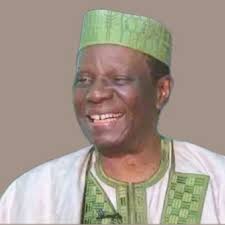
Kano’s Kabir Yusuf: Best Pension-Paying Governor, Says Tonnie Iredia
Retired public servants as distinct from political office holders in Nigeria live in penury. The value of their pensions is not only too little for survival, disbursements are never regular leading to huge arrears of the otherwise meagre entitlements of retirees.
At the beginning of a new administration at federal and subnational levels in Nigeria in 2023, no less than 21 states of the federation reportedly owed retirees as much as N790billion inherited pensions and gratuities.
According to detailed findings by a team of Vanguard Newspaper reporters, only Kaduna and Kebbi states were up to date in the payment of pensions and gratuities to their retirees. All others led by Rivers and Benue states were ridiculously indebtedto the tune of N119 billion and N100 billion respectively.
Although the federal government often displayed a ‘father Xmas’ approach in bailing states out of financial problems, the government at the centre had itself failed to implement pension adjustments under the Contributory Pension Scheme, CPS, since the scheme’s inception some two decades ago.
It was therefore not only states that were owing retirees, the federal government did not perform better. Indeed, by July 1, 2024, that is more than a year in office by the present administration federal retirees alone were owed about N230bn pension arrears.
The rationale for the government’s neglect of citizens who had spent the better part of their lives serving the nation has remained inexplicable. Some states only pay current debts while pushing forward the inherited liabilities.
The few states that tried to clear the mounting indebtedness were visibly half-hearted in implementing the policy. It is against this backdrop that Governor Abba Kabir Yusuf of Kano state is singled out today for commendation for his pragmatic and continuous releases of appreciable sums to ameliorate the pains of retirees in his state.
Since 2023, Kabir has released a total of 22 billion in four tranches to pay pensions and gratuity. His consistent approach in dealing with the subject suggests that the debts will be a thing of the past at the end of his first tenure in office.
Having paid 50 percent in his first two years in office in line with his election promises, it is logical to conclude that he would ensure he keeps to his promise.If other governors can emulate the Kano example, the real essence of governance will take shape in the country.
More importantly, the high level of corruption in Nigeria today would drop considerably because serving public servants may no longer see the need to desperately pursue avenues for self-enrichment in order to avoid what is happening to their predecessors now to be their lot in future.
Put differently, whereas the anti-corruption agencies are making great moves in retrieving stolen public funds, giving retirees their entitlement will dissuade serving public servants from corruption.
Of course, Kebbi, Kaduna and other people-oriented leaders that have made different efforts to improve the leaving conditions of Nigerian workers past and present similarly deserve the same commendation being given to Kano today.
Hopefully,such praises would alter the disposition of some states that before now did not see the expedience of appreciating public servants who had diligently served society.
Here, a note of warning ought to be sounded to leaders in government particularly state governors who rather than paying entitlements to deserving citizens, divert public funds to themselves.
Unfortunately, such leaders have ignored the public cry in the land that they should stop the extortion of huge emoluments to enrich themselves as well as their friends and families. As a result, it would remain impossible to have enough funds to pay salaries, pensions as well as gratuities and still be able to develop society.
It is generally believed for example that funds expended on legislators at both federal and state levels are enough to make Nigeria a greater country. In fact, newspaper and other frivolous allowances to law makers are far higher than the meagre pensions of retirees, yet the country is always able to satisfy such irrational spendings on the comfort of political office holders.
The case of state governors who maintain long convoys which accompany them on any trip within and outside the country is another example. It is indeed quite irritating to realize that all personal requests of leaders are taken care of from the public treasury. But when it comes to emoluments to public servants both serving and retired,such leaders are quick at remembering the supposed poor economic status of Nigeria.
To make matters worse, political office holders in many states are paid bogus allowances at the end of an 8-year tenure, a policy which is not extended to citizens who had spent 35 years in office. Sadly, the leaders were able to ensure that pension law provisions were made to accommodate their extortion which in clear terms is as bad as a typical crime against humanity.
The atrocious insensitivity is neither new nor reducing.The trend began from Lagos where the Public Office Holder (Payment of Pension) Law No 11 of 2007 provided for unreasonably lavish goodies which were quickly adapted or increased in some other states.
The law approves a house each in preferred locations within the relevant state andor Abuja; an average of two to six new cars every three or four years; 100 per cent of the incumbent’s basic salary; free health care for the beneficiary and family members, local and abroad and furniture allowance, house maintenance allowance, utility allowance, car maintenance allowance, and entertainment allowance etc.
It also provides for personal assistants, policemen, and operatives of other security services for life; including 30 days of annual vacation within and outside Nigeria.
Due to public outcry, some states purported to have reviewed the provisions but without substantially reducing the bogus expenditure. Indeed, some governors who are receiving such emoluments are reportedly also getting unapproved emoluments from the National Assembly where they are currently serving as senators.
In 2019 however, a Federal High Court in Lagos ordered the Federal Government to recover pensions collected by former governors who had gone on to serve as ministers and federal legislators.
Bearing in mind the high degree of impunity in the land, no one knows if the order had been obeyed or not. What remains obvious is the trend whereby political leaders live in opulence while the people they claim to be representing in different arms of government are in penury.
Leaders who abhor agitations and criticisms need to take note of the issues raised above and redress them without delay. One of the things begging for action now in our clime is an immediate end to the culture of long-drawn-out arrears of pensions and gratuities.
To faithfullyclearthe debts in line with the proactive stand of governor Abba Kabir of Kano is recommended. In addition, the irritating pension laws which approve bogus allowances for former political office holders who served for no more than 8 years should be abrogated.
To avoid a recurrence of such disposition towards official extortions,the existence of arrears of pensions and gratuities in any state should be made an impeachable offence to replace the current frivolous impeachments that are used to settle political scores.
It is worthy of note that President Bola Tinubu has himself gotten concerned over the poor management of pension matters in Nigeria. A few days ago, Tinubu directed the National Pension Commission (PenCom) topromptly implement “long-overdue pension increases and a minimum pension guarantee, which would provide a safety net for the most vulnerable pensioners under the CPS.
”In like manner, it is germane that the Inspector-General of Police, Kayode Egbetokun, has openly berated the plight of retired police officers under the Contributory Pension Scheme.
“According to the police boss, many retired police personnel”live in humiliating conditions that have instilled fear and anxiety among serving officers, thereby weakening morale across the ranks.”
If urgent steps are not taken to fall in line with the above feelings, no one can predict the nature of public reactions to sufferings by retirees. Only last month, retired police officers protested in Abuja, lamenting their poor treatment and humiliating pension payments.
In January, the federal government had to propose a 53 per cent increase in the 2025 budget allocations for military retirees following a series of ugly protests at the Ministry of Finance in Abuja over their unpaid entitlements.
A trend whereby retired personnel of armed services have to protest before getting their entitlement is clearly dangerous. It is thus a matter for regret that leaders in Nigeria take action on sensitive matters such as the livelihood of the elderly only after several protests. It is unwholesome and gravely derogates from the country’s reputation.
Tonnie Osa Iredia is Professor of Mass Communication, former DG NTA and Veteran Broadcaster write from Benin.








News
JUST IN: Senate Approves Tinubu’s $6 Billion Loan Request
By Yusuf Danjuma Yunusa
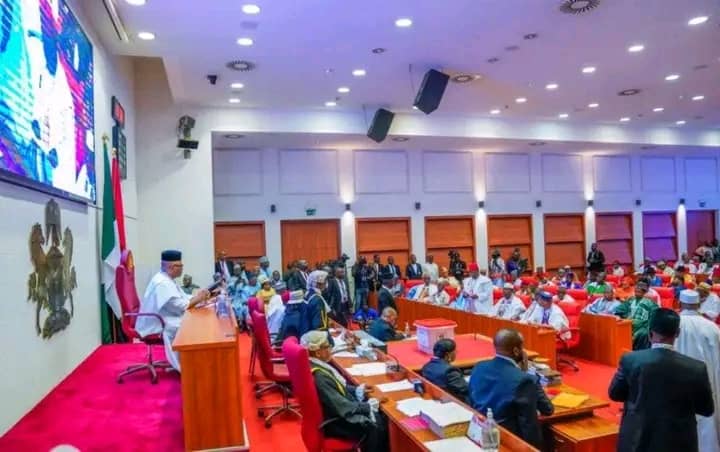
The Senate on Tuesday approved President Bola Tinubu’s request to secure $6 billion in external loans, granting legislative backing for the facilities hours after the Executive formally sought approval to finance critical infrastructure and address fiscal gaps.
The approval followed the consideration of a report submitted by the Chairman of the Senate Committee on Local and Foreign Debts, Senator Aliyu Wamakko (APC, Sokoto North).
In a letter read during plenary, President Tinubu sought approval for two separate facilities: a $5 billion loan from Abu Dhabi Bank to support budget deficit financing and meet existing debt obligations, and a $1 billion loan from UK Export Finance through Citibank London to fund the rehabilitation of the Lagos Port Complex and Tin Can Island Port.
According to the President, the port rehabilitation projects aim to address longstanding operational challenges, improve efficiency, enhance safety standards, support non-oil trade diversification, and position Nigeria as a regional trade hub.
Senate President Godswill Akpabio referred the requests to the committee for expedited consideration, a directive that culminated in Tuesday’s approval.
The latest borrowing comes amid the Federal Government’s sustained reliance on domestic and external loans to finance budget deficits. Four months ago, the National Assembly approved a separate request to raise N1.15 trillion from the domestic debt market to fund the 2025 budget deficit.
In its report, the Senate Committee on Local and Foreign Debts noted that the 2025 Appropriation Act provides for total expenditure of N59.99 trillion—an increase of N5.25 trillion from the Executive’s initial proposal—highlighting the widening fiscal gap driving the government’s borrowing strategy.
News
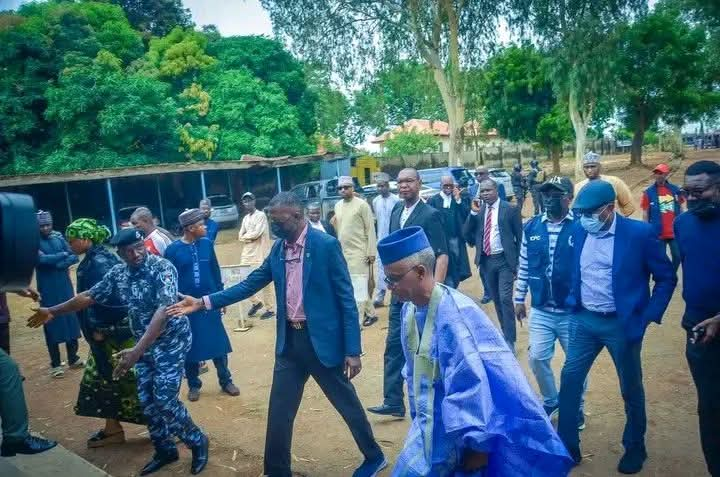
El-Rufai’s Bail Hearing Adjourned to Wednesday as Security Tightens Around Kaduna Court
By Yusuf Danjuma Yunusa
The Federal High Court in Kaduna has adjourned the bail hearing for former Governor Nasir El-Rufai until Wednesday, March 31. Justice Rilwanu scheduled the new date after hearing arguments from both the defense and prosecution.
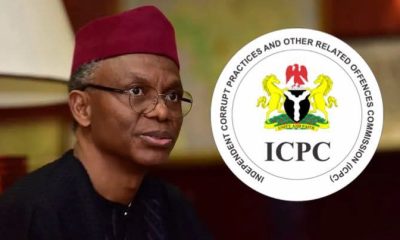
El-Rufai was arraigned by the Independent Corrupt Practices and Other Related Offences Commission (ICPC) on a 10-count charge involving the alleged conversion of public property and money laundering. The former governor pleaded not guilty to all charges.
In a separate case, El-Rufai also appeared before a Kaduna State High Court on charges of abuse of office, fraud, and intent to commit fraud. The ICPC filed charge number KDH/KAD/ICPC/01/26 against him and one other defendant, Amadu Sule, from the Kaduna State Development Agency (LEDA).
According to the News Agency of Nigeria, El-Rufai arrived at the Federal High Court premises at approximately 9:40 a.m. in the company of ICPC officers.
Security was heightened across the Kaduna metropolis ahead of the proceedings. Armed personnel from the police, the Department of State Services (DSS), and the Kaduna State Vigilance Service were deployed to strategic locations. Access to the court was restricted to accredited journalists and court officials, though media representatives were barred from entering the courtroom to cover the proceedings.
Counsel for El-Rufai, Abdul Adamu, declined to comment after the session, stating only that the case “has been adjourned till tomorrow.”
News
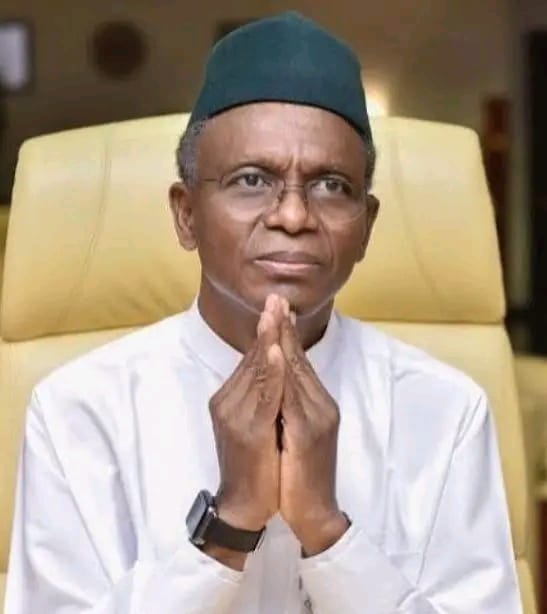
El-Rufai Taken Back To Custody
By Yusuf Danjuma Yunusa
The ICPC and DSS operatives, after the court session on Tuesday, 31 March, have taken Mallam Nasir El-Rufai with them to Abuja, a move which has raised questions about the status of his administrative bail.
The journey to Abuja followed his appearance at the Federal High Court, Kaduna, which was scheduled to hear his application for bail. The court adjourned to tomorrow, 1 April 2026, after the prosecution said it had just filed its counter affidavit.
He had been released on administrative bail on Friday following the death of his mother. Sources say that he was granted bail for 14 days. He hosted the fidau prayers for his mother yesterday in Abuja before proceeding to Kaduna for today’s court sessions. The latest development indicates that the bail has been revoked.
Mallam El-Rufai has first appeared this morning at the Kaduna State High Court. The absence of the second defendant stalled the hearing which was then adjourned to 10 April 2026.

JUST IN: Senate Approves Tinubu’s $6 Billion Loan Request

El-Rufai’s Bail Hearing Adjourned to Wednesday as Security Tightens Around Kaduna Court

El-Rufai Taken Back To Custody

Eight Kano Rep Members Abandon NNPP for APC

Governor Abba Kabir Yusuf Holds Exclusive Prerogative to Choose Deputy – Malam Inuwa Waya

The Governor Who Chose His People Over His Politics: Abba Yusuf and the Moral Courage Behind Kano First

FREEDOM OF SPEECH, NOT FREEDOM FROM CONSEQUENCE: A CITIZEN’S CALL FOR RESPONSIBLE PUBLIC COMMENTARY
Restoring the Glory That Was Always There: Governor Abba Kabir Yusuf and the Historical Vision Behind Kano First

Tinubu to Swear in Olatunji Disu as Inspector-General of Police on Wednesday

NDLEA Clarifies: Drug Case Against Abba Kyari Still Active After Court Discharge
JUST IN: Senate Approves Tinubu’s $6 Billion Loan Request
El-Rufai’s Bail Hearing Adjourned to Wednesday as Security Tightens Around Kaduna Court
El-Rufai Taken Back To Custody
Eight Kano Rep Members Abandon NNPP for APC
Governor Abba Kabir Yusuf Holds Exclusive Prerogative to Choose Deputy – Malam Inuwa Waya
The Governor Who Chose His People Over His Politics: Abba Yusuf and the Moral Courage Behind Kano First
FREEDOM OF SPEECH, NOT FREEDOM FROM CONSEQUENCE: A CITIZEN’S CALL FOR RESPONSIBLE PUBLIC COMMENTARY
Restoring the Glory That Was Always There: Governor Abba Kabir Yusuf and the Historical Vision Behind Kano First
Tinubu to Swear in Olatunji Disu as Inspector-General of Police on Wednesday
NDLEA Clarifies: Drug Case Against Abba Kyari Still Active After Court Discharge
-

 Opinion4 years ago
On The Kano Flyovers And Public Perception
-

 Features5 years ago
How I Became A Multimillionaire In Nigeria – Hadiza Gabon
-

 Opinion5 years ago
Kano As future Headquarters Of Poverty In Nigeria
-

 History5 years ago
Sheikh Adam Abdullahi Al-Ilory (1917-1992):Nigeria’s Islamic Scholar Who Wrote Over 100 Books And Journals
-

 Opinion4 years ago
My First Encounter with Nasiru Gawuna, the Humble Deputy Governor
-

 History5 years ago
The Origin Of “Mammy Market” In Army Barracks (Mammy Ochefu)
-

 History4 years ago
The History Of Borno State Governor Professor Babagana Umara Zulum
-

 News4 years ago
Federal University Of Technology Babura To Commence Academic Activities September