
News
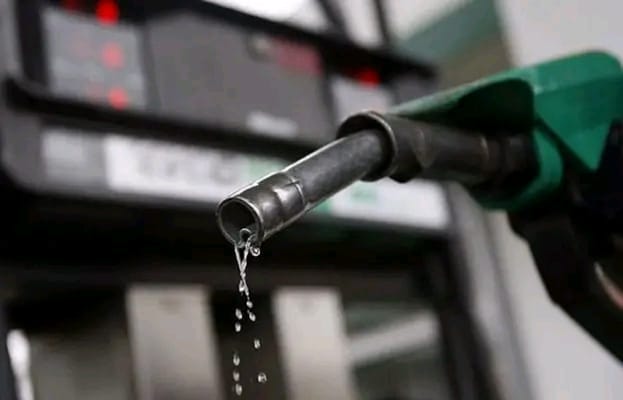
Special Report:Fuel Hike and the Weight of Distant Wars
By Yusuf Danjuma Yunusa
The faint hum of generators, once the relentless backdrop of life in the heart of its place, a heavier quiet has settled—born of grim resignation as the ripple effects of a distant geopolitical storm crash onto the wallets of ordinary Nigerians.
Here in Mararaba, the complaint is not just about the new numbers on the fuel pump. It is about the arithmetic of survival that no longer adds up. The latest hike in the price of Premium Motor Spirit (PMS), which dealers attribute to the escalating crisis in the Middle East—a conflict many here note involves the United States, Israel, and Iran—has plunged residents into familiar but increasingly unbearable hardship.
To understand the human weight of this policy, I took to the streets and queues of Mararaba, annex to the Federal Capital Territory, to speak with those who feel they are paying the price for a war thousands of miles away.
At a crowded NNPC filling station in Nyanya, where the queue of vehicles stretched nearly a kilometer under the harsh sun, I met Nasir, a commercial bus driver. He leaned against his battered Korope bus, wiping sweat from his brow, watching the attendant update the price board.
“Look at this,” Nasir said, his voice a mix of anger and exhaustion. “Just last week, I was managing. Now they tell us because there is war between Israel and Iran, and because America supports Israel, the price must go up again. What does that have to do with us in Abuja?”
Nasir’s math is simple but devastating. “I used to buy fuel here for around N700. Now we are pushing N1,000 and above, and they say it might go to N1,500 if the crisis continues. My transport fare? If I double it, my passengers—civil servants, traders, students—cannot pay. If I don’t, I go home with nothing. The politicians in America and Israel are fighting a war with our stomachs.”
His lament echoes the reality of transport inflation, which has spiked dramatically since the removal of subsidies, now worsened by global tensions.
Across town on Abacha Road, at a modern but nearly empty restaurant, I found Yakubu, a small business owner who runs a catering service. For him, the fuel hike is a “tax” on everything he buys.
“It is a chain. I cook with gas, but the price of gas goes up because the dollar is high and the market fears the war. I transport food to clients, but fuel for my van is now this much,” he said, snapping his fingers. “The government tells us it is ‘market forces’ and the war in the Middle East. I am not a fool. I know the Middle East is unstable because of the US and its allies. But why is Nigeria’s economy tied so tightly to their conflicts? Why are we still importing fuel when we have refineries? We are suffering for their wars and our leaders’ incompetence.”
At Mararaba market, the complaints are less about geopolitics and more about the immediate struggle to fill a pot. Anwar, a tailor, sat idle at his sewing machine. The shop beside him, a provisions store, was dark.
“My neighbor cannot afford to run his generator today,” Anwar said, gesturing to the dark shop. “He sells cold drinks and water. If he has no light, he has no business. If he uses a generator, his profit is gone because diesel is over N1,000 in some places. This is the reality. America, Israel, and Iran are fighting, and my neighbor loses his livelihood.”
The sentiment is backed by data. According to a recent NOIPolls report, 85% of Nigerians disapprove of the fuel subsidy removal, and 93% believe the country is heading in the wrong direction. For people like Anwar, the official explanations ring hollow.
“They say it is deregulation, that it is global politics,” he continued, shaking his head. “I say it is abandonment. We are being buried alive by policies made in Washington and Tel Aviv, carried out by Abuja.”
The geopolitical angle is a particularly bitter pill to swallow. In a country already grappling with high living costs, the idea that a conflict far removed from Africa’s Sahel could dictate the price of commuting to work or powering a small clinic breeds deep resentment.
Ibrahim, a retiree and civil servant, sat on his veranda in Angwa Katsinawa listening to the rare silence where generators once roared.
“Since 2023, when President Tinubu said ‘subsidy is gone,’ we have been on a rollercoaster to poverty. Now this war gives them the perfect excuse to finish us off. The government says the NNPC made this decision based on ‘market realities.’ What reality? The reality that America supports Israel, and Iran threatens retaliation? Why must my pension suffer for that?”
His frustration touches on a key point raised by experts: the escalating conflict threatens to push the subsidy burden—or the cost passed to consumers—past a staggering N644 billion monthly if oil prices spike.
As the sun set over Mararaba, taxis and buses were fewer on the roads. Many drivers, like Sadiq, a university graduate who drives for a ride-hailing app, simply parked for the day.
“I cannot make money if I spend all day in a fuel queue or if 70% of what I earn goes into the tank,” Sadiq said, scrolling through his phone, which showed a fraction of his usual earnings. “They talk about the crisis in the Middle East. But we have a crisis here. It is a crisis of hunger. Until the US, Israel, and Iran stop fighting, we suffer. Until our government decides to fix our refineries, we suffer. We are just pawns.”
As I left him, Sadiq called out, “Tell them we are tired. We are tired of paying for wars we did not start.”
It is a sentiment that hangs heavy in Nigeria’s air—a feeling of being trapped between the anvil of global politics and the hammer of local economic policy.









News
State Police: 24 State Assemblies Approve Constitutional Amendment–Presidency
By Yusuf Danjuma Yunusa
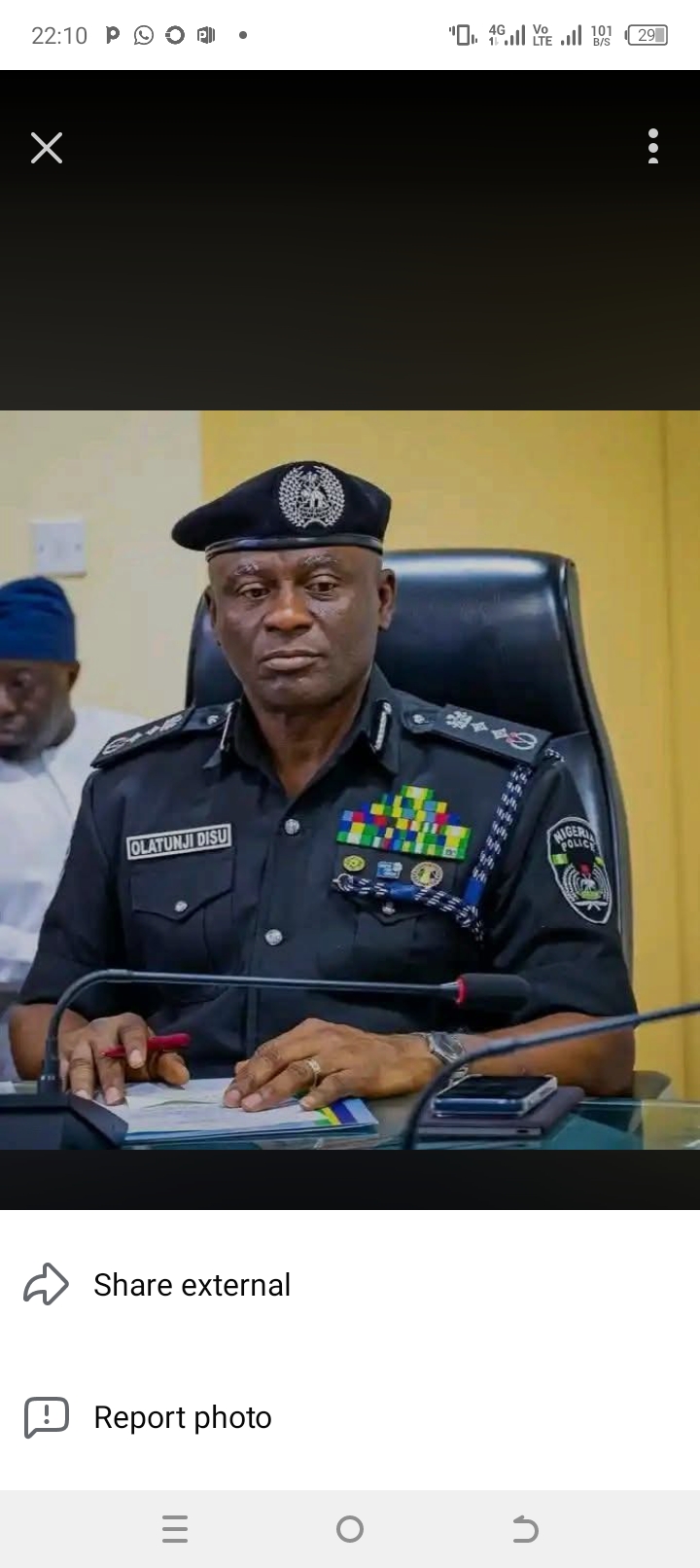
The Presidential Working Group on the National Policing Bill says 24 State Houses of Assembly have approved the Constitution (Sixth Alteration) Bill, 2026, providing for a dual policing system.
The approval meets the constitutional threshold of two-thirds of the 36 states required for the amendment to proceed.
The Working Group commended the State Houses of Assembly for their action and acknowledged the National Assembly for passing the amendment in both chambers.
This is contained in a statement issued by Femi Gbajabiamila, Chief of Staff to the president and chairman of the Working Group, on Friday in Abuja.
“In line with Section 9 of the Constitution, the amendment can now be returned to the National Assembly for transmission to Mr President for assent.”
Mr Gbajabiamila said the approval provided constitutional backing for the policing framework outlined in the Working Group’s draft National Policing Bill, 2026.
He added that the draft bills were undergoing legislative drafting, review and validation at the Federal Ministry of Justice.
The bills are expected to be returned on or before October 30, after which the Working Group will give them final consideration before presenting them to President Bola Tinubu.
The Working Group urged stakeholders to support a smooth transition to a dual policing system aimed at improving public safety.
News
ECOWAS Court Faults Process Backed by Council of Ministers in Darma Removal Case
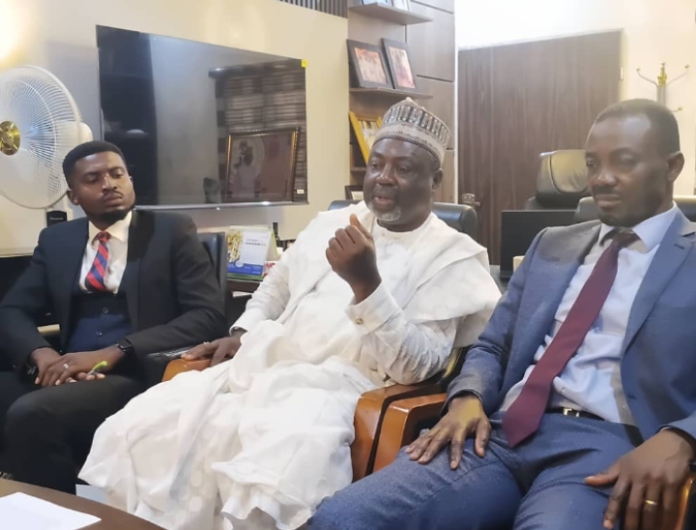
The ECOWAS Community Court of Justice has ruled that the removal and replacement of former ECOWAS Commissioner for Internal Services, Prof. Nazifi Abdullahi Darma, were unlawful, overturning a process that culminated in his replacement being formalised by the Council of Ministers.
Darma disclosed the outcome while briefing journalists in Abuja on the Court’s recent judgment.
He said the dispute arose after a memorandum dated 30 October 2025 by the then President of the ECOWAS Commission, Dr. Omar Alieu Touray withdrew responsibilities previously exercised by Darma and initiated steps that eventually led to his replacement.
While Darma challenged the actions before the ECOWAS Court on 3 November 2025, the Federal Republic of Nigeria subsequently recalled him and nominated a successor.
The Council of Ministers later formalised the replacement.
However, the Court found that the legal requirements for ending his mandate had not been satisfied.
According to Darma, the Court held that the memorandum triggering the process was based on adverse allegations that affected his responsibilities and was issued without giving him an effective opportunity to respond.
“The Court found that these actions were taken without prior notice or an effective opportunity for me to respond,” he said.
The Court further ruled that managerial powers vested in the President of the Commission could not be used to extinguish or transfer responsibilities assigned by Community law to another statutory office.
Darma said the Court also rejected the argument that Nigeria’s recall automatically ended his tenure as Commissioner.
“Once appointed, a Commissioner derives his mandate from Community law and not from the nominating Member State,” he quoted the Court as holding.
The Court consequently declared that his removal and replacement were unlawful, notwithstanding the subsequent actions taken to formalise the change in office.
The judgment ordered the payment of outstanding salaries, allowances and accrued entitlements up to the expiration of his tenure and awarded him US$50,000 in general damages.
Because his tenure expired on 31 August 2026, the Court did not order reinstatement.
Describing the ruling as significant for regional governance, Darma said it reaffirmed that ECOWAS statutory office holders can only be removed through procedures recognised by Community law.
News
Dangote Cement Gboko Commits Millions in Scholarship Scheme
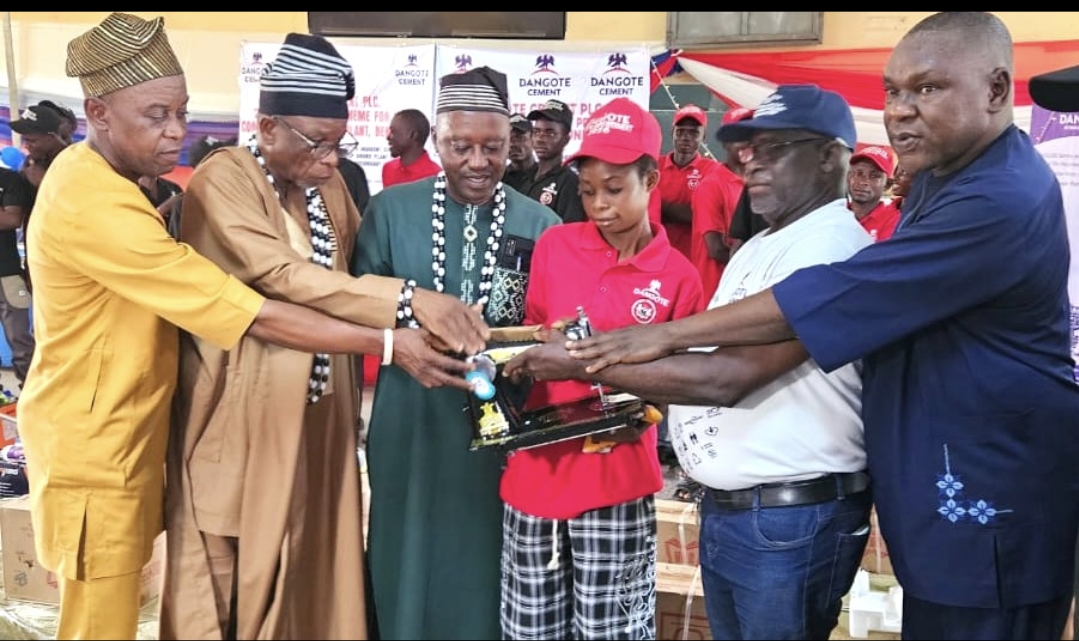
Dangote Cement Plc, Gboko Plant has awarded multi-million-naira scholarships to tertiary and secondary school students from its six host communities in Benue State.
The company also presented starter packs, working tools and certificates to graduates of its Youth Empowerment Programme to enable them to establish their own businesses, apply the skills acquired during the training and become financially reliant.
The Minister of Solid Minerals Development, Dr. Henry Dele Alake, lauded Dangote Cement Plc for its community development interventions, calling on other private sector players to adopt similar initiatives to promote socio-economic development in their host communities.
Dr. Alake, who was represented by the Federal Mines Officer of the Federal Ministry of Solid Minerals Development in Benue State, Engr. Achi Gregory, urged the company to sustain its commitment to implementing community development programmes agreed upon with its host communities.
Speaking at the official presentation ceremony, Group Head, Social Performance, Dangote Cement Plc, Mr. Wakeel Olayiwola, said the implementation of the Community Development Agreement underscores Dangote Cement’s commitment to equipping young people with practical skills and resources to promote entrepreneurship, create employment opportunities and improve livelihoods in its host communities.
Mr. Olayiwola, who was represented by the Head of Social Performance of the Dangote Cement, Gboko Plant, Dr. Johnson Kor, said the scholarship and youth empowerment programmes came against the backdrop of several other programmes recently executed by the company, which include farmers and women empowerment programmes.
The Acting Plant Director, Dangote Cement, Gboko, Engr. Arbind Singh, said: “This annual scholarship scheme for indigent students of the host communities is an indication of our company’s commitment to its Corporate Social Responsibilities (CSR).”
Engr Singh, who was represented by the company’s General Manager, Production, Engr Tabershima Soom, said: “The Gboko Plant has already launched 150 Women Empowerment Programme and 50 Farmerss Empowerment Programme where women were provided with cash to support their businesses, and farmers were supported with farm inputs.”
The beneficiary communities for these programs are: Tse-Kucha, Quarry, Amua, Mbazembe, Mbatur, and Pass Brothers.
Speaking on behalf of the Benue State Attorney-General, the Chairman of the Mineral Resources and Environmental Management Committee (MIREMCO), Barr. Dooshima Orosaga, commended Dangote Cement Plc for its compliance with the Community Development Agreement (CDA), urging the beneficiaries and host communities to maximise the benefits of the company’s interventions.
Chairman of the Gboko Local Government, Hon Yina Elias said the government will continue to provide the support needed for the company to succeed, adding that the Dangote Cement Plc is an exemplary company in Corporate Social Responsibilities programmes.
In his remarks, the District Head of Ukpekpe, Chief Tsegba Igbarumun, commended Dangote Cement Plc’s Gboko Plant for its contributions to the community, assuring the company of the community’s continued support.
He said the community valued its mutually beneficial relationship with the company and would continue to serve as its ambassadors.
A beneficiary of the Youth Empowerment Programme, Mr Ignatius Aondohemba, expressed appreciation to Dangote Cement Plc for the support, pledging to put the skills and resources provided to good use and build a business that would enable him to become an employer of labour.

State Police: 24 State Assemblies Approve Constitutional Amendment–Presidency

ECOWAS Court Faults Process Backed by Council of Ministers in Darma Removal Case

Dangote Cement Gboko Commits Millions in Scholarship Scheme

Mass Exodus Looms in Kano APC as More Chieftains Consider Exit — Mansur Ahmed

Kano Donates Equipment to NDLEA

PCACC Arrests Man Over Alleged ₦4.5m Sale, Illegal Leasing of Kano Government Horse Stable

Kano Monitors ₦48.9bn Projects Across Six LGAs

Goje’s Electoral War:The Confrontation With Tinubu,Governor Inuwa,Usman Kumo And APC candidates Ahead Of 2027

Kano Spends ₦10.36bn on Hospitality, Sitting Allowances, Others in Six Months

Prof Yusuf Adamu Delivers BUK’s 63rd Professorial Inaugural Lecture, Reflects on Medical Geography and Academic Legacy
State Police: 24 State Assemblies Approve Constitutional Amendment–Presidency
ECOWAS Court Faults Process Backed by Council of Ministers in Darma Removal Case
Dangote Cement Gboko Commits Millions in Scholarship Scheme
Mass Exodus Looms in Kano APC as More Chieftains Consider Exit — Mansur Ahmed
Kano Donates Equipment to NDLEA
PCACC Arrests Man Over Alleged ₦4.5m Sale, Illegal Leasing of Kano Government Horse Stable
Kano Monitors ₦48.9bn Projects Across Six LGAs
Goje’s Electoral War:The Confrontation With Tinubu,Governor Inuwa,Usman Kumo And APC candidates Ahead Of 2027
Kano Spends ₦10.36bn on Hospitality, Sitting Allowances, Others in Six Months
Prof Yusuf Adamu Delivers BUK’s 63rd Professorial Inaugural Lecture, Reflects on Medical Geography and Academic Legacy
-

 Opinion5 years ago
On The Kano Flyovers And Public Perception
-

 Features5 years ago
How I Became A Multimillionaire In Nigeria – Hadiza Gabon
-

 Opinion6 years ago
Kano As future Headquarters Of Poverty In Nigeria
-

 History6 years ago
Sheikh Adam Abdullahi Al-Ilory (1917-1992):Nigeria’s Islamic Scholar Who Wrote Over 100 Books And Journals
-

 Opinion5 years ago
My First Encounter with Nasiru Gawuna, the Humble Deputy Governor
-

 History5 years ago
The History Of Borno State Governor Professor Babagana Umara Zulum
-

 History6 years ago
The Origin Of “Mammy Market” In Army Barracks (Mammy Ochefu)
-

 News5 years ago
Federal University Of Technology Babura To Commence Academic Activities September