
News
Special Report: Women’s Political Participation in Nigeria Hits an Alarming Low Amid Systemic Marginalization
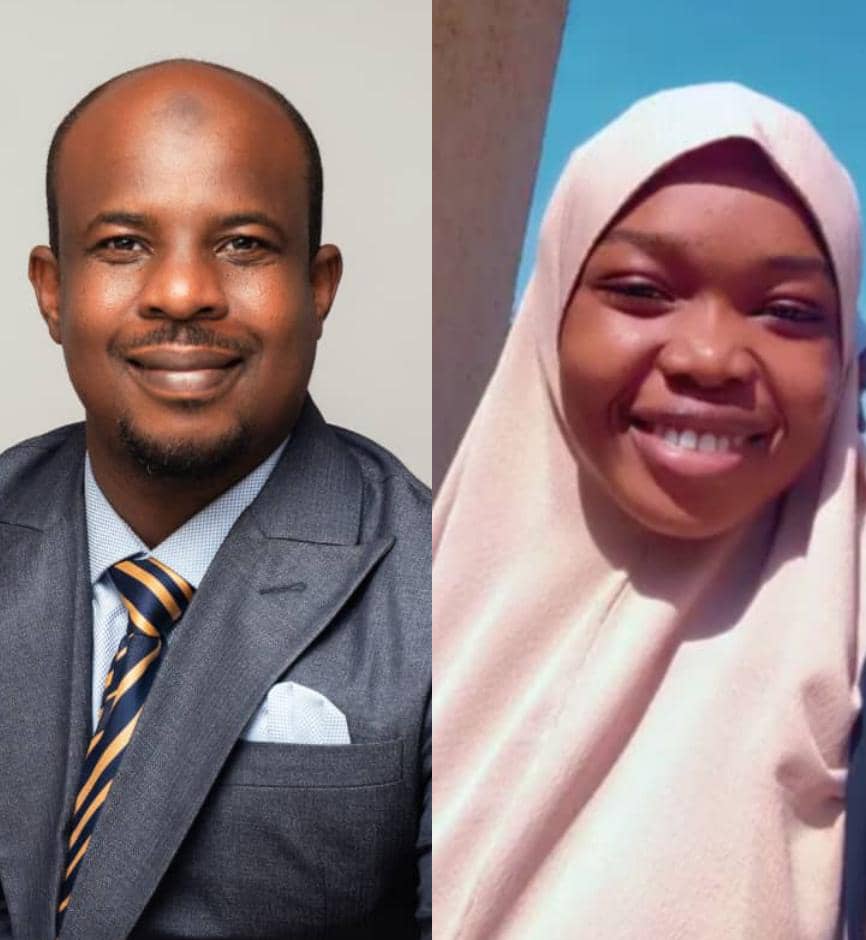
By Yusuf Danjuma Yunusa, Nigerian Tracker Correspondent
The steady decline of women’s representation in Nigeria’s political landscape has reached a critical point, raising concerns over systemic marginalization and gender disparity in governance.
An analysis of the 2023 general elections reveals a stark underrepresentation of women in both the Senate and the House of Representatives. Only four women secured senatorial seats out of 109, while just 15 were elected to the House of Representatives out of 360.
The four female senators include:
Senator Ireti Heebah Kingibe (Labour Party, FCT)
Senator Ipalibo Harry Banigo (Peoples Democratic Party, Rivers West)
Senator Natasha Akpoti-Uduaghan (Peoples Democratic Party, Kogi Central)
Senator Idiat Oluranti Adebule (All Progressives Congress, Lagos West)
Notably, the number only rose to four after a court ruling reinstated Senator Natasha Akpoti-Uduaghan, who had initially been excluded. This marks a decline from the 9th Assembly, where eight women held senatorial seats—a reduction of four.
No Female Governors, Limited Executive Presence
The situation is even more dire in the executive branch, where no woman currently serves as governor. The closest attempt was in Adamawa State, where Aishatu Binani’s bid was ultimately unsuccessful. While women occasionally feature in ministerial appointments, their presence remains minimal compared to their male counterparts.
Experts Weigh In on the Crisis
Public affairs analyst Dr. Muttaqa Yushau Abdulrauf attributes the decline to multiple factors, including financial barriers and entrenched patriarchal norms.
“It is quite unfortunate that women, who constitute a significant portion of voters and the general population, remain grossly underrepresented in elected offices,” he said. “This has been the trend since 1999.”
He identified two key obstacles:
Financial Constraints – Many women cannot afford the high cost of nomination forms for political offices.
Cultural Bias – Deep-seated patriarchy perpetuates the notion that women are unfit for leadership roles.
Dr. Rofiat Adedokun Highlights Gender Marginalization Beyond Politics
Dr. Rofiat Adedokun, a lecturer in the Department of Banking and Finance at Ahmadu Bello University, Zaria, has stated that women face marginalization not only in politics but across nearly all aspects of society.
She emphasized that gender stereotypes persist in workplaces worldwide, citing the common perception that secretarial roles are exclusively for women. “This should not be the case,” she asserted.
“Both men and women should be given equal opportunities for the sake of equity. That is how it ought to be,” Dr. Adedokun added.
A Call for Affirmative Action
To reverse the trend, Dr. Abdulrauf advocates for reserved seats for women in political parties. “An affirmative action mandating a quota for women in party candidacies would significantly boost their participation,” he emphasized.
On the other hand, Dr. Rofiat was asked about potential solutions, she identified sensitization as the most effective approach to combat such marginalization, particularly from the perspective of women.
Additionally, she also advocated for affirmative measures, such as reserving seats for women in political contests. However, she cautioned, “The reservation of seats must not be limited to specific political offices, as that could lead to another form of stereotyping.”
Dr. Adedokun’s remarks underscore ongoing discussions about gender equality and the need for systemic change to ensure fair representation in all sectors.
Views From The Street Of Nigeria
On the street of Nigeria, Kaduna State, Zaria to be precise, more views concerning the subject matter were sought and the following are the responses gathered:
Fatima Tijani Bintu who is a final year student of Ahmadu Bello University, Zaria, is of the same view that there has been an injustice concerning the marginalization of women in Nigerian politics. In her statement, she said, “the dominance of men over women in Nigerian politics is not necessarily a reflection of an inherent ability but rather as a result of a structural and systemic barriers that women face.”
“This opinion is largely supported by empirical evidence globally,” she asserted.
Responding to what could be the cause of such phenomenon, Fatima added that, “societal norms and stereotype are the major cause of such disturbing development.”
In her bid to proffer solutions to the end of the marginalization, she noted that quota system implementation and mentorship programs to giude and support aspiring female politicians are key.
But in a stark contrast to the views aforementioned, a National Youth Service Corp member, Rahmatullah Ahmad, opined that women should not lead. In her words, “women are inherently caregivers and not leaders.”
“Leadership is a very delicate responsibility that must not be merged with emotions–which women are known for,” she asserted.
Substantiating her view, she referenced the drama that ensued between the suspended Senator Natasha and the senate president Akpabio–noting that if she hadn’t been elected into the chambers, such allegation wouldn’t have come up in the first place.
However, as Nigeria’s political landscape remains overwhelmingly male-dominated, the question persists: Will concrete measures be taken to ensure gender equity, or will women’s representation continue to dwindle?








News
Kwankwaso Officially Joins ADC
By Yusuf Danjuma Yunusa
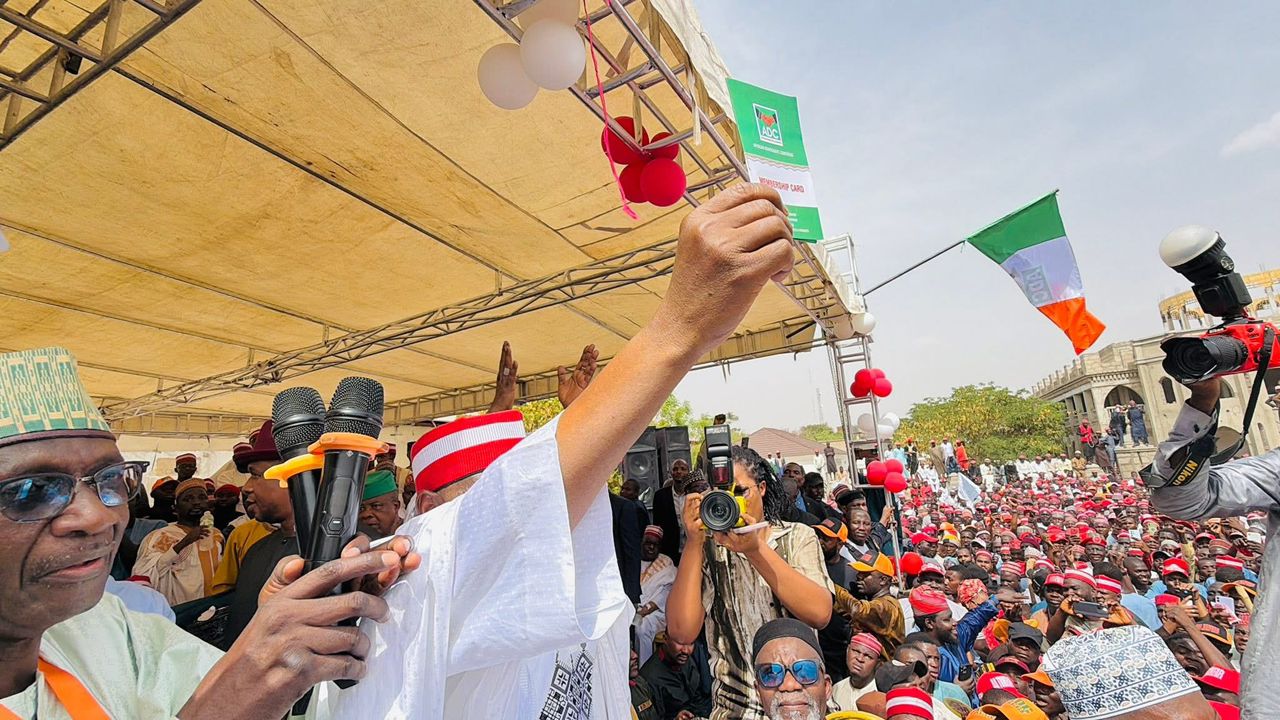
Former presidential candidate of the New Nigeria Peoples Party and ex-Governor of Kano State, Senator Rabiu Kwankwaso, has officially joined the African Democratic Congress.
The former Minister of Defence also registered with the party and received his membership card on Monday at Gidan Kwankwasiyya, Miller Road, Bompai, Kano.
Present at the event include ADC National Chairman and former Senate President, David Mark; former Sokoto State Governor, Senator Aminu Tambuwal; former Minister of Transportation, Rotimi Amaechi; former Labour Party presidential candidate, Peter Obi; Senator Dino Melaye; and former National Chairman of the All Progressives Congress, John Odigie-Oyegun, among others.
News
FMBN Chairman Nasiru Gawuna Resigns, Set to Defect to ADC Amid Kano Political Realignments
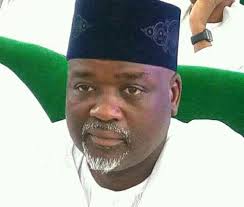
The chairman of the Governing Board of the Federal Mortgage Bank of Nigeria, FMBN, Nasiru Gawuna, has resigned from his position.
Reports indicate that Mr Gawuna has perfected his defection deal with a former governor of Kano, Rabiu Kwankwaso, and is expected to defect to ADC on Tuesday.
In a resignation letter dated March 27, 2026, the former APC governorship candidate said his decision takes immediate effect and aligns with the President’s instruction aimed at ensuring adherence to electoral laws ahead of forthcoming political activities.
He expressed profound gratitude to President Bola Tinubu for the opportunity to serve, describing his tenure as a privilege to contribute to the growth and development of the Federal Mortgage Bank of Nigeria and the country at large.
“My resignation is in strict compliance with the President’s directive requiring all political appointees to step down in accordance with the provisions of the Electoral Act,” the letter read.
Mr Gawuna also stated that he is placing his future “in the hands of Allah (SWT),” while seeking divine guidance on his next course of action.
He further assured of his commitment to a smooth transition process, noting that he would hand over all responsibilities in accordance with established procedures and directives.
Daily Nigerian
News
Sallah Thanksgiving: NUJ President Commends Kano Correspondents’ Chapel For Fostering Love, Unity Among Journalists
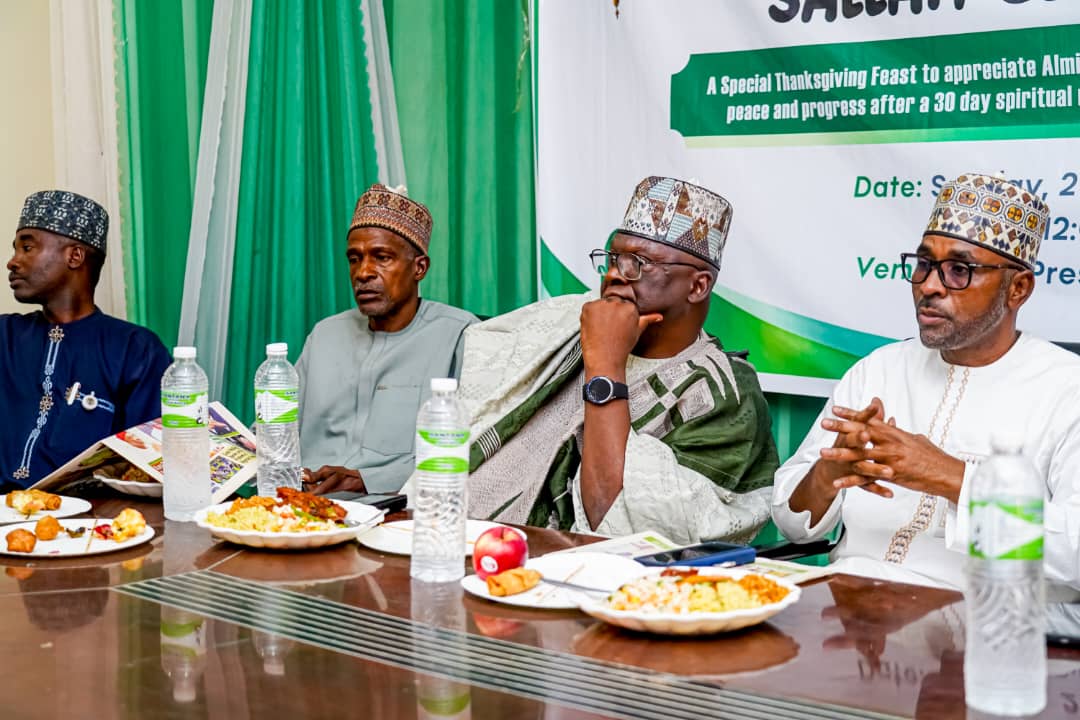
The National President of the Nigeria Union of Journalists (NUJ),
Comrade Alhassan Yahya, has commended the leadership of Kano Correspondents’ Chapel, NUJ, for providing platforms and occasions that foster love, unity and progress among journalists.
Comrade Yahya stated this at Kano Press Centre, on Sunday, during the 2026 Eid-El-Fitr Sallah Celebrations, Thanksgiving And Special Prayers Ceremony, organized by Kano Correspondents’ Chapel, NUJ, to appreciate God for the successful month long Ramadan fasting period and the Eid-El-Fitr Sallah celebrations.
The NUJ National President used the occasion to urge journalists to reflect on the true meaning of the occasion and promote unity, peace, and tolerance, among themselves, in the course of their profession.
Represented by former chairman of Kano NUJ and a member of NUJ National Board of Trustees, Comrade Abbas Ibrahim, the NUJ National President, who said he has been impressed over the activities of Kano NUJ Correspondents’ Chapel, within the last one year, under the leadership of Comrade Murtala Adewale, emphasized the importance of compassion, unity, and addressing national challenges, particularly food security and insecurity.
Comrade Alhassan Yahya urged other NUJ chapels to draw inspiration from Kano Correspondents’ Chapel’s unity and camaraderie, highlighting their event as a model for promoting peace and solidarity among journalists.
He encouraged other chapels to organize similar events, fostering a sense of community and cooperation, which is essential for the growth and development of the journalism profession.
In his remarks, chairman of the occasion, a Professor of Communication in Bayero University, Kano (BUK), Prof. Yakubu Mai Nasara Kurfi, described the event as not only inspiring, but heart-warming, while urging the Kano Correspondents’ Chapel leadership to sustain the tempo.
Prof. Mai Nasara Kurfi congratulated the Kano Correspondents’ Chapel executive members for their foresight to organize the event, and promised to borrow a leaf from them as he planned to introduce such occasion in the Faculty of Communication, BUK.
The Professor of Communication also used the occasion to canvass for collaboration and synergy among the NUJ, working journalists and the Faculty of Communication, BUK, so as to ensure training and re-training of both working journalists and student journalists for enhancement of the journalism profession.
The chairman of NUJ in Kano state, Comrade Suleiman Abdullahi Dederi, who was represented by the Vice Chairman, Comrade Mustapha Gambo, noted that the event was not only a Thanksgiving for the successful Ramadan and celebration of the Eid El Fitr, but a symbol of unity and togetherness among members of Kano Correspondents’ Chapel, and the larger Kano NUJ family.
“This even is so special because some of the prominent scholars and practitioners in the media are here. I want to thank and commend the leadership of the Kano Correspondents’ Chapel for organizing this event,” he said.
In his speech, chairman of NUJ Kano Correspondents’ Chapel, Comrade Murtala Adewale, described the event as not just a celebration, but a moment to reflect on Allah’s countless mercies—granting us the strength, patience, and opportunity to observe the holy month.
According to him: “Ramadan has been a period of spiritual renewal, sacrifice, and discipline. It has reminded us of the importance of empathy, humility, and self-restraint. As journalists, these values resonate deeply with our professional responsibilities—to be fair, truthful, and guided by integrity in all that we do.
“This gathering also serves as an avenue to strengthen our unity as members of the Chapel. In the midst of our demanding schedules and the pressures of the profession, moments like this allow us to reconnect, share, and reinforce the bond that holds us together.”
He encouraged all imbibe the lessons of Ramadan, and continue to embody patience, kindness, and responsibility, “in our daily lives and in our reportage. Our society looks up to us, and we must remain committed to promoting peace, truth, and understanding.
“I sincerely appreciate all our invited guests and well-wishers who have joined us today. Your presence is a testament to the strong relationships we have built over time, and we do not take it for granted. As we share this special breakfast, let us also remember those who are less privileged and continue to extend a helping hand, as taught during the holy month.”
The event was designed as a special Thanksgiving feast to appreciate Almighty Allah for His mercies and offer prayers for peace and progress, after a 30-day spiritual rejuvenation in the fasting month of Ramadan.

Kwankwaso Officially Joins ADC

El-Rufai/Uba Sani And Pantami’s Perceived Peace Of The Graveyard

Defection: Kwankwaso’s Legacy Under Scrutiny; A Critical Look at his Political Journey Since 1999

The Godfather Who Mistook Democracy for Personal Ownership

FMBN Chairman Nasiru Gawuna Resigns, Set to Defect to ADC Amid Kano Political Realignments

The Governor Who Chose His People Over His Politics: Abba Yusuf and the Moral Courage Behind Kano First

FREEDOM OF SPEECH, NOT FREEDOM FROM CONSEQUENCE: A CITIZEN’S CALL FOR RESPONSIBLE PUBLIC COMMENTARY
Restoring the Glory That Was Always There: Governor Abba Kabir Yusuf and the Historical Vision Behind Kano First

Tinubu to Swear in Olatunji Disu as Inspector-General of Police on Wednesday

NDLEA Clarifies: Drug Case Against Abba Kyari Still Active After Court Discharge
Kwankwaso Officially Joins ADC
El-Rufai/Uba Sani And Pantami’s Perceived Peace Of The Graveyard
Defection: Kwankwaso’s Legacy Under Scrutiny; A Critical Look at his Political Journey Since 1999
The Godfather Who Mistook Democracy for Personal Ownership
FMBN Chairman Nasiru Gawuna Resigns, Set to Defect to ADC Amid Kano Political Realignments
The Governor Who Chose His People Over His Politics: Abba Yusuf and the Moral Courage Behind Kano First
FREEDOM OF SPEECH, NOT FREEDOM FROM CONSEQUENCE: A CITIZEN’S CALL FOR RESPONSIBLE PUBLIC COMMENTARY
Restoring the Glory That Was Always There: Governor Abba Kabir Yusuf and the Historical Vision Behind Kano First
Tinubu to Swear in Olatunji Disu as Inspector-General of Police on Wednesday
NDLEA Clarifies: Drug Case Against Abba Kyari Still Active After Court Discharge
-

 Opinion4 years ago
On The Kano Flyovers And Public Perception
-

 Features5 years ago
How I Became A Multimillionaire In Nigeria – Hadiza Gabon
-

 Opinion5 years ago
Kano As future Headquarters Of Poverty In Nigeria
-

 History5 years ago
Sheikh Adam Abdullahi Al-Ilory (1917-1992):Nigeria’s Islamic Scholar Who Wrote Over 100 Books And Journals
-

 Opinion4 years ago
My First Encounter with Nasiru Gawuna, the Humble Deputy Governor
-

 History5 years ago
The Origin Of “Mammy Market” In Army Barracks (Mammy Ochefu)
-

 History4 years ago
The History Of Borno State Governor Professor Babagana Umara Zulum
-

 News4 years ago
Federal University Of Technology Babura To Commence Academic Activities September