
Features
Sheikh Ahmad Muhammad Ibrahim Bamba: A tribute
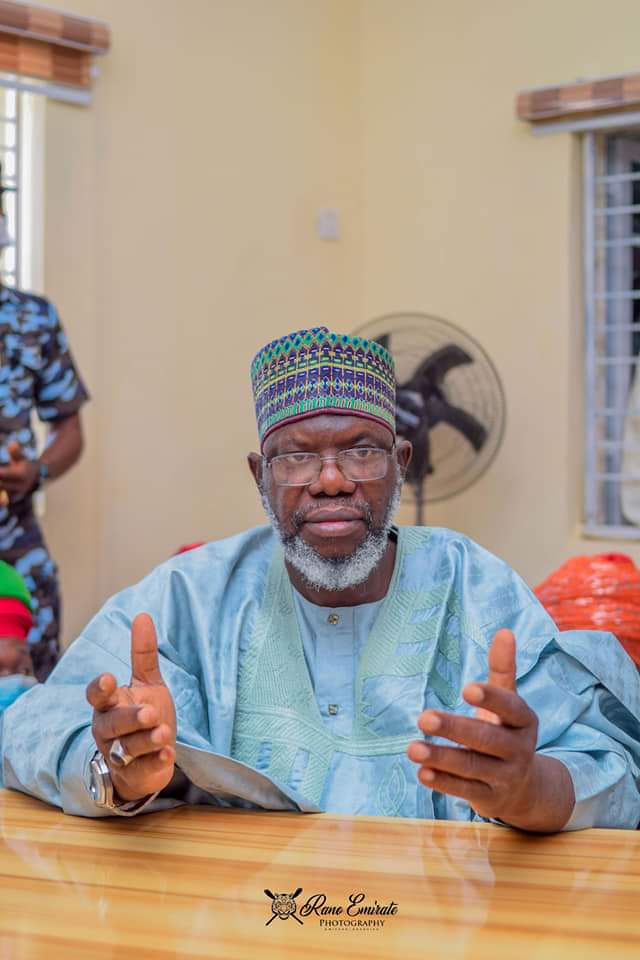
By Professor Salisu Shehu
My first sight of Dr. Ahmad Bamba was 37 years ago in 1984 in the Ummah Mosque at the Old
Campus, Bayero University Kano where I just got registered as a pre-degree student.
Although the Central Mosque in Bayero University Kano would always be the first sight of any visitor or newly arriving student to the university, having been strategically located near the Main Gate, the Ummah Mosque may be the first place of worship for the new resident (on campus) student because of its location between the two major and oldest faculties of the university – the Faculty of Arts and Islamic Studies (FAIS) and the Faculty of Education. Because of its lively nature and vibrancy – series of nasihas, ta’alims, Qur’anic study circles and Tajweed, Arabic classes and even sometimes, very hot intra-faith dialogues and debates – Ummah Mosque, therefore, would always easily capture every newly arriving young Muslim student.
It was quite rare to see non-students’ faces at the Ummah Mosque except during Zuhr and Asr prayers when some visitors and lecturers might be around to join the congregation. There was however, a non- student face that was very familiar in the mosque most especially, during Zuhr prayer and seldom during Maghrib; that was Dr. Ahmad Muhammad Ibrahim Bamba’s. He would certainly be the first lecturer students that used to regularly attend congregational prayer in Ummah Mosque would be familiar with because of his regular presence.
My first countenance of Dr. Ahmad in mosque reminded me of my first IRK teacher at Teachers College – Sheikh Yahya Abdul’Azeez – a fully bearded Pakistani Sheikh. On my first sight of Sheikh Dr. Ahmad in Ummah Mosque the memories of Sheikh Abdul’Azeez suddenly came back to my mind. More strikingly however, the sights of the two gentlemen present to the heart a mien of piety that sometimes made you think of the countenances of the Sahaba, or so we used to think as young people that still had some elements of naivety in our thoughts.
Our admiration of Sheikh Dr. Ahmad was ceaseless whenever he came and prayed with us in Ummah Mosque and left. But our interaction with him was no more than the salaam and typically, he would wave at you and make his way out or extend his hand for a shake when you happen to be close enough to him. The first time I had a conversation with him or heard him speak to me was when I was appointed as an imam in the mosque.
With the vestiges of adolescent exuberance and obsession for fashionable and smart appearance, my wardrobe had more of the fashionable shirts and trousers of the time (TOBI shirts/jeans and HARA trousers) than kaftans. Invariably, therefore, the imam in me would most of the time lead prayers in the said kinds of fashionable shirts and trousers in Ummah Mosque. I led the Maghrib prayer one day. After the prayer, Sheikh Dr. Ahmad Bamba called me, held my hand and led the way outside the mosque. In his typical gentle manner and way he said, “Liman, yaya kokari”. I replied, “Alhamdulillah”, with a mixture of exciting and nervous mien. He then said to me, “Toh liman ga karatu mai kyau, amma kuma kullum ana mana Sallah kai babu hula?” With a sigh of relief, I said , “Na Gode Mallam, insha Allah, za a gyara.”. It was both an awesome and joyful moment
for me. But what was most instructive was the fact that that simple and gentle counsel not only made me appreciate that I was no longer just an ordinary student on campus but I was treading the path of spiritual leaders, it also changed my life in terms of personal disposition and appearance on campus and beyond.
A second experience with Sheikh Dr. Ahmad Bamba made me a witness to his magnanimity. It was in the case of attending his Hadith class for students offering Islamic Studies as Special Honours. I was not one, so I could not register for that course. I offered Islamic Studies as a subsidiary course but I was interested in attending his special or rather advanced Hadith class. All my friends and classmates were encouraging me to just enter the class and that they were sure Malam would not send me out. On the second or third lecture day, I joined some of these mates. I sat in the class with some bit of nervousness. Sheikh entered the class, conducted his lesson and alhamdulillah, he did not send me out. He definitely saw me, and he definitely knew that I was not duly registered for that course because it was a small class of less than 15 students. By virtue of my imamship in Ummah Mosque, I was already a familiar face to him. With a deep sense of appreciation, I must say that, that opportunity was my first experience with not only some of the basic and essential rudiments of Ilm al-Hadith but was also the greatest inspiration for deeper and more advanced study of the field.
After graduation in 1988, I got intellectually and personally reconnected with him when I returned to Bayero University Kano in 1991 to pursue my Master’s degree. That was the year Sheikh Dr. Ahmad Bamba started his very awesome, weekly/weekend Hadith Ta’alim sessions, beginning with Sahih al-Bukhari in the BUK Central Mosque, a teaching-cum- admonishment exercise that he continued to conduct uninterruptedly with a great sense of passion, vigour, consistency and rare faith and commitment for 30 years.
Breaking:Renown Hadith Translator Dr Ahmad Is Dead
In the Hadith Ta’alim sessions, we did not only learn the texts of the Hadiths and elements of Mastalahul Hadith but we also learnt to be much more committed to Sunnah in terms of faith and practice. Quite instructively also, we learnt lots and lots and lots of the Aqwal (wise or sayings) of the salafs, many aspects of Usul al-Fiqh (Islamic Jurisprudence), Qaw’id al- Fiqh (Jurisprudential principles and maxims) and many Islamic religious and Jahiliyyah poetries (Qasa’id and Shu’ara’ al-Jahiliyyah).
Sheikh Dr. Ahmad Bamba did not only contribute to the knowledge of Hadith through the Ta’alim sessions, he also contributed to it through authorship. Within the first three years after the commencement of the Sahih al Bukhari lessons, one of his very scholarly Hadith works was released was his Takhreej and Tahqeeq work on Imam al- Bukhari’s “Juz al-Qira’ah Khalf al-Imam.
For Sheikh Dr. Ahmad Bamba, it was a life well spent. Thirty solid years of uninterrupted teaching of the Hadiths of the Prophet (s.a.w) was not just a monumental intellectual and scholarly contribution but evidence of true love of and for our Beloved Prophet Muhammad (s.a.w).
The death of our most honourable Sheikh Dr. Ahmad Muhammad Ibrahim Bamba is certainly a tragic loss to the world of knowledge and Da’awah.
Prof Shehu is the Vice Chancellor, Al- Istiqama University, Sumaila, Kano State













Features
Why I want To Rewrite Kannywood’s Playbook – Dan Hausa

By Saif Ibrahim, Kano
Who is Dan Hausa?
I am Kamilu Ibrahim born 31 years ago, but most people know me as Dan Hausa. I was born in Fagge, Kano State, and from the very beginning I knew I wanted to tell stories that reflect the realities of my people. I trained at the High Definition Film Academy in Abuja, SAE Institute, and also took part in the U.S. Embassy’s Filmmaking for Impact program. I join the fikm making industry and started directing in 2017 because I wanted full control over how my stories are told.
Can you tell us a bit about yourself and your journey into film directing?
My journey began with a love for storytelling—I started as a scriptwriter, then worked closely with experienced filmmakers before directing my first film. Over the years, I’ve learned that directing isn’t just about cameras and lights, but about understanding people, culture, and the power of narrative.
Growing up, I saw how films could educate and inspire people. In Arewa, cinema is more than entertainment—it’s a mirror of society. I wanted to use that mirror to reflect our values, challenges, and hopes. That desire to make meaningful films pushed me into directing.
What sets your work apart in today’s Kannywood?
For me, it’s about merging modern cinematic techniques with our Hausa cultural identity. I love bold visuals and tight storytelling, but I never want to lose that traditional heartbeat of my origin. My goal has always been to raise our production quality to international standards while staying true to our roots”, proof of that is clear in my current and biggest project, “Wata Shida.
How would you describe your directing style?
I like to call my style “realism with purpose.” I focus on authenticity—every scene, every performance, every frame must feel true to life. But I also ensure that there’s always a message, something the audience can take home and reflect on.
Can you highlight some of your notable works?
Sure, there is Wata Shida which is currently airing and has an overwhelming response from the public and the likes of Lulu Da Andalu a myth-inspired adventure series showing on AREWA24 and YouTube. YouTube pushed us to think bigger in terms of story and production. Mijin Hajiya earned me Best Director at the 2024 Kano Entertainment Awards, while Tataburza made waves at film festivals. Earlier films like Bakon Yanayi (2019) and my debut Kulba Na Barna (2017) helped me define my style. My latest project, Amaryar Lalle, starring Rahama Sadau, premieres August 2025 on Sadau Pictures TV. Each project is a step forward in showing what Kannywood can achieve.
What awards and recognitions have you earned?
I have also been recognized by the Arewa5050 Awards and Kaduna International Film Festival (KIFF) for Lulu Da Andalu, which even won Best Indigenous Hausa Film. There’s also an AMVCA nomination for best Africanindigenous language , which is exciting because it means Hausa stories are getting wider attention.”
Who are your key collaborators?
Filmmaking is teamwork; TY Shaba has been a creative partner on several projects, especially on Lulu Da Andalu. I have WORKED with Rahama Sadau on Amaryar Lalle has been fantastic; she brings so much energy to the screen.”
What themes do you explore in your films?
I like telling stories where modern life clashes with traditional values—family conflict, cultural identity, gender roles. These are real issues in our society, and I try to explore them honestly but cinematically. I believe film should make people feel and also think.”
What is your next project?
I am working on Wata Shida Season 2, a story about a woman who enters a six-month sham marriage to protect her inheritance. It’s socially meaningful but also very entertaining. I will also continue with season 2 of “Amaryar Lalle.”
Can you tell us a little about your latest project?
This project is very close to my heart. It follows a young girl fighting to get an education in a society full of obstacles. Through her eyes, we see how family, tradition, and resilience collide, and how hope can survive even in the harshest situations.”
What inspired you to make this story?
Growing up, I saw so many bright young girls whose dreams were cut short just because they were girls. I felt a responsibility to tell this story—not as fiction, but as a mirror of what is happening around us.
How do you balance tradition and modernity in your work?
A: It’s about respect. I respect our traditions, but I also embrace new technology and ideas. In my films, I make sure traditional values are represented truthfully, while using modern techniques to improve production quality.
What challenges do you face as a director in Kannywood?
Budgets are often limited, and resources can be scarce. But the biggest challenge is sometimes societal misunderstanding of what we do as filmmakers. People forget that film is also an art form and a tool for change, not just entertainment.
Can you tell us your favourite project
Every project has its own special memory, but I’m proudest when a film sparks conversation or impacts people’s lives. For example, one of my recent films about youth unemployment led to community discussions and even small initiatives to help young people. That’s when I feel film is doing its job.
What advice would you give to aspiring directors?
Learn the craft—don’t rush. Watch films, study scripts, spend time on set even if it’s just to observe. Most importantly, stay humble and focused. Filmmaking is about patience, teamwork, and vision.
What should audiences expect from your upcoming projects?
Expect more powerful stories rooted in our culture, with better technical quality. I’m working on projects that tackle real societal issues, and I believe they’ll resonate with audiences not just in Arewa, but globally.
Features
Antenatal Care: Why some women misses several sessions

By Aisha Muhammad Rabiu
In many parts of Northern Nigeria, antenatal care is a vital step in ensuring the health of both mother and the unborn child. Yet, an increasing number of women are neglecting this crucial stage of pregnancy, putting themselves and their babies at serious risk, hence the high infant, mother mortality rate.
Health experts have been warning that antenatal visits help detect pregnancy complications at its early stage, provide essential supplements for healthy mother/child development, and educate mothers on safe delivery practices. But for some women, they find antenatal care as a burden either due to poverty or lack of awareness based on cultural practices and beliefs. As such antenatal remains a neglected priority.
In Kadawa, Fatima Sani, a 28-year-old expectant mother, admits she has not attended a single session of antenatal since the start of her pregnancy. she said “It’s not that I don’t want to go, but the clinic is far from my house, and my husband says we should save the transport money for delivery day. I just pray Allah protects me and my baby.”
From Dan Bare, Shago Tara precisely, Khairat a mother of 4 shares her reasons for not attending antenatal session even though she is fully aware that the session is very important to pregnant women. She said “I feel healthy, so I don’t see the need to go for antenatal. My mother gave birth to all her children at home without any clinic visits, and they all survived.”
In Rijiyar Zaki, Hadiza Mukhtar recalls her previous pregnancy, where she skipped antenatal visits entirely. “The nurses were rude to me when I first went. I decided I would not return. This pregnancy, I haven’t gone at all,” she confesses.
For Usaina Muhammad of Kurna, the problem is financial. “I can’t afford the registration fee, and I also have other children to feed. I know antenatal is important, but survival comes first.”
Meanwhile, Maryam Lawan of Layi Kaji reveals that misinformation has influenced her decision. “Someone told me that the iron tablets they give at the clinic make the babies grow too big, making delivery harder. So, I decided to avoid it altogether.”
Medical professionals emphasize that skipping antenatal care increases the risk of complications such as anemia, high blood pressure, infections, and even maternal or infant death. Dr. Ibrahim Musa, a gynecologist in Kano, warns: “We see many emergencies that could have been avoided if the mother had attended antenatal. Most of these cases arrive late, making it harder for the doctors to save lives.”
Experts and community leaders agree that raising awareness is key in addressing the matter. Antenatal care should be made more affordable, accessible, and culturally acceptable for all women. Religious leaders, health workers, and family members all have a role to play in encouraging expectant mothers to attend regular check-ups.
Neglecting antenatal care is not just a personal choice; it’s a public health concern that affects families, communities, and the future of the nation. Ensuring that every mother has the knowledge, resources, and support to seek antenatal care is a step toward a healthier society.
Aisha Muhammad Rabiu writes from Bayero University Kano (BUK) and she can be reached at Email: aishatama2020@gmail.com
Phone no.08084273341
Features
Rano’s Peaceful Legacy: More Than a Slogan, One Tragedy Won’t Define Us

For decades, Rano Garin Autan Bawo has proudly stood as a symbol of peace and harmony in Kano State. It is a place where neighbors look out for one another, where disputes are settled through dialogue, and where diversity is met with respect—not resentment. In Rano, peace is not just a slogan—it is a way of life passed down through generations.
The tragic incident that recently occurred at the Divisional Police Station in Rano Local Government has deeply shaken our community. Known for generations as one of the most peaceful and united areas in Nigeria, Rano now faces the painful reality of an attack that led to the death of a Divisional Police Officer and the destruction of police property. This senseless act of violence goes against everything our community stands for and must not be seen as a reflection of who we are.
Rano has long been recognized for its peaceful spirit, tolerance, and respect for all. People from different backgrounds, religions, and cultures have lived side by side here in harmony. This didn’t happen by chance—it is the result of years of effort by our leaders, religious figures, and ordinary citizens who believe that our strength lies in our unity and diversity.
Our respect for law and order is deep-rooted. We understand the crucial role that security personnel play in keeping our community safe. The people of Rano have always appreciated the risks and sacrifices made by the police, military, and other agencies to protect lives and property.
Respect for the law here is not just about obeying rules—it’s about a shared belief in justice, fairness, and solving problems peacefully and legally. This belief has helped build a respectful and cooperative relationship between the police and the people.
What happened at the police station is completely out of character for our community. The individuals who carried out this attack do not represent us. Their actions go against the values that have shaped Rano. We strongly condemn what they did and make it clear that their behavior does not reflect who we are.
The loss of the Divisional Police Officer is not just a blow to the Nigeria Police Force or the Kano State Police Command—it is a loss for all of us. He wasn’t just doing his job; he was part of our extended family. His death is an attack on the peace and security that we all hold dear.
We send our deepest condolences to his family. No words can ease the pain of losing a loved one in such a brutal way. Our thoughts are also with his colleagues in the police force, who have lost a brother and a friend.
We also stand with the Kano State Police Command and the Nigeria Police Force as they face this heartbreaking loss. We understand how much this affects their morale, especially at a time when their work is more important than ever.
Destroying police buildings and equipment is not just an attack on law enforcement—it’s an attack on the very system that helps keep us safe. These facilities belong to the people and serve the entire community. Damaging them harms everyone, especially the most vulnerable among us.
We urge the government and relevant authorities to investigate this incident fully and fairly. Those responsible must be held accountable. Justice must be swift and uncompromised. Our community deserves to see the law upheld and the wrongdoers brought to book.
To our young people—the future of Rano—we ask for calm and reflection. We know that you may be frustrated or angry about many issues. But violence is never the answer. Taking the law into your own hands only brings more pain and setbacks for everyone.
Instead, we encourage our youth to focus on positive, constructive paths. There are peaceful, legal ways to raise your voices and push for change. Use those channels. Help move our community forward.
Rano must now focus on healing, rebuilding trust, and recommitting to the peaceful values that have always defined us. We must come together—young and old, leaders and citizens—to ensure that such violence never happens again.
We call on traditional leaders, religious figures, community elders, youth leaders, and all residents to stand united in promoting peace and respect for the law. Let’s strengthen our partnership with security agencies and support their efforts to keep us safe, while also holding them accountable to serve with respect and dignity.
How we respond to this tragedy will shape our future. Let us choose unity over division, peace over violence, and hope over despair. The actions of a few will not define us. We will protect the legacy of peace that Rano is known for and continue working together for a better tomorrow.
Buhari Abba wrote this piece from Unguwar Liman Rano.

Kano Ex-Deputy Governor Gawuna Joins ADC After Resignation from APC

JUST IN: Senate Approves Tinubu’s $6 Billion Loan Request

El-Rufai’s Bail Hearing Adjourned to Wednesday as Security Tightens Around Kaduna Court

El-Rufai Taken Back To Custody

Eight Kano Rep Members Abandon NNPP for APC

The Governor Who Chose His People Over His Politics: Abba Yusuf and the Moral Courage Behind Kano First

FREEDOM OF SPEECH, NOT FREEDOM FROM CONSEQUENCE: A CITIZEN’S CALL FOR RESPONSIBLE PUBLIC COMMENTARY
Restoring the Glory That Was Always There: Governor Abba Kabir Yusuf and the Historical Vision Behind Kano First

Tinubu to Swear in Olatunji Disu as Inspector-General of Police on Wednesday

NDLEA Clarifies: Drug Case Against Abba Kyari Still Active After Court Discharge
Kano Ex-Deputy Governor Gawuna Joins ADC After Resignation from APC
JUST IN: Senate Approves Tinubu’s $6 Billion Loan Request
El-Rufai’s Bail Hearing Adjourned to Wednesday as Security Tightens Around Kaduna Court
El-Rufai Taken Back To Custody
Eight Kano Rep Members Abandon NNPP for APC
The Governor Who Chose His People Over His Politics: Abba Yusuf and the Moral Courage Behind Kano First
FREEDOM OF SPEECH, NOT FREEDOM FROM CONSEQUENCE: A CITIZEN’S CALL FOR RESPONSIBLE PUBLIC COMMENTARY
Restoring the Glory That Was Always There: Governor Abba Kabir Yusuf and the Historical Vision Behind Kano First
Tinubu to Swear in Olatunji Disu as Inspector-General of Police on Wednesday
NDLEA Clarifies: Drug Case Against Abba Kyari Still Active After Court Discharge
-

 Opinion4 years ago
On The Kano Flyovers And Public Perception
-

 Features5 years ago
How I Became A Multimillionaire In Nigeria – Hadiza Gabon
-

 Opinion5 years ago
Kano As future Headquarters Of Poverty In Nigeria
-

 History5 years ago
Sheikh Adam Abdullahi Al-Ilory (1917-1992):Nigeria’s Islamic Scholar Who Wrote Over 100 Books And Journals
-

 Opinion4 years ago
My First Encounter with Nasiru Gawuna, the Humble Deputy Governor
-

 History5 years ago
The Origin Of “Mammy Market” In Army Barracks (Mammy Ochefu)
-

 History4 years ago
The History Of Borno State Governor Professor Babagana Umara Zulum
-

 News4 years ago
Federal University Of Technology Babura To Commence Academic Activities September