
News
AHIP, ITF Trains 40 Women on Entrepreneurship, Financial Management
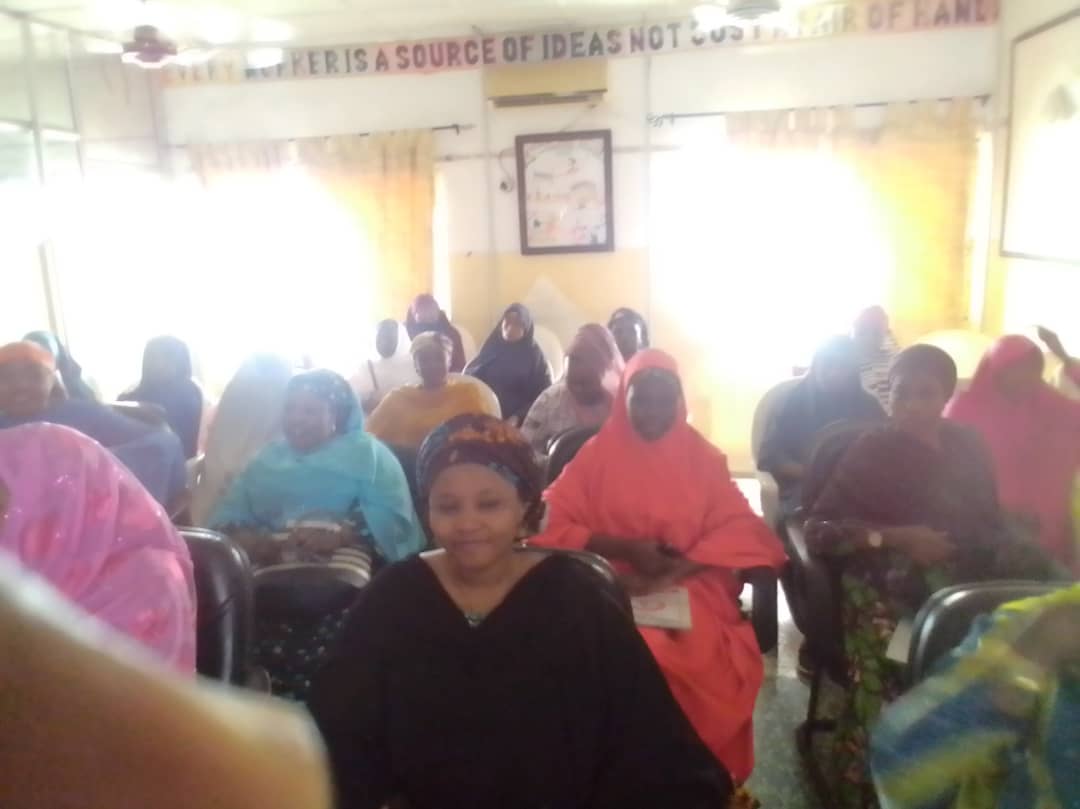
The Adolescent health information project in conjunction with the industrial training fund has trained 40 women in hygiene and financial management training
The director of adolescent Health information project Hajiya Mairo Bello stated this in an interview with newsmen in kano
She said the forty women were trained in household facilities including hand sanitizers, soap, and others.
Hajiya Mairo said a lot of women were trained on household sanitizers and has spanned for six weeks.
AYCC Condemns Katsina School Attack, Urges Govt. To Secure Lives
In a remark one of the beneficiaries Rukayyya said she benefitted immensely from the training, she learned a lot from on she learned making a certain brand of sanitizer which every household uses
Another trainee Khadija Ado Suleiman Yakasai said she learned how to make hand sanitizer liquid detergent and others

















News
JUST IN: El-Rufai Detained as Bail Ruling Adjourned to April 14
By Yusuf Danjuma Yunusa
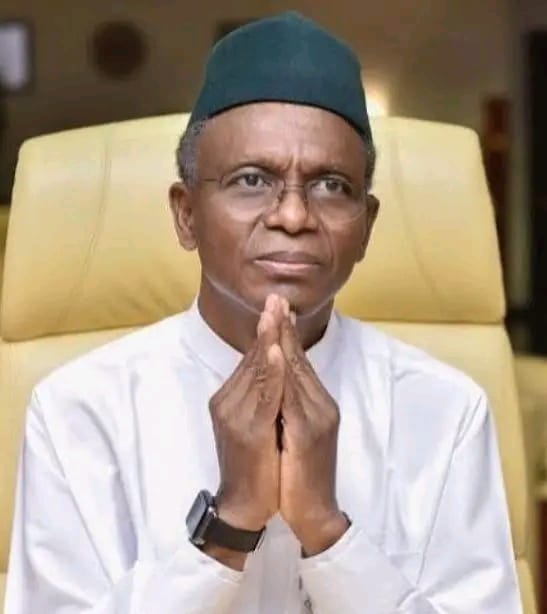
Operatives of the Department of State Services on Wednesday took former Kaduna State governor, Nasir El-Rufai, into custody moments after proceedings at the Federal High Court in Kaduna.
El-Rufai, standing trial over alleged corruption, had just concluded a hearing on his bail application filed by the Independent Corrupt Practices and Other Related Offences Commission when DSS operatives bundled him into a waiting vehicle and drove him away, reportedly heading to Abuja.
A heavy DSS presence around the court before the hearing had fuelled speculation that the former governor might be taken into custody.
Security sources said vehicles had been strategically positioned around the court prior to proceedings.
El-Rufai had arrived at the court at about 9:05 a.m. in a Hilux van, drawing attention from security personnel and observers.
Speaking to journalists after the proceedings, lead defence counsel, Oluwole Iyamu (SAN), confirmed that the court had fixed April 14 for ruling on the bail application.
“The bail application was argued and responded to, and the ruling has been fixed for April 14.
“We look forward to that day. We are hopeful. We have put our arguments before the court, and this is a court of justice.
“We await the decision of the court,” he added.
He also noted that the defence team is prepared for a related case scheduled for April 10 at the Federal High Court in Abuja, describing it as “a separate matter.”
“That is a separate matter. As lawyers, we are ready. We have filed all necessary processes and will be in court. That is the DSS matter,” he said.
News
Court Ends NNPP Crisis, Restores Party Leadership to Founder
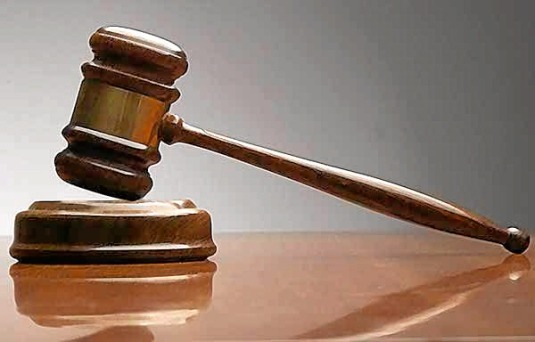
The Court of Appeal sitting in Owerri has delivered a decisive judgement in the protracted leadership crisis within the New Nigeria People’s Party (NNPP), affirming Boniface Okechukwu Aniebonam as the recognised leader of the party.
In its ruling, the appellate court set aside an earlier decision of the Abia State High Court in Uzuakoli, which had vacated its previous judgement delivered in favour of the faction led by Aniebonam.
The appellate court held that the lower court erred in granting a motion that effectively reversed its own earlier judgement, thereby upholding all three grounds of appeal filed by the Aniebonam-led faction.
The dispute stems from a November 2024 judgement of the Uzuakoli High Court in Suit No. HUZ/11/2024, which had recognised the Board of Trustees of the NNPP under Aniebonam. However, in June 2025, the same court granted an application that set aside that ruling, following a motion filed by Rabi’u Musa Kwankwaso.
Dissatisfied with the reversal, the Aniebonam faction approached the Court of Appeal in Owerri (Appeal No. CA/OW/271/2025), arguing that the trial judge lacked the jurisdiction to sit on appeal over his own judgement.
Delivering its verdict, the Court of Appeal agreed with the appellants, restoring the earlier judgement and effectively recognising Aniebonam as the legitimate leader of the party he founded in 2001.
Legal representation in the matter saw Onitsha-based senior counsel, Sir Azubike Anazor, appear for Aniebonam, while Abuja-based Eyitayo Fatogun, SAN, represented Kwankwaso.
The NNPP, which fielded Kwankwaso as its presidential candidate in the 2023 general elections, has been embroiled in internal disputes over its leadership structure, with rival factions laying claim to control of the party.
News
JUST IN: Adelabu Resigns as Power Minister to Pursue Oyo Governorship Bid
By Yusuf Danjuma Yunusa
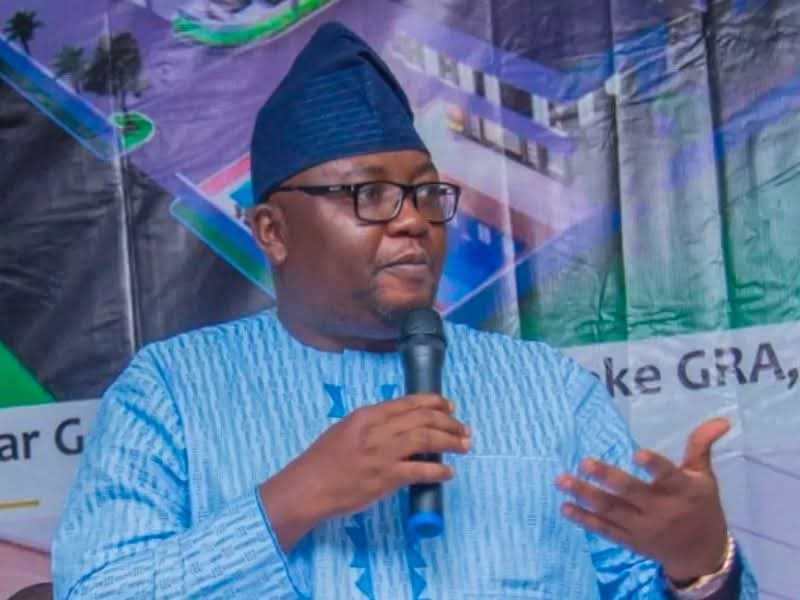
The Minister of Power, Adebayo Adelabu, has resigned his appointment to focus on his governorship ambition in Oyo State.
Adelabu disclosed this in a resignation letter addressed to the President Bola Ahmed Tinubu on Tuesday, and routed through the Secretary to the Government of the Federation.
In the letter titled “Resignation as Honourable Minister of Power”, Adelabu expressed gratitude to the President for the opportunity to serve in his administration.
He said it was a privilege to contribute to efforts aimed at strengthening Nigeria’s power sector in line with the administration’s Renewed Hope Agenda.
Adelabu added that his decision to step down was to enable him fully pursue his aspiration to contest for the office of Governor of Oyo State.
He noted that the move would allow him to dedicate his time and resources to the political ambition.
The former minister also conveyed his appreciation and respect to the President for the confidence reposed in him during his tenure.

JUST IN: El-Rufai Detained as Bail Ruling Adjourned to April 14

Court Ends NNPP Crisis, Restores Party Leadership to Founder

Why Nura Manu Soro should be APC candidate in Bauchi State come 2027

JUST IN: Adelabu Resigns as Power Minister to Pursue Oyo Governorship Bid

After Kwankwaso Joins ADC, Party Alleges Plot by APC, Senior Lawyers to Force INEC Into Illegal Takeover

The Governor Who Chose His People Over His Politics: Abba Yusuf and the Moral Courage Behind Kano First

Governor Abba Kabir Yusuf Holds Exclusive Prerogative to Choose Deputy – Malam Inuwa Waya
Restoring the Glory That Was Always There: Governor Abba Kabir Yusuf and the Historical Vision Behind Kano First

Tinubu to Swear in Olatunji Disu as Inspector-General of Police on Wednesday

NDLEA Clarifies: Drug Case Against Abba Kyari Still Active After Court Discharge
JUST IN: El-Rufai Detained as Bail Ruling Adjourned to April 14
Court Ends NNPP Crisis, Restores Party Leadership to Founder
Why Nura Manu Soro should be APC candidate in Bauchi State come 2027
JUST IN: Adelabu Resigns as Power Minister to Pursue Oyo Governorship Bid
After Kwankwaso Joins ADC, Party Alleges Plot by APC, Senior Lawyers to Force INEC Into Illegal Takeover
The Governor Who Chose His People Over His Politics: Abba Yusuf and the Moral Courage Behind Kano First
Governor Abba Kabir Yusuf Holds Exclusive Prerogative to Choose Deputy – Malam Inuwa Waya
Restoring the Glory That Was Always There: Governor Abba Kabir Yusuf and the Historical Vision Behind Kano First
Tinubu to Swear in Olatunji Disu as Inspector-General of Police on Wednesday
NDLEA Clarifies: Drug Case Against Abba Kyari Still Active After Court Discharge
-

 Opinion4 years ago
On The Kano Flyovers And Public Perception
-

 Features5 years ago
How I Became A Multimillionaire In Nigeria – Hadiza Gabon
-

 Opinion5 years ago
Kano As future Headquarters Of Poverty In Nigeria
-

 History5 years ago
Sheikh Adam Abdullahi Al-Ilory (1917-1992):Nigeria’s Islamic Scholar Who Wrote Over 100 Books And Journals
-

 Opinion4 years ago
My First Encounter with Nasiru Gawuna, the Humble Deputy Governor
-

 History5 years ago
The Origin Of “Mammy Market” In Army Barracks (Mammy Ochefu)
-

 History4 years ago
The History Of Borno State Governor Professor Babagana Umara Zulum
-

 News4 years ago
Federal University Of Technology Babura To Commence Academic Activities September