
News
We won’t succumb to blackmail from our students, says NIPSS
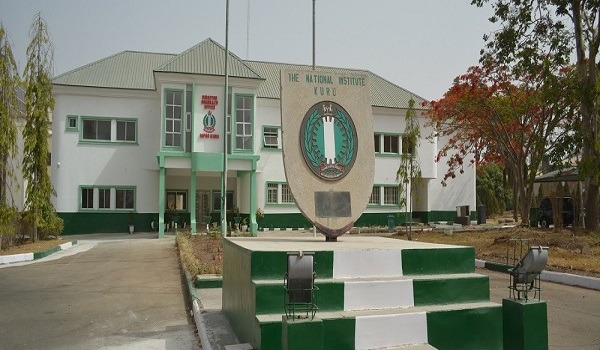
The National Institute for Policy and Strategic Studies (NIPSS) has reiterated its commitment to grooming credible leaders for national development, declaring that it will not succumb to what it described as blackmail by students unwilling to abide by the Institute’s rules.
In a statement on Sunday, Head of Public Affairs at the Institute, Prof. Sola Adeyanju, reacted to a media report linked to a student identified simply as Yeshua, describing it as an attempt to discredit the institution.
Adeyanju noted that a petition allegedly sent to the President but instead published in the media contained claims of intimidation, which he dismissed as baseless. He maintained that NIPSS remains focused on its core mandate of training top decision-makers and policy-makers across the public and private sectors.
As Nigeria’s foremost policy think tank, NIPSS is mandated to build leaders who are effective, ethical, and capable of making sound decisions in their organisations and for the country,” he stated.
As Nigeria’s foremost policy think tank, NIPSS is mandated to build leaders who are effective, ethical, and capable of making sound decisions in their organisations and for the country,” he stated.
He said, “In doing this, it has set some parameters along the lines of discipline, time management, emotional intelligence, respect for rules and regulations, respect for other people’s rights, and many more. Those who have passed through the National Institute trainings, particularly the Senior Executive Course, leading to the award of the Member of the National Institute (mni), will attest to this.
The performance of the products of the National Institute has been acknowledged in Nigeria and around the world; that is in addition to its cutting-edge, top-notch research results for national development. It has not, at any time, been found wanting in the discharge of all its mandates and obligations.
This is the 47th Course and the graduates with mni are always proud and happy to raise their shoulders high wherever they find themselves for the level of moulding they have received from the National Institute.
Coming to the specific issue of Mal Yushau, it is a case of someone who would not allow himself to be subjected to constituted authorities in the Institute. One of the cardinal rules of the National Institute is to keep whatever is discussed within, particularly during plenary, confidential.
This is a rule that all participants have signed to uphold. It is modelled along the Chatham House Rule. The essence is to give all our resource persons the freedom of intellectual and academic independence to speak their minds. Whatever will be published should be after the course is concluded. In fact, some process their Individual Research Projects into books, with approval from the Management.
However, Mr Yushau, being a PR and media person, violated this rule by publishing what transpired in the Institute. He got it wrong by insinuating that he meant well. The truth is, the content is immaterial; the act of publishing when you are not supposed to is what matters.
Mr Yushau knows very well that he signed the document where he promised to abide by this rule. Upon violation, he was queried and he responded by apologising. Thereafter, he was warned that it should never happen again.
However, it did not take Mr Yushau long before re-violating the same rule he was warned about. He published another story on the theme of the study given to the Senior Executive Participants of SEC 47, 2025, and NIPSS, which he belonged to, using his byline.
The study is still ongoing and should not, by any imagination, be published, in part or full, until the Course is over. This is in flagrant violation of the rules for which he was appropriately queried for the second time.
‘However, instead of replying to the query accordingly, Mr Yushau threw caution to the wind and decided to lecture and threaten the National Institute on the inappropriateness of issuing him a query. This he did in bad faith. Let us reiterate that the cheap blackmail of saying the content was to support Mr President on his agenda cannot hold.
We are all working towards the success of Mr President, as exemplified in the many detailed research and other activities of the Institute being submitted to Mr President from time to time.
Nevertheless, being an orderly and law-abiding Institution, with a reputation built over the years with a clear and known ethos and standards, Mr Yushau was given a suspension for six weeks, after receiving the second query for the same offence. He was still serving the suspension when he sent a letter of complaint to the media, insinuating bullying.
We need to stress here that all we asked Mr Yushau to do is obey laid down rules and regulations, and this is not tantamount to bullying in whatever way. The newspaper did a story on this, and the Director General gave a detailed response.
“As if that was not enough, his case is still being considered, as he has been invited by the Disciplinary Committee set up by the Management to look into his case and give him a fair hearing when he decided to publish (again) a petition meant for Mr President in the media. One would have thought that a petition meant for Mr President would be submitted in his office.
We are aware that he has been going from one media house to another in order to blackmail the National Institute. This is counterproductive, as the National Institute will not subject itself to blackmail by a candidate who refuses to obey simple rules and regulations.
“The National Institute, in line with the dreams of its founding fathers, many of whom are still alive, will not reduce the standard of producing decent, courteous, sound and effective leaders for the country. Let us say here that Mr Yushau is using his affiliation with the media for a negative cause.
Contrary to his claims, he is actually trying to denigrate the very National think tank, which is the pride of Nigeria, for his selfish end. That Mr Yushau’s nomination came from the Nigerian Institute of Public Relations, NIPR (an organisation we are all proud of) speaks volumes.
He has not demonstrated the very tenet of public relations, as he has not only let himself down professionally, but he has let his nominating agency down. We are looking for leaders with emotional intelligence, not those who will betray his or her temperament when faced with the issue of discipline.
Without prejudice to the outcome of his letter to Mr President, let it be on record that the NIPR has also set up a panel of inquiry to look into his case. The questions Mr Yushau should ask himself are: how many participants are in his Course, and how many of them have been queried twice within two months? For the benefit of doubt, there are 96 of them, and he is the only one who has gotten two queries.
We leave this to the general public to judge. In conclusion, the Disciplinary Committee set up to look into his case has submitted its report to Management, and the six-week suspension has not lapsed, so we await the verdict of Management on his case. Until then, we want to thank all our media organisations for holding on to the truth.”
Nation







News
Kano Allocates N27.8bn for ICT, CBT Centres Across 44 LGAs
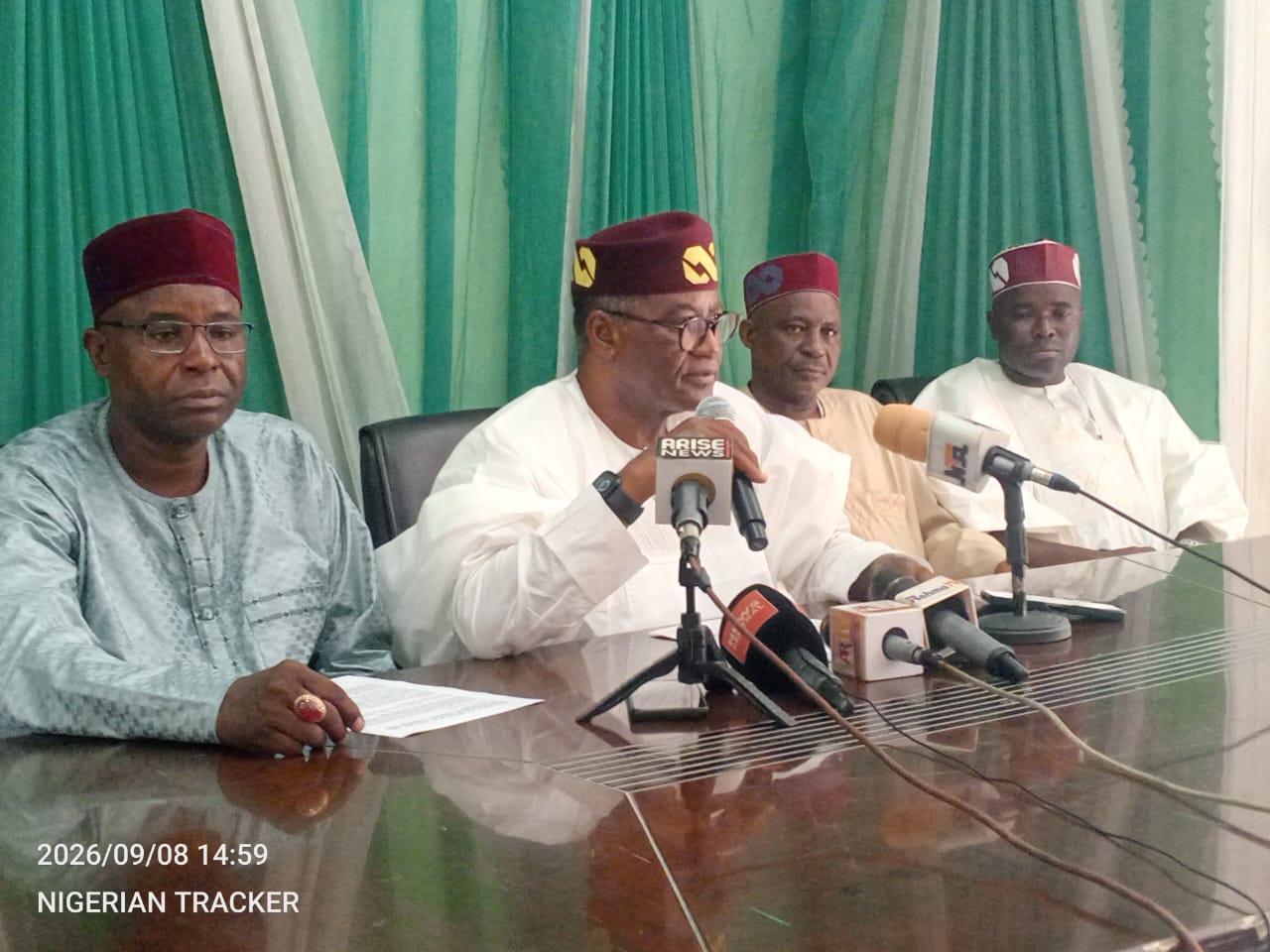
The Kano State Government has earmarked N27.806 billion for the establishment of Information and Communication Technology (ICT) and Computer-Based Test (CBT) centres across the state’s 44 Local Government Areas (LGAs).
The Commissioner for Local Government and Chieftaincy Affairs, Muhammad Tajuddin Uthman, disclosed this while addressing journalists at the Kano Press Centre, where he outlined a number of initiatives being undertaken by the government to improve security, education, healthcare and access to technology across the state.
Uthman said the proposed ICT and CBT centres would be established in each of the 44 LGAs to provide residents, particularly students, with access to computers and digital examination facilities without having to travel long distances to Kano metropolis.
The commissioner explained that the initiative was designed to address the difficulties faced by students from rural communities who are required to travel to the state capital to sit for examinations conducted electronically.
According to him, the government considers the establishment of the centres necessary because examinations and other important services are increasingly moving online, making access to computers and reliable internet-enabled facilities essential for students and other members of the public.
Uthman cited areas such as Dambatta and Gaya as examples of communities where students sometimes have to travel to Kano to access CBT facilities, stressing that the new centres would bring such services closer to the people.
He said the centres would not be restricted to examinations, as residents of the respective LGAs would also have opportunities to use the computers and other facilities for various digital activities, thereby improving their digital literacy and access to online services.
The commissioner disclosed that each of the proposed centres would have three compartments, with each compartment designed to accommodate 100 students at a time, giving each centre a total capacity of 300 students.
Uthman further stated that each centre would be equipped with 300 computers to ensure that a large number of candidates could participate in computer-based examinations and other digital activities simultaneously.
He explained that the government was also making provisions for uninterrupted power supply at the centres, with electricity expected to be supported through the Kano Electricity Distribution Company (KEDCO), generators and solar-powered systems.
According to him, the centres would operate on a 24-hour basis to maximise their usefulness and ensure that students, residents and other users could access the facilities beyond conventional working hours.
Uthman said users would be required to pay affordable charges for some of the services provided at the centres, explaining that the fees would help sustain the facilities, maintain the equipment and ensure that the centres remain functional after their establishment.
On security, the commissioner said the state government was strengthening existing security arrangements in the 44 LGAs through additional measures, including the deployment of forest guards to areas where insecurity has been identified as a challenge.
Uthman said the additional security arrangements were aimed at improving rapid response to security threats and enhancing the safety of residents, particularly in local government areas and communities considered vulnerable to attacks.
He further disclosed that military bases would be established in strategic locations across the state as part of measures to strengthen security and improve the government’s ability to respond quickly to emerging threats.
The commissioner said the government was determined to ensure that security challenges did not prevent residents in rural communities from accessing government services, education, healthcare and other opportunities.
On healthcare, Uthman announced plans to provide a rural emergency ambulance for wards across the state’s 44 LGAs as part of efforts to improve access to emergency and basic healthcare services for people living in rural communities.
He explained that the ambulances would be designed specifically for rural environments and would help transport patients requiring urgent medical attention from remote communities to appropriate healthcare facilities.
According to the commissioner, the ambulances would be in the form of tricycles adapted for emergency medical transportation, making them suitable for communities and roads where conventional ambulances may experience difficulties.
Uthman added that each ambulance would have two drivers assigned to it to ensure availability and continuity of service, while qualified drivers would be recruited by the government to operate the vehicles.
He said the rural ambulance programme was specifically intended to bring emergency healthcare closer to rural dwellers and reduce delays in transporting patients to health facilities.
The commissioner also disclosed plans to establish electric vehicle charging points in the metropolitan area as part of the government’s efforts to promote cheaper and more sustainable transportation.
Uthman said the charging infrastructure would support users of electric motorcycles and electric tricycles and would make it easier for residents to adopt electric vehicles as an alternative means of transportation.
He explained that increasing access to charging facilities would contribute to reducing the cost of transportation for residents while also supporting the state’s transition towards cleaner energy-powered mobility.
The commissioner commended Abba Bichi for his contribution towards the provision of solar-powered facilities, describing such initiatives as important to the state’s efforts to expand access to reliable and alternative sources of electricity.
Uthman also said the state government would continue its efforts to revive entrepreneurship, stressing that the development of small businesses and self-employment opportunities remained an important part of its strategy for improving livelihoods and economic opportunities for residents.
He said the various initiatives in ICT, healthcare, security, renewable energy and entrepreneurship were aimed at bringing government services and opportunities closer to residents across the 44 LGAs, particularly those living in rural communities.
News
Governor Yusuf celebrates Abdulmumin Jibrin Kofa at 50
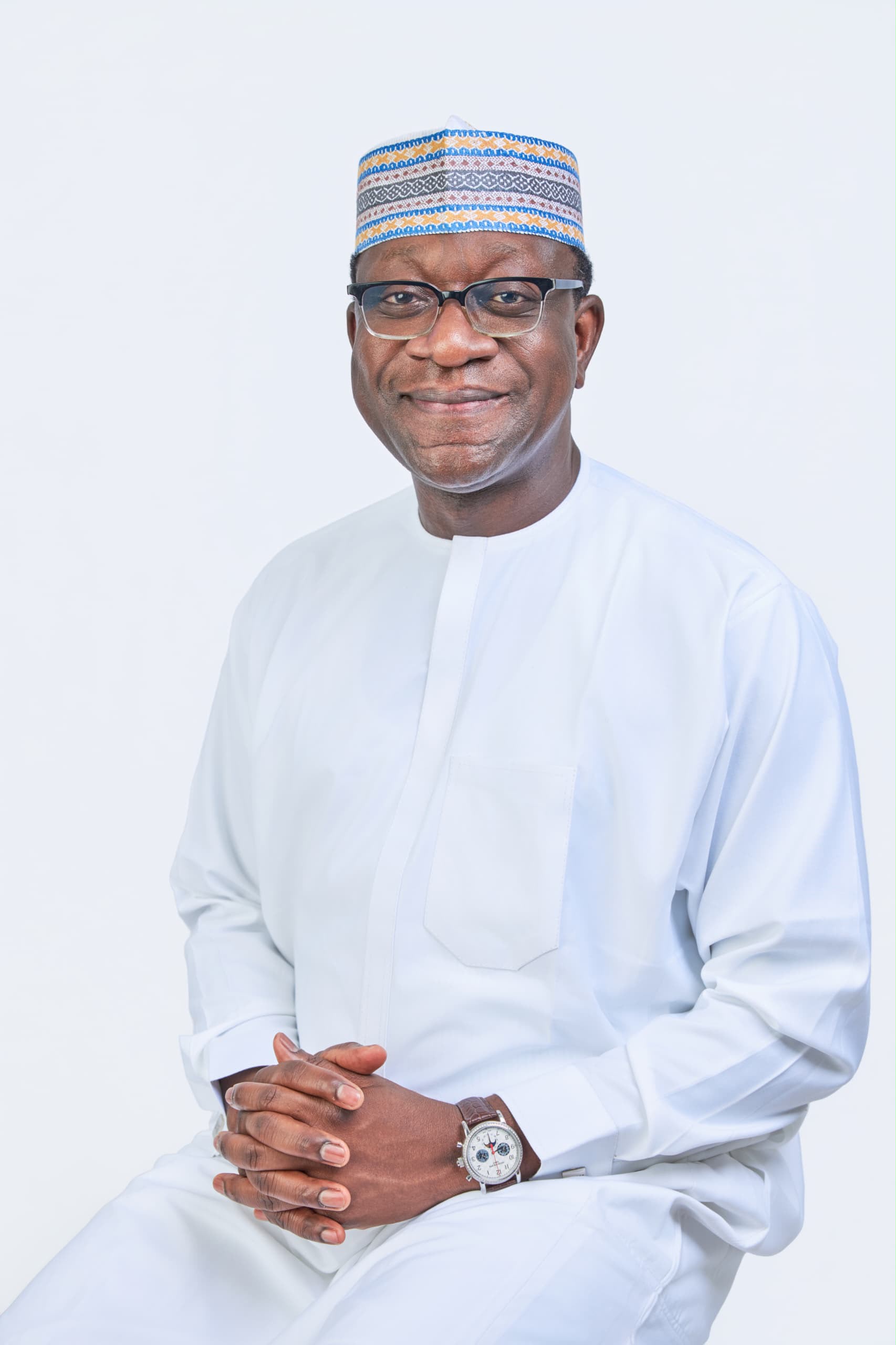
Kano State Governor, Alhaji Abba Kabir Yusuf, has congratulated the member representing Kiru/Bebeji Federal Constituency in the House of Representatives, Hon. Dr. Abdulmumin Jibrin Kofa, on his 50th birthday.
This was contained in a statement issued by the governor’s spokesman, Sunusi Bature Dawakin Tofa, on Monday.
Governor Yusuf described Kofa as a distinguished son of Kano whose contributions to his constituency, the state and Nigeria have earned him recognition and commendation.
The Governor praised Kofa for his outstanding performance in the National Assembly, where he has served in several key capacities, including Chairman of the Committees on Finance, Appropriations, Transport and Foreign Affairs, and currently Housing and Habitat.
According to Governor Yusuf, Kofa has demonstrated strong legislative capacity through effective representation, advocacy and initiatives aimed at improving the welfare of his constituents.
He also acknowledged Kofa’s contributions to the housing sector and national development during his service at the Federal Housing Authority.
Governor Yusuf commended the lawmaker for his continued focus on grassroots development, particularly through empowerment programmes targeting youths, women, farmers, entrepreneurs and vulnerable members of society.
He said Kofa’s interventions, including provision of working tools, business support, vocational training, educational assistance and agricultural initiatives, have helped create opportunities for many constituents to improve their livelihoods.
“You are a fine lawmaker who has demonstrated effective representation of your people. Your empowerment and human development initiatives for the people of Kiru/Bebeji Federal Constituency are remarkable and worthy of emulation,” the Governor said.
Governor Yusuf further described Kofa as a public servant who has combined legislative responsibilities with direct engagement with the grassroots, ensuring that the concerns and needs of his constituents receive attention.
He noted that Kofa’s experience as a businessman, lecturer, public servant and legislator has enabled him to make meaningful contributions to national discussions and issues affecting Kano State.
“Having attained so much at 50, Kano State is proud of you and appreciates your contributions to the development of our state and country,” Governor Yusuf said.
The Governor wished Dr. Abdulmumin Jibrin Kofa many more years of good health, happiness and success, while praying that Almighty Allah grants him the wisdom and strength to continue serving humanity.
He also prayed for greater opportunities for the celebrant to contribute to the growth and development of Kano State and Nigeria.
News
JUST IN: El-rufai’s Family Issues 7-day Ultimatum for Defence Minister to Retract Comment on Violence
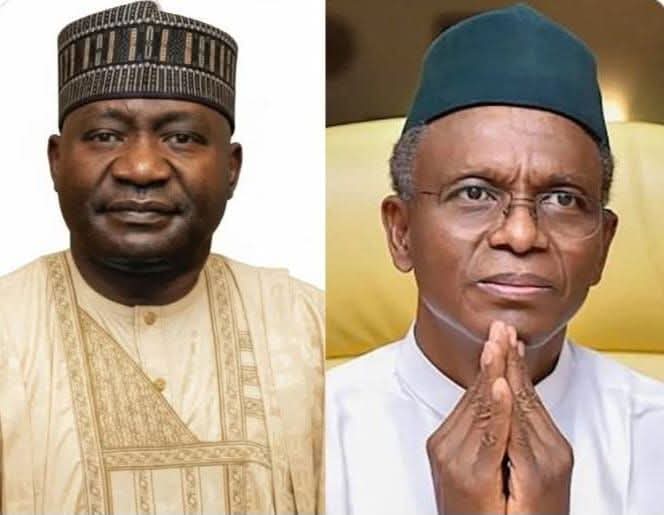
By Yusuf Danjuma Yunusa
Former Minister of the Federal Capital Territory (FCT), Mallam Nasir Ahmad El-Rufai, has issued a seven-day ultimatum to the Minister of Defence, General Christopher Musa (rtd.), to provide evidence backing an allegation that El-Rufai planned killings in Southern Kaduna or publicly retract the claim.
Musa had accused the former governor of taking actions that deepened divisions and contributed to insecurity in Kaduna State during his administration between 2015 and 2023.
The minister, on Channels TV’s Politics Today, described the situation in the state during El-Rufai’s tenure as “toxic”, arguing that residents of Southern Kaduna remained unhappy with the former governor over the killings recorded in the area during his administration.
“El-Rufai did a lot of terrible things in Kaduna State. He divided the state into two. In that, if you are from the south, you cannot go to the north to live,” Musa had said during the interview.
When Musa was asked whether the people of Southern Kaduna were still unhappy with the former governor, he said, “If there is anything worse than unhappy. We can never be happy with somebody who has deliberately planned for the killing of our people.”
He also accused El-Rufai of ordering the demolition of houses belonging to people with whom he had personal disagreements.
But in a statement issued on his behalf by his family, the former governor denied the allegation and demanded retraction.
The statement signed by Hon. Mohammed Bello El-Rufai, eldest son of the former governor, said it was seriously concerned by comments made by the Defence Minister during a live edition of Politics Today on Channels Television on September 3.
The family described the allegation as grave and said it was made without the presentation of evidence to substantiate the claim.
“While General Musa (Rtd.) is entitled to hold and express his personal opinions, the El-Rufai family is equally entitled to demand that such serious allegations be substantiated with credible evidence,” the statement said.
The family therefore called on the Defence Minister to publicly retract the allegation through the same medium on which it was made.
“The family of Mallam Nasir Ahmad El-Rufai, the former Minister of the Federal Capital Territory (FCT), former Governor of Kaduna State and Opposition Leader of the African Democratic Congress (ADC), has noted with serious concern the allegations made by General Christopher Musa (Rtd.), Minister of Defence, on 3 September 2026 during a live television broadcast of Politics Today on Channels Television. During the programme, General Musa alleged that Mallam Nasir El-Rufai actively planned killings in Southern Kaduna while serving as Governor of Kaduna State.”
“This grave allegation was made without the presentation of any evidence in support of the claim. While General Musa (Rtd.) is entitled to hold and express his personal opinions, the El-Rufai family is equally entitled to demand that such serious allegations be substantiated with credible evidence.
“In the absence of such evidence, we call on him to publicly retract the allegation through the same medium on which it was made. Accordingly, General Musa (Rtd.) is hereby given seven (7) days from the date of this statement to either provide evidence in support of his allegation or issue a full public retraction and apology.
“Failure to do so will leave the family with no option but to pursue all appropriate legal remedies available under the law in response to these unsubstantiated allegations.”
El-Rufai, who previously served as FCT minister and Kaduna State governor, is currently an opposition leader of the African Democratic Congress (ADC).

Kano Allocates N27.8bn for ICT, CBT Centres Across 44 LGAs

Governor Yusuf celebrates Abdulmumin Jibrin Kofa at 50

JUST IN: El-rufai’s Family Issues 7-day Ultimatum for Defence Minister to Retract Comment on Violence

Kano Chemists Threaten Warning Strike Over Alleged PCN Pressure

Why Pantami Should Not Be Trusted With The Governance Of Gombe

From World’s 9th Most Populous City to Perfect: As Gov Yusuf Revisits Kano Master Plan

95% of Governor Abba Kabir Yusuf’s Promises Have Been Fulfilled — CPS Interview By Musa Diso, In Kano

Kano Islamic Scholar Declares Kano Widow Marriage Programme ‘Haram’, Urges Government to Stop It

We’re aware of your clandestine meetings with Lulu-Briggs, 𝐏𝐢𝐝𝐨𝐦𝐬𝐨𝐧, CRP uncovers ex-MD of NDDC, Nunieh

Between Sabotage and Scepticism: Why Nigeria’s Oil Dream Keeps Stalling
Kano Allocates N27.8bn for ICT, CBT Centres Across 44 LGAs
Governor Yusuf celebrates Abdulmumin Jibrin Kofa at 50
JUST IN: El-rufai’s Family Issues 7-day Ultimatum for Defence Minister to Retract Comment on Violence
Kano Chemists Threaten Warning Strike Over Alleged PCN Pressure
Why Pantami Should Not Be Trusted With The Governance Of Gombe
From World’s 9th Most Populous City to Perfect: As Gov Yusuf Revisits Kano Master Plan
95% of Governor Abba Kabir Yusuf’s Promises Have Been Fulfilled — CPS Interview By Musa Diso, In Kano
Kano Islamic Scholar Declares Kano Widow Marriage Programme ‘Haram’, Urges Government to Stop It
We’re aware of your clandestine meetings with Lulu-Briggs, 𝐏𝐢𝐝𝐨𝐦𝐬𝐨𝐧, CRP uncovers ex-MD of NDDC, Nunieh
Between Sabotage and Scepticism: Why Nigeria’s Oil Dream Keeps Stalling
-

 Opinion5 years ago
On The Kano Flyovers And Public Perception
-

 Features5 years ago
How I Became A Multimillionaire In Nigeria – Hadiza Gabon
-

 Opinion6 years ago
Kano As future Headquarters Of Poverty In Nigeria
-

 History5 years ago
Sheikh Adam Abdullahi Al-Ilory (1917-1992):Nigeria’s Islamic Scholar Who Wrote Over 100 Books And Journals
-

 Opinion5 years ago
My First Encounter with Nasiru Gawuna, the Humble Deputy Governor
-

 History5 years ago
The History Of Borno State Governor Professor Babagana Umara Zulum
-

 History5 years ago
The Origin Of “Mammy Market” In Army Barracks (Mammy Ochefu)
-

 News4 years ago
Federal University Of Technology Babura To Commence Academic Activities September