
News
Ghost contractors, rogue lawmaker and abandoned projects threaten education in Kano public schools
By Hafsat Bello Bahara
MANY rural schools in Kano state face dire conditions, with crumbling structures and inadequate furniture. However, this is not the only concern. The lives of the students are equally at risk due to the absence of perimeter fencing. Added to these concerns are the risk of kidnapping and a spike in the incidence of sexual assault, particularly on female students.
In dealing with these challenges, the state government initiated projects to build sturdy fencing and renovate classrooms and other measures in schools in the state. Among these projects, through the ministries of education and works and infrastructure, the government approved the construction of new classroom blocks and renovation of existing classrooms in Dawakin Tofa, Dambatta, Albasu, Nasarawa, Dawakin Kudu and Warawa local government areas in the 2020, 2021 and 2022 budget.
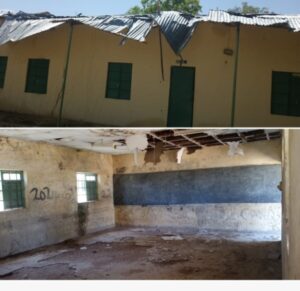
Albasu
Contract award information obtained from the Kano state public procurement website revealed that these projects have been awarded and funds released. All the projects have been tagged as 100 per cent completed.
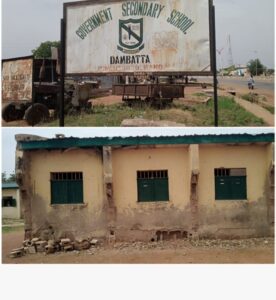
Government secondary school Dambatta
However, investigations revealed that some contractors have not fulfilled their tasks, leaving students in unsafe conditions, Hafsah Bello Bahara reports.
As the car came to a screeching halt, the driver barely managed to stop hitting the 10-year-old girl who dashed in front of him with no warning. She shut her eyes, frozen in fright, in the middle of the road as the driver corrected his course and sped away, spewing insults at her for being so careless. The girl was in tears as her friends led her away from the road and back into the classroom.
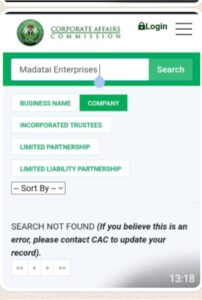
CAC
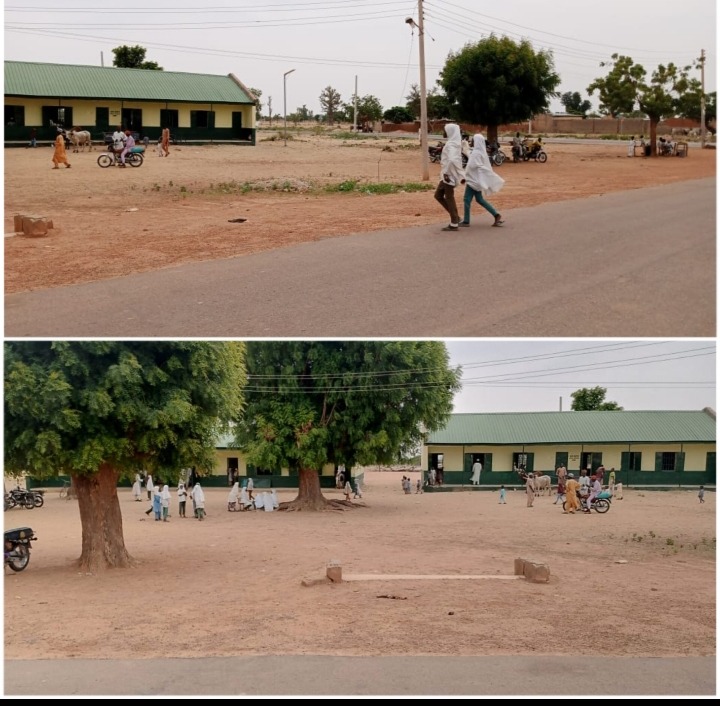
This time, by sheer luck, an accident was avoided but the pupils of Ganduje Nomadic Primary School will always be in danger of being in a similar situation as long as there is no fence surrounding their school.
Fatima Muhammad, a Basic 5 pupil, the worried sister of Aisha who almost got hit on the road, expressed her fears: “Aisha is my only sister. My parents will never forgive me if something happens to her. I try to keep her away from the road, but she doesn’t listen at all,” she said.
Fatima tearfully revealed that her mother was against sending young Aisha to school because of the road, but their father was convinced that, at 16, Fatima would be able to keep Aisha out of trouble. Unfortunately, her best efforts are proving inadequate.
Ganduje Nomadic Primary School lies next to the highway that connects Dawakin Tofa Local Government Area, LGA, with the Metropolis. It is a fairly new, well-equipped structure in Ganduje village, a small farming community. Residents of Ganduje rely heavily on farming and cattle rearing.
The school was established to give children in the community access to quality education. However, the absence of a fence despite the school has caused parents with young children a lot of concern, thereby restricting their young children who should be enrolled in primary school from attending the school.
According to information from the 2022 Open Contract Data Standard (OCDS) of the Kano State Public Procurement site, the Ministry of Education awarded N15,660,965.17 to AD2 Integrated Technical Nigeria Limited for the construction of a perimeter wall fence around the school.
However, a spot check revealed the project has not been done. During a visit on June 13, the reporter observed the pupils playing close to the road despite the teachers’ best efforts to keep them off the road. Some members of the community rode their noisy motorcycles through the school on their way to their destination while the pupils were playing.
A teacher in the school, who does not want to be named, is greatly concerned about how the lack of fencing affects the education of his young pupils.
“The children don’t pay attention while lessons are going on, they like looking at all the cars passing on the road. And that is not the only concern. Without a fence the safety of the students is at risk, they run onto the road while playing. Thank God there has never been a casualty but, still, with the state of insecurity we live in, we don’t have control over the students’ movement. Once the bell rings, some of them sneak out without permission.”
“The contractor came to measure the place and even brought some equipment. We were so happy the wall would finally be constructed but he never came back again. We don’t know what went wrong but we are still hopeful the wall will be completed someday”.
Malam Bello is a Nomad whose only child, Garba, used to be enrolled in Primary 3 at Ganduje Nomadic Primary School, but his father revealed to this reporter why he pulled him out of school.
“They came and convinced us to let our children attend school but they don’t teach them anything, I have over 50 heads of cattle to take care of and Garba is my only male child so he needs to learn the family business, but I let him go to school and then people kept telling me they saw him with his friends running around in the bush or at the motor park causing mischief. That is why I removed him from the school, if he is going to sneak around anyway, it’s better to run after the cattle”
Bello is not the only parent that expressed concern. Habibu Tukur has a tire patching business a stone’s throw away from the school. He had this to say.
“The cars and bikes that pass by are always speeding and the children are always running around by the road. I have to keep chasing them away. Just a month back, one boy was almost hit by a bus I was the one that rescued him. They really need to fence the school because children don’t listen no matter how many times you tell them not to go near the road.”
The contract award information published on the Kano public procurement site indicates the job included the construction of a perimeter wall fence, gate and gatehouse. The bill of quantity specifies that the contractor is supposed to construct a 439.60M × 300 M perimeter wall fence, an entrance gate and a gatehouse as well as fix barbed wire across the fence.
The reporter went around the entire school premises, but there was no sign of work being done; the foundation has not even been dug.
Who is the contractor responsible for the project?
A quick search on the Corporate Affairs Commission (CAC) portal and NGcheck revealed that AD2 Integrated Technical Nig Ltd was registered in November 2015, with an address at 127 Sabuwar Tukur, Opp Fatima Private School, Dutse, Jigawa state. The reporter reached out to a colleague who resides in Dutse to help locate the company at the given address, but it could not be found.
Furthermore, this reporter sent an email to the company’s email address as provided in the Kano OCDS contract award information, but the email bounced back, showing “Address not found, your message wasn’t delivered to binalinig@gmail.com, because the address couldn’t be found, or is unable to receive mail.”
The search revealed the directors of the company are Adamu Dalha and Dalha Abubakar. Online searches for “Engineer Adamu Dalha”, revealed a LinkedIn profile of one “Engr Adamu Dalha” as an employee of the Jigawa State Ministry of Works and Transport.
Further research online showed that there is a previous corruption allegation against the director of AD2 integrated technical services for procurement fraud and direct breach of the civil service law.
It was established that “Engr Adamu Dalha” of AD2 Integrated Technical Services is the same man employed by the Jigawa State Ministry of Works and Transport. Therefore, he is in direct breach of the Fifth Schedule, Section 2 (b) of the 1999 Constitution of the Federal Republic of Nigeria which provides that “without prejudice to the generality of the foregoing paragraph, a public officer shall not, except where he is NOT employed on full-time basis engage or participate in the management or running of any private business, profession or trade, but nothing in this sub-paragraph shall prevent a public officer from engaging in farming.”
The reporter secured Dalha’s phone number from the registration information provided by the National Institution of Civil Engineers. Dalha eventually reached out to the reporter following a series of phone calls and message seeking information. He affirmed he is, indeed, the director of AD2 Integrated Technical Services and when asked about why the contract awarded to his company by the Kano State Ministry of Works, Housing and Transport was not executed, he said he could not help the reporter.
“I am not in the best position to speak on this issue, one of my staff handled the contract directly and he will give you all the information you need,” Dalha said.
He later sent the contact information of one Muhammad Tahir, who explained that the school had called him after the reporter visited to inform him that questions were being asked about the contract. He claimed that work subsequently started on the project and sent pictures to the reporter as proof. When asked why the project was delayed, he said the government did not release the funds for the project on time. The reporter requested evidence of payment, but he has failed to provide it as of the time of filing this report.
Apparently, the contractor had rushed to the site to commence work on the project after being told that a journalist had come around asking questions.
How contract was awarded to non-existent contractor:
A similar situation presented itself in Government Secondary School, GSS, Dambatta, where the Kano State government in 2022 awarded a contract for the renovation of classrooms, construction of additional blocks and supply of students’ furniture to Madatai Enterprises at the sum of N32,062,835.42. However, the project was not executed.
GSS Dambatta serves over 3,000 students for both day and boarding sessions. As such, the non-execution of this project affects the education and well-being of a vast student body.
Based on the bill of quantity obtained from the Kano state public procurement site, the project involved “renovation of Block A&B, renovation of 4 classrooms and library, complete admin block, construction of 6-seater toilet, renovation of a 2-seater toilet, as well as supply of 120 pieces of 3-seater student furniture. All ceilings are to be changed, fix all doors and windows and add all necessary fittings, fix tile floors, replace damaged hardwood, fix all electric fixtures and paint the blocks.”
Jabiru Muhammad Lawan is a product of this school and currently teaches at his alma mater, and he expressed concern about the deplorable condition of the school.
“We have a serious shortage of benches in this school, most of them are broken, and our ceiling is in a tatter, you will be teaching in class and birds will burst out and start flying over your head. How can you expect students to learn in this condition,” he said.
When asked if any renovation has been done recently, Jabiru Muhammad said, “the last renovation done in this school was in 2018. The furniture and painting you see today was done by our old students’ association, they always help us out when we need it.”
He appealed to the government to ensure this project is completed so the students can learn comfortably like their peers who attend private schools.
The reporter observed that the doors and windows in most of the classrooms are broken, and the walls are crumbling. However, for the students of GSS Dambatta, this is not the only concern.
Shu’aibu Hussaini, a SS2 student, spoke of other concerns.
“When it rains, water leaks from the ceiling and drenches us. Our lab equipment is outdated, and we need our hostel to be renovated but what worries me the most is some part of the wall has crumbled, and some people use it to enter the school at will. I don’t feel safe staying here anymore.”
Shu’aibu’s concern about safety is not unfounded, as the insecurity bedevilling this country has affected a lot of students. Some have been kidnapped, while others became casualties of the cruelty of insurgents. At a point, the Kano State government had to close down some of the schools in the outlining areas to ensure student safety.
A search of the CAC showed that Madatai Enterprises is not a registered entity and is ineligible for contract awards under the law.
The award of a contract to Madatai Enterprises, a non-existent contracting company, contravenes Sections 417–424 of the Companies and Allied Matters Act, 2020, which state that “every company must make and deliver their annual returns to the CAC every year”.
It also contravenes Section 16 of the Public Procurement Act 2007. Section 16 Subsection 6(d) states: “All bidders, in addition to requirements contained in any solicitation documents, shall have fulfilled all their obligations to pay taxes, pensions, and social security contributions.
Also, the contract awarding agency contravened Section 31 (4d), of the Kano Public Procurement Law, KPPL, which stipulates that a tender would be rejected if “the bidder is in arrears regarding payment of due taxes, charges, pensions, or social insurance contributions, unless such bidder has obtained a lawful permit with respect to the allowance or difference of such outstanding payments in instalments.”
The sordid tale continues in GGSS Yar gaya
The Government Girls Secondary School, GGSS, Yar gaya, Dawakin Kudu Local Government Area, which was established 30 years ago, serves over 2,000 students. Yet they grapple with inadequate classrooms.
The school had to be divided into morning and afternoon sessions to accommodate the needs of the students as some classrooms are uninhabitable.
The Kano State government awarded the renovation of the other classes to Brixcom Engineering and Consultancy Services in 2019. The date of completion of the project was set at March 30, 2020, yet, more than three years later, the renovation is yet to be completed. A check on the June 21, 2023 revealed the classes in disrepair, with broken windows and a dilapidated ceilings.
During a visit to the school, this reporter observed an abandoned and incomplete structure. The two-classroom block have not reached the lintel level, so the students are not able to use it for learning. The construction of the classrooms was part of a constituency project that started in 2008 during the Ibrahim Shekarau administration that was abandoned, leaving the structure at the mercy of the elements.
Only a single block of classrooms seemed to be in good condition, while the rest were in disrepair, exposing students to poor learning conditions.
Danjuma Ishaq, a product of GSS Yar Gaya decided to come back and teach after he earned his degree but he laments how the quality of education is declining in the school due to an inadequate number of classrooms.
“We had to divide the school into batches because we don’t have enough classes, the ones we are managing are getting worse by the day, but these learning hours are not enough for our students to get the proper education they deserve.”
“There hasn’t been a government project done in this school in all the years I’ve worked here. In 2022 Agile Project helped us renovate three blocks and the principal office but the other blocks are in deplorable condition. The roof is about to cave in, and I fear for the safety of the students.”
The newly renovated classes gleamed with a fresh coat of paint in the early morning sun, a sad contrast to the dilapidated block of classrooms next to it. Many students expressed an interest in studying in the newly renovated classes but sadly not all of them were opportune to learn in the fresh-smelling fully furnished classroom.
The lack of a conducive environment has caused some of the students to stop coming to school. Some of the students this reporter interacted with said that their number keeps dwindling, especially during the afternoon sessions as some of their classmates choose to use their time playing football on the streets rather than come to school, while others cited the time clashes with Islamiyya (Islamic education school) that predominantly holds in the evenings in Kano state as the reason they do not come to school regularly.
Ahmad Jamilu is one of the students whose attendance has worsened ever since the two-shift system was initiated. He told this reporter, “My Islamiyya operates Monday to Wednesday and my parents will never let me miss it. So, I only come to school on Thursday and Friday. I copy notes from my friends, and I do the homework I miss but I am always left behind. I used to be one of the first twenty after exams but in my last results I was the 36th position.”
The situation is even worse in Government Girls Arabic Secondary School (GGASS), Albasu, where there were over 2,000 students but due to the closure of some boarding schools by the Kano State government in 2021 as a result of insecurity, only about 200 students were in attendance when the reporter visited.
This reporter observed that the classrooms are crumbling, there are cracks on the walls, the roof has caved in, and the floor is in tatters.
Yusuf Idris Muhammad, the Vice Principal of the school, said that no renovation has been done in the school other than a single block of classrooms that was renovated by AGILE Project. He said the school fell into further disrepair when it was shut down due to insecurity but when the school was reopened for the use of the students who are indigenes of Albasu local government, they found it difficult to cope because no repairs were done to make this school habitable.
“We are not able to use some of the classrooms because they are uninhabitable and infested by birds and rodents, there are no benches for the students to sit on, and all our lab material for practical have gone bad and we can’t use them anymore.“
Currently, only SS2 and SS3 classes run in the school, which is a critical stage in the secondary school system because of WAEC and JAMB examinations. But with no proper lab equipment and poor condition of infrastructure, the students are not getting the education they deserve.
Muhammad appealed to the government to reopen the school completely so students in the community could get back to school.
“Right now, students in the junior section have to travel far to the neighbouring communities to study, but if the government renovates and reopens the school, we can save their future because with the economic hardship some parents can’t afford to give their children transport for the long journey to Panda to attend school.
The renovation of this school was awarded to Brixcom Engineering and Consultancy services in 2019; however, the project was not done.
How contractor abandoned project halfway
It is not only in GGASS Albasu that Brixcom Engineering and Consultancy services failed to deliver a project. The same fate has been suffered by GSS Kawaji in Nasarawa Local Government. The school is in one of the urban local governments in the state, serving students from Kawaji, Dakata and Bridget.
The renovation of a block of classrooms in GSS Kawaji was captured by the Kano state government in 2019 through the Ministry of Education. However, a spot check revealed the project has been abandoned halfway.
The principal and teachers at the school refused to speak to the reporter regarding the project. However, the principal who refused to give his name, revealed that the renovation began during his tenure in 2020, but it abruptly stopped due to the COVID-19 lockdown and was never resumed.
This reporter observed that the renovations done already need an update three years later, the aluminium roofing sheets fixed on the classes are contorted due to heavy wind and the ceilings in the classrooms have holes in them.
Maryam Lawal is a building and contracting expert. When shown pictures of the current state of the classrooms she said she could not “determine if the contractor did a shoddy job or not without seeing the bill of quantity.”
She continued, “However, I can say there is clear evidence of poor workmanship in this renovation. It looks to me like the contractor just painted the ceilings without changing them and, that is why there are holes already but to be fair this might be due to lack of enough funds. Most contractors, especially those that do government contracts, find it hard to access the funds to do the quality work needed, so they end up having to hire inexperienced labour and use substandard materials.”
The classrooms also lacked benches, so the students have to sit on the cold, hard floor to learn. With the current rainy season, they are sometimes soaked to the bone from sitting on the wet floor which can impact on their health.
Idris Rogo, a renowned educationist from the Department of Education, Bayero University,Kano, said that “lack of proper infrastructure and conducive learning environment has a direct bearing on the performance of a child, this is why we see the mass failure of this children from rural areas in government-sanctioned exams.”
“A child will learn more when he is in a safe environment and has all the facilities he needs to succeed. If the funds dispensed by the government to fix these schools were prudently managed and the project well executed, the renovated schools would provide a conducive learning environment for thousands of pupils in these schools but the deplorable conditions of most public in the state is truly disheartening”
Status of Contractor:
The repair and renovation of GSS Yar Gaya, GSS Kawaji and GGASS Albasu was awarded to Brixcom Engineering and Consultancy services for the sum of 22,834,673.74 on 27/12/2019. The renovation was supposed to be completed in 12 weeks. According to the open contracting document obtained from the Kano state Public Procurement site, 8,474,667.94 was initially paid to the contractor at the beginning of the project out of the 22,834,673.74 budgeted for the project.
A status on the CAC portal revealed the status of the company as inactive. An inactive CAC status could mean a number of things. It could be as a result of the agency not updating a company’s status due to administrative bottlenecks. In that case, that would not be the company’s fault. But it could also mean that it has not been filing returns to CAC, which would be a breach of the law.
Awards of contracts to an inactive company contravenes the Public Procurement Law of 2007, which states that: “A bidder may have its bid or tender excluded if the bidder is in arrears regarding payment of due tax, charges, pensions or social insurance contributions unless such bidders obtain a lawful permit in respect to allowance, the difference of such outstanding payments or payment thereof in installments.”
A search revealed that Brixcom Engineering and Consultancy became a registered entity on 14th April 2016 and the shareholders are Yunusa Adamu Dangwani, a known personality who served as the chief of staff to the Kano state governor in 2011-2012 and also as the commissioner of water resources 2012-2015. Other shareholders include Sani lawan Atana and Hilal Bashir.
The secretary of Brixcom Engineering and Consultancy, Hilal Bashir, in an interview with the reporter claimed to have completed the renovations in GGASS Albasu and GSS Yar gaya, adding that the only project not completed is the renovation of GSS Kawaji, which was halted because the government refused to pay their fees.
Bashir said the current state of the schools despite completing their renovation is due to government oversight.
“When we went to do the renovation, we had specific classes we were supposed to focus on, our contract was not for the entire school so all those dilapidated classrooms you saw in the school were not done by us. The classrooms the government gave us to renovate we did it successfully as per the specifications on the bill of quantity; the main issue we had was the non-completion of payment which is why we stopped without finishing GSS Kawaji, ” he stated.
”The ministry officials came to inspect the projects when we finished and marked it completed, so I don’t know why the people at the school are claiming we didn’t do the projects.”
He speculates that since they did the project during COVID-19 lockdown period, the school was not in session so the teachers and students were not aware of when the renovation was ongoing.
Hilal showed the reporter pictures taken while the company’s staff was carrying out the renovation but when the reporter requested the bill of quantity for the projects, he claimed that years have passed and he no longer has a copy readily available.
Madari, Kano lawmaker awarded contract, claims it’s his donation
In 2019 the Kano state government under the Ministry of Works and Infrastructure awarded the contract for the construction of one block Islamiyya classroom type E in Katarkawa, Warawa LGA to Kwore Nig Ltd at the sum of N6,700,792.56.
A visit to the small village of Katarkawa revealed over 100 students crammed into two small classrooms that were constructed.
The furniture in the classes were engraved “donated by Hon Labaran Abdul Madari.”
A search for the contractor on CAC portal unearthed the beneficial owner of Kwore Nig Ltd was Labaran Abdul Madari, serving law marker representing Warawa LGA in the Kano State House of Assembly since 2007.
An indigene of Warawa, Labaran Abdul Madari has held many principal positions in the State House of Assembly. He served as Chief Whip for three years. His primary responsibility was to ensure due process is followed by members of the House.
The contract was awarded to his company in 2019 when Labaran Abdul Madari was serving as the Majority Leader in the State House of Assembly, a clear violation of the Nigerian constitution that prohibits public officials from engaging in business other than farming.
There is a clear influence by the lawmaker to be awarded this contract by the Ministry of Works and Infrastructure as investigation revealed that his company Kwore Nig Ltd was awarded almost all the contracts for constituency projects carried out in Warawa LGA in 2019.
Clearly, both the contractor and the procuring entity’s actions contravene sections of the law; furthermore, Section 87(1) of the law provides that “any natural person who contravenes any provision of this law commits an offence and is liable on conviction to a term of imprisonment of one to five years or an option of fine from a minimum of N100,000 to N500,000 or both
When our reporter spoke to Madari on the phone, he said that he executed the project and he has no comment regarding breaching the procurement law. He would answer no further questions.
Ministry ignores FOI
A Freedom of Information Act, FOIA, request was written and sent to the ministries of Education and works and Infrastructure on June 26, 2023, seeking an explanation on the non-execution of the projects despite tagging them as completed on official documents and also to get a clear picture of how the contract was awarded to a lawmaker as well as a non-existent company.
The request was acknowledged, but the ministry claimed the FOIA 2011 is a federal law and has not been domesticated in Kano, therefore, they are not liable to comply with the request.
The 1999 Constitution quotes the right to education as a cardinal fundamental human right. However, according to UNICEF, Kano has over 1.5 million out-of-school children; this is a result of lack of access to quality education, especially in rural areas.
There are over 1,000 students in these schools whose future is in jeopardy due to the inability of these companies to complete these projects and the lack of proper oversight by the supervising ministries.
This report republished from Premier Radio is supported by the John D. and Catherine T. MacArthur Foundation and the International Centre for Investigative Reporting (ICIR).











News
ADC Reports Surge in Membership Following Kwankwaso’s Defection, Calls Him ‘Game Changer’
By Yusuf Danjuma Yunusa
The African Democratic Congress (ADC) has officially welcomed former Kano State Governor and 2023 presidential candidate Senator Rabiu Musa Kwankwaso into its fold, touting his defection as a pivotal move that strengthens a growing coalition for political realignment in Nigeria.
In a statement released for immediate effect, the party described Kwankwaso as a “game-changer,” announcing that he has directed his network of supporters nationwide to join the ADC. According to the party, this call has already triggered a significant uptick in registrations on its online platform over the past 24 hours.
The ADC’s National Publicity Secretary, Mallam Bolaji Abdullahi, framed the defection as part of a broader recognition among Nigerians of the need for a credible political alternative. The statement emphasized Kwankwaso’s experience in governance, grassroots influence, and capacity to unify as assets to the party’s ambition to “rebuild Nigeria.”
Notably, the ADC highlighted the presence of several high-profile leaders at the defection event, including the party’s National Chairman, Senator David Mark; National Secretary, Ogbeni Rauf Aregbesola; and leading presidential aspirants such as former Vice President Atiku Abubakar, Mr. Peter Obi, and Rt. Hon. Rotimi Amaechi. Their attendance, the party stated, reflects a united front and growing momentum.
The party characterized the surge in online registrations as evidence that Nigerians are aligning with what it called a “different path forward.” In its appeal to Kwankwaso’s supporters and the broader public, the ADC positioned itself as a vehicle for restoring dignity, opportunity, and public trust in governance.
“Change does not happen by chance,” the statement concluded. “It happens when people come together with purpose.”
The development marks a significant realignment in Nigeria’s opposition political landscape, with the ADC seeking to position itself as a converging point for influential politicians and their followings ahead of future elections.
News
Foreign Affairs Minister Resigns to Pursue Bauchi Governorship Election
By Yusuf Danjuma Yunusa
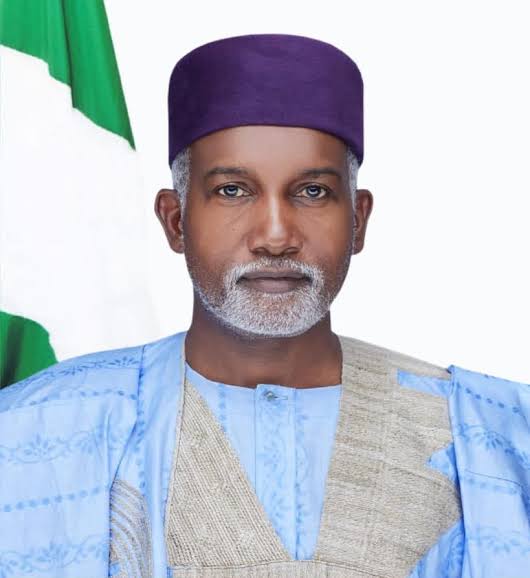
The Minister of Foreign Affairs, Yusuf Maitama Tuggar, has resigned from his position in the administration of President Bola Ahmed Tinubu to pursue the governorship of Bauchi State in the 2027 election.
Tuggar submitted his resignation on Monday, in compliance with a presidential directive requiring all political appointees with electoral ambitions to vacate their posts by the March 31, 2026, deadline.
The directive, issued through the office of the Secretary to the Government of the Federation, George Akume, aligns with Section 88(1) of the Electoral Act, 2026, and the timetable released by the Independent National Electoral Commission (INEC). It affects ministers, advisers, and heads of federal agencies intending to contest in the 2027 general elections.
Reports have it that his resignation positions him to seek the ticket of the All Progressives Congress (APC) for the Bauchi State gubernatorial race.
Tuggar’s entry is expected to significantly reshape the state’s political landscape, intensifying an already competitive contest for the APC nomination. His background as a career diplomat and serving minister is seen by political observers as a potential advantage, offering national visibility and extensive political networks.
With less than 24 hours remaining before the deadline, additional resignations from the Federal Executive Council are anticipated as other appointees move to formalize their electoral ambitions.
News
Kwankwaso Officially Joins ADC
By Yusuf Danjuma Yunusa
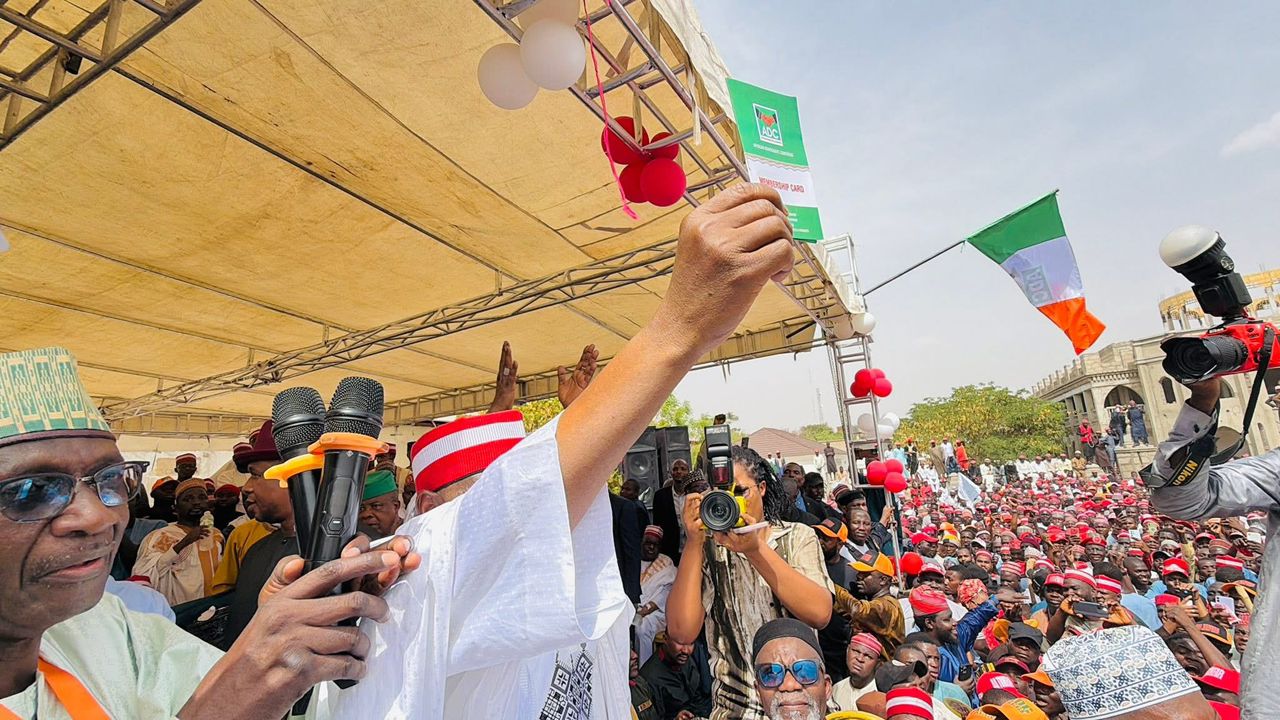
Former presidential candidate of the New Nigeria Peoples Party and ex-Governor of Kano State, Senator Rabiu Kwankwaso, has officially joined the African Democratic Congress.
The former Minister of Defence also registered with the party and received his membership card on Monday at Gidan Kwankwasiyya, Miller Road, Bompai, Kano.
Present at the event include ADC National Chairman and former Senate President, David Mark; former Sokoto State Governor, Senator Aminu Tambuwal; former Minister of Transportation, Rotimi Amaechi; former Labour Party presidential candidate, Peter Obi; Senator Dino Melaye; and former National Chairman of the All Progressives Congress, John Odigie-Oyegun, among others.

ADC Reports Surge in Membership Following Kwankwaso’s Defection, Calls Him ‘Game Changer’

Foreign Affairs Minister Resigns to Pursue Bauchi Governorship Election

Kwankwaso Officially Joins ADC

El-Rufai/Uba Sani And Pantami’s Perceived Peace Of The Graveyard

Defection: Kwankwaso’s Legacy Under Scrutiny; A Critical Look at his Political Journey Since 1999

The Governor Who Chose His People Over His Politics: Abba Yusuf and the Moral Courage Behind Kano First

FREEDOM OF SPEECH, NOT FREEDOM FROM CONSEQUENCE: A CITIZEN’S CALL FOR RESPONSIBLE PUBLIC COMMENTARY
Restoring the Glory That Was Always There: Governor Abba Kabir Yusuf and the Historical Vision Behind Kano First

Tinubu to Swear in Olatunji Disu as Inspector-General of Police on Wednesday

NDLEA Clarifies: Drug Case Against Abba Kyari Still Active After Court Discharge
ADC Reports Surge in Membership Following Kwankwaso’s Defection, Calls Him ‘Game Changer’
Foreign Affairs Minister Resigns to Pursue Bauchi Governorship Election
Kwankwaso Officially Joins ADC
El-Rufai/Uba Sani And Pantami’s Perceived Peace Of The Graveyard
Defection: Kwankwaso’s Legacy Under Scrutiny; A Critical Look at his Political Journey Since 1999
The Governor Who Chose His People Over His Politics: Abba Yusuf and the Moral Courage Behind Kano First
FREEDOM OF SPEECH, NOT FREEDOM FROM CONSEQUENCE: A CITIZEN’S CALL FOR RESPONSIBLE PUBLIC COMMENTARY
Restoring the Glory That Was Always There: Governor Abba Kabir Yusuf and the Historical Vision Behind Kano First
Tinubu to Swear in Olatunji Disu as Inspector-General of Police on Wednesday
NDLEA Clarifies: Drug Case Against Abba Kyari Still Active After Court Discharge
-

 Opinion4 years ago
On The Kano Flyovers And Public Perception
-

 Features5 years ago
How I Became A Multimillionaire In Nigeria – Hadiza Gabon
-

 Opinion5 years ago
Kano As future Headquarters Of Poverty In Nigeria
-

 History5 years ago
Sheikh Adam Abdullahi Al-Ilory (1917-1992):Nigeria’s Islamic Scholar Who Wrote Over 100 Books And Journals
-

 Opinion4 years ago
My First Encounter with Nasiru Gawuna, the Humble Deputy Governor
-

 History5 years ago
The Origin Of “Mammy Market” In Army Barracks (Mammy Ochefu)
-

 History4 years ago
The History Of Borno State Governor Professor Babagana Umara Zulum
-

 News4 years ago
Federal University Of Technology Babura To Commence Academic Activities September