
News
10th NASS: Allow democracy to take charge, Group writes Tinubu
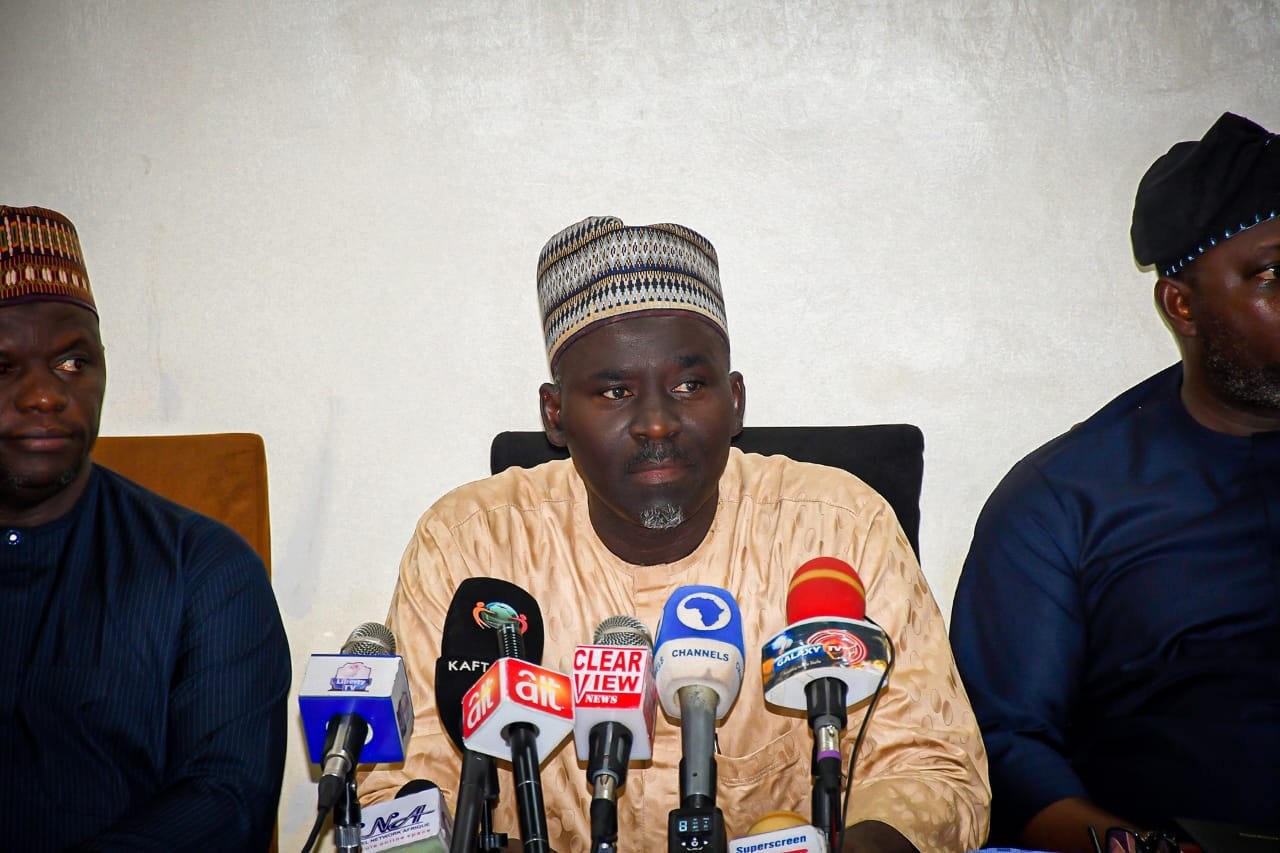
A Northern Nigerian group, Democratic Watch Initiative has written a letter to the president-elect, Asiwaju Bola Ahmed Tinubu demanding his immediate intervention in the process of selecting leadership of the 10th National Assembly, saying that he should allow democracy to take charge in the process.
The group in a letter addressed to the president-elect and signed by its National Coordinator, Dr. Sunusi Umar, said they write the letter to forestall the drift toward greater regional distrust in Nigeria, breach of constitutional democracy, due process of leadership succession through elections and rancor in the 10th Assembly.
They alerted the president-elect to the consequences of falling for the trap of a brewing cabal out to reverse the populist tendencies of his government by whatever means and tactics, saying that his administration should disregard the cabal as they are there to destroy his chances of working perfectly for the country.
The full text of the letter reads below:
His Excellency,
President-elect,
Asiwaju Bola Ahmed Tinubu
Sir,
FALL-OUT OF AREWA HOUSE, KADUNA COLLOQUIUM
We humbly write you with a heart full of praises to the Almighty God for seeing us through a hectic journey to the dawn of a new era promised by your emergence as Nigeria’s next President.
Compelled by the emerging trends in the polity arising from the intervention of the National Working Committee of the All Progressives Congress regarding the leadership of the 10th National Assembly, we convened a one-day colloquium of critical stakeholders at the Arewa House, Kaduna.
After deeply analyzing the situation and assessing cost of the potential complications and unforeseen consequences of the intended intervention of the NWC, the colloquium decided to take the bold but necessary step to address this letter to you in decent patriotism and love of our country, fellow citizens and sustainable democracy.
The letter, Your Excellency, aims to forestall the drift toward greater regional distrust in Nigeria, breach of constitutional democracy, due process of leadership succession through elections and rancor in the 10th Assembly.
This representation is also to alert you to the consequences of falling for the trap of a brewing cabal out to reverse the populist tendencies of your government by whatever means and tactics.
Firstly, we wish to invite your attention, as a renowned committed democrat, to the necessity for inclusive participation, respect for statutory autonomy of such organs of government as the legislature as the only basis for sustainable constitutional democracy.
Constitutional democracy as the antithesis of arbitrary rule, allows all citizens, rather than favored individuals or groups, have the right and opportunity to participate.
This informs our conviction that only a leadership of the National Assembly independently and willingly produced by the members themselves, for themselves, can douse the rising regional tensions and foster strong understanding and cooperation among the elected members.
We are of the view therefore, that the current attempt to impose leaders on people of undoubtful maturity, and proven experience, elected to represent their various constituencies in the incoming 10th National Assembly, amounts to an encroachment on the sanctity of the legislature, subversion of popular will and a negation of the democratic principle of separation of powers between executive, the legislature and the Judiciary.
We find it curious that the leadership of the All Progressives Congress, itself a product of democratic election and which subjected its presidential ticket contest to elections, should now be the same party attempting to manipulate the system to one of selection and imposition.
Having come this far Sir, we feel duty-bound to call your attention to be vigilant as to the political opportunists that are bound to swarm around you with the intent of forming another cabal who are behind this scheme aiming to pitch you against your traditional political friends and sections of the country.
Everyone must be aware by now that those pursuing this undemocratic, unconstitutional and unrealistic agenda are not your friends; they are people who did not vote for you nor in anyway supported your emergence as APC candidate nor your eventual victory at the February polls.
What they are doing about the National Assembly leadership is to test the ground for a wider political agenda that aims to diminish your personal populist tendencies and those anticipated in your government.
Your Excellency may recall the incredible promises he made to the North during electioneering at the Arewa House talk show organized by the Northern leaders and elders. No one expects however that you will give to the North what it does not deserve, what we are demanding is a free environment for the exercise of franchise as the only solution to the pervasive communal distrust that is more accentuated in the North.
We believe a free election of leaders of the National Assembly by its own members would put to end the already brewing concerns of marginalization and fear of domination of other geopolitical zones in the North by others.
We submit therefore that if North despite the immense contribution it made towards the victory of the APC at the Presidential election at the expense of fellow candidates from the region does not deserve to be rewarded with the position it rightly demands in the National Assembly, there should be no justification to deny the the right to stand election to the same post.
We finally call Your Excellency to reclaim the people’s confidence in your untainted democratic credentials and commitment to entrenching sustainable democracy, restoring the glory of governance, reclaiming the sanctity of constitutionalism and respect for rule of law by maintaining the balanced and matured neutrality you are famous for.
We are confident that Your Excellency is endowed with ample experience and diplomatic wherewithal to cope with whatever National Assembly leadership may emerge through due democratic process.
Finally Sir, while we repose an enduring faith in your ability and will to change the situation in the country for the better, we pray the Almighty God to increase you in wisdom to be able to accomplish your good intentions for the country.
We pray God to bestow you improved health, protect and guide you as you embark on the task of transforming a country and repositioning the people’s life around security, the economy and social safety.
Yours Faithfully,
Sunusi Umar PhD
National Coordinator









News
Jonathan Urges National Assembly to Overhaul Electoral Litigation Process, Create Specialised Court
By Yusuf Danjuma Yunusa
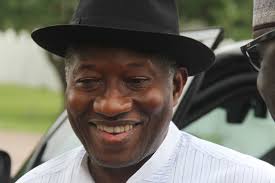
Former President Goodluck Jonathan has called on the National Assembly to overhaul Nigeria’s electoral litigation process by establishing a specialised constitutional court to handle election disputes.
Speaking on Wednesday in Abuja at the 70th birthday and book launch of Senator Gbenga Daniel (APC, Ogun East), Mr. Jonathan argued that a dedicated court would reduce the strain on the political system by resolving election-related cases in a single phase.
He criticised the current three-tier system for governorship disputes—moving from a tribunal to the Court of Appeal and finally to the Supreme Court—as ineffective and unnecessarily prolonged.
Recalling a landmark case from 2011, Jonathan highlighted how technicalities have historically undermined electoral justice. “I remember a particular case where someone lost an election as a governor because the law then stipulated the use of red ink to tick voters’ names,” he said.
“In an entire senatorial district, they were not provided with red pens and used available black or green pens. As a result, those votes were cancelled. The Appeal Court upheld this, even though the lower tribunal felt that a tick is a tick.”
While acknowledging that the National Assembly later amended the law to allow governorship cases to reach the Supreme Court—specifically to prevent such injustices—Jonathan noted that the amendment failed to address the length of the litigation process.
The former president urged Nigeria to draw lessons from Francophone African countries, which employ specialised constitutional courts for political matters. He proposed that if the Supreme Court must remain the final arbiter for governorship elections, the lower tribunal stage should be eliminated entirely.
“I believe the ideal thing to do, which I was considering when I was in office, was to make sure that it’s only one tribunal that listens to any litigation relating to politics. This is done, especially in the Francophone countries in Africa. They have constitutional courts. Anything about elections, only the constitutional courts take decisions,” Jonathan explained.
He also challenged the judiciary to exercise firmness in its rulings, drawing an analogy to football. “Politics is like soccer, and the judges are the referees. If the referee looks the other way, players will break legs or score with their hands,” he added.
News
ADC Defies INEC, Vows to Proceed with Congresses Amid Leadership Crisis
By Yusuf Danjuma Yunusa
Nigeria’s African Democratic Congress (ADC) has declared it will go ahead with its scheduled congresses and national convention, defying the Independent National Electoral Commission’s (INEC) decision to suspend recognition of the party’s leadership.
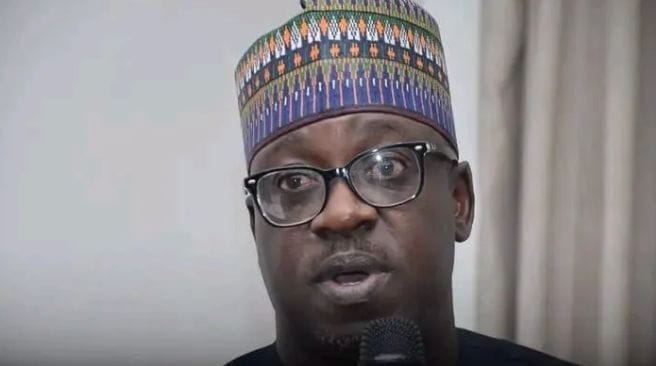
The party’s National Publicity Secretary, Bolaji Abdullahi, insisted that the ADC has fulfilled all legal requirements, having formally notified the electoral body of its planned events.
“We will go ahead with our congresses. We have given INEC 21 days’ notice, they have accepted. Whether they come or not, we will continue with our congresses and our convention,” Abdullahi said during an interview on Arise TV.
His remarks come just days after INEC announced it would withhold recognition of the ADC’s leadership pending the outcome of a court case related to an internal dispute within the party.
The standoff sets the stage for a potential clash between the electoral commission and the opposition party, raising fresh questions about party governance, internal democracy, and the legal limits of INEC’s oversight powers in Nigeria.
News
ADC Rejects INEC’s Ruling Interpretation, Vows to Clarify Contradictions
By Yusuf Danjuma Yunusa
The African Democratic Congress (ADC) has sharply criticized the Independent National Electoral Commission (INEC) over its interpretation of a recent Court of Appeal statement, alleging that the commission has abandoned its neutrality by siding with the federal government.
In a press release issued on Wednesday, the ADC’s National Publicity Secretary, Mallam Bolaji Abdullahi, rejected INEC’s position, describing it as “contradictory and inconsistent with facts.” The party claimed that INEC was acting under pressure from a government it characterized as “jittery” due to the ADC’s growing momentum.
“We reject INEC’s interpretation of the Court of Appeal ruling,” the statement read. “We knew that INEC was being pressured by a government that has become jittery from the ADC’s rising momentum even in the face of its relentless assault on all opposition parties.”
The ADC accused the electoral commission of caving to political pressure, asserting that it has effectively chosen to align with the government against the Nigerian people. The party vowed to publicly clarify what it called the contradictions in INEC’s statement.
According to the release, the ADC is currently reviewing its legal and political options and will announce its next steps in the coming days. The party urged its members and the public to remain steadfast.
“We are currently reviewing our options, and we shall make these known soon. Meanwhile, we call on our members and all Nigerians to remain steadfast as they await further directives,” the statement concluded, adding the slogans: “Nigeria is rising. ADC is rising.”

INEC, David Mark, And Coming Abachaian Coronation
Jonathan Urges National Assembly to Overhaul Electoral Litigation Process, Create Specialised Court

ADC Defies INEC, Vows to Proceed with Congresses Amid Leadership Crisis

ADC Rejects INEC’s Ruling Interpretation, Vows to Clarify Contradictions

ADC Rising: Salga hails influx of political heavyweights as a turning point for justice

Governor Abba Kabir Yusuf Holds Exclusive Prerogative to Choose Deputy – Malam Inuwa Waya

The Governor Who Chose His People Over His Politics: Abba Yusuf and the Moral Courage Behind Kano First
Restoring the Glory That Was Always There: Governor Abba Kabir Yusuf and the Historical Vision Behind Kano First

NDLEA Clarifies: Drug Case Against Abba Kyari Still Active After Court Discharge

Nigeria’s Education Minister Tunji Alausa Weighs Resignation to Run for Lagos Governor
INEC, David Mark, And Coming Abachaian Coronation
Jonathan Urges National Assembly to Overhaul Electoral Litigation Process, Create Specialised Court
ADC Defies INEC, Vows to Proceed with Congresses Amid Leadership Crisis
ADC Rejects INEC’s Ruling Interpretation, Vows to Clarify Contradictions
ADC Rising: Salga hails influx of political heavyweights as a turning point for justice
Governor Abba Kabir Yusuf Holds Exclusive Prerogative to Choose Deputy – Malam Inuwa Waya
The Governor Who Chose His People Over His Politics: Abba Yusuf and the Moral Courage Behind Kano First
Restoring the Glory That Was Always There: Governor Abba Kabir Yusuf and the Historical Vision Behind Kano First
NDLEA Clarifies: Drug Case Against Abba Kyari Still Active After Court Discharge
Nigeria’s Education Minister Tunji Alausa Weighs Resignation to Run for Lagos Governor
-

 Opinion4 years ago
On The Kano Flyovers And Public Perception
-

 Features5 years ago
How I Became A Multimillionaire In Nigeria – Hadiza Gabon
-

 Opinion5 years ago
Kano As future Headquarters Of Poverty In Nigeria
-

 History5 years ago
Sheikh Adam Abdullahi Al-Ilory (1917-1992):Nigeria’s Islamic Scholar Who Wrote Over 100 Books And Journals
-

 Opinion4 years ago
My First Encounter with Nasiru Gawuna, the Humble Deputy Governor
-

 History5 years ago
The Origin Of “Mammy Market” In Army Barracks (Mammy Ochefu)
-

 History4 years ago
The History Of Borno State Governor Professor Babagana Umara Zulum
-

 News4 years ago
Federal University Of Technology Babura To Commence Academic Activities September