
News
Breaking: Gombe Suspends Selection Of New Traditional Ruler Of Tangale
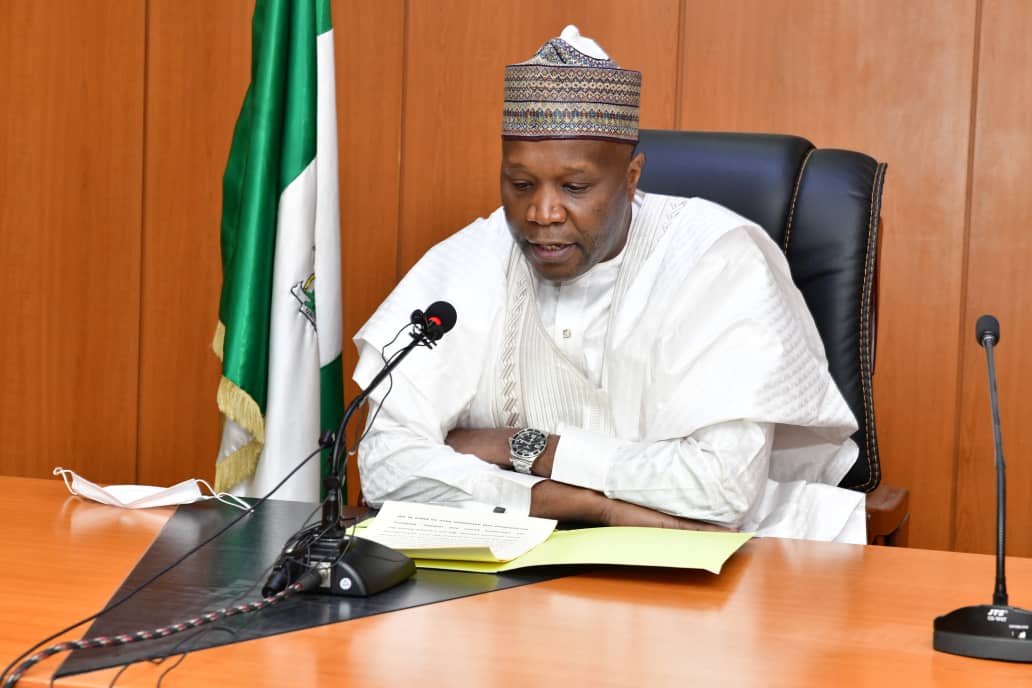
Gombe State Governor, Muhammadu Inuwa Yahaya has suspended all proceedings leading to the selection of a new traditional ruler of Tangale Chiefdom until peace is fully restored to the troubled area which has seen days of violent protests.
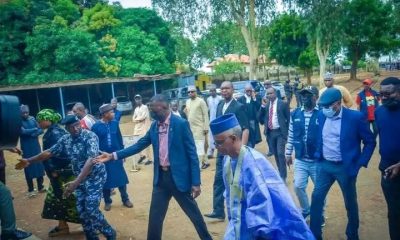
Governor Inuwa Yahaya announced the decision in a statewide broadcast shortly after returning from Billiri where he went to ascertain the extent of damage caused by the violence.
The Governor, on behalf of the Gombe State Government extended his condolences and sympathies to the families of those who lost their lives or properties in the unfortunate incident.
He assured the people of the State that in line with his oath of office, he will do everything within his powers to protect the lives and property of the citizenry.
“We are a people known for our cherished peace and stability. Violence, sectarianism and extremism have no place in our culture and tradition, those conflict merchants who seek to profit from this violence by setting brothers upon brothers, families upon families, and communities upon communities, will soon be made to face the full wrath of the law”.
He recalled that following the demise of His Royal Highness, late Abdu Buba Maisheru II, and in line with established laws and traditions, his administration had set in motion the process for the selection of a new Mai.
The process, he said was transparent and devoid of any interference, leading to the forwarding of three (3) recommended candidates by the Tangale traditional Kingmakers, from among whom his administration will select the one to fill the vacant stool of Mai Tangle as the law provides.
“As Governor, I approached the Mai Tangale succession process with high sense of responsibility because, as part of Gombe State’s cultural tradition, any decision I take will have far reaching implication on not only the Tangale chiefdom but the entire Gombe State”.
This was why the Governor said, his administration would have to undertake widespread consultations, conduct background checks and engage in personal reflection in order to arrive at a decision that is in the best interest of the people and the state.
“Let it be clear that it is within my powers as governor to appoint any of the three recommended candidates to become the new Mai Tangle. Let it also be clear that no official pronouncement was made about any candidate before, during and after the eruption of violence in Billiri Local Government Area”.
He said the violence was orchestrated by some unpatriotic individuals who thought they could blackmail the government into announcing their preferred candidate.
Governor Inuwa Yahaya also made it clear that his administration will never cow into any blackmail, threat, intimidation or witch-hunt from any individual or group no matter how highly placed.
He said, “the people of Gombe State have a history of peaceful coexistence and interrelationship among our various tribes and religions”.
This relationship according to the Governor should not be allowed to suffer because of the selfish interest of some violent minority who seek to turn the succession process into a religious contest.
“The succession battle is a Tangale cum Gombe State affair and all the three recommended candidates are eminently qualified Tangale princes by virtue of their royal ancestry to the Mai Tangale stool”.
He said by history, and in accordance with the constitution of the Federal Republic of Nigeria, religion is not a criteria in selecting the new Mai Tangale or any public officer for that matter.
The Governor said the eruption of violence in Billiri LGA has left his administration with no option than to declare a 24-hour curfew to further stem the spread of violence, loss of lives and destruction of property.
“To this end, Government is withholding any decision on the new Mai Tangale until normalcy returns to the affected communities”.
The Governor noted with dismay the dangerous campaign of incitement and polarization waged by some unscrupulous elements on social media, saying government will vigorously discharge its role of protecting innocent citizens and combating criminality and violence anywhere in Gombe State.
He called on traditional, religious and opinion leaders to prevail on their people on the need to remain calm, peaceful and law abiding.
He equally called on the media to refrain from promoting fake news and other divisive and inciteful narratives, adding that government in collaboration with relevant security agencies has put in place adequate measures to ensure the protection of lives and property of all the people living in Gombe State.
“Our cherished peace and stability in Gombe State is bigger than the selfish interest or ambition of any individual or group”
Governor Inuwa Yahaya used the opportunity to thank the good people of Gombe State and friends across the world for their continued support and prayers, especially in these trying times.
He said his administration will continue to pursue its genuine developmental agenda for the people across all areas of economic and social endeavors.
“We will neither be blackmailed nor distracted from our noble path of maintaining peace, promoting friendly coexistence and delivering democratic dividends to all our people”.
He said the task of providing peace and development in Gombe State is a collective responsibility that all men and women of goodwill should join hands to promote.








News
JUST IN: El-Rufai Detained as Bail Ruling Adjourned to April 14
By Yusuf Danjuma Yunusa
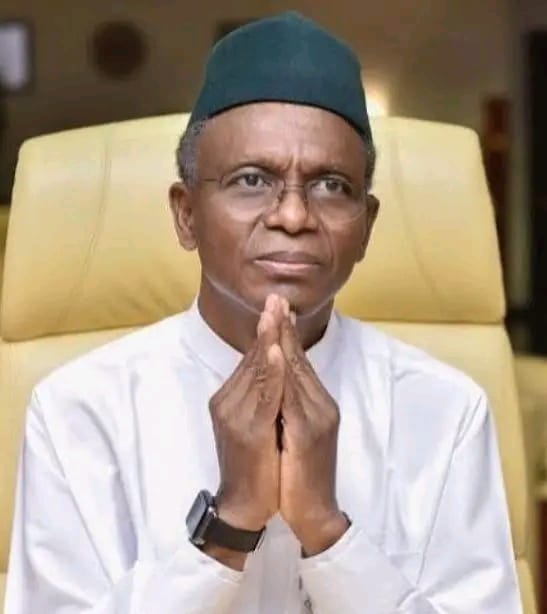
Operatives of the Department of State Services on Wednesday took former Kaduna State governor, Nasir El-Rufai, into custody moments after proceedings at the Federal High Court in Kaduna.
El-Rufai, standing trial over alleged corruption, had just concluded a hearing on his bail application filed by the Independent Corrupt Practices and Other Related Offences Commission when DSS operatives bundled him into a waiting vehicle and drove him away, reportedly heading to Abuja.
A heavy DSS presence around the court before the hearing had fuelled speculation that the former governor might be taken into custody.
Security sources said vehicles had been strategically positioned around the court prior to proceedings.
El-Rufai had arrived at the court at about 9:05 a.m. in a Hilux van, drawing attention from security personnel and observers.
Speaking to journalists after the proceedings, lead defence counsel, Oluwole Iyamu (SAN), confirmed that the court had fixed April 14 for ruling on the bail application.
“The bail application was argued and responded to, and the ruling has been fixed for April 14.
“We look forward to that day. We are hopeful. We have put our arguments before the court, and this is a court of justice.
“We await the decision of the court,” he added.
He also noted that the defence team is prepared for a related case scheduled for April 10 at the Federal High Court in Abuja, describing it as “a separate matter.”
“That is a separate matter. As lawyers, we are ready. We have filed all necessary processes and will be in court. That is the DSS matter,” he said.
News
Court Ends NNPP Crisis, Restores Party Leadership to Founder
The Court of Appeal sitting in Owerri has delivered a decisive judgement in the protracted leadership crisis within the New Nigeria People’s Party (NNPP), affirming Boniface Okechukwu Aniebonam as the recognised leader of the party.
In its ruling, the appellate court set aside an earlier decision of the Abia State High Court in Uzuakoli, which had vacated its previous judgement delivered in favour of the faction led by Aniebonam.
The appellate court held that the lower court erred in granting a motion that effectively reversed its own earlier judgement, thereby upholding all three grounds of appeal filed by the Aniebonam-led faction.
The dispute stems from a November 2024 judgement of the Uzuakoli High Court in Suit No. HUZ/11/2024, which had recognised the Board of Trustees of the NNPP under Aniebonam. However, in June 2025, the same court granted an application that set aside that ruling, following a motion filed by Rabi’u Musa Kwankwaso.
Dissatisfied with the reversal, the Aniebonam faction approached the Court of Appeal in Owerri (Appeal No. CA/OW/271/2025), arguing that the trial judge lacked the jurisdiction to sit on appeal over his own judgement.
Delivering its verdict, the Court of Appeal agreed with the appellants, restoring the earlier judgement and effectively recognising Aniebonam as the legitimate leader of the party he founded in 2001.
Legal representation in the matter saw Onitsha-based senior counsel, Sir Azubike Anazor, appear for Aniebonam, while Abuja-based Eyitayo Fatogun, SAN, represented Kwankwaso.
The NNPP, which fielded Kwankwaso as its presidential candidate in the 2023 general elections, has been embroiled in internal disputes over its leadership structure, with rival factions laying claim to control of the party.
News
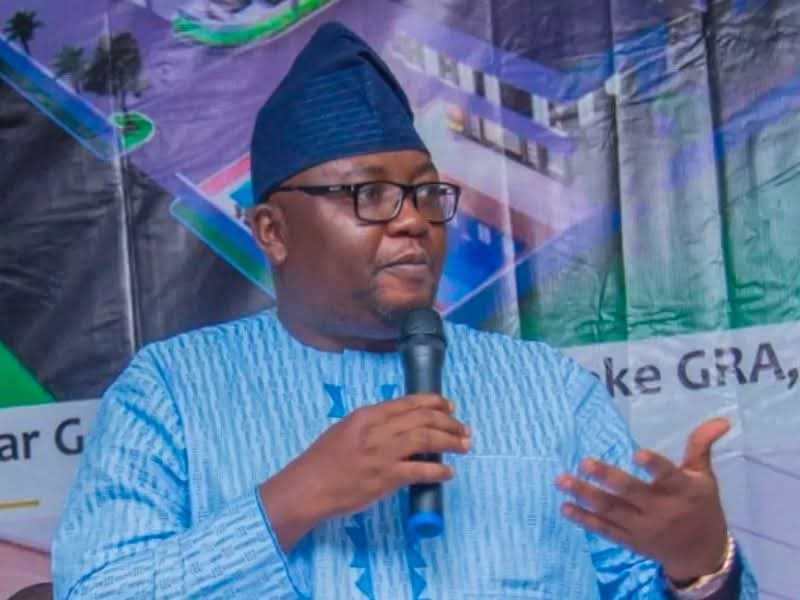
JUST IN: Adelabu Resigns as Power Minister to Pursue Oyo Governorship Bid
By Yusuf Danjuma Yunusa
The Minister of Power, Adebayo Adelabu, has resigned his appointment to focus on his governorship ambition in Oyo State.
Adelabu disclosed this in a resignation letter addressed to the President Bola Ahmed Tinubu on Tuesday, and routed through the Secretary to the Government of the Federation.
In the letter titled “Resignation as Honourable Minister of Power”, Adelabu expressed gratitude to the President for the opportunity to serve in his administration.
He said it was a privilege to contribute to efforts aimed at strengthening Nigeria’s power sector in line with the administration’s Renewed Hope Agenda.
Adelabu added that his decision to step down was to enable him fully pursue his aspiration to contest for the office of Governor of Oyo State.
He noted that the move would allow him to dedicate his time and resources to the political ambition.
The former minister also conveyed his appreciation and respect to the President for the confidence reposed in him during his tenure.

JUST IN: El-Rufai Detained as Bail Ruling Adjourned to April 14

Court Ends NNPP Crisis, Restores Party Leadership to Founder

Why Nura Manu Soro should be APC candidate in Bauchi State come 2027

JUST IN: Adelabu Resigns as Power Minister to Pursue Oyo Governorship Bid

After Kwankwaso Joins ADC, Party Alleges Plot by APC, Senior Lawyers to Force INEC Into Illegal Takeover

The Governor Who Chose His People Over His Politics: Abba Yusuf and the Moral Courage Behind Kano First

Governor Abba Kabir Yusuf Holds Exclusive Prerogative to Choose Deputy – Malam Inuwa Waya
Restoring the Glory That Was Always There: Governor Abba Kabir Yusuf and the Historical Vision Behind Kano First

Tinubu to Swear in Olatunji Disu as Inspector-General of Police on Wednesday

NDLEA Clarifies: Drug Case Against Abba Kyari Still Active After Court Discharge
JUST IN: El-Rufai Detained as Bail Ruling Adjourned to April 14
Court Ends NNPP Crisis, Restores Party Leadership to Founder
Why Nura Manu Soro should be APC candidate in Bauchi State come 2027
JUST IN: Adelabu Resigns as Power Minister to Pursue Oyo Governorship Bid
After Kwankwaso Joins ADC, Party Alleges Plot by APC, Senior Lawyers to Force INEC Into Illegal Takeover
The Governor Who Chose His People Over His Politics: Abba Yusuf and the Moral Courage Behind Kano First
Governor Abba Kabir Yusuf Holds Exclusive Prerogative to Choose Deputy – Malam Inuwa Waya
Restoring the Glory That Was Always There: Governor Abba Kabir Yusuf and the Historical Vision Behind Kano First
Tinubu to Swear in Olatunji Disu as Inspector-General of Police on Wednesday
NDLEA Clarifies: Drug Case Against Abba Kyari Still Active After Court Discharge
-

 Opinion4 years ago
On The Kano Flyovers And Public Perception
-

 Features5 years ago
How I Became A Multimillionaire In Nigeria – Hadiza Gabon
-

 Opinion5 years ago
Kano As future Headquarters Of Poverty In Nigeria
-

 History5 years ago
Sheikh Adam Abdullahi Al-Ilory (1917-1992):Nigeria’s Islamic Scholar Who Wrote Over 100 Books And Journals
-

 Opinion4 years ago
My First Encounter with Nasiru Gawuna, the Humble Deputy Governor
-

 History5 years ago
The Origin Of “Mammy Market” In Army Barracks (Mammy Ochefu)
-

 History4 years ago
The History Of Borno State Governor Professor Babagana Umara Zulum
-

 News4 years ago
Federal University Of Technology Babura To Commence Academic Activities September