
News
Special Report :The Dwindling Reading Culture Among Nigerians, Causes, And Ways to Revive It
By Yusuf Danjuma Yunusa
Reading is undoubtedly the most sophisticated weapon to empowering oneself. Self-discovering can’t be achieved more without inculcating the habit of reading within oneself. It begets education.
But unfortunately, most people in today’s world have little or no interest at all in reading. Rarely do you find people, especially the young ones, reading even as little as a four-paragraph piece with full concentration.
And it’s saddening that the issue is most prevalent among the black people the Africans. The reading culture among Africans, especially Nigerians, has reduced drastically. It should be a thing of great concern because, Malcolm X, the prominent civil rights activist, who said that if anyone should hide anything from a black man, he should put it in a book, would have said worst if he is alive today.
We really should sit back, take a deep breath, and ask ourselves what the prognosis of this dilemma will look like with the next generation. Will the status quo continue, or there is hope of an improvement, or the worst of it is yet to emerge?
Find out with the Nigerian Tracker’s Yusuf Danjuma Yunusa in his engagement with authors, educationists and students:
Authors Give Insights:
An Author, and also an academic lecturing at the Kaduna State University, Audu Haruna Jimoh, was of the opinion that the prices of books actually contribute to people’s lack of interest in reading nowadays:
“Yes, I think the high cost of books affects people’s inclination towards reading.”
“But it is not just about the books themselves, it’s also about the economy of Nigeria,” he added.
Mr. Jimoh buttressed his point stating unequivocally that people’s purchasing power is at its lowest; hence making them shift their priority to feeding which is one of the reasons for lack of interest in the reading culture among Nigerians:
“The high cost of books and the economy of Nigeria have made it unfavorable for people to consider spending their money on things that don’t count for survival.”
When asked if the rise of smartphones could revive reading culture through digital books like e-books, Mr. Jimoh, again, responded that it might only help but can’t solve the problem of reading culture because, the issue at hand is more deeper than accessibility:
“We live in a time when people’s attention is limited to what gives them instant gratification. People are more interested in audio-visuals that are entertaining than informative or educative articles or books.”
He continued, “so it’s not just about digital books. It’s the fact that people’s attention span to reading is low and poor in this time.”
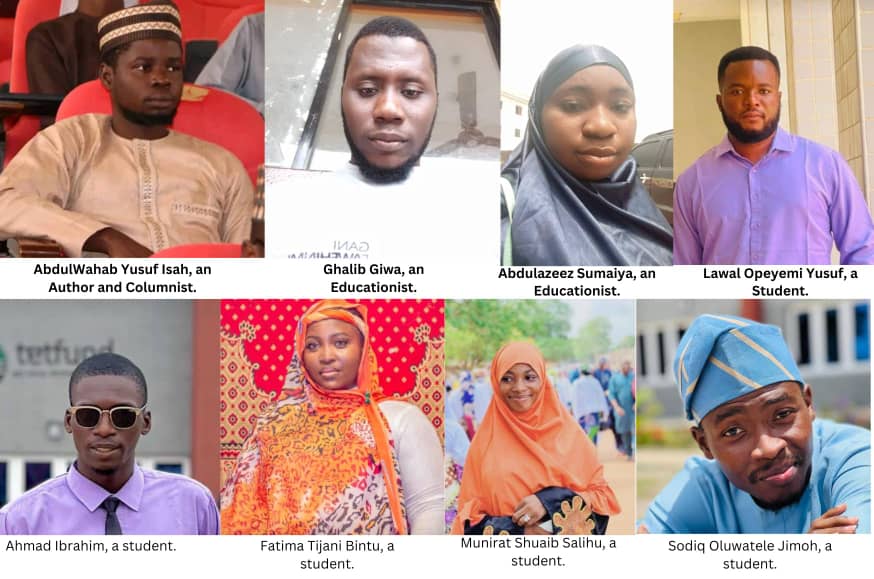
AbdulWahab Yusuf Isah who is also an Author, and a columnist, when asked if the decline in reading culture is a Nigeria thing, responded that the observed decline in reading engagement is not confined to Nigeria alone:
“While Nigeria contends with unique challenges such as economic barriers to book acquisition, the overarching shift in reading behavior is worldwide.”
He went further to stress that there are empirical data from countries across the globe including United States indicating a reduction in recreational reading across various demographics.
From his years of experience as an Author and a columnist, AbdulWahab disclosed that while religious texts, academic and self-help books command the most substantial market share because of the spiritual quest due to the strong religious culture among Nigerians, the challenging socio-economic conditions and personal development for social and economic well-being, their purchases is more of necessity-driven than leisure-oriented.
Educationists Shared Experiences
An educationist, Abdulazeez Sumaiya, revealed that the shift from hardcopy books to digital books has affected students negatively, academically and even medically:
“While I was in school, our lecturers utilized PDFs instead of handouts and it affected my sight severely due to the ray of light from my phone.”
“Also, the inadvertently urge to do other things while reading with phone due to notifications that usually pop in is another setback to students habit for reading with attention,” she added.
Sumaiya further responded to the question of what her take is regarding the schools curriculum if it encourages reading among students:
“If students want to actually read books, the school curriculum is not a problem; it’s absolutely encouraging.”
Another respondent who is also an educationist, Ghalib Giwa, opined that technology has contributed the most to the decline in reading culture among Nigerians than socio-economic factors and educational policies.
“My opinion on this is technology.”
Mr. Giwa also posited that the curriculum which schools are operating with does not actually have a problem with the decline in the reading habit of Nigerians:
“The curriculum actually encourages reading”
He also shared the same view with Sumaiya which says that the shift from hardcopy books to digital books has largely affected students interest for reading:
“Switching from reading to social media while reading is one of the reasons why the opinion for digital books isn’t favourable.”
Students’ Candid Expression
Another category of respondents which is the students, has Lawal Opeyemi Yusuf, a final year student of Business Administration, disclosed that it had been long he read a book that’s not for academic purposes:
“I can’t recall, mostly I read because it’s required for school purposes.”
When asked if he would prefer watching movies or scrolling through social media to reading books, Yusuf responded that he prefers watching movies:
“Watching a movie is like a therapy for me because it calms my mind, especially after spending the whole day studying and reading a course.”
Though he revealed that if he had not been in school, he would have read books for fun, cheaper or not.
Ahmad Ibrahim, also a final year student, couldn’t also recall the last time he read a book that wasn’t for academic purposes:
“It has been a while I read a book that was not for academic purposes; a year ago or two.”
He mentioned that school activities made him stopped reading for fun.
When asked what his preference is among watching movies, scrolling through social media, and reading books, Ahmad responded that he prefers scrolling through social media because he needs to keep himself updated with things happening around the globe:
“It depends on my mood. But I prefer scrolling through social media because I will be able to keep up with what is trending.”
Ahmad recommended that it will be encouraging if reading of books is associated with some sort of incentives or competition.
Another student, Asiya Muhammad, expressed the same view as Ahmad and Yusuf, stating that she couldn’t recall the last time she read a book:
“I honestly can’t recall the last time I read a book.”
Like Ahmad, Asiya also prefers scrolling through social media than reading a book or watching movies. She dejectedly replied ‘No’ when asked if she would read more books for fun if they are for competition, accessible, or more cheaper.
Fatima Tijani Bintu, while responding to the questions, mentioned that despite school activities, she actually read books like novels and poetry during her leisure periods. Like the other students, Fatima prefers scrolling through social media for the same reason as the other students:
“It gives me more connection to the world.”
She was also of the opinion that whether cheap or not, whether associated with competition, incentives or not, she will always read books no matter the circumstance, so far it’s her leisure time:
“Well, yes in every aspect.”
Jimoh Sodiq Oluwatele mentioned that the last time he read a book outside academics was early this year:
“I read an adventure book early this year.”
He also disclosed that he prefers scrolling through social media; citing the same reason as the other students:
“It’s easy for one to stay abreast with all happenings around the world.”
Just like Ahmad, Sodiq recommended that reading of books will probably be fun if it’s associated with prizes and competition, and at cheaper prices.
Salihu Munirat Shuaib also failed to recall the last time he read a book for fun, stating that academic stress is too much to make her engage in such fun for quite a while:
“To be honest, I haven’t read a book for fun in a while.”
“School has taken priority,” she added.
Munirat shared the same preference as other students when asked which she prefers among scrolling through social media, watching movies and reading books:
“Watching movies is more engaging and visually appealing.”
She also suggested that if books were cheaper, and it’s being associated with competition or rewards, she would read more:
“I think I would read more if books were cheaper, matched with rewards and competitions, because they would be affordable, interactive and engaging.”
How Could This Dwindling Culture Be Revived?
To reinvigorate the reading culture among Nigerians, AbdulWahab recommended that a joint effort from the government, schools, and families is needed:
“The government should fund and enforce policies for public and school libraries nationwide. Grants and incentives should also be provided for authors and publishers in order to make affordable culturally relevant books.”
“Schools should revitalize libraries, and also organize literary competition,” he continued.
“Parents should create book-rich home environments and at same time manage screen time. They should revive the habit of reading to their children from an early age,” AbdulWahab added.
On the other hand, Audu Haruna Jimoh opined that the resuscitation of reading behavior among Nigerians is multifaceted. He suggested, firstly, that:
“People’s purchasing power must be fixed so that they can have more money to spend on books.”
Secondly, “children should be made to imbibe the reading culture by making available curated books in different genres which are of the best for them as children.”
Lastly, “reading clubs should also be created within schools for students to compete and make summary of a book they have read.”
Ghalib Giwa was also of the opinion that government, schools and families have roles to play in reviving the culture:
“Government should partner with the online influencers and celebrities who most young people emulate and look up to today to initiate and spread the writing and reading culture.”
“Schools should introduce compulsory book clubs where every student must take part in,” Ghalib continued.
“Parents should entice their children to read at home while they reward them with gifts,” he added.
Lastly, Sumaiya proposed that government should enforce censorship on authors and publishers in the country on the kind of books they write and produce:
“Some authors are fond of writing with bloated grammar that one can not easily understand; that which automatically betrays the essence of communication.”
She also hinted that schools should revitalize libraries with divers texts and make them available for students to lay their hands on.
Sumaiya stressed further to warn parents who do not usually allow their wards to have relaxation after school, stating that it’s part of the psychology of education to allow children relax and satisfied mentally, physically and emotionally before engaging them in reading:
“Parents should feed their children and allow them rest well after school before engaging them in reading and learning. In that way, they will be interested.”
To address this growing habit, the government must create an enabling environment for a reading culture to thrive again, implementing the various strategies suggested by experts. Additionally, schools and parents must work together and collaborate effectively to revive this lost culture in the best way possible.
Perhaps, as Malcolm X once said, “If you want to hide anything from the Black man, put it in a book.” Maybe the tricks of governance have been hidden inside books, and by reviving the reading habit, we will uncover them. This could help curb the apparent breakdown in governance plaguing the country and, in time, make Nigeria a better place to live.
















News
NFF Appoints Eguavoen as Interim Head Coach of Super Falcons

By Yusuf Danjuma Yunusa
Augustine Eguavoen has been appointed the interim head coach of the Super Falcons.
The former Super Eagles head coach will lead the Falcons for their 2028 Olympic Games double-legged qualifier against Comoros in October.
Eguavoen will be assisted by Christopher Danjuma, head coach of Nasarawa Amazons, alongside a supporting cast that includes Ayisat Yusuf, a former Super Falcons defender; Olatunji Baruwa, former Super Eagles goalkeeper trainer.
The Falcons will kick off their Olympic qualifying campaign in the second round against Comoros, with both legs taking place at the Remo Stars Stadium in Ikenne-Remo on October 9 and 13.
Nigeria had received a bye into the second round as one of the top-ranked teams, while Comoros qualified after a 30-0 aggregate victory over Sudan.
Falcons must navigate four rounds of two-legged knockout ties to secure of Africa’s two slots for the women’s football event at the Olympics. A win over Comoros will advance the team to the third round in early 2027 to face either DR Congo or Morocco.
Eguavoen will be handling women’s football team for the first time in his managerial career.
His appointment comes a few weeks after Justine Madugu was sacked as Falcons’ head coach alongside his technical crew.
The dismal follows the Falcons failure to qualify for the 2027 women’s World Cup.
The first time the team will miss the World Cup since its inception in 1991.
News
Dependable political ally’ — Tinubu celebrates Abdulmumin Jibrin at 50
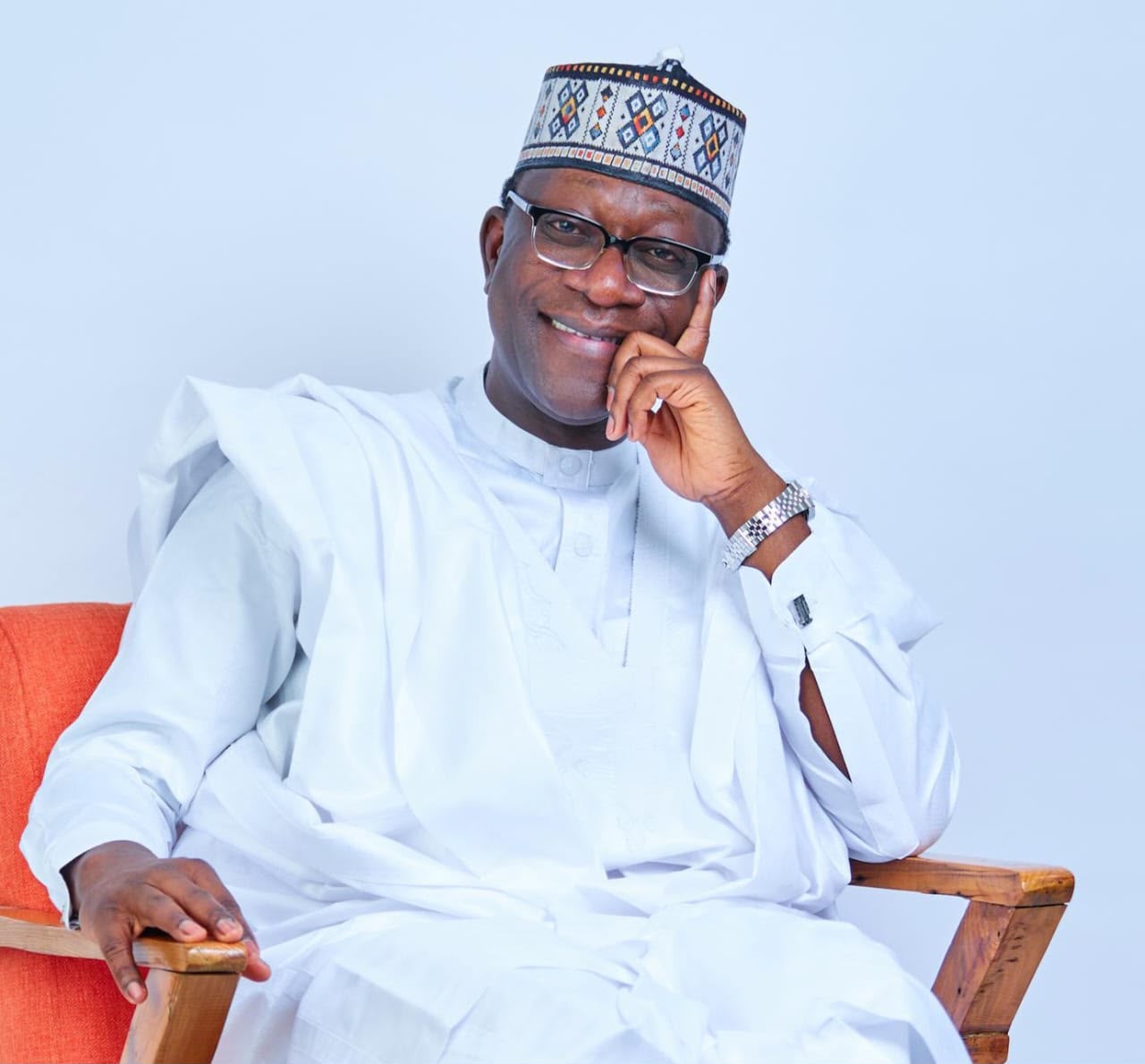
President Bola Tinubu has congratulated Abdulmumin Jibrin, the member representing the Kiru/Bebeji federal constituency in the house of representatives, on his 50th birthday.
In a statement issued on Tuesday by Bayo Onanuga, special adviser to the president on information and strategy, Tinubu described Jibrin as a dependable political ally and commended his intellectual rigour, entrepreneurial drive and commitment to public service.
The president praised Jibrin’s pursuit of knowledge, noting that his academic background at the University of Abuja, Ahmadu Bello University, Zaria, SBS Swiss Business School in Switzerland, Bayero University, Kano, and other institutions has shaped his approach to leadership and public service.
Jibrin holds two PhDs in international relations and economics, as well as an MBA from Bayero University. He also attended executive education programmes at Harvard Business School, Oxford and London Business Schools, and INSEAD in France.
Tinubu also acknowledged Jibrin’s record in public service, including his leadership of the house committees on finance, appropriations, land transport, foreign affairs, and housing and habitat.
According to the president, the lawmaker has contributed to debates and policies on public finance, fiscal policy, infrastructure and housing.
Jibrin also served as executive director at the Federal Housing Authority (FHA).
“Abdulmumin Jibrin represents a generation of Nigerians whose pursuit of knowledge, enterprise, and public service has been driven by a desire to make a difference,” the president said
His journey from scholarship and business into national politics reflects intellectual curiosity, resilience, and a deep commitment to Nigeria.
“At 50, he has much to celebrate, but I am confident that his most consequential contributions to our nation are still ahead.”
The president wished Jibrin renewed strength, good health, wisdom and fulfilment as he marked the milestone.
He also urged him to continue using his experience and knowledge to mentor younger Nigerians, strengthen democratic institutions and contribute to the development of Kano state and Nigeria.
Jibrin rejoined the All Progressive Congress (APC) in 2025 after he was expelled from the New Nigerian People’s Party (NNPP).
News
Ibrahim Little Condemns Attack on Journalists, Calls for Government Commitment to Ending Thuggery

The gubernatorial candidate of the African Democratic Congress (ADC), Alhaji Ibrahim Ali Amin Little, has condemned the recent attack on journalists covering the All Progressives Congress (APC) rally at the Sani Abacha Stadium in Kano on Saturday
Little, in a statement signed by his Executive Assistant, Adnan Mukhtar, described the attack as unfortunate and unacceptable, calling on security agencies to demonstrate greater commitment to ending political thuggery in the state.
“Politicians are guilty of recruiting and using thugs during political rallies, and I believe this is absolutely wrong. Such actions contribute to the destruction of the future of our young people by exposing them to immoral and criminal activities.
“It is important that we tell ourselves the truth. A government that claims to be fighting thuggery, phone snatching and drug abuse should not be seen sponsoring or encouraging thugs to attend political rallies. This is unfortunate, unacceptable and uncalled for.
“Political rallies should be platforms for presenting ideas, engaging citizens and seeking their support, rather than breeding grounds for violence and criminality.”
Little extended his sympathy to the Nigerian Union of Journalists (NUJ), the affected journalists and all other victims of the incident.
He assured the people of Kano that, if elected, his administration would have zero tolerance for political thuggery and other forms of violence, stressing that his government would prioritise the protection of lives and property and create an environment where journalists and citizens can carry out their legitimate activities without fear.

NFF Appoints Eguavoen as Interim Head Coach of Super Falcons

Dependable political ally’ — Tinubu celebrates Abdulmumin Jibrin at 50

A FRIEND’S LETTER TO ABDULMUMIN AT FIFTY

Ibrahim Little Condemns Attack on Journalists, Calls for Government Commitment to Ending Thuggery

Kano Allocates N27.8bn for ICT, CBT Centres Across 44 LGAs

From World’s 9th Most Populous City to Perfect: As Gov Yusuf Revisits Kano Master Plan

95% of Governor Abba Kabir Yusuf’s Promises Have Been Fulfilled — CPS Interview By Musa Diso, In Kano

Kano Islamic Scholar Declares Kano Widow Marriage Programme ‘Haram’, Urges Government to Stop It

Between Sabotage and Scepticism: Why Nigeria’s Oil Dream Keeps Stalling

Bello Sharada: A Great Writer, A Bookish Soul, Gone Too Soon
NFF Appoints Eguavoen as Interim Head Coach of Super Falcons
Dependable political ally’ — Tinubu celebrates Abdulmumin Jibrin at 50
A FRIEND’S LETTER TO ABDULMUMIN AT FIFTY
Ibrahim Little Condemns Attack on Journalists, Calls for Government Commitment to Ending Thuggery
Kano Allocates N27.8bn for ICT, CBT Centres Across 44 LGAs
From World’s 9th Most Populous City to Perfect: As Gov Yusuf Revisits Kano Master Plan
95% of Governor Abba Kabir Yusuf’s Promises Have Been Fulfilled — CPS Interview By Musa Diso, In Kano
Kano Islamic Scholar Declares Kano Widow Marriage Programme ‘Haram’, Urges Government to Stop It
Between Sabotage and Scepticism: Why Nigeria’s Oil Dream Keeps Stalling
Bello Sharada: A Great Writer, A Bookish Soul, Gone Too Soon
-

 Opinion5 years ago
On The Kano Flyovers And Public Perception
-

 Features5 years ago
How I Became A Multimillionaire In Nigeria – Hadiza Gabon
-

 Opinion6 years ago
Kano As future Headquarters Of Poverty In Nigeria
-

 History5 years ago
Sheikh Adam Abdullahi Al-Ilory (1917-1992):Nigeria’s Islamic Scholar Who Wrote Over 100 Books And Journals
-

 Opinion5 years ago
My First Encounter with Nasiru Gawuna, the Humble Deputy Governor
-

 History5 years ago
The History Of Borno State Governor Professor Babagana Umara Zulum
-

 History5 years ago
The Origin Of “Mammy Market” In Army Barracks (Mammy Ochefu)
-

 News4 years ago
Federal University Of Technology Babura To Commence Academic Activities September