
News
Special Report :The Dwindling Reading Culture Among Nigerians, Causes, And Ways to Revive It
By Yusuf Danjuma Yunusa
Reading is undoubtedly the most sophisticated weapon to empowering oneself. Self-discovering can’t be achieved more without inculcating the habit of reading within oneself. It begets education.
But unfortunately, most people in today’s world have little or no interest at all in reading. Rarely do you find people, especially the young ones, reading even as little as a four-paragraph piece with full concentration.
And it’s saddening that the issue is most prevalent among the black people the Africans. The reading culture among Africans, especially Nigerians, has reduced drastically. It should be a thing of great concern because, Malcolm X, the prominent civil rights activist, who said that if anyone should hide anything from a black man, he should put it in a book, would have said worst if he is alive today.
We really should sit back, take a deep breath, and ask ourselves what the prognosis of this dilemma will look like with the next generation. Will the status quo continue, or there is hope of an improvement, or the worst of it is yet to emerge?
Find out with the Nigerian Tracker’s Yusuf Danjuma Yunusa in his engagement with authors, educationists and students:
Authors Give Insights:
An Author, and also an academic lecturing at the Kaduna State University, Audu Haruna Jimoh, was of the opinion that the prices of books actually contribute to people’s lack of interest in reading nowadays:
“Yes, I think the high cost of books affects people’s inclination towards reading.”
“But it is not just about the books themselves, it’s also about the economy of Nigeria,” he added.
Mr. Jimoh buttressed his point stating unequivocally that people’s purchasing power is at its lowest; hence making them shift their priority to feeding which is one of the reasons for lack of interest in the reading culture among Nigerians:
“The high cost of books and the economy of Nigeria have made it unfavorable for people to consider spending their money on things that don’t count for survival.”
When asked if the rise of smartphones could revive reading culture through digital books like e-books, Mr. Jimoh, again, responded that it might only help but can’t solve the problem of reading culture because, the issue at hand is more deeper than accessibility:
“We live in a time when people’s attention is limited to what gives them instant gratification. People are more interested in audio-visuals that are entertaining than informative or educative articles or books.”
He continued, “so it’s not just about digital books. It’s the fact that people’s attention span to reading is low and poor in this time.”
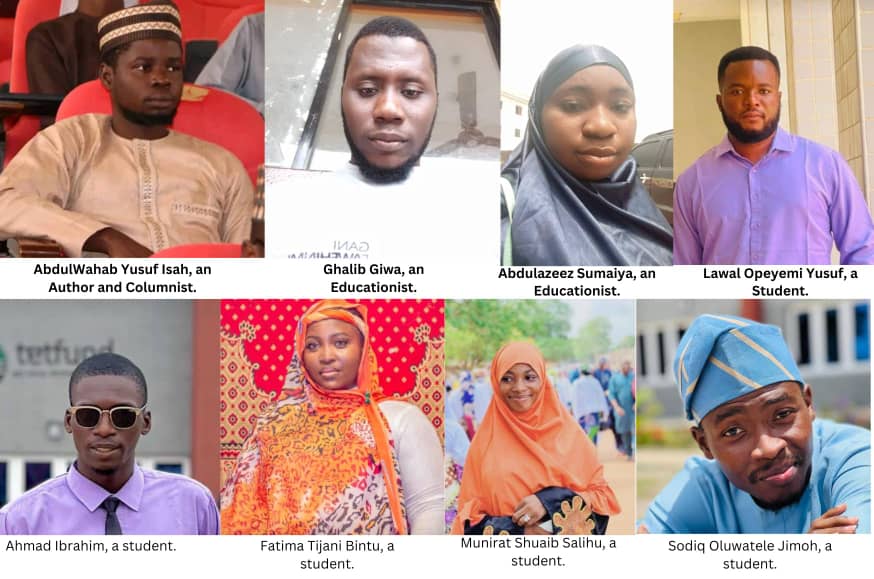
AbdulWahab Yusuf Isah who is also an Author, and a columnist, when asked if the decline in reading culture is a Nigeria thing, responded that the observed decline in reading engagement is not confined to Nigeria alone:
“While Nigeria contends with unique challenges such as economic barriers to book acquisition, the overarching shift in reading behavior is worldwide.”
He went further to stress that there are empirical data from countries across the globe including United States indicating a reduction in recreational reading across various demographics.
From his years of experience as an Author and a columnist, AbdulWahab disclosed that while religious texts, academic and self-help books command the most substantial market share because of the spiritual quest due to the strong religious culture among Nigerians, the challenging socio-economic conditions and personal development for social and economic well-being, their purchases is more of necessity-driven than leisure-oriented.
Educationists Shared Experiences
An educationist, Abdulazeez Sumaiya, revealed that the shift from hardcopy books to digital books has affected students negatively, academically and even medically:
“While I was in school, our lecturers utilized PDFs instead of handouts and it affected my sight severely due to the ray of light from my phone.”
“Also, the inadvertently urge to do other things while reading with phone due to notifications that usually pop in is another setback to students habit for reading with attention,” she added.
Sumaiya further responded to the question of what her take is regarding the schools curriculum if it encourages reading among students:
“If students want to actually read books, the school curriculum is not a problem; it’s absolutely encouraging.”
Another respondent who is also an educationist, Ghalib Giwa, opined that technology has contributed the most to the decline in reading culture among Nigerians than socio-economic factors and educational policies.
“My opinion on this is technology.”
Mr. Giwa also posited that the curriculum which schools are operating with does not actually have a problem with the decline in the reading habit of Nigerians:
“The curriculum actually encourages reading”
He also shared the same view with Sumaiya which says that the shift from hardcopy books to digital books has largely affected students interest for reading:
“Switching from reading to social media while reading is one of the reasons why the opinion for digital books isn’t favourable.”
Students’ Candid Expression
Another category of respondents which is the students, has Lawal Opeyemi Yusuf, a final year student of Business Administration, disclosed that it had been long he read a book that’s not for academic purposes:
“I can’t recall, mostly I read because it’s required for school purposes.”
When asked if he would prefer watching movies or scrolling through social media to reading books, Yusuf responded that he prefers watching movies:
“Watching a movie is like a therapy for me because it calms my mind, especially after spending the whole day studying and reading a course.”
Though he revealed that if he had not been in school, he would have read books for fun, cheaper or not.
Ahmad Ibrahim, also a final year student, couldn’t also recall the last time he read a book that wasn’t for academic purposes:
“It has been a while I read a book that was not for academic purposes; a year ago or two.”
He mentioned that school activities made him stopped reading for fun.
When asked what his preference is among watching movies, scrolling through social media, and reading books, Ahmad responded that he prefers scrolling through social media because he needs to keep himself updated with things happening around the globe:
“It depends on my mood. But I prefer scrolling through social media because I will be able to keep up with what is trending.”
Ahmad recommended that it will be encouraging if reading of books is associated with some sort of incentives or competition.
Another student, Asiya Muhammad, expressed the same view as Ahmad and Yusuf, stating that she couldn’t recall the last time she read a book:
“I honestly can’t recall the last time I read a book.”
Like Ahmad, Asiya also prefers scrolling through social media than reading a book or watching movies. She dejectedly replied ‘No’ when asked if she would read more books for fun if they are for competition, accessible, or more cheaper.
Fatima Tijani Bintu, while responding to the questions, mentioned that despite school activities, she actually read books like novels and poetry during her leisure periods. Like the other students, Fatima prefers scrolling through social media for the same reason as the other students:
“It gives me more connection to the world.”
She was also of the opinion that whether cheap or not, whether associated with competition, incentives or not, she will always read books no matter the circumstance, so far it’s her leisure time:
“Well, yes in every aspect.”
Jimoh Sodiq Oluwatele mentioned that the last time he read a book outside academics was early this year:
“I read an adventure book early this year.”
He also disclosed that he prefers scrolling through social media; citing the same reason as the other students:
“It’s easy for one to stay abreast with all happenings around the world.”
Just like Ahmad, Sodiq recommended that reading of books will probably be fun if it’s associated with prizes and competition, and at cheaper prices.
Salihu Munirat Shuaib also failed to recall the last time he read a book for fun, stating that academic stress is too much to make her engage in such fun for quite a while:
“To be honest, I haven’t read a book for fun in a while.”
“School has taken priority,” she added.
Munirat shared the same preference as other students when asked which she prefers among scrolling through social media, watching movies and reading books:
“Watching movies is more engaging and visually appealing.”
She also suggested that if books were cheaper, and it’s being associated with competition or rewards, she would read more:
“I think I would read more if books were cheaper, matched with rewards and competitions, because they would be affordable, interactive and engaging.”
How Could This Dwindling Culture Be Revived?
To reinvigorate the reading culture among Nigerians, AbdulWahab recommended that a joint effort from the government, schools, and families is needed:
“The government should fund and enforce policies for public and school libraries nationwide. Grants and incentives should also be provided for authors and publishers in order to make affordable culturally relevant books.”
“Schools should revitalize libraries, and also organize literary competition,” he continued.
“Parents should create book-rich home environments and at same time manage screen time. They should revive the habit of reading to their children from an early age,” AbdulWahab added.
On the other hand, Audu Haruna Jimoh opined that the resuscitation of reading behavior among Nigerians is multifaceted. He suggested, firstly, that:
“People’s purchasing power must be fixed so that they can have more money to spend on books.”
Secondly, “children should be made to imbibe the reading culture by making available curated books in different genres which are of the best for them as children.”
Lastly, “reading clubs should also be created within schools for students to compete and make summary of a book they have read.”
Ghalib Giwa was also of the opinion that government, schools and families have roles to play in reviving the culture:
“Government should partner with the online influencers and celebrities who most young people emulate and look up to today to initiate and spread the writing and reading culture.”
“Schools should introduce compulsory book clubs where every student must take part in,” Ghalib continued.
“Parents should entice their children to read at home while they reward them with gifts,” he added.
Lastly, Sumaiya proposed that government should enforce censorship on authors and publishers in the country on the kind of books they write and produce:
“Some authors are fond of writing with bloated grammar that one can not easily understand; that which automatically betrays the essence of communication.”
She also hinted that schools should revitalize libraries with divers texts and make them available for students to lay their hands on.
Sumaiya stressed further to warn parents who do not usually allow their wards to have relaxation after school, stating that it’s part of the psychology of education to allow children relax and satisfied mentally, physically and emotionally before engaging them in reading:
“Parents should feed their children and allow them rest well after school before engaging them in reading and learning. In that way, they will be interested.”
To address this growing habit, the government must create an enabling environment for a reading culture to thrive again, implementing the various strategies suggested by experts. Additionally, schools and parents must work together and collaborate effectively to revive this lost culture in the best way possible.
Perhaps, as Malcolm X once said, “If you want to hide anything from the Black man, put it in a book.” Maybe the tricks of governance have been hidden inside books, and by reviving the reading habit, we will uncover them. This could help curb the apparent breakdown in governance plaguing the country and, in time, make Nigeria a better place to live.
















News
ADC Reports Surge in Membership Following Kwankwaso’s Defection, Calls Him ‘Game Changer’
By Yusuf Danjuma Yunusa
The African Democratic Congress (ADC) has officially welcomed former Kano State Governor and 2023 presidential candidate Senator Rabiu Musa Kwankwaso into its fold, touting his defection as a pivotal move that strengthens a growing coalition for political realignment in Nigeria.
In a statement released for immediate effect, the party described Kwankwaso as a “game-changer,” announcing that he has directed his network of supporters nationwide to join the ADC. According to the party, this call has already triggered a significant uptick in registrations on its online platform over the past 24 hours.
The ADC’s National Publicity Secretary, Mallam Bolaji Abdullahi, framed the defection as part of a broader recognition among Nigerians of the need for a credible political alternative. The statement emphasized Kwankwaso’s experience in governance, grassroots influence, and capacity to unify as assets to the party’s ambition to “rebuild Nigeria.”
Notably, the ADC highlighted the presence of several high-profile leaders at the defection event, including the party’s National Chairman, Senator David Mark; National Secretary, Ogbeni Rauf Aregbesola; and leading presidential aspirants such as former Vice President Atiku Abubakar, Mr. Peter Obi, and Rt. Hon. Rotimi Amaechi. Their attendance, the party stated, reflects a united front and growing momentum.
The party characterized the surge in online registrations as evidence that Nigerians are aligning with what it called a “different path forward.” In its appeal to Kwankwaso’s supporters and the broader public, the ADC positioned itself as a vehicle for restoring dignity, opportunity, and public trust in governance.
“Change does not happen by chance,” the statement concluded. “It happens when people come together with purpose.”
The development marks a significant realignment in Nigeria’s opposition political landscape, with the ADC seeking to position itself as a converging point for influential politicians and their followings ahead of future elections.
News
Foreign Affairs Minister Resigns to Pursue Bauchi Governorship Election
By Yusuf Danjuma Yunusa
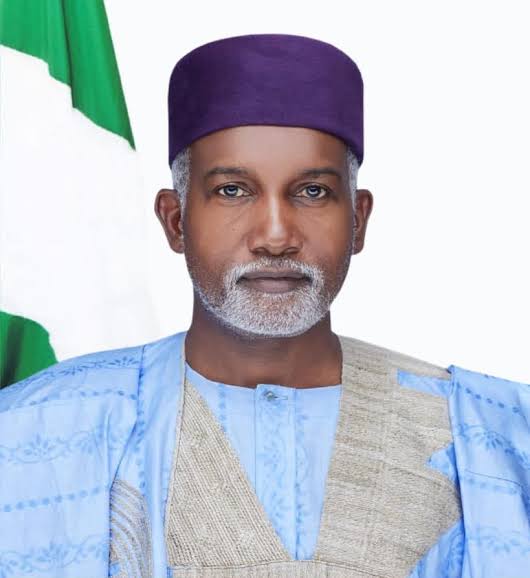
The Minister of Foreign Affairs, Yusuf Maitama Tuggar, has resigned from his position in the administration of President Bola Ahmed Tinubu to pursue the governorship of Bauchi State in the 2027 election.
Tuggar submitted his resignation on Monday, in compliance with a presidential directive requiring all political appointees with electoral ambitions to vacate their posts by the March 31, 2026, deadline.
The directive, issued through the office of the Secretary to the Government of the Federation, George Akume, aligns with Section 88(1) of the Electoral Act, 2026, and the timetable released by the Independent National Electoral Commission (INEC). It affects ministers, advisers, and heads of federal agencies intending to contest in the 2027 general elections.
Reports have it that his resignation positions him to seek the ticket of the All Progressives Congress (APC) for the Bauchi State gubernatorial race.
Tuggar’s entry is expected to significantly reshape the state’s political landscape, intensifying an already competitive contest for the APC nomination. His background as a career diplomat and serving minister is seen by political observers as a potential advantage, offering national visibility and extensive political networks.
With less than 24 hours remaining before the deadline, additional resignations from the Federal Executive Council are anticipated as other appointees move to formalize their electoral ambitions.
News
Kwankwaso Officially Joins ADC
By Yusuf Danjuma Yunusa
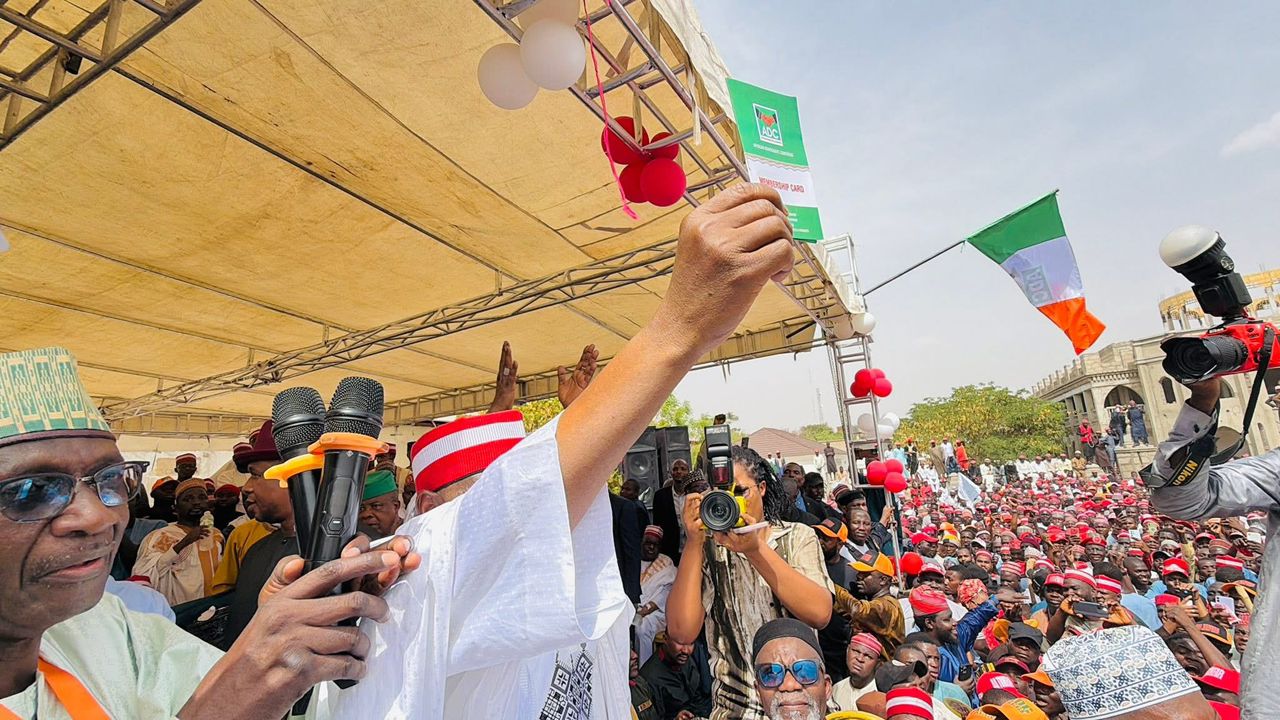
Former presidential candidate of the New Nigeria Peoples Party and ex-Governor of Kano State, Senator Rabiu Kwankwaso, has officially joined the African Democratic Congress.
The former Minister of Defence also registered with the party and received his membership card on Monday at Gidan Kwankwasiyya, Miller Road, Bompai, Kano.
Present at the event include ADC National Chairman and former Senate President, David Mark; former Sokoto State Governor, Senator Aminu Tambuwal; former Minister of Transportation, Rotimi Amaechi; former Labour Party presidential candidate, Peter Obi; Senator Dino Melaye; and former National Chairman of the All Progressives Congress, John Odigie-Oyegun, among others.

ADC Reports Surge in Membership Following Kwankwaso’s Defection, Calls Him ‘Game Changer’

Foreign Affairs Minister Resigns to Pursue Bauchi Governorship Election

Kwankwaso Officially Joins ADC

El-Rufai/Uba Sani And Pantami’s Perceived Peace Of The Graveyard

Defection: Kwankwaso’s Legacy Under Scrutiny; A Critical Look at his Political Journey Since 1999

The Governor Who Chose His People Over His Politics: Abba Yusuf and the Moral Courage Behind Kano First

FREEDOM OF SPEECH, NOT FREEDOM FROM CONSEQUENCE: A CITIZEN’S CALL FOR RESPONSIBLE PUBLIC COMMENTARY
Restoring the Glory That Was Always There: Governor Abba Kabir Yusuf and the Historical Vision Behind Kano First

Tinubu to Swear in Olatunji Disu as Inspector-General of Police on Wednesday

NDLEA Clarifies: Drug Case Against Abba Kyari Still Active After Court Discharge
ADC Reports Surge in Membership Following Kwankwaso’s Defection, Calls Him ‘Game Changer’
Foreign Affairs Minister Resigns to Pursue Bauchi Governorship Election
Kwankwaso Officially Joins ADC
El-Rufai/Uba Sani And Pantami’s Perceived Peace Of The Graveyard
Defection: Kwankwaso’s Legacy Under Scrutiny; A Critical Look at his Political Journey Since 1999
The Governor Who Chose His People Over His Politics: Abba Yusuf and the Moral Courage Behind Kano First
FREEDOM OF SPEECH, NOT FREEDOM FROM CONSEQUENCE: A CITIZEN’S CALL FOR RESPONSIBLE PUBLIC COMMENTARY
Restoring the Glory That Was Always There: Governor Abba Kabir Yusuf and the Historical Vision Behind Kano First
Tinubu to Swear in Olatunji Disu as Inspector-General of Police on Wednesday
NDLEA Clarifies: Drug Case Against Abba Kyari Still Active After Court Discharge
-

 Opinion4 years ago
On The Kano Flyovers And Public Perception
-

 Features5 years ago
How I Became A Multimillionaire In Nigeria – Hadiza Gabon
-

 Opinion5 years ago
Kano As future Headquarters Of Poverty In Nigeria
-

 History5 years ago
Sheikh Adam Abdullahi Al-Ilory (1917-1992):Nigeria’s Islamic Scholar Who Wrote Over 100 Books And Journals
-

 Opinion4 years ago
My First Encounter with Nasiru Gawuna, the Humble Deputy Governor
-

 History5 years ago
The Origin Of “Mammy Market” In Army Barracks (Mammy Ochefu)
-

 History4 years ago
The History Of Borno State Governor Professor Babagana Umara Zulum
-

 News4 years ago
Federal University Of Technology Babura To Commence Academic Activities September