
News
Special Report :Examination Malpractice: Why, Who Is to Be Blamed, and What Is the Way Out ?
By Yusuf Danjuma Yunusa
Examination malpractice a term that has become synonymous with irresponsibility and dishonesty in our society has manifested in various scenarios and for different reasons.
Unlike some crimes that often have accomplices justifying them, examination malpractice rarely sees its practitioners attempt to justify it. Ironically, it is one of the fastest-growing issues in our educational system.
Any action in an examination center that outrightly violates the stipulated rules and regulations for conducting an examination is referred to as examination malpractice.
In a bid to uncover the myth behind this practice, students, educationists, and like minds were engaged by Nigerian Tracker correspondent Yusuf Danjuma Yunusa. Below are their responses:
Educationists and Students React
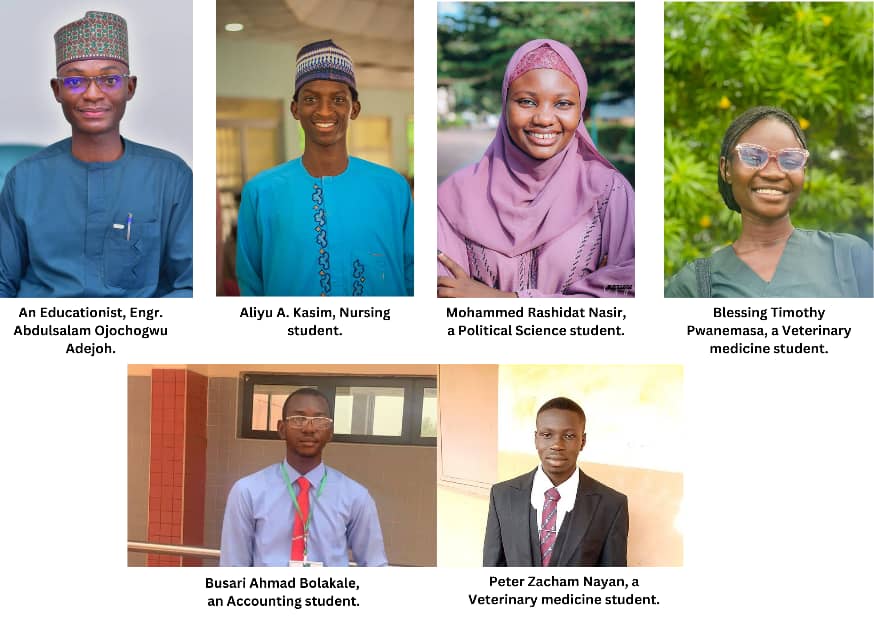
While defining examination malpractice in the context of today’s educational system, seasoned educationist Engr. Abdulsalam Ojochogwu Adejoh posited:
“Introducing into an examination anything that is foreign to the examination rules, principles, and instructions as stated by the examiner will be considered examination malpractice.”
He also noted that malpractice is not only restricted to what happens during the examination or within the venue, but it also extends beyond the examination itself:
“In fact, examination malpractice goes beyond the examination hall,” Engr. Adejoh emphasized.
“Sometimes, even after students have written an examination, they meet teachers and bribe them to escape failure. That also constitutes examination malpractice,” he added.
He further outlined some causes of such practices: lack of preparation before an examination, forgetfulness of what one has read, and lack of discipline.
Although not all teachers are guilty, the educationist criticized the indiscipline of some who encourage malpractice at various levels of education:
“Well, in some cases not all some teachers are complicit in examination malpractice.”
“Such teachers would not be able to say ‘No, don’t do this’ to students caught in the act because they have been compromised.”
Busari Ahmad Bolakale, a final-year accounting student, also stated that anything that goes against examination ethics is considered malpractice:
“Examinations have ethics and a structure of conduct according to the body overseeing them. So anything that goes against these is automatically malpractice.”
He explained that malpractice can take several forms:
“It could be through oral communication among students during exams, the use of electronic or digital devices, or even sneaking in papers.”
He also disclosed that teachers sometimes become accomplices when they have personal relationships with students:
“Some teachers often overlook malpractice when it involves students they share a relationship with.”
Peter Zacham Nayan, a 300-level Veterinary Medicine student, commented on the role schools play in curbing malpractice:
“Schools are putting in a lot of effort to eradicate examination malpractice despite setbacks from some teachers and parents who undermine the struggle.”
He elaborated:
“Some teachers help their favorite students before and even after examinations to get marks they didn’t earn.”
“Parents often threaten school management when their wards are punished for engaging in malpractice. These actions undermine the schools’ efforts.”
Aliyu A. Kasim, a 300-level Nursing student, offered a different perspective. He argued that poverty and unemployment are key reasons students engage in malpractice:
“Some students fend for themselves. The struggle to make a living and sponsor themselves through school leaves little time to study. When exams come, they resort to malpractice.”
“Also, some feel that even a first-class degree doesn’t guarantee a job. So the motivation to study hard isn’t there. They prefer to cheat and pass rather than study.”
Blessing Timothy Pwanemasa, also a Veterinary Medicine student, noted that lecturers warn students against bringing phones or gadgets into the exam hall:
“Lecturers usually warn us not to bring phones or gadgets that could implicate us. They advise us to leave them in our hostels before coming to the exam venue.”
She added that check-in exercises and seating arrangements help curb malpractice.
Mohammed Rashidat Nasir emphasized that many students read but forget what they studied:
“Some students have comprehension problems. They read but forget what they studied once in the exam hall.”
“While some engage in malpractice due to laziness, others do so because of a lack of confidence and fear of failure.”
What Could Be the Remedy?
Engr. Abdulsalam recommended that schools train their teaching staff and enforce strict punishment for offenders:
“Schools must train their staff regularly so they are acquainted with modern educational tools.”
“Students must be educated on what examination malpractice is, the harm it causes, and why it must be avoided.”
“There should be strict supervision to prevent communication or copying, even when students have the same questions.”
“Strict disciplinary actions and compliance must be enforced for students found guilty.”
Mr. Ahmad Busari expressed optimism that if schools focus on teaching students properly, malpractice will be curbed:
“If schools teach students to acquire knowledge in a structured way and examine them based on what they’ve learned, it will help eradicate malpractice.”
In contrast, Mohammed Rashidat Nasir argued that examinations should not be conducted at all:
“I strongly recommend that examinations should not be conducted.”
“Examinations are not the best way to test students’ brilliance or intelligence.”
She believes the pressure to prove brilliance in the exam hall drives students to cheat.
Mr. Peter suggested that schools should reduce class sizes:
“Admitting fewer students per class would make supervision during exams easier and more effective.”
Mr. Aliyu proposed that the government initiate programs to alleviate poverty and create jobs:
“If students see the benefits of studying hard and passing without cheating, fewer will engage in malpractice.”
“The government should create an enabling environment that rewards academic integrity.”
Miss Blessing recommended sensitizing students on personal values:
“Students should be sensitized on the virtues of responsibility, accountability, and fear of God. That way, examination malpractice will be reduced to the barest minimum.”
In summary, the government, parents, teachers, and students all share responsibility for examination malpractice. Therefore, efforts to curb it must come from each of these groups.










News
Jonathan Urges National Assembly to Overhaul Electoral Litigation Process, Create Specialised Court
By Yusuf Danjuma Yunusa
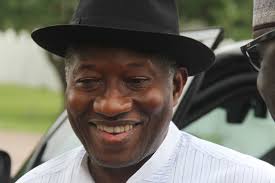
Former President Goodluck Jonathan has called on the National Assembly to overhaul Nigeria’s electoral litigation process by establishing a specialised constitutional court to handle election disputes.
Speaking on Wednesday in Abuja at the 70th birthday and book launch of Senator Gbenga Daniel (APC, Ogun East), Mr. Jonathan argued that a dedicated court would reduce the strain on the political system by resolving election-related cases in a single phase.
He criticised the current three-tier system for governorship disputes—moving from a tribunal to the Court of Appeal and finally to the Supreme Court—as ineffective and unnecessarily prolonged.
Recalling a landmark case from 2011, Jonathan highlighted how technicalities have historically undermined electoral justice. “I remember a particular case where someone lost an election as a governor because the law then stipulated the use of red ink to tick voters’ names,” he said.
“In an entire senatorial district, they were not provided with red pens and used available black or green pens. As a result, those votes were cancelled. The Appeal Court upheld this, even though the lower tribunal felt that a tick is a tick.”
While acknowledging that the National Assembly later amended the law to allow governorship cases to reach the Supreme Court—specifically to prevent such injustices—Jonathan noted that the amendment failed to address the length of the litigation process.
The former president urged Nigeria to draw lessons from Francophone African countries, which employ specialised constitutional courts for political matters. He proposed that if the Supreme Court must remain the final arbiter for governorship elections, the lower tribunal stage should be eliminated entirely.
“I believe the ideal thing to do, which I was considering when I was in office, was to make sure that it’s only one tribunal that listens to any litigation relating to politics. This is done, especially in the Francophone countries in Africa. They have constitutional courts. Anything about elections, only the constitutional courts take decisions,” Jonathan explained.
He also challenged the judiciary to exercise firmness in its rulings, drawing an analogy to football. “Politics is like soccer, and the judges are the referees. If the referee looks the other way, players will break legs or score with their hands,” he added.
News
ADC Defies INEC, Vows to Proceed with Congresses Amid Leadership Crisis
By Yusuf Danjuma Yunusa
Nigeria’s African Democratic Congress (ADC) has declared it will go ahead with its scheduled congresses and national convention, defying the Independent National Electoral Commission’s (INEC) decision to suspend recognition of the party’s leadership.
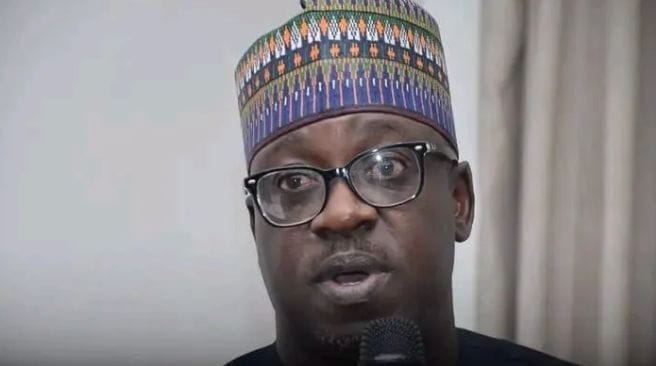
The party’s National Publicity Secretary, Bolaji Abdullahi, insisted that the ADC has fulfilled all legal requirements, having formally notified the electoral body of its planned events.
“We will go ahead with our congresses. We have given INEC 21 days’ notice, they have accepted. Whether they come or not, we will continue with our congresses and our convention,” Abdullahi said during an interview on Arise TV.
His remarks come just days after INEC announced it would withhold recognition of the ADC’s leadership pending the outcome of a court case related to an internal dispute within the party.
The standoff sets the stage for a potential clash between the electoral commission and the opposition party, raising fresh questions about party governance, internal democracy, and the legal limits of INEC’s oversight powers in Nigeria.
News
ADC Rejects INEC’s Ruling Interpretation, Vows to Clarify Contradictions
By Yusuf Danjuma Yunusa
The African Democratic Congress (ADC) has sharply criticized the Independent National Electoral Commission (INEC) over its interpretation of a recent Court of Appeal statement, alleging that the commission has abandoned its neutrality by siding with the federal government.
In a press release issued on Wednesday, the ADC’s National Publicity Secretary, Mallam Bolaji Abdullahi, rejected INEC’s position, describing it as “contradictory and inconsistent with facts.” The party claimed that INEC was acting under pressure from a government it characterized as “jittery” due to the ADC’s growing momentum.
“We reject INEC’s interpretation of the Court of Appeal ruling,” the statement read. “We knew that INEC was being pressured by a government that has become jittery from the ADC’s rising momentum even in the face of its relentless assault on all opposition parties.”
The ADC accused the electoral commission of caving to political pressure, asserting that it has effectively chosen to align with the government against the Nigerian people. The party vowed to publicly clarify what it called the contradictions in INEC’s statement.
According to the release, the ADC is currently reviewing its legal and political options and will announce its next steps in the coming days. The party urged its members and the public to remain steadfast.
“We are currently reviewing our options, and we shall make these known soon. Meanwhile, we call on our members and all Nigerians to remain steadfast as they await further directives,” the statement concluded, adding the slogans: “Nigeria is rising. ADC is rising.”

INEC, David Mark, And Coming Abachaian Coronation
Jonathan Urges National Assembly to Overhaul Electoral Litigation Process, Create Specialised Court

ADC Defies INEC, Vows to Proceed with Congresses Amid Leadership Crisis

ADC Rejects INEC’s Ruling Interpretation, Vows to Clarify Contradictions

ADC Rising: Salga hails influx of political heavyweights as a turning point for justice

Governor Abba Kabir Yusuf Holds Exclusive Prerogative to Choose Deputy – Malam Inuwa Waya

The Governor Who Chose His People Over His Politics: Abba Yusuf and the Moral Courage Behind Kano First
Restoring the Glory That Was Always There: Governor Abba Kabir Yusuf and the Historical Vision Behind Kano First

NDLEA Clarifies: Drug Case Against Abba Kyari Still Active After Court Discharge

Nigeria’s Education Minister Tunji Alausa Weighs Resignation to Run for Lagos Governor
INEC, David Mark, And Coming Abachaian Coronation
Jonathan Urges National Assembly to Overhaul Electoral Litigation Process, Create Specialised Court
ADC Defies INEC, Vows to Proceed with Congresses Amid Leadership Crisis
ADC Rejects INEC’s Ruling Interpretation, Vows to Clarify Contradictions
ADC Rising: Salga hails influx of political heavyweights as a turning point for justice
Governor Abba Kabir Yusuf Holds Exclusive Prerogative to Choose Deputy – Malam Inuwa Waya
The Governor Who Chose His People Over His Politics: Abba Yusuf and the Moral Courage Behind Kano First
Restoring the Glory That Was Always There: Governor Abba Kabir Yusuf and the Historical Vision Behind Kano First
NDLEA Clarifies: Drug Case Against Abba Kyari Still Active After Court Discharge
Nigeria’s Education Minister Tunji Alausa Weighs Resignation to Run for Lagos Governor
-

 Opinion4 years ago
On The Kano Flyovers And Public Perception
-

 Features5 years ago
How I Became A Multimillionaire In Nigeria – Hadiza Gabon
-

 Opinion5 years ago
Kano As future Headquarters Of Poverty In Nigeria
-

 History5 years ago
Sheikh Adam Abdullahi Al-Ilory (1917-1992):Nigeria’s Islamic Scholar Who Wrote Over 100 Books And Journals
-

 Opinion4 years ago
My First Encounter with Nasiru Gawuna, the Humble Deputy Governor
-

 History5 years ago
The Origin Of “Mammy Market” In Army Barracks (Mammy Ochefu)
-

 History4 years ago
The History Of Borno State Governor Professor Babagana Umara Zulum
-

 News4 years ago
Federal University Of Technology Babura To Commence Academic Activities September