
News
Governor Namadi’s Visionary Investment in Kano DisCo Yielding Results
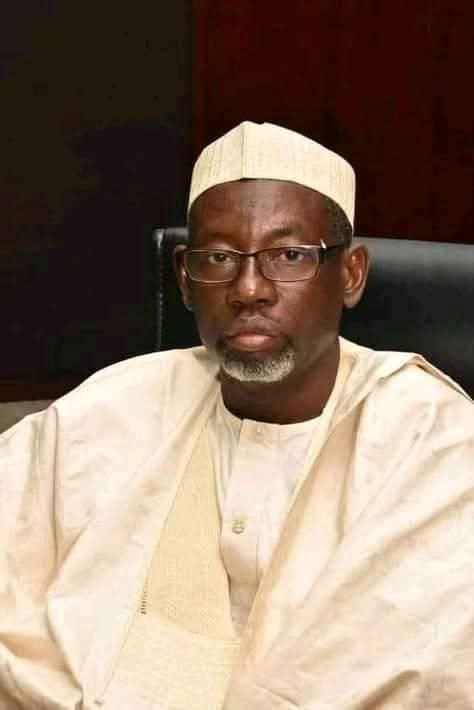
When the Jigawa State Government announced in January 2024 that it would invest ₦4 billion into Future Energies Africa (FEA) to acquire a 2.5 percent stake in the Kano Electricity Distribution Company (KEDCO), many Nigerians were skeptical.
The move broke from the traditional playbook of state governments, which have long limited their involvement in the power sector to donations of transformers and short-term palliatives. But 18 months later, Governor Umar Namadi’s bet is showing clear signs of paying off, both in returns and results.
On July 7, 2025, the State Executive Council approved the second tranche payment of ₦1 billion to FEA, reinforcing Jigawa’s long-term commitment to the partnership. The investment, the first of its kind by any Nigerian state since the 2013 power sector privatisation, is already producing tangible outcomes in terms of electricity access, infrastructure upgrades, and fiscal returns.
A Strategic, Unorthodox Investment:
The context behind Jigawa’s bold move is compelling. FEA had just acquired KEDCO’s majority shareholding from Fidelity Bank after the latter placed the electricity distributor in receivership due to poor performance by the previous core investors. The opportunity was ripe for a reset, and Namadi seized it, not just to secure power supply improvements but to ensure Jigawa had a financial stake in the success of the region’s power distribution.
Crucially, the investment deal did more than buy equity. It required FEA to commit to matching, and even exceeding, Jigawa’s ₦4 billion investment with infrastructure developments targeted specifically at the state. Sources in the State House say Namadi was adamant that the funds should yield measurable returns, not just political goodwill.
Performance rebound – KEDCO Emerges as Leader:
KEDCO, which previously lagged behind its peers in operational and financial performance, has undergone a dramatic transformation under FEA’s stewardship. When FEA took over, the company’s market remittance rate was a dismal 59 percent. Today, according to the Nigerian Electricity Regulatory Commission (NERC)’s Q1 2025 performance report, KEDCO is the best-performing DISCO in Northern Nigeria, with a remittance performance above 100 percent.
The turnaround is credited to a new governance structure led by the FEA-appointed board, working closely with the Bureau of Public Enterprises and state governments in the KEDCO franchise area — namely Kano, Katsina, and Jigawa. Improvements in billing and collection efficiencies have followed, significantly reducing commercial losses.
Powering Jigawa – From Urban Hubs to Rural Grids:
Even more remarkable are the on-ground infrastructure developments now reshaping Jigawa’s power landscape. FEA’s infrastructure commitments include up to 10MW of interconnected solar mini-grids in key cities, including Dutse, Gumel, Hadejia, Kafin Hausa, Kazaure, and Ringim.
These projects are being implemented through FEA’s renewable energy subsidiary, Bagaja Renewables, which previously constructed Nigeria’s largest interconnected mini-grid in Zawaciki, Kano. The flagship 500kW mini-grid in Kafin Hausa is nearing 95% completion, built at an estimated cost of ₦950 million. Additionally, the once-damaged second substation in Dutse has been fully repaired and brought back online, restoring redundancy and minimizing blackout risk in the capital — a project that cost nearly ₦200 million.
According to Sani Bala Sani, spokesperson for KEDCO, the next wave of mini-grids will focus on Hadejia and the Maigatari Free Trade Zone in Gumel. “We estimate to spend an incremental $3 million on these projects,” Bala said. “Our investors are bullish about the sector, and we’re actively engaging the Jigawa State Government on additional projects — including one to replace the Gagarawa-Taura-Ringim line, now under federal supervision.”
In a separate milestone, FEA recently completed a 39-kilometre distribution line delivering Band A electricity supply to the Dawanau International Grain Market, a major agro-trade hub. This line is expected to boost industrial activity in the region and aligns with Jigawa’s larger agro-industrial ambitions.
A Model for Energy Reform:
Governor Namadi’s “Agenda for Greater Jigawa” is increasingly being recognized as a template for pragmatic and forward-thinking energy policy at the subnational level. By choosing to invest strategically, rather than merely spending, Jigawa is positioning itself as a pioneer in driving inclusive electrification and sustainable industrial growth.
The governor’s approach also breaks with the traditional donor-recipient dynamic that has long defined state-DISCO relationships in Nigeria. Rather than providing infrastructure on behalf of the utility, Jigawa is shaping utility investment priorities through an ownership lens, and the results are speaking for themselves.
The Road Ahead:
While the full dividends of Jigawa’s investment in KEDCO and FEA are yet to be realised, early indicators suggest a partnership built on accountability, innovation, and mutual benefit. The alignment of public capital with private sector efficiency appears to be catalyzing a virtuous cycle of growth.
Challenges remain, especially as the federal government continues to recalibrate its role in power sector development. However, Jigawa’s proactive engagement and insistence on a structured, ROI-driven model have provided the state with both leverage and learning.
As Nigeria continues to grapple with widespread electricity shortfalls, Jigawa’s success offers a compelling case study and a challenge to other states to rethink their approach to power sector participation. Governor Namadi’s gamble is not only yielding returns; it is changing the conversation on how to build a reliable, sustainable energy future in Nigeria.
Signed:
Sani Bala Sani
22/07/2025








News
Kano Ex-Deputy Governor Gawuna Joins ADC After Resignation from APC
By Yusuf Danjuma Yunusa
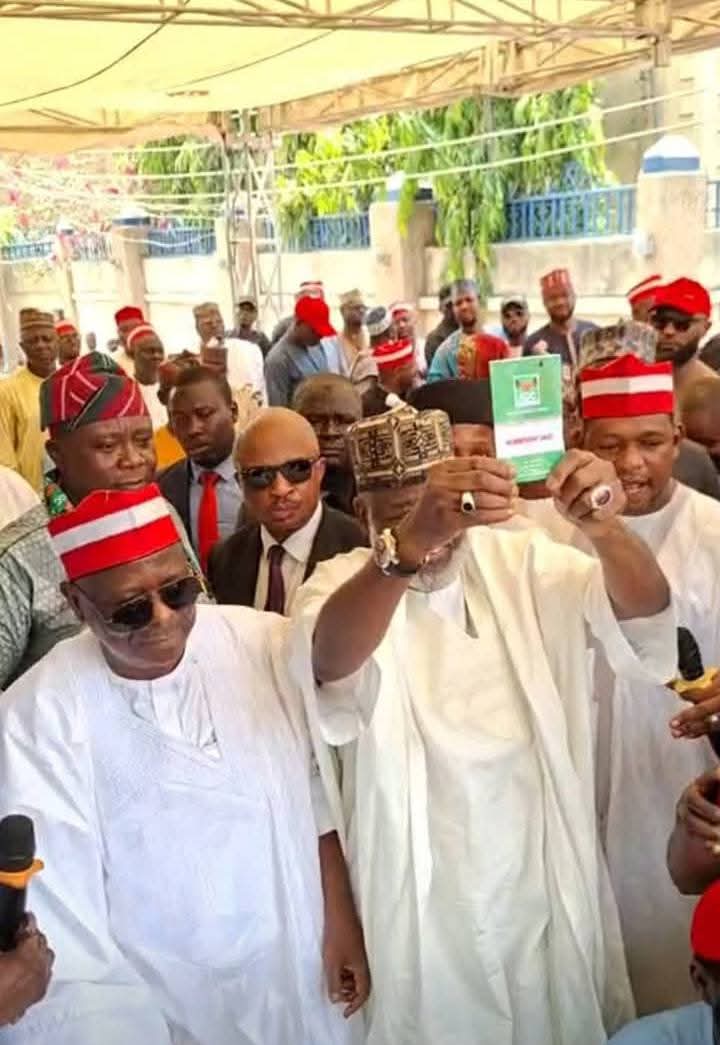
Nasiru Gawuna, the 2023 governorship candidate of the All Progressives Congress (APC) in Kano State, has formally joined the African Democratic Congress (ADC).
Gawuna, a former deputy governor of the state, received his membership card on Tuesday at his ward in Gawuna, Nasarawa Local Government Area. The event drew a large gathering of supporters and notable political figures, including former Governor Senator Rabiu Musa Kwankwaso, immediate-past Deputy Governor Aminu Gwarzo, and the state ADC chairman, Musa Ungogo.
Speaking after the registration, Gawuna thanked his supporters and party leaders, pledging his commitment to strengthening the ADC in Kano State.
His defection follows a formal resignation from the APC, which he described as a personal and voluntary decision. In a letter dated March 29, 2026, addressed to his ward chairman, Gawuna expressed appreciation to the APC for the opportunity to serve.
The move also comes after his resignation as Chairman of the Board of Directors of the Federal Mortgage Bank of Nigeria, effective March 31, 2026. His departure from the role complied with a directive by President Bola Ahmed Tinubu requiring political appointees to resign in line with the provisions of the Electoral Act.
Gawuna thanked the president for the trust reposed in him, noting it was an honor to serve in various capacities, including as Pro-Chancellor and Chairman of the Governing Council of Bayero University, Kano.
Political observers view Gawuna’s entry into the ADC as a significant boost for the party, given his political influence and strong showing in the 2023 governorship election, where he secured 890,705 votes.
The development is the latest in a series of political realignments in Kano State ahead of the 2027 general elections, signaling continued shifts in the state’s political landscape.
News
JUST IN: Senate Approves Tinubu’s $6 Billion Loan Request
By Yusuf Danjuma Yunusa
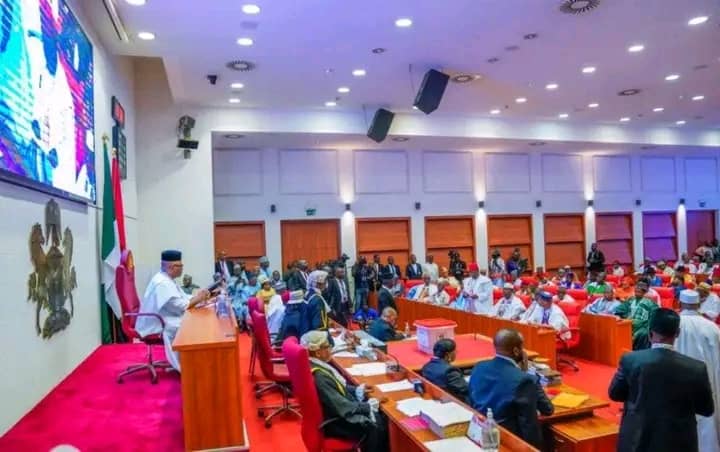
The Senate on Tuesday approved President Bola Tinubu’s request to secure $6 billion in external loans, granting legislative backing for the facilities hours after the Executive formally sought approval to finance critical infrastructure and address fiscal gaps.
The approval followed the consideration of a report submitted by the Chairman of the Senate Committee on Local and Foreign Debts, Senator Aliyu Wamakko (APC, Sokoto North).
In a letter read during plenary, President Tinubu sought approval for two separate facilities: a $5 billion loan from Abu Dhabi Bank to support budget deficit financing and meet existing debt obligations, and a $1 billion loan from UK Export Finance through Citibank London to fund the rehabilitation of the Lagos Port Complex and Tin Can Island Port.
According to the President, the port rehabilitation projects aim to address longstanding operational challenges, improve efficiency, enhance safety standards, support non-oil trade diversification, and position Nigeria as a regional trade hub.
Senate President Godswill Akpabio referred the requests to the committee for expedited consideration, a directive that culminated in Tuesday’s approval.
The latest borrowing comes amid the Federal Government’s sustained reliance on domestic and external loans to finance budget deficits. Four months ago, the National Assembly approved a separate request to raise N1.15 trillion from the domestic debt market to fund the 2025 budget deficit.
In its report, the Senate Committee on Local and Foreign Debts noted that the 2025 Appropriation Act provides for total expenditure of N59.99 trillion—an increase of N5.25 trillion from the Executive’s initial proposal—highlighting the widening fiscal gap driving the government’s borrowing strategy.
News
El-Rufai’s Bail Hearing Adjourned to Wednesday as Security Tightens Around Kaduna Court
By Yusuf Danjuma Yunusa
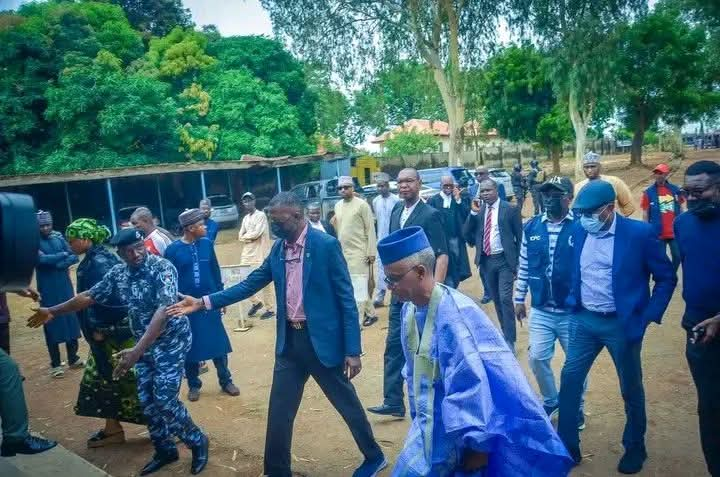
The Federal High Court in Kaduna has adjourned the bail hearing for former Governor Nasir El-Rufai until Wednesday, March 31. Justice Rilwanu scheduled the new date after hearing arguments from both the defense and prosecution.
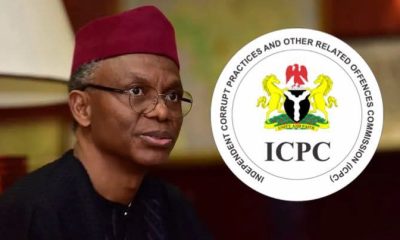
El-Rufai was arraigned by the Independent Corrupt Practices and Other Related Offences Commission (ICPC) on a 10-count charge involving the alleged conversion of public property and money laundering. The former governor pleaded not guilty to all charges.
In a separate case, El-Rufai also appeared before a Kaduna State High Court on charges of abuse of office, fraud, and intent to commit fraud. The ICPC filed charge number KDH/KAD/ICPC/01/26 against him and one other defendant, Amadu Sule, from the Kaduna State Development Agency (LEDA).
According to the News Agency of Nigeria, El-Rufai arrived at the Federal High Court premises at approximately 9:40 a.m. in the company of ICPC officers.
Security was heightened across the Kaduna metropolis ahead of the proceedings. Armed personnel from the police, the Department of State Services (DSS), and the Kaduna State Vigilance Service were deployed to strategic locations. Access to the court was restricted to accredited journalists and court officials, though media representatives were barred from entering the courtroom to cover the proceedings.
Counsel for El-Rufai, Abdul Adamu, declined to comment after the session, stating only that the case “has been adjourned till tomorrow.”

Kano Ex-Deputy Governor Gawuna Joins ADC After Resignation from APC

JUST IN: Senate Approves Tinubu’s $6 Billion Loan Request

El-Rufai’s Bail Hearing Adjourned to Wednesday as Security Tightens Around Kaduna Court

El-Rufai Taken Back To Custody

Eight Kano Rep Members Abandon NNPP for APC

The Governor Who Chose His People Over His Politics: Abba Yusuf and the Moral Courage Behind Kano First

FREEDOM OF SPEECH, NOT FREEDOM FROM CONSEQUENCE: A CITIZEN’S CALL FOR RESPONSIBLE PUBLIC COMMENTARY
Restoring the Glory That Was Always There: Governor Abba Kabir Yusuf and the Historical Vision Behind Kano First

Tinubu to Swear in Olatunji Disu as Inspector-General of Police on Wednesday

NDLEA Clarifies: Drug Case Against Abba Kyari Still Active After Court Discharge
Kano Ex-Deputy Governor Gawuna Joins ADC After Resignation from APC
JUST IN: Senate Approves Tinubu’s $6 Billion Loan Request
El-Rufai’s Bail Hearing Adjourned to Wednesday as Security Tightens Around Kaduna Court
El-Rufai Taken Back To Custody
Eight Kano Rep Members Abandon NNPP for APC
The Governor Who Chose His People Over His Politics: Abba Yusuf and the Moral Courage Behind Kano First
FREEDOM OF SPEECH, NOT FREEDOM FROM CONSEQUENCE: A CITIZEN’S CALL FOR RESPONSIBLE PUBLIC COMMENTARY
Restoring the Glory That Was Always There: Governor Abba Kabir Yusuf and the Historical Vision Behind Kano First
Tinubu to Swear in Olatunji Disu as Inspector-General of Police on Wednesday
NDLEA Clarifies: Drug Case Against Abba Kyari Still Active After Court Discharge
-

 Opinion4 years ago
On The Kano Flyovers And Public Perception
-

 Features5 years ago
How I Became A Multimillionaire In Nigeria – Hadiza Gabon
-

 Opinion5 years ago
Kano As future Headquarters Of Poverty In Nigeria
-

 History5 years ago
Sheikh Adam Abdullahi Al-Ilory (1917-1992):Nigeria’s Islamic Scholar Who Wrote Over 100 Books And Journals
-

 Opinion4 years ago
My First Encounter with Nasiru Gawuna, the Humble Deputy Governor
-

 History5 years ago
The Origin Of “Mammy Market” In Army Barracks (Mammy Ochefu)
-

 History4 years ago
The History Of Borno State Governor Professor Babagana Umara Zulum
-

 News4 years ago
Federal University Of Technology Babura To Commence Academic Activities September