
News
With the Death of Former President Muhammadu Buhari, Nigeria Now Has Five Living Former Leaders
Abbas Yushau Yusuf
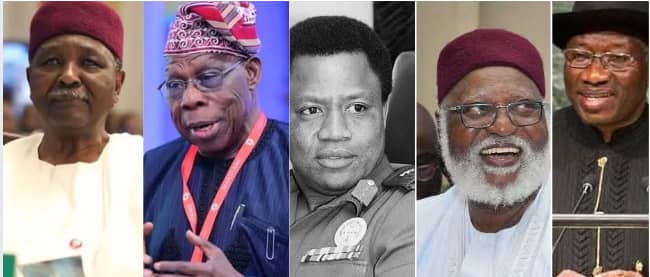
With the death of former Nigeria’s President Muhammadu Buhari on 13th July 2025, and his befitting state burial accorded to him by President Bola Ahmed Tinubu on July 15 at his Daura country home, Nigeria now has five living former leaders who left office at their time and are still alive.
They are:
1. General Yakubu Gowon
The longest-serving Nigerian military ruler, he was in power from July 29, 1966, to July 29, 1975. He came to power after a counter-coup that overthrew General Johnson Thomas Umunakwe Aguiyi-Ironsi.
General Yakubu Gowon was overthrown in a bloodless coup led by young officers of the Nigerian Army and was replaced by General Murtala Ramat Muhammad while Gowon was away in Kampala, Uganda, for an OAU summit.
General Gowon has now been out of power for fifty years and is currently 91 years old.
2. General Olusegun Obasanjo
General (or Chief) Olusegun Obasanjo was Nigeria’s military ruler between 1976 and 1979 and returned as Nigeria’s civilian President from May 29, 1999, to May 29, 2007.
He was the first Nigerian to lead the country both as a military and civilian leader. He handed over power in 2007 to the late Umaru Musa Yar’Adua after his controversial third-term bid failed in the National Assembly.
Chief Olusegun Obasanjo is now 88 years old.
3. General Ibrahim Badamasi Babangida
Popularly known as IBB, he was Nigeria’s Military Head of State from August 26, 1985, to August 26, 1993. He voluntarily stepped aside as President of the Federal Republic of Nigeria after the controversial annulment of the June 12, 1993, election won by the late Chief MKO Abiola.
General Ibrahim Babangida currently resides at his hilltop residence in Minna and is 84 years old.
4. General Abdulsalami Abubakar
General Abdulsalami Abubakar was Nigeria’s Military Head of State from June 9, 1998, to May 29, 1999. He oversaw Nigeria’s transition from military rule to civilian democracy, which the country currently enjoys.
General Abdulsalami Abubakar is also over 80 years old.
5. Dr. Goodluck Ebele Jonathan
Dr. Goodluck Jonathan was Nigeria’s President from May 6, 2010, to May 29, 2015. He succeeded his boss, the late Umaru Musa Yar’Adua, and was elected President in April 2011. He failed in his bid for re-election and was succeeded by the late President Muhammadu Buhari on May 29, 2015.
Dr. Goodluck Jonathan is currently 68 years old.









News
El-Rufai’s Release Sparks Claims of Political Motives, Unjust Detention
By Yusuf Danjuma Yunusa
Following the release of former Kaduna State Governor, Nasir Ahmad El-Rufai, a growing number of netizens have alleged that his detention was politically motivated and aimed at humiliation rather than justice. The former governor was released hours after the news of his mother’s death broke, prompting accusations of undue hardship from several public commentators.
Among those speaking out are Barrister Abba Hikima, Stanley Chinonso, and Imran U Wakili, who took to social media to question the timing and rationale behind the release.
In a post on X (formerly Twitter), Imran U Wakili argued that the former governor’s detention was never about criminal allegations but was intended to degrade him. He noted that El-Rufai was held throughout the 30 days of Ramadan and was not permitted to bid farewell to his late mother while in custody.
“The sudden release of Nasir Ahmad El-Rufai shows that they were only keeping him to humiliate him, not because he committed any crime,” Wakili wrote. He added that while the release—coming in time for the funeral—suggests “a little conscience” on the part of authorities, it also underscores what he described as unjust treatment.
Echoing similar sentiments, Stanley Chinonso described the former governor’s detention as politically driven. “This simply shows the federal government does not have any case against him; they are just trying to hold him down because they felt he’s a threat to them. For Tinubu, he has just saved face because he would have lost the case in court. We are watching,” Stanley wrote.
Barrister Abba Hikima offered a legal perspective, pointing to the absence of formal judicial proceedings that would typically precede a release. He noted that El-Rufai was neither granted bail by the court nor had his bail conditions reviewed—standard legal pathways to release.
“Well, none of that has happened. And Nasir El-Rufa’i has been released. Does this show there was cruelty and violation in refusal to release him from the beginning?” Hikima posted.
Meanwhile, President Bola Tinubu, Kaduna State Governor Uba Sani, and National Security Adviser Nuhu Ribadu have all extended condolences to El-Rufai over the passing of his mother. The messages, shared publicly, have drawn mixed reactions on social media, with some users dismissing them as indicative of a closed political circle.
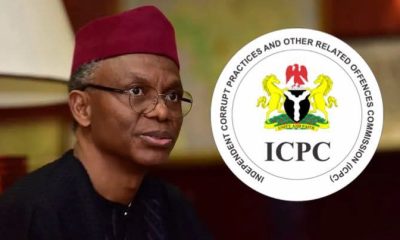
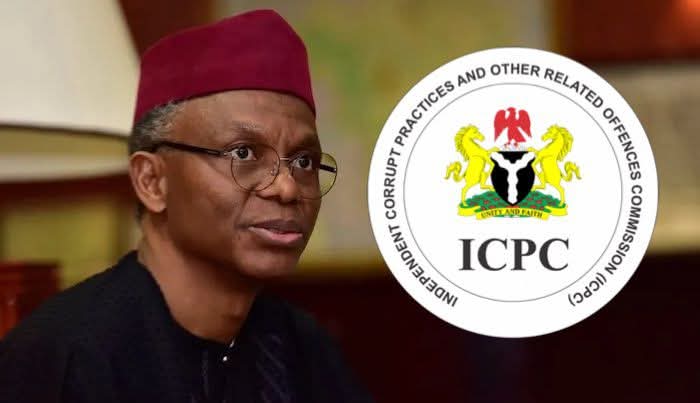
El-Rufai was arraigned by the Independent Corrupt Practices and Other Related Offences Commission (ICPC) on a 10-count charge related to alleged conversion of public property and money laundering. He appeared before a Federal High Court in Kaduna, which had adjourned his bail application until March 31.
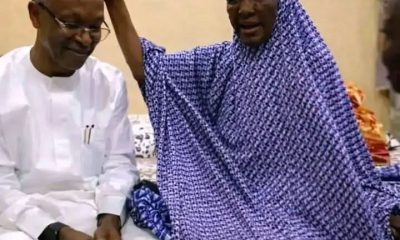
The former governor was released shortly after news broke of his mother’s death in Cairo, Egypt. He has consistently denied all allegations against him.
News
BREAKING: El-Rufai Released Following Mother’s Death, Son Alleges Unlawful Detention
By Yusuf Danjuma Yunusa
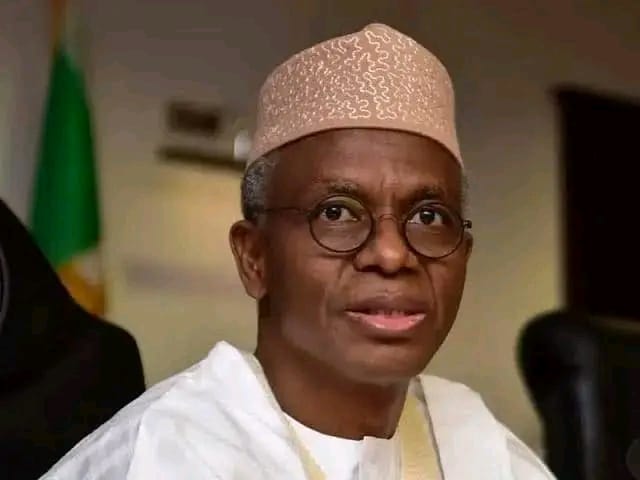
Nasir El-Rufai, the former governor of Kaduna State, has returned home after what his family describes as a period of detention, just in time for the funeral of his late mother.
His son, Bashir El-Rufai, confirmed the development in a post on X (formerly Twitter), stating that his father had been released. Bashir characterized the detention as “unlawful and illegal,” and directed sharp criticism at the agency involved, referring to it as “one of the most corrupt agencies in the Federal Republic of Nigeria that is a lame excuse of a pathetic institution.”
The former governor had reportedly presented himself to the Economic and Financial Crimes Commission (EFCC) on February 16 for questioning. According to Bashir’s account, El-Rufai was held by the commission until his release prior to the funeral.
News
Breaking:Kano Deputy Governor Resigns
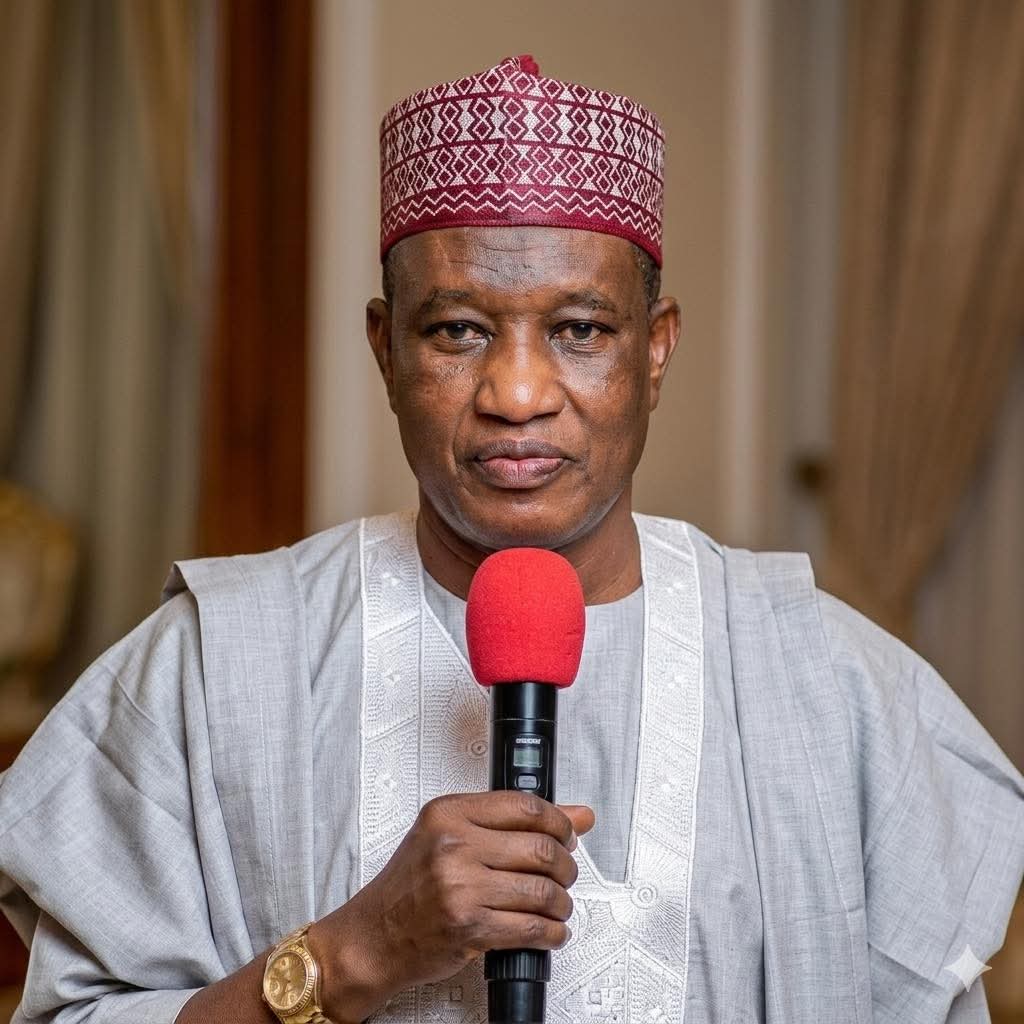
The Kwankwasiyya Movement has announced the resignation of the Deputy Governor of Kano State Comrade Aminu Abdulsalam Gwarzo, stating that the decision was formally communicated to the public in a press release issued on Friday and signed by its spokesperson, Dr. Habibu Sale Mohammed.
According to the statement, the resignation was taken “in the overall interest of the people and the stability of governance” in the state, with the movement noting that recent developments had significantly limited the Deputy Governor’s ability to fully discharge the responsibilities of the office.
The movement also addressed the ongoing issues involving the Kano State House of Assembly, emphasizing that the Deputy Governor’s decision to step down should not be interpreted as an admission of any allegations raised against him, and insisting that he continues to maintain his innocence.
Describing the move as one of “statesmanship,” the statement said the resignation was intended to reduce political tension and prevent further disruptions to governance and development efforts in Kano State, while demonstrating a commitment to peace and political maturity.
The Kwankwasiyya Movement further disclosed that the former Deputy Governor plans to redirect his focus toward strengthening the movement’s internal structures and strategies, particularly as political actors begin positioning ahead of Nigeria’s 2027 general elections.
The statement added that this renewed engagement would involve rebuilding party frameworks and pursuing strategic realignments aimed at promoting what it described as people-oriented leadership, social justice, and sustainable development.
The movement called on its supporters and residents of Kano State to remain calm, law-abiding, and committed to democratic principles, assuring the public that additional details regarding the resignation would be communicated in due course, according to the spokesperson.
Comrade Aminu Abdulsalam Gwarzo the Deputy Governor has been enmeshed in a political battle with his boss Governor Abba Kabir Yusuf since the Governor defected to the All Progressives Congress without the blessing of the NNPP National leader Senator Rabiu Musa Kwankwaso.
Recently the Kano state House of Assembly has issued Impeachment notice on Comrade Aminu Abdulsalam Gwarzo over allegation of corruption.

El-Rufai’s Release Sparks Claims of Political Motives, Unjust Detention

APC National Convention : How DSP Barau Displays Political Sagacity, Deep Knowledge of Democracy Before President Tinubu, Others

BREAKING: El-Rufai Released Following Mother’s Death, Son Alleges Unlawful Detention

Breaking:Kano Deputy Governor Resigns

Hajiya Umma El-Rufai, Mother of Former Kaduna Governor, Passes Away

The Governor Who Chose His People Over His Politics: Abba Yusuf and the Moral Courage Behind Kano First

FREEDOM OF SPEECH, NOT FREEDOM FROM CONSEQUENCE: A CITIZEN’S CALL FOR RESPONSIBLE PUBLIC COMMENTARY

Press Freedom: IPI Nigeria Calls on New Acting IGP to End Police Harassment of Journalists
Tinubu to Swear in Olatunji Disu as Inspector-General of Police on Wednesday
Restoring the Glory That Was Always There: Governor Abba Kabir Yusuf and the Historical Vision Behind Kano First
El-Rufai’s Release Sparks Claims of Political Motives, Unjust Detention
APC National Convention : How DSP Barau Displays Political Sagacity, Deep Knowledge of Democracy Before President Tinubu, Others
BREAKING: El-Rufai Released Following Mother’s Death, Son Alleges Unlawful Detention
Breaking:Kano Deputy Governor Resigns
Hajiya Umma El-Rufai, Mother of Former Kaduna Governor, Passes Away
The Governor Who Chose His People Over His Politics: Abba Yusuf and the Moral Courage Behind Kano First
FREEDOM OF SPEECH, NOT FREEDOM FROM CONSEQUENCE: A CITIZEN’S CALL FOR RESPONSIBLE PUBLIC COMMENTARY
Press Freedom: IPI Nigeria Calls on New Acting IGP to End Police Harassment of Journalists
Tinubu to Swear in Olatunji Disu as Inspector-General of Police on Wednesday
Restoring the Glory That Was Always There: Governor Abba Kabir Yusuf and the Historical Vision Behind Kano First
-

 Opinion4 years ago
On The Kano Flyovers And Public Perception
-

 Features5 years ago
How I Became A Multimillionaire In Nigeria – Hadiza Gabon
-

 Opinion5 years ago
Kano As future Headquarters Of Poverty In Nigeria
-

 History5 years ago
Sheikh Adam Abdullahi Al-Ilory (1917-1992):Nigeria’s Islamic Scholar Who Wrote Over 100 Books And Journals
-

 Opinion4 years ago
My First Encounter with Nasiru Gawuna, the Humble Deputy Governor
-

 History5 years ago
The Origin Of “Mammy Market” In Army Barracks (Mammy Ochefu)
-

 History4 years ago
The History Of Borno State Governor Professor Babagana Umara Zulum
-

 News4 years ago
Federal University Of Technology Babura To Commence Academic Activities September