
News
Killings: Senate to Organize Regional Meeting
The Nigerian Senate has unveiled plans to engage stakeholders, including survivors of recent killings across all six geopolitical zones, to unearth the root causes of violence and address the nation’s worsening security crisis.
Announcing the initiative on Thursday, the Senate Leader and Chairman of the Senate ad hoc committee on National Security Summit, Opeyemi Bamidele, said it signalled a shift toward localised engagement in the face of spiralling insecurity that continued to claim lives and stall development.
No amount of investment in infrastructure will yield meaningful results without peace and stability,” Bamidele declared during the committee’s inaugural meeting at the National Assembly in Abuja.
He added, “We must first address insecurity if we hope to rebuild this nation.”
The 20-member ad hoc committee, which was constituted earlier this month, draws from the leadership of key Senate committees, including those on Defence, Army, Navy, Interior, and Police Affairs.
Prominent members include Chief Whip, Tahir Monguno, Senate Minority Leader, Abba Moro, and Adams Oshiomhole, among others.
But Bamidele stressed that the regional meetings would not only involve high-level security agencies but seek input from those most affected—victims of armed violence, traditional rulers, community leaders, and civil society actors.
We will go to the people, listen to their fears and hopes, and gather their ideas on how to turn disorder into order.
This national summit will be inclusive and participatory because the security of Nigeria concerns everyone,” he said.
The Senate’s approach recognises that security challenges vary across regions: from banditry and kidnapping in the North-West to Boko Haram insurgency in the North-East, herder-farmer clashes in the North-Central, secessionist unrest and gang violence in the South-East, ritual killings in the South-West, and oil theft and piracy in the South-South.
What began as isolated incidents of violence in parts of the North has now spread across the entire country. Even Kwara, previously spared, is now affected. Benue continues to bleed daily,” Bamidele lamented.
He further warned that these growing threats—ranging from economic sabotage through oil theft in the South-South, to rampant abductions for ransom in the South-East—could destabilise the country permanently if not urgently addressed.
The Senate stressed that the upcoming summit was expected to convene security and intelligence agencies, traditional institutions, state and local governments, the media, and private citizens with valuable insights.
“We must end the culture of reactive firefighting. It’s time for preventive dialogue and strategic action,” Bamidele said.
The regional consultations are scheduled to begin in the coming weeks, with dates and venues to be announced shortly by the Senate Committee on National Security Summit.
The Senate said confronting these issues required input from every Nigerian, adding that the time to speak and act was now.










News
Court Ends NNPP Crisis, Restores Party Leadership to Founder
The Court of Appeal sitting in Owerri has delivered a decisive judgement in the protracted leadership crisis within the New Nigeria People’s Party (NNPP), affirming Boniface Okechukwu Aniebonam as the recognised leader of the party.
In its ruling, the appellate court set aside an earlier decision of the Abia State High Court in Uzuakoli, which had vacated its previous judgement delivered in favour of the faction led by Aniebonam.
The appellate court held that the lower court erred in granting a motion that effectively reversed its own earlier judgement, thereby upholding all three grounds of appeal filed by the Aniebonam-led faction.
The dispute stems from a November 2024 judgement of the Uzuakoli High Court in Suit No. HUZ/11/2024, which had recognised the Board of Trustees of the NNPP under Aniebonam. However, in June 2025, the same court granted an application that set aside that ruling, following a motion filed by Rabi’u Musa Kwankwaso.
Dissatisfied with the reversal, the Aniebonam faction approached the Court of Appeal in Owerri (Appeal No. CA/OW/271/2025), arguing that the trial judge lacked the jurisdiction to sit on appeal over his own judgement.
Delivering its verdict, the Court of Appeal agreed with the appellants, restoring the earlier judgement and effectively recognising Aniebonam as the legitimate leader of the party he founded in 2001.
Legal representation in the matter saw Onitsha-based senior counsel, Sir Azubike Anazor, appear for Aniebonam, while Abuja-based Eyitayo Fatogun, SAN, represented Kwankwaso.
The NNPP, which fielded Kwankwaso as its presidential candidate in the 2023 general elections, has been embroiled in internal disputes over its leadership structure, with rival factions laying claim to control of the party.
News
JUST IN: Adelabu Resigns as Power Minister to Pursue Oyo Governorship Bid
By Yusuf Danjuma Yunusa
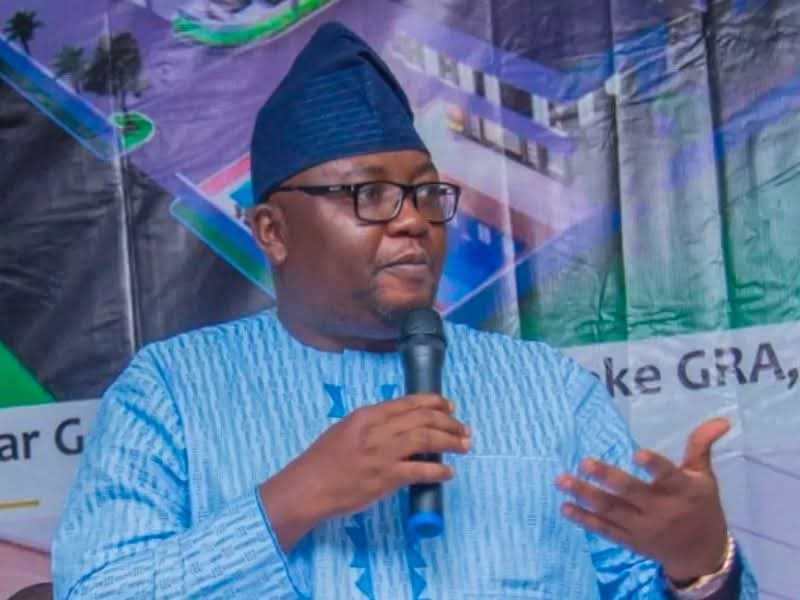
The Minister of Power, Adebayo Adelabu, has resigned his appointment to focus on his governorship ambition in Oyo State.
Adelabu disclosed this in a resignation letter addressed to the President Bola Ahmed Tinubu on Tuesday, and routed through the Secretary to the Government of the Federation.
In the letter titled “Resignation as Honourable Minister of Power”, Adelabu expressed gratitude to the President for the opportunity to serve in his administration.
He said it was a privilege to contribute to efforts aimed at strengthening Nigeria’s power sector in line with the administration’s Renewed Hope Agenda.
Adelabu added that his decision to step down was to enable him fully pursue his aspiration to contest for the office of Governor of Oyo State.
He noted that the move would allow him to dedicate his time and resources to the political ambition.
The former minister also conveyed his appreciation and respect to the President for the confidence reposed in him during his tenure.
News
After Kwankwaso Joins ADC, Party Alleges Plot by APC, Senior Lawyers to Force INEC Into Illegal Takeover
By Yusuf Danjuma Yunusa
The African Democratic Congress (ADC) has alleged that the All Progressives Congress (APC)-led federal government is mounting pressure on the Independent National Electoral Commission (INEC) to interfere in the party’s leadership affairs, following the defection of Senator Rabiu Musa Kwankwaso to its ranks.
In a statement issued on Tuesday, the ADC claimed that a coordinated effort is underway to compel INEC Chairman, Professor Joash Ojo Amupitan (SAN), to invalidate party actions and alter its leadership structure before courts have ruled on pending disputes.
According to Mallam Bolaji Abdullahi, the party’s National Publicity Secretary, a letter dated March 28, 2026, written by a team of Senior Advocates of Nigeria, is being used to pressure the electoral commission. The letter reportedly seeks to enforce a particular interpretation of a Court of Appeal ruling regarding “status quo ante bellum” — a legal principle referring to the restoration of a prior state of affairs.
The ADC said the legal representatives went as far as threatening the INEC chairman with arrest should he fail to accede to their request within seven days.
“The authors of this vexatious letter are attempting to pressure INEC to take sides and grant them what no court in Nigeria has granted,” Abdullahi said in the statement.
The party dismissed claims by Hon. Nafiu Bala Gombe, whom it described as an expelled former member, asserting that he was never the party’s chairman and had previously resigned his position.
“What we are witnessing is a convergence of legal pressure and political intent by a ruling party that is unsettled by the growing appeal of the ADC,” Abdullahi added.
The ADC described itself as “the only viable opposition party left in the country” and vowed to resist what it called a “grand plan” to destabilise its leadership using all constitutional means.
Kwankwaso, a former governor of Kano State and presidential candidate of the New Nigeria Peoples Party (NNPP) in the 2023 general election, recently defected to the ADC — a move the party claims has unsettled ruling party officials.
The ADC called on INEC to remain guided by the constitution and resist pressure, stating that the matter “is bigger than the ADC” and concerns whether Nigerians can freely choose an alternative political path.

Court Ends NNPP Crisis, Restores Party Leadership to Founder

Why Nura Manu Soro should be APC candidate in Bauchi State come 2027

JUST IN: Adelabu Resigns as Power Minister to Pursue Oyo Governorship Bid

After Kwankwaso Joins ADC, Party Alleges Plot by APC, Senior Lawyers to Force INEC Into Illegal Takeover

Steron community development through football competition kicks off in Kano

The Governor Who Chose His People Over His Politics: Abba Yusuf and the Moral Courage Behind Kano First
Restoring the Glory That Was Always There: Governor Abba Kabir Yusuf and the Historical Vision Behind Kano First

Tinubu to Swear in Olatunji Disu as Inspector-General of Police on Wednesday

NDLEA Clarifies: Drug Case Against Abba Kyari Still Active After Court Discharge

Nigeria’s Education Minister Tunji Alausa Weighs Resignation to Run for Lagos Governor
Court Ends NNPP Crisis, Restores Party Leadership to Founder
Why Nura Manu Soro should be APC candidate in Bauchi State come 2027
JUST IN: Adelabu Resigns as Power Minister to Pursue Oyo Governorship Bid
After Kwankwaso Joins ADC, Party Alleges Plot by APC, Senior Lawyers to Force INEC Into Illegal Takeover
Steron community development through football competition kicks off in Kano
The Governor Who Chose His People Over His Politics: Abba Yusuf and the Moral Courage Behind Kano First
Restoring the Glory That Was Always There: Governor Abba Kabir Yusuf and the Historical Vision Behind Kano First
Tinubu to Swear in Olatunji Disu as Inspector-General of Police on Wednesday
NDLEA Clarifies: Drug Case Against Abba Kyari Still Active After Court Discharge
Nigeria’s Education Minister Tunji Alausa Weighs Resignation to Run for Lagos Governor
-

 Opinion4 years ago
On The Kano Flyovers And Public Perception
-

 Features5 years ago
How I Became A Multimillionaire In Nigeria – Hadiza Gabon
-

 Opinion5 years ago
Kano As future Headquarters Of Poverty In Nigeria
-

 History5 years ago
Sheikh Adam Abdullahi Al-Ilory (1917-1992):Nigeria’s Islamic Scholar Who Wrote Over 100 Books And Journals
-

 Opinion4 years ago
My First Encounter with Nasiru Gawuna, the Humble Deputy Governor
-

 History5 years ago
The Origin Of “Mammy Market” In Army Barracks (Mammy Ochefu)
-

 History4 years ago
The History Of Borno State Governor Professor Babagana Umara Zulum
-

 News4 years ago
Federal University Of Technology Babura To Commence Academic Activities September