
News
Abdulaziz Abdulaziz: The Man for the Job
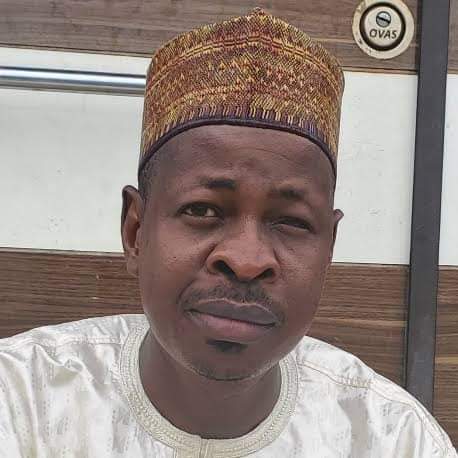
By Nasiru Salisu Zango
Dear Mr. President,
In light of the recent voluntary resignation of the presidential spokesperson, there is a significant need to fill the vacant position with a capable and competent individual. In my humble opinion, there is no better choice than Abdulaziz Abdulaziz, your current Special Assistant on Media, a man of exceptional intellect, experience, and dedication.
Abdulaziz’s capacity to step into this critical role would be the most astute decision for your administration. His extensive background as a reporter and editor for esteemed publications such as Blueprint, Premium Times, and Daily Trust has left a legacy of excellence that continues to resonate across Nigeria. Abdulaziz is a recipient of numerous awards, including the prestigious Wole Soyinka Center for Investigative Journalism Award. His integrity, dedication, and work ethic remain exemplary despite his elevation into the corridors of power within Aso Rock Villa. Arrogance and vanity are foreign concepts to him, as he continues to maintain strong relationships with colleagues and friends across the media industry.
Despite the challenging task of defending the present administration, especially given the economic policies that have brought hardship to many Nigerians, Abdulaziz has consistently worked with dedication to enlighten the public. He reminds Nigerians that though the present may be tough, there is light at the end of the tunnel. His unwavering optimism and thoughtful communication have been crucial in maintaining public morale during these difficult times.
Abdulaziz is known not only for his professional prowess but also for his personal character. He is accommodating, approachable, and always ready to embrace friends and colleagues as family. These attributes have earned him respect from a wide range of people, both within and outside the media industry. His ability to foster inclusivity and carry everyone along has made him a respected figure across political divides.
Appointing Abdulaziz as your next presidential spokesperson would be a strategic move, one that would bring both competence and credibility to the role. His popularity, especially in the northern part of the country where he hails from, would enhance your administration’s connection with various regions.
As a Nigerian citizen and social commentator, I urge you, Mr. President, and the esteemed individuals within Aso Rock, to give this recommendation serious consideration. Abdulaziz Abdulaziz is more than qualified for the job.
His intelligence is unparalleled, his experience speaks for itself, and his ability to use his pen as a powerful tool is second to none.
This recommendation is not made out of personal friendship, but out of a deep conviction that Abdulaziz Abdulaziz is indeed the man for the job. His capacity to succeed Ajuri Ngelale as presidential spokesperson would be an invaluable asset to your administration.
Sincerely,
Nasiru Zango
7th Sept 2024.







News
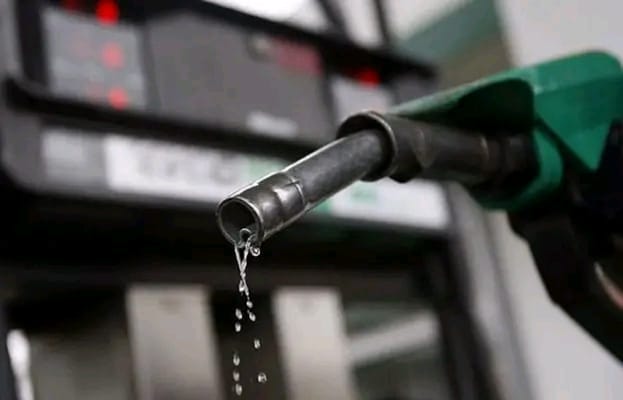
Special Report:Fuel Hike and the Weight of Distant Wars
By Yusuf Danjuma Yunusa
The faint hum of generators, once the relentless backdrop of life in the heart of its place, a heavier quiet has settled—born of grim resignation as the ripple effects of a distant geopolitical storm crash onto the wallets of ordinary Nigerians.
Here in Mararaba, the complaint is not just about the new numbers on the fuel pump. It is about the arithmetic of survival that no longer adds up. The latest hike in the price of Premium Motor Spirit (PMS), which dealers attribute to the escalating crisis in the Middle East—a conflict many here note involves the United States, Israel, and Iran—has plunged residents into familiar but increasingly unbearable hardship.
To understand the human weight of this policy, I took to the streets and queues of Mararaba, annex to the Federal Capital Territory, to speak with those who feel they are paying the price for a war thousands of miles away.
At a crowded NNPC filling station in Nyanya, where the queue of vehicles stretched nearly a kilometer under the harsh sun, I met Nasir, a commercial bus driver. He leaned against his battered Korope bus, wiping sweat from his brow, watching the attendant update the price board.
“Look at this,” Nasir said, his voice a mix of anger and exhaustion. “Just last week, I was managing. Now they tell us because there is war between Israel and Iran, and because America supports Israel, the price must go up again. What does that have to do with us in Abuja?”
Nasir’s math is simple but devastating. “I used to buy fuel here for around N700. Now we are pushing N1,000 and above, and they say it might go to N1,500 if the crisis continues. My transport fare? If I double it, my passengers—civil servants, traders, students—cannot pay. If I don’t, I go home with nothing. The politicians in America and Israel are fighting a war with our stomachs.”
His lament echoes the reality of transport inflation, which has spiked dramatically since the removal of subsidies, now worsened by global tensions.
Across town on Abacha Road, at a modern but nearly empty restaurant, I found Yakubu, a small business owner who runs a catering service. For him, the fuel hike is a “tax” on everything he buys.
“It is a chain. I cook with gas, but the price of gas goes up because the dollar is high and the market fears the war. I transport food to clients, but fuel for my van is now this much,” he said, snapping his fingers. “The government tells us it is ‘market forces’ and the war in the Middle East. I am not a fool. I know the Middle East is unstable because of the US and its allies. But why is Nigeria’s economy tied so tightly to their conflicts? Why are we still importing fuel when we have refineries? We are suffering for their wars and our leaders’ incompetence.”
At Mararaba market, the complaints are less about geopolitics and more about the immediate struggle to fill a pot. Anwar, a tailor, sat idle at his sewing machine. The shop beside him, a provisions store, was dark.
“My neighbor cannot afford to run his generator today,” Anwar said, gesturing to the dark shop. “He sells cold drinks and water. If he has no light, he has no business. If he uses a generator, his profit is gone because diesel is over N1,000 in some places. This is the reality. America, Israel, and Iran are fighting, and my neighbor loses his livelihood.”
The sentiment is backed by data. According to a recent NOIPolls report, 85% of Nigerians disapprove of the fuel subsidy removal, and 93% believe the country is heading in the wrong direction. For people like Anwar, the official explanations ring hollow.
“They say it is deregulation, that it is global politics,” he continued, shaking his head. “I say it is abandonment. We are being buried alive by policies made in Washington and Tel Aviv, carried out by Abuja.”
The geopolitical angle is a particularly bitter pill to swallow. In a country already grappling with high living costs, the idea that a conflict far removed from Africa’s Sahel could dictate the price of commuting to work or powering a small clinic breeds deep resentment.
Ibrahim, a retiree and civil servant, sat on his veranda in Angwa Katsinawa listening to the rare silence where generators once roared.
“Since 2023, when President Tinubu said ‘subsidy is gone,’ we have been on a rollercoaster to poverty. Now this war gives them the perfect excuse to finish us off. The government says the NNPC made this decision based on ‘market realities.’ What reality? The reality that America supports Israel, and Iran threatens retaliation? Why must my pension suffer for that?”
His frustration touches on a key point raised by experts: the escalating conflict threatens to push the subsidy burden—or the cost passed to consumers—past a staggering N644 billion monthly if oil prices spike.
As the sun set over Mararaba, taxis and buses were fewer on the roads. Many drivers, like Sadiq, a university graduate who drives for a ride-hailing app, simply parked for the day.
“I cannot make money if I spend all day in a fuel queue or if 70% of what I earn goes into the tank,” Sadiq said, scrolling through his phone, which showed a fraction of his usual earnings. “They talk about the crisis in the Middle East. But we have a crisis here. It is a crisis of hunger. Until the US, Israel, and Iran stop fighting, we suffer. Until our government decides to fix our refineries, we suffer. We are just pawns.”
As I left him, Sadiq called out, “Tell them we are tired. We are tired of paying for wars we did not start.”
It is a sentiment that hangs heavy in Nigeria’s air—a feeling of being trapped between the anvil of global politics and the hammer of local economic policy.
News
CNG Expansion: Tinubu Orders 100,000 Kits to Ease Fuel Pain

By Yusuf Danjuma Yunusa
President Bola Tinubu has ordered the urgent deployment of 100,000 Compressed Natural Gas (CNG) conversion kits within the next two to three weeks, aiming to mitigate the burden of soaring petrol and diesel prices on the Nigerian public.
Ismaeel Ahmed, the Executive Chairman of the Presidential Initiative on Compressed Natural Gas (Pi-CNG), disclosed this to State House correspondents on Tuesday following a briefing with the President in Abuja.
According to Ahmed, the directive was prompted by escalating global petroleum prices linked to the ongoing conflict in the Middle East, which has led to a sharp increase in domestic transportation costs.
“The President is keenly monitoring global developments, particularly the situation in the Middle East and its direct impact on the rising cost of petrol and diesel here at home,” Ahmed stated. “He summoned this meeting to assess our progress at Pi-CNG and determine how we can rapidly scale up the availability of gas across the country to ensure Nigerians benefit from lower transportation costs.”
Ahmed revealed that Tinubu issued a firm mandate to accelerate the distribution of conversion kits, facilitating a widespread shift from traditional fuels to natural gas.
“Mr. President has given a clear directive for the immediate deployment of approximately 100,000 kits,” Ahmed said. “We are collaborating with a broad coalition of stakeholders to incentivize this process and push these kits into the market without delay. The goal is to convert a significant number of vehicles and tricycles, enabling more citizens to access and utilize gas.”
The Pi-CNG boss confirmed that the rollout is scheduled to begin within the next two to three weeks. He added that conversion centres across the country are expected to become highly active as the programme gains momentum.
News
Just In:Governor Yusuf Sacks Head of Service
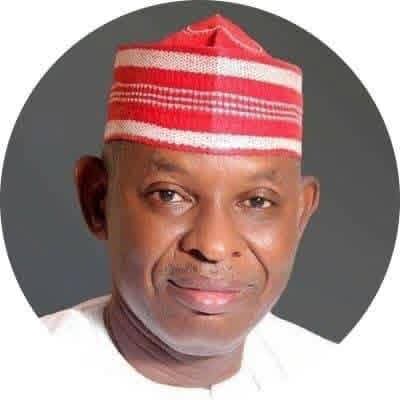
Governor of Kano State, Alhaji Abba Kabir Yusuf, has relieved the State Head of Service, Alhaji Abdullahi Musa, of his appointment with immediate effect.
This was contained in a statement issued by the governor’s spokesperson, Sunusi Bature Dawakin Tofa, on Tuesday evening.
The decision is part of the ongoing efforts by the present administration to reposition the state civil service for greater efficiency, discipline, and improved service delivery across all government institutions.
Governor Yusuf expressed appreciation to the outgoing Head of Service for his contributions and dedication to the service of Kano State during his tenure.
“We wish him the best in his future endeavours and pray for his continued success in all aspects of life.”
The Governor also directed that Hajiya Bilkisu Shehu Maimota, the Permanent Secretary, Admin and General Services at the Cabinet Office, to serve in acting capacity pending the appointment of a substantive Head of Service.
By this announcement, the outgoing Head of Service is directed to handover the affairs of the office to the Ag. Head of Service latest tomorrow, Wednesday 11th March, 2026
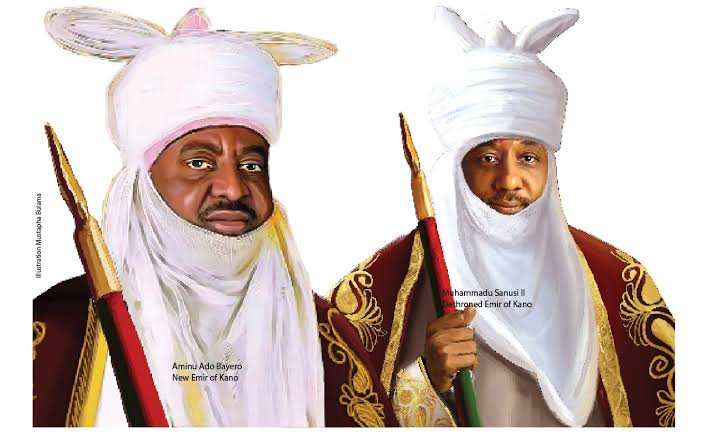
Restoring the Dignity of the Kano Emirate

Restoring the Glory That Was Always There: Governor Abba Kabir Yusuf and the Historical Vision Behind Kano First

Special Report:Fuel Hike and the Weight of Distant Wars

CNG Expansion: Tinubu Orders 100,000 Kits to Ease Fuel Pain
Just In:Governor Yusuf Sacks Head of Service

BREAKING: El-Rufai Suffers Nose Bleeding in EFCC Custody, Family Denied Access

Breaking:NAHCON Chairman Prof.Abdullahi Saleh Resigns

The Essence of Great Health During Ramadan—By Dr. Nelson Aluya

Alhaji Alkasim Musa Rewards Kano Pillars Players with ₦1.2m After Remo Stars Victory

Honourable Murtala Sule Garo; he who the cap fits
Restoring the Dignity of the Kano Emirate
Restoring the Glory That Was Always There: Governor Abba Kabir Yusuf and the Historical Vision Behind Kano First
Special Report:Fuel Hike and the Weight of Distant Wars
CNG Expansion: Tinubu Orders 100,000 Kits to Ease Fuel Pain
Just In:Governor Yusuf Sacks Head of Service
BREAKING: El-Rufai Suffers Nose Bleeding in EFCC Custody, Family Denied Access
Breaking:NAHCON Chairman Prof.Abdullahi Saleh Resigns
The Essence of Great Health During Ramadan—By Dr. Nelson Aluya
Alhaji Alkasim Musa Rewards Kano Pillars Players with ₦1.2m After Remo Stars Victory
Honourable Murtala Sule Garo; he who the cap fits
-

 Opinion4 years ago
On The Kano Flyovers And Public Perception
-

 Features5 years ago
How I Became A Multimillionaire In Nigeria – Hadiza Gabon
-

 Opinion5 years ago
Kano As future Headquarters Of Poverty In Nigeria
-

 History5 years ago
Sheikh Adam Abdullahi Al-Ilory (1917-1992):Nigeria’s Islamic Scholar Who Wrote Over 100 Books And Journals
-

 Opinion4 years ago
My First Encounter with Nasiru Gawuna, the Humble Deputy Governor
-

 History5 years ago
The Origin Of “Mammy Market” In Army Barracks (Mammy Ochefu)
-

 History4 years ago
The History Of Borno State Governor Professor Babagana Umara Zulum
-

 News4 years ago
Federal University Of Technology Babura To Commence Academic Activities September