
News
2023 Gov Elections:Concerned Yagbs Citizens In Diaspora Progressives Movement Raises Alarm Over Political Impunity In Yagba Land
“There may be times when we are powerless to prevent injustice, but there must never be a time when we fail to protest.”
Nothing can stop the power of a committed and determined people to make a difference in our society.
The duo above popular quotes best described our feelings towards the disturbing political atmosphere in Yagba and extensively in Kogi land.
Ahead of the forth coming Kogi state governorship elections, Yagba Progressive Movement in strong terms frown at what we would best tag as the barbaric and uncivilized pattern of politicking by some politicians in the state.
Hon Leke Abejide as the most popular and widely acceptable governorship candidate of all those contending for the exalted position of the governor of Kogi state has committed no crime to warrant the level of incitement and provocations been vented against him and his followers..
Abejide’s acceptability is the fruit of his output as Member representing Yagba federal constituency in the House of Representatives , where he is currently serving his second term in office.
That he transformed the how and why of federal representation is today magneting the massive followership he enjoys in the quest to proceed to secure the peoples mandate to become the next democratically anointed occupant of Kogi state government house.
Abejide has risen the bar of representation by putting smiles on the faces of widows, youth and students, his magic touch on infrastructures, roads, health, water and agricultural empowerment programs has convinced doubting Thomases over his large political heart.
Abejide has a stool in the homes in Yagba land.
We make bold to state that , It’s on record that the non performance of the current Yahaya Bello government in the last over 7 years, has left Yagba sector of the state in abject poverty and abandonment in the supposed even distribution of the state resources.
Our local government have been strangulated by being denied their mandatory funds, leading to non payment of salaries of teachers and local government workers, pensions and gratuity , all are not been paid , likewise feasible project is now an anathema in our area.
Our roads are in deplorable conditions, cutting off our people completely from accessing other parts of the state.
The level of hardship imposed on our people is disheartening .
The cumulative failure of the Yahaya Bello government has made Ododo, the APC candidate very difficult to market , if given the mandate by the people , it is a widely accepted belief that he is going to be the continuation of Yahaya Bello’s government , which the people have vowed to resist.
The people are determined and resolute that this is the time to hand their mandate to Hon Leke Abejide, who has earned their trust and confidence
To the promoters of APC and their drivers of the Ododo project in Yagba land, the fear of Leke Abejide is the beginning of wisdom.
Thus they have resorted to pooling down the billboards of Hon Leke Abejide in Yagba Mopa Amuro and Yagba West LGA.
This set of unskilled political jobbers, we learnt that they were to host Ododo in Yagba and needed to create a false impression, we know that the people have made up their minds to vote for Leke Abejide and with or without billboards, but it is important we state here, that this is unacceptable and we of the above group condemn these shameless acts in strong terms.
We hereby call on the governor of Kogi state, His Excellency, Alh Yahaya Bello to call the APC members of Mopa Amuro and Yagba West to order, if this senseless acts are not curtailed, it would lead to the possible break down of law and order in the area, let all those involved in this lawlessness know for sure that this acts of criminalities will be met with very strong resistance.
Further provocative attacks on the campaign materials installed or pasted by the supporters of Hon Leke Abejide will not be tolerated.
We call on the beloved president of the Federal Republic of Nigeria , His Excellency Bola Ahmed Tinubu to call to order the executive governor of Kogi state, such only will usher in a free, fair and violence free campaigns and election.
It is our conviction and firm belief that no blood of any Kogites is worth the election of 11th November, 2023.
S S OLORUNSHOLA
Movement President










News
Hajiya Umma El-Rufai, Mother of Former Kaduna Governor, Passes Away
By Yusuf Danjuma Yunusa
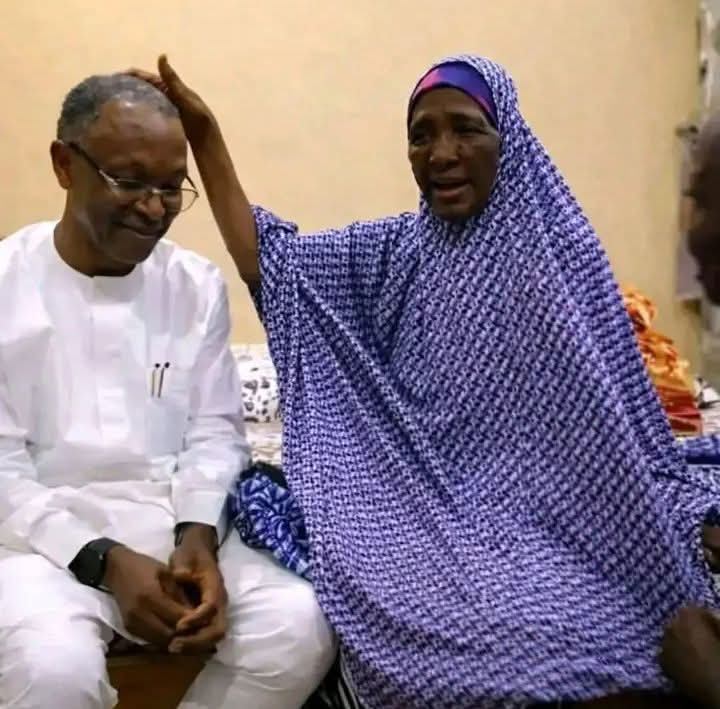
Hajiya Umma El-Rufai, the mother of former Kaduna State governor, Mallam Nasir El-Rufai, has died.
According to family sources, she passed away on Friday afternoon. While details surrounding her death remain unclear at this time, the family has since confirmed the sad event.
The announcement was made public by her grandson, Bello El-Rufai, in a statement shared on Facebook. The statement read:
“Inna lillahi wa inna ilayhi raji’un. From Allah SWT we came and to Him we shall all return.
I would like to inform the public of the demise of my grandmother, Hajiya Umma El-Rufai, who passed away a few hours ago.
She is the biological mother of our father, Mallam Nasir El-Rufai. We are grateful for the life she lived and pray that Allah SWT bless her gentle soul.
May He bless the souls of the parents we have lost. On behalf of our family, we seek your prayers. Thank you.”
The family is expected to release further details regarding funeral arrangements in due course.
News
ASUU Threatens Nationwide Shutdown

By Yusuf Danjuma Yunusa
The Academic Staff Union of Universities has warned the Federal Government of Nigeria to immediately implement the newly approved salary structure for university lecturers or face a possible nationwide shutdown of public universities.
The union issued a four-day ultimatum on Thursday, with its president, Christopher Piwuna, saying failure to act within the deadline would trigger a strong response.
Speaking at Sa’adu Zungur University in Bauchi State, Piwuna said the government must begin payment under the new salary arrangement without further delay.
“We have issued a four-day ultimatum from today to the federal government to commence payment of the newly approved salary structure. Failure to comply will attract a strong response from the union,” he said.
The warning comes months after ASUU and the federal government signed a renegotiated agreement in January, aimed at resolving long-standing disputes and preventing the recurring strikes that have plagued Nigeria’s university system.
At the heart of the agreement is a revised salary structure designed to improve lecturers’ welfare and finally address issues stemming from the controversial 2009 FG-ASUU pact, which remained largely unimplemented for years.
News
APC Convention:FG Orders Remote Work for Offices Near Eagles Square
By Yusuf Danjuma Yunusa
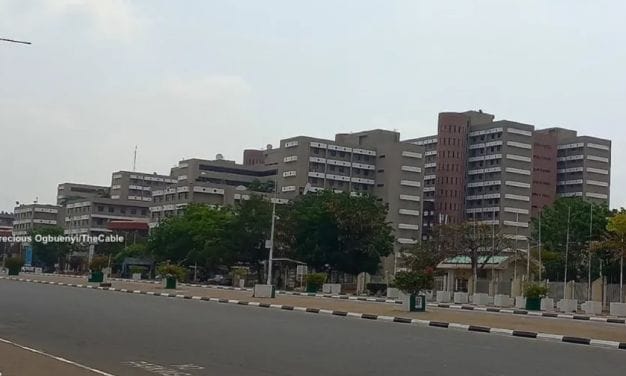
The Federal Government has directed all civil servants working in offices around Eagle Square and the Federal Secretariat complex in Abuja to work from home this weekend.
The directive, issued in a circular by the Office of the Head of the Civil Service of the Federation, is aimed at easing congestion ahead of the All Progressives Congress (APC) national convention. The event is scheduled to hold on March 27 and 28 at Eagle Square.
The measure is intended to ensure smooth access and security around the convention venue.

Hajiya Umma El-Rufai, Mother of Former Kaduna Governor, Passes Away

ASUU Threatens Nationwide Shutdown

APC Convention:FG Orders Remote Work for Offices Near Eagles Square

Nigeria’s Power Supply to Improve in Two Weeks as Gas Pipeline Work Nears Completion

Court Orders Arrest of PDP Factional Chairman Kabiru Turaki for Skipping Trial

The Governor Who Chose His People Over His Politics: Abba Yusuf and the Moral Courage Behind Kano First

FREEDOM OF SPEECH, NOT FREEDOM FROM CONSEQUENCE: A CITIZEN’S CALL FOR RESPONSIBLE PUBLIC COMMENTARY

Press Freedom: IPI Nigeria Calls on New Acting IGP to End Police Harassment of Journalists
Tinubu to Swear in Olatunji Disu as Inspector-General of Police on Wednesday
Restoring the Glory That Was Always There: Governor Abba Kabir Yusuf and the Historical Vision Behind Kano First
Hajiya Umma El-Rufai, Mother of Former Kaduna Governor, Passes Away
ASUU Threatens Nationwide Shutdown
APC Convention:FG Orders Remote Work for Offices Near Eagles Square
Nigeria’s Power Supply to Improve in Two Weeks as Gas Pipeline Work Nears Completion
Court Orders Arrest of PDP Factional Chairman Kabiru Turaki for Skipping Trial
The Governor Who Chose His People Over His Politics: Abba Yusuf and the Moral Courage Behind Kano First
FREEDOM OF SPEECH, NOT FREEDOM FROM CONSEQUENCE: A CITIZEN’S CALL FOR RESPONSIBLE PUBLIC COMMENTARY
Press Freedom: IPI Nigeria Calls on New Acting IGP to End Police Harassment of Journalists
Tinubu to Swear in Olatunji Disu as Inspector-General of Police on Wednesday
Restoring the Glory That Was Always There: Governor Abba Kabir Yusuf and the Historical Vision Behind Kano First
-

 Opinion4 years ago
On The Kano Flyovers And Public Perception
-

 Features5 years ago
How I Became A Multimillionaire In Nigeria – Hadiza Gabon
-

 Opinion5 years ago
Kano As future Headquarters Of Poverty In Nigeria
-

 History5 years ago
Sheikh Adam Abdullahi Al-Ilory (1917-1992):Nigeria’s Islamic Scholar Who Wrote Over 100 Books And Journals
-

 Opinion4 years ago
My First Encounter with Nasiru Gawuna, the Humble Deputy Governor
-

 History5 years ago
The Origin Of “Mammy Market” In Army Barracks (Mammy Ochefu)
-

 History4 years ago
The History Of Borno State Governor Professor Babagana Umara Zulum
-

 News4 years ago
Federal University Of Technology Babura To Commence Academic Activities September