
News
Dangote: Our acquisition of Obajana Cement plant followed Due Process
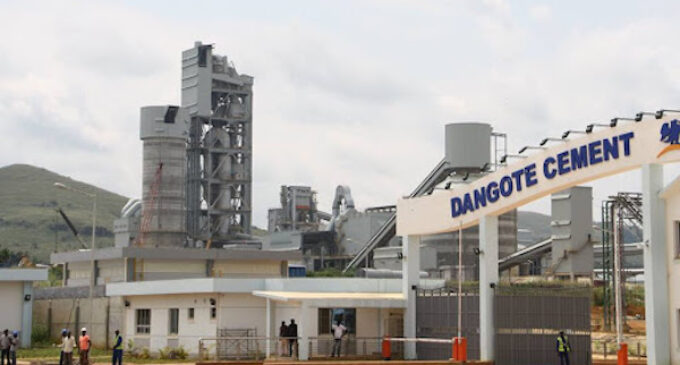
Obajana Cement PLC was incorporated in 1992 and as at 2002 had no paid up shares
* Kogi State has no equity interest in Obajana Cement Plc
* The plant and machinery were conceived, designed, procured, built, and paid for solely by DIL, well after it acquired the shares in Obajana Cement Company
* The land on which the Obajana Cement Plant is built was acquired solely by Dangote Industries Limited (DIL) in 2003
* Taxes paid to Kogi Govt yearly since production commenced in 2007
The management of Dangote Industries Limited has insisted that its acquisition of the Obajana Cement Plc in 2002 followed due process, contrary to claims by the Kogi State government.
The conglomerate asserted that Kogi State government has no equity interest in Obajana Cement Plc. It also stated that the company as a responsible corporate organisation has been paying relevant State taxes, levies and charges to the Kogi State government since 2007 when production commenced in the acquired cement plant.
These clarifications were contained in a statement issued by the management of Dangote Industries Limited titled ‘Obajana Cement Plant: Separating Facts from Fiction.’
According to the statement, “This is a statement issued for the sole purpose of addressing the concerns and apprehensions of the stakeholders of Dangote Cement Plc (DCP) especially the over twenty-two thousand people it employs directly, and more indirectly, as well as thousands of contractors, wholesalers, users of our products, our financiers and shareholders.
“At a time of significant economic challenges that we face as a nation, we believe all must be done to keep our economy running effectively, our people employed, businesses that depend on us thriving and not discourage those who take the risks of needed, lawful and significant investments in our economy. The shutdown of our plant has materially jeopardised the economic wellbeing of our country without any regard for its significant consequences.
“Whilst reserving our rights to proceed to arbitration in accordance with the extant agreement, we have reported the unlawful invasion by KSG and the consequential adverse effects of same to all the relevant authorities, including the Federal Government of Nigeria who has now intervened in the matter. It is hoped that the dispute resolution process we have initiated will quickly resolve the disputes and allow us to focus on our business without distraction and continue our significant contribution to our national economy. It is in this context that we state in brief as follows”, the company added.
According to the statement, “The Obajana Cement Plant is one of the most critical components of economic activity in the nation, being one of the highest taxpayers, and vehicle for one of the largest companies invested in by thousands of Nigerian and foreign investors. Its most important assets are (1) its land, the plant and machinery thereon, and (2) the vast limestone deposit covered by mining leases issued under licence by the Federal Government of Nigeria (FGN).”
The company clarified that the land on which Obajana Cement Plant is built was solely acquired by Dangote Industries Limited (DIL) in 2003. “The land on which the Obajana Cement Plant is built was acquired solely by Dangote Industries Limited (DIL) in 2003, well after it had acquired the shares in Obajana Cement Company in 2002, following the legally binding agreement it entered into with KSG to invest in Kogi State. DIL was issued three Certificates of Occupancy in its name after payment of necessary fees and compensation to landowners.
Nigeria’s ace photojournalist, Maikatanga wins GLF Africa 2022 award
“The plant and machinery were conceived, designed, procured, built, and paid for solely by DIL, again, well after it acquired the shares in Obajana Cement Company. The limestone and other minerals used by the Obajana Cement Plant, by the provisions of the Nigerian Constitution belonged to the Federation, with authority only in the FGN and not the State in which the minerals are situated, to grant licences to extract and mine the resources”, the company explained.
“After the agreement with the KSG, DIL applied for and obtained mining leases over the said limestone from FGN, at its cost and has complied with the terms of the leases since inception. The Government of Kogi State had no minerals to give, had no assets to give, and only invited DIL as most responsible governments do to come into the State and invest in a manner that will create employment, develop the State, and earn it taxes”, the statement added.
In a section of the statement titled, ‘The Incorporation of OCP and the Invitation by KSG’, the company noted that, “In 1992, the Kogi State Government incorporated Obajana Cement PLC (OCP) as a public limited liability company. Sometime in early 2002, about 10 years after the incorporation of the OCP (which still had no assets or operations as of that time), KSG invited Dangote Industries Limited (DIL) to take the opportunity of the significant limestone deposit in the State by establishing a cement plant in the State.
“Following several engagements and assessment of the viability of the proposed opportunity, DIL agreed that it would establish a cement plant in Kogi State and provide the entirety of the substantial capital required for the investment.
“DIL also agreed, following a specific request by KSG, to use the OCP name (albeit only existing on paper as of that time, and without any assets or operations) for the time being, as the vehicle for this investment
On 30 July 2002, KSG and DIL entered into a binding agreement to document their understanding. The agreement was amended in 2003 and remains binding on, and legally enforceable by, the parties to same,” the statement explained.
On the issue of an Agreement between Dangote and Kogi State Government, the statement gave a summary. It noted that “it was agreed, inter alia, that: DIL would establish a cement plant with a capacity of 3,500,000 metric tonnes per annum; DIL shall hold 100% of the shareholding in OCP, and source for all the funds required to develop the cement plant; KSG shall have the option to acquire 5% equity shareholding in OCP within 5 years; and KSG shall grant tax relief and exemption from levies and other charges by KSG for a period of seven (7) years from the date of commencement of production.”
Consistent with the terms of agreement, DIL sourced for 100% of the funds that was used to develop the plant without any contribution from KSG. In line with its rights, ensuring alignment with the Dangote Brand, as part of internal restructuring and for better market recognition the name of OCP was changed to Dangote Cement Plc in 2010, and a number of other significant cement companies (such as the Benue Cement Company) owned by DIL were merged with OCP to become the enlarged Dangote Cement Plc”, the statement added.
On the issues of ‘Execution of the Agreement: The Plant, Taxes, Shares & Dividends’, the statement noted, “DIL assiduously and at significant cost met all the terms of the agreement between it and KSG in relation to OCP. It built the cement factory, much bigger and better than envisaged.
“KSG could not meet its financial obligations of contributing to the funding the plant in any form; neither could KSG fund acquisition of 5% equity shares in OCP when it was asked on a number of occasions to exercise the purchase option.
“KSG also did not meet its obligations to grant waiver of taxes, charges and levies that it could charge the operations, affairs and activities of OCP. Rather despite being entitled (under the terms of the agreement with KSG) to tax relief and exemption from charges and levies by KSG for a period of seven (7) years from the date of commencement of production, OCP (and now DCP) has paid all due sub-sovereign taxes, levies and charges to KSG since it commenced production in 2007.
“KSG does not have any form of investment or equity stake in OCP, so no dividend or other economic and/or shareholding rights whatsoever could have accrued to it from the operations of the company”, the statement added.
On the issue of the Acquisition of the Plant Site, the statement noted that, “After the agreement between DIL and KSG in 2002, DIL in 2003, applied to KSG for the acquisition of land for the plant site, and this application was granted with the issuance of three Certificates of Occupancy to DIL. DIL to the knowledge of KSG, paid substantive compensation to Obajana Farmland Owners located within the two (2) square kilometres plant site.
“Subsequently, in September 2004, DIL, in good faith, applied to the State Governor for the statutory consent for DIL to assign the plant site to OCP being DIL’s investment vehicle. This consent request was granted by the State Governor and the appropriate consent fees were paid by DIL”, it added.
Shedding more light on the company’s engagement with Kogi State Government, the statement explained that, “The investment of DIL in Kogi State through OCP was at the instance of the duly constituted government of Kogi State, done in accordance with the law of the State and all enabling laws in that regard, and the transaction documents were effectively, lawfully and duly executed by the Governor and Attorney General of the State (at the time), after internal approvals were obtained within the government.
“Since the inception of Alhaji Yahaya Bello’s administration in 2016, and regardless that government is a continuum, we have had series of enquiries about the ownership structure of the Dangote Cement PLC as it relates to the alleged interest of KSG; and had several engagements with the officers of the State government including Governor Yahaya Bello. At all of these engagements we have provided all the details and information supported by relevant documents, required by the Government and the State House of Assembly to confirm our lawful investment.
“For instance, in 2017, we were invited by the Judicial Commission of Inquiry, and we made our submission to the commission with relevant documents to support our position. We are yet to receive any feedback from the Judicial Commission of Inquiry. While still waiting to hear of the report of the Inquiry, we were invited by the State House of Assembly on the same matter earlier this year, and again, we provided evidence in support of our position that KSG does not have any equity or other interest in OCP or DCP.
“On Wednesday 5 October 2022, hundreds of dangerously armed men, other than law enforcement officers, attacked our cement plant in Obajana, Kogi State, destroyed our property, inflicted grievous injuries on many of our employees, and shutdown operations at the plant. KSG has admitted that the armed invaders acted on its instructions, and in furtherance of the recent enquiry by the Kogi State House of Assembly in connection with the ownership of the Obajana Cement Plant.
“Curiously, on 6 October 2022, a day after the shutdown of our facility in Obajana on the orders of KSG, Governor Bello addressed the public and announced that a Specialised Technical Committee which was set up as part of the recommendations of the Judicial Commission of Inquiry had just presented its recommendations, which have been accepted by KSG. This statement makes it abundantly clear that the shutdown of DCP’s plant occurred regardless of the Governor’s own confirmation that implementation of the recommendations of the Specialised Technical Committee was still pending”, the statement noted.
Focusing on the current state of play, the company said, “Whilst we do not want to speculate on the motivation for the spurious claims being made by KSG in relation to the ownership of the Company, which have resulted in the unfortunate unlawful forcible closure and damage of our plant, and injury of several people, we condemn in strongest possible terms, the unlawful shutdown of our plant by KSG sponsored armed-thugs, the damage to our property (including the looting of large sum of money kept in the office), and grievous injury inflicted on our employees by them.
“This disruption of operations at the plant has caused loss of revenue not only to our company and its customers but has also adversely impacted revenue due to both the Federal and State governments. It has also occasioned loss of jobs for the teeming youths who are daily paid workers that throng our plant for their daily sustenance.
Appealing for overall peace and calm, the statement noted, “We implore all our stakeholders, namely shareholders, customers, suppliers, employees, and the entire community of Obajana and Kogi State at large to remain calm while we follow the legitimate and lawful process to resolve this matter. We shall keep our stakeholders duly updated whilst we remain confident that the statutory and contractual rights ofB DIL shall be upheld by these legal processes which we have initiated.”










News
Breaking: Kwankwaso Resigns from NNPP
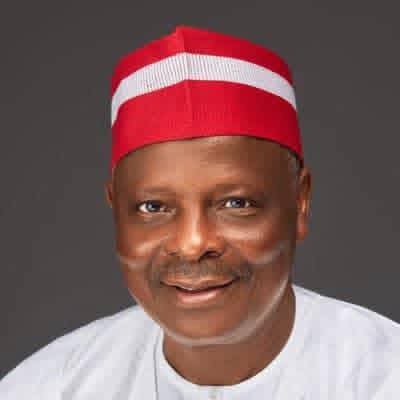
Former Governor of Kano State and 2023 Presidential Candidate of the New Nigeria People’s Party (NNPP), Senator Rabiu Musa Kwankwaso, has announced his resignation from the party. The declaration was made through a statement posted on his verified Facebook page earlier today.
Kwankwaso, who served as the NNPP’s National Leader and spearheaded its presidential campaign in the 2023 general elections, described the decision as “not an easy one.” He explained that his departure was driven by the need for “strategic realignment” in Nigeria’s evolving political landscape.
“Considering the current trajectory of the nation’s political landscape, which calls for strategic realignment, I have found it necessary to identify with another political platform that offers the best opportunity to effectively change the nation,” Kwankwaso stated.
In his resignation letter, Kwankwaso expressed gratitude to the NNPP’s leadership, including National Chairman Ajuji Ahmed, the National Working Committee, Board of Trustees, and members across all levels of the party. He also acknowledged the unwavering support of the Kwankwasiyya Movement, his loyal political base, pledging continued collaboration toward building “a better and more prosperous future for our dear nation.”
Kwankwaso’s exit marks a significant moment for the NNPP, which rose to prominence under his leadership and made notable gains in the 2023 elections. His next political move is expected to reshape alignments ahead of the 2027 general elections, though he has yet to disclose the platform he intends to join.
Political analysts suggest that Kwankwaso’s resignation could trigger a wave of defections within the NNPP, particularly among members of the Kwankwasiyya Movement, who have historically followed his political trajectory.
News
Northern Youth Group Backs Doguwa for Kano APC Leadership, Urges National Role

The Northern Youths Merger Groups under the All Progressives Congress (APC) has congratulated Hon. Umar Haruna Doguwa on his election as the APC State Chairman in Kano.
In a statement, the group’s National Coordinator, Hon. Musa Mujahid Zaitawa, described Doguwa as a hardworking and experienced politician capable of leading the party to victory.
The group highlighted Doguwa’s track record, noting his four-time leadership of political parties in Kano, as well as his service in two commissioner roles. According to the group, his vast experience will significantly contribute to the success of the APC.
The Northern Youths Merger Groups also called on APC stakeholders to nominate and support Doguwa for appointment as Chairman of the APC States Chairmen Forum, which comprises representatives from all 36 states and the Federal Capital Territory.
They expressed confidence that such an appointment would strengthen efforts toward securing victory for President Bola Ahmed Tinubu and the APC in the 2027 general elections, particularly in the North-West region.
The group further noted that the North-West zone is expected to deliver massive votes in the 2027 elections, describing it as one of the APC’s strongest strongholds with seven sitting governors.
They emphasized that Doguwa’s leadership, experience, and political influence would play a crucial role in ensuring the party’s success in both the presidential and gubernatorial elections.
News
Kwankwaso to Join ADC on Monday
By Yusuf Danjuma Yunusa
The Kwankwasiyya Movement has announced that former Kano State governor, Rabiu Musa Kwankwaso, will formally defect to the African Democratic Congress (ADC).
In a statement released on Saturday, the movement confirmed that Kwankwaso is expected to complete his registration with the party on Monday, 30 March 2026, in what observers describe as a significant shift in Nigeria’s political landscape ahead of future elections.
The announcement signals a new chapter for the influential northern politician and his loyal political base, widely known as the Kwankwasiyya Movement, whose backing could reshape party alignments and electoral calculations nationwide.
The full statement reads
PRESS STATEMENT
FOR IMMEDIATE RELEASE
Date: 28th March, 2026
The Kwankwasiyya Movement wishes to formally inform all its members across Nigeria and the general public that our Supreme Leader sanetor Rabiu Musa Kwankwaso has concluded all necessary arrangements to join the African Democratic Congress (ADC).
In furtherance of this decision, he will officially register with the party on Monday, 30th March 2026, at his residence, Gidan Kwankwasiyya, Miller Road, Kano, by 12pm.
Consequently, all members of the Kwankwasiyya Movement are hereby directed to proceed and register with the African Democratic Congress (ADC) in their respective wards, local government areas, and states immediately thereafter. Members are also encouraged to fully engage in all party activities and contribute actively toward the growth, development, and success of the party at all levels.
This strategic decision, as always, has been taken in the best interest of the movement, our state, and the nation at large. It reflects our unwavering commitment to the advancement of democratic values, good governance, and the collective aspirations of the people.
We emphasize that democracy must be protected, and the will of the people must always be respected.
The Kwankwasiyya Movement remains resolute, united, and committed to building a better and more inclusive Nigeria.
Signed
Dr. Habibu Sale Mohammed
Spokesperson
Kwankwasiyya Movement

Breaking: Kwankwaso Resigns from NNPP

Northern Youth Group Backs Doguwa for Kano APC Leadership, Urges National Role

Kwankwaso to Join ADC on Monday

Radiographers Kick Against Controversial Health Bills, Demand Immediate Withdrawal

2027 Race : President Tinubu’s Aide, Ja’oji Resigns to Contest

The Governor Who Chose His People Over His Politics: Abba Yusuf and the Moral Courage Behind Kano First

FREEDOM OF SPEECH, NOT FREEDOM FROM CONSEQUENCE: A CITIZEN’S CALL FOR RESPONSIBLE PUBLIC COMMENTARY
Restoring the Glory That Was Always There: Governor Abba Kabir Yusuf and the Historical Vision Behind Kano First

Press Freedom: IPI Nigeria Calls on New Acting IGP to End Police Harassment of Journalists
Tinubu to Swear in Olatunji Disu as Inspector-General of Police on Wednesday
Breaking: Kwankwaso Resigns from NNPP
Northern Youth Group Backs Doguwa for Kano APC Leadership, Urges National Role
Kwankwaso to Join ADC on Monday
Radiographers Kick Against Controversial Health Bills, Demand Immediate Withdrawal
2027 Race : President Tinubu’s Aide, Ja’oji Resigns to Contest
The Governor Who Chose His People Over His Politics: Abba Yusuf and the Moral Courage Behind Kano First
FREEDOM OF SPEECH, NOT FREEDOM FROM CONSEQUENCE: A CITIZEN’S CALL FOR RESPONSIBLE PUBLIC COMMENTARY
Restoring the Glory That Was Always There: Governor Abba Kabir Yusuf and the Historical Vision Behind Kano First
Press Freedom: IPI Nigeria Calls on New Acting IGP to End Police Harassment of Journalists
Tinubu to Swear in Olatunji Disu as Inspector-General of Police on Wednesday
-

 Opinion4 years ago
On The Kano Flyovers And Public Perception
-

 Features5 years ago
How I Became A Multimillionaire In Nigeria – Hadiza Gabon
-

 Opinion5 years ago
Kano As future Headquarters Of Poverty In Nigeria
-

 History5 years ago
Sheikh Adam Abdullahi Al-Ilory (1917-1992):Nigeria’s Islamic Scholar Who Wrote Over 100 Books And Journals
-

 Opinion4 years ago
My First Encounter with Nasiru Gawuna, the Humble Deputy Governor
-

 History5 years ago
The Origin Of “Mammy Market” In Army Barracks (Mammy Ochefu)
-

 History4 years ago
The History Of Borno State Governor Professor Babagana Umara Zulum
-

 News4 years ago
Federal University Of Technology Babura To Commence Academic Activities September