
News
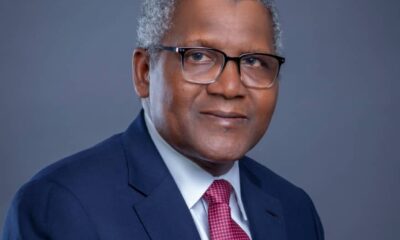
Dangote: Our acquisition of Obajana Cement plant followed Due Process
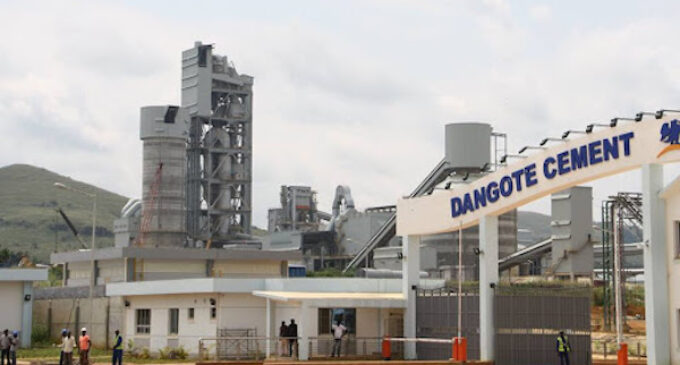
Obajana Cement PLC was incorporated in 1992 and as at 2002 had no paid up shares
* Kogi State has no equity interest in Obajana Cement Plc
* The plant and machinery were conceived, designed, procured, built, and paid for solely by DIL, well after it acquired the shares in Obajana Cement Company
* The land on which the Obajana Cement Plant is built was acquired solely by Dangote Industries Limited (DIL) in 2003
* Taxes paid to Kogi Govt yearly since production commenced in 2007
The management of Dangote Industries Limited has insisted that its acquisition of the Obajana Cement Plc in 2002 followed due process, contrary to claims by the Kogi State government.
The conglomerate asserted that Kogi State government has no equity interest in Obajana Cement Plc. It also stated that the company as a responsible corporate organisation has been paying relevant State taxes, levies and charges to the Kogi State government since 2007 when production commenced in the acquired cement plant.
These clarifications were contained in a statement issued by the management of Dangote Industries Limited titled ‘Obajana Cement Plant: Separating Facts from Fiction.’
According to the statement, “This is a statement issued for the sole purpose of addressing the concerns and apprehensions of the stakeholders of Dangote Cement Plc (DCP) especially the over twenty-two thousand people it employs directly, and more indirectly, as well as thousands of contractors, wholesalers, users of our products, our financiers and shareholders.
“At a time of significant economic challenges that we face as a nation, we believe all must be done to keep our economy running effectively, our people employed, businesses that depend on us thriving and not discourage those who take the risks of needed, lawful and significant investments in our economy. The shutdown of our plant has materially jeopardised the economic wellbeing of our country without any regard for its significant consequences.
“Whilst reserving our rights to proceed to arbitration in accordance with the extant agreement, we have reported the unlawful invasion by KSG and the consequential adverse effects of same to all the relevant authorities, including the Federal Government of Nigeria who has now intervened in the matter. It is hoped that the dispute resolution process we have initiated will quickly resolve the disputes and allow us to focus on our business without distraction and continue our significant contribution to our national economy. It is in this context that we state in brief as follows”, the company added.
According to the statement, “The Obajana Cement Plant is one of the most critical components of economic activity in the nation, being one of the highest taxpayers, and vehicle for one of the largest companies invested in by thousands of Nigerian and foreign investors. Its most important assets are (1) its land, the plant and machinery thereon, and (2) the vast limestone deposit covered by mining leases issued under licence by the Federal Government of Nigeria (FGN).”
The company clarified that the land on which Obajana Cement Plant is built was solely acquired by Dangote Industries Limited (DIL) in 2003. “The land on which the Obajana Cement Plant is built was acquired solely by Dangote Industries Limited (DIL) in 2003, well after it had acquired the shares in Obajana Cement Company in 2002, following the legally binding agreement it entered into with KSG to invest in Kogi State. DIL was issued three Certificates of Occupancy in its name after payment of necessary fees and compensation to landowners.
Nigeria’s ace photojournalist, Maikatanga wins GLF Africa 2022 award
“The plant and machinery were conceived, designed, procured, built, and paid for solely by DIL, again, well after it acquired the shares in Obajana Cement Company. The limestone and other minerals used by the Obajana Cement Plant, by the provisions of the Nigerian Constitution belonged to the Federation, with authority only in the FGN and not the State in which the minerals are situated, to grant licences to extract and mine the resources”, the company explained.
“After the agreement with the KSG, DIL applied for and obtained mining leases over the said limestone from FGN, at its cost and has complied with the terms of the leases since inception. The Government of Kogi State had no minerals to give, had no assets to give, and only invited DIL as most responsible governments do to come into the State and invest in a manner that will create employment, develop the State, and earn it taxes”, the statement added.
In a section of the statement titled, ‘The Incorporation of OCP and the Invitation by KSG’, the company noted that, “In 1992, the Kogi State Government incorporated Obajana Cement PLC (OCP) as a public limited liability company. Sometime in early 2002, about 10 years after the incorporation of the OCP (which still had no assets or operations as of that time), KSG invited Dangote Industries Limited (DIL) to take the opportunity of the significant limestone deposit in the State by establishing a cement plant in the State.
“Following several engagements and assessment of the viability of the proposed opportunity, DIL agreed that it would establish a cement plant in Kogi State and provide the entirety of the substantial capital required for the investment.
“DIL also agreed, following a specific request by KSG, to use the OCP name (albeit only existing on paper as of that time, and without any assets or operations) for the time being, as the vehicle for this investment
On 30 July 2002, KSG and DIL entered into a binding agreement to document their understanding. The agreement was amended in 2003 and remains binding on, and legally enforceable by, the parties to same,” the statement explained.
On the issue of an Agreement between Dangote and Kogi State Government, the statement gave a summary. It noted that “it was agreed, inter alia, that: DIL would establish a cement plant with a capacity of 3,500,000 metric tonnes per annum; DIL shall hold 100% of the shareholding in OCP, and source for all the funds required to develop the cement plant; KSG shall have the option to acquire 5% equity shareholding in OCP within 5 years; and KSG shall grant tax relief and exemption from levies and other charges by KSG for a period of seven (7) years from the date of commencement of production.”
Consistent with the terms of agreement, DIL sourced for 100% of the funds that was used to develop the plant without any contribution from KSG. In line with its rights, ensuring alignment with the Dangote Brand, as part of internal restructuring and for better market recognition the name of OCP was changed to Dangote Cement Plc in 2010, and a number of other significant cement companies (such as the Benue Cement Company) owned by DIL were merged with OCP to become the enlarged Dangote Cement Plc”, the statement added.
On the issues of ‘Execution of the Agreement: The Plant, Taxes, Shares & Dividends’, the statement noted, “DIL assiduously and at significant cost met all the terms of the agreement between it and KSG in relation to OCP. It built the cement factory, much bigger and better than envisaged.
“KSG could not meet its financial obligations of contributing to the funding the plant in any form; neither could KSG fund acquisition of 5% equity shares in OCP when it was asked on a number of occasions to exercise the purchase option.
“KSG also did not meet its obligations to grant waiver of taxes, charges and levies that it could charge the operations, affairs and activities of OCP. Rather despite being entitled (under the terms of the agreement with KSG) to tax relief and exemption from charges and levies by KSG for a period of seven (7) years from the date of commencement of production, OCP (and now DCP) has paid all due sub-sovereign taxes, levies and charges to KSG since it commenced production in 2007.
“KSG does not have any form of investment or equity stake in OCP, so no dividend or other economic and/or shareholding rights whatsoever could have accrued to it from the operations of the company”, the statement added.
On the issue of the Acquisition of the Plant Site, the statement noted that, “After the agreement between DIL and KSG in 2002, DIL in 2003, applied to KSG for the acquisition of land for the plant site, and this application was granted with the issuance of three Certificates of Occupancy to DIL. DIL to the knowledge of KSG, paid substantive compensation to Obajana Farmland Owners located within the two (2) square kilometres plant site.
“Subsequently, in September 2004, DIL, in good faith, applied to the State Governor for the statutory consent for DIL to assign the plant site to OCP being DIL’s investment vehicle. This consent request was granted by the State Governor and the appropriate consent fees were paid by DIL”, it added.
Shedding more light on the company’s engagement with Kogi State Government, the statement explained that, “The investment of DIL in Kogi State through OCP was at the instance of the duly constituted government of Kogi State, done in accordance with the law of the State and all enabling laws in that regard, and the transaction documents were effectively, lawfully and duly executed by the Governor and Attorney General of the State (at the time), after internal approvals were obtained within the government.
“Since the inception of Alhaji Yahaya Bello’s administration in 2016, and regardless that government is a continuum, we have had series of enquiries about the ownership structure of the Dangote Cement PLC as it relates to the alleged interest of KSG; and had several engagements with the officers of the State government including Governor Yahaya Bello. At all of these engagements we have provided all the details and information supported by relevant documents, required by the Government and the State House of Assembly to confirm our lawful investment.
“For instance, in 2017, we were invited by the Judicial Commission of Inquiry, and we made our submission to the commission with relevant documents to support our position. We are yet to receive any feedback from the Judicial Commission of Inquiry. While still waiting to hear of the report of the Inquiry, we were invited by the State House of Assembly on the same matter earlier this year, and again, we provided evidence in support of our position that KSG does not have any equity or other interest in OCP or DCP.
“On Wednesday 5 October 2022, hundreds of dangerously armed men, other than law enforcement officers, attacked our cement plant in Obajana, Kogi State, destroyed our property, inflicted grievous injuries on many of our employees, and shutdown operations at the plant. KSG has admitted that the armed invaders acted on its instructions, and in furtherance of the recent enquiry by the Kogi State House of Assembly in connection with the ownership of the Obajana Cement Plant.
“Curiously, on 6 October 2022, a day after the shutdown of our facility in Obajana on the orders of KSG, Governor Bello addressed the public and announced that a Specialised Technical Committee which was set up as part of the recommendations of the Judicial Commission of Inquiry had just presented its recommendations, which have been accepted by KSG. This statement makes it abundantly clear that the shutdown of DCP’s plant occurred regardless of the Governor’s own confirmation that implementation of the recommendations of the Specialised Technical Committee was still pending”, the statement noted.
Focusing on the current state of play, the company said, “Whilst we do not want to speculate on the motivation for the spurious claims being made by KSG in relation to the ownership of the Company, which have resulted in the unfortunate unlawful forcible closure and damage of our plant, and injury of several people, we condemn in strongest possible terms, the unlawful shutdown of our plant by KSG sponsored armed-thugs, the damage to our property (including the looting of large sum of money kept in the office), and grievous injury inflicted on our employees by them.
“This disruption of operations at the plant has caused loss of revenue not only to our company and its customers but has also adversely impacted revenue due to both the Federal and State governments. It has also occasioned loss of jobs for the teeming youths who are daily paid workers that throng our plant for their daily sustenance.
Appealing for overall peace and calm, the statement noted, “We implore all our stakeholders, namely shareholders, customers, suppliers, employees, and the entire community of Obajana and Kogi State at large to remain calm while we follow the legitimate and lawful process to resolve this matter. We shall keep our stakeholders duly updated whilst we remain confident that the statutory and contractual rights ofB DIL shall be upheld by these legal processes which we have initiated.”












News
State Police: 24 State Assemblies Approve Constitutional Amendment–Presidency
By Yusuf Danjuma Yunusa
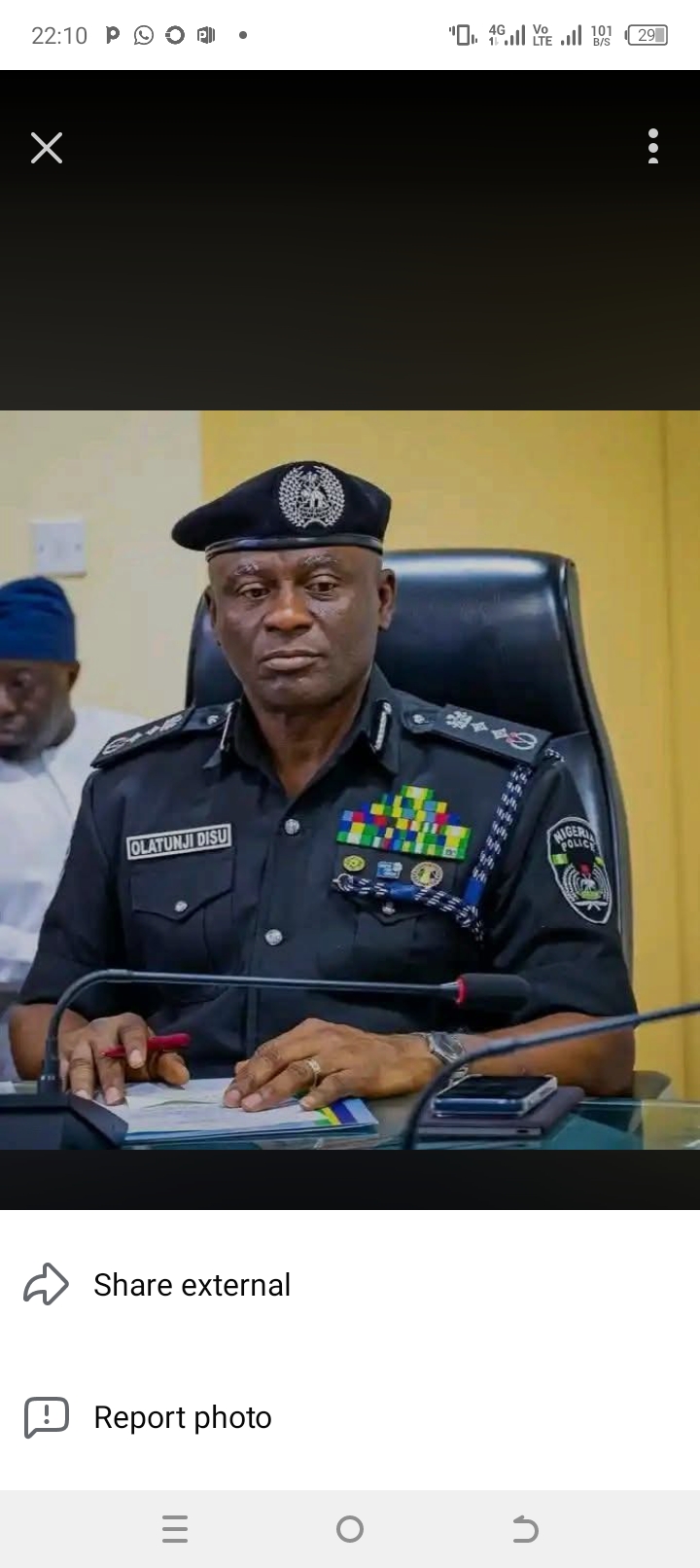
The Presidential Working Group on the National Policing Bill says 24 State Houses of Assembly have approved the Constitution (Sixth Alteration) Bill, 2026, providing for a dual policing system.
The approval meets the constitutional threshold of two-thirds of the 36 states required for the amendment to proceed.
The Working Group commended the State Houses of Assembly for their action and acknowledged the National Assembly for passing the amendment in both chambers.
This is contained in a statement issued by Femi Gbajabiamila, Chief of Staff to the president and chairman of the Working Group, on Friday in Abuja.
“In line with Section 9 of the Constitution, the amendment can now be returned to the National Assembly for transmission to Mr President for assent.”
Mr Gbajabiamila said the approval provided constitutional backing for the policing framework outlined in the Working Group’s draft National Policing Bill, 2026.
He added that the draft bills were undergoing legislative drafting, review and validation at the Federal Ministry of Justice.
The bills are expected to be returned on or before October 30, after which the Working Group will give them final consideration before presenting them to President Bola Tinubu.
The Working Group urged stakeholders to support a smooth transition to a dual policing system aimed at improving public safety.
News
ECOWAS Court Faults Process Backed by Council of Ministers in Darma Removal Case
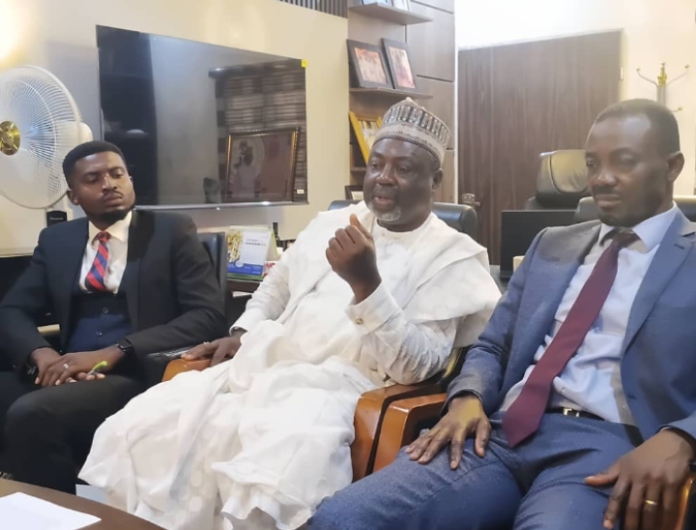
The ECOWAS Community Court of Justice has ruled that the removal and replacement of former ECOWAS Commissioner for Internal Services, Prof. Nazifi Abdullahi Darma, were unlawful, overturning a process that culminated in his replacement being formalised by the Council of Ministers.
Darma disclosed the outcome while briefing journalists in Abuja on the Court’s recent judgment.
He said the dispute arose after a memorandum dated 30 October 2025 by the then President of the ECOWAS Commission, Dr. Omar Alieu Touray withdrew responsibilities previously exercised by Darma and initiated steps that eventually led to his replacement.
While Darma challenged the actions before the ECOWAS Court on 3 November 2025, the Federal Republic of Nigeria subsequently recalled him and nominated a successor.
The Council of Ministers later formalised the replacement.
However, the Court found that the legal requirements for ending his mandate had not been satisfied.
According to Darma, the Court held that the memorandum triggering the process was based on adverse allegations that affected his responsibilities and was issued without giving him an effective opportunity to respond.
“The Court found that these actions were taken without prior notice or an effective opportunity for me to respond,” he said.
The Court further ruled that managerial powers vested in the President of the Commission could not be used to extinguish or transfer responsibilities assigned by Community law to another statutory office.
Darma said the Court also rejected the argument that Nigeria’s recall automatically ended his tenure as Commissioner.
“Once appointed, a Commissioner derives his mandate from Community law and not from the nominating Member State,” he quoted the Court as holding.
The Court consequently declared that his removal and replacement were unlawful, notwithstanding the subsequent actions taken to formalise the change in office.
The judgment ordered the payment of outstanding salaries, allowances and accrued entitlements up to the expiration of his tenure and awarded him US$50,000 in general damages.
Because his tenure expired on 31 August 2026, the Court did not order reinstatement.
Describing the ruling as significant for regional governance, Darma said it reaffirmed that ECOWAS statutory office holders can only be removed through procedures recognised by Community law.
News
Dangote Cement Gboko Commits Millions in Scholarship Scheme
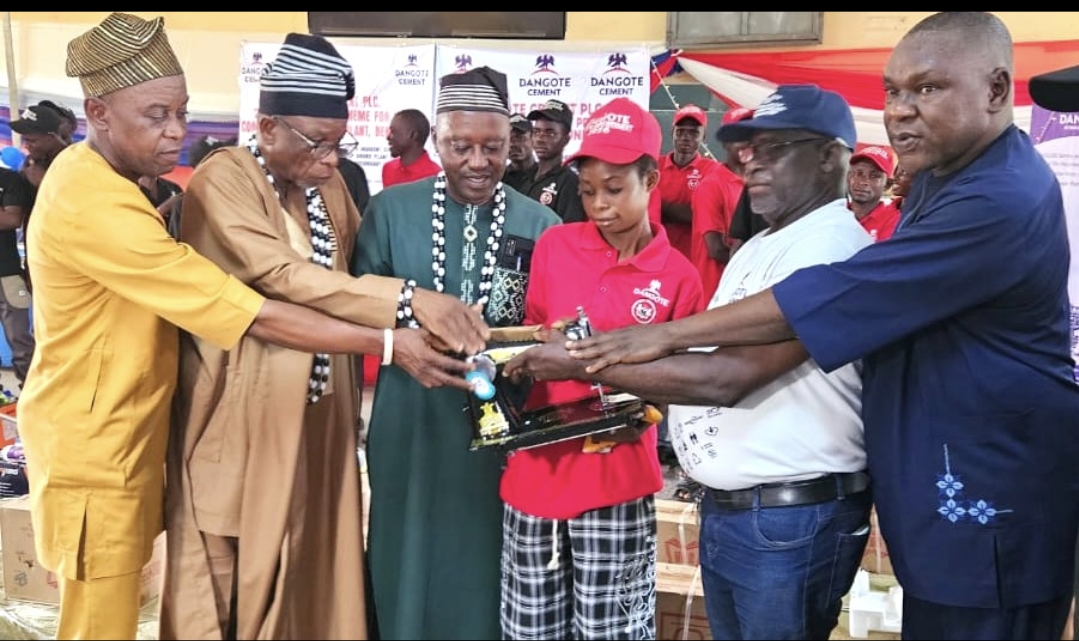
Dangote Cement Plc, Gboko Plant has awarded multi-million-naira scholarships to tertiary and secondary school students from its six host communities in Benue State.
The company also presented starter packs, working tools and certificates to graduates of its Youth Empowerment Programme to enable them to establish their own businesses, apply the skills acquired during the training and become financially reliant.
The Minister of Solid Minerals Development, Dr. Henry Dele Alake, lauded Dangote Cement Plc for its community development interventions, calling on other private sector players to adopt similar initiatives to promote socio-economic development in their host communities.
Dr. Alake, who was represented by the Federal Mines Officer of the Federal Ministry of Solid Minerals Development in Benue State, Engr. Achi Gregory, urged the company to sustain its commitment to implementing community development programmes agreed upon with its host communities.
Speaking at the official presentation ceremony, Group Head, Social Performance, Dangote Cement Plc, Mr. Wakeel Olayiwola, said the implementation of the Community Development Agreement underscores Dangote Cement’s commitment to equipping young people with practical skills and resources to promote entrepreneurship, create employment opportunities and improve livelihoods in its host communities.
Mr. Olayiwola, who was represented by the Head of Social Performance of the Dangote Cement, Gboko Plant, Dr. Johnson Kor, said the scholarship and youth empowerment programmes came against the backdrop of several other programmes recently executed by the company, which include farmers and women empowerment programmes.
The Acting Plant Director, Dangote Cement, Gboko, Engr. Arbind Singh, said: “This annual scholarship scheme for indigent students of the host communities is an indication of our company’s commitment to its Corporate Social Responsibilities (CSR).”
Engr Singh, who was represented by the company’s General Manager, Production, Engr Tabershima Soom, said: “The Gboko Plant has already launched 150 Women Empowerment Programme and 50 Farmerss Empowerment Programme where women were provided with cash to support their businesses, and farmers were supported with farm inputs.”
The beneficiary communities for these programs are: Tse-Kucha, Quarry, Amua, Mbazembe, Mbatur, and Pass Brothers.
Speaking on behalf of the Benue State Attorney-General, the Chairman of the Mineral Resources and Environmental Management Committee (MIREMCO), Barr. Dooshima Orosaga, commended Dangote Cement Plc for its compliance with the Community Development Agreement (CDA), urging the beneficiaries and host communities to maximise the benefits of the company’s interventions.
Chairman of the Gboko Local Government, Hon Yina Elias said the government will continue to provide the support needed for the company to succeed, adding that the Dangote Cement Plc is an exemplary company in Corporate Social Responsibilities programmes.
In his remarks, the District Head of Ukpekpe, Chief Tsegba Igbarumun, commended Dangote Cement Plc’s Gboko Plant for its contributions to the community, assuring the company of the community’s continued support.
He said the community valued its mutually beneficial relationship with the company and would continue to serve as its ambassadors.
A beneficiary of the Youth Empowerment Programme, Mr Ignatius Aondohemba, expressed appreciation to Dangote Cement Plc for the support, pledging to put the skills and resources provided to good use and build a business that would enable him to become an employer of labour.

State Police: 24 State Assemblies Approve Constitutional Amendment–Presidency

ECOWAS Court Faults Process Backed by Council of Ministers in Darma Removal Case

Dangote Cement Gboko Commits Millions in Scholarship Scheme

Mass Exodus Looms in Kano APC as More Chieftains Consider Exit — Mansur Ahmed

Kano Donates Equipment to NDLEA

PCACC Arrests Man Over Alleged ₦4.5m Sale, Illegal Leasing of Kano Government Horse Stable

Kano Monitors ₦48.9bn Projects Across Six LGAs

Goje’s Electoral War:The Confrontation With Tinubu,Governor Inuwa,Usman Kumo And APC candidates Ahead Of 2027

Kano Spends ₦10.36bn on Hospitality, Sitting Allowances, Others in Six Months

Prof Yusuf Adamu Delivers BUK’s 63rd Professorial Inaugural Lecture, Reflects on Medical Geography and Academic Legacy
State Police: 24 State Assemblies Approve Constitutional Amendment–Presidency
ECOWAS Court Faults Process Backed by Council of Ministers in Darma Removal Case
Dangote Cement Gboko Commits Millions in Scholarship Scheme
Mass Exodus Looms in Kano APC as More Chieftains Consider Exit — Mansur Ahmed
Kano Donates Equipment to NDLEA
PCACC Arrests Man Over Alleged ₦4.5m Sale, Illegal Leasing of Kano Government Horse Stable
Kano Monitors ₦48.9bn Projects Across Six LGAs
Goje’s Electoral War:The Confrontation With Tinubu,Governor Inuwa,Usman Kumo And APC candidates Ahead Of 2027
Kano Spends ₦10.36bn on Hospitality, Sitting Allowances, Others in Six Months
Prof Yusuf Adamu Delivers BUK’s 63rd Professorial Inaugural Lecture, Reflects on Medical Geography and Academic Legacy
-

 Opinion5 years ago
On The Kano Flyovers And Public Perception
-

 Features5 years ago
How I Became A Multimillionaire In Nigeria – Hadiza Gabon
-

 Opinion6 years ago
Kano As future Headquarters Of Poverty In Nigeria
-

 History6 years ago
Sheikh Adam Abdullahi Al-Ilory (1917-1992):Nigeria’s Islamic Scholar Who Wrote Over 100 Books And Journals
-

 Opinion5 years ago
My First Encounter with Nasiru Gawuna, the Humble Deputy Governor
-

 History5 years ago
The History Of Borno State Governor Professor Babagana Umara Zulum
-

 History6 years ago
The Origin Of “Mammy Market” In Army Barracks (Mammy Ochefu)
-

 News5 years ago
Federal University Of Technology Babura To Commence Academic Activities September