
News
Nigerian Youth Parliament , Civil Society brainstorm on security situation in Kano State
Abdul Umar
When the frog in the front falls inside the pit, others behind take caution – Ola Rotimi
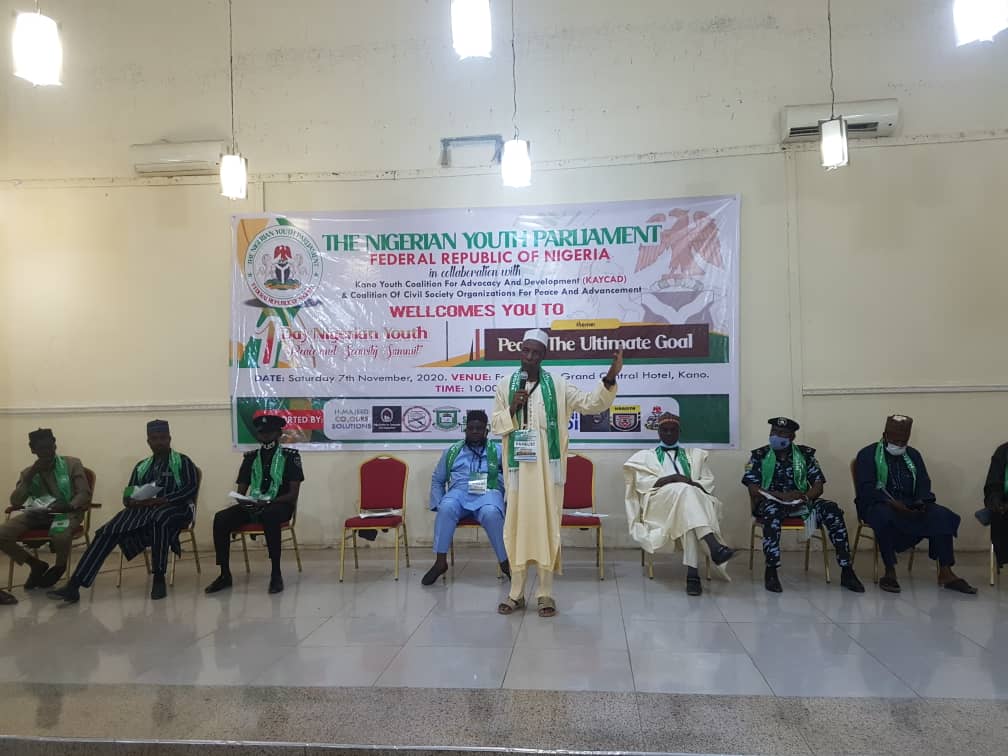
Irked by the recent EndSars protest that created the dusty atmosphere of insecurity across the major cities like Lagos and Abuja in which several lives and properties were lost, The Nigerian Youth Parliament, in collaboration with Kano State Youth Coalition for Advocacy and Development (KayCad), and Cconjunctio Civil Society Organisation for Peace and Development on Saturday organised a 1 day summit with the theme “Peace For Development” in the bid to brainstorm on salient issues that could be useful in preempting any form of violence and other vices among the youth of the state.
The summit had in attendance several key stakeholders such as the Kano State Commissioner of Police, CP Abu A. Sanni, ably represented by ACP Uzaira Abdullahi, the Kano State Honourable Commissioner for Youth and Sport, Comrade Kabiru Ado Lakwaya, Professor Adama Hassan, Director, Centre forGender Studies, BUK, Rev. Samaila Joshua Awake for CAN Youth Wing, Comrade Abba Ibrahim, NUJ President, Kano State branch, Dr Baffa Baba Dan Agudi, MD Karota and several other stakeholders.
In his opening remarks, ACP Uzairu Abdullahi who stood in for the Kano State Commissioner of Police, CP Abu Abdullahi Sanni rued that the commissioner would have honoured the invitation to the summit, but was absent due to some pressing issues. He stated that the message from the Kano State command was that of the appreciation for the organisers of the summit who joined hands with other youth organisations, The Ulamas, traditional rulers, academia and religious leaders, coming together in a trying that the country is having challenges mostly from the youths to discuss issues of maintaining peace.
Uzairu extolled the virtue of peace, reiterating that nothing meaningful can be achieved in the absence, as violence halts and hurts all forms human activities. “Peace, peace, peace, that is what is what we all want to have because it is when you have peace, you have freedom, is only when there is peace, you can go to to your mosque or church to worship your God, it is when there is peace you can go to the market and do other activities “, he emphasised.
The CP representative assured that the cardinal responsibilities of the police is to maintain peace and ensuring lives and properties are protected, and that the force will not botch on carrying out these important responsibities.”It is generally known that the major responsibilities of the police are to ensure lives and properties are protected, and with the recent and current developments across the country, the Kano State Police Command, through the command’s engagement in the community police drive, where all the state’s stakeholders were engaged, was able to ensure all the vices that came with the EndSars protests in states like Lagos, Osun, Ondo and Abuja did not escalate to Kano State, especially when the similar ugly trend was rearing its head in Sabon Gari area of the state”, he boasted.
He concluded by enjoying the organisers to continue preaching the sermon of peace, adding that the youths are the vanguard of peaceful coexistence, and they must live up to such billing.
On his part, The Honourable Commissioner of Youth and Sport, Comrade Kabiru Ado Lakwaya commended the organisers of the summit, stressing that it is commendable that the youths are taking their place as the enforcer of peaceful society devoid of forms of violence and vices, being it ethnic or religious.
Comrade Kabiru therefore commended the Kano State government for identifying and recognising the importance of youth in the state, pointing out that the recent creation of the ministry for Youth and Sport was enough suffice to buttress the state government’s readiness to not only include youth in its administration, but develop them for positive development of the state and the country as whole. ” Kano State government since its return to office for the second time established established a new ministry, which is ministry for Youth and Sport. That alone shows the commitment of the kano state government, led by Dr Abdullahi Umar Ganduje to develop the youth, make them productive and to embrace peace and stability”.
Also speaking at the summit was Professor Kamilu Fagge who pointed out that the youth have great roles to play in promoting harmony, stressing that Nigeria is a multi cultural, multi ethnic and and multi religious, and that this is where the youth would play a very important role in ensuring that the unity in diversity of the country is not compromised. “In the past past, the youth played a very important key role in terms of peace and unity of this country, and as the current security challenges in the country show, if the youth are not united, then there are gloom and doom days ahead of the country”, he cautioned.
He then advised the youth to shun violence and all the vices elements that would put the country in further state of perpetual insecurity, and also that they should refuse to be manipulated by others because of their selfish interests.












News
ADC Urges INEC to Bar Partisan Lecturers from Serving as Returning Officers in 2027 Elections
By Yusuf Danjuma Yunusa
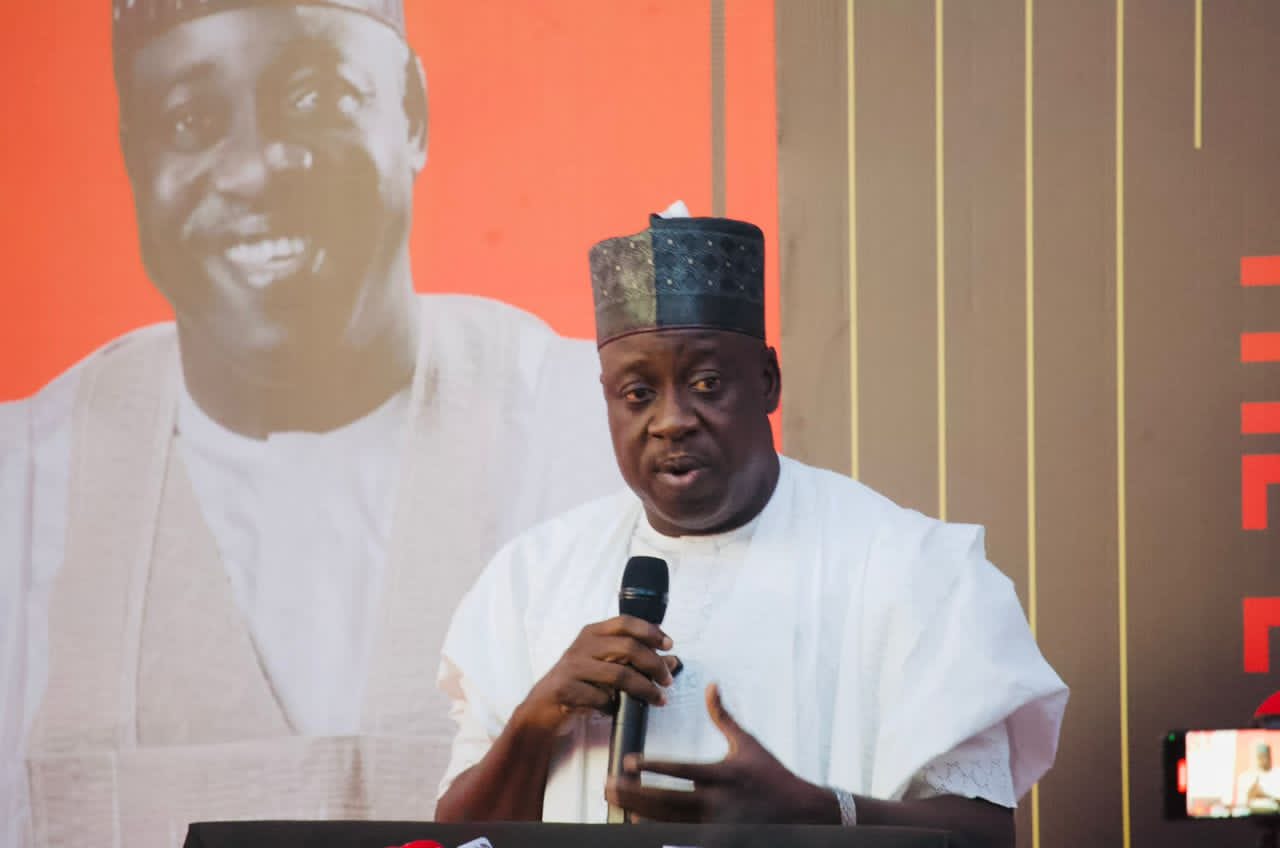
The African Democratic Congress (ADC) has called on the Independent National Electoral Commission (INEC) to review the appointment of politically exposed academics as Returning and Collation Officers for the 2027 general elections.
In a press statement issued on Monday, the party expressed concern over a newspaper report revealing that over 600 senior lecturers from public universities across Northern Nigeria have endorsed President Bola Ahmed Tinubu for the 2027 presidential election.
The ADC argued that this development raises fundamental questions regarding electoral credibility and conflict of interest, noting that university lecturers and vice chancellors are routinely entrusted with the sensitive responsibility of collating election results and declaring winners.
While acknowledging the constitutional right of every Nigerian, including academics, to support or endorse any political candidate, the party insisted that no individual who has openly taken a partisan position should be entrusted with determining the outcome of an election involving that candidate.
“The principle is straightforward,” the ADC stated. “You cannot campaign for a candidate and then be entrusted with counting the votes and declaring winners in the same election that your candidate is contesting in.”
The party, therefore, urged INEC to establish and publish clear criteria disqualifying academics and other prospective election officials who have publicly endorsed candidates, participated in partisan political activities, or otherwise demonstrated an obvious political affiliation.
Additionally, the ADC called on INEC to publish the names of proposed Returning and Collation Officers sufficiently ahead of the elections. This, the party said, would allow political parties and the public to identify and raise legitimate conflict-of-interest concerns.
“The integrity of an election does not begin when the first ballot is cast,” the statement read.
“It begins with the neutrality of the people entrusted to administer, collate, and declare its outcome. Nigerians must never be placed in a position where those who have publicly chosen a side are subsequently presented as neutral arbiters of the contest.”
The statement was signed by Mallam Bolaji Abdullahi, National Publicity Secretary of the African Democratic Congress.
News
Male Heir Not My Priority ; My Daughters Are Doing Well, Says Dangote
By Yusuf Danjuma Yunusa
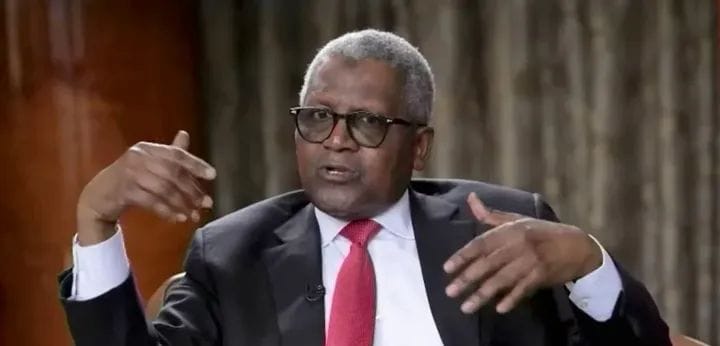
Aliko Dangote, President of the Dangote Group
Africa’s richest man, Aliko Dangote, says having a male child to sustain his family name and business empire is not his priority.
He noted that he has three daughters doing well.
Mr Dangote, 69, who is the president of Dangote Group and Dangote Refinery, made the statement during an interview on Arise TV, on Tuesday.
Asked if he was making efforts to have a son to sustain his legacy, Mr Dangote said, “That’s not really my priority. Let me say it blurntly. It is not really my priority. God controls everything. Sometimes you can pray to have a son but the son could be the one to drag the family name down.”
The Africa’s richest man further said he didn’t think a son would do better than the three girls he already has.
“Sometimes when God does give you a something don’t push it. I don’t think a son would have done better than the three girls I have,” he said.
Mr Dangote’s three daughters; Fatima, Halima and Mariya are holding key executive and leadership positions in the Dangote Group.
News
BREAKING: APC Governors Hold Closed-Door Meeting Over Wike’s ‘Rainbow Coalition’
By Yusuf Danjuma Yunusa
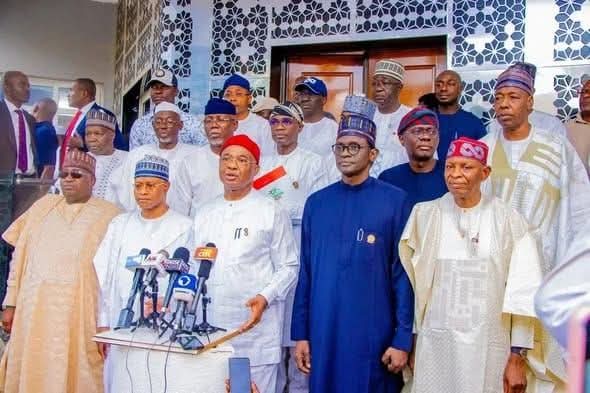
Governors elected on the platform of the All Progressives Congress (APC) are currently meeting behind closed doors at the Imo State Governors’ Lodge in Abuja, amid rising political tension over the “rainbow coalition” being promoted by the Minister of the Federal Capital Territory (FCT), Nyesom Wike.
The meeting, which began on Tuesday, is understood to be centred on recent political realignments that party leaders fear could undermine President Bola Ahmed Tinubu’s interests and weaken APC candidates at all levels.
It was gathered that the governors are expected to issue a statement distancing themselves from any political alliance or arrangement that could work against the President or the ruling party.
The move is widely seen as a direct response to Wike’s coalition, which has reportedly set some APC governors against the FCT minister. The governors are particularly aggrieved over allegations that Wike is sponsoring candidates who lost in the APC under the platform of the Peoples Democratic Party (PDP).
The APC governors are said to be determined to draw a clear line between legitimate political engagement and actions that could damage the party’s electoral fortunes.
As of the time of filing this report, the meeting was still ongoing, and no official communiqué had been issued. A statement is expected shortly.
More details later…

ADC Urges INEC to Bar Partisan Lecturers from Serving as Returning Officers in 2027 Elections

Male Heir Not My Priority ; My Daughters Are Doing Well, Says Dangote

BREAKING: APC Governors Hold Closed-Door Meeting Over Wike’s ‘Rainbow Coalition’

Oil Prices Rise After Saudi Pipeline Halt and Delayed Hormuz Talks

Atiku Accuses Tinubu of ‘Economic Deception’ Over Subsidy Savings, Demands ‘Where Is the Money?’ as ASUU Threatens Fresh Strike

From World’s 9th Most Populous City to Perfect: As Gov Yusuf Revisits Kano Master Plan

95% of Governor Abba Kabir Yusuf’s Promises Have Been Fulfilled — CPS Interview By Musa Diso, In Kano

Bello Sharada: A Great Writer, A Bookish Soul, Gone Too Soon

Call Me Chairman, Not Tony!’: Elumelu’s Blunt Correction of Trainee Splits Internet as Old Video Sparks Double Standard Fury

Nigerians Are Tired of Promises’ — CAN Demands Action on Insecurity, Hardship In Eid-el-Maulud Message
ADC Urges INEC to Bar Partisan Lecturers from Serving as Returning Officers in 2027 Elections
Male Heir Not My Priority ; My Daughters Are Doing Well, Says Dangote
BREAKING: APC Governors Hold Closed-Door Meeting Over Wike’s ‘Rainbow Coalition’
Oil Prices Rise After Saudi Pipeline Halt and Delayed Hormuz Talks
Atiku Accuses Tinubu of ‘Economic Deception’ Over Subsidy Savings, Demands ‘Where Is the Money?’ as ASUU Threatens Fresh Strike
From World’s 9th Most Populous City to Perfect: As Gov Yusuf Revisits Kano Master Plan
95% of Governor Abba Kabir Yusuf’s Promises Have Been Fulfilled — CPS Interview By Musa Diso, In Kano
Bello Sharada: A Great Writer, A Bookish Soul, Gone Too Soon
Call Me Chairman, Not Tony!’: Elumelu’s Blunt Correction of Trainee Splits Internet as Old Video Sparks Double Standard Fury
Nigerians Are Tired of Promises’ — CAN Demands Action on Insecurity, Hardship In Eid-el-Maulud Message
-

 Opinion5 years ago
On The Kano Flyovers And Public Perception
-

 Features5 years ago
How I Became A Multimillionaire In Nigeria – Hadiza Gabon
-

 Opinion6 years ago
Kano As future Headquarters Of Poverty In Nigeria
-

 History5 years ago
Sheikh Adam Abdullahi Al-Ilory (1917-1992):Nigeria’s Islamic Scholar Who Wrote Over 100 Books And Journals
-

 Opinion5 years ago
My First Encounter with Nasiru Gawuna, the Humble Deputy Governor
-

 History5 years ago
The History Of Borno State Governor Professor Babagana Umara Zulum
-

 History5 years ago
The Origin Of “Mammy Market” In Army Barracks (Mammy Ochefu)
-

 News4 years ago
Federal University Of Technology Babura To Commence Academic Activities September