
News
Nigerian Youth Parliament , Civil Society brainstorm on security situation in Kano State
Abdul Umar
When the frog in the front falls inside the pit, others behind take caution – Ola Rotimi
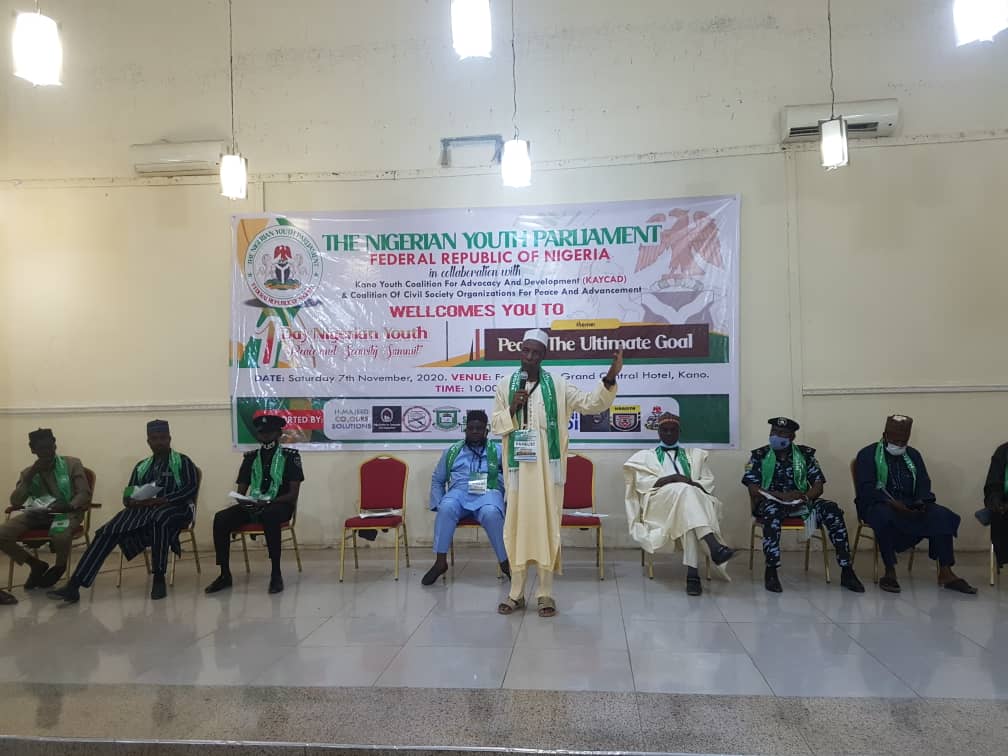
Irked by the recent EndSars protest that created the dusty atmosphere of insecurity across the major cities like Lagos and Abuja in which several lives and properties were lost, The Nigerian Youth Parliament, in collaboration with Kano State Youth Coalition for Advocacy and Development (KayCad), and Cconjunctio Civil Society Organisation for Peace and Development on Saturday organised a 1 day summit with the theme “Peace For Development” in the bid to brainstorm on salient issues that could be useful in preempting any form of violence and other vices among the youth of the state.
The summit had in attendance several key stakeholders such as the Kano State Commissioner of Police, CP Abu A. Sanni, ably represented by ACP Uzaira Abdullahi, the Kano State Honourable Commissioner for Youth and Sport, Comrade Kabiru Ado Lakwaya, Professor Adama Hassan, Director, Centre forGender Studies, BUK, Rev. Samaila Joshua Awake for CAN Youth Wing, Comrade Abba Ibrahim, NUJ President, Kano State branch, Dr Baffa Baba Dan Agudi, MD Karota and several other stakeholders.
In his opening remarks, ACP Uzairu Abdullahi who stood in for the Kano State Commissioner of Police, CP Abu Abdullahi Sanni rued that the commissioner would have honoured the invitation to the summit, but was absent due to some pressing issues. He stated that the message from the Kano State command was that of the appreciation for the organisers of the summit who joined hands with other youth organisations, The Ulamas, traditional rulers, academia and religious leaders, coming together in a trying that the country is having challenges mostly from the youths to discuss issues of maintaining peace.
Uzairu extolled the virtue of peace, reiterating that nothing meaningful can be achieved in the absence, as violence halts and hurts all forms human activities. “Peace, peace, peace, that is what is what we all want to have because it is when you have peace, you have freedom, is only when there is peace, you can go to to your mosque or church to worship your God, it is when there is peace you can go to the market and do other activities “, he emphasised.
The CP representative assured that the cardinal responsibilities of the police is to maintain peace and ensuring lives and properties are protected, and that the force will not botch on carrying out these important responsibities.”It is generally known that the major responsibilities of the police are to ensure lives and properties are protected, and with the recent and current developments across the country, the Kano State Police Command, through the command’s engagement in the community police drive, where all the state’s stakeholders were engaged, was able to ensure all the vices that came with the EndSars protests in states like Lagos, Osun, Ondo and Abuja did not escalate to Kano State, especially when the similar ugly trend was rearing its head in Sabon Gari area of the state”, he boasted.
He concluded by enjoying the organisers to continue preaching the sermon of peace, adding that the youths are the vanguard of peaceful coexistence, and they must live up to such billing.
On his part, The Honourable Commissioner of Youth and Sport, Comrade Kabiru Ado Lakwaya commended the organisers of the summit, stressing that it is commendable that the youths are taking their place as the enforcer of peaceful society devoid of forms of violence and vices, being it ethnic or religious.
Comrade Kabiru therefore commended the Kano State government for identifying and recognising the importance of youth in the state, pointing out that the recent creation of the ministry for Youth and Sport was enough suffice to buttress the state government’s readiness to not only include youth in its administration, but develop them for positive development of the state and the country as whole. ” Kano State government since its return to office for the second time established established a new ministry, which is ministry for Youth and Sport. That alone shows the commitment of the kano state government, led by Dr Abdullahi Umar Ganduje to develop the youth, make them productive and to embrace peace and stability”.
Also speaking at the summit was Professor Kamilu Fagge who pointed out that the youth have great roles to play in promoting harmony, stressing that Nigeria is a multi cultural, multi ethnic and and multi religious, and that this is where the youth would play a very important role in ensuring that the unity in diversity of the country is not compromised. “In the past past, the youth played a very important key role in terms of peace and unity of this country, and as the current security challenges in the country show, if the youth are not united, then there are gloom and doom days ahead of the country”, he cautioned.
He then advised the youth to shun violence and all the vices elements that would put the country in further state of perpetual insecurity, and also that they should refuse to be manipulated by others because of their selfish interests.















News
Dangote Cement Obajana Awards Scholarships, Empowers Farmers, Market Women At Jakura Community

Dangote Cement Plc, Obajana Plant, has strengthened its support for the Jakura community through scholarship awards and empowerment programmes for farmers and market women.
Speaking at the presentation ceremony on Monday, Plant Director, Obajana Plant, Engr. Azad Nawabuddin, said the scheme was part of the company’s commitment to implementing the provisions of the Community Development Agreement (CDA).
Represented by the Head of Social Performance at the Obajana Plant, Prince Ademola Adeyemi, he said the empowerment programme benefited students, farmers and market women.
Engr. Nawabuddin said the programme, which focused on students, farmers and market women, underscores DCP’s continued commitment to sustainable community development, poverty reduction and economic empowerment across its host communities.
He said a total of twenty beneficiaries drawn from several tertiary institutions and sixty beneficiaries from secondary schools received educational grants running into several millions of naira.
He disclosed that 20 farmers were provided with essential farming implements and funds, noting that the initiative is designed to enhance agricultural productivity, encourage the adoption of improved farming practices and contribute to greater food security in the community.
Twenty market women were each provided with start-up capital and business support to strengthen their enterprises, promote financial independence and enhance household incomes.
The event attracted several stakeholders, traditional rulers, government representatives, and community leaders including: His Royal Highness, Oba Usman Adoga Ajibola, the Obaro of Jakura., Representative of the Olu of Oworo, Chief K.A Mahmood, (The Obalumema of Oworo Land), Engr. E.O. Olaitan, Ministry of Solid Minerals Development (MSMD), Mrs. A. O. Onimode, Kogi State Ministry of Solid Mineral and Natural Resources, youth and women groups, members of Jakura traditional council, among others.
Earlier in his welcome address, the Chairman of Jakura CDA Committee, Chief Bonibade Ajiboye, appreciated Dangote Cement Plc Obajana Plant for keeping to commitments noting that aside the empowerment programme, the electrification project is almost completed.
He commended the Plant for the kind gesture towards Jakura community despite the security challenge. Goodwill messages were brought to the event by members of Jakura traditional council, Oworo traditional council, Federal and State representatives with all commending and joining Jakura community to express appreciation to Dangote Cement Plc, Obajana Plant.
In his remarks, His Royal Highness, Oba Usman Adoga Ajibola, the Obaro of Jakura, expressed gratitude to Almighty God for blessing Jakura with abundant mineral resources and commended **Alhaji Aliko Dangote** for choosing to invest in the area.
The royal father also lauded Dangote Cement Plc for its numerous developmental interventions in the community, describing the latest empowerment initiative as another demonstration of the company’s commitment to improving the welfare and livelihoods of its host communities.
He pledged that the community would ensure the sustainability of the projects and see to it that the beneficiaries put their respective benefits to good use.
He prayed for Allah’s continued blessings upon Alhaji Aliko Dangote for his generosity, philanthropy and contributions to humanity.
News
EFCC Strengthens Media Ties with Matashiya TV to Combat Economic Crimes
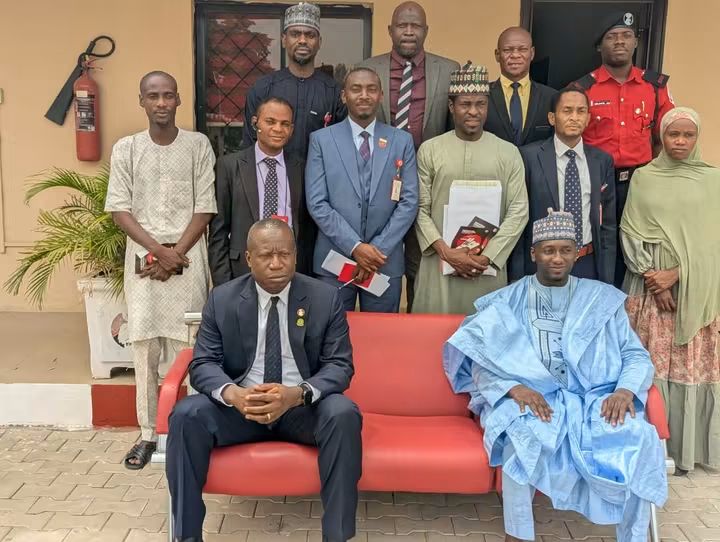
The Zonal Director of the Economic and Financial Crimes Commission (EFCC), Kano Directorate, Assistant Commander of the EFCC, ACE1 Friday S. Ebelo, has reaffirmed the Commission’s commitment to leveraging media collaboration as a critical tool for crime deterrence and public education. He stated this in Kano on Wednesday, October 7, 2026 while receiving the Chairman and Chief Executive Officer of Matashiya TV, an online television platform, on a courtesy visit to his office.
Speaking on behalf of the Executive Chairman, Ola Olukoyede, Ebelo emphasized that the media remains a core stakeholder in the EFCC’s mandate to investigate, prevent, and prosecute economic and financial crimes. He noted that the Commission’s vision is to achieve a Nigeria free of economic and financial crimes, a goal that cannot be realized without the active partnership of the media.
“Whatever we do, if it is not properly reported to the populace in the form of education and crime deterrence, we will not be able to go further. The media is a core partner in progress. From the beginning, our Public Affairs Department has coordinated the media angle of our operations, and it is on this premise that we seek to further reaffirm our support and partnership.”
The Zonal Director highlighted that the EFCC’s mandate covers a broad spectrum of offences, including cybercrime, fraud, money laundering, public sector corruption, and economic sabotage. He stressed that publicizing these efforts is essential to deterring potential offenders and enlightening the public, particularly the youth.
In his remarks, the Chairman/CEO of Matashiya TV, Abubakar Murtala Ibrahim expressed the platform’s desire to establish a working and sustainable relationship with the Commission. He noted that Matashiya TV focuses on journalism, community development, and youth empowerment, having trained over 3,000 youths in various professional skills.
He explained that the platform has designed programs specifically aimed at enlightening the youth to steer them away from cybercrime and violence. “We have ideas and programs to enlighten the people, especially the youth, because we believe this will reduce their engagement in cybercrime and related violence,” the CEO stated, soliciting the EFCC’s partnership in this regard.
The visit concluded with both parties agreeing to foster a robust working relationship to advance the fight against economic and financial crimes in Kano and beyond.
News
Shettima Leads FG Delegation to Ethiopia on Nutrition Mission
By Yusuf Danjuma Yunusa
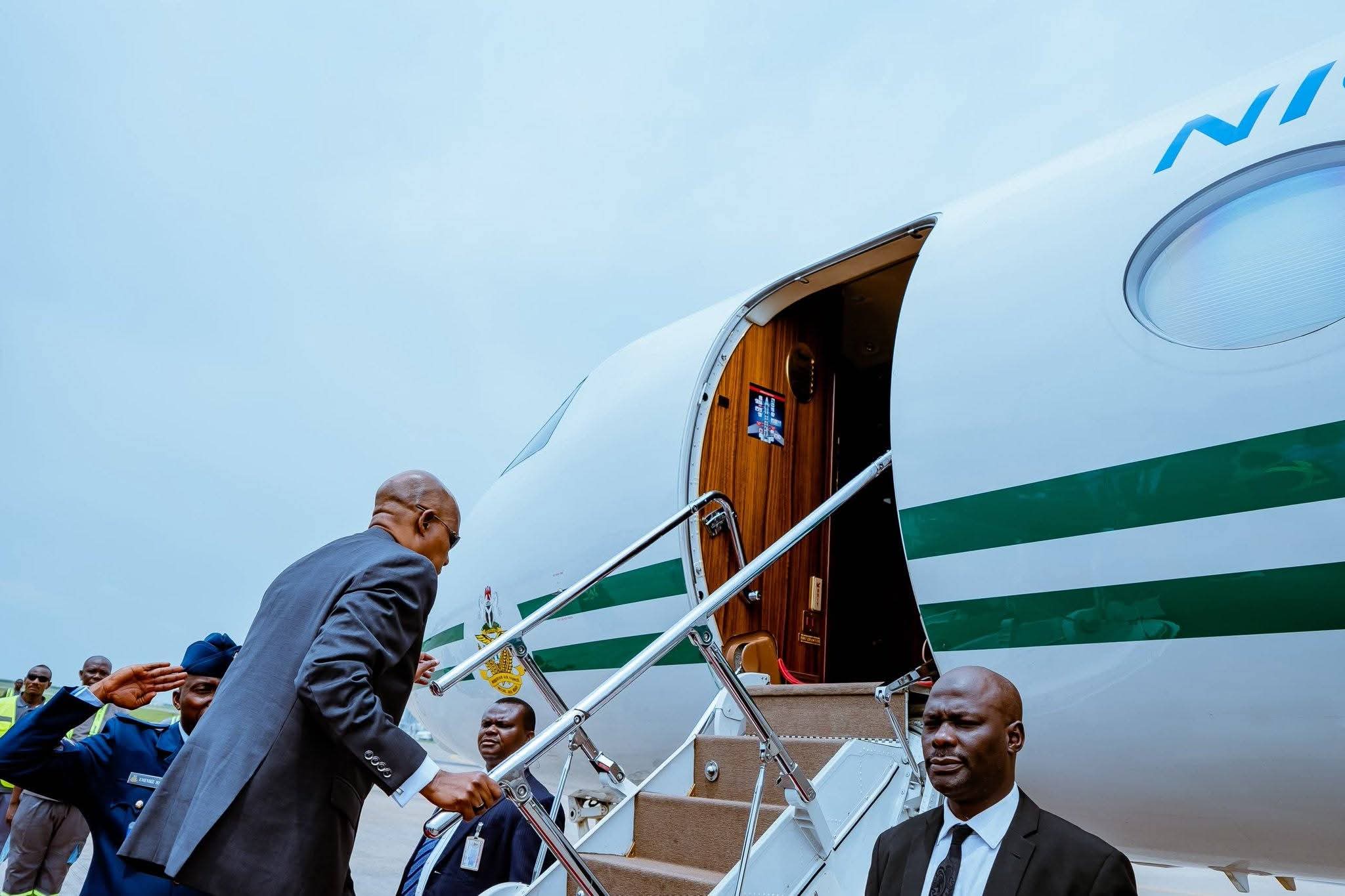
Vice President, Kashim Shettima has departed Abuja for Addis Ababa, Ethiopia, to lead a nutrition-focused peer exchange mission.
Shettima is attending the inaugural Nigeria-Ethiopia Nutrition Leadership Exchange Visit at the invitation of Ethiopian Deputy Prime Minister Temesgen Tiruneh.
According to a statement released by Stanley Nkwocha, Senior Special Assistant to the President on Media and Communications (Office of the Vice President), the visit will enable both nations to share strategies on establishing a combined federal, state, and local compact for effective nutrition delivery.
According to the statement, during the visit, the Nigerian delegation will study Ethiopia’s government-led, multi-sectoral approach to food security and tour several key sites, including: A wheat farm and banana plantation in Oromia, The ‘Bounty of the Basket’ Training Centre and community household initiatives in Mojo, and Jabdu Motors in Bishoftu.”
“The Vice President’s entourage includes Governors Dauda Lawal of Zamfara State and Umar Namadi of Jigawa State; Minister of Budget and Economic Planning, Senator Abubakar Atiku Bagudu; Minister of Agriculture and Food Security, Senator Abubakar Kyari; and Director-General of the National Emergency Management Agency (NEMA), Mrs. Zubaida Umar Abubakar,” it added.

Dangote Cement Obajana Awards Scholarships, Empowers Farmers, Market Women At Jakura Community

EFCC Strengthens Media Ties with Matashiya TV to Combat Economic Crimes

Shettima Leads FG Delegation to Ethiopia on Nutrition Mission

JUST IN: Military, DSS , Police Rescue 20 Kidnapped NYSC Members, Civilian in Imo

NDC Candidate Questions Barau’s Origin, Says He’s Not From Kano North

Zamfara Varsity ASUU Threatens Warning Strike Over FG-ASUU Agreement, Promotion Arrears

Goje’s Electoral War:The Confrontation With Tinubu,Governor Inuwa,Usman Kumo And APC candidates Ahead Of 2027

Per Ishaq Samaila: “Waziri” for Strategy. “Mai Jama’a” for Service. One Man. One Mission. Ibrahim Kabir Masari

PCACC Arrests Man Over Alleged ₦4.5m Sale, Illegal Leasing of Kano Government Horse Stable

Prof Yusuf Adamu Delivers BUK’s 63rd Professorial Inaugural Lecture, Reflects on Medical Geography and Academic Legacy
Dangote Cement Obajana Awards Scholarships, Empowers Farmers, Market Women At Jakura Community
EFCC Strengthens Media Ties with Matashiya TV to Combat Economic Crimes
Shettima Leads FG Delegation to Ethiopia on Nutrition Mission
JUST IN: Military, DSS , Police Rescue 20 Kidnapped NYSC Members, Civilian in Imo
NDC Candidate Questions Barau’s Origin, Says He’s Not From Kano North
Zamfara Varsity ASUU Threatens Warning Strike Over FG-ASUU Agreement, Promotion Arrears
Goje’s Electoral War:The Confrontation With Tinubu,Governor Inuwa,Usman Kumo And APC candidates Ahead Of 2027
Per Ishaq Samaila: “Waziri” for Strategy. “Mai Jama’a” for Service. One Man. One Mission. Ibrahim Kabir Masari
PCACC Arrests Man Over Alleged ₦4.5m Sale, Illegal Leasing of Kano Government Horse Stable
Prof Yusuf Adamu Delivers BUK’s 63rd Professorial Inaugural Lecture, Reflects on Medical Geography and Academic Legacy
-

 Opinion5 years ago
On The Kano Flyovers And Public Perception
-

 Features5 years ago
How I Became A Multimillionaire In Nigeria – Hadiza Gabon
-

 Opinion6 years ago
Kano As future Headquarters Of Poverty In Nigeria
-

 History5 years ago
Sheikh Adam Abdullahi Al-Ilory (1917-1992):Nigeria’s Islamic Scholar Who Wrote Over 100 Books And Journals
-

 Opinion5 years ago
My First Encounter with Nasiru Gawuna, the Humble Deputy Governor
-

 History5 years ago
The History Of Borno State Governor Professor Babagana Umara Zulum
-

 History6 years ago
The Origin Of “Mammy Market” In Army Barracks (Mammy Ochefu)
-

 News5 years ago
Federal University Of Technology Babura To Commence Academic Activities September