
News
Biden’s Victory Speech
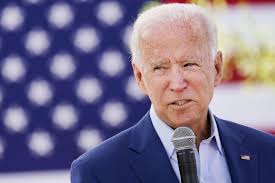
“My fellow Americans, the people of this nation have spoken.
They have delivered us a clear victory. A convincing victory. A victory for “We the People.”
We have won with the most votes ever cast for a presidential ticket in the history of this nation — 74 million.
I am humbled by the trust and confidence you have placed in me.
I pledge to be a President who seeks not to divide, but to unify. Who doesn’t see Red and Blue states, but a United States. And who will work with all my heart to win the confidence of the whole people.
For that is what America is about: The people. And that is what our Administration will be about.
I sought this office to restore the soul of America. To rebuild the backbone of the nation — the middle class. To make America respected around the world again and to unite us here at home.
It is the honor of my lifetime that so many millions of Americans have voted for this vision. And now the work of making this vision real is the task of our time.
As I said many times before, I’m Jill’s husband. I would not be here without the love and tireless support of my wife, Jill, Hunter, Ashley, all of our grandchildren and their spouses, and all our family. They are my heart.
Jill’s a mom — a military mom — and an educator. She has dedicated her life to education, but teaching isn’t just what she does — it’s who she is. For America’s educators, this is a great day: You’re going to have one of your own in the White House, and Jill is going to make a great First Lady.
And I will be honored to be serving with a fantastic vice president — Kamala Harris — who will make history as the first woman, first Black woman, first woman of South Asian descent, and first daughter of immigrants ever elected to national office in this country.
It’s long overdue, and we’re reminded tonight of all those who fought so hard for so many years to make this happen. But once again, America has bent the arc of the moral universe towards justice.
Kamala, Doug — like it or not — you’re family. You’ve become honorary Bidens.
To all those who volunteered, worked the polls, local election officials — you deserve a special thanks from this nation. To my campaign team, to all the volunteers, to all those who gave so much of themselves to make this moment possible, I thank you for everything. And to all those who supported us: I am proud of the campaign we built and ran. I am proud of the coalition we built, the broadest and most diverse in history.
Democrats and Republicans and Independents. Progressives, moderates and conservatives. Young and old. Urban, suburban and rural. Gay, straight, transgender. White. Latino. Asian. Native American.
And especially for those moments when this campaign was at its lowest — the African American community.
I said from the outset I wanted a campaign that represented America, and I think we did that.
And to those who voted for President Trump, I understand your disappointment tonight. I’ve lost a couple of elections myself.
But now, let’s give each other a chance. It’s time to put away the harsh rhetoric. To lower the temperature. To see each other again. To listen to each other again. To make progress, we must stop treating our opponents as our enemy. We are not enemies. We are Americans.
The Bible tells us that to everything there is a season — a time to build, a time to reap, a time to sow. And a time to heal.
This is that time for America. A time to heal.
Now that the campaign is over — what is the people’s will? What is our mandate?
I believe it is this: Americans have called on us to marshal the forces of decency and the forces of fairness. To marshal the forces of science and the forces of hope in the great battles of our time.
The battle to control the virus. The battle to build prosperity. The battle to secure your family’s health care. The battle to achieve racial justice and root out systemic racism in this country. The battle to save the climate. The battle to restore decency, defend democracy, and give everybody in this country a fair shot.
Our work begins with getting COVID under control.
We cannot repair our economy, restore our vitality, or relish life’s most precious moments — hugging a grandchild, birthdays, weddings, graduations, all the moments that matter most to us — until we get this virus under control.
On Monday, I will name a group of leading scientists and experts as Transition Advisors to help take the Biden-Harris COVID plan and convert it into an action blueprint that starts on January 20th, 2021.
That plan will be built on a bedrock of science. It will be constructed out of compassion, empathy, and concern. I will spare no effort — or commitment — to turn this pandemic around.
I ran as a proud Democrat. I will now be an American president. I will work as hard for those who didn’t vote for me — as I will for those who did.
Let this grim era of demonization in America begin to end — here and now.
The refusal of Democrats and Republicans to cooperate with one another is not due to some mysterious force beyond our control. It’s a decision. It’s a choice we make.
And if we can decide not to cooperate, then we can decide to cooperate. And I believe that is part of the mandate from the American people. They want us to cooperate.
That’s the choice I’ll make. And I call on the Congress — Democrats and Republicans alike — to make that choice with me.
America’s story is about the slow, yet steady widening of opportunity. Make no mistake: Too many dreams have been deferred for too long. We must make the promise of the country real for everybody — no matter their race, their identity, their ethnicity, their faith.
America has always been shaped by inflection points — by moments in time where we’ve made hard decisions about who we are and what we want to be.
Lincoln in 1860 — coming to save the Union. FDR in 1932 — promising a beleaguered country a New Deal. JFK in 1960 — pledging a New Frontier.
And twelve years ago — when Barack Obama made history — and told us, “Yes, we can.”
We stand again at an inflection point. We have the opportunity to defeat despair and to build a nation of prosperity and purpose. We can do it. I know we can.
I’ve long talked about the battle for the soul of America. Now we must restore the soul of America.
Our nation is shaped by the constant battle between our better angels and our darkest impulses. It is time for our better angels to prevail.
Tonight, the whole world is watching. I believe at our best America is a beacon for the globe. And we lead not by the example of our power, but by the power of our example.
I’ve always believed we can define America in one word: Possibilities.
That in America everyone should be given the opportunity to go as far as their dreams and God-given ability will take them.
You see, I believe in the possibility of this country. We’re always looking ahead. Ahead to an America that’s freer and more just. Ahead to an America that creates jobs with dignity and respect. Ahead to an America that cures disease — like cancer and Alzheimers. Ahead to an America that never leaves anyone behind. Ahead to an America that never gives up.
This is a great nation. And we are a good people. This is the United States of America. And there has never been anything we haven’t been able to do when we’ve done it together.
In the last days of the campaign, I’ve been thinking about a hymn that means a lot to me and to my family. It captures the faith that sustains me and which I believe sustains America.
And I hope it can provide some comfort and solace to the more than 230,000 families who have lost a loved one to this terrible virus this year. My heart goes out to each and every one of you.
“And He will raise you up on eagle’s wings,
Bear you on the breath of dawn,
Make you to shine like the sun,
And hold you in the palm of His Hand.”
And now, together — on eagle’s wings — we embark on the work that God and history have called upon us to do.
With full hearts and steady hands, with faith in America and in each other, with a love of country — and a thirst for justice — let us be the nation that we know we can be.
A nation united. A nation strengthened. A nation healed.
God bless you. And may God protect our troops.”
Joe Biden











News
ADC Urges INEC to Bar Partisan Lecturers from Serving as Returning Officers in 2027 Elections
By Yusuf Danjuma Yunusa
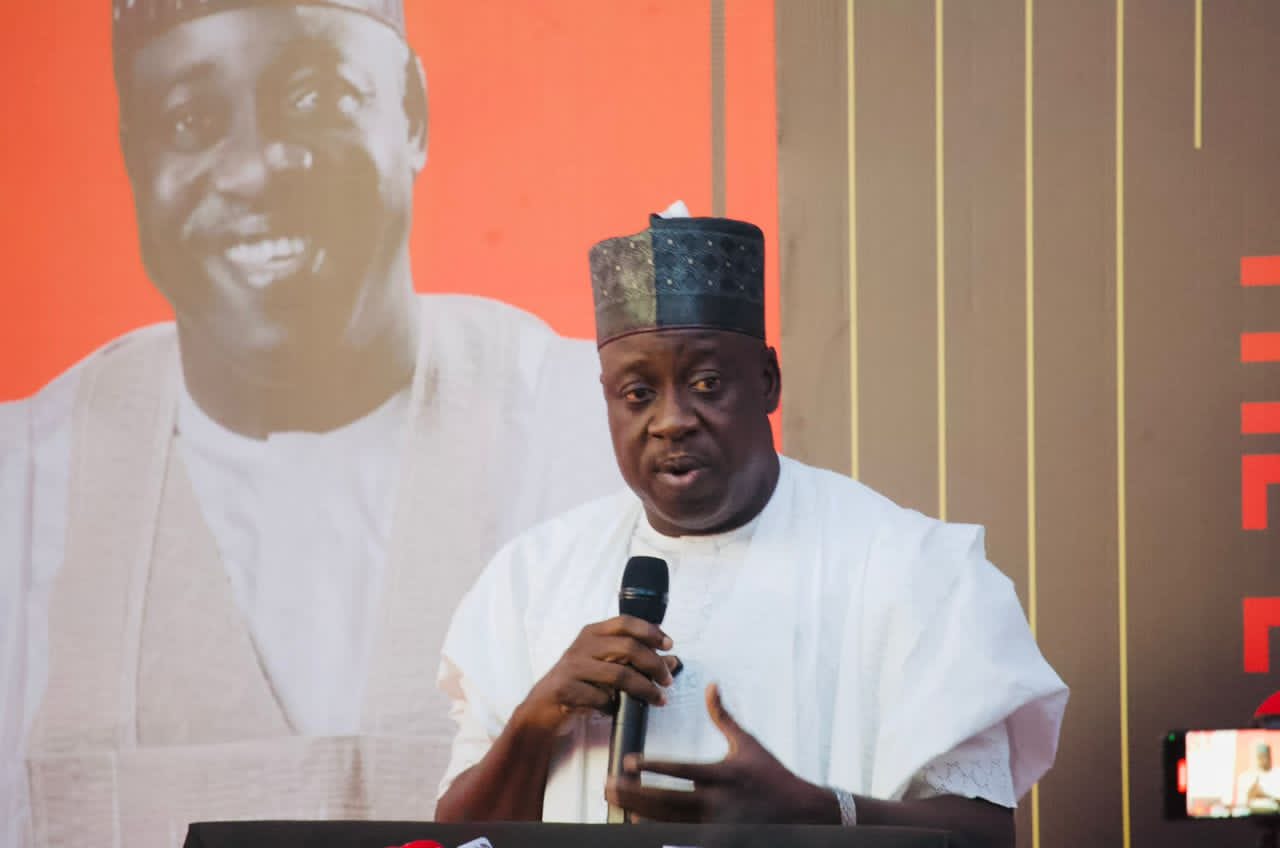
The African Democratic Congress (ADC) has called on the Independent National Electoral Commission (INEC) to review the appointment of politically exposed academics as Returning and Collation Officers for the 2027 general elections.
In a press statement issued on Monday, the party expressed concern over a newspaper report revealing that over 600 senior lecturers from public universities across Northern Nigeria have endorsed President Bola Ahmed Tinubu for the 2027 presidential election.
The ADC argued that this development raises fundamental questions regarding electoral credibility and conflict of interest, noting that university lecturers and vice chancellors are routinely entrusted with the sensitive responsibility of collating election results and declaring winners.
While acknowledging the constitutional right of every Nigerian, including academics, to support or endorse any political candidate, the party insisted that no individual who has openly taken a partisan position should be entrusted with determining the outcome of an election involving that candidate.
“The principle is straightforward,” the ADC stated. “You cannot campaign for a candidate and then be entrusted with counting the votes and declaring winners in the same election that your candidate is contesting in.”
The party, therefore, urged INEC to establish and publish clear criteria disqualifying academics and other prospective election officials who have publicly endorsed candidates, participated in partisan political activities, or otherwise demonstrated an obvious political affiliation.
Additionally, the ADC called on INEC to publish the names of proposed Returning and Collation Officers sufficiently ahead of the elections. This, the party said, would allow political parties and the public to identify and raise legitimate conflict-of-interest concerns.
“The integrity of an election does not begin when the first ballot is cast,” the statement read.
“It begins with the neutrality of the people entrusted to administer, collate, and declare its outcome. Nigerians must never be placed in a position where those who have publicly chosen a side are subsequently presented as neutral arbiters of the contest.”
The statement was signed by Mallam Bolaji Abdullahi, National Publicity Secretary of the African Democratic Congress.
News
Male Heir Not My Priority ; My Daughters Are Doing Well, Says Dangote
By Yusuf Danjuma Yunusa
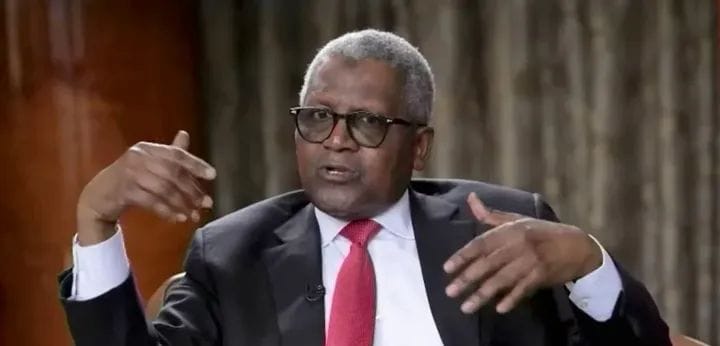
Aliko Dangote, President of the Dangote Group
Africa’s richest man, Aliko Dangote, says having a male child to sustain his family name and business empire is not his priority.
He noted that he has three daughters doing well.
Mr Dangote, 69, who is the president of Dangote Group and Dangote Refinery, made the statement during an interview on Arise TV, on Tuesday.
Asked if he was making efforts to have a son to sustain his legacy, Mr Dangote said, “That’s not really my priority. Let me say it blurntly. It is not really my priority. God controls everything. Sometimes you can pray to have a son but the son could be the one to drag the family name down.”
The Africa’s richest man further said he didn’t think a son would do better than the three girls he already has.
“Sometimes when God does give you a something don’t push it. I don’t think a son would have done better than the three girls I have,” he said.
Mr Dangote’s three daughters; Fatima, Halima and Mariya are holding key executive and leadership positions in the Dangote Group.
News
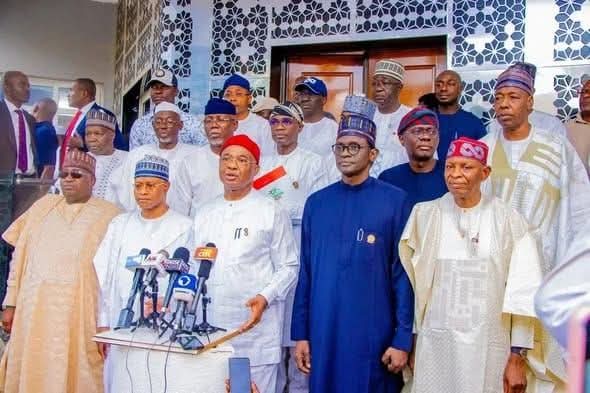
BREAKING: APC Governors Hold Closed-Door Meeting Over Wike’s ‘Rainbow Coalition’
By Yusuf Danjuma Yunusa
Governors elected on the platform of the All Progressives Congress (APC) are currently meeting behind closed doors at the Imo State Governors’ Lodge in Abuja, amid rising political tension over the “rainbow coalition” being promoted by the Minister of the Federal Capital Territory (FCT), Nyesom Wike.
The meeting, which began on Tuesday, is understood to be centred on recent political realignments that party leaders fear could undermine President Bola Ahmed Tinubu’s interests and weaken APC candidates at all levels.
It was gathered that the governors are expected to issue a statement distancing themselves from any political alliance or arrangement that could work against the President or the ruling party.
The move is widely seen as a direct response to Wike’s coalition, which has reportedly set some APC governors against the FCT minister. The governors are particularly aggrieved over allegations that Wike is sponsoring candidates who lost in the APC under the platform of the Peoples Democratic Party (PDP).
The APC governors are said to be determined to draw a clear line between legitimate political engagement and actions that could damage the party’s electoral fortunes.
As of the time of filing this report, the meeting was still ongoing, and no official communiqué had been issued. A statement is expected shortly.
More details later…

ADC Urges INEC to Bar Partisan Lecturers from Serving as Returning Officers in 2027 Elections

Male Heir Not My Priority ; My Daughters Are Doing Well, Says Dangote

BREAKING: APC Governors Hold Closed-Door Meeting Over Wike’s ‘Rainbow Coalition’

Oil Prices Rise After Saudi Pipeline Halt and Delayed Hormuz Talks

Atiku Accuses Tinubu of ‘Economic Deception’ Over Subsidy Savings, Demands ‘Where Is the Money?’ as ASUU Threatens Fresh Strike

From World’s 9th Most Populous City to Perfect: As Gov Yusuf Revisits Kano Master Plan

95% of Governor Abba Kabir Yusuf’s Promises Have Been Fulfilled — CPS Interview By Musa Diso, In Kano

Bello Sharada: A Great Writer, A Bookish Soul, Gone Too Soon

Call Me Chairman, Not Tony!’: Elumelu’s Blunt Correction of Trainee Splits Internet as Old Video Sparks Double Standard Fury

Nigerians Are Tired of Promises’ — CAN Demands Action on Insecurity, Hardship In Eid-el-Maulud Message
ADC Urges INEC to Bar Partisan Lecturers from Serving as Returning Officers in 2027 Elections
Male Heir Not My Priority ; My Daughters Are Doing Well, Says Dangote
BREAKING: APC Governors Hold Closed-Door Meeting Over Wike’s ‘Rainbow Coalition’
Oil Prices Rise After Saudi Pipeline Halt and Delayed Hormuz Talks
Atiku Accuses Tinubu of ‘Economic Deception’ Over Subsidy Savings, Demands ‘Where Is the Money?’ as ASUU Threatens Fresh Strike
From World’s 9th Most Populous City to Perfect: As Gov Yusuf Revisits Kano Master Plan
95% of Governor Abba Kabir Yusuf’s Promises Have Been Fulfilled — CPS Interview By Musa Diso, In Kano
Bello Sharada: A Great Writer, A Bookish Soul, Gone Too Soon
Call Me Chairman, Not Tony!’: Elumelu’s Blunt Correction of Trainee Splits Internet as Old Video Sparks Double Standard Fury
Nigerians Are Tired of Promises’ — CAN Demands Action on Insecurity, Hardship In Eid-el-Maulud Message
-

 Opinion5 years ago
On The Kano Flyovers And Public Perception
-

 Features5 years ago
How I Became A Multimillionaire In Nigeria – Hadiza Gabon
-

 Opinion6 years ago
Kano As future Headquarters Of Poverty In Nigeria
-

 History5 years ago
Sheikh Adam Abdullahi Al-Ilory (1917-1992):Nigeria’s Islamic Scholar Who Wrote Over 100 Books And Journals
-

 Opinion5 years ago
My First Encounter with Nasiru Gawuna, the Humble Deputy Governor
-

 History5 years ago
The History Of Borno State Governor Professor Babagana Umara Zulum
-

 History5 years ago
The Origin Of “Mammy Market” In Army Barracks (Mammy Ochefu)
-

 News4 years ago
Federal University Of Technology Babura To Commence Academic Activities September