
News
Arbitration Victory: Nigeria Signals Procurement Reform as ADSC Boss Oluwafemi Hails DG BPP Adedokun

President of the Africa Development Studies Centre, ADSC, Sir Victor Walsh Oluwafemi warmly congratulates the Director General of the Bureau of Public Procurement, Dr Adebowale Adedokun, the Honourable Attorney General of the Federation and Minister of Justice, Prince Lateef Fagbemi SAN, and the Federal Government of Nigeria under the leadership of President Bola Ahmed Tinubu on the landmark arbitration victory against European Dynamics UK Ltd.
This was contained in a statement issued and signed by Sir Victor Walsh Oluwafemi, an International Development Expert, Reputation Architecture Strategist stating that:
“This decisive outcome is not merely a legal win. It is a governance statement.
“At a time when international contractors often assume that African institutions will capitulate under technical pressure, Nigeria has demonstrated maturity, institutional discipline and contractual courage.
“The dismissal of claims totalling over 6.2 million dollars signals a structural shift in how the country manages public-sector technology contracts.
“This is a defining moment in Nigeria’s procurement evolution, Oluwafemi asserted.
He explained that: “For years, procurement in many developing economies has been vulnerable to inflated milestone claims, loosely defined deliverables and weak enforcement of performance validation mechanisms.
“The tribunal’s affirmation of the centrality of User Acceptance Testing reinforces a fundamental principle: value must be delivered before value is paid for.
“That principle must now become doctrine. The Bureau of Public Procurement has sent a powerful message to the global contracting community that Nigeria will no longer accept distorted contractual interpretations, premature payment claims or technical shortcuts disguised as compliance. Payment must follow performance.
“Performance must be verifiable. Verification must be independent and rigorous.This is how institutions are built.
“The courage shown by Dr Adedokun in resisting premature settlement discussions reflects leadership rooted in fiduciary responsibility rather than convenience.
“The strategic coordination between the Bureau, the Attorney General’s office and Nigerian legal experts further demonstrates that domestic professional capacity can compete and prevail on the international stage.
“This victory should now catalyse a broader reform journey. Nigeria must seize this moment to institutionalise a new procurement architecture anchored on:
• Mandatory performance validated digital milestones
• Strengthened e-procurement oversight frameworks
• Independent technical audit layers embedded into contract execution
• Clear modular phase governance structures
• Structured risk allocation in technology contracting
“Through frameworks such as Policy as a Platform and Results as a Service, Nigeria can move beyond reactive dispute resolution into proactive procurement intelligence. The future of public procurement must be data-driven, performance-coded, and legally fortified.
“This arbitration win should mark the beginning of a national procurement renaissance.
“Let the journey of procurement reform begin in earnest. Let Nigeria’s e-procurement ecosystem evolve into a benchmark for transparency, accountability, and technical excellence across Africa. Let every contractor understand that Nigeria welcomes partnership but insists on performance.
“Today, Nigeria did not simply win a case. Nigeria strengthened its institutions. Nigeria protected public resources. Nigeria restored confidence in the architecture of public accountability.
“The Africa Development Studies Centre stands ready to support the Bureau of Public Procurement and relevant federal institutions in embedding these lessons into sustainable reform frameworks that will redefine public sector contracting for the digital age.
“The message is clear. Nigeria is no longer business as usual. The procurement reform era has begun,” Oluwafemi added.










News
Nonagenarian Zulai Yusuf Is Dead
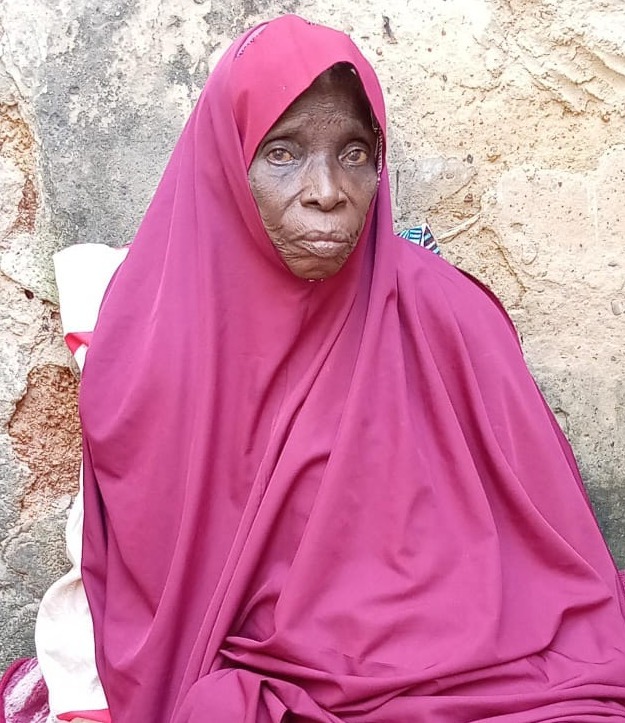
Hajiya Zulai Yusuf has died at the age of 98 after a prolonged illness.
Zulai Yusuf (Babar Talatuwa), who resided at Gama in Mangwaran Shata Ward of Nassarawa Local Government Area, hailed from Yajin Rana in Minjibir Local Government Area of Kano State. She died at the age of 98, leaving behind three children.
Among her children are Malam Abubakar Anas, Hajiya Saadatu Anas, and Malama Amina Anas.
She left behind 25 grandchildren, 40 great-grandchildren, and four great-great-grandchildren.
Among her grandchildren are Dr. Muhammad Jameel Yushau, a communication scholar with the Islamic Development Bank in Jeddah; Dr. Muttaqa Yushau of the Nigeria Labour Congress; and Abbas Yushau Yusuf, an editor with Nigerian Tracker online newspaper.
Others are Dr. Nafisa Yushau Yusuf of the State Universal Basic Education Board; Mujahid Yushau Yusuf, who works with the ICT unit of Bayero University, Kano; Anas Yushau Yusuf, a development worker; Barrister Sumayyah Yushau Yusuf; Abdurrahman Yushau, a banker; Gwana Hafsa Yushau Yusuf; and Ruqayya Yushau Yusuf.
Others are Juwairiyya Abubakar, Lubabatu Abubakar, Mubarak Abubakar, Muawaiyah Abubakar, Amiru Abubakar, Salim Abubakar, Nusaiba Abubakar, Mudasir Abubakar, and Abdulyazid Abubakar.
Also among them are Rabi Sale, Kamalu Sale, Balaraba Sale, and Yasir Sale.
She has since been buried in accordance with Islamic rites.
News
Court Directs ICPC to Produce El-Rufai for Next Hearing
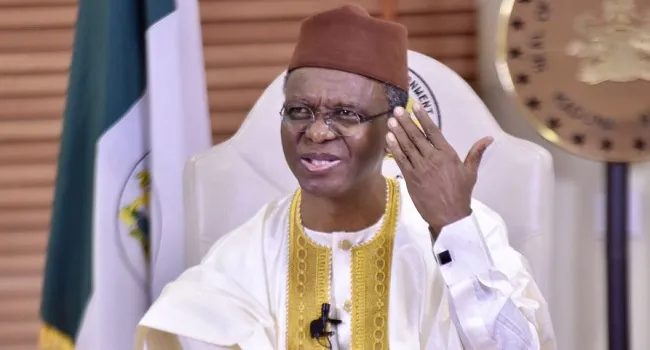
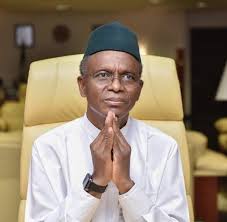
The Kaduna State High Court on Monday directed the Independent Corrupt Practices and Other Related Offences Commission (ICPC) to produce former Kaduna State Governor Nasir Ahmad El-Rufai for the next hearing in his trial.
Justice Darius Khobo gave the directive while adjourning proceedings after counsel for the defence and the prosecution agreed to the adjournment.
Speaking before the court, ICPC lead counsel, Ayodeleji Adelukpe, SAN, explained that the defence had requested an adjournment to enable its lead counsel, Paul Erokoro, SAN, to attend the swearing-in ceremony for a new set of Senior Advocates of Nigeria at the Supreme Court.
Adelukpe said Erokoro had sent him a WhatsApp message requesting that the proceedings scheduled for Monday and Tuesday be vacated, followed by a telephone call to explain the request.
He said he agreed to the adjournment for Monday out of respect for Erokoro and in recognition of the importance of the Supreme Court event but proposed that the case continue on Tuesday.
According to him, he suggested 10 a.m. for the continuation of proceedings, subject to the judge’s approval, but Erokoro requested that the sitting be fixed for noon.
The ICPC counsel, however, expressed surprise that El-Rufai was also absent from court, saying the communication he received from the defence counsel did not indicate that the defendant would be unavailable.
Adelukpe told the court that the information available to him was that El-Rufai would not attend because he wanted to review the results of his medical tests.
The court subsequently adjourned the proceedings until Tuesday and directed the ICPC to produce the former governor at the next hearing.
News
2027: Nigeria Forward Calls for Issue-Based Campaigns, Warns Against Personal Attacks
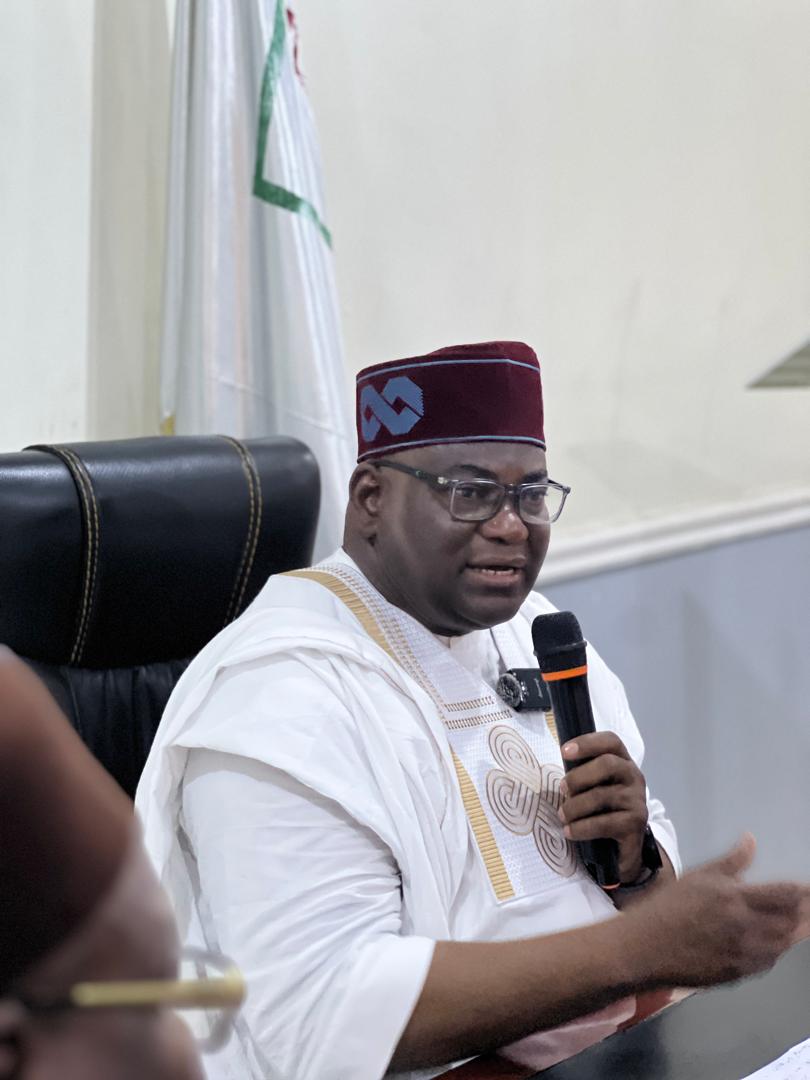
Nigeria Forward, a national socio-political group, has urged politicians and political parties participating in the 2027 general elections to focus on issue-based campaigns and refrain from hate speech, personality attacks and dangerous rhetoric capable of threatening national unity and peaceful coexistence.
In a press release issued on Monday, October 12, 2026, the group called on political candidates, parties and other stakeholders to conduct their campaigns responsibly by prioritising policies, manifestoes and programmes that address the needs of Nigerians.
The group’s position was contained in a statement issued by its Directorate of Communications and Strategy in response to the commencement of public political campaigns ahead of the 2027 general elections.
According to Nigeria Forward, the growing tendency among some political stakeholders to engage in personal attacks rather than discuss policies and governance issues could undermine peaceful coexistence and deepen divisions across the country.
The organisation expressed concern over what it described as campaigns of calumny, character assassination and other negative political practices, warning that such tendencies could turn the political environment into an arena for personality clashes rather than a platform for exchanging ideas.
Nigeria Forward maintained that election campaigns should provide voters with an opportunity to assess candidates based on their policies, proposed programmes, leadership priorities and capacity to address the country’s challenges.
The group also criticised the alleged abuse of the media space, particularly digital platforms, which it said some political actors and groups use to spread fake news, hate speech and misinformation in pursuit of political advantage.
It called on politicians and their supporters to exercise restraint in their use of social media and other communication channels, stressing that the dissemination of misleading information could heighten tensions and weaken public trust during the electioneering period.
While acknowledging that the pursuit of political power is a legitimate feature of democracy, Nigeria Forward said political ambitions should be pursued with decency, decorum, mutual respect, responsibility and patriotism.
The organisation urged Nigerian politicians to draw lessons from established democracies where, according to the group, election campaigns focus on issues, manifestoes, policies and programmes intended to improve the welfare of the electorate.
“Our politicians must take a cue from their contemporaries in the advanced and developed democracies, where electioneering campaigns are based on issues, manifestoes, policies and programmes that are intended to be implemented for the benefit of the electorates,” the statement said.
Nigeria Forward further called on political leaders to demonstrate a sense of responsibility and patriotism in their conduct as the country approaches the 2027 elections.
The group said responsible political engagement would encourage voters to embrace patriotism and civic responsibility, while placing national unity, peace and development above partisan interests.
“Our politicians must show sense of responsibility and patriotism in their approach towards the 2027 electioneering campaign activities, thereby setting the pace and tune for a more responsive and patriotic electorates that are alive to their responsibility of being patriotic and committed citizens whose focus is national unity, peace and development,” the statement added.
The organisation also appealed to individuals, corporate organisations, civil society groups and other well-meaning Nigerians to hold politicians accountable for their public statements and actions, particularly where such conduct could promote division among citizens.
According to Nigeria Forward, sustained public scrutiny of political rhetoric and campaign activities would help promote responsible political participation and discourage conduct capable of threatening national cohesion ahead of the elections.
The group said all stakeholders had a responsibility to contribute to a peaceful electoral environment by encouraging issue-based debates and rejecting inflammatory statements that could undermine democratic engagement.
It further expressed the hope that greater accountability and responsible campaigning would contribute to the emergence of leaders committed to democratic principles, national unity and peaceful coexistence.
The statement was signed by Comrade Ibrahim Abdullahi Waiya, PhD, Co-Convener of Nigeria Forward.

Nonagenarian Zulai Yusuf Is Dead

Court Directs ICPC to Produce El-Rufai for Next Hearing

2027: Nigeria Forward Calls for Issue-Based Campaigns, Warns Against Personal Attacks

Beyond Connectivity: How a Community Network Is Changing Life in Dakwa

Kenyan Presidential Aspirant Warns Dangote: ‘Don’t Rush Lamu Refinery, I’ll Send You Back to Nigeria’

Zamfara Varsity ASUU Threatens Warning Strike Over FG-ASUU Agreement, Promotion Arrears

PCACC Arrests Man Over Alleged ₦4.5m Sale, Illegal Leasing of Kano Government Horse Stable

Goje’s Electoral War:The Confrontation With Tinubu,Governor Inuwa,Usman Kumo And APC candidates Ahead Of 2027

Prof Yusuf Adamu Delivers BUK’s 63rd Professorial Inaugural Lecture, Reflects on Medical Geography and Academic Legacy

Al-Istiqama University to Hold Convocation, Honours Late Aminu Dantata, Sheikh Ibrahim Khalil
Nonagenarian Zulai Yusuf Is Dead
Court Directs ICPC to Produce El-Rufai for Next Hearing
2027: Nigeria Forward Calls for Issue-Based Campaigns, Warns Against Personal Attacks
Beyond Connectivity: How a Community Network Is Changing Life in Dakwa
Kenyan Presidential Aspirant Warns Dangote: ‘Don’t Rush Lamu Refinery, I’ll Send You Back to Nigeria’
Zamfara Varsity ASUU Threatens Warning Strike Over FG-ASUU Agreement, Promotion Arrears
PCACC Arrests Man Over Alleged ₦4.5m Sale, Illegal Leasing of Kano Government Horse Stable
Goje’s Electoral War:The Confrontation With Tinubu,Governor Inuwa,Usman Kumo And APC candidates Ahead Of 2027
Prof Yusuf Adamu Delivers BUK’s 63rd Professorial Inaugural Lecture, Reflects on Medical Geography and Academic Legacy
Al-Istiqama University to Hold Convocation, Honours Late Aminu Dantata, Sheikh Ibrahim Khalil
-

 Opinion5 years ago
On The Kano Flyovers And Public Perception
-

 Features5 years ago
How I Became A Multimillionaire In Nigeria – Hadiza Gabon
-

 Opinion6 years ago
Kano As future Headquarters Of Poverty In Nigeria
-

 History5 years ago
Sheikh Adam Abdullahi Al-Ilory (1917-1992):Nigeria’s Islamic Scholar Who Wrote Over 100 Books And Journals
-

 Opinion5 years ago
My First Encounter with Nasiru Gawuna, the Humble Deputy Governor
-

 History5 years ago
The History Of Borno State Governor Professor Babagana Umara Zulum
-

 History6 years ago
The Origin Of “Mammy Market” In Army Barracks (Mammy Ochefu)
-

 News5 years ago
Federal University Of Technology Babura To Commence Academic Activities September