
News
Atiku Slams Tinubu Over 30-Day Petrol Discount, Demands Answers on Day 31
By Yusuf Danjuma Yunusa
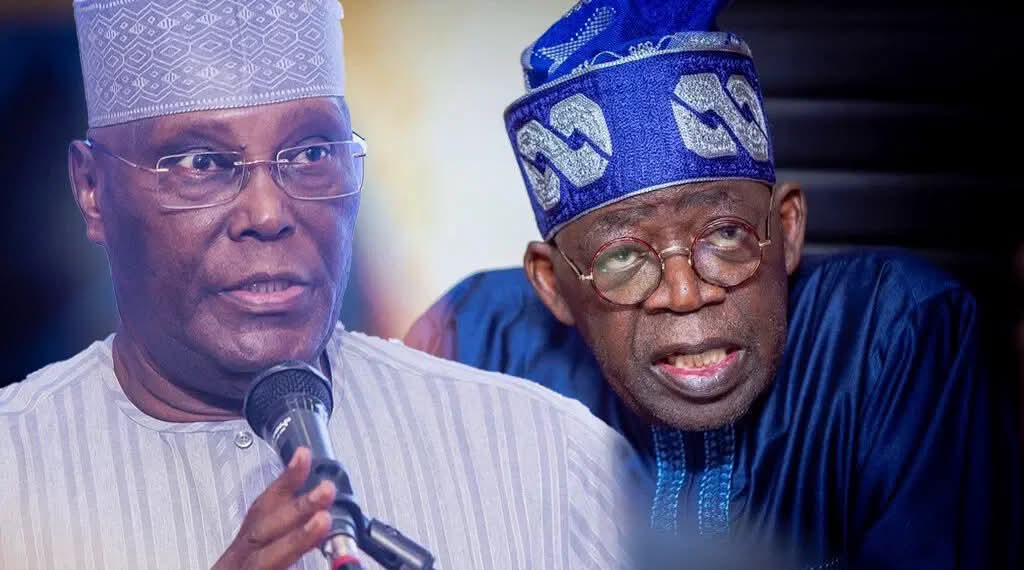
Former Vice-President Atiku Abubakar has criticised President Bola Tinubu’s administration over its 30-day petrol discount initiative, describing the measure as a temporary palliative that would not provide lasting relief to Nigerians grappling with rising living costs.
Atiku, in a statement, accused the Federal Government of introducing the discount as an election-season gesture after more than three years of economic hardship, questioning what would happen when the 30-day period expires.
The former vice-president said the government’s decision to offer a ₦50 discount on petrol at Nigerian National Petroleum Company (NNPC) stations amounted to a temporary intervention rather than a comprehensive solution to the country’s economic challenges.
“What happens on day 31?” Atiku asked, arguing that Nigerians required sustainable policies capable of reducing fuel costs and easing the burden of transportation, food and other essential commodities.
Atiku said the rising cost of living had continued to affect households, businesses and farmers, accusing the Tinubu administration of implementing economic reforms without providing adequate protection for citizens struggling with their consequences.
He said Nigerians had endured higher food prices, increased transportation costs, rising business expenses and growing insecurity, adding that the government should not expect a short-term petrol discount to compensate for the prolonged economic difficulties experienced by citizens.
According to him, the administration had spent more than three years asking Nigerians to endure economic sacrifices, while the cost of essential goods and services continued to rise.
The former vice-president also accused Tinubu of introducing the petrol discount only after his administration had dismissed similar proposals for targeted support to reduce the burden of fuel costs.
Atiku said he had previously advocated targeted assistance to ease the impact of petrol prices but was criticised by the government for what it described as a lack of understanding of economic policy.
He argued that the government’s latest initiative had effectively adopted the principle behind his proposal, although he maintained that the administration had failed to implement it in a comprehensive and sustainable manner.
“When I proposed targeted support to ease fuel costs, you called me ignorant of economic policy. Your government said it could not be done. Now, in a desperate and clumsy retreat, you have shamelessly embraced the principle you mocked,” Atiku said.
He demanded an apology from the president but stressed that his greater concern was the need for the government to explain how Nigerians would be protected from rising fuel costs after the discount period ended.
Atiku distinguished his proposed production subsidy from the government’s 30-day discount, describing his approach as a long-term intervention designed to support local refining and reduce the cost of fuel.
He argued that a properly structured production subsidy could help lower domestic fuel production costs while providing more durable relief to consumers.
According to him, the government’s temporary discount lacked the policy framework required to guarantee stable transportation fares, predictable operating costs for businesses and affordable living conditions for households.
“Atiku described Tinubu’s 30-day discount as a ‘sugar rush masquerading as economic policy,’ arguing that the temporary reduction in petrol prices would be followed by renewed hardship once the initiative expired.
“Families cannot plan their meals around a temporary discount. Transporters cannot set stable fares on it. Businesses cannot invest or plan for the future on it,” he said.
The former presidential candidate maintained that Nigerians needed a sustainable economic relief programme rather than a short-term reduction in petrol prices that could offer only limited respite.
He also accused the president and his economic team of failing to adequately consider alternative policy proposals aimed at reducing the hardship associated with the government’s economic reforms.
Atiku said that during his State of the Nation address on September 18, 2026, he had offered to share his economic relief plan with Tinubu in the national interest.
He expressed disappointment that the president had not accepted the offer, alleging that the government had instead introduced a limited intervention that failed to address the underlying problems.
According to Atiku, the administration’s decision reflected what he described as intellectual laziness and an unwillingness to acknowledge alternative approaches to economic management.
He further accused the government of seeking public approval for a temporary discount after presiding over years of rising living costs.
“Now you offer a ₦50 petrol discount for 30 days and expect applause for returning a fraction of what Nigerians have lost?” he asked.
Atiku said the government should be judged by the overall impact of its economic policies rather than by the announcement of temporary relief measures.
He added that Nigerians were capable of distinguishing between a government pursuing a comprehensive economic strategy and one introducing short-term interventions to manage public dissatisfaction.
The former vice-president also questioned the practical implementation of the discount, particularly the government’s plan to prioritise public transport operators.
He asked whether the initiative would translate into lower transportation fares for passengers and what mechanisms the government would establish to ensure that transport operators passed the savings on to commuters.
“Do not hide behind the word ‘discount.’ You say public transport operators come first. Will fares fall? Who will enforce that?” Atiku asked.
He maintained that without clear enforcement measures and a sustainable policy framework, the initiative might fail to deliver meaningful benefits to ordinary Nigerians.
Atiku urged the administration to adopt a lasting economic relief strategy focused on reducing fuel costs, supporting local refining and easing the pressure on households and businesses.
He said Nigerians had endured significant economic difficulties and deserved policies that would provide predictable and sustained improvements in their living conditions rather than temporary relief measures.
The former vice-president says the public would ultimately judge the Tinubu administration by its ability to address the country’s economic challenges and improve the welfare of citizens.










News
Northern APC Youths Reject Tinubu’s Second-Term Bid, Form Anti-Tinubu Forum
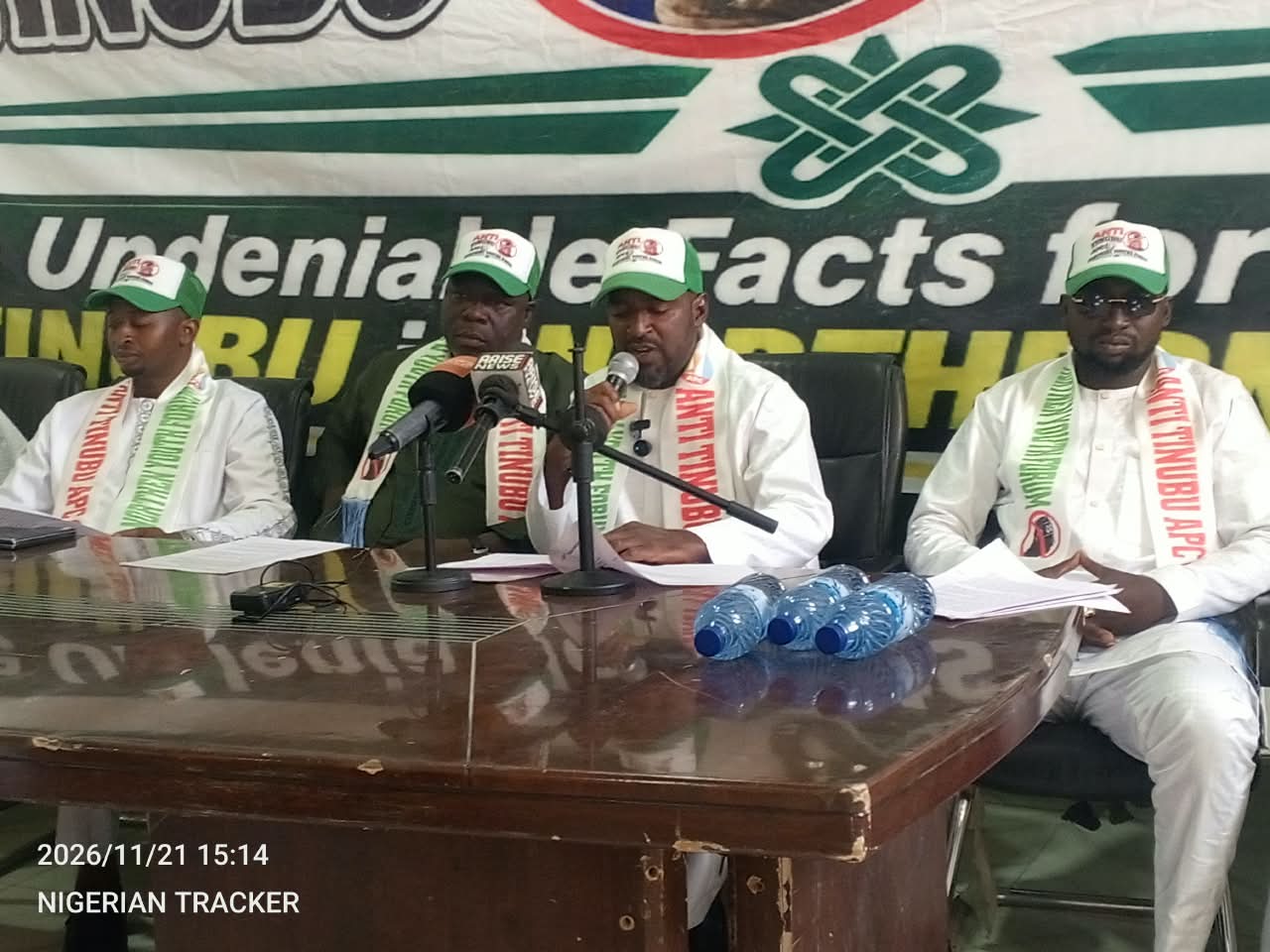
A group of youths within the All Progressives Congress (APC) from the 19 northern states has announced its withdrawal of support for President Bola Ahmed Tinubu’s second-term ambition ahead of the 2027 general elections.
The group, operating under the banner of the Anti-Tinubu APC Northern Youths Forum, said its decision was informed by what it described as the Federal Government’s failure to address insecurity, economic hardship, unemployment, declining educational standards and other challenges confronting Nigerians, particularly those in the northern region.
The Secretary of the forum, Comrade Umar Chanji, announced the group’s position while addressing journalists in Kano, alongside other leaders representing various states across northern Nigeria.
Chanji, who spoke under the leadership of the forum’s Chairman, Alhaji Mustapha Tinubu, said the group was no longer interested in supporting or promoting President Tinubu’s re-election campaign in the 2027 presidential election.
He said the decision, which was taken under the theme *Gaskiya Dayace*, followed what he described as several unfulfilled promises and the failure of the current administration to adequately address the challenges facing ordinary Nigerians.
Explaining the reasons behind their decision, Chanji identified insecurity as one of the major concerns, arguing that the protection of lives and property, which he described as the primary responsibility of government, had not been adequately guaranteed under the Tinubu administration.
He alleged that several communities across Katsina, Sokoto, Zamfara, Niger, Plateau, Nasarawa, Benue, Kaduna, Kebbi, Bauchi, Taraba, the Federal Capital Territory, Kwara and Kogi states continued to experience attacks, killings and destruction of property.
The APC youth leader further alleged that insecurity had forced thousands of residents out of their communities, disrupting farming activities, education, commercial activities and other means of livelihood.
On the economy, Chanji criticised the removal of fuel subsidy and what he described as the introduction of unnecessary taxes, arguing that the government’s economic policies had increased the financial burden on ordinary Nigerians.
He also questioned the Federal Government’s handling of the country’s refineries and its promises concerning the introduction of Compressed Natural Gas (CNG) as an alternative to petrol, insisting that the economic difficulties facing citizens had continued despite government assurances.
The forum also expressed concern over the state of education in northern Nigeria, alleging that insecurity had contributed to the disruption of schooling and deprived many children of access to quality education.
Chanji accused the Tinubu administration of using northern youths as political instruments during the 2023 general elections, only to abandon them after securing political power.
He claimed that members of the group played significant roles in mobilising support and promoting the APC’s presidential campaign during the last general election but had subsequently been sidelined in the distribution of political appointments and government opportunities.
The forum’s secretary further accused the administration of promoting nepotism, alleging that political appointments and government opportunities were concentrated among individuals close to those in power rather than being distributed based on competence, loyalty and contributions to the party.
On healthcare, Chanji expressed concern over what he described as inadequate government attention to medical services, particularly for economically disadvantaged Nigerians who struggle to access affordable healthcare.
He also accused political appointees of prioritising personal interests and the accumulation of wealth over projects and policies that could improve the living conditions of ordinary citizens.
According to him, the forum was particularly dissatisfied with what it described as the attitude of some political officeholders who, rather than addressing the concerns of party members and the electorate, were allegedly waiting for campaign funds ahead of the 2027 elections.
Despite withdrawing support for President Tinubu’s second-term ambition, Chanji clarified that the group remained committed to the APC and would continue to support the party’s candidates contesting other elective positions across the 19 northern states.
He said the forum would continue to mobilise, campaign for and support APC governorship, senatorial, House of Representatives and State House of Assembly candidates in the region.
The group, however, urged APC members, particularly youths at the federal, state and local government levels, as well as other residents of northern Nigeria, not to support President Tinubu’s second-term bid in 2027.
Chanji also called on the national leadership of the APC, led by Professor Nentawe Yilwatda, to pay attention to the grievances of party members and address concerns over governance, political appointments and the welfare of ordinary Nigerians.
The announcement marks a growing expression of dissent from within the ruling party, although the extent of the forum’s membership, its organisational structure and the level of support it commands across the 19 northern states were not independently established.
The group concluded its address by thanking journalists and participants who attended the Kano briefing, while reaffirming its commitment to what it described as the struggle for better governance and improved living conditions for Nigerians.
The statement was signed by Comrade Umar Chanji, Secretary of the Anti-Tinubu APC Northern Youths Forum, under the leadership of its Chairman, Alhaji Mustapha Tinubu.
News
Atiku to INEC: Subject AI Election Result System to Independent Audit Before 2027
By Yusuf Danjuma Yunusa
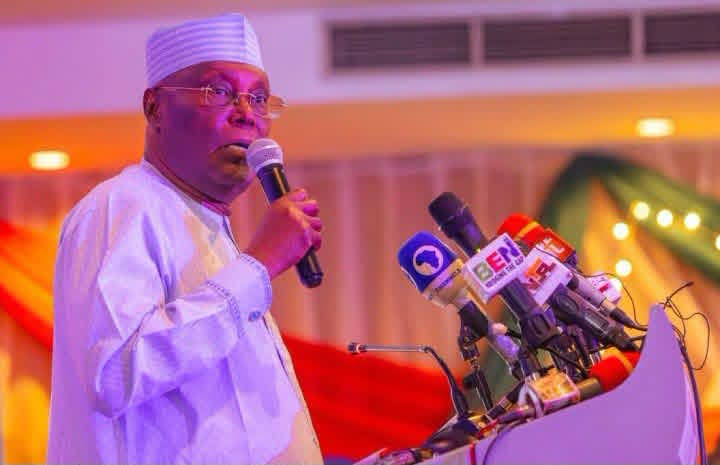
Former Vice President Atiku Abubakar has called on the Independent National Electoral Commission to subject its proposed Artificial Intelligence system to an independent audit before deploying it for processing results in the 2027 general elections.
Atiku said the use of AI in election result management without adequate transparency and safeguards could undermine public confidence in the electoral process, particularly if algorithms were allowed to delay, reject or interfere with the transmission of polling unit results.
He asked the electoral commission to disclose the technical and operational details of the system, including its source code, training data, discrepancy-detection criteria and the identities of its developers and third-party vendors.
The former vice president made the demands in a petition addressed to the INEC Chairman on behalf of the African Democratic Congress and allied democratic stakeholders.
In a statement issued on Thursday by the Director of Strategic Communication of the ADC Presidential Campaign Council, Phrank Shaibu, Atiku said independent cybersecurity experts, political party representatives and civil society technologists should be granted access to the system for a comprehensive audit before the nationwide mock accreditation exercise scheduled for November 28, 2026.
He expressed concern over INEC’s announced integration of AI and intelligent document processing into the process linking its Data Verification and Authentication System with the INEC Result Viewing portal.
According to him, Nigerians should be informed about how the technology works and its role in election result management.
“INEC cannot ask Nigerians to trust a system whose rules they are forbidden to see. If an algorithm can flag a polling unit result sheet, the public deserves to know what triggers that flag, who set the threshold, who can change it and what happens to the result afterward,” he said.
Atiku said technical limitations, including poor lighting, unfamiliar handwriting and worn-out paper, could cause legitimate result sheets to be flagged or delayed.
He argued that such difficulties should not be grounds for withholding valid election results and called for discrepancies to be treated consistently across polling units.
The former presidential candidate also asked INEC to establish and publicise a procedure for reviewing results flagged by the AI system.
He said the commission should explain who would review such results, how decisions would be documented, how political parties would be notified and how erroneous assessments could be challenged.
Atiku said AI should serve only as an administrative tool under human supervision and should not be allowed to delete, alter or permanently block election results.
He also asked the commission to reaffirm the legal status of Form EC8A, the polling unit result sheet completed and signed by presiding officers and party agents.
“The polling unit result sheet, Form EC8A, records what happened where the people voted. INEC must publicly reaffirm the legal status of the physical form completed and signed at the polling unit, and explain how it will resolve any conflict between that document and an AI assessment.
“A machine’s verdict cannot be allowed to quietly displace the evidence witnessed by voters and party agents,” he added.
The ADC presidential candidate called for real-time monitoring access for political parties through a dedicated dashboard or observer interface to enable them to monitor result flagging, upload delays and blocked submissions during elections.
He urged the National Assembly to summon INEC’s leadership and its Information and Communication Technology Directorate to explain the system’s design, safeguards and independent audit arrangements.
Atiku also called on election observers and international partners to include the digital handling and transmission of results in their monitoring activities.
He advised voters to document results as announced and displayed at their polling units to provide records for comparison with electronically uploaded results.
The former vice president linked the demand for transparency to his campaign’s promise of an affordable life, saying Nigerians should be allowed to determine their political future without technological interference.
News
Trump, Putin, Xi Urged to Translate Historic Trilateral Meeting into Concrete Action to End Wars
By Yusuf Danjuma Yunusa
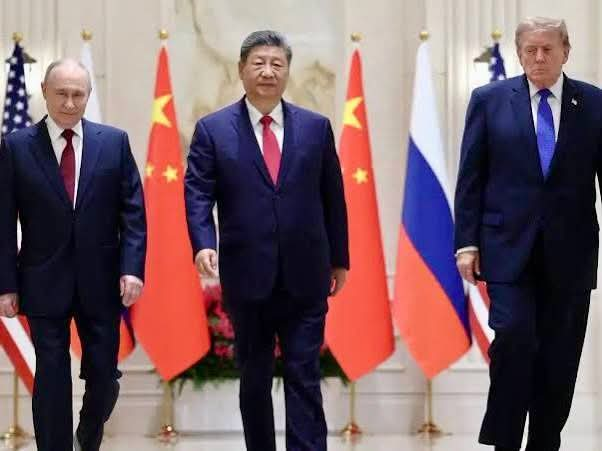
Media Diplomacy Studies (MDS), a research and policy advocacy organisation, says the historic trilateral meeting between US President Donald Trump, Russian President Vladimir Putin and Chinese President Xi Jinping must produce concrete actions towards ending ongoing wars.
The three leaders met on Thursday in Shenzhen, China, on the sidelines of the Asia-Pacific Economic Cooperation summit.
In a statement issued after the meeting, MDS commended the leaders for embracing direct diplomatic engagement at a particularly consequential moment in international relations.
The organisation urged them to translate the Shenzhen engagement into resolute, practical and measurable initiatives aimed at securing immediate de-escalation, negotiated ceasefires, humanitarian protection and sustainable political settlements in conflict-affected regions.
“The world needs fewer theatres of war – if any at all – and more enduring platforms for dialogue, trust and international cooperation,” Mkpe Abang, MDS founder and chief executive officer (CEO), said.
A readout of the meeting published by Chinese state broadcaster CCTV said Xi, Trump, and Putin exchanged views on a wide range of issues, including global energy flows, nuclear proliferation and the international legal system.
However, the document did not mention key issues, such as wars in Ukraine and Iran, artificial intelligence (AI), or the Nvidia scandal.
MDS also said Africa must not remain a peripheral participant in international discussions whose outcomes profoundly affect its security, economic development, political stability and future prosperity.
Abang said media organisations must also recognise their responsibility to promote international peace, particularly at a time when global influence is increasingly exercised through information, narratives and strategic communication.

Blowing One’s Own Trumpet:43 Years Since My Journey Through Triumph

Northern APC Youths Reject Tinubu’s Second-Term Bid, Form Anti-Tinubu Forum

Atiku to INEC: Subject AI Election Result System to Independent Audit Before 2027

Trump, Putin, Xi Urged to Translate Historic Trilateral Meeting into Concrete Action to End Wars

Senator Kawu Sumaila Commends Kano Drug Task Force, Donates ₦5m to Operatives, Supports Rescued Children

Open The Social Sciences “A Tribute to a Heterodox Scholar: Mallam Ibrahim Muazzam

Kano’s War On Drugs: How Barr. Muhyi’s Taskforce Is Changing The Game

Begging in Northern Nigeria: What Future Are We Preparing for Our Society?

NDC Deputy Governorship Candidate Gives Kano Information Commissioner 48-Hour Ultimatum Over Alleged Defamation

Tinubu’s Jigawa Rally Signals Growing Northern Support, TMS Says as President Defends Economic Reforms
Blowing One’s Own Trumpet:43 Years Since My Journey Through Triumph
Northern APC Youths Reject Tinubu’s Second-Term Bid, Form Anti-Tinubu Forum
Atiku to INEC: Subject AI Election Result System to Independent Audit Before 2027
Trump, Putin, Xi Urged to Translate Historic Trilateral Meeting into Concrete Action to End Wars
Senator Kawu Sumaila Commends Kano Drug Task Force, Donates ₦5m to Operatives, Supports Rescued Children
Open The Social Sciences “A Tribute to a Heterodox Scholar: Mallam Ibrahim Muazzam
Kano’s War On Drugs: How Barr. Muhyi’s Taskforce Is Changing The Game
Begging in Northern Nigeria: What Future Are We Preparing for Our Society?
NDC Deputy Governorship Candidate Gives Kano Information Commissioner 48-Hour Ultimatum Over Alleged Defamation
Tinubu’s Jigawa Rally Signals Growing Northern Support, TMS Says as President Defends Economic Reforms
-

 Opinion5 years ago
On The Kano Flyovers And Public Perception
-

 Features5 years ago
How I Became A Multimillionaire In Nigeria – Hadiza Gabon
-

 Opinion6 years ago
Kano As future Headquarters Of Poverty In Nigeria
-
 History6 years ago
Sheikh Adam Abdullahi Al-Ilory (1917-1992):Nigeria’s Islamic Scholar Who Wrote Over 100 Books And Journals
-
 Opinion5 years ago
My First Encounter with Nasiru Gawuna, the Humble Deputy Governor
-

 History5 years ago
The History Of Borno State Governor Professor Babagana Umara Zulum
-
 History6 years ago
The Origin Of “Mammy Market” In Army Barracks (Mammy Ochefu)
-
 News5 years ago
Federal University Of Technology Babura To Commence Academic Activities September