
News
Beyond Connectivity: How a Community Network Is Changing Life in Dakwa
By Ali Sabo
Dakwa is the kind of community that can easily be overlooked in Nigeria’s digital story.
Located along the Zuba–Dei-Dei–Zuma corridor of the Federal Capital Territory, the agrarian community is only about 29 kilometres from Abuja, yet proximity to the nation’s capital has not always translated into access to reliable and affordable internet. For many residents, particularly young people, accessing the opportunities of the digital world meant looking beyond their immediate environment.
That is beginning to change.
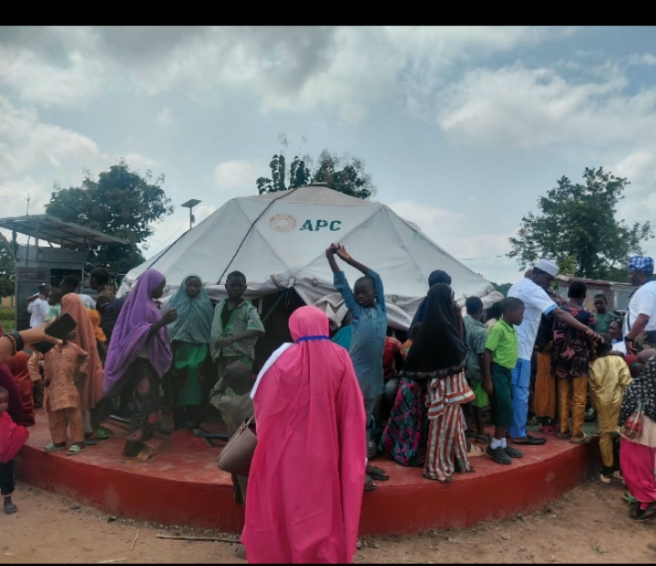
Through the efforts of the Centre for Information Technology and Development (CITAD), the Association for Progressive Communications (APC), Hello World and 48 Percent, a community network and internet hub was established in Dakwa, bringing affordable connectivity closer to residents and creating a space where people can use the internet for learning, communication and accessing opportunities.
But the real story of the Dakwa Community Network is not the infrastructure. It is what the people of Dakwa are beginning to do with it.
During a recent visit to the community, the District Head of Dakwa, Alhaji Shuaibu Samu, described the intervention as a “life-changing opportunity” for residents.
His description is rooted in what the community experienced before the hub came into existence.
“Before the establishment of this facility, access to reliable and affordable internet was a major challenge for our people.”
For a community increasingly connected to a world where education, employment, communication and access to information are moving online, that challenge carries consequences. Being offline or poorly connected does not simply mean having no internet. It can mean missing opportunities that others take for granted.
Today, Samu says the situation is changing.
“Now, our youths can access information, learn new skills and explore opportunities online without having to travel far from the community.”
That statement captures perhaps the most important change taking place in Dakwa: the world of opportunities is becoming physically closer to the people who live there.
A window beyond Dakwa
For Ismail Shuaibu, a Community Champion at the hub, the facility has already become part of the community’s daily life.
He explained that young people now use the hub to study, search for jobs, access online opportunities and communicate with others.
“Many young people now come here to study, search for jobs, access online opportunities and communicate with others.”
These may sound like simple activities. But in a community where reliable and affordable internet was previously a major challenge, they represent something much bigger.
A young person who comes to the hub to search for a job is no longer limited to opportunities advertised within the community. A student who comes to study can access information and learning resources that may not be available locally. Someone looking for information can reach beyond the boundaries of Dakwa and engage with a much wider world.
In that sense, the community network is not merely connecting devices. It is expanding people’s horizons.
From a project to a community asset
Perhaps equally important is the way residents are beginning to see the facility.
Ismail explained that the hub operates through a community-driven model, with users paying a small fee that contributes to maintaining the equipment and keeping the service running.
“The idea is for the community to see this as its own facility. The small amount paid by users helps us maintain the equipment and provide the service continuously.”
This is significant.
Many development interventions struggle after external support ends because the communities that benefit from them were not sufficiently involved in their ownership or management. Dakwa is attempting a different path: making the community part of the solution.
The District Head has also called on residents to take ownership of the facility and support efforts to keep it operational.
That sense of ownership could ultimately determine whether the digital opportunity created in Dakwa becomes a temporary intervention or a lasting community institution.
The real measure of digital inclusion
Dakwa’s experience offers a broader lesson about digital inclusion in Nigeria.
For years, discussions about the digital divide have often focused on infrastructure, broadband coverage and the number of people connected to the internet. These are important measures, but they do not tell the whole story.
The more important question is: What changes when people get connected?
In Dakwa, the early answers are emerging from the residents themselves: young people are studying, searching for jobs, accessing opportunities, communicating and becoming more familiar with digital tools and online services.
The organisations that helped bring the community network into existence deserve recognition for creating that opportunity. But the most important voices in determining its impact are those of the people who now use it.
And their testimonies suggest that something deeper than internet access is taking place.
Dakwa is beginning to discover that distance does not necessarily have to determine opportunity.
A young person can live in a community outside the centre of Abuja and still search for employment online. A student can access learning resources without travelling to the city. A resident can communicate, find information and explore opportunities that were previously difficult to reach.
That is what meaningful connectivity should ultimately achieve.
The success of Dakwa’s community network will not be measured simply by how many people connect to it. It will be measured by how many possibilities people discover because they can.
And perhaps that is the most important transformation happening in Dakwa: the internet is not only bringing the wider world into the community. It is giving the people of Dakwa a stronger opportunity to reach out and participate in that world.
Ali Sabo is the Campaign and Communication Officer of the Centre for Information Technology and Development and can be reached at asabo@citad.org















News
Mahanga TV appoints former AREWA24 staff Zuwairiyah Girei as MD
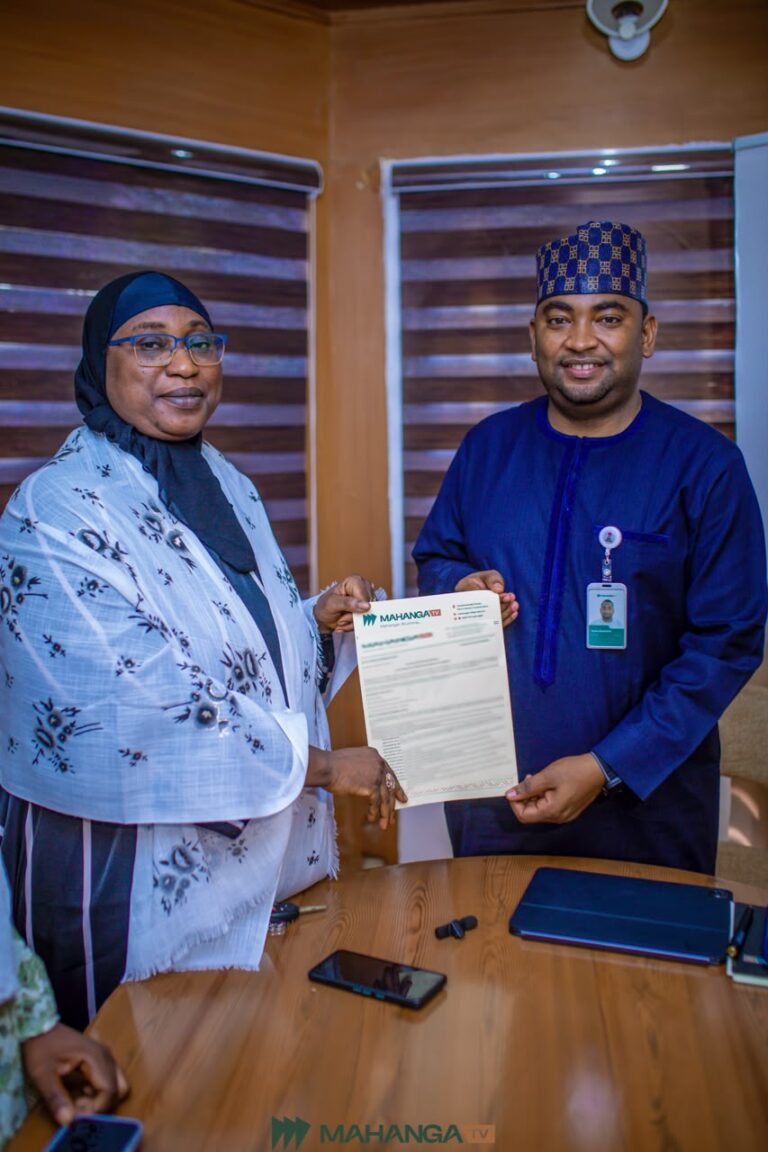
Mahanga TV, a Kano-based television station, has appointed former AREWA24 staff member Zuwairiyah Adamu Girei as its new Managing Director, bringing her more than 14 years of experience in Hausa-language television production and broadcasting to the organisation.
Girei was formally welcomed into her new role during a reception held at Mahanga TV’s premises in Kano on Monday, November 2, 2026, marking a new phase in the organisation’s growthe barely three months after its launch.
Speaking at the reception, Girei expressed excitement over her appointment, describing her experience at AREWA24 as a significant milestone in her professional journey.
She said she would draw on the knowledge and experience acquired during her time at the television station to strengthen Mahanga TV and drive it towards greater achievements.
“All the experience I have at AREWA24, I will bring here, and I think I will do extraordinary because I know what I have learnt there. I pray that we will see success beyond our expectations,” she said.
Outlining her vision for Mahanga TV, the new Managing Director said the organisation would look beyond Northern Nigeria and target audiences across Africa and the rest of the world.
She identified the large Hausa-speaking population as a major opportunity for the industry, noting that despite the challenges facing Hausa-language broadcasting, the sector has a substantial audience.
“We have over 60 million Hausa speakers in Nigeria, so I think we have a target audience we have to try to reach,” she said.
Girei said her leadership would focus on understanding audience expectations, introducing improvements and positioning Hausa productions for international recognition.
“Our thinking is pan-African; our thinking is the world. Our thinking is now how can Hausa film reach the Oscars. That is the thinking,” she said.
Looking ahead to the next decade, she expressed her ambition to see Mahanga TV secure three to four Academy Awards, earn international recognition and become a household name among viewers across different age groups.
She said she envisioned a future where Mahanga TV would be the preferred television platform in homes, with both adults and children identifying with its programmes.
The Chief Executive Officer of Mahanga TV, Nuhu Abdullahi Balarabe, said Girei’s appointment was informed by the organisation’s rapid growth and the need for experienced leadership to sustain its progress.
Balarabe explained that he initially served as both Managing Director and CEO but decided to appoint a dedicated Managing Director to oversee the organisation’s daily operations and provide the leadership required to sustain its expanding activities.
He said the organisation needed someone who could provide consistent leadership and maintain its momentum as it continued to grow.
“She is well experienced, and I’m sure she will use that experience to take the organisation further from where it is,” he said.
Balarabe disclosed that Mahanga TV had recorded progress beyond its initial expectations within three months of launching, attributing the achievement to the dedication of its staff, consultants and advisers.
He said the organisation was expanding its content offerings through original productions and partnerships with independent producers to provide audiences with engaging programmes.
He also urged viewers to continue supporting the station and sharing feedback through its social media platforms and WhatsApp channel, assuring them that the organisation remained open to suggestions as it worked to improve its services.
Reaffirming the organisation’s broader ambition, Balarabe said Mahanga TV was committed to ensuring that Hausa stories, culture and experiences reached audiences across the world.
“We have a beautiful tale happening in Northern Nigeria, and I believe it is only we that can tell our own story. We want to make sure all our stories are told and they reach every part of the world,” he said.
Also speaking, Mahanga TV’s Creative Director and Brand Manager, Abdulbasit Abanikanda, described Girei’s appointment as a timely development that would strengthen the organisation’s management structure and provide better direction for its expanding workforce.
Abanikanda recalled that Mahanga TV started with a team of just three people but had since grown considerably, making the appointment of an experienced manager necessary to coordinate its activities.
He expressed confidence in Girei’s ability to advance the station’s creative vision, noting that her ambition of taking Hausa stories to audiences across the world aligned with the organisation’s objectives.
With Girei’s appointment, Mahanga TV aims to consolidate its early progress, strengthen its content production and expand the reach of Hausa storytelling, creating opportunities for Northern Nigeria’s stories, culture and creative talent to gain wider national and international recognition.
News
Kano Governor Nominates Ex- Speaker, Spokesperson as Commissioners
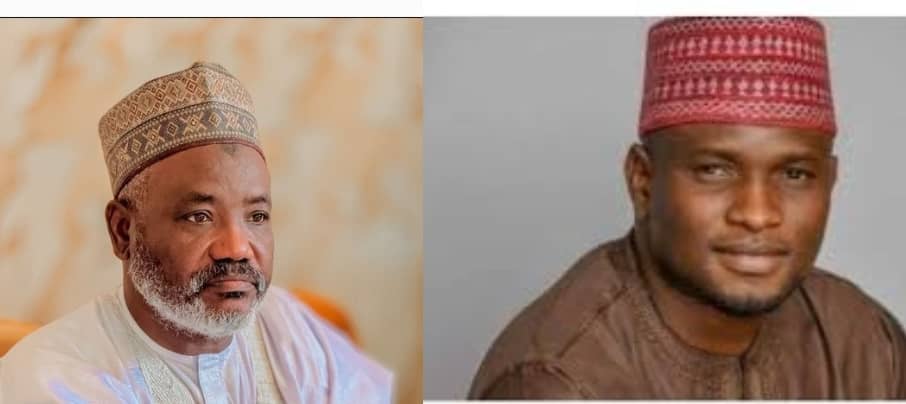
Kano State Governor, Abba Kabir Yusuf, has nominated his spokesperson, Sanusi Bature Dawakin Tofa, and a former Speaker of the State House of Assembly, Balarabe Sa’idu Gani, for appointment as commissioners.
The governor has forwarded their names to the Kano State House of Assembly for screening and confirmation.
The Assembly is expected to screen the nominees on Tuesday, November 3, 2026, at 10:00 a.m.
In a statement issued on Monday, the Assembly’s spokesperson, Kamaluddeen Sani Shawai, said the legislature had received a formal communication from Governor Yusuf requesting the screening of the two nominees.
He added that the exercise would be conducted in accordance with the provisions of the Constitution of the Federal Republic of Nigeria.
Gani served as Speaker of the Kano State House of Assembly from 2003 to 2007, while Bature currently serves as the governor’s spokesperson.
News
2027: Rep Abubakar Kabir Bichi holds strategic meeting with Kano lawmakers
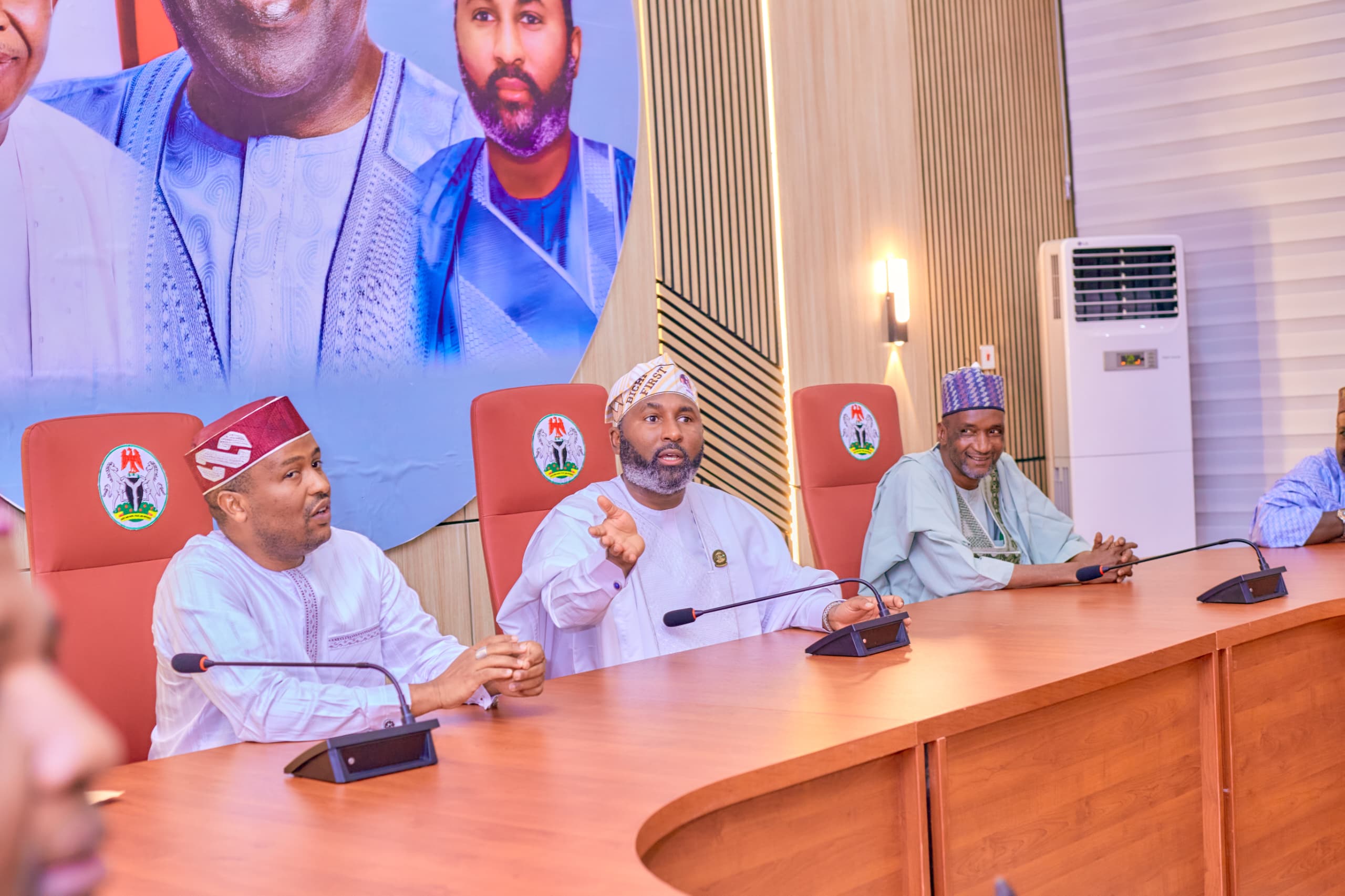
The Chairman, House of representatives committee on appropriations Hon. Abubakar Kabir Bichi, has convened a meeting of all APC State Assembly Members and 40 Candidates in the upcoming 2027 General elections, led by the Speaker of the Kano State House of Assembly, Rt. Hon. Jibril Ismail Falgore.
Crucial issues were discussed on how best to coordinate their campaigns programs to deliver the APC, President Bola Ahmed Tinubu and Governor Abba Kabir Yusuf in the forthcoming 2027 general elections.
The meeting was held at his Bichi office, Sunday evening 1st November 2026.

Mahanga TV appoints former AREWA24 staff Zuwairiyah Girei as MD

Kano Governor Nominates Ex- Speaker, Spokesperson as Commissioners

2027: Rep Abubakar Kabir Bichi holds strategic meeting with Kano lawmakers

Kano’s War On Drugs: How Barr. Muhyi’s Taskforce Is Changing The Game

The Reward For Hardwork Is More Work: A Rejoinder To Dr Garba Ubale Danbatta

Kano Monitors ₦48.9bn Projects Across Six LGAs

Kano Spends ₦10.36bn on Hospitality, Sitting Allowances, Others in Six Months

Open The Social Sciences “A Tribute to a Heterodox Scholar: Mallam Ibrahim Muazzam

Senate Passes Barau’s Bill to Provide Legal Framework for Yusuf Maitama Sule Federal University of Education, Kano

Kano First Forum Petitions Police Over Alleged Inciting Statements by Aminu Babba Dan Agundi
Mahanga TV appoints former AREWA24 staff Zuwairiyah Girei as MD
Kano Governor Nominates Ex- Speaker, Spokesperson as Commissioners
2027: Rep Abubakar Kabir Bichi holds strategic meeting with Kano lawmakers
Kano’s War On Drugs: How Barr. Muhyi’s Taskforce Is Changing The Game
The Reward For Hardwork Is More Work: A Rejoinder To Dr Garba Ubale Danbatta
Kano Monitors ₦48.9bn Projects Across Six LGAs
Kano Spends ₦10.36bn on Hospitality, Sitting Allowances, Others in Six Months
Open The Social Sciences “A Tribute to a Heterodox Scholar: Mallam Ibrahim Muazzam
Senate Passes Barau’s Bill to Provide Legal Framework for Yusuf Maitama Sule Federal University of Education, Kano
Kano First Forum Petitions Police Over Alleged Inciting Statements by Aminu Babba Dan Agundi
-

 Opinion5 years ago
On The Kano Flyovers And Public Perception
-

 Features5 years ago
How I Became A Multimillionaire In Nigeria – Hadiza Gabon
-

 Opinion6 years ago
Kano As future Headquarters Of Poverty In Nigeria
-
 History6 years ago
Sheikh Adam Abdullahi Al-Ilory (1917-1992):Nigeria’s Islamic Scholar Who Wrote Over 100 Books And Journals
-
 Opinion5 years ago
My First Encounter with Nasiru Gawuna, the Humble Deputy Governor
-
 History5 years ago
The History Of Borno State Governor Professor Babagana Umara Zulum
-
 History6 years ago
The Origin Of “Mammy Market” In Army Barracks (Mammy Ochefu)
-
 News5 years ago
Federal University Of Technology Babura To Commence Academic Activities September