
Opinion
Journalists:The Proverbial Brown Envelope, a Potent Threat To Journalism In Nigeria
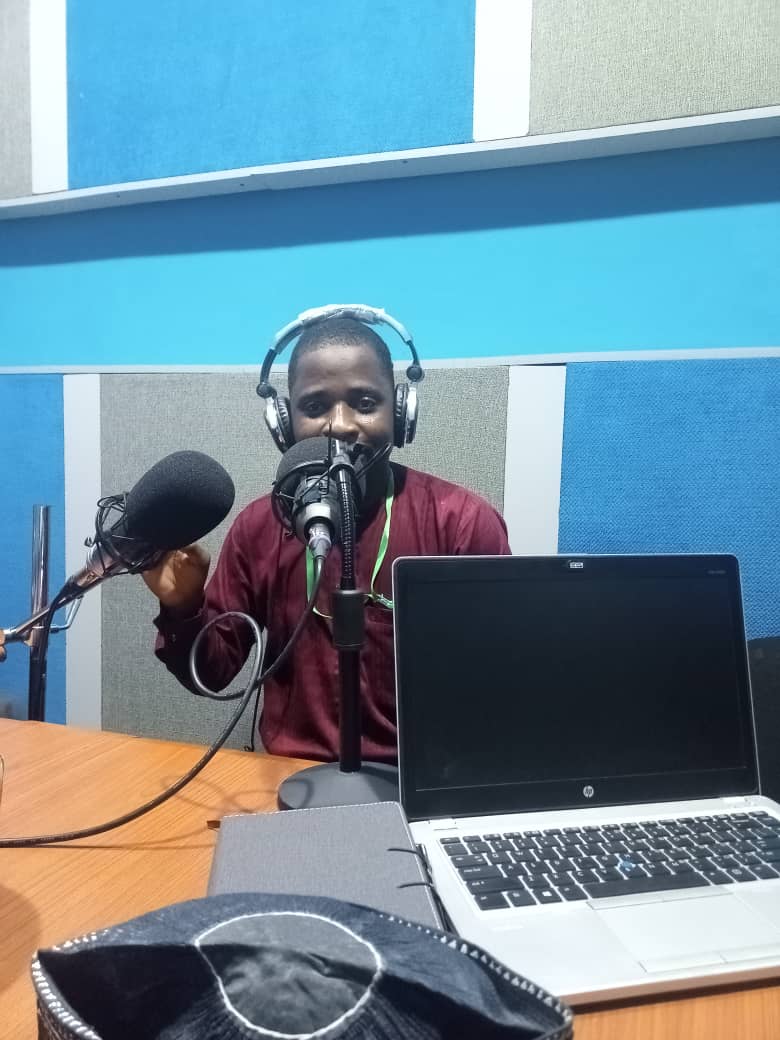
By Ali Sabo
Journalists all over the world are facing threats to their lives and are being assaulted either verbally or physically even in countries that claim to be the custodians of democracy.
This has prevented or is preventing many journalists from carrying out their works freely for fear of being harmed by those in power and their friends who perceived them as enemies for exposing their dirty deals or holding them to account for their actions.
In 2018 for instance, a prominent Saudi born journalist, Jamal Khashoggi, who fled his country for fear of being killed by authorities there was brutally murdered and his body decapitated inside the Saudi Consulate in Istanbul, Turkey.
Journalists urge to maintain professionalism in their reportage
Of recent, in the most developed country which also claims to be the global safest haven for freedom of the press and expression, we have seen in multiple instances how its president consistently abused journalists for asking simple questions and expelling many of them from his media briefings.
That president has successfully stratified the media in his country into those presumably hostile towards him and his policies and those sympathetic to him.
In Nigeria, the debate on the protection of journalists’ rights has been going on for so many decades, but as I penned this, we have yet to find a common ground and a common consensus that could address the challenges to journalism that have lingered for far too long that can be passed off as healthy.
Journalists in Nigeria are some of the most disrespected and assaulted professionals anywhere by government officials, private individuals, and media house owners who pay them meager amounts as salaries which can very hardly cater to even their most basic needs.
As if that wasn’t bad enough, some media organizations go as insensitive as giving only ID cards to their staff as meal tickets.
This unfair treatment of journalists by media establishments who collect a huge amount of money as advertisements from companies and government MDAs – among other sources – have exposed many journalists to the dangers of corruption and made some of them to compromise even the most abiding ethos of journalism for the singular purpose of survival. These are some of the reasons why journalists are not respected and placed in high regard in Nigeria as they naturally should.
Last week at a media briefing organized by Femi Fani Kayode as part of his tour to some states in Nigeria, a journalist working with Daily Trust Newspaper in Cross River State Eyo Charles during questions and answers session posed a question to the ex-minister about who is bankrolling his tours.
In a normal and sane society, and if the interviewee had any iota of decency in him, he would have simply answered the question, but he resorted to unprintable insults and verbal threats.
He rained abuses on that journalist and dressed him down to a point of dignity bankruptcy whilst his colleagues, the other journalists there, kept nodding their heads in apparent agreement to the ex-ministers wanton display of moral deficiencies – on a live TV.
The most disturbing part of that grim episode to me was seeing the other journalists sat in the hall completely self-muted without any of them rise in defense of his colleague and by extension, the remaining dignity of the noble profession.
In fact, one of the journalists there was heard admonishing the insulted journalist on why he would ask such a question. Could journalists possibly go any lower than this on any self-embarrassing scale?
This means that he, and the others in attendance too, actually found nothing wrong in FFK’s blurts of arrogance against their own colleague.
However, what else could anyone had expected from brown envelope journalists who were waiting for the interviewee to finish his damned rants and give them transport money?
Look, I am not in any way trying to insult journalists or ridicule the profession because I am also a trained journalist and have many friends who are working with Media Houses, but many of our colleagues have contaminated the profession, thereby making it easy prey for disregard by every mentally derailed person and morally empty societal imbecile.
The cliché, brown envelope has done a great damage/injury to the spirit of journalism and will take us many years to repair.
But we need to begin the courageous process of that repair before we get completely consumed by the lack of it.
I have in the past discussed this with many media colleagues and senior colleagues, including the publisher of Premium Times Newspaper, Mr. Dapo at a Conference where I asked him about the possibility of banning or disbanding correspondents chapels in our states because they are the major contributors to this menace.
These associations sometimes aid laziness in the profession, they have turned journalism into a boring copy and paste job. These days, it is disheartening how you will read a story in different papers, but with little or no changes at all to their headlines and the grammatical and structural composition of their contents.
For us to restore the dignity of this noble profession, we must make journalists independent from one another and compel media houses to be paying these chaps reasonable salaries and close those organizations that cannot pay salaries to their staff, if not, we are going to continue witnessing similar or more of FFK’s ugly escapades.
The Writer, Ali Sabo is the Communication Officer of the Centre for Information technology and Development (CITAD). He can be reached either by his email address: aliyuncee@gmail.com or his twitter handle: @a_sabo12










Opinion
Dry Taps Gone, Kano Flows Again: The Abba Yusuf Water Comeback By Abba Anwar
By Abba Anwar
It is evidently clear and on record to understand that Kano thirsty decade is ending, as how His Excellency the Governor of Kano State, Eng Abba Kabir Yusuf is turning 95 years of ruin into a N21.3 Billion revival. This is leadership, commitment, display of patriotic political will and understanding of complexities and peculiarities of human existence.
What Kano is experiencing now, in terms of redirecting the water industry into human face, calls for global gist and account. For example in Cape Town, they called perennial shortage of water Day Zero – the day the taps would run dry.
In Flint, Michigan, history tells us that it was a lead poisoning crisis that shocked America. While in Kano, Africa’s most populous city, situated in Northern Nigeria, it was slower, quieter, and more painful. Very pathetic and heartbreaking, for over ten years, the taps simply stopped. No announcement. No Day Zero. Just air.
The history of Kano water sector reveals that the city needs 700 million litres of water every single day to survive. Until last year, it was getting less than 300 million. A deficit of 400 million litres. That is not a shortage; it is a systemic collapse. Mothers woke up at 4 a.m. to queue at boreholes. Children trekked kilometres with jerry cans. Industries shut down. Cholera whispered in the background.
Identification of problem didn’t match with problem diagnosis. For years, successive administrations applied plaster to a cancer. The current administration of Governor Yusuf has chosen to perform open-heart surgery. A better and neater option. Surgical operation not plaster application. Which catches and punches the right button.
And the heart is now beating again as the Governor means business and genuine service delivery.
Kano’s 95-year-old legacy, which I term as The Soul of a City, is a deliberate presentation for proper
understanding of the magnitude of what is happening now. Hence we must understand what was lost.
Kano’s water story did not start yesterday. It started in 1927, when the British colonial administration, under Emir Abdullahi Bayero, broke ground for what would become the first waterworks in Northern Nigeria – the Challawa Water Works. Completed in 1930, with a modest 20 million litres per day, it was an engineering marvel of its time. It supplied Dorayi, Kabuga, Kofar Fanfo, Jan Bulo, Rijiyar Zaki, and even the Army Barracks in Janguza. It ran non-stop for 86 years.
Then came its younger brothers. The Old Tamburawa in 1986 – 9.6 million litres, later upgraded to 20 million. Then the New Tamburawa, a behemoth with a 150 million litre per day capacity. And anchoring them all, the legendary Goron Dutse reservoirs – five massive underground and surface reservoirs built between 1930 and 1974, with a combined storage of over 40 million litres. They were the lungs of Kano’s distribution.
By whatever standard and estimation this was a system built by visionaries, with clearly defined vision. But it was, unfortunately, killed by neglect. Year in year out all the donkey years witnessed terrifying reality when city’s lifeline was utterly and irresponsibly looted.
To tell my reader that, that experience was worrying our Governor deeply even before he came on board, before he took the oath of office on May 29, 2023, he set up a powerful Committee of Experts to look into the perennial nature of the water industry. Immediately after he came on board his engineers gave him a report on water that read like a war zone assessment.
Since then, when I discussed the concern with a friend from Darmanawa he quickly commended the effort and called for public support of the entire process and procedures.
It was fundamentally clear that in Challawa, the scene was “pathetic and disheartening,” in the official words of the Ministry. Out of six giant industrial generating sets that power the entire plant when the national grid fails, only two were limping. Water Works No. 1 and No. 2 were dead. No. 3 was gasping at 30% capacity. A call for action at whatever rate.
Worse than decay was destruction. Raw water pumps were gone. Electrical starters ripped from control rooms. Underground electrical facilities stolen. And in an act that shocked even veteran engineers, a 15-kilometre, 15.6 kilometre underground transmission pipeline – the artery that feeds Challawa – was excavated and stolen. Not vandalised. Stolen. Some individuals even walked into the premises claiming the federal government had sold the waterworks to them. A brazen dishonesty of the highest order.
At Goron Dutse, the story was even more symbolic. The reservoirs that had quenched Kano for nearly a century had not received a single drop of water for over ten years. Ten years! They were dry, cracked, and filled with silt. As bad as economies during conventional wars. Abandonment amid need for attention.
The total cost of decay was put at over N30 billion. An administration in the past had spent N5.6 billion in just 11 months for “maintenance” but it was maintenance without a soul. As pipes were not replaced, reservoirs were not desilted, pumps were not procured. The result? Tamburawa, designed for 150 million litres, was doing 27%. Challawa, designed for 220 million, was doing less than 30%. Together, they should produce 370 million litres. They were producing less than 90 million.
To revive just Challawa, an official told journalists that the state would need $3.5 million, later revised to over $10 million, because the 1930-era machines have to be custom-built in Europe on demand. They are not on any shelf in the world.
This is the rot Governor Yusuf inherited. To me, Governor Yusuf’s political will is doctrinal with no match in sight. Unmatched political will. It is glaring for all to know that great cities are not revived by press releases. They are revived by political will. This is where His Excellency separates himself from every administration in the last decade.
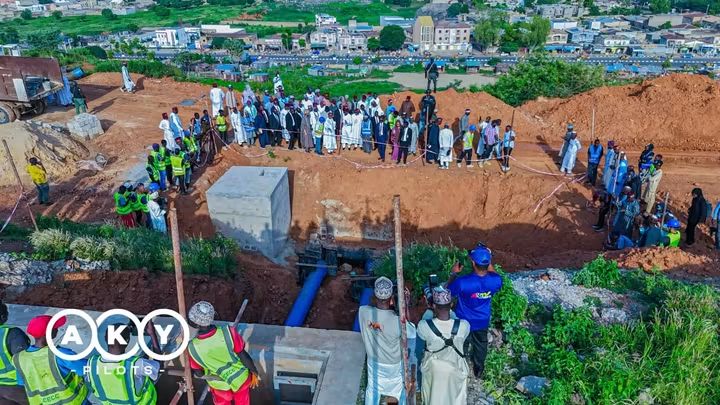
He did not send a committee. He went himself. Since from the start of the good re-engineering touch of the water facilities. For example just yesterday, he and his able Deputy H.E. Murtala Sule Garo alongside other top government functionaries visited water projects that are almost ready for good operations.
In a now-famous inspection tour, Governor Yusuf, in rain boots, walked the length of Challawa and Tamburawa with engineers from CGC Nigeria Limited and CCECC Nigeria Limited – the same Chinese engineering giants building Africa’s biggest dams and railways. He saw the leaking pipes. He saw the obsolete clarifiers. He saw the dead high-lift pumps. And there, on the spot, he made a decision that will define his legacy.
He approved without any hesitation, the sum of N21.29 billion. Wow! the single largest water investment in Kano in 15 years. Leadership by example. Viva our dear Governor Viva.
Not N21.89 billion in rumour. N21.29 billion in signed contracts. With N9.9 billion to CGC Nigeria Limited for the total rehabilitation of Tamburawa Water Treatment Plant and its raw water pump station. The sum of N11.39 billion to CCECC Nigeria Limited for the rehabilitation of Challawa Raw Water Pump Station, its treatment plant, and the total restoration of the Goron Dutse reservoirs. Action! Action!! Action!!!
This is not rehabilitation on paper. This is what is happening on the ground right now, as confirmed by Dr. Dahiru Muhammad Hashim, Acting Commissioner for Water Resources, Environment and Climate Change. That:
1. The critical 15.6-kilometre transmission line to Goron Dutse has been restored with modern ductile steel pipes, replacing the 1970s asbestos pipes that were poisoning the system.
2. Goron Dutse reservoirs have been fully desilted and repaired.
3. Clarifiers, filtration units, manifolds, and high-lift pumps have been restored.
4. Ten high-capacity 110-kilowatt pumps have been procured.
5. A full test run was completed in mid-September.
And beyond the metropolis, the Governor is doing what no one did – reviving the dead. Nine out of Kano’s 19 dormant regional water schemes are under restoration. Guzugu in Kabo is flowing. Joda in Gabasawa is flowing. Wudil Waterworks, dead for years, is alive. For the first time, rural Kano is part of the water equation. Government for all sections of the state.
On September 21, 2026, the Ministry officially announced: expanded distribution of potable water would commence within few days to come. All are waiting patiently Your Excellency Sir!
Why Kano must attract global communities? From London to Lagos, water is politics. The UN says water scarcity will displace 700 million people by 2030. What Governor Yusuf has done is a case study in how to reverse it without World Bank loans, without privatising your heritage.
He did not outsource the problem. He funded the solution. He did not blame the past. He fixed the future. Sometime in the past I spoke to Malam Musa in Tarauni, he was lamenting all over. When asked again, now, he simply smiles that Governor Yusuf is on the top of the situation. This is courageous.
When the taps in Kofar Mata sputter and then gush, when a child in Dala drinks from the tap for the first time in his life, when Goron Dutse reservoirs hold water again after a 10-year drought, Kano will not just be celebrating water. Kano will be celebrating a Governor who proved that a 95-year-old dream, buried under silt, stolen pipes, and failed promises, can still flow.
That is not just governance. That is unmatched and unwavering political will in action.
KANO FLOWS AGAIN UNDER GOVERNOR YUSUF!
Viva Kano. Viva Abba Gida-Gida.
Anwar writes from Kano
Tuesday, 29th September, 2026
Opinion
The Tinubu Health Reset: A Consultant Examines Nigeria’s Healthcare Reforms

By Dr. Usman Muhammad Shanawa
For decades, Nigeria’s healthcare system has faced a familiar set of challenges: inadequate infrastructure, limited access to specialised medical services, weak primary healthcare facilities, shortages of healthcare personnel and the rising financial burden of treatment on ordinary Nigerians.
Against this backdrop, the Federal Government under President Bola Ahmed Tinubu has pursued interventions across different levels of the healthcare system, ranging from primary healthcare and general hospitals to specialised tertiary facilities, digital health, emergency care and healthcare financing.
For Dr. Usman Muhammad Shanawa, a Consultant Obstetrician and Gynaecologist and specialist in Gynaecological Oncology with more than two decades of experience in clinical practice and healthcare management, the interventions deserve to be examined as part of a broader attempt to strengthen Nigeria’s healthcare architecture.
Dr. Shanawa’s assessment moves across the three levels of healthcare delivery, ranging from primary, secondary and tertiary, while drawing particular attention to diagnostics, maternal healthcare, hospital infrastructure, health insurance and the growing role of technology.
For him, the real significance of healthcare reform lies not simply in the announcement of new projects, but in whether the changes improve access to quality medical care for Nigerians.
*Zamfara: A local window into the reforms*
Dr. Shanawa’s assessment begins from Zamfara State, where he says federal support and collaboration with state authorities have provided a local perspective on the changing healthcare landscape.
He recalled that financial constraints had historically affected the implementation of several healthcare projects at the state level.
According to him, increased federal financial support and policy interventions under the Tinubu administration created room for renewed investment, with 2025 emerging as a particularly significant period for healthcare development in the state.
He views the experience as an illustration of how government intervention can translate into improved access to healthcare when funding, policy and implementation converge.
*At the top: Expanding tertiary healthcare*
At the apex of Nigeria’s healthcare system are tertiary institutions, where patients with complex medical conditions are expected to receive specialised treatment and advanced diagnostic services.
Yet these institutions have historically faced technological and infrastructural gaps.
Dr. Shanawa identifies improved diagnostic capacity as one of the areas requiring sustained attention.
He points to technologies such as Computerised Tomography (CT) scanners and Magnetic Resonance Imaging (MRI) as critical tools for modern medical practice.
For a specialist in gynaecological oncology, the issue carries particular weight.
Cancer care, he explains, depends heavily on timely and accurate diagnosis. The availability of sophisticated diagnostic and oncology services closer to patients can reduce the need for long-distance travel in search of specialised treatment.
He also points to the development of oncology facilities in states such as Katsina, Enugu and Edo as examples of efforts to expand specialised cancer services beyond traditional medical centres.
The broader implication, in his assessment, is that advanced healthcare should not remain concentrated in only a few locations.
*The missing link: Strengthening secondary healthcare*
Between the primary healthcare centre and the highly specialised tertiary hospital lies another crucial layer, that is the secondary healthcare.
For Dr. Shanawa, general and state hospitals remain an indispensable part of the healthcare chain.
These facilities often receive patients referred from primary healthcare centres and provide services beyond the capacity of frontline facilities, while also serving as important points for emergency treatment.
He particularly highlights emergency obstetric care.
For women experiencing complications during pregnancy or childbirth, he argues, the availability of properly equipped secondary hospitals and effective referral systems can be critical.
This makes the strengthening of general hospitals more than an infrastructure issue. It is also a question of how quickly the healthcare system can respond when lives are at risk.
*Primary healthcare: Rebuilding from the foundation*
If tertiary healthcare represents the peak of the system, primary healthcare is its foundation.
And this, according to Dr. Shanawa, is where one of the most important aspects of the current reforms lies.
Nigeria’s healthcare system has historically been characterised by patients bypassing weak or poorly equipped primary healthcare centres and seeking treatment directly at secondary and tertiary institutions.
The result has been pressure on higher-level hospitals, with facilities already handling complicated cases also having to deal with conditions that could have been managed closer to patients’ communities.
Dr. Shanawa sees the renewed emphasis on primary healthcare as an attempt to reverse this pattern.
He argues that strengthening the base of the healthcare pyramid while maintaining improvements at the tertiary level is essential to creating a more functional system.
The Federal Government has reported the deployment of National Health Fellows and Public Financial Management Officers across all 774 local government areas under the health-sector renewal programme, alongside the revitalisation of primary healthcare facilities in priority areas.
For Dr. Shanawa, the importance of such interventions lies in bringing healthcare closer to the people before illnesses become more complicated.
*Maternal mortality: The doctor’s particular concern*
For an obstetrician, the discussion inevitably returns to maternal health.
Dr. Shanawa describes maternal mortality as one of Nigeria’s most persistent public-health challenges, one that has affected generations of Nigerian women.
He argues that strengthening primary healthcare, improving referral systems, expanding the frontline health workforce and ensuring access to emergency obstetric care are essential to addressing pregnancy-related complications.
The Federal Ministry of Health has reported improvements in maternal and newborn health indicators in areas targeted under its intervention programmes.
For Dr. Shanawa, however, the importance of such interventions ultimately comes down to whether a pregnant woman can obtain appropriate care at the time she needs it.
The journey from pregnancy to safe delivery, he suggests, depends on the strength of the entire healthcare chain, from community-level services to emergency and specialist hospitals.
Healthcare needs people, not just buildings
Infrastructure may be the visible face of healthcare investment, but Dr. Shanawa stresses that facilities cannot function without the professionals who operate them.
Doctors, nurses, midwives, community health workers, laboratory scientists, pharmacists and other healthcare professionals are central to translating infrastructure and equipment into actual medical services.
The Federal Government has reported recruitment and retraining initiatives for frontline and community-based health workers as part of its health-sector renewal efforts.
But recruitment is only one part of the challenge.
For the reforms to be sustained, healthcare workers must also be retained, properly deployed and supported with the equipment and working environment required to provide quality care.
*The cost of getting sick*
Another dimension of Nigeria’s healthcare challenge is affordability.
For many families, the question is not only whether a hospital exists, but whether they can afford the treatment available there.
Dr. Shanawa therefore places health insurance and healthcare financing alongside infrastructure and medical technology in his assessment of the reforms.
He points to the Basic Health Care Provision Fund and broader efforts to expand health insurance coverage as mechanisms that could reduce the financial burden on patients.
The Federal Ministry of Health has reported significant increases in health insurance enrolment, while also acknowledging that out-of-pocket expenditure remains high.
This presents one of the central tests for healthcare reform: expanding services while ensuring that the people who need those services are not priced out of the system.
Healthcare goes digital
The transformation is also taking place beyond hospital walls.
Digital health and electronic medical records are increasingly becoming part of the effort to modernise Nigeria’s healthcare system.
Dr. Shanawa highlights electronic medical records and health-information exchange systems as important tools for improving the management and continuity of patient care.
The Federal Government’s Nigeria Digital in Health Initiative is intended to improve interoperability between healthcare facilities and facilitate the secure sharing of health information.
For a healthcare system spread across a vast country, better digital connectivity could help bridge some of the gaps between facilities and levels of care.
Measuring the Tinubu health reset
For Dr. Shanawa, the ultimate measure of healthcare reform is not the number of projects announced or facilities commissioned.
It is what happens to the patient.
Can a woman access skilled care when she needs it?
Can a patient obtain an accurate diagnosis without travelling hundreds of kilometres?
Can an emergency case receive timely treatment?
Can a family afford the cost of care?
Can healthcare professionals work with the equipment, personnel and systems they require?
These questions bring the debate back to the heart of healthcare delivery.
The Federal Government has reported progress across areas including infrastructure, digital health, primary healthcare, workforce development and maternal-health interventions.
But sustaining such gains will require continued financing, effective implementation, maintenance of infrastructure, retention of skilled professionals and stronger coordination among federal, state and local authorities.
For Dr. Shanawa, Nigeria’s healthcare system cannot be transformed by focusing on only one level.
The primary healthcare centre, the general hospital and the specialist tertiary institution must function as parts of the same system.
That, ultimately, is the test of the health reset, and whether the reforms can move beyond policy and infrastructure to create a healthcare system in which quality, affordable and accessible medical care is closer to the Nigerian who needs it most.
Opinion
RE:WE ARE UNDER SIEGE: TARABA MONARCH BREAKS SILENCE AS FULANI BANDITS OVERRUN THE ANCIENT KWARARAFA KINGDOM:
Wukari Traditional Council
Aku Uka’s Palace, Wukari, Taraba State
RE:WE ARE UNDER SIEGE: TARABA MONARCH BREAKS SILENCE AS FULANI BANDITS OVERRUN THE ANCIENT KWARARAFA KINGDOM:
The attention of the Aku Uka’s Palace has been drawn to a piece in the Social Media titled, “‘We Are Under Siege ‘: Taraba Monarch Breaks Silence as Fulani Bandits Overrun the Ancient Kwararafa Kingdom.”
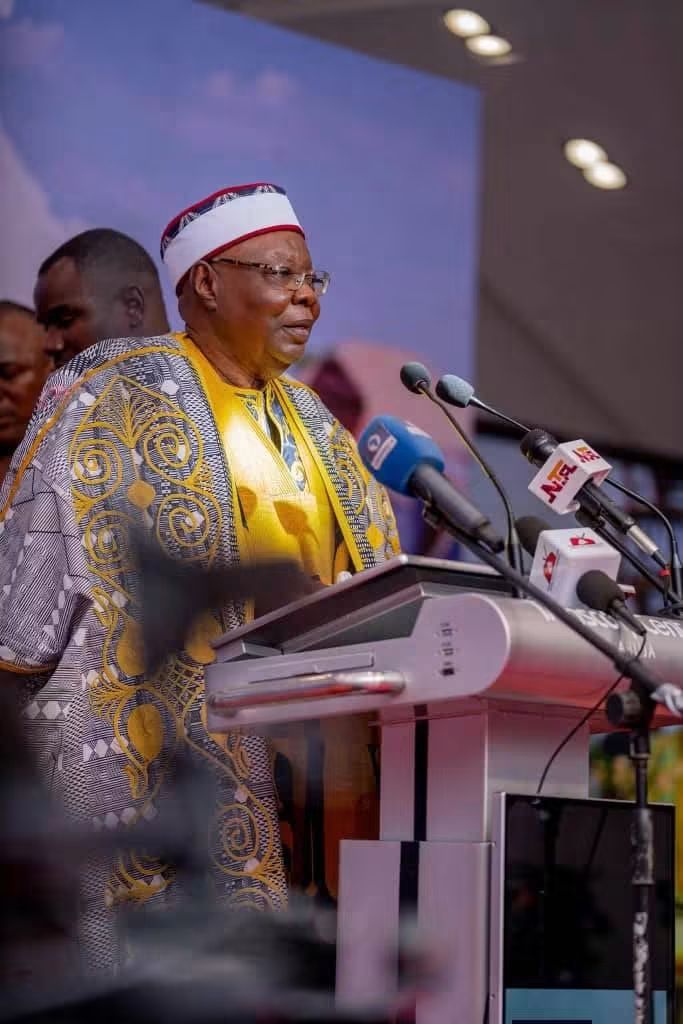
The piece being referred to is credited to the Aku Uka, Dr. Ishaku Adda Ali, Matakhitswen, said to be contained in the speech he read at the recent Assembly of the ethnic nationalities of the old Kwararafa Confederacy organised by the Kwararafa Development Forum (KDF) in Abuja on Saturday, 19th September, 2026.
Below is the full text of the anonymous writer/commentator’s piece as it appeared in the Social Media, on Tuesday, 22nd September, 2026:
“The Aku-Uka of Wukari, HRM, Dr Ishaku Adda Ali, has raised a desperate alarm over the escalating security crisis engulfing the historic Kwararafa kingdom in Taraba State, declaring that the situation has reached a point where silence is no longer an option. Speaking at the 2026 Kwararafa People’s Assembly in Abuja, the monarch revealed that the old Kwararafa Confederacy—one of the oldest and most culturally significant traditional institutions in Nigeria—has come under sustained Fulani bandit siege, with communities living in constant fear. His intervention is significant because traditional rulers rarely speak this bluntly in public; when they do, it usually means the violence has overwhelmed local capacity and the state has failed to protect its people.
“The deeper implication is what this says about Nigeria’s widening security vacuum. Taraba sits at the crossroads of the North-East and North-Central, a corridor where Fulani bandits, kidnappers, and separatist militias operate with frightening impunity. If an ancient kingdom with deep historical roots and a sitting monarch can be “under siege” in 2026, then the federal government’s claims of progress against insecurity ring hollow. For the Tinubu administration, this is another embarrassing data point ahead of 2027: the violence is not confined to a few flashpoints—it is spreading into communities that once considered themselves safe. The Aku-Uka’s alarm is not just a Taraba problem; it is a warning that Nigeria’s security architecture is failing across multiple regions at once. And when kings begin to cry out, it is usually because the people have already been abandoned.”
Our observations on the above piece are as follows:
1. The piece in question is not only mischievous, false and blatant lies but cowardly, as the writer has not the courage to disclose his or her identity. The speech read by the Aku Uka never mentioned any ethnic group, as the perpetrators of insecurity or violence as mentioned by the anonymous writer.
Let me quote exactly what the Aku Uka read in his speech on security:
“Our people have contributed immensely to Nigerian development in such areas as agriculture, the armed forces, natural resources, and culture, among others. Yet, many of our communities continue to suffer deprivation in areas such as infrastructure, economic opportunities, and general marginalization and discrimination in the nation’s political set up. Our appeal and clarion call is therefore simple: we seek for fairness, equity, justice, security and inclusion in all spheres of our national life.”
Why the writer made this blatant assertion by putting words into the mouth of the Aku Uka for something he (Aku) never said can not be fathomed to any sane person, except this mischief maker. The intention is to clearly create communal disharmony. The Aku Uka is a peace maker and would never be a party to anything that will bring about conflict among various groups in the country.
2. Aku Uka’s speech was not about Taraba State, but concerning the whole old Kwararafa Confederacy in modern Nigeria and the challenge of security generally, being experienced in a number of States in the country.
3. It is clear that the Federal Government under leadership of President Bola Ahmed Tinubu, has been making strenuous effort to address the various security issues across the whole country. The Aku Uka deeply appreciates such efforts and will continue to pledge his support in tackling and bringing to an end the security challenge.
4. Let me emphatically state that the Aku Uka’s speech he read was not about politics or the 2027 election. The Aku Uka is a traditional ruler who does not dabble into politics. It is therefore the height of irresponsibility and mischief to drag His Majesty into political matters. Furthermore, nowhere did Aku Uka make any reference to 2027 election in the speech he read or politics generally for that matter.
It is possible that the anonymous hack writer is fronting for his or her political masters agenda and so believe that by dragging the revered monarch into the political issues, they would reap political mileage out of this falsehood. If this is the intention of the mischievous writer, no doubt he or she has failed in this regard woefully. His Majesty, Dr Ishaku Adda Ali, Aku Uka’s sole concern is about fairness, justice, equity and progress of the descendants of the old Kwararafa Confederacy and indeed, the country as a whole.
DANJUMA A. ADAMU, Esq.
The NENE of the Jukun People

PCACC Arrests Man Over Alleged ₦4.5m Sale, Illegal Leasing of Kano Government Horse Stable

Goje’s Electoral War:The Confrontation With Tinubu,Governor Inuwa,Usman Kumo And APC candidates Ahead Of 2027

Dry Taps Gone, Kano Flows Again: The Abba Yusuf Water Comeback By Abba Anwar

Rep. Abubakar Bichi Employs 100 New Islamic School Teachers in Bichi

The Tinubu Health Reset: A Consultant Examines Nigeria’s Healthcare Reforms

Zamfara Varsity ASUU Threatens Warning Strike Over FG-ASUU Agreement, Promotion Arrears

Bello Sharada: A Great Writer, A Bookish Soul, Gone Too Soon

Kano Chemists Threaten Warning Strike Over Alleged PCN Pressure

Per Ishaq Samaila: “Waziri” for Strategy. “Mai Jama’a” for Service. One Man. One Mission. Ibrahim Kabir Masari

Education Stakeholders, SBMC Train Students on Skills for Self-Reliance
PCACC Arrests Man Over Alleged ₦4.5m Sale, Illegal Leasing of Kano Government Horse Stable
Goje’s Electoral War:The Confrontation With Tinubu,Governor Inuwa,Usman Kumo And APC candidates Ahead Of 2027
Dry Taps Gone, Kano Flows Again: The Abba Yusuf Water Comeback By Abba Anwar
Rep. Abubakar Bichi Employs 100 New Islamic School Teachers in Bichi
The Tinubu Health Reset: A Consultant Examines Nigeria’s Healthcare Reforms
Zamfara Varsity ASUU Threatens Warning Strike Over FG-ASUU Agreement, Promotion Arrears
Bello Sharada: A Great Writer, A Bookish Soul, Gone Too Soon
Kano Chemists Threaten Warning Strike Over Alleged PCN Pressure
Per Ishaq Samaila: “Waziri” for Strategy. “Mai Jama’a” for Service. One Man. One Mission. Ibrahim Kabir Masari
Education Stakeholders, SBMC Train Students on Skills for Self-Reliance
-

 Opinion5 years ago
On The Kano Flyovers And Public Perception
-

 Features5 years ago
How I Became A Multimillionaire In Nigeria – Hadiza Gabon
-

 Opinion6 years ago
Kano As future Headquarters Of Poverty In Nigeria
-

 History5 years ago
Sheikh Adam Abdullahi Al-Ilory (1917-1992):Nigeria’s Islamic Scholar Who Wrote Over 100 Books And Journals
-

 Opinion5 years ago
My First Encounter with Nasiru Gawuna, the Humble Deputy Governor
-

 History5 years ago
The History Of Borno State Governor Professor Babagana Umara Zulum
-

 History6 years ago
The Origin Of “Mammy Market” In Army Barracks (Mammy Ochefu)
-

 News4 years ago
Federal University Of Technology Babura To Commence Academic Activities September