
News
5,800 Plateau Children Suffer Acute Malnutrition – Report
By Asile Abel,Jos
For decades, malnutrition in Nigeria has been described in statistics, often reduced to charts and policy debates. But in places like Jos North, the crisis has a face, small arms that barely fit a measuring tape, sunken eyes that betray hunger, and children who, at five years old, weigh less than they should at two.
Despite being one of Nigeria’s agricultural strongholds, Plateau State has not been spared from the nutrition crisis gripping the country. According to the 2023 Multiple Indicator Cluster Survey (MICS), nearly half of the children in the state are stunted, with more than 326,000 affected, a staggering figure for a state blessed with fertile soil and local food options.
Still, in the midst of the crisis, voices of resilience rise.
Cynthia Raymond, a mother of a six-month-old baby, sits proudly with her daughter in her arms. Nothing else, just breast milk. It’s been good. No illness. I eat well, eggs, meat, fruits and I see the strength in my baby. She hardly falls sick.” she says with confidence.
Cynthia is one of many mothers embracing exclusive breastfeeding, a low-cost, high-impact intervention proven to prevent disease and promote healthy growth in children under six months.
“After six months, I plan to introduce complementary feeding. I’ll make Tamba, groundnut, grains with crayfish and vegetables. I want her strong,” she added.
Another mother, Tabita Solomon, shares a similar story. “I prepared puff from ground grains, soybean, and crayfish. He ate it and loved it. They said breastfed babies don’t eat much, but mine? He eats everything. He started crawling before five months. He walks now. Teething was easy.”
These mothers represent a growing movement: women returning to traditional, nutritious foods and health education to combat a crisis once thought insurmountable.
Yet, the scale of the challenge is immense. Across Nigeria, over 15 million children are stunted, 10 million are wasted, and 12 million are anaemic. Numbers second only to India globally. In Plateau alone, 5,800 children suffer from severe acute malnutrition. And the consequences are deadly: weakened immunity, poor brain development, and a high risk of death before the age of five.
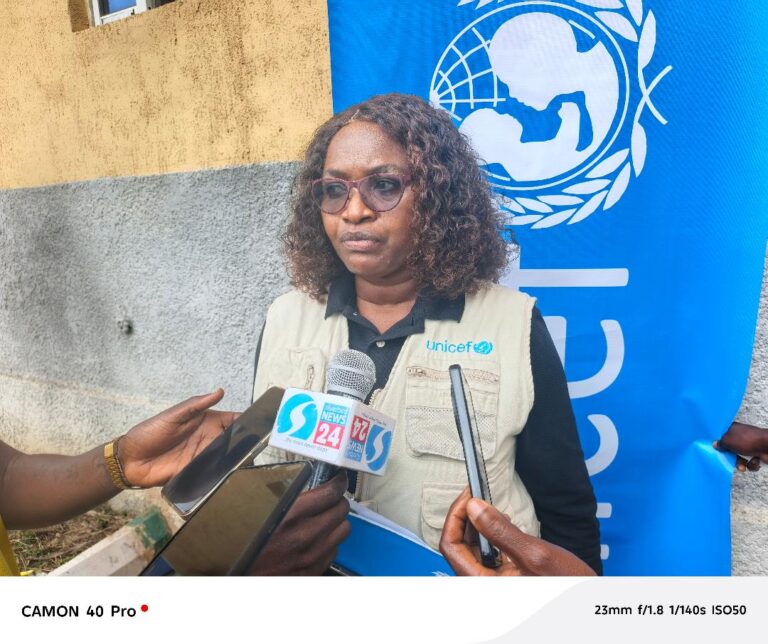
Philomena Irene, a Nutrition Specialist at UNICEF Nigeria, Bauchi Field Office, did not mince words during a two-day media dialogue with journalists in Jos. “Nigeria ranks number one in Africa for child malnutrition. Not because of war like in Sudan or Chad but because of our child population size and systemic health gaps.
She painted a grim picture “31 million Nigerians don’t know where their next meal will come from. And among children aged 0–6 months, only one in three is exclusively breastfed. We’re already shortchanging the future,” she warned.
Plateau’s statistics align with this national crisis. 46.4% of children are stunted, 4.8% are wasted, and 22.3% are anaemic. The under-five mortality rate is 105 per 1,000 live births, well above global targets.
She stressed that reversing malnutrition requires a shift not just in policy, but in attitude. “This is about our own children. Not someone else’s but ours. Feeding them right is our first responsibility.”
The mid-upper arm circumference (MUAC) band, a simple strip used to measure a child’s nutrition status. “When the arm falls in the red zone, we know we must act immediately. That child is severely wasted”; Irene explained, holding up the strip.
In Plateau, the red-zone children number in thousands. Yet, the awareness is growing.
UNICEF called on local leaders, families, and policymakers to act. “Start from your kitchen. Choose wisely. That sugary beverage? It’s 90% sugar, 1% cocoa. That’s not food,” Philomena said, her voice tinged with frustration.
Malnutrition, as the Nutritionist say, is not incurable. But it is sneaky, it hides behind full stomachs and cultural norms. “Just because a child eats doesn’t mean they’re nourished,” warned Philomena
Irene revealed that every $1 invested in child nutrition generates a $16 return, emphasizing the economic and developmental urgency of tackling malnutrition among children aged 6 to 23 months in Plateau State.
The nutritionist said that while exclusive breastfeeding is vital for children from birth to six months, attention must shift to ensuring nutrient-rich complementary foods are introduced afterward.
“In Plateau State, according to the 2021 Multiple Indicator Cluster Survey, two out of every three children suffer from food poverty, meaning they lack access to the minimum dietary diversity needed for proper growth. Our goal with this dialogue is to mobilize awareness and foster government and community action to improve child nutrition outcomes,” she said.
Irene highlighted the significant consequences of malnutrition on cognitive and physical development, especially in the 6–23 months age range, which falls within the first 1,000 days of life, a scientifically proven window critical to lifelong development.
The nutrition specialist warned that failing to invest in nutrition carries steep costs for families and the country. “It costs ₦21,000 to prevent malnutrition, but more than ₦190,000 to treat it. The return on investment is clear for every $1 spent on nutrition, we get $16 in economic return,” Irene added, citing research from the World Bank and Lancet Series.
One of the key interventions spotlighted at the event was the introduction of Small Quantity Lipid-Based Nutrient Supplements (SQ-LNS)—a specialized supplement for enriching the diets of children during the complementary feeding period.
She explained that in 2024, Plateau State committed $200,000 to the Child Nutrition Fund, which was matched by UNICEF. The joint funding enabled the state to procure over 5,900 cartons of SQ-LNS for distribution.
Irene also revealed that discussions are underway to commence local production of SQ in Nigeria, a move aimed at reducing costs and creating jobs.
She emphasized that community awareness, sustained political will, and strategic government investments are vital in reversing the alarming trend of malnutrition. “This is not just a health issue, it is an economic and national development issue,” Irene said.
At the Township Primary Health Centre in Jos North, Halima Chantu, the acting officer-in-charge, leads the charge with hands-on education. “We give health talks every day during immunization and antenatal care. We teach them breastfeeding, complementary feeding, and local food prep,” she said.
Halima said that using locally available food is key. “Why spend money on packaged food when yam, sweet potato, and vegetables are right here? We teach them how to combine these. We even encourage them to grow spinach.”
Halima’s team monitors babies’ growth, checks weights, and follows up when signs of malnutrition appear. “We don’t stop at advice. We follow through,” she added.
The World Bank warns that stunting alone can reduce GDP, a stark reminder that malnutrition is not just a health issue, but a national development threat.
Across Jos and its neighboring communities, a quiet revolution is taking shape, one vegetable garden, one feeding demonstration, one mother at a time.
Mothers like Tabita and Cynthia are leading the way not with slogans, but with practice. Their message is clear: start early, feed right, and never underestimate the power of knowledge passed from one mother to another.
In a nation as young as Nigeria where nearly half the population is under 18, this revolution could shape the country’s destiny.
News
JUST IN: El-Rufai Detained as Bail Ruling Adjourned to April 14
By Yusuf Danjuma Yunusa
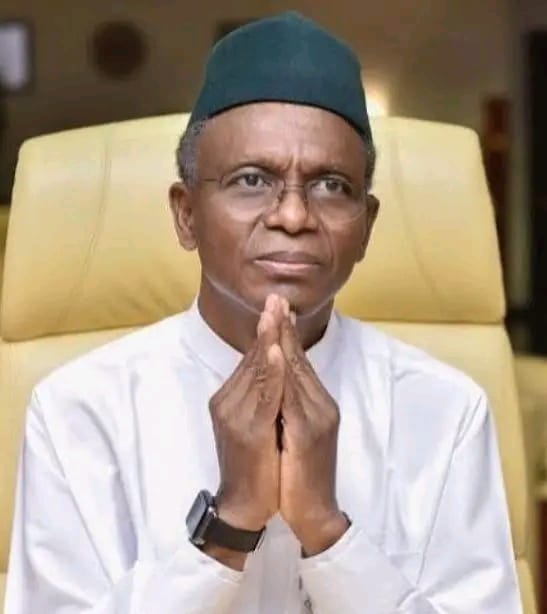
Operatives of the Department of State Services on Wednesday took former Kaduna State governor, Nasir El-Rufai, into custody moments after proceedings at the Federal High Court in Kaduna.
El-Rufai, standing trial over alleged corruption, had just concluded a hearing on his bail application filed by the Independent Corrupt Practices and Other Related Offences Commission when DSS operatives bundled him into a waiting vehicle and drove him away, reportedly heading to Abuja.
A heavy DSS presence around the court before the hearing had fuelled speculation that the former governor might be taken into custody.
Security sources said vehicles had been strategically positioned around the court prior to proceedings.
El-Rufai had arrived at the court at about 9:05 a.m. in a Hilux van, drawing attention from security personnel and observers.
Speaking to journalists after the proceedings, lead defence counsel, Oluwole Iyamu (SAN), confirmed that the court had fixed April 14 for ruling on the bail application.
“The bail application was argued and responded to, and the ruling has been fixed for April 14.
“We look forward to that day. We are hopeful. We have put our arguments before the court, and this is a court of justice.
“We await the decision of the court,” he added.
He also noted that the defence team is prepared for a related case scheduled for April 10 at the Federal High Court in Abuja, describing it as “a separate matter.”
“That is a separate matter. As lawyers, we are ready. We have filed all necessary processes and will be in court. That is the DSS matter,” he said.
News
Court Ends NNPP Crisis, Restores Party Leadership to Founder

The Court of Appeal sitting in Owerri has delivered a decisive judgement in the protracted leadership crisis within the New Nigeria People’s Party (NNPP), affirming Boniface Okechukwu Aniebonam as the recognised leader of the party.
In its ruling, the appellate court set aside an earlier decision of the Abia State High Court in Uzuakoli, which had vacated its previous judgement delivered in favour of the faction led by Aniebonam.
The appellate court held that the lower court erred in granting a motion that effectively reversed its own earlier judgement, thereby upholding all three grounds of appeal filed by the Aniebonam-led faction.
The dispute stems from a November 2024 judgement of the Uzuakoli High Court in Suit No. HUZ/11/2024, which had recognised the Board of Trustees of the NNPP under Aniebonam. However, in June 2025, the same court granted an application that set aside that ruling, following a motion filed by Rabi’u Musa Kwankwaso.
Dissatisfied with the reversal, the Aniebonam faction approached the Court of Appeal in Owerri (Appeal No. CA/OW/271/2025), arguing that the trial judge lacked the jurisdiction to sit on appeal over his own judgement.
Delivering its verdict, the Court of Appeal agreed with the appellants, restoring the earlier judgement and effectively recognising Aniebonam as the legitimate leader of the party he founded in 2001.
Legal representation in the matter saw Onitsha-based senior counsel, Sir Azubike Anazor, appear for Aniebonam, while Abuja-based Eyitayo Fatogun, SAN, represented Kwankwaso.
The NNPP, which fielded Kwankwaso as its presidential candidate in the 2023 general elections, has been embroiled in internal disputes over its leadership structure, with rival factions laying claim to control of the party.
News
JUST IN: Adelabu Resigns as Power Minister to Pursue Oyo Governorship Bid

By Yusuf Danjuma Yunusa
The Minister of Power, Adebayo Adelabu, has resigned his appointment to focus on his governorship ambition in Oyo State.
Adelabu disclosed this in a resignation letter addressed to the President Bola Ahmed Tinubu on Tuesday, and routed through the Secretary to the Government of the Federation.
In the letter titled “Resignation as Honourable Minister of Power”, Adelabu expressed gratitude to the President for the opportunity to serve in his administration.
He said it was a privilege to contribute to efforts aimed at strengthening Nigeria’s power sector in line with the administration’s Renewed Hope Agenda.
Adelabu added that his decision to step down was to enable him fully pursue his aspiration to contest for the office of Governor of Oyo State.
He noted that the move would allow him to dedicate his time and resources to the political ambition.
The former minister also conveyed his appreciation and respect to the President for the confidence reposed in him during his tenure.

JUST IN: El-Rufai Detained as Bail Ruling Adjourned to April 14

Court Ends NNPP Crisis, Restores Party Leadership to Founder

Why Nura Manu Soro should be APC candidate in Bauchi State come 2027

JUST IN: Adelabu Resigns as Power Minister to Pursue Oyo Governorship Bid

After Kwankwaso Joins ADC, Party Alleges Plot by APC, Senior Lawyers to Force INEC Into Illegal Takeover

The Governor Who Chose His People Over His Politics: Abba Yusuf and the Moral Courage Behind Kano First

Governor Abba Kabir Yusuf Holds Exclusive Prerogative to Choose Deputy – Malam Inuwa Waya
Restoring the Glory That Was Always There: Governor Abba Kabir Yusuf and the Historical Vision Behind Kano First

Tinubu to Swear in Olatunji Disu as Inspector-General of Police on Wednesday

NDLEA Clarifies: Drug Case Against Abba Kyari Still Active After Court Discharge
JUST IN: El-Rufai Detained as Bail Ruling Adjourned to April 14
Court Ends NNPP Crisis, Restores Party Leadership to Founder
Why Nura Manu Soro should be APC candidate in Bauchi State come 2027
JUST IN: Adelabu Resigns as Power Minister to Pursue Oyo Governorship Bid
After Kwankwaso Joins ADC, Party Alleges Plot by APC, Senior Lawyers to Force INEC Into Illegal Takeover
The Governor Who Chose His People Over His Politics: Abba Yusuf and the Moral Courage Behind Kano First
Governor Abba Kabir Yusuf Holds Exclusive Prerogative to Choose Deputy – Malam Inuwa Waya
Restoring the Glory That Was Always There: Governor Abba Kabir Yusuf and the Historical Vision Behind Kano First
Tinubu to Swear in Olatunji Disu as Inspector-General of Police on Wednesday
NDLEA Clarifies: Drug Case Against Abba Kyari Still Active After Court Discharge
-

 Opinion4 years ago
On The Kano Flyovers And Public Perception
-

 Features5 years ago
How I Became A Multimillionaire In Nigeria – Hadiza Gabon
-

 Opinion5 years ago
Kano As future Headquarters Of Poverty In Nigeria
-

 History5 years ago
Sheikh Adam Abdullahi Al-Ilory (1917-1992):Nigeria’s Islamic Scholar Who Wrote Over 100 Books And Journals
-

 Opinion4 years ago
My First Encounter with Nasiru Gawuna, the Humble Deputy Governor
-

 History5 years ago
The Origin Of “Mammy Market” In Army Barracks (Mammy Ochefu)
-

 History4 years ago
The History Of Borno State Governor Professor Babagana Umara Zulum
-

 News4 years ago
Federal University Of Technology Babura To Commence Academic Activities September