
Opinion
“Akpabio and Barau Jibrin: The Mistakes APC Cannot Afford to Make”
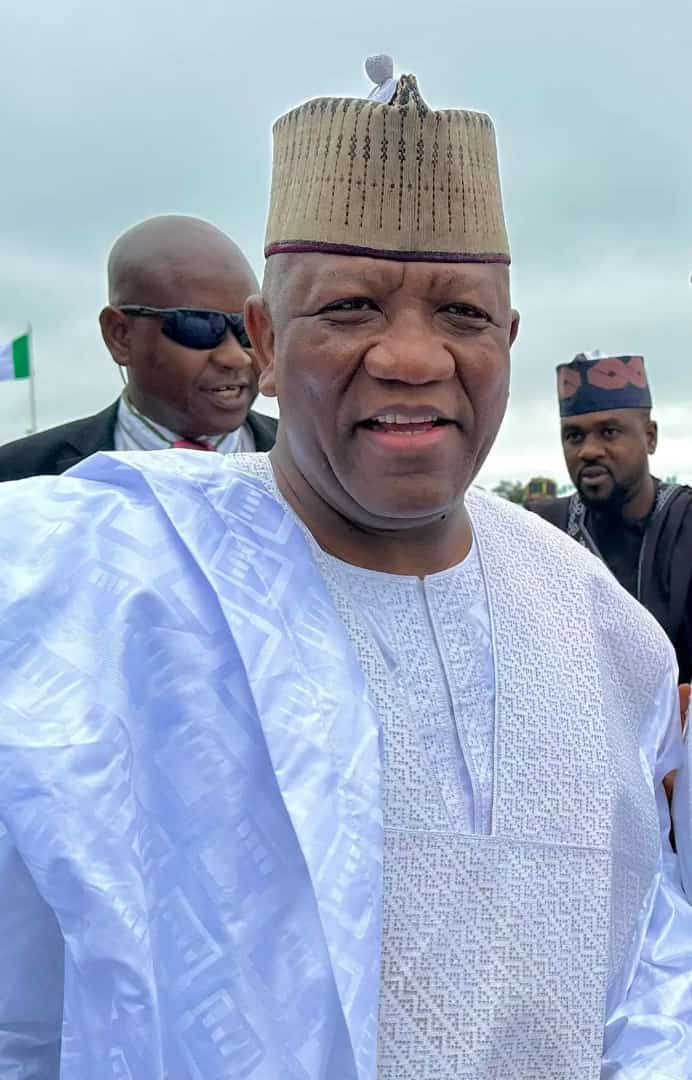
By Sueiman Abdullahi Suleiman
The Nigerian Senate is the upper legislative chamber of the National Assembly, and its President and Deputy President are important positions that play a crucial role in the legislative process.
In the 10th National Assembly, there are two main candidates vying for the positions of Senate President and Deputy Senate President: Ahmad Godswill Akpabio, and Abdulaziz who is a first timer at the Senate.
However, in this article, we will focus on why Abdulaziz Yari and Orji Uzo Kalu are the best choices for the positions of Senate President and Deputy Senate President, respectively.
Many important stakeholders of the APC and aspirants to the National Assembly positions appear to have been brushed aside because of the insistence of the party to support particular names instead of allowing the zones to make further consultations as to who should be presented for final voting by the National Assembly members.
In the case of the Senate Presidency position, there is a serious feeling of marginalization of the Northwest at the national assembly despite given the highest vote to the president elect; the southeast also who have been marginalized from leadership, that leads to the agitation of Biafra would have been a best option to reconsider its stands and allow free process to make the leadership of both house.
More importantly, there is a strong groundswell of opinion that the Nigerian people are eager to have an independent parliament-one that will not be at the beck and call of the Presidency.
Which was the reasons why Yari and Kalu are the best choices for the positions of Senate President and Deputy Senate President is because of their wide support and popularity among their colleagues in the National Assembly, and their respective regions. Both senators are well-respected within the APC and have garnered support from members across party lines.
Even when viewed more critically, the South East has shown greater tendency in embracing the APC than the South-South zone. Two of the Governors in the Zone are in APC, while Orji Uzo Kalu who is an Igbo from Abia state, is a strong and prominent figure from the region which cannot be said of the South-South.
This is a crucial factor in determining who becomes Senate President and Deputy Senate President, as the positions require the support of a majority of the senators.
Many Nigerians believe that qualitative separation of powers will put the Executive Arm on its toes and compels it to serve the interests of the people positively. What is needed is a robust legislative engagement that works for all groups and tendencies within the polity.
Related to the above vision of qualitative governance based on legislative autonomy is the need for a balanced power-sharing framework, rooted in social justice and equity-which constitute the intricate forms of democratic balancing needed for national stability.
Another reason why Yari and Kalu are the best choices is because of their strong and prominent personalities, and believe in the Legislature’s independence. Both senators have demonstrated their ability to lead and have shown a commitment to the welfare of their constituents. They have also been involved in legislative efforts aimed at promoting good governance and improving the lives of Nigerians.
In contrast, Godswill Akpabio and Barau Jibrin, the other candidates for the positions, lack the wide support and prominent personalities that Yari and Kalu possess.
Sad to note is how Godswill Akpabio and Barau Jibrin, the APC anointed candidates for Senate President and Deputy Senate President, respectively, embarked on using religion and the Presidency to sway support in their favour.
Despite this, Abdulaziz Yari and Orji Uzor Kalu, have been pushing back against their opponents’ strategy. Yari, who has been emphasizing his experience and track record in governance, arguing that he is the best candidate to lead the Senate. While Kalu has been highlighting his contributions to the party and his commitment to the Nigerian people, positioning himself as a unifying force within the party.
Brushing aside the Igbo Question and continuing with new forms of marginalization against Ndigbo can only agrivaitae the problem. But with Abdulaziz Yari and Orji Uzo Kalu as his deputy, the aggitation will be crushed and bring an end to the menace the southestaern states are suffrening in the hands o the separatiest.
So also Abdulazizi Yari was much disturbed by the mere happenings, which serves as an obstalce for his vision andn agitation for one Nigeria, that led to his choice of Orji Uzo Kalu as his Deputy, a perfect combination fro the 10th assembly.
A more creative political class would have shown serious concern and taken steps to douse the tension generated by the mythical charter of ethnic prejudice against the Igbo instead of adding fuel to an already burning inferno.
The struggle for the Senate and Deputy Senate President positions has far-reaching implications for the Nigerian polity.
If Akpabio and Barau are successful in their bid for the positions, it could strengthen the influence of the APC and the Presidency in the Senate, potentially making it easier for the ruling party to push through its legislative agenda.
However, if Yari and Kalu emerge victorious, it could signal a shift in power dynamics within the party and the Senate, potentially leading to a more independent and assertive Senate.
The outcome of this race will have significant implications for the Nigerian polity, as it will determine the direction of the Senate and the balance of power within the ruling party. Ultimately, it will be up to the Senators to decide who is best suited to lead them and the Nigerian people forward.









Opinion
El-Rufai/Uba Sani And Pantami’s Perceived Peace Of The Graveyard
By Bala Ibrahim.
Yesterday was Sunday, a day recognized as the first day of the week, which in the Bible, holds supreme significance as the day of Jesus Christ’s resurrection. Some Christians call it the Lord’s Day. There are many interpretations given to show the significance of Sunday. But for the purpose of this article, attention would be given to the significance of yesterday’s Sunday, (29/03/2026), with special bias to the role it played in promoting reconciliation between parties and friends, as well as how, at the National Mosque, Abuja, the wall of religious divide was unconsciously demolished, as followers of different faiths scrambled over each other, in the competition for space to participate in the funeral rites of late Hajiya Umma El-Rufai, the deceased mother of Mallam Nasir El-Rufai.
By the Islamic tradition, when a Muslim dies, before he or she is taken to the grave yard, special prayers are offered on the deceased person’s body, at any convenient place, before proceeding to the cemetery. For late Hajiya Umma El-Rufai, the National Mosque Abuja, was the venue. And what happened there, is the prelude to this article.
If I say everyone that is anything in Nigeria was there, I think I am making an understatement. But that is not surprising, given the personal and political profile of the bereaved, who is Mallam Nasir El-Rufai. It may interest the reader to know that, among the early callers at the Mosque, were reputable Christians, with people like Peter Obi and Rotimi Amaechi, rubbing shoulders with Muslims, in the stampede to partake in the Islamic ceremonial practice. They know they don’t belong to the Islamic faith, but they want to share with Mallam Nasir El-Rufai, as an honour of solidarity, in the last rites given to his beloved mother. The duo of NSA Mallam Nuhu Ribadu and Governor Uba Sani were there face to face with El-Rufai. The atmosphere was solemn, sombre and clearly sorrowful.
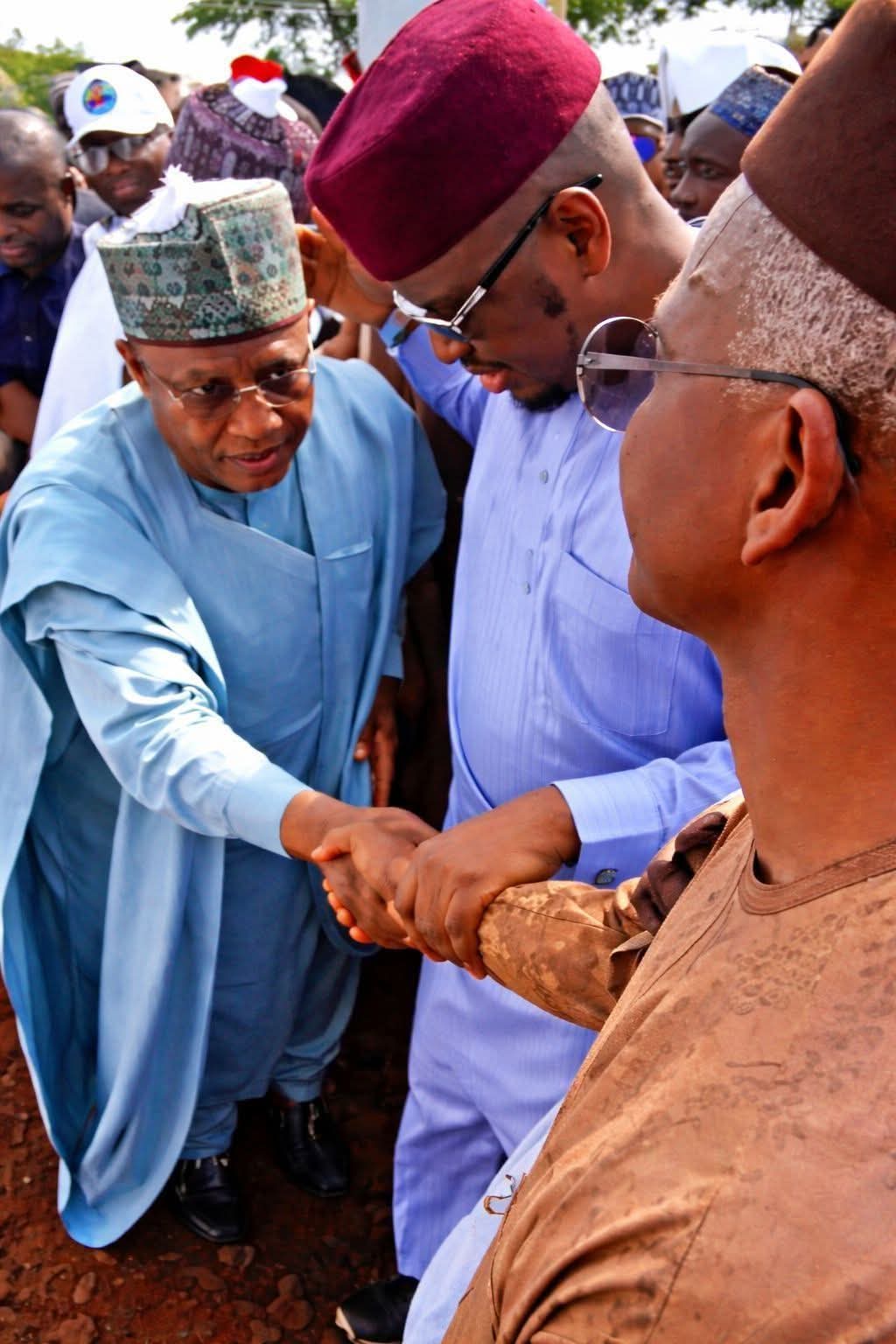
Also present at the Mosque was Prof. Isa Ali Ibrahim Pantami, former Minister and renowned Islamic cleric, who seized the opportunity to advance the imperative of reconciliation in Islam. He started in the Mosque and continued at the graveyard, to the extent of persuading El-Rufai to shake hands with Uba Sani, with a soft but casual commitment from both sides, on the pleaded forgiveness. It was difficult, very difficult, especially when perused through the prism of Mallam Nasir El-Rufai’s position.
Undoubtedly peace is fundamental to Islam, because it serves as a source of inner tranquillity and social harmony. The Quran has laid emphasis on reconciliation and kindness. So every Muslim is enjoined to embrace reconciliation. However, in advancing the course of reconciliation, timing is important, I think. We must not only perceive peace as merely the absence of conflict. No, it also has something to do with our state of mind. A man standing before the lifeless body of his beloved mother, at the graveyard, under intense pressure, is not in the appropriate state of mind to commit to any peace deal. Unless we are referring to the probabial peace of the graveyard.
The ambition of any reconciliation is to arrive at unity. And unity can only come after conflict, if there is healing. By definition, healing is the process of becoming healthy or whole again, encompassing the restoration of physical tissue, mental, or emotional well-being. A man under emotional pressure is not fit for commitment to any peace deal, I think. Unless we are referring to the probabial peace of the graveyard.
Peace of the graveyard is not genuine, because it could be deceptive, by resulting in forced calm, beneath which lies a deep tension. As a friend of the trio of El-Rufai, Nuhu Ribadu and Uba Sani, Sheik Pantami must go for a genuine, organic and sustainable peace agreement between the parties. More so, because they were genuine friends before.
All hands must be put on deck, to compel President Bola Ahmed Tinubu to come into the agreement. Because, he was the one who compelled Mallam Nasir El-Rufai to come into the Tinubu project in 2023. Indeed a lot of water had passed under the bridge. We should forget past misunderstandings or issues that are now irrelevant, and forgivable. Let’s move on from past disagreements and let go of grudges.That’s the only way to arrive at genuine reconciliation.
It may be recalled that the Muslim Rights Concern, MURIC, had long been appealing to the President, to come out clearly and reciprocate the gesture given to him in his time of need by Mallam Nasir El-Rufai. MURIC said they were the ones who persuaded El-Rufai to support Tinubu in 2023, as a result of which, he confronted the so called Buhari cabal, the then CBN Governor and other forces that were putting spanners in the work of the Tinubu project. The result of which is now President Tinubu. MURIC said El-Rufai does not deserve to be humiliated and went further to support their argument with the quote below:
“Noteworthy is a video clip showing how President Tinubu openly asked El-Rufai to join his government and this did not happen at a private meeting. It happened at a campaign ground, in the presence of thousands of party enthusiasts.”
Opinion
Defection: Kwankwaso’s Legacy Under Scrutiny; A Critical Look at his Political Journey Since 1999
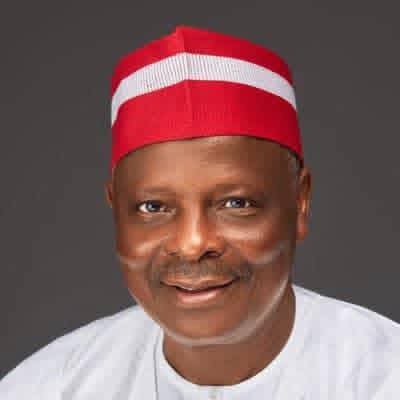
When Nigeria returned to democratic rule in 1999, the people of Kano embraced the moment with hope and expectation after years of military governance. Among the prominent figures who emerged at the time was Rabiu Musa Kwankwaso, whose leadership inspired confidence among many citizens eager for progress and representation.
More than two decades later, however, Kwankwaso’s political legacy continues to generate debate, with supporters highlighting his achievements and critics questioning the long-term impact of his leadership on Kano’s development.
Kwankwaso’s first tenure as governor (1999–2003) was marked by visible infrastructure projects, including roads and public buildings, which were widely welcomed by residents. At a time when tangible government presence was limited, these developments symbolised a new beginning. Yet, some analysts argue that while these projects addressed immediate needs, they did not sufficiently tackle deeper structural challenges, particularly the decline of Kano’s once-thriving industrial economy.
Historically a major commercial hub, Kano’s economy had been weakening due to years of policy neglect and infrastructural decay. Critics maintain that a more comprehensive economic strategy might have helped revive industries and reduce dependence on federal allocations.
Kwankwaso’s defeat in 2003 by Malam Ibrahim Shekarau marked a turning point. Observers note that while the loss strengthened his political network and grassroots appeal, it also raised questions about the sustainability of the systems established during his administration. Many of the projects, though impactful, were seen as lacking the institutional depth needed for long-term continuity.
Returning to office in 2011, Kwankwaso expanded his development agenda with increased infrastructure and an ambitious foreign scholarship programme that benefited thousands of Kano youths. The initiative is widely regarded as one of his most significant contributions, opening educational opportunities for many.
However, critics argue that despite these efforts, broader economic transformation remained limited. Rising population growth, unemployment, and declining industrial capacity continued to challenge the state’s development trajectory.
Beyond governance, Kwankwaso’s political influence has also shaped Kano’s power dynamics. His role in building a strong political movement—popularly known as the Kwankwasiyya—has been praised for mobilising grassroots support but criticised by some for reinforcing a personality-driven political structure.
Political analysts further point to the tensions surrounding the Kano Emirate as a significant episode in the state’s recent history. The controversial removal of Muhammadu Sanusi II highlighted deep divisions within the state’s political and traditional institutions, with varying opinions on the factors that led to the crisis.
In recent years, Kwankwaso’s shifting political alliances—from the PDP to the APC and later to the NNPP—have also drawn mixed reactions. While such moves are common in Nigeria’s political landscape, critics argue that they have contributed to instability and uncertainty within Kano’s political structure.
The 2023 elections brought another dimension to the discourse, with the emergence of Abba Kabir Yusuf as governor under the NNPP platform. Subsequent political developments, including evolving relationships between state and federal actors, have further shaped public debate about governance priorities and political strategy.
Today, Kwankwaso remains one of Kano’s most influential political figures, with a legacy that reflects both notable achievements and enduring controversies. While many credit him with expanding access to education and improving infrastructure, others believe that the state’s long-term economic and institutional challenges require deeper reflection.
As Kano continues to navigate its future, the assessment of past leadership—including Kwankwaso’s role—remains central to ongoing conversations about development, governance, and political direction.
Opinion
The Godfather Who Mistook Democracy for Personal Ownership
Murtala Muhammad Rijiyar Zaki
Democracy is, at its most essential, an act of trust. Citizens go to the polls, cast their votes, and place in the hands of an elected individual the authority to govern on their behalf. That authority is borrowed, not given. It is conditional, not absolute. It belongs, in the final and irreducible sense, to the people who granted it, and it must be exercised in their interest, not in the interest of whoever helped engineer its acquisition. This elementary principle, the very foundation upon which every credible democracy in the world is constructed, is the principle that Senator Rabiu Musa Kwankwaso has spent the better part of three decades systematically, deliberately, and quite unapologetically violating. His violation of it is not accidental. It is not the product of ignorance or misunderstanding. It is the logical expression of a political philosophy that has always placed personal ownership above democratic accountability, and godfather authority above the sovereign will of the people.
To understand the full weight of this charge, one must first understand what godfatherism actually means in the Nigerian political context, and why it is not merely an inconvenient feature of our democracy but a fundamental corruption of it. A political godfather, in the Nigerian tradition, is a figure who uses his resources, his organization, and his influence to install candidates in elective office, with the explicit or implicit understanding that those candidates, once elected, will govern not primarily in the interest of the electorate but in the interest of the godfather. The elected official becomes, in this arrangement, less a representative of the people and more a proxy for the man who put him there. The voters, in this model, are not principals whose mandate the elected official is obligated to honor. They are a mechanism, a crowd to be mobilized and demobilized at the godfather’s discretion, a necessary inconvenience in the process of acquiring and exercising power.
This is the model that has been perfected, refined, and deployed with extraordinary effectiveness across the entire arc of his political career. He did not invent godfatherism in Nigerian politics, and it would be unfair to suggest otherwise. But he has practiced it at a scale, with a sophistication, and with a degree of institutional embedding that sets him apart from the ordinary political patron. Kwankwasiyya is not simply a network of political supporters. It is a parallel governance structure, a shadow administration that has, for years, operated alongside whatever formal government happened to be in power in Kano, always with the understanding that the real decisions, the real appointments, the real directions of policy would be filtered through one man’s judgment and one man’s calculations.
The most instructive way to appreciate the depth of this ownership model is to examine what happened each time a political associate of Kwankwaso dared to exercise the kind of independent judgment that democracy not only permits but actively demands. The case of Governor Abdullahi Ganduje is the first and perhaps most telling exhibit. Ganduje was Kwankwaso’s deputy governor, his chosen running mate, and eventually his personally endorsed successor. He was, by every public indication, a Kwankwasiyya man to the core. When he won the governorship and proceeded to govern Kano as an elected official accountable to Kano’s people rather than as a Kwankwasiyya proxy accountable to its founder, the consequences were swift, bitter, and enormously damaging to Kano’s political stability. war enraged. The two men, former partners and political brothers, became bitter enemies whose conflict consumed years of Kano’s political energy, distorted the state’s governance, and created divisions whose effects are still visible in the state’s political landscape today.
Now, with a precision that suggests not merely repetition but pathology, the same drama is performing itself with Governor Abba Kabir Yusuf. Abba was Kwankwaso’s political son in the most complete sense of that phrase. He rose through the Kwankwasiyya structure, received the movement’s full organizational support in the 2023 governorship election, and arrived in office as the standard bearer of a movement that had just achieved its most significant electoral victory in years. By the Kwankwasiyya ownership model, Abba was supposed to govern as an instrument of the movement’s will, making appointments that the movement approved, pursuing policies that the movement sanctioned, and maintaining, above all, the fiction that the man in Government House in Kano was the governor while the man who really governed Kano lived elsewhere and wore a red cap.
Abba refused. And in refusing, he did something that deserves to be named clearly and celebrated without reservation: he honored the democratic mandate that the people of Kano had given him. The people of Kano did not vote for Kwankwasiyya’s agenda on the ballot paper they cast in 2023. They voted for Abba Kabir Yusuf. They did not elect a movement to govern them. They elected a man. And that man, exercising the authority that democratic election confers, made decisions that his judgment and his reading of Kano’s interests demanded, including the strategically essential decision to align his government with the federal administration in order to ensure that Kano’s development was not held hostage to one man’s unresolved political grievances.
Kwankwaso’s response to this exercise of democratic independence has been to cry betrayal, to mobilize his movement’s considerable media machinery against the government, and to position himself as a martyr of political ingratitude. But let us be precise about what he is actually saying when he uses the language of betrayal in this context. He is saying that an elected governor who makes decisions without his approval has broken faith with him. He is saying that the democratic mandate of millions of Kano voters is subordinate to his personal expectations. He is saying, with a candor that his language barely conceals, that he considers the governorship of Kano to be, in some meaningful sense, his property, and that its occupant’s primary obligation is not to the electorate but to the man who arranged for his installation. This is not a democratic position. It is the position of a feudal lord who has temporarily misplaced his deed of ownership and wants it returned.
The scholarship program, so frequently invoked as the centerpiece of Kwankwaso’s benevolence, must also be examined in this context of ownership and obligation. It is a program of genuine educational impact, and that impact must be acknowledged. But it was also, by the testimony of its own structure and its own cultural expectations, a mechanism for creating politically indebted citizens. Young men who received Kwankwaso’s scholarships understood, without being told explicitly, that their education came with a political price tag attached. They were expected to be Kwankwasiyya soldiers, to wear the red cap, to attend the rallies, to defend the movement on social media, and to vote, organize, and mobilize as the movement directed. The scholarship was real. The debt it created was equally real. And a democracy in which citizens are politically indebted to a patron for their education is not a functioning democracy. It is a patronage system wearing democracy’s clothing.
There is a further dimension to this ownership model that deserves careful attention, and that is its impact on the quality of governance that Kano has received across the years of Kwankwasiyya’s dominance. When a governor knows that his political survival depends not on satisfying his electorate but on satisfying his godfather, his incentives are fundamentally distorted. He makes appointments that the godfather approves rather than appointments that competence recommends. He pursues policies that maintain the movement’s patronage networks rather than policies that address the state’s developmental needs. He manages information to protect the movement’s image rather than managing resources to improve the people’s lives. The distortion is systematic, and its costs, while difficult to quantify in any single instance, accumulate across years of governance into a development deficit of enormous proportions. Kano’s persistent structural challenges, its unemployment crisis, its struggling industrial base, its dependence on federal allocations, these are not merely the products of bad luck or difficult circumstances. They are, in significant part, the products of a governance model that has been answerable to the wrong principal for far too long.
It is worth pausing here to consider what genuine political mentorship, as opposed to godfatherism, actually looks like. A true political mentor invests in the development of younger leaders because he believes that stronger leaders produce better governance for the people he loves. He gives his mentees the tools, the networks, and the confidence to govern independently and excellently. He celebrates their independence as evidence that his investment has matured. He measures his own legacy not by how many proxies he controls but by how many excellent leaders he has released into public service. By every one of these measures, Kwankwaso’s relationship with his political sons fails the test comprehensively. He has not produced independent leaders. He has produced dependents, and when they outgrow their dependence, he has declared war on them. The pattern is too consistent, too repetitive, and too damaging to be explained as personal disappointment. It is the structural consequence of a political philosophy that was always about ownership rather than mentorship.
The people of Kano have a right, a democratic and a moral right, to a government that is accountable to them and only to them. They have a right to a governor whose first, last, and only political obligation is to the mandate they granted him at the ballot box. They have a right to a political culture in which their votes are the ultimate source of political authority, not a preliminary ceremony that a godfather subsequently ratifies or overrides according to his own judgment. Governor Abba Kabir Yusuf’s refusal to govern as Kwankwaso’s proxy is not a betrayal of democracy. It is democracy’s vindication. It is the system working precisely as its architects intended, returning authority to the people by insisting that their elected representative answers to them and not to the man who helped elect him.
Kwankwaso has spent decades building a movement and decades mistaking that movement for a mandate. He has confused organizational power with democratic legitimacy, confusing the ability to mobilize crowds with the right to govern through proxies, confusing the gratitude of scholarship beneficiaries with the sovereign consent of an electorate. These are not small confusions. They are the fundamental errors of a man who has been at the center of Nigerian democracy long enough to know better, and who has chosen, repeatedly and consequentially, not to.
Nigeria’s democracy is young, imperfect, and perpetually under pressure from precisely the forces that Kwankwaso represents: the forces that would reduce elections to expensive ceremonies legitimizing predetermined outcomes, that would convert public office into private property, and that would transform the people’s sovereign authority into a godfather’s personal asset. Every time a governor like Abba Kabir Yusuf insists on governing for his people rather than for his patron, he pushes back against those forces. Every time Kwankwaso responds to that insistence with outrage and accusations of betrayal, he reveals, with an honesty that his political communications never intend, exactly what he believed he owned and exactly why he was always wrong to believe it.
Kano does not belong to Kwankwaso. It never did. And the sooner his political calculations are made to reckon with that elementary democratic truth, the sooner the state can complete the transition from a political culture of patronage and ownership to one of accountability and genuine service. That transition is already underway. Governor Abba Kabir Yusuf, by the simple act of governing for the people who elected him, has done more to advance it than any political speech or manifesto could have achieved. That is not betrayal. That is, at long last, democracy beginning to mean what it was always supposed to mean in Kano.

Court Ends NNPP Crisis, Restores Party Leadership to Founder

Why Nura Manu Soro should be APC candidate in Bauchi State come 2027

JUST IN: Adelabu Resigns as Power Minister to Pursue Oyo Governorship Bid

After Kwankwaso Joins ADC, Party Alleges Plot by APC, Senior Lawyers to Force INEC Into Illegal Takeover

Steron community development through football competition kicks off in Kano

The Governor Who Chose His People Over His Politics: Abba Yusuf and the Moral Courage Behind Kano First
Restoring the Glory That Was Always There: Governor Abba Kabir Yusuf and the Historical Vision Behind Kano First

Tinubu to Swear in Olatunji Disu as Inspector-General of Police on Wednesday

NDLEA Clarifies: Drug Case Against Abba Kyari Still Active After Court Discharge

Nigeria’s Education Minister Tunji Alausa Weighs Resignation to Run for Lagos Governor
Court Ends NNPP Crisis, Restores Party Leadership to Founder
Why Nura Manu Soro should be APC candidate in Bauchi State come 2027
JUST IN: Adelabu Resigns as Power Minister to Pursue Oyo Governorship Bid
After Kwankwaso Joins ADC, Party Alleges Plot by APC, Senior Lawyers to Force INEC Into Illegal Takeover
Steron community development through football competition kicks off in Kano
The Governor Who Chose His People Over His Politics: Abba Yusuf and the Moral Courage Behind Kano First
Restoring the Glory That Was Always There: Governor Abba Kabir Yusuf and the Historical Vision Behind Kano First
Tinubu to Swear in Olatunji Disu as Inspector-General of Police on Wednesday
NDLEA Clarifies: Drug Case Against Abba Kyari Still Active After Court Discharge
Nigeria’s Education Minister Tunji Alausa Weighs Resignation to Run for Lagos Governor
-

 Opinion4 years ago
On The Kano Flyovers And Public Perception
-

 Features5 years ago
How I Became A Multimillionaire In Nigeria – Hadiza Gabon
-

 Opinion5 years ago
Kano As future Headquarters Of Poverty In Nigeria
-

 History5 years ago
Sheikh Adam Abdullahi Al-Ilory (1917-1992):Nigeria’s Islamic Scholar Who Wrote Over 100 Books And Journals
-

 Opinion4 years ago
My First Encounter with Nasiru Gawuna, the Humble Deputy Governor
-

 History5 years ago
The Origin Of “Mammy Market” In Army Barracks (Mammy Ochefu)
-

 History4 years ago
The History Of Borno State Governor Professor Babagana Umara Zulum
-

 News4 years ago
Federal University Of Technology Babura To Commence Academic Activities September