
News
Dangote: Our acquisition of Obajana Cement plant followed Due Process
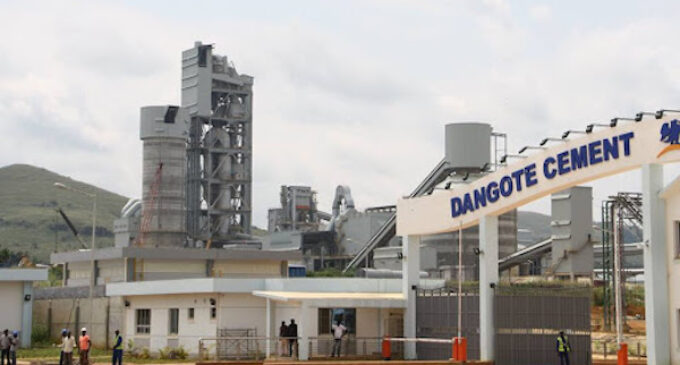
Obajana Cement PLC was incorporated in 1992 and as at 2002 had no paid up shares
* Kogi State has no equity interest in Obajana Cement Plc
* The plant and machinery were conceived, designed, procured, built, and paid for solely by DIL, well after it acquired the shares in Obajana Cement Company
* The land on which the Obajana Cement Plant is built was acquired solely by Dangote Industries Limited (DIL) in 2003
* Taxes paid to Kogi Govt yearly since production commenced in 2007
The management of Dangote Industries Limited has insisted that its acquisition of the Obajana Cement Plc in 2002 followed due process, contrary to claims by the Kogi State government.
The conglomerate asserted that Kogi State government has no equity interest in Obajana Cement Plc. It also stated that the company as a responsible corporate organisation has been paying relevant State taxes, levies and charges to the Kogi State government since 2007 when production commenced in the acquired cement plant.
These clarifications were contained in a statement issued by the management of Dangote Industries Limited titled ‘Obajana Cement Plant: Separating Facts from Fiction.’
According to the statement, “This is a statement issued for the sole purpose of addressing the concerns and apprehensions of the stakeholders of Dangote Cement Plc (DCP) especially the over twenty-two thousand people it employs directly, and more indirectly, as well as thousands of contractors, wholesalers, users of our products, our financiers and shareholders.
“At a time of significant economic challenges that we face as a nation, we believe all must be done to keep our economy running effectively, our people employed, businesses that depend on us thriving and not discourage those who take the risks of needed, lawful and significant investments in our economy. The shutdown of our plant has materially jeopardised the economic wellbeing of our country without any regard for its significant consequences.
“Whilst reserving our rights to proceed to arbitration in accordance with the extant agreement, we have reported the unlawful invasion by KSG and the consequential adverse effects of same to all the relevant authorities, including the Federal Government of Nigeria who has now intervened in the matter. It is hoped that the dispute resolution process we have initiated will quickly resolve the disputes and allow us to focus on our business without distraction and continue our significant contribution to our national economy. It is in this context that we state in brief as follows”, the company added.
According to the statement, “The Obajana Cement Plant is one of the most critical components of economic activity in the nation, being one of the highest taxpayers, and vehicle for one of the largest companies invested in by thousands of Nigerian and foreign investors. Its most important assets are (1) its land, the plant and machinery thereon, and (2) the vast limestone deposit covered by mining leases issued under licence by the Federal Government of Nigeria (FGN).”
The company clarified that the land on which Obajana Cement Plant is built was solely acquired by Dangote Industries Limited (DIL) in 2003. “The land on which the Obajana Cement Plant is built was acquired solely by Dangote Industries Limited (DIL) in 2003, well after it had acquired the shares in Obajana Cement Company in 2002, following the legally binding agreement it entered into with KSG to invest in Kogi State. DIL was issued three Certificates of Occupancy in its name after payment of necessary fees and compensation to landowners.
Nigeria’s ace photojournalist, Maikatanga wins GLF Africa 2022 award
“The plant and machinery were conceived, designed, procured, built, and paid for solely by DIL, again, well after it acquired the shares in Obajana Cement Company. The limestone and other minerals used by the Obajana Cement Plant, by the provisions of the Nigerian Constitution belonged to the Federation, with authority only in the FGN and not the State in which the minerals are situated, to grant licences to extract and mine the resources”, the company explained.
“After the agreement with the KSG, DIL applied for and obtained mining leases over the said limestone from FGN, at its cost and has complied with the terms of the leases since inception. The Government of Kogi State had no minerals to give, had no assets to give, and only invited DIL as most responsible governments do to come into the State and invest in a manner that will create employment, develop the State, and earn it taxes”, the statement added.
In a section of the statement titled, ‘The Incorporation of OCP and the Invitation by KSG’, the company noted that, “In 1992, the Kogi State Government incorporated Obajana Cement PLC (OCP) as a public limited liability company. Sometime in early 2002, about 10 years after the incorporation of the OCP (which still had no assets or operations as of that time), KSG invited Dangote Industries Limited (DIL) to take the opportunity of the significant limestone deposit in the State by establishing a cement plant in the State.
“Following several engagements and assessment of the viability of the proposed opportunity, DIL agreed that it would establish a cement plant in Kogi State and provide the entirety of the substantial capital required for the investment.
“DIL also agreed, following a specific request by KSG, to use the OCP name (albeit only existing on paper as of that time, and without any assets or operations) for the time being, as the vehicle for this investment
On 30 July 2002, KSG and DIL entered into a binding agreement to document their understanding. The agreement was amended in 2003 and remains binding on, and legally enforceable by, the parties to same,” the statement explained.
On the issue of an Agreement between Dangote and Kogi State Government, the statement gave a summary. It noted that “it was agreed, inter alia, that: DIL would establish a cement plant with a capacity of 3,500,000 metric tonnes per annum; DIL shall hold 100% of the shareholding in OCP, and source for all the funds required to develop the cement plant; KSG shall have the option to acquire 5% equity shareholding in OCP within 5 years; and KSG shall grant tax relief and exemption from levies and other charges by KSG for a period of seven (7) years from the date of commencement of production.”
Consistent with the terms of agreement, DIL sourced for 100% of the funds that was used to develop the plant without any contribution from KSG. In line with its rights, ensuring alignment with the Dangote Brand, as part of internal restructuring and for better market recognition the name of OCP was changed to Dangote Cement Plc in 2010, and a number of other significant cement companies (such as the Benue Cement Company) owned by DIL were merged with OCP to become the enlarged Dangote Cement Plc”, the statement added.
On the issues of ‘Execution of the Agreement: The Plant, Taxes, Shares & Dividends’, the statement noted, “DIL assiduously and at significant cost met all the terms of the agreement between it and KSG in relation to OCP. It built the cement factory, much bigger and better than envisaged.
“KSG could not meet its financial obligations of contributing to the funding the plant in any form; neither could KSG fund acquisition of 5% equity shares in OCP when it was asked on a number of occasions to exercise the purchase option.
“KSG also did not meet its obligations to grant waiver of taxes, charges and levies that it could charge the operations, affairs and activities of OCP. Rather despite being entitled (under the terms of the agreement with KSG) to tax relief and exemption from charges and levies by KSG for a period of seven (7) years from the date of commencement of production, OCP (and now DCP) has paid all due sub-sovereign taxes, levies and charges to KSG since it commenced production in 2007.
“KSG does not have any form of investment or equity stake in OCP, so no dividend or other economic and/or shareholding rights whatsoever could have accrued to it from the operations of the company”, the statement added.
On the issue of the Acquisition of the Plant Site, the statement noted that, “After the agreement between DIL and KSG in 2002, DIL in 2003, applied to KSG for the acquisition of land for the plant site, and this application was granted with the issuance of three Certificates of Occupancy to DIL. DIL to the knowledge of KSG, paid substantive compensation to Obajana Farmland Owners located within the two (2) square kilometres plant site.
“Subsequently, in September 2004, DIL, in good faith, applied to the State Governor for the statutory consent for DIL to assign the plant site to OCP being DIL’s investment vehicle. This consent request was granted by the State Governor and the appropriate consent fees were paid by DIL”, it added.
Shedding more light on the company’s engagement with Kogi State Government, the statement explained that, “The investment of DIL in Kogi State through OCP was at the instance of the duly constituted government of Kogi State, done in accordance with the law of the State and all enabling laws in that regard, and the transaction documents were effectively, lawfully and duly executed by the Governor and Attorney General of the State (at the time), after internal approvals were obtained within the government.
“Since the inception of Alhaji Yahaya Bello’s administration in 2016, and regardless that government is a continuum, we have had series of enquiries about the ownership structure of the Dangote Cement PLC as it relates to the alleged interest of KSG; and had several engagements with the officers of the State government including Governor Yahaya Bello. At all of these engagements we have provided all the details and information supported by relevant documents, required by the Government and the State House of Assembly to confirm our lawful investment.
“For instance, in 2017, we were invited by the Judicial Commission of Inquiry, and we made our submission to the commission with relevant documents to support our position. We are yet to receive any feedback from the Judicial Commission of Inquiry. While still waiting to hear of the report of the Inquiry, we were invited by the State House of Assembly on the same matter earlier this year, and again, we provided evidence in support of our position that KSG does not have any equity or other interest in OCP or DCP.
“On Wednesday 5 October 2022, hundreds of dangerously armed men, other than law enforcement officers, attacked our cement plant in Obajana, Kogi State, destroyed our property, inflicted grievous injuries on many of our employees, and shutdown operations at the plant. KSG has admitted that the armed invaders acted on its instructions, and in furtherance of the recent enquiry by the Kogi State House of Assembly in connection with the ownership of the Obajana Cement Plant.
“Curiously, on 6 October 2022, a day after the shutdown of our facility in Obajana on the orders of KSG, Governor Bello addressed the public and announced that a Specialised Technical Committee which was set up as part of the recommendations of the Judicial Commission of Inquiry had just presented its recommendations, which have been accepted by KSG. This statement makes it abundantly clear that the shutdown of DCP’s plant occurred regardless of the Governor’s own confirmation that implementation of the recommendations of the Specialised Technical Committee was still pending”, the statement noted.
Focusing on the current state of play, the company said, “Whilst we do not want to speculate on the motivation for the spurious claims being made by KSG in relation to the ownership of the Company, which have resulted in the unfortunate unlawful forcible closure and damage of our plant, and injury of several people, we condemn in strongest possible terms, the unlawful shutdown of our plant by KSG sponsored armed-thugs, the damage to our property (including the looting of large sum of money kept in the office), and grievous injury inflicted on our employees by them.
“This disruption of operations at the plant has caused loss of revenue not only to our company and its customers but has also adversely impacted revenue due to both the Federal and State governments. It has also occasioned loss of jobs for the teeming youths who are daily paid workers that throng our plant for their daily sustenance.
Appealing for overall peace and calm, the statement noted, “We implore all our stakeholders, namely shareholders, customers, suppliers, employees, and the entire community of Obajana and Kogi State at large to remain calm while we follow the legitimate and lawful process to resolve this matter. We shall keep our stakeholders duly updated whilst we remain confident that the statutory and contractual rights ofB DIL shall be upheld by these legal processes which we have initiated.”










News
Independence Day: FG Declares October 1 Public Holiday
By Yusuf Danjuma Yunusa
The Federal Government has declared Thursday, October 1, 2026, as public holiday to mark Nigeria’s 66th Independence Anniversary.
The Minister of Interior, Dr. Olubunmi Tunji-Ojo, announced the declaration on behalf of the Federal Government in a statement issued on Wednesday by Dr. Magdalene Ajani, Permanent Secretary, Ministry of Interior.
Tunji-Ojo congratulated Nigerians at home and abroad, describing the anniversary as an opportunity to reflect on the country’s journey since independence and its prospects for the future.
He highlighted Nigeria’s human capital, natural resources and cultural diversity as key national assets, while stressing the importance of peace and stability to the country’s development.
The minister urged Nigerians to emulate the patriotism of the nation’s founding fathers and contribute to building a country that future generations would be proud of.
“As we celebrate 66 years of our independence, we should always remember that there is hope for our country and our diversity is our strength, and our collective determination remains the foundation upon which a stronger and more prosperous nation will be built,” he said.
Tunji-Ojo also called on citizens to use the celebration to promote unity, patriotism, peaceful coexistence and mutual respect.
News
Dangote Sponsors Abuja Trade Fair, Features Refinery IPO
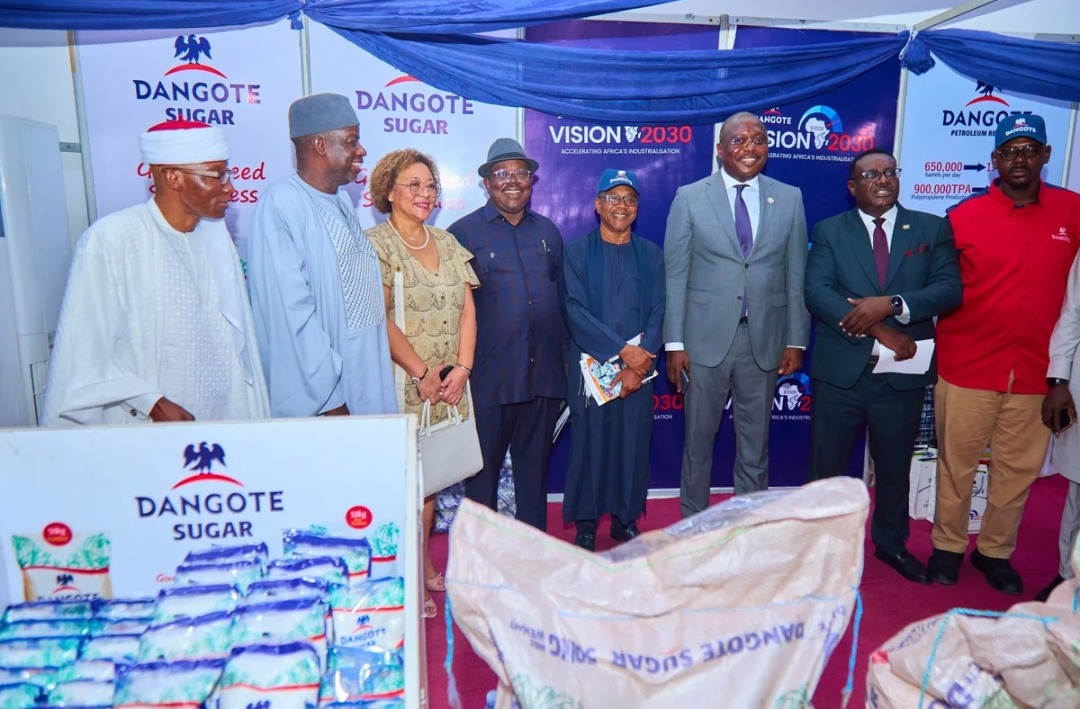
Dangote Industries Limited (DIL), one of the sponsors of the 21st Abuja International Trade Fair, will spotlight the ongoing Initial Public Offering (IPO) of the Dangote Petroleum Refinery and Petrochemicals (DPRP) during the company’s Special Day.
The Dangote Special Day, scheduled for Friday October 2, will feature a high-level fireside and business interactive session bringing together representatives of Dangote Group, government, the organised private sector and business leaders to examine the transformative role of the Dangote Refinery in Nigeria’s economic development.
According to the company, the interactive session will provide prospective investors, entrepreneurs, business operators and other participants with an opportunity to engage directly with representatives of Dangote Group and gain a better understanding of the refinery’s ongoing IPO and its broader economic significance.
The session, themed “Dangote Refinery, Vision 2030, ACCI and the Economy,” will examine the refinery’s contribution to Nigeria’s energy security, industrialisation, trade, employment generation, taxation and economic growth.
Particular attention will be paid to how increased domestic refining capacity can reduce Nigeria’s dependence on imported petroleum products, conserve foreign exchange, strengthen local value chains and create new opportunities for businesses across the petroleum, petrochemical, logistics, manufacturing and services sectors.
The IPO will also feature prominently in the discussions, with participants expected to explore how the public offer can broaden participation in the ownership of one of Africa’s most significant industrial assets, deepen Nigeria’s capital market and provide eligible investors with an opportunity to participate in the country’s ongoing industrial transformation.
The fireside session will bring together senior representatives of Dangote Group, the Abuja Chamber of Commerce and Industry (ACCI), the Nigerian Association of Chambers of Commerce, Industry, Mines and Agriculture (NACCIMA), government and the wider private sector.
The company said the session would also provide an opportunity to examine Dangote Group’s Vision 2030 and its implications for industrialisation, job creation, local content development, technology transfer, investment and economic diversification.
Beyond the fireside discussion, visitors to the Trade Fair will have the opportunity to engage with the Dangote Group at its pavilion, where the company will showcase a range of products and businesses spanning cement, sugar, salt and seasoning, packaging and other sectors.
Dangote Group’s sustained participation and sponsorship of the Abuja International Trade Fair reflects its continued support for platforms that promote trade, investment, entrepreneurship and stronger linkages between the private sector and government.
The 21st Abuja International Trade Fair, organised by the Abuja Chamber of Commerce and Industry, is expected to bring together hundreds of exhibitors, businesses, investors, policymakers and members of the public, providing a platform for networking, market access, investment promotion and business-to-business engagement.
The company said it looks forward to welcoming participants to the Dangote Special Day and its pavilion to explore the Group’s products, investment opportunities and potential areas of business collaboration.
News
15th Emir Of Kano Condemns Destruction Of Governor Yusuf’s Banners, Orders Immediate Replacement
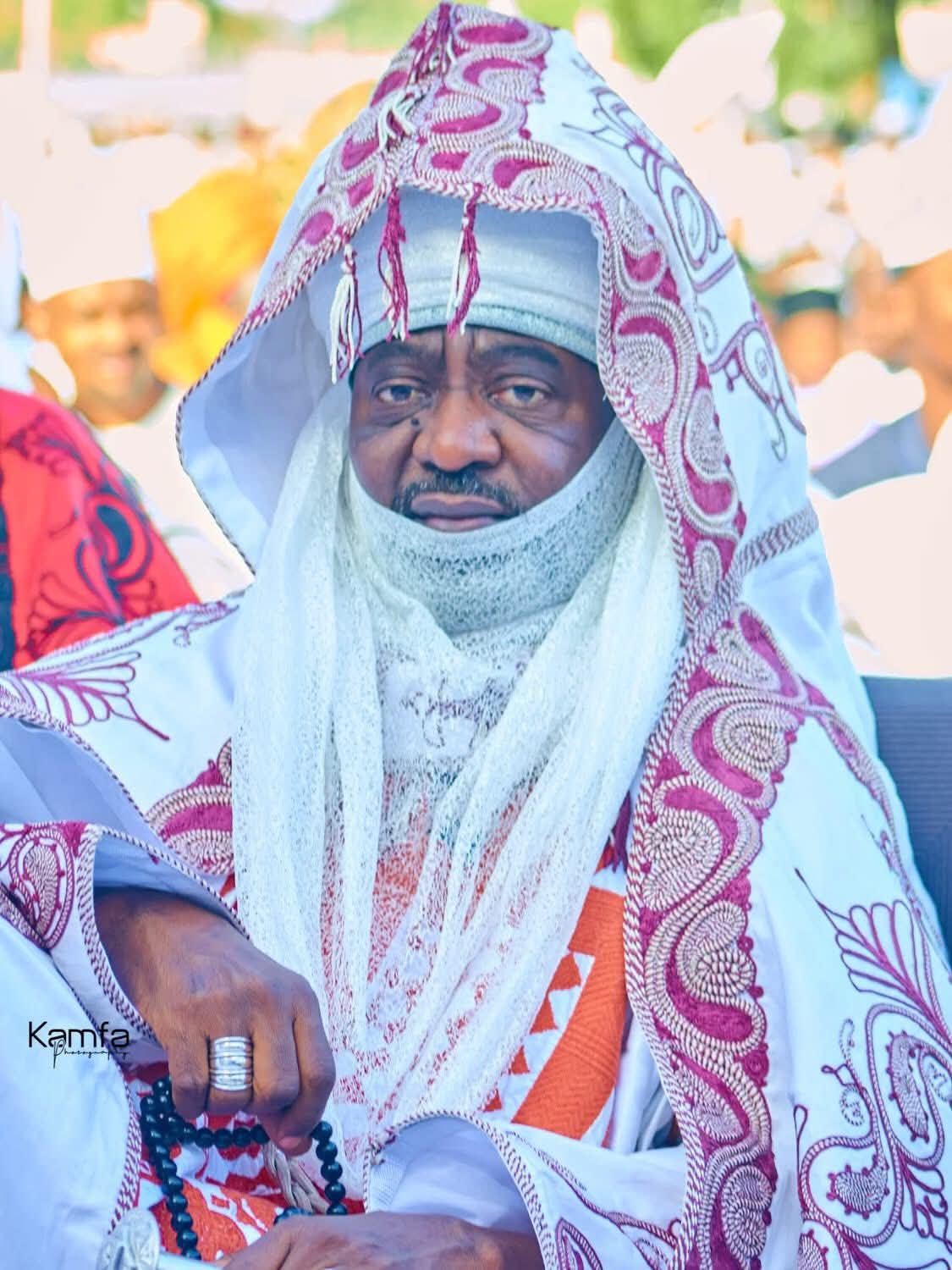
15th Emir of Kano, Alhaji Aminu Ado Bayero, has expressed displeasure over the destruction of banners bearing the images of the Kano State Governor, Alhaji Abba Kabir Yusuf.
The 15th Emir’s Chief Councillor, Alhaji Aminu Babba Dan’agundi, Sarkin Dawaki Babba, disclosed this while addressing journalists, saying that the Emir had already directed that the damaged banners be repaired.
According to him, 15th Emir Bayero stressed that the traditional institution must remain above partisan politics, saying, “We are fathers of the people, not politicians.” He therefore appealed to the Emir’s supporters and well-wishers to avoid bringing partisan political activities into the affairs of the traditional institution.
The Sarkin Dawaki Babba also conveyed the 15th Emir’s appreciation to the thousands of supporters men and women, youths and elders who demonstrated their love and loyalty by complying with the government’s directive and accompanying the Emir on foot to his residence at the Nassarawa Palace, despite the heavy rainfall and strong winds.
He said the 15th Emir had no adequate words to express his gratitude to the people for their show of love, patience and solidarity, adding that His Highness prayed that Almighty Allah would reward them abundantly.
The 15th Emir also urged his supporters to continue with prayers, as is customary, for peace, stability and progress in Kano State and Nigeria, as well as abundant blessings and prosperity for the people.

Independence Day: FG Declares October 1 Public Holiday

Dangote Sponsors Abuja Trade Fair, Features Refinery IPO

15th Emir Of Kano Condemns Destruction Of Governor Yusuf’s Banners, Orders Immediate Replacement

PCACC Arrests Man Over Alleged ₦4.5m Sale, Illegal Leasing of Kano Government Horse Stable

Goje’s Electoral War:The Confrontation With Tinubu,Governor Inuwa,Usman Kumo And APC candidates Ahead Of 2027

Zamfara Varsity ASUU Threatens Warning Strike Over FG-ASUU Agreement, Promotion Arrears

Bello Sharada: A Great Writer, A Bookish Soul, Gone Too Soon

Kano Chemists Threaten Warning Strike Over Alleged PCN Pressure

Per Ishaq Samaila: “Waziri” for Strategy. “Mai Jama’a” for Service. One Man. One Mission. Ibrahim Kabir Masari

UN Assembly: Nigeria Affirms Nuclear-Free Status, Seeks Overhaul of UN Domestic Jurisdiction Rule
Independence Day: FG Declares October 1 Public Holiday
Dangote Sponsors Abuja Trade Fair, Features Refinery IPO
15th Emir Of Kano Condemns Destruction Of Governor Yusuf’s Banners, Orders Immediate Replacement
PCACC Arrests Man Over Alleged ₦4.5m Sale, Illegal Leasing of Kano Government Horse Stable
Goje’s Electoral War:The Confrontation With Tinubu,Governor Inuwa,Usman Kumo And APC candidates Ahead Of 2027
Zamfara Varsity ASUU Threatens Warning Strike Over FG-ASUU Agreement, Promotion Arrears
Bello Sharada: A Great Writer, A Bookish Soul, Gone Too Soon
Kano Chemists Threaten Warning Strike Over Alleged PCN Pressure
Per Ishaq Samaila: “Waziri” for Strategy. “Mai Jama’a” for Service. One Man. One Mission. Ibrahim Kabir Masari
UN Assembly: Nigeria Affirms Nuclear-Free Status, Seeks Overhaul of UN Domestic Jurisdiction Rule
-

 Opinion5 years ago
On The Kano Flyovers And Public Perception
-

 Features5 years ago
How I Became A Multimillionaire In Nigeria – Hadiza Gabon
-

 Opinion6 years ago
Kano As future Headquarters Of Poverty In Nigeria
-

 History5 years ago
Sheikh Adam Abdullahi Al-Ilory (1917-1992):Nigeria’s Islamic Scholar Who Wrote Over 100 Books And Journals
-

 Opinion5 years ago
My First Encounter with Nasiru Gawuna, the Humble Deputy Governor
-

 History5 years ago
The History Of Borno State Governor Professor Babagana Umara Zulum
-

 History6 years ago
The Origin Of “Mammy Market” In Army Barracks (Mammy Ochefu)
-

 News4 years ago
Federal University Of Technology Babura To Commence Academic Activities September