
Politics
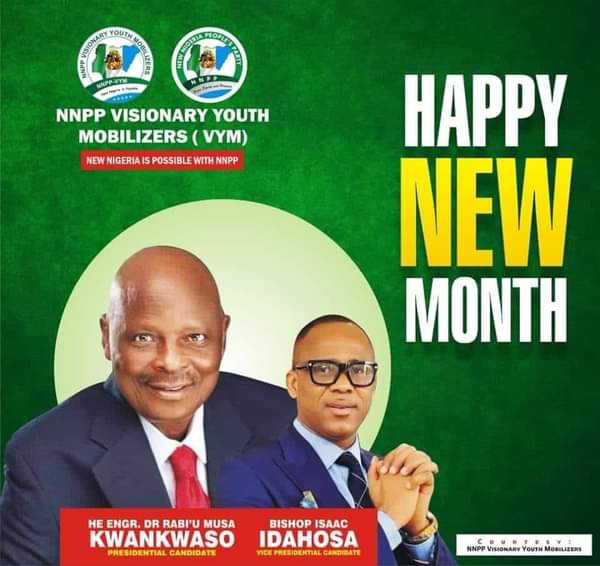
Kwankwaso/Obi ticket – a nice combination which shouldn’t have even started
Muhammad Suleiman Abdullahi
There are a lot of good things that should have happened to Nigeria but such good things were and are still averted by Nigerians who feel threatened by others. Our collective psyches teach us to be myopic and to lack reason. These make us to promote selfishness, ethnic chauvinism or even some other worldly material gains at the expense of best public interest.
Now that Kwankwaso/Obi ticket has been ethnically killed, I am happy that it didn’t come to fruition as it would have been disastrous to the nation as Obi supporters are turning into something else. Now that it didn’t happen, it left behind some issues to ponder about, especially on our reasoning that it shouldn’t have even been thought of in the first place. It left us with no hope as to the politicians we see who are a sort of “young” bloods when compared to those whose real age, patriotism, source of wealth and health status are all not certain.
All of us in the North, without an iota of doubt, believe that Kwankwaso is by far, better than Obi. Infact they are not even comparable in whatever capacity. From the academic credentials to practical experience, national spread, political platform and even patriotism. However, one irony about the ticket was that, the way Northerners believe in Kwankwaso is equally the way those South Easterners believe that Obi is better. They believe that Obi is the only answer. In their bid to justify that, they reduced Kwankwaso to pieces, saying that he is over ambitious. This is where they woefully failed. This was what made the thought of bringing the ticket even more worrisome.
Obi’s suporters shouldn’t be blamed, as the country is programed as such. People only know and promote he who they are so much close too, naturally. What will happen if this natural knowledge is mixed with bitter secessionists’ sentiments and arrogance that beclouded their thought of anything if not theirs?
There are some reasons why Kwankwaso shouldn’t have even thought of Obi. Probably Kwankwaso did that out of nationalism and another way of garnering support from the other end, but one thing Kwankwaso failed to realize was that, Obi’s candidature was no long his own. It had long been hijacked by a fake Christiandom, Obidients/OBiafrans and other disgruntled politicians from the other end. However, some points should be considered here.
1) The way Nigeria is; a country with such a vivid religious divide, with Muslims as the majority and Christians with a significant number, the Christians must definitely feel offended if they do not feature as number two, if not number one in the country. In this case, someone may say that, democracy is, to some extent, a hoax. If not, why shouldn’t majority carry the board all the time? But in Nigeria’s situation, Christians are many and they would feel somehow alinieted by Muslim/Muslim ticket.
Therefore, it will be a sort of miscalculation for anyone to ask Obi to deputize instead of being the lead. Christians may not take it lightly. They have already fought the Muslim/Muslim ticket and failed and now the only option left for some of them, shouldn’t be tempted or played with. Therefore, looking at it from this angle it was a very bad idea right from the beginning. Reuben Abati confirmed this in an interview when he opined that, during one of their talks about Kwankwaso/Obi, he asked one single question! And the answer to that question, given to him by the NNPP representatives convinced him that the Kwankwanso/Obi arrangement was dead on arrival.
According to him, he asked them, is it fair, that after a Northener – and may be a Muslim – finishes his 8 year tenure, for another Northerner to rule again immediately? He said the Kwankwanso/NNPP representatives responded that, that is not an issue to be disturbed with. This is their point of reasoning which should be understood.
Another point is the regional affiliation. This doesn’t give much but many Southerners may prefer to have someone healthier than Tinubu, not minding his religion the way the Northerners do. Here, Obi as the lead may be more appealing to them.
On the other hand, there is an issue of Igbo presidency. In real sense Igbo politicians have been too stubborn, divisive and too much regional in their approaches to national discourse. They always create problems for themselves, to which Obi’s candidature is part of. You can’t disown your country, engage in series of treasonable felonies, condone crimes and support terrorism against your nation and then think you would be trusted. The idea of rallying behind Obi as the only source of salvation is another mistake made by the Igbos. It will make them more stubborn or more alienated. If Obi fails – which will likely happen, some of those overzealous OBiafrans who now threaten all those who talk against Obi will surely be more stubborn and restless. And the mainstream politicians would put them aside as they know they are inconsequential.
Now that the ticket has been killed and most commentators agree that even if it had happened, it wouldn’t change anything. The real fight is seen to be between the two giansts. Now both camps should sheath their swords and forge ahead.
Kwankwaso and his supporters should continue to aim high. Merging with anyone among the two major parties cannot produce result and going alone is not the solution. Madugu and his team should think within and outside the box and come with real solution.
As for Obi’s real supporters, the real Obidients, they should learn tolerance and know that Nigeria is not Imo, Abia or Enugu. Two state’s votes in the North can be equal to the total number of states in the entire South East region in terms of everything and more. This is based on the latest voter statistics released by the Independent National Electoral Commission which showed that the North has more voters registered in the Continuous voter registration that ended last Sunday.
Therefore, these #OBidients, including the OBiafrans among them, should be more civil, tolerant and open minded. They should interact well with others and show decorum in their manners and shouldn’t allow the #OBiafrans to always lead them.
@muhammadunfagge
muhammadunfagge@yahoo.com








Politics
EXCLUSIVE: How DSP Barau Douses Tension In Kano’s Noisy Politics
By Abba Anwar
Amid Engulfing Political Brouhaha in Kano State, His Excellency, Deputy Senate President, Distinguished Senator Barau I Jibrin, CFR, has recently been busy empowering hundreds of thousands of his constituents, with the sum of One Hundred Thousand Naira (N100, 000), each.
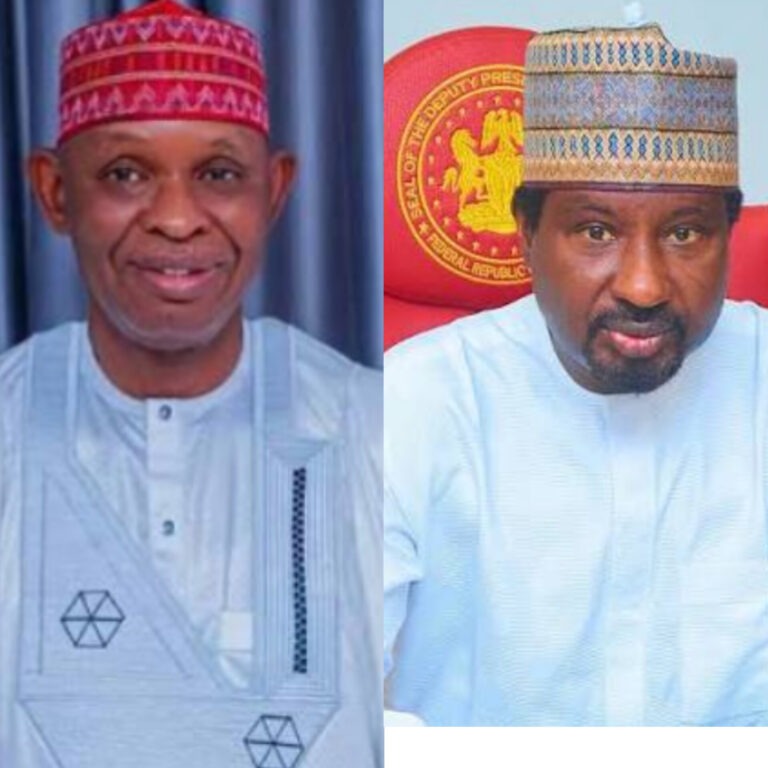
As the polity is tensed recently with the exit of two APC heavyweights, joining African Democratic Congress (ADC), His Excellency Nasiru Yusuf Gawuna, the immediate past Deputy Governor, who was the Gubernatorial flagbearer of the APC, in 2023 election and the former Governor of the state, His Excellency Kabiru Ibrahim Gaya, Senator Barau keeps eyes on the development of party members, particularly in his constituency, Kano North zone.
While politicians are busy discussing the new political wave in the state, DSP Barau has since flagged-off the grand empowerment programme for his constituents. Is in continuation of his efforts to stimulate economic activities across the Kano North Senatorial District and other parts of the state. This, at the expense of soured political engagements, being witnessed.
As his Special Assistant on Media and Publicity, Hon. Shitu Madaki Kunchi, his Senior Legislative Aide, Hon Kabiru Ado Lakwaya, along other dignitaries represented the Senator for the take-off recently. Which from there all local governments committees were dispatched to all the 13 local governments across Kano North Senatorial District. To fully take charge of the effective implementation of the programme.
The programme will go through December, this year, 2026. It is a year-round intervention. Visible tension in some quarters, already started subsiding. As people are kept busy with economic reinforcement.
A total of 15,600 persons would be given a N100,000 capital grant in 12 months across 13 LGAs of the Kano North Senatorial District. Each of the LGAs will have 100 beneficiaries monthly for 12 months. This is part of the correct measures taken to purposely engineer economic growth for individuals and their families. Grown and independent economy first, before any other thing.
After inauguration of the grand programme, the representative of the DSP, Hon Madaki, urged all committees that were raised for the activity, Special Assistants, Senior Legislative Aides to the DSP and all other stakeholders across the zone, to make sure that the programme succeeds.
When we look at it critically, we can say, Senator Jibrin is doing it differently. In a traditional way of such empowerment programmes, it is the sum of either Ten Thousand Naira (N10,000) or Twenty Thousand Naira (N20,000) that are distributed to beneficiaries. But Senator’s programme goes beyond that, with the sum of One Hundred Thousand Naira (N100,000) to each beneficiary.
With the kind of political tension ravaging the state, across, the ruling and other opposition parties, this empowerment programme comes at a better time, to douse tension and make people busy, being empowered economically.
The important and essential aspect of the programme, in cushioning the effect of hardship, felt in the land, is that the positive result does not stop at the 15,600 beneficiaries, through one year duration of the project. It is an initiative with multiplier effect. Under each and every beneficiary, out of their total number of 15,600, there are other dependents, as immediate families, other relations and friends.
The sum of One Hundred Thousand Naira, even in urban setting, isn’t a joke, for small businesses. Not to talk of rural communities. With this development, many people will definitely turn blind eyes on the political tension springing up, in the state recently. The empowerment will take people away from being possessors of idle mind. Which has always been a devil’s workshop.
So without fear of contradiction, I can posit that, Distinguished Senator’s clear understanding of our setting, is not only an asset to the ruling All Progressives Congress (APC), in Kano, but also to the government and good people of the state. Bravo my Senator, Bravo.
Less interested in unnecessary political debates, criticisms and counter-criticisms, he believes that, intervention in man’s development is primary. While any other things are secondary. Because of this foresight, in the pipeline, is another plan advanced to cater for other categories of people. Under it, for example in the transportation sector, 130 vehicles will be allocated to various groups to enhance the Kano North Transport Services. This is just as 1,000 motorcycles would be distributed to commercial riders, headmasters, teachers, students and other categories of people across Kano North Senatorial District.
Women are not left out. They too, meet DSP’s magnanimous engagement. As no fewer than 1,300 sewing machines and 1,300 grinding machines are set for distribution to 2,600 women. Additionally, 1,300 deep freezers and 1,300 noodle-making machines, along with bags of flour, are set aside to small-scale business owners to support food processing, storage, and other income-generating ventures across the senatorial district.
To the chagrin of all, he doesn’t keep secondary schools students and pupils away from benefiting, under his people-oriented projects, For the young students, 1,300 bicycles are set aside distribution to school children in the Senatorial district to ease transportation challenges and enhance access to education.
While the heated polity keeps many away from remembering their constituents, His Excellency, the Deputy Senate President, keeps his eyes on all categories for accessing dividends of democracy, for safe growth and development. Under this, for sports development, jerseys and footballs would be provided to 1,950 teams. A total of 150 teams will benefit from each of the 13 LGAs in Kano North Senatorial District to promote grassroots sports development and provide opportunities for young people to showcase their talents.
Understanding the basic fact that, all parts of Kano need similar interventions, he also assured that, similar things would be extended to other zones, of Kano Central and Kano South, after its completion in Kano North.
Observers believe that, the tensions engulfing the state recently, could be address squarely through multi-faceted interventions. Like the ones brought to limelight by the people’s DSP.
Investigation reveals that, some thousands of universities students and other tertiary institutions, who benefited from Barau I Jibrin Education Foundation’s Scholarship Scheme, are planning to stage a solidarity procession for the Senator. But he turned down the plan, urging them to concentrate on their studies.
His words to them, “Please concentrate on your studies. Don’t over-heat the polity. This is not what we need. We need peaceful coexistence, mutual understanding of our political realities, growth and development of our dear state and our motherland, Nigeria.”
A gentleman with indelible taste of peace, tranquility, a quintessential leader of quality substance, strong, focused, down-to-earth intellectual, kind-hearted national leader, detribalised legislator, with sound skills for debate and enduring political actor.
He also called on those who are currently attending post-graduate courses across the globe, sponsored by the his Foundation, to also face their studies and come back home with flying colours, at the completion of their studies.
He urged them to continue as good Ambassadors for Kano state and Nigeria. While concentrating on their studies. Adding that, “Mingle with other people across the globe. Meet other Africans and see how you can aid Africa’s sustainable development.”
Distinguished Senator speaking as an able First Deputy Speaker of ECOWAS Parliament. Whose interest has always been regional integration, Africa’s development and global cohesion among cultures and settlements.
Anwar writes from Kano
Friday, 10th April, 2026
Politics
A Remarkable Homecoming: Kano Unites in Support of Abba Kabiru Yusuf, Signaling a Strong Endorsement for Bola Ahmed Tinubu in 2027
By: Nasiru Yusuf Gwadabe
Saturday, 4th April 2026 will not fade easily from the living memory of Kano. It is a date that has already secured its place in the history of the ancient city, not through official proclamation, but through the overwhelming expression of its people. From the very moment the aircraft conveying Abba Kabir Yusuf touched down at about noon, Kano transformed into a living theatre of emotion, loyalty, and political meaning. What began as a homecoming soon evolved into something far deeper, a dual expression of confidence in state leadership and a rising chorus of national political alignment.
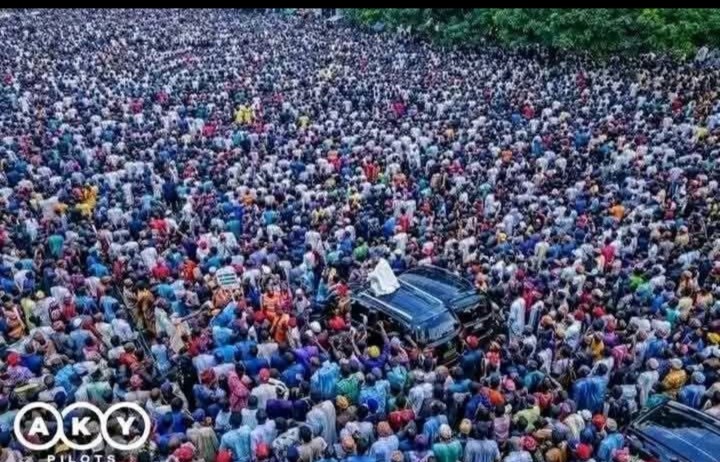
What followed defied imagination. The governor could barely step forward without being surrounded by a surging crowd, eager not just to see him, but to connect with him. From approximately 12 noon until about 9 o’clock, movement itself became an extraordinary challenge. It was not resistance that slowed the governor’s convoy, but an outpouring of affection so powerful that it turned a simple journey into a historic procession.
The journey from the airport to the Government House, which ordinarily takes not more than fifteen minutes, stretched into nearly ten hours. What should have been a routine drive became a prolonged passage through a sea of humanity. The motorcade moved slowly, almost ceremonially, as if guided by the collective will of the people rather than the force of engines.
At every junction, the story repeated itself. The convoy would halt, not out of necessity, but out of insistence. Citizens stepped forward to offer prayers, raising their hands and voices in supplication for the governor’s success. These were not symbolic gestures. They were deeply felt expressions of hope, trust, and shared destiny. In those pauses, the line between the leader and the people seemed to disappear, replaced by a bond rooted in mutual belief.
Kano is not a city that offers such devotion lightly. It is politically aware,
historically grounded, and known for its ability to assess leadership with clarity. Yet on this day, its verdict was unmistakable. The scale of the reception, the patience of the crowd, and the emotional intensity of the moment all pointed to one undeniable truth. Abba Kabir Yusuf is not merely occupying an office. He is occupying the hearts of his people.
To describe him as a homeboy is to capture the essence of this connection. He is seen not as a distant authority, but as one who understands the rhythm of the streets, the struggles of ordinary citizens, and the aspirations that define Kano’s future. This familiarity has translated into trust, and that trust has now found its most visible expression in the streets.
Yet beyond the celebration of a leader’s return, a second narrative steadily took shape, one that aligned Kano’s political voice with the national leadership of Bola Ahmed Tinubu. What unfolded was not only a reaffirmation of faith in the governor, but also a growing endorsement of the President, expressed through chants, symbols, and the unmistakable enthusiasm of the crowd.
What unfolded on that Saturday goes beyond spectacle. It carries deep political significance. In a system where legitimacy is often contested, moments like these serve as powerful indicators of public confidence. The crowd was not assembled. It emerged. It was not directed. It was inspired. And in its sheer magnitude, it delivered a message louder than any campaign could convey.
That message is clear. Kano believes in Abba Kabir Yusuf. Kano stands with him. At the same time, Kano is increasingly aligning with the leadership of Bola Ahmed Tinubu, projecting a unified political direction that stretches from the state to the centre.
The long hours from noon to night were not a burden to the people. They were an offering. Every minute spent waiting, every step taken alongside the convoy, every prayer raised was a contribution to a shared narrative. It was a way of saying that leadership, when it is genuine, does not stand apart from the people. It walks among them.
While addressing the mammoth gathering that thronged the streets, Governor Abba Kabir Yusuf expressed deep appreciation for the overwhelming show of love and solidarity, describing it as a clear endorsement of his administration’s direction and achievements. He noted that such a reception was not only humbling but also a powerful motivation to intensify efforts toward delivering more developmental projects across all sectors of the state.
He assured the people that their confidence would not be taken for granted, emphasizing that the administration remains committed to consolidating its gains and expanding its impact beyond 2027. In what appeared to be a pointed message to political opponents, the governor remarked that the unprecedented turnout had already sent a strong signal about the future, particularly to those suggesting that his tenure would be limited to a single term. According to him, the people of Kano have, through their actions, demonstrated where their loyalty lies.
“Today’s outing is no doubt an indication of your unalloyed support and endorsement for our administration to continue with the laudable initiatives that will make Kano greater,” he declared, while challenging any political contender to mobilize a similar organic gathering. The statement carried a clear undertone, positioning the event not just as a welcome ceremony, but as an early barometer of political strength ahead of the 2027 elections.
Importantly, the governor used the moment to reaffirm Kano State’s alignment with the Federal Government under the leadership of Bola Ahmed Tinubu. He emphasized that sustained collaboration with the centre remains vital for attracting federal interventions and accelerating development across the state.
In a more direct political appeal, he called on the people of Kano to translate their visible enthusiasm into electoral action by supporting President Bola Ahmed Tinubu in the 2027 general elections. He stressed that continuity at the federal level would not only consolidate ongoing reforms but also guarantee greater opportunities and development for Kano State.
The response from the crowd reinforced this call. From the airport through the major streets, chants in support of the President grew louder, blending seamlessly with those of the governor. Supporters waved party symbols and openly affirmed their readiness to stand with President Bola Ahmed Tinubu, turning the reception into a powerful demonstration of dual loyalty and shared political purpose.
For many observers, this was more than a moment of celebration. It was a declaration of alignment. The people of Kano, through their sheer numbers and visible enthusiasm, projected confidence not only in their governor but also in the leadership at the centre. The endorsement of President Bola Ahmed Tinubu was not staged. It emerged organically, carried on the voices of thousands who see continuity as a pathway to progress.
This groundswell of support speaks to a broader political reality. Kano remains one of the most influential political blocs in the country, and its direction often shapes national outcomes. By rallying behind both Abba Kabir Yusuf and President Bola Ahmed Tinubu, the people have signaled a convergence of interests that could prove decisive in the coming electoral cycle.
The electrifying reception, marked by chants, music, and a sea of party symbols, brought movement across key roads to a standstill as residents came out in solidarity. The massive turnout underscores the governor’s growing political influence and the deepening connection between his administration and the people. It also reflected the role of grassroots mobilization across all levels, drawing participation from party executives, political office holders, traders, youth groups, and entertainers. The crowd took nearly eight hours to escort the governor from the airport to the Government House, a journey that ordinarily lasts just fifteen minutes.
The reception stands as one of the largest in Kano’s recent political history, second only to the massive turnout recorded on 12th January 2024 following the Supreme Court judgment. In both instances, the people’s response has served as a clear signal of political direction and public sentiment.
As the governor finally made his way through the vast crowd late in the evening, the significance of the moment remained unmistakable. This was more than a return from official engagements. It was a reaffirmation of trust, a visible endorsement of leadership, and a powerful reminder of the bond between Kano and its governor.
Saturday, 4th April 2026 will be remembered not just for the crowd, but for what the crowd represented. It will be remembered as the day Kano stood still, not in silence, but in solidarity. A day when the streets spoke, when the people declared their confidence, and when a leader’s journey home became a collective experience.
And as the echoes of that historic welcome continue to ripple across the political landscape, one conclusion rises above all others. This was not merely a reception. It was a statement of strength, a public reaffirmation of mandate, and a quiet but powerful signal of what lies ahead. In the language of politics, moments like these are not accidental.
They are indicators of momentum, of acceptance, and of a growing consensus. If the future is shaped by the will of the people, then Kano has already begun to write its next chapter, one that places Abba Kabir Yusuf firmly at its center, while echoing a resounding and unmistakable endorsement of Bola Ahmed Tinubu as the path forward to 2027.
Nasiru Yusuf Gwadabe, a Veteran Journalist, retired Editor with CTV writes from Kano
Politics
REJOINDER: The Fallacy of the “Commander” and the Burden of Integrity
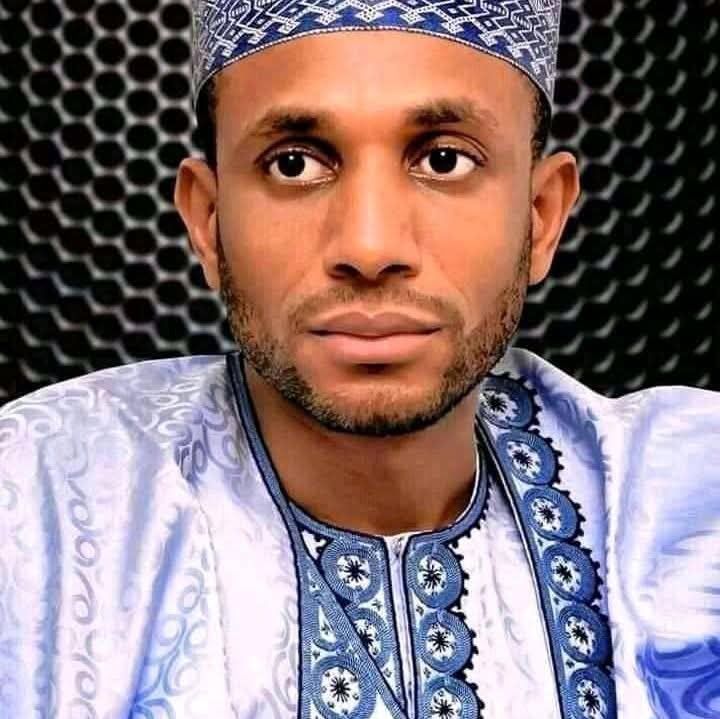
By Halima Isyaku Dantsoho
I read with a mix of amusement and concern the defense of Hon. Murtala Sule Garo by Hadi Abdullahi Muhammad, which attempts to frame the valid scrutiny of a public figure as a mere product of “internal power struggles.” While it is convenient to label every criticism a “media trial,” we must confront the reality that leadership is a sacred trust, not a reward for street mobilization. To suggest that Garo is the ideal choice for Deputy Governor—particularly in the wake of the recent political shift that saw Governor Abba Kabir Yusuf move to the APC—is to ignore the very “storm” the author claims to see. The vacancy in the Deputy Governor’s office exists because Kano is attempting to move past a season of distraction following the resignation of the former occupant; why then would the state replace a controversy with a liability? We are talking about a man who remains entangled in significant litigation regarding his past tenure as Commissioner, and to elevate such an individual to the second-highest office in the state would be like putting out a fire with petrol. It would lock the administration into a permanent state of legal defense, ensuring that the coming years are spent in courtrooms rather than on the construction of a better Kano.
The author praises Garo as a “Commander” of the grassroots, yet in a state as economically vital as ours, “mobilization” is not a substitute for administrative integrity. The “grassroots” of which he speaks—the traders, farmers, and youths—are the primary victims when public funds are allegedly mismanaged at the local government level. True loyalty to the base is shown through transparent governance and the systemic protection of public wealth, not through the strategic distribution of startup tools during an election cycle. If the APC national leadership and President Bola Ahmed Tinubu are truly committed to a “Renewed Hope” agenda, they must recognize that elevating a figure with such unresolved legal narratives contradicts the very integrity the party must represent in this new era. Perfection may not be the standard, but accountability is. Fairness does not mean ignoring a mountain of evidence in favor of political popularity; it means letting the courts decide a man’s fate before he is granted the prestige of high office. Kano has moved forward into a new political era, and it is time our leadership choices reflected a future built on stability rather than a return to the controversies of the past.
Halima Isyaku Dantsoho wrote from Kano.

BREAKING: INEC Postpones Nationwide Voter Revalidation Till After 2027 Elections

World Bank Urges Nigeria to Break Petrol Monopoly, Reopen Market to Imports

Online Media Now Shapes Public Opinion Faster Than Traditional Platforms — Inuwa Waya

EXCLUSIVE: How DSP Barau Douses Tension In Kano’s Noisy Politics

The Final Betrayal Of A Red Neck?-Martin Yakwo

ADC Leadership Crisis: State Chairmen to Elect Caretaker Committee on Tuesday

Governor Abba Kabir Yusuf Holds Exclusive Prerogative to Choose Deputy – Malam Inuwa Waya

DSP Barau As A Global Citizen, His Recent Global Engagements

NUJ Kano Online Chapel Tightens Membership Standards, Approves 31 Applicants After Rigorous Screening

APC National Convention : How DSP Barau Displays Political Sagacity, Deep Knowledge of Democracy Before President Tinubu, Others
BREAKING: INEC Postpones Nationwide Voter Revalidation Till After 2027 Elections
World Bank Urges Nigeria to Break Petrol Monopoly, Reopen Market to Imports
Online Media Now Shapes Public Opinion Faster Than Traditional Platforms — Inuwa Waya
EXCLUSIVE: How DSP Barau Douses Tension In Kano’s Noisy Politics
The Final Betrayal Of A Red Neck?-Martin Yakwo
ADC Leadership Crisis: State Chairmen to Elect Caretaker Committee on Tuesday
Governor Abba Kabir Yusuf Holds Exclusive Prerogative to Choose Deputy – Malam Inuwa Waya
DSP Barau As A Global Citizen, His Recent Global Engagements
NUJ Kano Online Chapel Tightens Membership Standards, Approves 31 Applicants After Rigorous Screening
APC National Convention : How DSP Barau Displays Political Sagacity, Deep Knowledge of Democracy Before President Tinubu, Others
-

 Opinion4 years ago
On The Kano Flyovers And Public Perception
-

 Features5 years ago
How I Became A Multimillionaire In Nigeria – Hadiza Gabon
-

 Opinion5 years ago
Kano As future Headquarters Of Poverty In Nigeria
-

 History5 years ago
Sheikh Adam Abdullahi Al-Ilory (1917-1992):Nigeria’s Islamic Scholar Who Wrote Over 100 Books And Journals
-

 Opinion4 years ago
My First Encounter with Nasiru Gawuna, the Humble Deputy Governor
-

 History5 years ago
The Origin Of “Mammy Market” In Army Barracks (Mammy Ochefu)
-

 History4 years ago
The History Of Borno State Governor Professor Babagana Umara Zulum
-

 News4 years ago
Federal University Of Technology Babura To Commence Academic Activities September