
News
Friday Sermon)The Prophet’s Night Journey and Heavenly Ascent (Al-Isra’ Wal-Mi’raj)
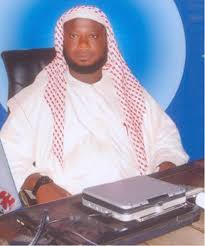
By Imam Murtadha Gusau
In the Name of Allah, the Most Gracious, the Most Merciful
Praise be to Allah Who chose His praiseworthy servant Muhammad (Peace be upon him) for the Message, distinguished him with the night journey on the lightening-mount Buraq, and caused him to ascend the ladders of perfection to the high heavens to show him of the greatest signs of his Lord. He raised him until he reached the Lote-tree (Sidratil-Muntaha) of the Farthest Boundary where ends the science of every Messenger-Prophet and every Angel Brought Near, where lies the Garden of Retreat, to the point that he heard the sound of the pens that write what has befallen and what is to befall. To proceed:
Dear Brothers and Sisters! On Tuesday, 27th Rajab, 1443 AH/Tuesday, 1st March, 2022 marked the Isra’ and Mi’raj. Isra’ and Mi’raj are Arabic terms that describe the mystical Night Journey from Makkah to Baitil-Maqdis in Jerusalem, and Prophet Muhammad’s (Peace be upon him) upward journey through the heavens to reach the very throne of Allah Almighty. This is one of the most amazing events in the life story of our beloved Prophet Muhammad (Peace be upon him).
Some scholars say that the Isra’ and Mi’raj occurred on 27th Rajab. Others disagree about the date, saying no one knows for certain. Only Allah knows best. But no Muslim disputes the essence of Prophet Muhammad’s Isra’ and Mi’raj: his Mystical Night Journey and his Ascension through the Heavenly Spheres. May Allah’s peace and mercy and blessings be ever upon him. The Noble Qur’an alludes to this momentous occasion in the first verse of Surah Isra’i. Allah the Most High says:
“Glory to [Allah] Who did take His Servant on a journey by night from the Sacred Mosque to the Farthest Mosque, whose precincts We sanctified; in order that We might show him some of Our Signs: for Allah is He who hears and sees everything.”
Respected brothers and sisters! It was during this sacred month of Rajab, Allah Almighty conferred on Prophet Muhammad (Peace be upon him), the great honour of ascending to the heavens.
FRIDAY SERMON)The Virtues Of The Months Of Rajab And Sha’aban
This honour had never been ascribed to any other Prophet than the Prophet Muhammad (Peace be upon him). He (Peace be upon him) made a journey with his physical being from the sacred city of Makkah to Jerusalem and, from there he ascended through the seven heavens to a place so near to the Divine Court that not even an angel, far less a human being, could have access. After having reached the Sidratul-Muntaha even Angel Jibril (AS), the head of the angels expressed his inability to proceed beyond this point. The five daily prayers became obligatory on all Muslims following this night of ascent.
This momentous event occurred more than 14 centuries ago. Then, as now, it aroused the sceptics and cynics to dismiss it as a fantasy, as a delusion. How can someone travel hundreds of miles in one night, and then claim to have travelled through the heavens to the throne of Allah? Then, as now, the true Believers have the same answer: He Who created the heavens and the earth out of nothing can do whatever He pleases. He can part the oceans to save the followers of Prophet Musa (AS). He can drown Fir’aun (Pharaoh) in that same ocean. He can flood the world while saving Prophet Nuh (AS) in the Ark. He can turn to the roaring flames that are licking at the feet of Prophet Ibrahim (AS), and decree: “Fire, be cool!” And, Prophet Ibrahim can walk out of the fire with no burns. Allah can change the properties and behaviour of any part of His creation. He is not enslaved by the natural laws that He, Himself, wrote. He’s the Author. He can edit and do as He pleases.
A man was once asked, can Allah pass a camel through the eye of a needle? He answered: Not only can Allah pass a camel through the eye of a needle; if He decided to put the whole world, the whole earth through the eye of a needle that’s easy for Him. He says: Kun, faya kun! … Be! And it is!
Centuries ago, this might have seemed fanciful. But nowadays, every scientist knows that if the universe began with a big bang 14 billion years ago, then all matter and energy, all time and space must have been concentrated in an extremely dense, incredibly small area, smaller than the head of a pin, and certainly, smaller than the eye of a needle. Today every self-respecting scientist believes that. But many of them still hesitate to go one step further. Who created the Big Bang? Was it spontaneous? Did time and space all begin by accident? So many scientists have difficulty in taking that crucial next step. That is, to accept that this big bang did not just happen by chance. As believers we know that everything follows the Will of Allah. When Allah decrees a thing, He only has to say, “Kun!” Be! Faya kun! …. And it is! Subhanallah!
Dear servants of Allah! In the short time we have, I want to deal with 3 points:
1. The story of the Isra’ and Mi’raj
2. The significance of Mi’raj
3. and the Gift of the Mi’raj.
The story is well known: it has a horizontal aspect and a vertical aspect. The horizontal aspect is the journey itself, from Makkah to Baitil-Maqdis in Jerusalem and back, in one night. The vertical aspect is the Ascension from Jerusalem to the heavens into the very presence of Allah, the Glorified and exalted.
We are told that one night, the Prophet Muhammad (Peace be upon him) was asleep near the Ka’abah, when the archangel Jibril [Gabriel] awoke him, washed his heart and placed him on Buraq, a mystical winged horse. Buraq could travel from horizon to horizon in one leap. Accompanied by Jibril (Gabriel), they rode to Jerusalem and from there they travelled upward through the seven heavens, meeting and greeting all the earlier Prophets along the way, until Jibril (Gabriel) stopped by ‘the lote tree of the furthest extremity, the utmost boundary’ Sidratul-Muntaha. Here he left Prophet Muhammad (Peace be upon him) because not even angels could go further than this point. This is where Prophet Muhammad (Peace be upon him) proceeded on his own until he was, as the Qur’an says, “Qaba Qawsain,” two bows-length from Allah. [Let us remember that words are so inadequate We are trying here to describe what is infinitely beyond description, beyond our strongest imaginings] The Noble Qur’an simply uses an evocative description:
“His vision did not waver, nor did the eyes deny what they saw…”
This was the absolute nearest any human being has ever come to the Divine Presence. Allah the Glorified and Exalted, and Prophet Muhammad, peace and blessings on him, alone at last, face to face. No interlocutors, no distractions. Creator and created, indeed, the best of His creation in direct communion. Again in the words of the Noble Qur’an, Prophet Muhammad (Peace be upon him) saw:
“Of the Signs of His Lord, the Greatest.” [Qur’an, 53:17-18]
We are told that Prophet Muhammad (Peace be upon him) then descended to earth, and in Jerusalem he led all the other Prophets in prayer. He returned from his meeting with Allah, carrying this blessed Gift of the Mi’raj, the Prayer, the Salah, as we know it today. At first he had instructions that Muslims are required to pray 50 times each day. But when Prophet Musa (AS), said that this would be too difficult, Prophet Muhammad (Peace be upon him) went back several times till Allah reduced it to 5 times a day. Again Prophet Musa said that 5 daily prayers was too much, people are lazy and rebellious. But Prophet Muhammad (Peace be upon him) replied that he was too embarrassed to go back and ask Allah for a further reduction. So there we have it. This gift of the 5 daily prayers, is a direct gift of the Mi’raj, over 14 centuries ago.
Imagine for a moment, what would Islam have been like without the Prayer (Salah), without precisely detailed formal prayers. Our faith would have been little more than an academic exercise, something to tickle the intellect; a belief system with some quaint notions about the meaning and purpose of life, but with no pivotal connection between Creator and created. Prayer (Salah) is what makes Islam more than just a good idea, but a functioning, purposeful relationship between Allah and His servants.
Before the Mi’raj occurred, we Muslims had no idea as to how and when they should pray. Now we not only know how and when, but also, most importantly, we must remember the reason, the ‘why’ part. Why do we pray? Why 5 times a day? Why not just once?
Dear brothers and sisters! Know that Prayer (Salah) is not a human invention. Also It’s not the product of Prophet Muhammad (Peace be upon him)’s imagination. It’s planned and prescribed by Allah Almighty Himself. It’s our divinely designed means of communication with Allah. This is how He wants us to turn to Him, 5 times a day, amidst all our distractions and mundane pursuits of daily life. He does not want us simply to go into seclusion in a temple or monastery to remember Him, once in a while. He wants us to remember Him constantly, in the marketplace, in our offices, in our homes and during our leisure time. Right there in the midst of life’s distractions, we must keep our spiritual compass. We must maintain our moral integrity. This is the real challenge. While we are busy enjoying Allah’s blessings, we must never forget to thank Him. Prayer (Salah) is our formal link with our Creator. It brings our body, mind and soul into complete harmony and submission to Allah. Properly performed, it helps us to cultivate an attitude of gratitude. Our hearts fill with stillness, serenity, Sakinah (tranquility), and we develop a yearning to be close to Allah. We long to be in that blissful presence just as our beloved Prophet Muhammad had on the Mi’raj. Prayer (Salah) is our own Mi’raj. In prostration (Sujud), it’s the nearest we’ll ever be to Allah. With heads touching the ground, all limbs pointing towards our Qiblah (Makkah), all our thoughts and feelings and desires focussed on Allah, this is the magical moment when we become the connecting-point between time-space and eternity. In prostration (Sujud), we, humble creatures of dust, when we’ve shut off body, mind and soul to everything else except His Presence, we can become like lightning-rods that connect heaven and earth. In that moment of sheer and absolute surrender, we become truly, Allah’s Khalifah, His viceregents, on the earth.
Respected brothers and sisters! When we pray properly, as Allah decrees, then great things become possible. Let’s not neglect our prayers. Let’s not rush through them like some necessary but unwelcome habit like we’re brushing our teeth or washing the dishes. Let’s concentrate, meditate and rejuvenate with this wonderful gift of our personal Mi’raj. Let’s pray properly, with meaning and with feeling. In Prayer (Salah) we’re in the grand audience hall of the Lord of the universe. This is no place to let our minds wander off. Let’s show Allah our love, courtesy and respect.
Dear brothers and sisters! When we Muslims pray, we enjoy a very special relationship with Allah. While other faiths have intermediaries, Muslims have no priest, Rabbi, Archbishop or even a Pope to stands between us and Allah. We worship Him directly and He answers us directly. Allah the Most High says:
“I listen to the prayer of everyone who calls me. Let them also then, listen to My call, so that they may walk on the straight way.”
Although 70,000 veils may separate us from Allah, nothing separates Him from us. He says that He is:
“Closer to us than our jugular veins.”
What more do we need in the way of assurances and security? Without prayer, without regular, intimate contact with Allah, we would be exposed to all kinds of dangers, to mind, body and soul. Prayer (Salah) brings us intimately close to Allah. It brings us in to safety and security. Prayer (Salah) protects us like nothing else can. My dear brothers and sisters: we should never, never neglect our prayers.
This is especially true for those of us who are facing
different challenges at this time. No matter how busy you are with last minute struggle. Don’t neglect your Prayer (Salah)! Don’t lose Allah’s protection!
“Exalted is He who took His Servant [Prophet Muhammad] by night from Al-Masjid Al-Haram to Al-Masjid Al-Aqsa, whose surrounding We have blessed, to show him of Our signs. Indeed, He is the Hearing, the Seeing.” [Qur’an, 17:1]
Our Lord, please give us the best of this life, and the best of the life to come, and save us from the torment of the Fire!
Dear brothers and sisters! To conclude our sermon (Khutbah):
Surely Allah commands justice, good deeds and generosity to others and to relatives; and He forbids all shameful deeds, and injustice and rebellion: He instructs you, so that you may be reminded!
Allah Almighty says:
“And remember Me: I will remember you. Be grateful to Me, and do not reject faith.”
“And without doubt, Remembrance of Allah is the Greatest Thing in life, and Allah knows the deeds that you do.”
Polite reminder to all our people: Please try to get here (Mosque) in time for the sermon (Khutbah). Some people come running in after the prayers have started. They missed the Khutbah. Remember, the Khutbah is part of your Jumu’ah. If you miss it you may miss Jumu’ah. Please remind those who don’t know this. Thank you.
And as you always asked, In Shaa Allah there’s no problem, you can share our sermons with your relatives and friends!
All praise is due to Allah, the Lord of all creation; may Allah extol the mention of our noble Prophet Muhammad in the highest company of Angels, bless him and give him peace and security―and his family, his Companions and all those who follow him correctly and sincerely until the establishment of the Hour.
I ask Allah, the Most High to grant us success and enable us to be correct in what we say and write, ameen.
Murtadha Muhammad Gusau is the Chief Imam of Nagazi-Uvete Jumu’ah and the late Alhaji Abdur-Rahman Okene’s Mosques, Okene, Kogi State, Nigeria. He can be reached via: gusauimam@gmail.com or +2348038289761.
This Jumu’ah Khutbah (Friday sermon) was prepared for delivery today, Friday, Sha’aban 1st, 1443 A.H. (March 04, 2022).





News
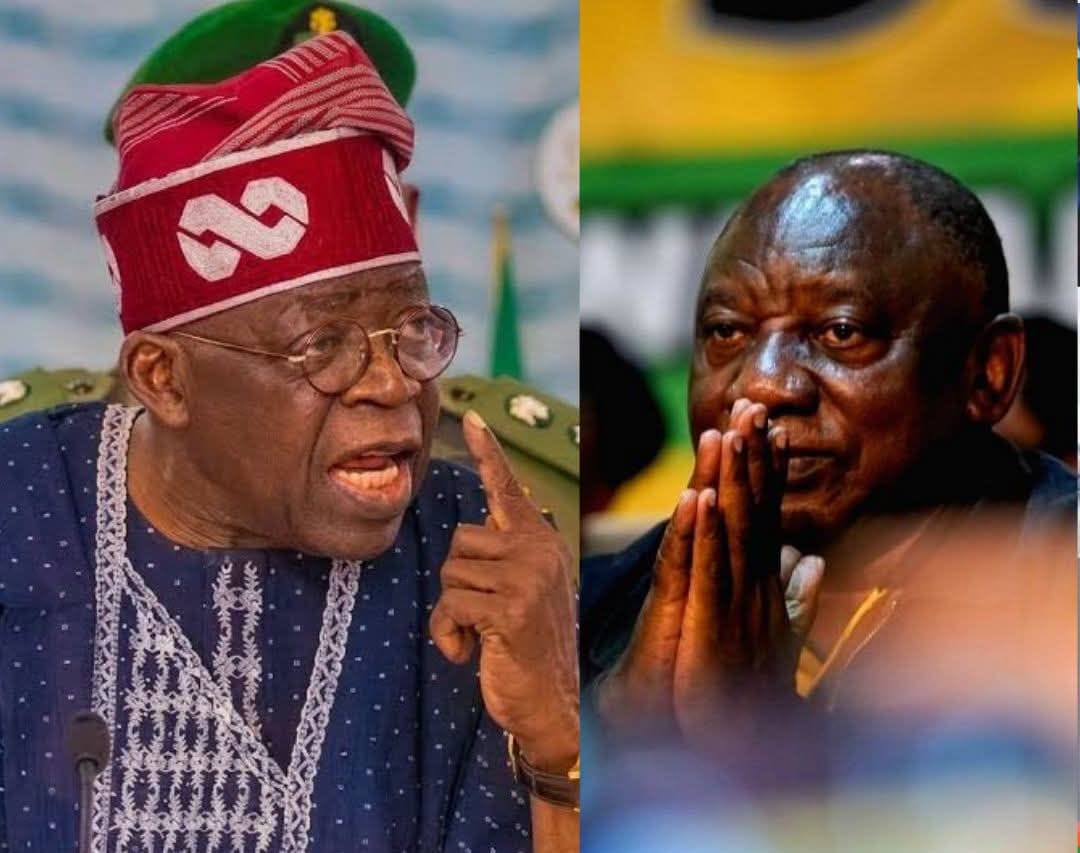
President Tinubu Declines Meeting with S’African Envoy, Directs Delegation to Foreign Affairs Minister
By Yusuf Danjuma Yunusa
President Bola Tinubu on Monday declined to receive a special delegation from South African President, Cyril Ramaphosa, over the ongoing xenophobic attacks on Nigerians in South Africa, directing the visiting team to instead meet with the Minister of State for Foreign Affairs, Ambassador Sola Enikanolaiye.
Multiple credible Presidency sources with knowledge of the development confirmed to PUNCH Online that the delegation, led by South Africa’s Minister of International Relations and Cooperation, Ronald Lamola, had sought an audience with the President after arriving in Abuja on Friday.
Instead, Tinubu instructed them to engage with Enikanolaiye, who was appointed Minister of State for Foreign Affairs in June 2026 after Ambassador Bianca Odumegwu-Ojukwu was elevated to the substantive ministerial position following the exit of Yusuf Tuggar.
The development comes amid a diplomatic row between both countries over renewed xenophobic attacks targeting Nigerians and other African nationals in South Africa, which forced the evacuation of nearly 600 Nigerians back home.
One Presidency source said, “They actually came here on Friday wanting to see the President. But there was no prior notice.
“And we said we can’t just allow you to see the President without first asking him if he is available. So we asked, and the President said they could come on Monday.
“But when Monday came, he simply said they should go and meet the Minister of State for Foreign Affairs, Ambassador Enikanolaiye, and whatever they discuss, the Minister would come and brief him.”
A second source confirmed the President’s decision, saying, “I just confirmed it. He is not seeing them. The meeting is not happening.”
A third Presidency official added, “We don’t have that on the schedule today.”
The South African delegation reportedly remained in Abuja throughout the weekend after arriving on July 24, carrying a message from Ramaphosa.
Sources further disclosed that the Minister of Foreign Affairs, Ambassador Bianca Odumegwu-Ojukwu, who is attending official engagements in Addis Ababa, had advised that it was not an appropriate time for the President to personally receive the South African delegation while attacks on Nigerians and their businesses were still ongoing.
Receiving the South African delegation in Abuja, Enikanolaiye said Tinubu directed him to engage the envoys on resolving the crisis, stressing that the longstanding relationship between Nigeria and South Africa should not be undermined by attacks on African migrants.
“It is with profound pleasure that I welcome our brothers from South Africa. President Bola Ahmed Tinubu had actually asked us to meet with you and exchange views and perspectives on how to address and resolve the ongoing Afrophobic attacks in South Africa, of which Nigerians, and other citizens of Africa, have been victims,” he said.
The minister lamented the recurring attacks on Nigerians, recalling that such incidents had persisted for decades.
“We have seen a pattern emerge as early as 1995, 1998, 2006, 2015, 2016, 2019, 2021, 2024 and 2026. It is on record that from 2022 alone, 98 Nigerians have died in mob actions, in hate-related actions that we have called Afrophobia, because we found that the preponderant victims of this ugly situation are Africans and Nigerians in particular,” he said.
Enikanolaiye recalled Nigeria’s role in supporting South Africa’s liberation from apartheid and said the violence was inconsistent with the relationship both countries had built over the years.
He stressed that while Nigeria does not support criminality, anyone accused of committing offences should face due process rather than mob violence.
“If someone is, quote-unquote, a criminal for drug trafficking, there are rules, there are regulations for when they are arrested, prosecuted, and jailed.”
News
APC Youths Demand Nationwide Ban on Rarara’s Songs at Party Activities
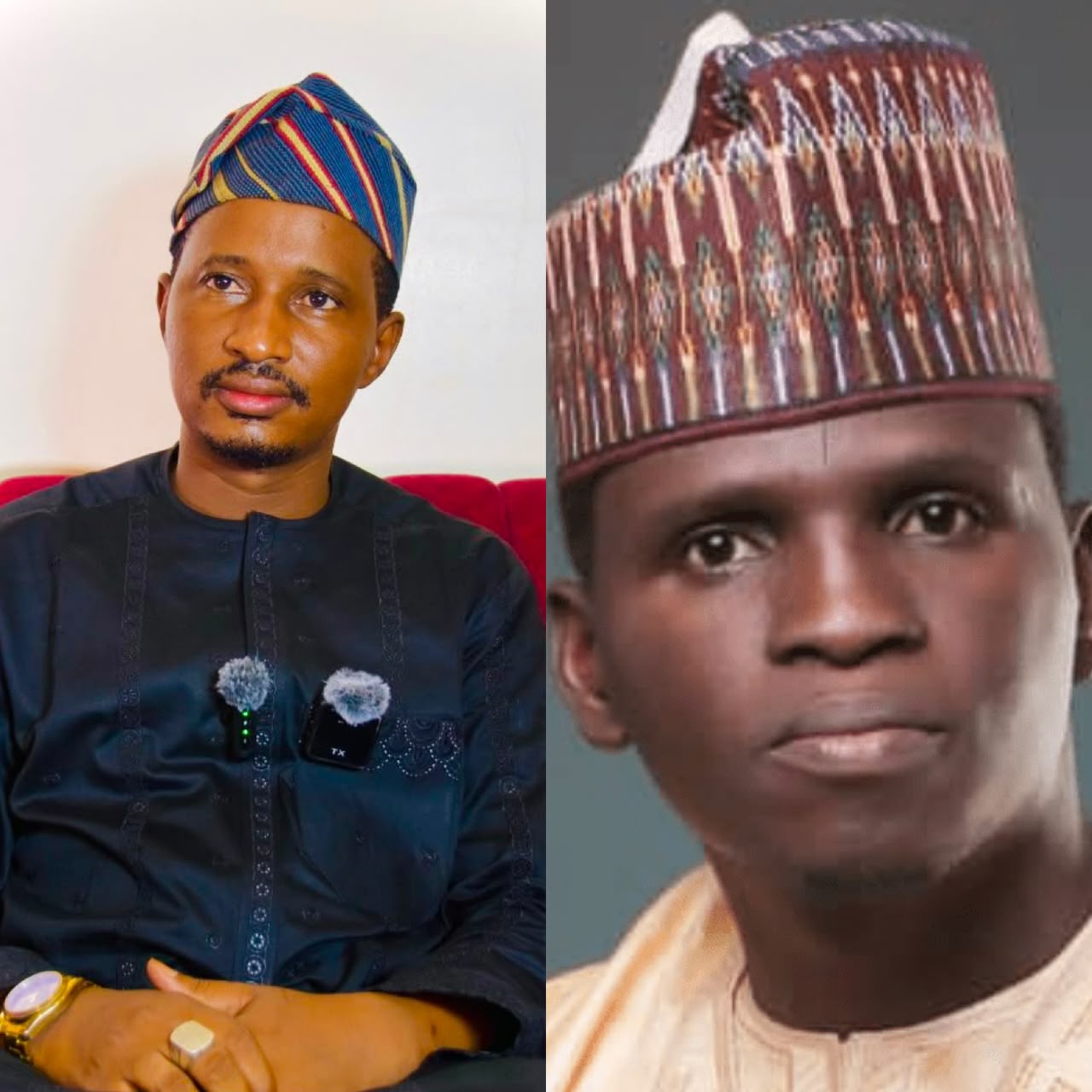
The Coalition of APC Progressive Youths has called on the leadership of the All Progressives Congress (APC) to prohibit the use of songs by popular political singer Dauda Adamu Kahutu, popularly known as Rarara, at all party activities across the national and state levels.
The group’s National Chairman, Hon. Sadiq Ali Sango, made the call in a statement issued to journalists in Abuja on Monday.
Sango alleged that Rarara’s songs have become more detrimental than beneficial to the ruling party, accusing the singer of using abusive language and divisive messages that undermine unity within the APC.
According to him, rather than promoting harmony among party members, Rarara’s style of political music has fueled hatred and deepened internal divisions.
He further alleged that the singer has repeatedly targeted senior party leaders and elders with insulting lyrics, describing such conduct as inconsistent with the values and principles of the APC.
The coalition also accused Rarara of sponsoring campaigns against the Deputy President of the Senate, Senator Barau I. Jibrin, claiming that the campaign encouraged some youths to launch personal attacks against the senator and make what it described as unfounded allegations against him.
The youth group condemned what it called Rarara’s “continuous politics of insults and character assassination,” warning that such actions could damage the party’s image ahead of future political contests.
Sango urged the APC National Working Committee (NWC) and other party stakeholders to immediately ban the use of Rarara’s songs at official party functions, rallies, and other political activities nationwide.
He added that the coalition would pursue all lawful and necessary measures to challenge what it described as conduct capable of causing disunity within the APC.
News
Hon. Abubakar Bichi Commissions 120 Health Workers in Bichi
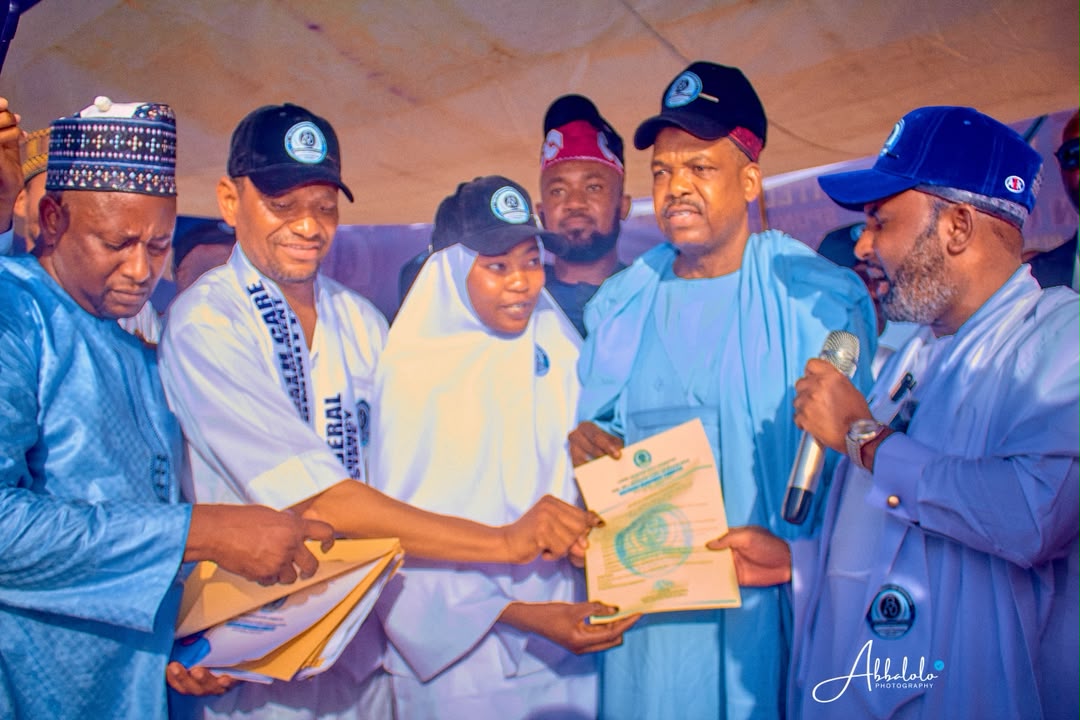
The Kabir Abubakar Bichi Foundation has commissioned 120 temporary health workers who will be deployed across primary healthcare centres in Bichi Local Government Area of Kano State.
The commissioning ceremony was led by the Member representing Bichi Federal Constituency, Hon. Abubakar Kabir Abubakar, on Saturday in Bichi. The event was attended by the Kano State Commissioner for Health, Dr. Abubakar Labaran Yusuf, alongside other dignitaries.
Speaking at the event, Hon. Abubakar Kabir Abubakar announced that the Federal Government is set to establish a new teaching hospital in Bichi Local Government Area to improve healthcare delivery.
“I recently attended meetings on education and healthcare development. As you know, we have Aminu Kano Teaching Hospital, and I want to assure you that we are working closely with the Minister of Health and the Chief Medical Director of Aminu Kano Teaching Hospital to facilitate the establishment of a new teaching hospital in Bichi,” he said.
Abubakar Kabir Abubakar added that the project is receiving strong support from President Bola Ahmed Tinubu.
“We must appreciate President Bola Ahmed Tinubu for his unwavering support for the development of the healthcare sector. We are currently working towards securing the President’s final approval for the project under this year’s budget,” he said.
Hon. Abubakar Kabir Abubakar, who also serves as the Chairman of the House Committee on Appropriations, reaffirmed his commitment to improving healthcare delivery. He disclosed that efforts are underway to upgrade Bichi General Hospital to the status of a specialist hospital in order to provide more advanced medical services and reduce pressure on major referral hospitals in Kano State.
He said “We are pleased to inform the Commissioner that we have completed the installation of equipment for the radiology department at Bichi General Hospital. The equipment includes a digital X-ray machine, 40 oxygen machines, and four dialysis machines, with an additional four dialysis machines expected soon.
“We are now awaiting the arrival of a 64-slice CT scan machine to complete the project. Once the remaining equipment arrives, we will be honoured to invite you and Governor Abba Kabir Yusuf to officially commission the upgraded facilities.
“We also plan to upgrade the surgical and operating theatre of Bichi General Hospital to meet the standards of leading hospitals across Kano State. Our goal is to strengthen healthcare delivery by reducing congestion at major referral hospitals in Kano metropolis, particularly Murtala Muhammad Specialist Hospital and Muhammad Abdullahi Wase Specialist Hospital, Nasarawa, where increasing patient numbers are placing pressure on healthcare personnel and facilities.
“As Kano’s population continues to grow, expanding and equipping secondary healthcare facilities such as Bichi General Hospital has become essential to ensuring timely access to quality healthcare for our people.”
Hon. Abubakar Kabir Abubakar also appealed to the Kano State Government to upgrade Danzabuwa and Saye Primary Healthcare Centres to General Hospitals, assuring the government of his full support in providing infrastructure and medical equipment for the facilities.
He commended the health committee, led by Professor Yusuf Muhammad, for conducting a transparent screening exercise for the newly recruited health workers.
He urged the newly commissioned workers to discharge their responsibilities with professionalism, dedication, and integrity in the service of their communities.
The lawmaker further appealed to the Kano State Government, under the leadership of Governor Abba Kabir Yusuf, to absorb the 120 temporary health workers into the state’s permanent and pensionable workforce.
He also praised Governor Yusuf for his investments in the health and education sectors, describing them as significant contributions to improving the welfare and well-being of the people of Kano State.

President Tinubu Declines Meeting with S’African Envoy, Directs Delegation to Foreign Affairs Minister

APC Youths Demand Nationwide Ban on Rarara’s Songs at Party Activities

Hon. Abubakar Bichi Commissions 120 Health Workers in Bichi

85 Religious Leaders Graduate from JNI-Alkalanci Fact-Checking Training in Gombe

From the struggle for Gombe State to life in the Senate: Senator Umar Usman Dukku reflects on politics, democracy, and his relationship with the late General Sani Abacha.

Alhaji Tijjani Rabiu Spikin: A Neighbour, Philanthropist, and Friend of Children

AI Delusion Among Students: When Smart Tools Start Replacing Real Connections, The Truth About AI And Student Life

BUK Emerges Top Performing Nigerian University In Global Ranking

Open letter to Governor Abba Kabir Yusuf on the Need To Include PCN, NAFDAC In Special Task Force On Drug Abuse And Illicit Trafficking

What Saheeba Taught Me About Waiting for Love
President Tinubu Declines Meeting with S’African Envoy, Directs Delegation to Foreign Affairs Minister
APC Youths Demand Nationwide Ban on Rarara’s Songs at Party Activities
Hon. Abubakar Bichi Commissions 120 Health Workers in Bichi
85 Religious Leaders Graduate from JNI-Alkalanci Fact-Checking Training in Gombe
From the struggle for Gombe State to life in the Senate: Senator Umar Usman Dukku reflects on politics, democracy, and his relationship with the late General Sani Abacha.
Alhaji Tijjani Rabiu Spikin: A Neighbour, Philanthropist, and Friend of Children
AI Delusion Among Students: When Smart Tools Start Replacing Real Connections, The Truth About AI And Student Life
BUK Emerges Top Performing Nigerian University In Global Ranking
Open letter to Governor Abba Kabir Yusuf on the Need To Include PCN, NAFDAC In Special Task Force On Drug Abuse And Illicit Trafficking
What Saheeba Taught Me About Waiting for Love
-

 Opinion4 years ago
On The Kano Flyovers And Public Perception
-

 Features5 years ago
How I Became A Multimillionaire In Nigeria – Hadiza Gabon
-

 Opinion6 years ago
Kano As future Headquarters Of Poverty In Nigeria
-

 History5 years ago
Sheikh Adam Abdullahi Al-Ilory (1917-1992):Nigeria’s Islamic Scholar Who Wrote Over 100 Books And Journals
-

 Opinion5 years ago
My First Encounter with Nasiru Gawuna, the Humble Deputy Governor
-

 History5 years ago
The History Of Borno State Governor Professor Babagana Umara Zulum
-

 History5 years ago
The Origin Of “Mammy Market” In Army Barracks (Mammy Ochefu)
-

 News4 years ago
Federal University Of Technology Babura To Commence Academic Activities September