
News
Governor Caleb Mutfwang Pledges Strong Collaboration and Support for Journalists in Plateau State”
By Asile Abel, Jos
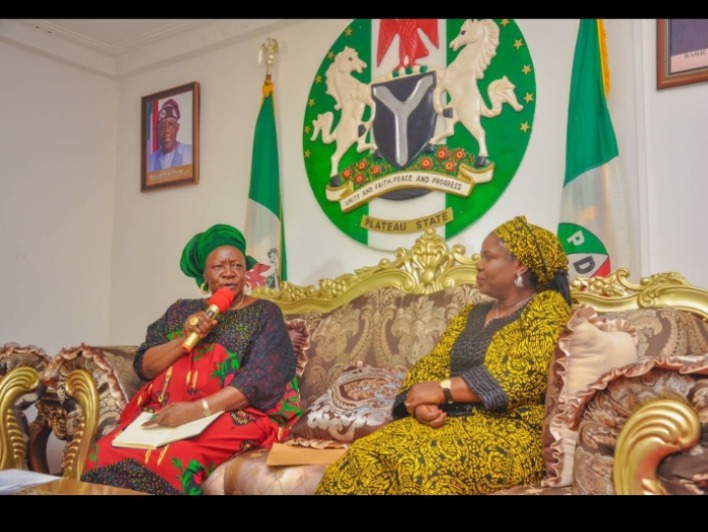
Governor Caleb Mutfwang, has promised close collaboration and support for journalists in Plateau state.
Mutfwang gave this assurance when a delegation of the Nigeria Union of Journalists (NUJ) Plateau State Chapter, led by their Chairman, Mrs Ayuku Pwaspo paid him a courtesy call.
The governor, represented by his deputy, Mrs Josephine Piyo, said the media play pivotal role in any society as well as indispensable in the proper functioning of a government and democracy.
He said journalists are one of the most powerful agents of democratic accountability in any society, highlighting that his administration would work hand in hand with them to ensure the total accountability of his administration in the state.
Mutfwang called on journalists to be objective in their reportage, draw government’s attention to wrong doings and not engage in issues that heats the polity or further divide the people.
While reiterating his
administration’s commitment to create a favourable environment for journalists to thrive, he congratulated the NUJ for electing the first female Chairman of the Association in Plateau.
He called on other bodies in the state to create an enabling environment for women to thrive and be encouraged to become leaders in different sectors.
Earlier, the Chairman of the NUJ in Plateau, Mrs Ayuku Pwaspo, promised to partner with the state government to fully harness the potential of the state.
Pwaspo, call on government to provide a conducive working environment for journalists to enable them perform effectively.
She further appealed to the government to give adequate attention to the state owned media organisations, to be able to meet contemporary challenges for optimal results inline with their mandate and projecting the true story of Plateau state to the world.









News
Hamma Urges Political Candidates to Prioritise Unity, Ideology Over Personal Interests
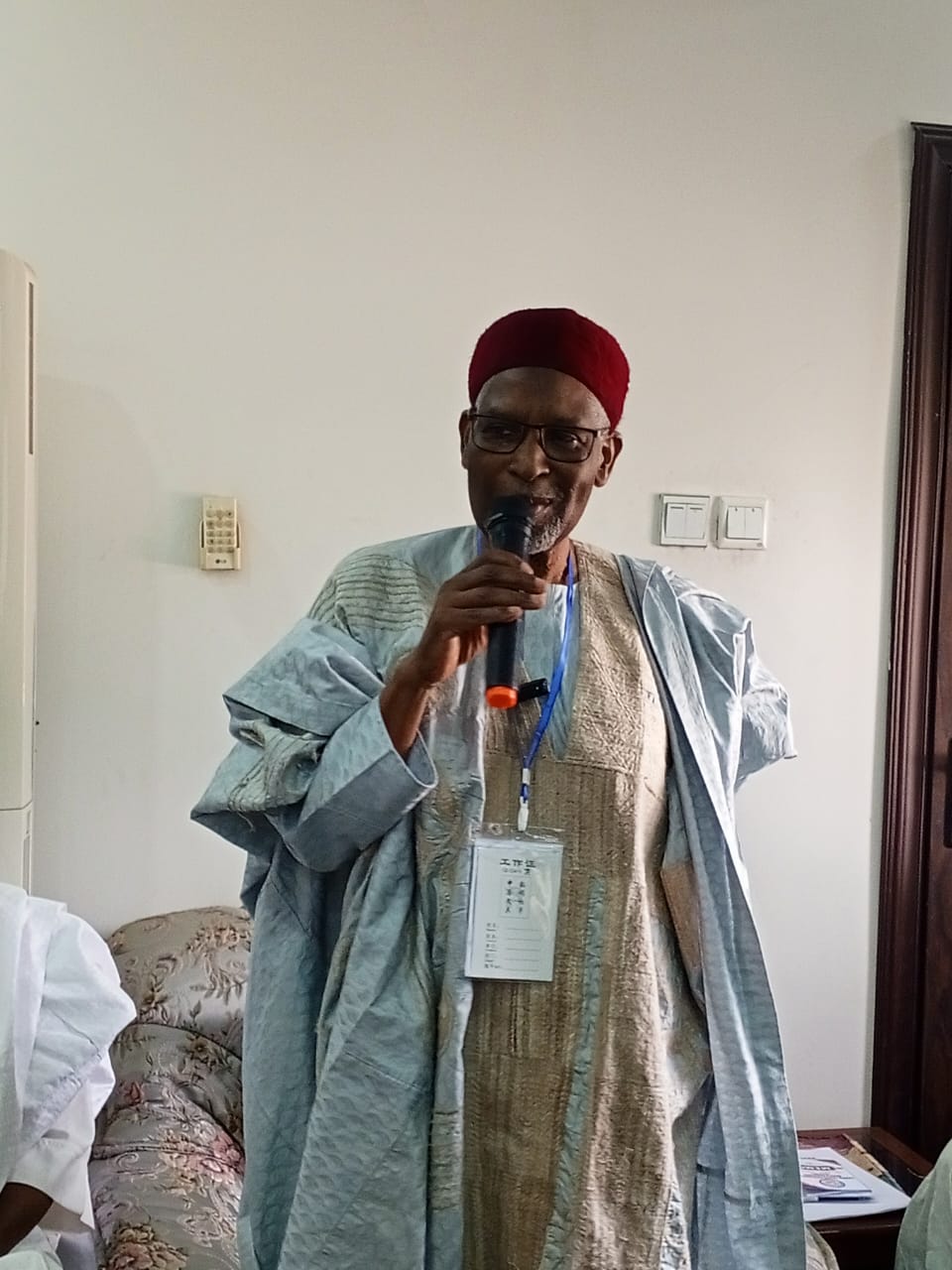
Former Pro-Chancellor of Northwest University and former Secretary to the Kano State Government, Alhaji Sule Yahaya Hamma, has urged political candidates in the Wudil/Garko Federal Constituency to prioritise unity, ideological commitment and peaceful political engagement ahead of the 2027 general elections.
Hamma made the appeal during a town hall meeting organised by the Garko Youth Movement for candidates seeking election to the House of Representatives to represent Wudil/Garko Federal Constituency in 2027.
He commended the youths for initiating the gathering, describing it as an opportunity for candidates to present their programmes and engage with the electorate on their plans for the constituency.
The former secretary to the state government stressed that unity and a clear political ideology were essential ingredients for development, urging the candidates and their supporters to avoid envy, division and personal interests that could undermine collective progress.
“I want to draw the attention of the people to the fact that there can be no progress without unity and ideology. Do away with envy and remain committed to your ideology,” Hamma said.
He explained that commitment to principles had historically played an important role in shaping the reputation of prominent individuals, including traditional rulers and descendants of Prophet Muhammad, noting that their influence was not necessarily determined by their birth but by their adherence to their beliefs and principles.
Hamma urged the candidates to place their political ideologies and the interests of the people above personal ambitions, adding that collective commitment to shared principles could help communities achieve meaningful development.
He also emphasised that contesting an election against another candidate should not be regarded as a personal conflict, noting that all contestants had the right to seek public office and present themselves as potential servants of the people.
According to him, political competition should provide an opportunity for candidates to explain their plans for addressing the challenges facing their constituency rather than becoming a platform for personal attacks.
Hamma consequently advised the candidates to avoid mudslinging, verbal abuse and other forms of negative campaigning, urging them to conduct their political activities with decorum and respect for one another.
He maintained that the ultimate objective of seeking public office should be to serve the people and contribute to the development of the constituency.
Speaking at the event, the Acting Chairman of the Garko Youth Progressive, Anas Ibrahim Na Baffa, described the town hall meeting as a historic gathering, saying that such an initiative had never previously taken place in Garko.
Na Baffa expressed appreciation to the stakeholders who supported the initiative, particularly the candidates and teachers who contributed to making the meeting possible.
He said the organisers were grateful for the cooperation they received from various stakeholders, adding that their participation demonstrated a shared interest in discussing the future of the area.
According to him, the meeting was not organised to undermine or discredit any candidate but to provide a common platform for discussing ideas and identifying practical ways to develop Garko and the wider federal constituency.
He explained that the organisers wanted the candidates to engage with the people, outline their priorities and demonstrate how they intended to address the challenges confronting the constituency if elected.
The meeting attracted more than 10 candidates aspiring to represent Wudil/Garko Federal Constituency in the House of Representatives in the 2027 general elections.
The candidates used the platform to present their views and explain the programmes they intended to implement if elected.
Among the candidates who presented their programmes was the candidate of the People’s Redemption Party (PRP), Rufai Dagumawa, who promised to prioritise the rehabilitation of drainage infrastructure in Garko Local Government Area if elected.
Dagumawa said he would work towards overhauling the area’s drainage system to address drainage-related challenges and improve local infrastructure.
He also pledged to promote information and communication technology (ICT) in Garko Local Government Area, with a view to supporting digital development and expanding opportunities for residents.
In addition, the PRP candidate promised to establish a rice mill as part of his proposed economic development initiatives, saying the project would support agricultural activities and contribute to local economic growth.
The town hall meeting provided an opportunity for the candidates to present their proposed policies and development priorities as political activities gradually build towards the 2027 general elections.
The organisers said the initiative was intended to encourage constructive political engagement and place the development needs of Wudil/Garko Federal Constituency at the centre of discussions among aspiring representatives.
News
State Police: 24 State Assemblies Approve Constitutional Amendment–Presidency
By Yusuf Danjuma Yunusa
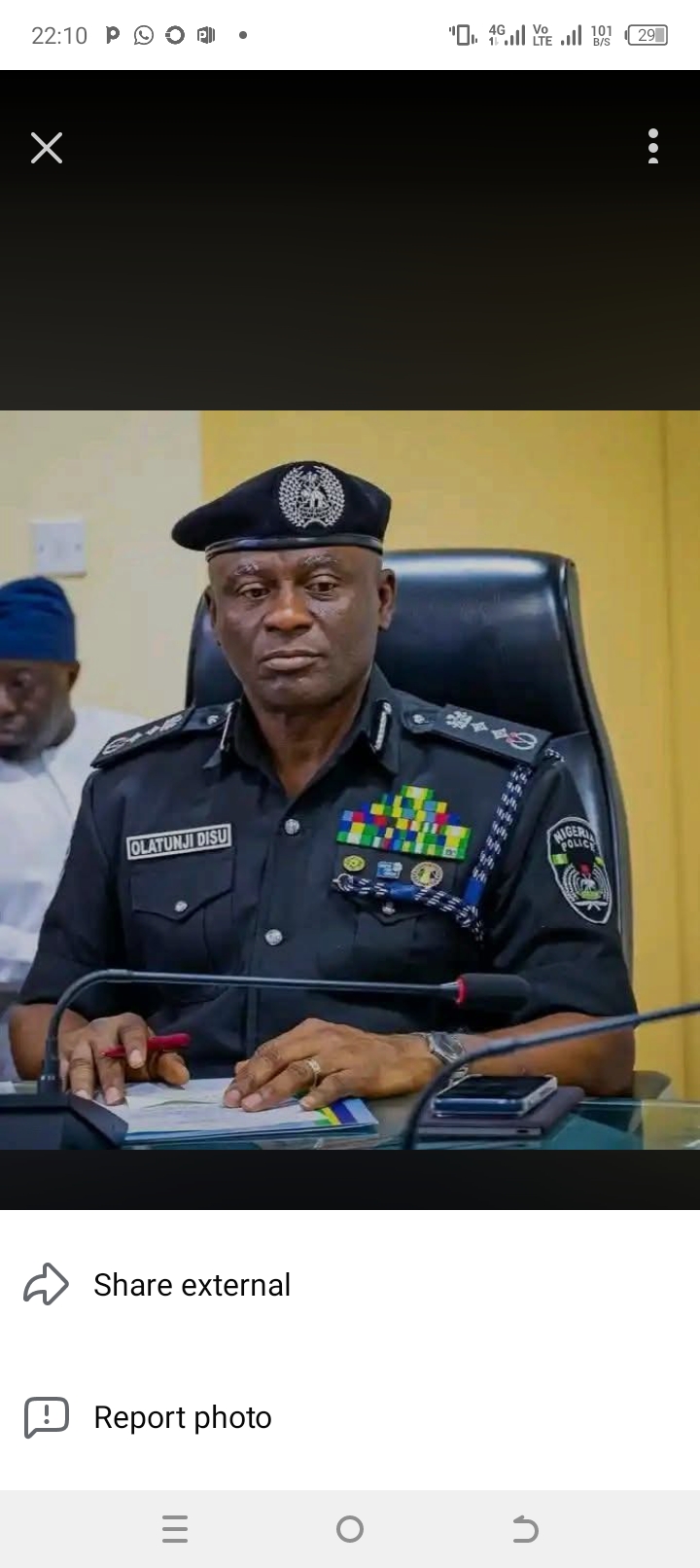
The Presidential Working Group on the National Policing Bill says 24 State Houses of Assembly have approved the Constitution (Sixth Alteration) Bill, 2026, providing for a dual policing system.
The approval meets the constitutional threshold of two-thirds of the 36 states required for the amendment to proceed.
The Working Group commended the State Houses of Assembly for their action and acknowledged the National Assembly for passing the amendment in both chambers.
This is contained in a statement issued by Femi Gbajabiamila, Chief of Staff to the president and chairman of the Working Group, on Friday in Abuja.
“In line with Section 9 of the Constitution, the amendment can now be returned to the National Assembly for transmission to Mr President for assent.”
Mr Gbajabiamila said the approval provided constitutional backing for the policing framework outlined in the Working Group’s draft National Policing Bill, 2026.
He added that the draft bills were undergoing legislative drafting, review and validation at the Federal Ministry of Justice.
The bills are expected to be returned on or before October 30, after which the Working Group will give them final consideration before presenting them to President Bola Tinubu.
The Working Group urged stakeholders to support a smooth transition to a dual policing system aimed at improving public safety.
News
ECOWAS Court Faults Process Backed by Council of Ministers in Darma Removal Case
The ECOWAS Community Court of Justice has ruled that the removal and replacement of former ECOWAS Commissioner for Internal Services, Prof. Nazifi Abdullahi Darma, were unlawful, overturning a process that culminated in his replacement being formalised by the Council of Ministers.
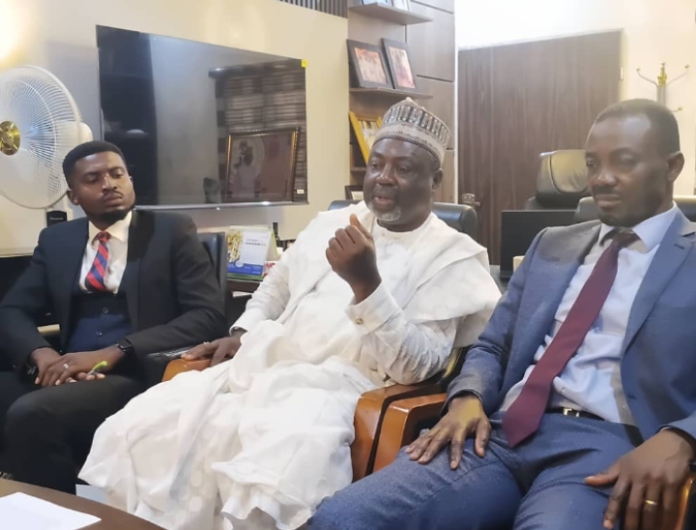
Darma disclosed the outcome while briefing journalists in Abuja on the Court’s recent judgment.
He said the dispute arose after a memorandum dated 30 October 2025 by the then President of the ECOWAS Commission, Dr. Omar Alieu Touray withdrew responsibilities previously exercised by Darma and initiated steps that eventually led to his replacement.
While Darma challenged the actions before the ECOWAS Court on 3 November 2025, the Federal Republic of Nigeria subsequently recalled him and nominated a successor.
The Council of Ministers later formalised the replacement.
However, the Court found that the legal requirements for ending his mandate had not been satisfied.
According to Darma, the Court held that the memorandum triggering the process was based on adverse allegations that affected his responsibilities and was issued without giving him an effective opportunity to respond.
“The Court found that these actions were taken without prior notice or an effective opportunity for me to respond,” he said.
The Court further ruled that managerial powers vested in the President of the Commission could not be used to extinguish or transfer responsibilities assigned by Community law to another statutory office.
Darma said the Court also rejected the argument that Nigeria’s recall automatically ended his tenure as Commissioner.
“Once appointed, a Commissioner derives his mandate from Community law and not from the nominating Member State,” he quoted the Court as holding.
The Court consequently declared that his removal and replacement were unlawful, notwithstanding the subsequent actions taken to formalise the change in office.
The judgment ordered the payment of outstanding salaries, allowances and accrued entitlements up to the expiration of his tenure and awarded him US$50,000 in general damages.
Because his tenure expired on 31 August 2026, the Court did not order reinstatement.
Describing the ruling as significant for regional governance, Darma said it reaffirmed that ECOWAS statutory office holders can only be removed through procedures recognised by Community law.

Hamma Urges Political Candidates to Prioritise Unity, Ideology Over Personal Interests

Open The Social Sciences “A Tribute to a Heterodox Scholar: Mallam Ibrahim Muazzam

State Police: 24 State Assemblies Approve Constitutional Amendment–Presidency

ECOWAS Court Faults Process Backed by Council of Ministers in Darma Removal Case

Dangote Cement Gboko Commits Millions in Scholarship Scheme

PCACC Arrests Man Over Alleged ₦4.5m Sale, Illegal Leasing of Kano Government Horse Stable

Kano Monitors ₦48.9bn Projects Across Six LGAs

Goje’s Electoral War:The Confrontation With Tinubu,Governor Inuwa,Usman Kumo And APC candidates Ahead Of 2027

Kano Spends ₦10.36bn on Hospitality, Sitting Allowances, Others in Six Months

Senate Passes Barau’s Bill to Provide Legal Framework for Yusuf Maitama Sule Federal University of Education, Kano
Hamma Urges Political Candidates to Prioritise Unity, Ideology Over Personal Interests
Open The Social Sciences “A Tribute to a Heterodox Scholar: Mallam Ibrahim Muazzam
State Police: 24 State Assemblies Approve Constitutional Amendment–Presidency
ECOWAS Court Faults Process Backed by Council of Ministers in Darma Removal Case
Dangote Cement Gboko Commits Millions in Scholarship Scheme
PCACC Arrests Man Over Alleged ₦4.5m Sale, Illegal Leasing of Kano Government Horse Stable
Kano Monitors ₦48.9bn Projects Across Six LGAs
Goje’s Electoral War:The Confrontation With Tinubu,Governor Inuwa,Usman Kumo And APC candidates Ahead Of 2027
Kano Spends ₦10.36bn on Hospitality, Sitting Allowances, Others in Six Months
Senate Passes Barau’s Bill to Provide Legal Framework for Yusuf Maitama Sule Federal University of Education, Kano
-

 Opinion5 years ago
On The Kano Flyovers And Public Perception
-

 Features5 years ago
How I Became A Multimillionaire In Nigeria – Hadiza Gabon
-

 Opinion6 years ago
Kano As future Headquarters Of Poverty In Nigeria
-

 History6 years ago
Sheikh Adam Abdullahi Al-Ilory (1917-1992):Nigeria’s Islamic Scholar Who Wrote Over 100 Books And Journals
-

 Opinion5 years ago
My First Encounter with Nasiru Gawuna, the Humble Deputy Governor
-

 History5 years ago
The History Of Borno State Governor Professor Babagana Umara Zulum
-

 History6 years ago
The Origin Of “Mammy Market” In Army Barracks (Mammy Ochefu)
-

 News5 years ago
Federal University Of Technology Babura To Commence Academic Activities September