
News
Kano State Approves Over ₦600 Million for Settlement of Electricity Bills,Other Projects
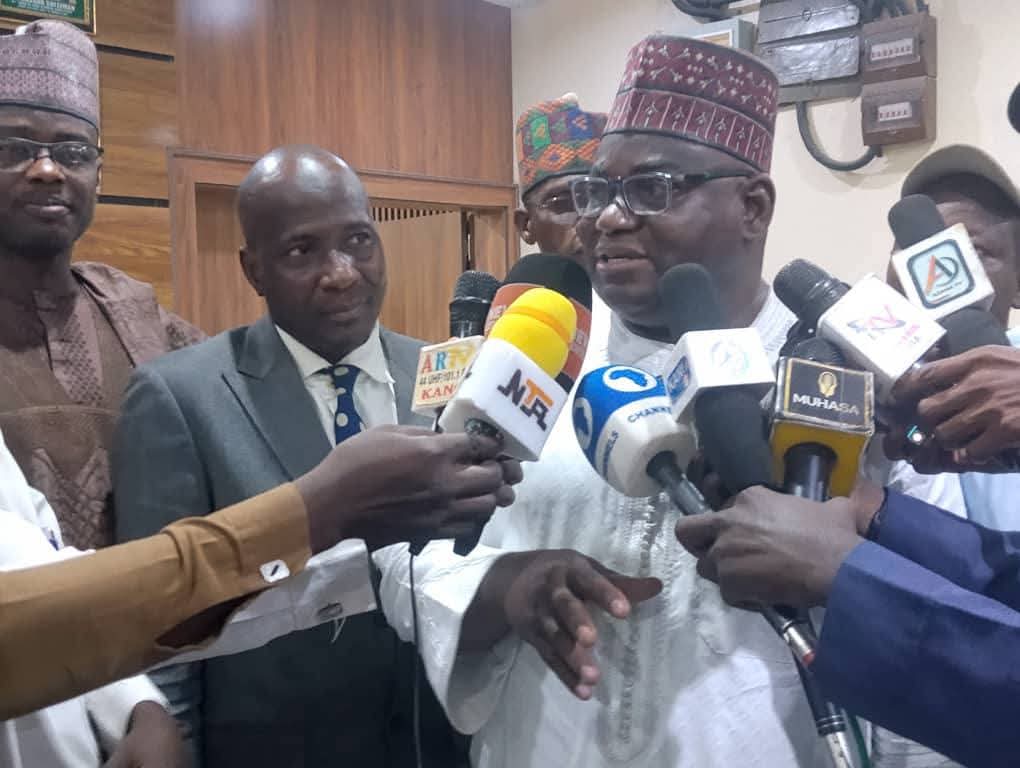
Kano State Government has approved the sum of ₦608,394,370.49 for the settlement of electricity bills owed to the Kano Electricity Distribution Company (KEDCO) for five major water treatment plants covering November and December 2025.
This was disclosed by the State Commissioner for Information, Comrade Ibrahim Abdullahi Waiya, while briefing journalists on the outcome of the 38th Executive Council meeting presided over by Governor Abba Kabir Yusuf at the Government House.
Waiya explained that the council’s decision was part of broader commitments to improve infrastructure, strengthen public services, and enhance socio-economic development across the state. According to him, “After exhaustive discussions, the Council approved several projects and commitments aimed at improving infrastructure, strengthening public services, empowering citizens and enhancing socio-economic development across Kano State.” He noted that the total approvals amounted to ₦310,266,203,046, cutting across key sectors of governance.
In the education sector, Waiya revealed that the council approved ₦238,020,000 for the purchase of UTME (JAMB) forms to be distributed to eligible candidates across the state. He added that ₦1.54 billion was also approved for the settlement of funds to boarding school suppliers to cover a six-week feeding period. “The Council also approved ₦236,198,174.08 for the settlement of outstanding payments for eggs and chickens supplied to boarding schools across the State,” Waiya stated.
On infrastructure, the Commissioner announced that ₦13.2 billion was approved for the implementation of 2026 constituency projects across the state. He further disclosed that ₦2.9 billion was approved for the reconstruction of Race Course Extension to Audu Bako Way, Alu Avenue, and Commandant Close off Race Course Road in Nassarawa Local Government Area. “Approval was also granted for the rehabilitation and overlay of the Gidan Malam Aminu Kano–Tal’udu–Gadonkaya–Yahaya Gusau–Sharada Road at the cost of ₦1.67 billion,” he said.
Waiya also highlighted approvals in the health sector, including ₦89,710,080 for the procurement of four dialysis machines for the Abubakar Imam Urology Centre and ₦165,637,550 for dental equipment and materials. He stressed that these interventions were aimed at strengthening healthcare delivery in the state.
In the housing sector, the Commissioner announced a major approval of ₦113.19 billion for the construction of a mass housing scheme comprising 480 houses at Rijiyar Gwan-Gwan, tagged “Gida Gida Mega City.” He added that ₦1 billion was also approved for the establishment of an Emergency Operations Management Centre at the Government House.
Other notable approvals included ₦1.34 billion for the 2026 Ramadan Feeding Programme under the Ministry of Religious Affairs, ₦1.7 billion as compensation to households affected by the Transmission Company of Nigeria’s 330KVA transmission line project, and ₦210 million for the production of 10 million seedlings for the 2026 Annual Tree Planting Campaign.
Waiya concluded by emphasizing that the approvals reflect the government’s commitment to sustainable development and improved service delivery. “These approvals and policy decisions clearly demonstrate the commitment of the Kano State Government under the leadership of His Excellency to sustainable development, improved service delivery and the overall wellbeing of the people of Kano State,” he said.










News
Kano Inaugurates Intellectuals Forum To Harness Socio-economic Development-Waiya
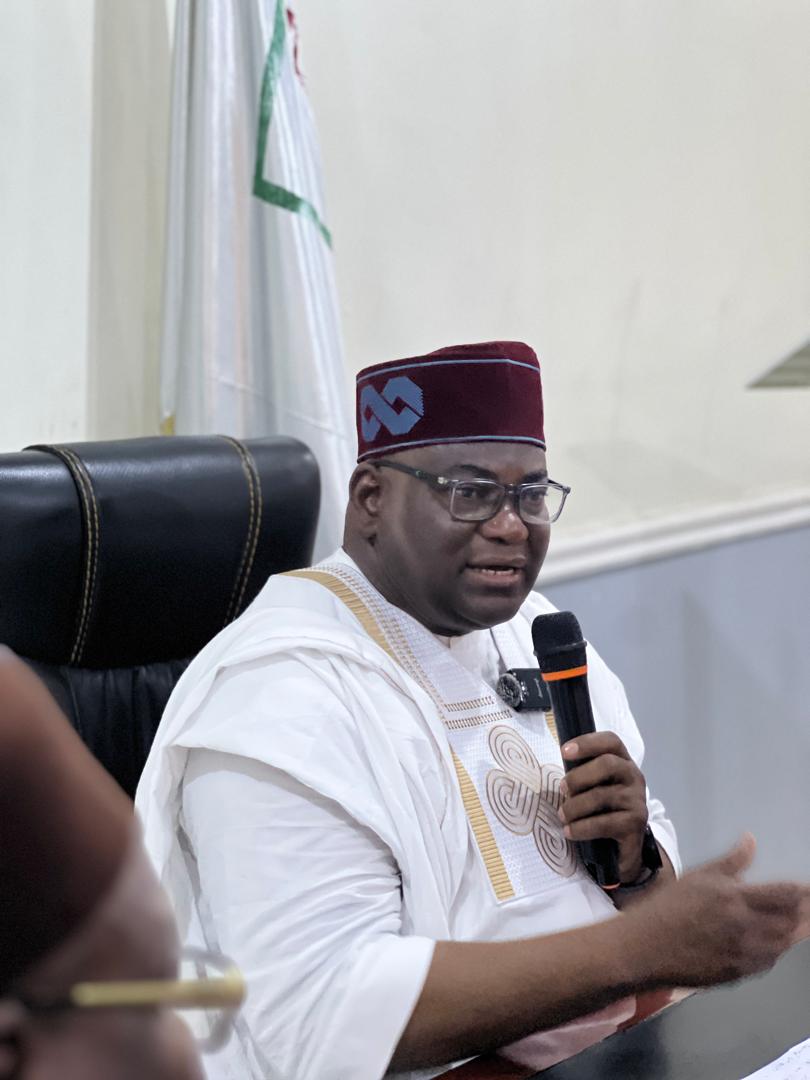
The Kano State Commissioner for Information and Internal Affairs, Comrade Ibrahim Abdullahi Waiya, PhD has inaugurated the Kano Intellectuals Forum at the Aminu Kano College of Islamic and Legal Studies, with a charge to academics and intellectuals to deploy their knowledge, research and expertise towards addressing the socioeconomic challenges confronting the people of the state.
Inaugurating the Forum, the Commissioner said the responsibility of academic institutions goes beyond the production of graduates and the issuance of academic certificates, stressing that higher institutions have a critical role to play in generating knowledge and providing practical solutions to the challenges confronting society.
Comrade Waiya noted that academic communities possess the technical knowledge, research capacity and professional expertise required to conduct evidence-based studies and develop innovative solutions to the problems affecting their host communities.
He therefore urged members of the Kano Intellectuals Forum to see their membership as an opportunity to contribute meaningfully to the development of the state by providing research-based advice, policy recommendations and technical support to government.
The Commissioner said the Forum would serve as an important platform for strengthening collaboration between the academic community and government, particularly in the areas of education, economic development, social welfare, innovation, human capital development and other sectors critical to improving the quality of life of the people.
He said the Forum has an important role to play in supporting and complementing government efforts towards improving the wellbeing of the people of Kano State.
According to him, the administration of Governor Abba Kabir Yusuf has demonstrated a commitment to placing the interests and welfare of the people at the centre of its development agenda through the Kano First Agenda, adding that the intellectual community should contribute its expertise towards achieving the objectives of the initiative.
Comrade Waiya called on members of the Forum to develop practical and implementable recommendations that could assist government in formulating policies and programmes capable of producing sustainable socioeconomic and political development.
Earlier in his welcome address, the Provost of Sa’adatu Rimi University of Education Dr. Kabiru Gwarzo, explained that the Forum was designed to ensure broad and inclusive representation of the academic community across tertiary institutions in the state.
He said each tertiary institution would have four representatives drawn from different segments of the institution, including academic and non-academic staff, students and women.
Dr. Gwarzo said the inclusive composition was intended to ensure that the Forum benefits from diverse perspectives, experiences and areas of expertise in addressing issues affecting the development of Kano State.
In his remarks, the Acting Provost of Aminu Kano College of Islamic and Legal Studies, Dr. Ali Tamasi, observed that Kano’s academic institutions are endowed with highly knowledgeable and experienced professionals who have provided consultancy services to organisations and institutions in and outside the country.
He stressed the need to create opportunities for such experts to deploy their knowledge and experience towards solving local challenges and contributing to the development of Kano State.
Dr. Tamasi said the establishment of the Forum would provide a structured platform for engaging intellectuals within the state to compliment the efforts of government in formulating policies and programmes, particularly in the Kano First agenda.
He explained that the Forum would advise and support government in areas such as education, socioeconomic development, research, policy formulation and other areas which would potentially support in improving the living standards of the people.
The Acting Provost expressed optimism that the Forum would strengthen the relationship between government and tertiary institutions and promote greater utilisation of academic research and professional expertise in addressing developmental challenges.
One critical area which the Forum will focus, is dissimination of Government achievements in the Tertiary institutions, for the people to appreciate the volume of investment in the sector
News
Court of Appeal Reserves Judgment on El-Rufai’s Bail Appeal
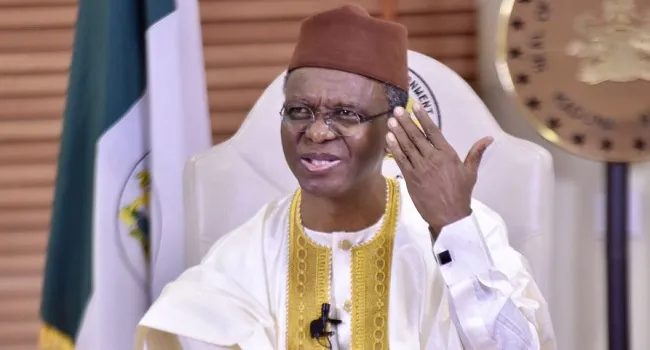
The Court of Appeal sitting in Kaduna on Monday, October 5, reserved judgment in the appeal filed by former Kaduna State Governor, Malam Nasiru Ahmad El-Rufai, challenging the ruling of the Kaduna State High Court that dismissed his bail application.
El-Rufai, who is being prosecuted by the Independent Corrupt Practices and Other Related Offences Commission (ICPC), had approached the Court of Appeal, asking it to overturn the High Court’s ruling and grant him bail.
Speaking to newsmen shortly after the proceedings, the ICPC lead counsel, Ayodeleji Adelukpe, said the former governor approached the Court of Appeal with an application challenging the ruling delivered by the trial court on his bail application.
“We oppose that because the bail application he is appealing against here, which is the ruling on the application, is the second one. They actually filed three before the trial judge.
“The first one was dismissed. They brought another one without showing any exceptional ground, so it was dismissed too. However, without relenting, they proceeded with another application, making it the third, which was also dismissed.
“Upon dismissal of the third application, El-Rufai decided to appeal the second application, which was the second ruling that led to this current appeal. That is why we are challenging the appeal.
“We are challenging the appeal because the trial judge who dismissed those applications was right. They failed to show any exceptional ground for why the second application should be granted.
“Despite this, they did not in any way inform the Honourable Court that they had filed the third application, which was also dismissed.
“In summary, our argument is that the appeal is unmeritorious,” he said.
However, lead counsel to the appellant, Paul Erokoro, SAN, expressed confidence that the Court of Appeal would grant their request and overturn the High Court’s decision on the bail application.
Erokoro described El-Rufai’s arrest and the legal battles surrounding him as politically motivated, arguing that the former governor did not commit treason or kill anyone and that the offences he is charged with are bailable.
“El-Rufai is a public figure who cannot run; he was a former governor and a former minister and is an elder statesman.
“Bail is a constitutional right. Except in capital offences, a defendant who is not on bail finds it very difficult to prepare his case.
“El-Rufai, held in ICPC custody by the agency prosecuting him, will find it difficult to access his lawyers and witnesses because he cannot be sure his communication with them is confidential.
“But with this appeal, we hope the court will take a different view and honour the bail application,” he said.
News
Rep. Abubakar Kabir Bichi Welcomes 21 Foreign Scholarship Beneficiaries, Flags Off Second Batch of 38 Students
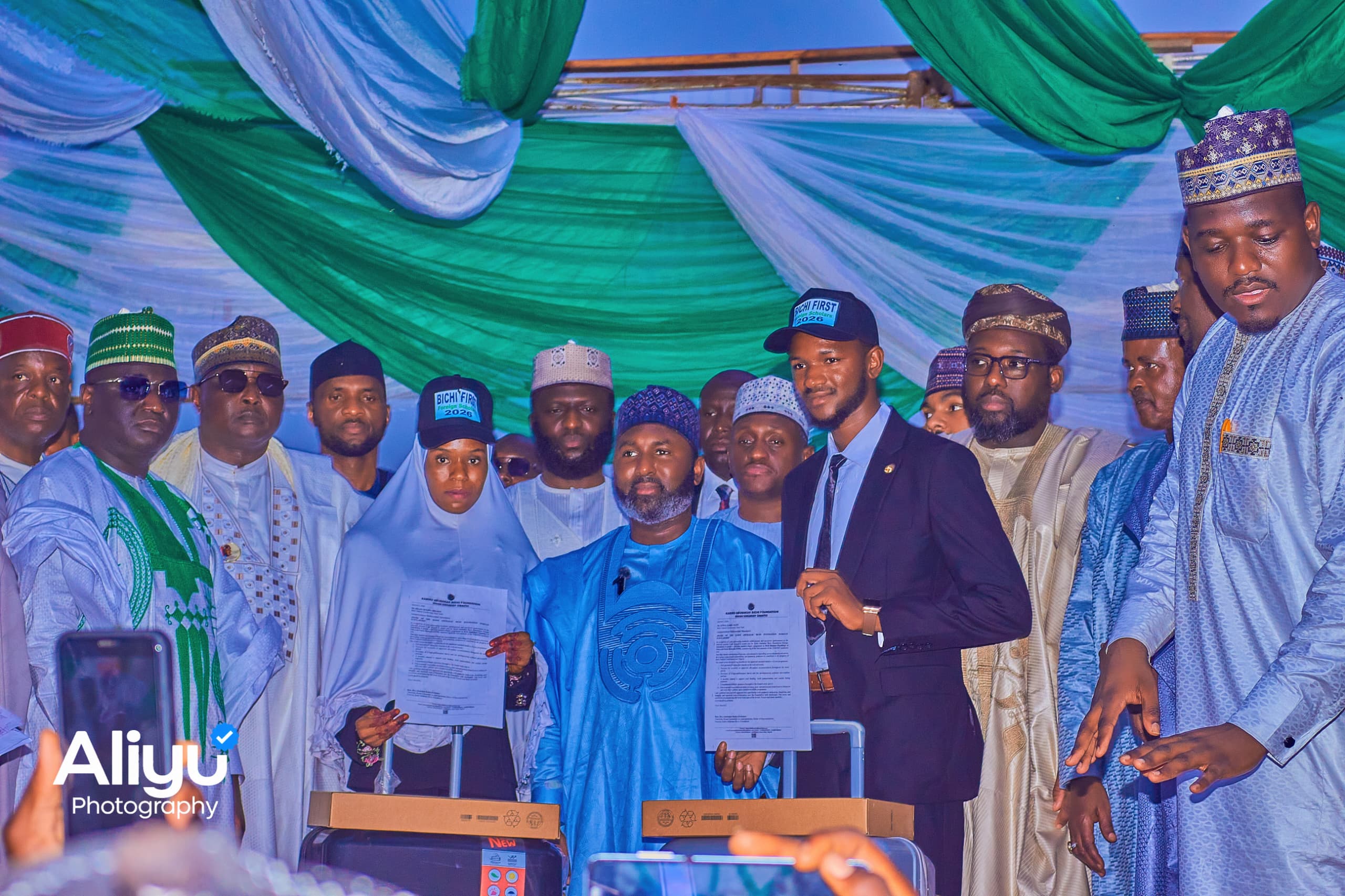
Rep. Abubakar Kabir Bichi Welcomes 21 Foreign Scholarship Beneficiaries, Flags Off Second Batch of 38 Students
Hon. Abubakar Kabir Abubakar, member representing Bichi Federal Constituency and Chairman of the House Committee on Appropriation, has welcomed 21 beneficiaries of his foreign scholarship programme who recently returned after completing their Master’s degree programmes abroad.
He also flagged off the second batch of the programme, comprising 38 new beneficiaries who are set to travel abroad to pursue Master’s degree programmes.
The event, which took place on Monday, 5 October 2026, at the Hagagawa Mini Stadium, Bichi, Kano State, featured a welcoming ceremony for the returning scholars, as well as the flag-off and presentation of awards to the second batch of beneficiaries.
The returning beneficiaries studied various science and technology-related courses, including Cybersecurity, Software Engineering and Information Technology. Six of the beneficiaries have also secured employment with the Federal Government and are expected to commence work at any time this week.
The event was attended by members of the National Assembly, stakeholders, community leaders, representatives of dignitaries, beneficiaries and their families, as well as other invited guests.
Addressing the returning beneficiaries, Abubakar Kabir said the initiative was part of his efforts to address some of the challenges confronting the education sector and contribute to the development of human capital.
“If you remember, one and a half years ago, we gathered here to see you off as you departed for Malaysia to pursue your Master’s degree. Alhamdulillah, today we are here again to welcome you back after successfully completing your Master’s degree.”
“I was impressed by your dedication. As we can see today, you have all become high flyers in your different fields after graduation.
“This initiative is part of my efforts to address existing educational gaps and fast-track our country’s development. Globally, human capital is the number one asset, and it is against this backdrop that we have taken this step,” he said.
Speaking to the new beneficiaries, Abubakar Kabir urged them to remain good ambassadors of Nigeria while abroad. He charged them to remain focused on their studies, achieve outstanding academic results and make the country proud.
He noted that all necessary arrangements had been made to provide the beneficiaries with a conducive learning environment.
“In this regard, I feel that the best action is to support what President Bola Ahmed Tinubu and Governor Abba Kabir Yusuf are doing by providing access to education for less privileged youths,” Abubakar Kabir added.
Earlier, the Secretary of the Foreign Scholarship Committee, Dr. Ado Abdu Bichi, said the beneficiaries were selected strictly on merit after undergoing a comprehensive screening process.
He commended the initiative of Abubakar Kabir Abubakar, saying the scholarship programme would contribute significantly to producing more highly educated young people in Bichi Federal Constituency.
Also speaking at the event, Hon. Alhassan Ado-Doguwa, member representing Doguwa/Tudun Wada Federal Constituency in the House of Representatives, commended Abubakar Kabir for his commitment to empowering young people through education.
“I have spent almost over 30 years in the House of Representatives, and I have never seen a member like Abubakar Kabir Abubakar. His participation and commitment are not only in Bichi, Lagos or Enugu; they extend across Nigeria,” Ado-Doguwa said.
The event brought together lawmakers from across the country, stakeholders, representatives of dignitaries, beneficiaries and their families, community leaders and other invited guests to mark another significant phase in the foreign scholarship programme.

Kano Inaugurates Intellectuals Forum To Harness Socio-economic Development-Waiya

Court of Appeal Reserves Judgment on El-Rufai’s Bail Appeal

Rep. Abubakar Kabir Bichi Welcomes 21 Foreign Scholarship Beneficiaries, Flags Off Second Batch of 38 Students

International Arabic Conference Calls for AI Integration

World Teachers’ Day: NUT Urges Kano Govt to Declare October 5 Public Holiday, Advocates Special Salary Scale

Zamfara Varsity ASUU Threatens Warning Strike Over FG-ASUU Agreement, Promotion Arrears

Kano Chemists Threaten Warning Strike Over Alleged PCN Pressure

Per Ishaq Samaila: “Waziri” for Strategy. “Mai Jama’a” for Service. One Man. One Mission. Ibrahim Kabir Masari

Goje’s Electoral War:The Confrontation With Tinubu,Governor Inuwa,Usman Kumo And APC candidates Ahead Of 2027

PCACC Arrests Man Over Alleged ₦4.5m Sale, Illegal Leasing of Kano Government Horse Stable
Kano Inaugurates Intellectuals Forum To Harness Socio-economic Development-Waiya
Court of Appeal Reserves Judgment on El-Rufai’s Bail Appeal
Rep. Abubakar Kabir Bichi Welcomes 21 Foreign Scholarship Beneficiaries, Flags Off Second Batch of 38 Students
International Arabic Conference Calls for AI Integration
World Teachers’ Day: NUT Urges Kano Govt to Declare October 5 Public Holiday, Advocates Special Salary Scale
Zamfara Varsity ASUU Threatens Warning Strike Over FG-ASUU Agreement, Promotion Arrears
Kano Chemists Threaten Warning Strike Over Alleged PCN Pressure
Per Ishaq Samaila: “Waziri” for Strategy. “Mai Jama’a” for Service. One Man. One Mission. Ibrahim Kabir Masari
Goje’s Electoral War:The Confrontation With Tinubu,Governor Inuwa,Usman Kumo And APC candidates Ahead Of 2027
PCACC Arrests Man Over Alleged ₦4.5m Sale, Illegal Leasing of Kano Government Horse Stable
-

 Opinion5 years ago
On The Kano Flyovers And Public Perception
-

 Features5 years ago
How I Became A Multimillionaire In Nigeria – Hadiza Gabon
-

 Opinion6 years ago
Kano As future Headquarters Of Poverty In Nigeria
-

 History5 years ago
Sheikh Adam Abdullahi Al-Ilory (1917-1992):Nigeria’s Islamic Scholar Who Wrote Over 100 Books And Journals
-

 Opinion5 years ago
My First Encounter with Nasiru Gawuna, the Humble Deputy Governor
-

 History5 years ago
The History Of Borno State Governor Professor Babagana Umara Zulum
-

 History6 years ago
The Origin Of “Mammy Market” In Army Barracks (Mammy Ochefu)
-

 News5 years ago
Federal University Of Technology Babura To Commence Academic Activities September