
News
Kebbi Governor Pays Hadaya for State Pilgrims in Saudi Arabia
By Lamara Garba
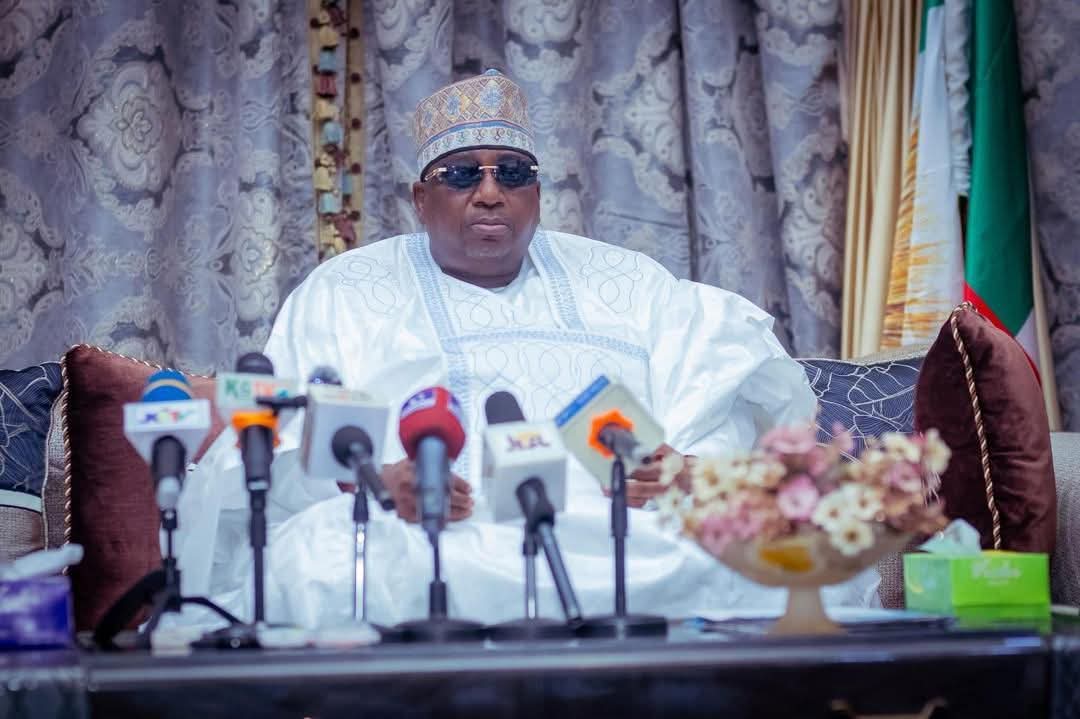
The Governor of Kebbi State, Nasir Idris, has approved a comprehensive welfare package for over 4,000 pilgrims from the state currently performing the 2026 Hajj pilgrimage in the Kingdom of Saudi Arabia.
The State Amirul Hajj, Alhaji Ahmad Ja’afaru Jega, disclosed this while addressing journalists in Makkah, saying Governor Nasir Idris Kauran Gwandu had fully paid for the pilgrims’ Hadaya sacrifice as part of the welfare package provided for the state contingents.
According to him, the governor paid 720 Saudi Riyals for the Hadaya of each pilgrim, an amount equivalent to about 200 US dollars, in order to ensure that all pilgrims perform the important rite without financial difficulty.
Alhaji Ahmad Ja’afaru Jega further revealed that the Kebbi State Government also provided an additional 350 Saudi Riyals to each pilgrim to ease their stay in Makkah and assist them in meeting some personal expenses during the pilgrimage.
He added that the state government equally distributed free Ihram materials to male pilgrims and Hijabs to female pilgrims as part of efforts to ensure comfort and adequate preparation for the Hajj rites.
According to the Amirul Hajj, the gesture by Governor Nasir Idris was aimed at easing the burden on pilgrims and ensuring that they perform their religious obligations with comfort, dignity and peace of mind throughout their stay in the Holy Land.
He explained that the payment of the Hadaya and other incentives formed part of several welfare initiatives introduced by the Kebbi State Government for this year’s Hajj operations, noting that the administration had demonstrated strong commitment towards the wellbeing of the pilgrims from the commencement of the exercise.
Alhaji Ahmad Ja’afaru Jega further revealed that the state government secured decent accommodation for the pilgrims at locations very close to the Grand Mosque in Makkah, thereby enabling them to conveniently participate in the five daily congregational prayers at the Holy Ka’abah Mosque.
“Because of the proximity of our hotels to the Grand Mosque, our pilgrims have been attending prayers at the Ka’abah regularly without stress. This is a great spiritual privilege for them,” he stated.
The Amirul Hajj observed that the welfare support introduced by the governor had significantly reduced the challenges usually encountered by pilgrims during Hajj operations.
He commended Governor Nasir Idris for what he described as a rare demonstration of leadership, compassion and commitment to the welfare and safety of Kebbi pilgrims in the Holy Land.
Alhaji Ja’afaru Jega also praised the conduct of the state contingents, saying the pilgrims had exhibited high levels of discipline, patriotism and orderliness since their arrival in Saudi Arabia.
“Despite being one of the states with the largest contingents from Nigeria, Kebbi pilgrims have remained peaceful, disciplined and orderly in all places of worship and public gatherings. This is a good omen not only for Kebbi State but for Nigeria as a whole,” he said.
The Amirul Hajj added that officials of the Kebbi State Pilgrims Welfare Board and other support teams had continued to work tirelessly to ensure the comfort, safety and successful completion of Hajj rites by the pilgrims.
He urged the pilgrims to continue praying for lasting peace, unity and development in Kebbi State and Nigeria, while also encouraging them to obey Saudi regulations and maintain the good image of the country throughout their stay in the Holy Land.
Many of the pilgrims who spoke on the development expressed appreciation to the Kebbi State Government for the unprecedented support and welfare packages provided to them, describing the 2026 Hajj exercise as one of the most organised and pilgrim-friendly operations in recent times.
They offered prayers for Governor Nasir Idris, asking Allah to reward him abundantly for prioritising the welfare of the pilgrims and for demonstrating genuine concern for their spiritual and social wellbeing.









News
Report: Nigeria Records N166trn Public Debt
By Yusuf Danjuma Yunusa
The Debt Management Office (DMO) says Nigeria’s total public debt rose to N166.79 trillion as of June 30, 2026.
The DMO published the latest public debt portfolio report on Friday.
The figure represents a 9.4 percent or N14.39 trillion increase from the N152.4 trillion recorded at the end of June 2025.
It also represents an increase of N7.44 trillion or 4.7 percent compared with the N159.35 trillion recorded at the end of the first quarter (Q1) of 2026.
According to the latest report, the debt stock comprises N91.59 trillion in domestic debt, which accounts for 54.91 percent of the total debt stock, and N75.2 trillion in external debt, representing 45.09 percent.
The debt office said domestic debt increased by N11.04 trillion (13.7 percent) from N80.55 trillion recorded in June 2025.
The office said external debt also rose by N3.35 trillion (4.7 percent) from N71.85 trillion in the same period.
According to the DMO, the federal government accounted for N152.77 trillion of the total debt stock, comprising N86.99 trillion in domestic debt and N65.77 trillion in external debt.
On the other hand, states and the Federal Capital Territory (FCT) accounted for the remaining N14.01 trillion — N4.59 trillion in domestic debt and N9.42 trillion in external debt.
In dollar terms, the agency said Nigeria’s total public debt stood at $120.93 billion as of June 30, 2026 — up from $99.66 billion recorded in June 2025.
The DMO said the Central Bank of Nigeria (CBN) official exchange rate of N1,379 per dollar as of June 30 was used to convert the external debt to naira.
News
NNPC Ltd Welcomes $800m Ima Gas Final Investment Decision
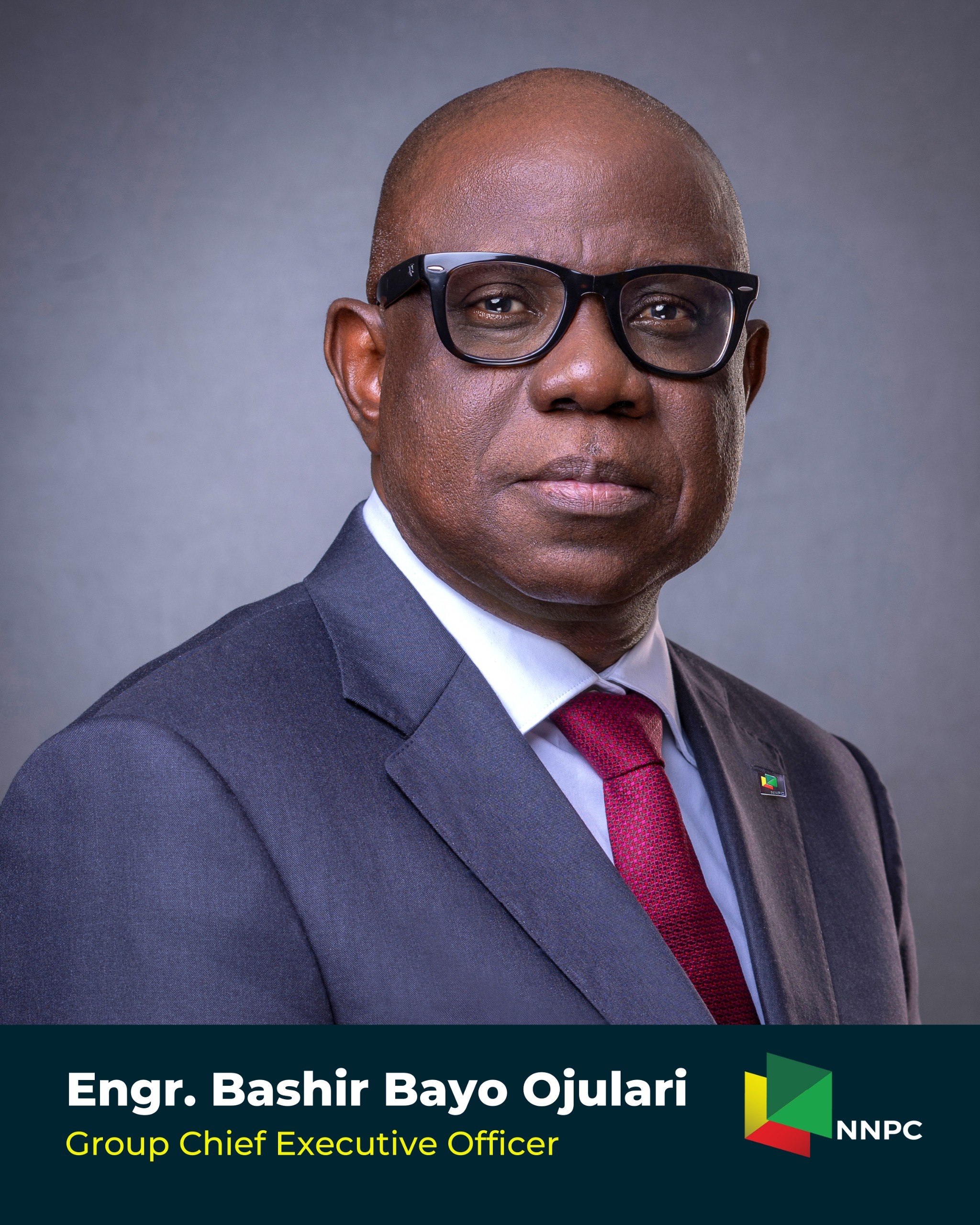
The Nigerian National Petroleum Company Limited (NNPC Ltd) has welcomed the $800 million Final Investment Decision (FID) on the Ima Gas Project, describing it as a landmark development that affirms the growing viability of Nigeria’s upstream gas sector.
The project, located offshore in OMLs 112 and 117 and developed by AMNI International in partnership with TotalEnergies, will produce about 300 million standard cubic feet of gas per day at peak. The output will supply critical feedgas to Nigeria LNG Limited in support of its Train 7 expansion, which will increase capacity at the Bonny Island plant from 22 million tons per annum to 30 Mtpa.
The FID was enabled by the Presidential Directives of 2024, which provided fiscal incentives for non-associated gas, streamlined contracting and lowered development costs. Ima is the fourth major gas project to reach FID under President Bola Ahmed Tinubu, after Iseni, Ubeta and HI.
Group Chief Executive Officer, NNPC Ltd., Engr. Bashir Bayo Ojulari described it as “a decisive vote of confidence in Nigeria’s gas sector and in the bold reforms” that have created competitive terms and a predictable investment environment.
NNPC Ltd. also commends the collaboration between AMNI, TotalEnergies and the Nigerian financial sector, saying the model of indigenous operator, international partner and domestic capital is a template for future developments.
In a statement signed by Andy Odeh Chief corporate communications officer of NNPC Ltd. reaffirms its commitment to work with government, regulators and industry partners to sustain investment momentum and deploy Nigeria’s gas resources for industrialisation, job creation and long-term prosperity.
News
At MAN AGM In Kano, Manufacturers Throng Dangote Pavilion Over ‘Peoples IPO’
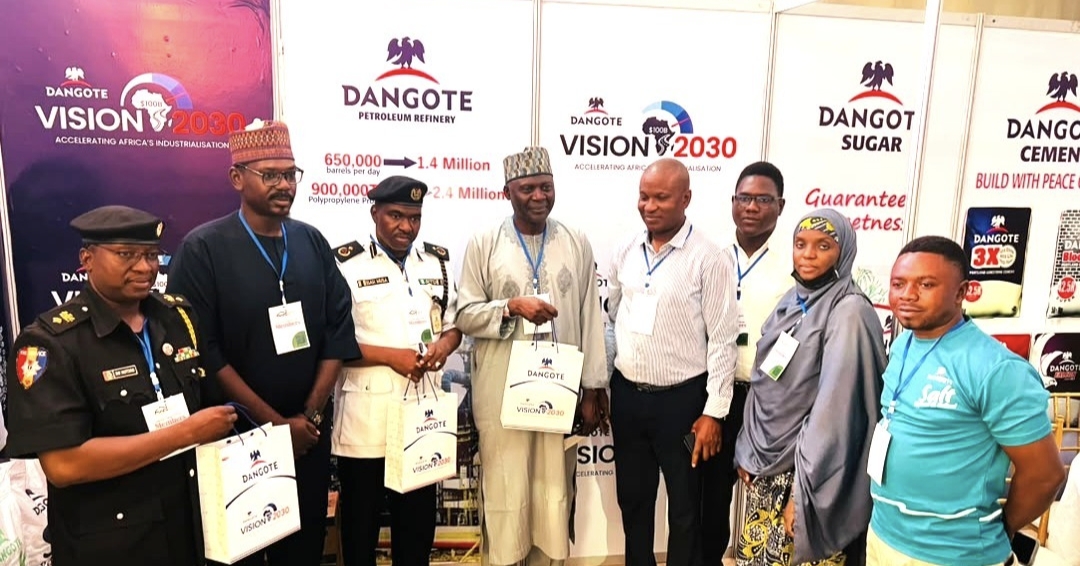
Manufacturers under the aegis of the Manufacturers Association of Nigeria (MAN) thronged the Dangote Group’s pavilion at the exhibition to seek information and clarification on the ongoing Public Initial Public Offering (IPO) of the Dangote Petroleum Refinery and Petrochemicals (DPRP).
The three-day Annual General Meeting (AGM) of the Kano-Jigawa Branch of the Manufacturers Association of Nigeria (MAN), the 54th in the series, ended on Thursday, with the Dangote Group’s representative hosting participants and engaging manufacturers who expressed keen interest in the ongoing Initial Public Offering (IPO) of the Dangote Refinery.
The Dangote Refinery Peoples’ IPO offers Nigerians and other eligible investors an opportunity to buy shares in the Dangote Petroleum Refinery and Petrochemicals, thereby becoming part-owners of one of Africa’s largest industrial projects and participating in its future growth.
The Dangote Refinery IPO runs from 14 September to 13 October 2026.
Dangote Industries Limited is one of the sponsors of the 54th MAN AGM.
Earlier, in his opening remarks, the Chairman of the Manufacturers Association of Nigeria (MAN), Sharada/Challawa Branch, Alhaji Nura S. Madugu, highlighted the mounting burden of multiple taxes, levies and charges on manufacturers, warning that the situation is increasing the cost of doing business and undermining the competitiveness of local industries.
Madugu urged the Kano State and Federal Governments to ease the tax burden on manufacturers and accelerate efforts to harmonise taxes and levies imposed on businesses.
He particularly decried the practice of double and multiple taxation, which he said continued to place additional financial pressure on manufacturers already grappling with high energy costs, inadequate infrastructure, expensive financing, insecurity, foreign exchange challenges and unfair competition from imported goods.
“We are especially concerned about instances of double and even multiple taxation, where the three tiers of government impose what is essentially the same levy under different names and different guises. This practice places our products at a serious disadvantage in their constant competition with imported goods, a disadvantage made worse by the high cost of alternative power supply and the volatility of the foreign exchange rate.
Madugu reminded the meeting of MAN’s enormous contribution to the society and provide employment to thousands of Nigerians, as well as participating actively in tax revenue generation for the country.
“We provide employment to thousands of Nigerians. We participate actively in tax revenue generation for the states and the federation through the deduction of Value Added Tax on our products, the remittance of Pay-As-You-Earn on behalf of our staff, and the payment of Withholding Tax, Education Tax, Tertiary Education Tax, Company Income Tax, and a whole host of other levies too numerous to mention individually. Beyond taxation, we also discharge our Corporate Social Responsibility diligently to the communities in which we operate.
“Even though what we receive in return remains modest, we continue, in strength and in good faith, to serve this nation and to hold up its economy. We do this because we believe in Nigeria and in Kano State. But it must be said plainly,” Madugu added.
In his remarks also, MAN Chairman, Bompai/Jigawa Branch, Mohammed Bello I. Umar, appreciated the association’s members for their resilience, commitment and continued investment in the Nigerian economy despite the difficult operating environment.
He pointed out that the meeting provides the members of the association with an opportunity to reflect on its activities, review the challenges confronting their businesses, acknowledge the progress they have made, and chart a stronger course for the future of manufacturing in the country.
However, he said, the members must acknowledge that manufacturing remains under serious pressure.
He highlighted that the high cost of energy, multiple taxes and levies, inadequate infrastructure, high financing costs, insecurity, foreign exchange challenges and unfair competition from imported goods continue to affect our competitiveness.
“One issue that requires our collective attention is the importation of contraband and substandard goods. These products undermine local manufacturers who invest heavily
“Reliable and affordable electricity remains one of the most important requirements for industrial development.
He however welcomed the ongoing electricity reforms and efforts by the Kano State Government and the State House of Assembly towards establishing a more effective electricity framework for the State.
He called for the swift implementation of reforms that will create a more reliable, competitive and affordable electricity market for industries.
He noted that manufacturers continue to provide employment, generate wealth, support local communities and contribute significantly to government revenue in production, employ Nigerians and comply with government regulations.
“We must therefore stand together and call for stronger enforcement at our borders and markets.
He urged the relevant government agencies to intensify the fight against smuggling, counterfeiting and the importation of goods that compete unfairly with locally

Report: Nigeria Records N166trn Public Debt

NNPC Ltd Welcomes $800m Ima Gas Final Investment Decision

At MAN AGM In Kano, Manufacturers Throng Dangote Pavilion Over ‘Peoples IPO’

NLC President Ajaero: It Is Wrong to Negotiate Minimum Wage Without Minimum Pension

Prof Yusuf Adamu Delivers BUK’s 63rd Professorial Inaugural Lecture, Reflects on Medical Geography and Academic Legacy

Zamfara Varsity ASUU Threatens Warning Strike Over FG-ASUU Agreement, Promotion Arrears

Bello Sharada: A Great Writer, A Bookish Soul, Gone Too Soon

Kano Chemists Threaten Warning Strike Over Alleged PCN Pressure

Per Ishaq Samaila: “Waziri” for Strategy. “Mai Jama’a” for Service. One Man. One Mission. Ibrahim Kabir Masari

Court Ultimatum Forces FBI to Hand Over Tinubu’s Fraud Records to Judge—But Keeps Them Hidden from Public
Report: Nigeria Records N166trn Public Debt
NNPC Ltd Welcomes $800m Ima Gas Final Investment Decision
At MAN AGM In Kano, Manufacturers Throng Dangote Pavilion Over ‘Peoples IPO’
NLC President Ajaero: It Is Wrong to Negotiate Minimum Wage Without Minimum Pension
Prof Yusuf Adamu Delivers BUK’s 63rd Professorial Inaugural Lecture, Reflects on Medical Geography and Academic Legacy
Zamfara Varsity ASUU Threatens Warning Strike Over FG-ASUU Agreement, Promotion Arrears
Bello Sharada: A Great Writer, A Bookish Soul, Gone Too Soon
Kano Chemists Threaten Warning Strike Over Alleged PCN Pressure
Per Ishaq Samaila: “Waziri” for Strategy. “Mai Jama’a” for Service. One Man. One Mission. Ibrahim Kabir Masari
Court Ultimatum Forces FBI to Hand Over Tinubu’s Fraud Records to Judge—But Keeps Them Hidden from Public
-

 Opinion5 years ago
On The Kano Flyovers And Public Perception
-

 Features5 years ago
How I Became A Multimillionaire In Nigeria – Hadiza Gabon
-

 Opinion6 years ago
Kano As future Headquarters Of Poverty In Nigeria
-

 History5 years ago
Sheikh Adam Abdullahi Al-Ilory (1917-1992):Nigeria’s Islamic Scholar Who Wrote Over 100 Books And Journals
-

 Opinion5 years ago
My First Encounter with Nasiru Gawuna, the Humble Deputy Governor
-

 History5 years ago
The History Of Borno State Governor Professor Babagana Umara Zulum
-

 History6 years ago
The Origin Of “Mammy Market” In Army Barracks (Mammy Ochefu)
-

 News4 years ago
Federal University Of Technology Babura To Commence Academic Activities September