
Opinion
How DSP Barau Rescues North West Development Summit
By Abba Anwar
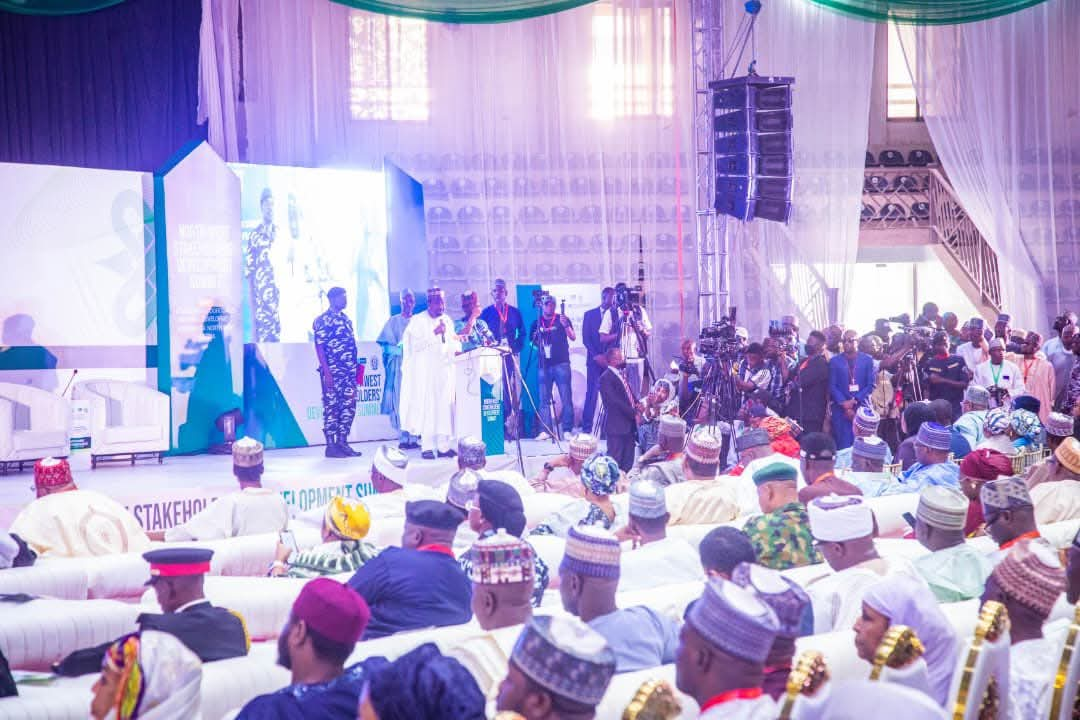
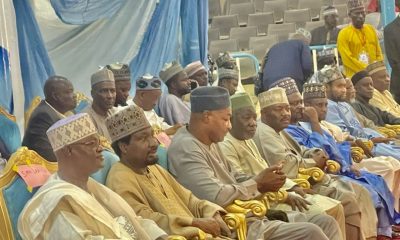
The patriotic posture and genuine love for regional development from the side of the Deputy Senate President, Distinguished Senator Barau I Jibrin, CFR, saved face for the just concluded and One-Day North West Stakeholders’ Development Summit, that took place at Umaru Musa Yar’Adua Conference Centre, Murtala Mohammed Square, Kaduna.
With the theme “Advancing A Coordinated Regional Development Agenda For North-West Nigeria.” To see the visible hands of the DSP in a more glaring way, the Summit was organized by the Senate and House Committees’ on North-West Development Commission, in good collaboration with North-West Governors’ Forum and North-West Development Commission.
The shabby representation of political leaders, especially at the state levels, was too defeating and undermining of the original objective of the Summit. But when the Deputy Senate President, arrived, the Summit was injected with life and survival strategy.
To understand how important, is the region in the sight of the DSP, he had an occasion to attend, as a representative of the Senate President, His Excellency Godswill Akpabio, almost the same time with that of the Summit’s.
He was billed to represent Akpabio at a grand event to receive the Governor of Taraba state, Agbu Kefas, in Jalingo, the state capital. But DSP ATTENDED THE SUMMIT IN KADUNA, BEFORE PROCEEDING TO JALINGO. That was a show of concern and love for the region. Bravo DSP! Bravo!!
The Kaduna Summit, was meant to create corridor for a high level platform for working hand in hand among federal, states actors, development partners and other meaningful stakeholders. To also strengthen regional coordination between the National Assembly, state governments, North West Development Commission and other Ministries, Departments and Agencies across the region, for meaningful regional development.
One can see how Distinguished Senator is running helter-skelter to create synergy between the National Assembly and the regional Commission. Out of the zeal to see to the growth and development of the region.
At the Summit, DSP was the highest elected official from the zone, who attended and injected enthusiasm to all who were at the hall. Including an elder statesman, Dr Hakeem Baba Ahmed, who complained bitterly about the absence of all the seven governors from the zone, North West.
Without fear of mincing words, I can add that, part of the reasons why the Deputy Senate President found it specifically important to bless the occasion, was his clear understanding of the Summit’s object that, there is a need to promote integrated and cross sectoral approaches to address key challenges facing the region.
While at the same time, believing that, the idea of encouraging private sector participation and supporting development partners engagement in financing and delivering sustainable development projects, is key in today’s Nigeria, he squeezed his schedules to be in Kaduna, no matter what. This is an excellent exhibition of statesmanship and responsible leadership.
Distinguished Senator’s zeal and commitment is partly acknowledged in his remarks at the event, when he said, “𝐓𝐡𝐞 𝐍𝐨𝐫𝐭𝐡 𝐖𝐞𝐬𝐭 𝐢𝐬 𝐫𝐞𝐚𝐝𝐲 𝐭𝐨 𝐫𝐢𝐬𝐞— 𝐧𝐨𝐭 𝐢𝐧 𝐢𝐬𝐨𝐥𝐚𝐭𝐢𝐨𝐧, 𝐛𝐮𝐭 𝐢𝐧 𝐜𝐨𝐨𝐫𝐝𝐢𝐧𝐚𝐭𝐞𝐝 𝐩𝐚𝐫𝐭𝐧𝐞𝐫𝐬𝐡𝐢𝐩 𝐰𝐢𝐭𝐡 𝐭𝐡𝐞 𝐍𝐢𝐠𝐞𝐫𝐢𝐚𝐧 𝐟𝐞𝐝𝐞𝐫𝐚𝐭𝐢𝐨𝐧 𝐭𝐡𝐫𝐨𝐮𝐠𝐡 North West Development Commission (𝐍𝐖𝐃𝐂), 𝐑𝐞𝐧𝐞𝐰𝐞𝐝 𝐇𝐨𝐩𝐞 𝐀𝐠𝐞𝐧𝐝𝐚.”
One can understand how keen is the DSP concerning the Summit, hence his show of interest and commitment. He said, “I approach this gathering not merely as a political leader or a critical stakeholder, but as a constitutional trustee of the Nigerian project. I stand here with a profound sense of responsibility to ensure that our region does not merely participate in national development, but takes its rightful place in shaping the direction of things.”
Many people at the event believed that, there could be some forces outside the composition of the Commission, that become bottlenecks for the proper and immediate take-off of the Commission, more than a year after the consent of President Bola Ahmed Tinubu, GCFR. Whether true or false, I can’t say. Hence, the none participation of big hands and faces in the Commission’s activities. Including today’s Summit.
That thinking, could be the reason why he further explained that, “It was from this understanding (of regional integration and development) that the idea of the North West Development Commission was conceived. The Commission was not created as another bureaucratic layer, but as a strategic institution—designed to aggregate our regional priorities, harmonize development efforts, and provide a long-term framework for addressing the structural challenges that have historically constrained our progress.”
The Kaduna state Governor was ably represented by his Deputy, Dr Hadiza Sabuwa Balarabe. Kano State Governor was represented by the Secretary to the State Government, Umar Faruk and Katsina State Governor was also represented by a senior government official.
Observations indicate that, His Excellency Jibrin, has genuine commitment for the Commission. He mentioned part of the reasons why he is so much attached to the Commission. When he said, in his remarks, “As we are aware, the North West is home to tens of millions of Nigerians. It is Nigeria’s largest agricultural belt, a major contributor to food security, commerce, and human capital. Yet we are also confronted by complex challenges—ranging from insecurity and infrastructure deficits to climate stress, youth unemployment, and uneven access to social services. These challenges do not respect state boundaries; therefore, our solutions must transcend them.”
To the chagrin of many, the Summit folded up without any official closure. No Communique no questions and answers sessions. Certificates were not presented to participants and all the highly placed officials were seen in total and absolute shock. While observing a near turn-of-events.
But the appearance of the National Assembly, Senate and House Chairmen Committees on North West Development Commission, Senator Babangida Hussaini and Dr Sulaiman Abubakar Gumi respectively, as well as all the three Senators from Kano state, DSP inclusive, injected some courage to the organisers.
Honourable Minister of State, FCT, Dr Mariya Bunkure’s participation was also another source of courage to the organizers. Not to talk of all the lead paper presenters, who were all around. Not to talk of the very large turn out of participants from all walks of life from the region.
I do not include the Chairman of the Governing Board of the Commission and the Managing Director /Chief Executive Officer, Lawal Sama’ila Abdullahi and Prof Shehu Abdullahi Ma’aji, because their presence is basic and necessary. So they were there live and direct. The presence of the Director General of North West Governors’ Forum, Maryam Musa Yahaya, was another source of hope to the organisers and innocent participants.
Anwar writes from Kano
Saturday, 31st January, 2026








Opinion
INEC, David Mark, And Coming Abachaian Coronation
By Farooq Kperogi
With INEC’s overtly partisan, intentionally illegal, and possibly remote-controlled withdrawal of recognition for the David Mark-led ADC, Nigeria has officially reverted to full-on Abacha-era suffocation of even the wispiest pretence to competitive electoral politics.
Lawyers have said that the judgment of the appeal court, which INEC invoked as a convenient crutch to carry out a predetermined action, said the status quo should be maintained. In other words, the judgment says David Mark should remain the chairman of the ADC until the merit of the appeal has been determined.
However, it appears that INEC is in the know of what the final judgment will be and decided to jump the gun. Yet the INEC chairman is a professor of law and a SAN! He can’t even pretend to be neutral.
It seems obvious that the ADC faction INEC will ultimately recognize, as I predicted in my column of two weeks ago, will be the faction that will merely be an extension of the APC, much like the PDP now is. They will either present dummy candidates or adopt Tinubu as their candidate, which is a distinction without a difference.
It is obvious that Tinubu wants a coronation, not a competitive election, in 2027. He is scared to death about a real electoral contest. We all know why.
Well, according to public records, it cost around ₦300–₦355 billion to conduct the 2023 presidential election. It is projected that it will cost almost ₦870 billion to conduct the 2027 election.
Why should Nigeria spend close to a trillion naira on a preset, make-believe, Abachaian coronation exercise? Let’s kuku cancel democracy and make Tinubu the supreme leader. At least we would save a trillion naira.
Opinion
El-Rufai/Uba Sani And Pantami’s Perceived Peace Of The Graveyard
By Bala Ibrahim.
Yesterday was Sunday, a day recognized as the first day of the week, which in the Bible, holds supreme significance as the day of Jesus Christ’s resurrection. Some Christians call it the Lord’s Day. There are many interpretations given to show the significance of Sunday. But for the purpose of this article, attention would be given to the significance of yesterday’s Sunday, (29/03/2026), with special bias to the role it played in promoting reconciliation between parties and friends, as well as how, at the National Mosque, Abuja, the wall of religious divide was unconsciously demolished, as followers of different faiths scrambled over each other, in the competition for space to participate in the funeral rites of late Hajiya Umma El-Rufai, the deceased mother of Mallam Nasir El-Rufai.
By the Islamic tradition, when a Muslim dies, before he or she is taken to the grave yard, special prayers are offered on the deceased person’s body, at any convenient place, before proceeding to the cemetery. For late Hajiya Umma El-Rufai, the National Mosque Abuja, was the venue. And what happened there, is the prelude to this article.
If I say everyone that is anything in Nigeria was there, I think I am making an understatement. But that is not surprising, given the personal and political profile of the bereaved, who is Mallam Nasir El-Rufai. It may interest the reader to know that, among the early callers at the Mosque, were reputable Christians, with people like Peter Obi and Rotimi Amaechi, rubbing shoulders with Muslims, in the stampede to partake in the Islamic ceremonial practice. They know they don’t belong to the Islamic faith, but they want to share with Mallam Nasir El-Rufai, as an honour of solidarity, in the last rites given to his beloved mother. The duo of NSA Mallam Nuhu Ribadu and Governor Uba Sani were there face to face with El-Rufai. The atmosphere was solemn, sombre and clearly sorrowful.
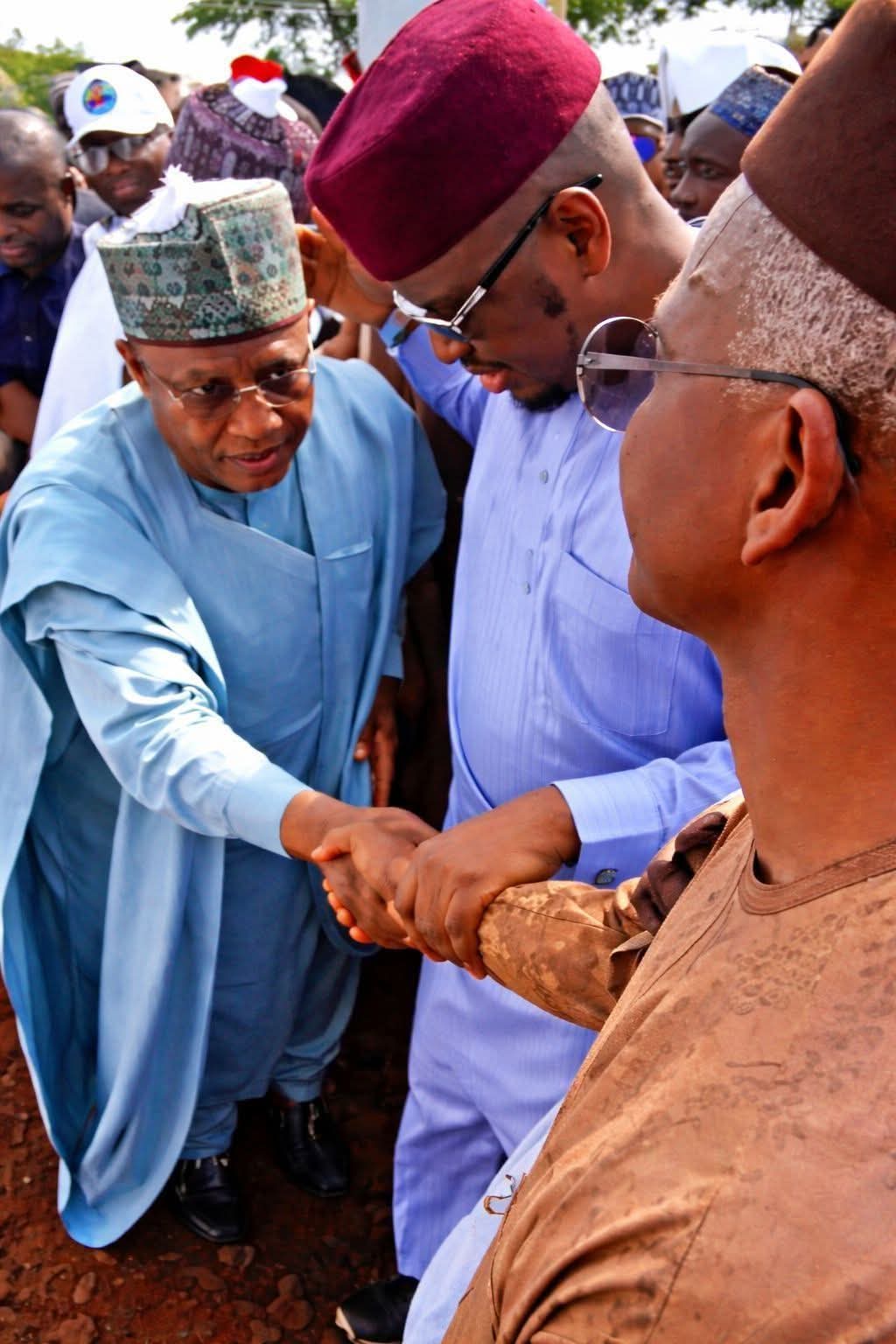
Also present at the Mosque was Prof. Isa Ali Ibrahim Pantami, former Minister and renowned Islamic cleric, who seized the opportunity to advance the imperative of reconciliation in Islam. He started in the Mosque and continued at the graveyard, to the extent of persuading El-Rufai to shake hands with Uba Sani, with a soft but casual commitment from both sides, on the pleaded forgiveness. It was difficult, very difficult, especially when perused through the prism of Mallam Nasir El-Rufai’s position.
Undoubtedly peace is fundamental to Islam, because it serves as a source of inner tranquillity and social harmony. The Quran has laid emphasis on reconciliation and kindness. So every Muslim is enjoined to embrace reconciliation. However, in advancing the course of reconciliation, timing is important, I think. We must not only perceive peace as merely the absence of conflict. No, it also has something to do with our state of mind. A man standing before the lifeless body of his beloved mother, at the graveyard, under intense pressure, is not in the appropriate state of mind to commit to any peace deal. Unless we are referring to the probabial peace of the graveyard.
The ambition of any reconciliation is to arrive at unity. And unity can only come after conflict, if there is healing. By definition, healing is the process of becoming healthy or whole again, encompassing the restoration of physical tissue, mental, or emotional well-being. A man under emotional pressure is not fit for commitment to any peace deal, I think. Unless we are referring to the probabial peace of the graveyard.
Peace of the graveyard is not genuine, because it could be deceptive, by resulting in forced calm, beneath which lies a deep tension. As a friend of the trio of El-Rufai, Nuhu Ribadu and Uba Sani, Sheik Pantami must go for a genuine, organic and sustainable peace agreement between the parties. More so, because they were genuine friends before.
All hands must be put on deck, to compel President Bola Ahmed Tinubu to come into the agreement. Because, he was the one who compelled Mallam Nasir El-Rufai to come into the Tinubu project in 2023. Indeed a lot of water had passed under the bridge. We should forget past misunderstandings or issues that are now irrelevant, and forgivable. Let’s move on from past disagreements and let go of grudges.That’s the only way to arrive at genuine reconciliation.
It may be recalled that the Muslim Rights Concern, MURIC, had long been appealing to the President, to come out clearly and reciprocate the gesture given to him in his time of need by Mallam Nasir El-Rufai. MURIC said they were the ones who persuaded El-Rufai to support Tinubu in 2023, as a result of which, he confronted the so called Buhari cabal, the then CBN Governor and other forces that were putting spanners in the work of the Tinubu project. The result of which is now President Tinubu. MURIC said El-Rufai does not deserve to be humiliated and went further to support their argument with the quote below:
“Noteworthy is a video clip showing how President Tinubu openly asked El-Rufai to join his government and this did not happen at a private meeting. It happened at a campaign ground, in the presence of thousands of party enthusiasts.”
Opinion
Defection: Kwankwaso’s Legacy Under Scrutiny; A Critical Look at his Political Journey Since 1999
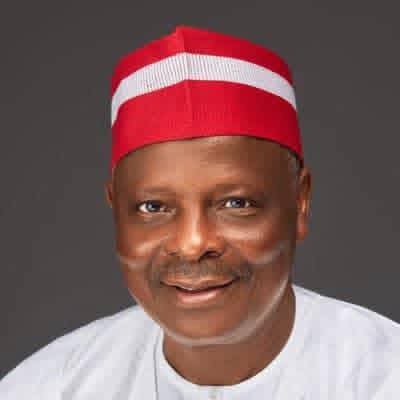
When Nigeria returned to democratic rule in 1999, the people of Kano embraced the moment with hope and expectation after years of military governance. Among the prominent figures who emerged at the time was Rabiu Musa Kwankwaso, whose leadership inspired confidence among many citizens eager for progress and representation.
More than two decades later, however, Kwankwaso’s political legacy continues to generate debate, with supporters highlighting his achievements and critics questioning the long-term impact of his leadership on Kano’s development.
Kwankwaso’s first tenure as governor (1999–2003) was marked by visible infrastructure projects, including roads and public buildings, which were widely welcomed by residents. At a time when tangible government presence was limited, these developments symbolised a new beginning. Yet, some analysts argue that while these projects addressed immediate needs, they did not sufficiently tackle deeper structural challenges, particularly the decline of Kano’s once-thriving industrial economy.
Historically a major commercial hub, Kano’s economy had been weakening due to years of policy neglect and infrastructural decay. Critics maintain that a more comprehensive economic strategy might have helped revive industries and reduce dependence on federal allocations.
Kwankwaso’s defeat in 2003 by Malam Ibrahim Shekarau marked a turning point. Observers note that while the loss strengthened his political network and grassroots appeal, it also raised questions about the sustainability of the systems established during his administration. Many of the projects, though impactful, were seen as lacking the institutional depth needed for long-term continuity.
Returning to office in 2011, Kwankwaso expanded his development agenda with increased infrastructure and an ambitious foreign scholarship programme that benefited thousands of Kano youths. The initiative is widely regarded as one of his most significant contributions, opening educational opportunities for many.
However, critics argue that despite these efforts, broader economic transformation remained limited. Rising population growth, unemployment, and declining industrial capacity continued to challenge the state’s development trajectory.
Beyond governance, Kwankwaso’s political influence has also shaped Kano’s power dynamics. His role in building a strong political movement—popularly known as the Kwankwasiyya—has been praised for mobilising grassroots support but criticised by some for reinforcing a personality-driven political structure.
Political analysts further point to the tensions surrounding the Kano Emirate as a significant episode in the state’s recent history. The controversial removal of Muhammadu Sanusi II highlighted deep divisions within the state’s political and traditional institutions, with varying opinions on the factors that led to the crisis.
In recent years, Kwankwaso’s shifting political alliances—from the PDP to the APC and later to the NNPP—have also drawn mixed reactions. While such moves are common in Nigeria’s political landscape, critics argue that they have contributed to instability and uncertainty within Kano’s political structure.
The 2023 elections brought another dimension to the discourse, with the emergence of Abba Kabir Yusuf as governor under the NNPP platform. Subsequent political developments, including evolving relationships between state and federal actors, have further shaped public debate about governance priorities and political strategy.
Today, Kwankwaso remains one of Kano’s most influential political figures, with a legacy that reflects both notable achievements and enduring controversies. While many credit him with expanding access to education and improving infrastructure, others believe that the state’s long-term economic and institutional challenges require deeper reflection.
As Kano continues to navigate its future, the assessment of past leadership—including Kwankwaso’s role—remains central to ongoing conversations about development, governance, and political direction.

INEC, David Mark, And Coming Abachaian Coronation
Jonathan Urges National Assembly to Overhaul Electoral Litigation Process, Create Specialised Court

ADC Defies INEC, Vows to Proceed with Congresses Amid Leadership Crisis

ADC Rejects INEC’s Ruling Interpretation, Vows to Clarify Contradictions

ADC Rising: Salga hails influx of political heavyweights as a turning point for justice

Governor Abba Kabir Yusuf Holds Exclusive Prerogative to Choose Deputy – Malam Inuwa Waya

The Governor Who Chose His People Over His Politics: Abba Yusuf and the Moral Courage Behind Kano First
Restoring the Glory That Was Always There: Governor Abba Kabir Yusuf and the Historical Vision Behind Kano First

Tinubu to Swear in Olatunji Disu as Inspector-General of Police on Wednesday

NDLEA Clarifies: Drug Case Against Abba Kyari Still Active After Court Discharge
INEC, David Mark, And Coming Abachaian Coronation
Jonathan Urges National Assembly to Overhaul Electoral Litigation Process, Create Specialised Court
ADC Defies INEC, Vows to Proceed with Congresses Amid Leadership Crisis
ADC Rejects INEC’s Ruling Interpretation, Vows to Clarify Contradictions
ADC Rising: Salga hails influx of political heavyweights as a turning point for justice
Governor Abba Kabir Yusuf Holds Exclusive Prerogative to Choose Deputy – Malam Inuwa Waya
The Governor Who Chose His People Over His Politics: Abba Yusuf and the Moral Courage Behind Kano First
Restoring the Glory That Was Always There: Governor Abba Kabir Yusuf and the Historical Vision Behind Kano First
Tinubu to Swear in Olatunji Disu as Inspector-General of Police on Wednesday
NDLEA Clarifies: Drug Case Against Abba Kyari Still Active After Court Discharge
-

 Opinion4 years ago
On The Kano Flyovers And Public Perception
-

 Features5 years ago
How I Became A Multimillionaire In Nigeria – Hadiza Gabon
-

 Opinion5 years ago
Kano As future Headquarters Of Poverty In Nigeria
-

 History5 years ago
Sheikh Adam Abdullahi Al-Ilory (1917-1992):Nigeria’s Islamic Scholar Who Wrote Over 100 Books And Journals
-

 Opinion4 years ago
My First Encounter with Nasiru Gawuna, the Humble Deputy Governor
-

 History5 years ago
The Origin Of “Mammy Market” In Army Barracks (Mammy Ochefu)
-

 History4 years ago
The History Of Borno State Governor Professor Babagana Umara Zulum
-

 News4 years ago
Federal University Of Technology Babura To Commence Academic Activities September