
News
Waiya Tackles Buba Galadima on Governor Yusuf’s Defection, Says Voting Decisions Rest With the Electorate
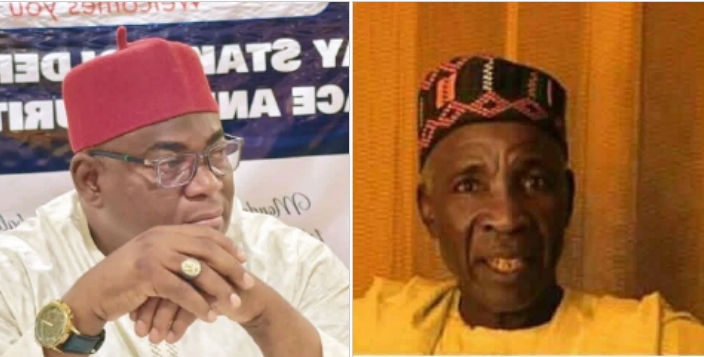
The Kano State Commissioner of Information and Internal Affairs, Comrade Ibrahim Abdullahi Waiya, has issued a press statement challenging recent remarks by elder statesman Engr. Buba Galadima, who suggested that Governor Abba Kabir Yusuf cannot secure a second term without the political support of Senator Rabiu Musa Kwankwaso.
In the statement dated January 25, 2026, Waiya described Galadima’s assertion as “analytically weak, misleading and dismissive of Kano State’s deeply rooted political culture.” He emphasized that while Kwankwaso remains a respected political heavyweight, Kano’s democratic tradition is not permanently contingent on the influence of a single individual.
According to Waiya, “There is no dispute that Senator Dr. Rabiu Musa Kwankwaso is a strategic mobiliser and one of the most consequential figures in Kano’s modern political history. His influence is real and well earned. However, to suggest that Kano’s political future is permanently contingent on the shadow of a single individual is to misread both history and democratic behaviour of the people in the State.”
Waiya further expressed surprise that such a claim came from Galadima, noting that the elder statesman had previously benefited from Governor Yusuf’s inclusive leadership. “In the hope of institutional improvement, the Governor appointed him Chairman of the Governing Council of Kano State Polytechnic, notwithstanding the fact that he is not an indigene of Kano State. Regrettably, the tenure yielded little or no measurable impact,” Waiya stated.
The Commissioner stressed that leadership is validated by tangible outcomes rather than commentary. “As the timeless proverb reminds us, the tree is known by its fruit,” he remarked, underscoring the need for performance-based legitimacy in Kano politics.
Highlighting Kano’s unique political culture, Waiya argued that power in the state ultimately rests with the electorate. “Kano operates on its own historical rhythm, civic memory, and political consciousness. Here, power does not permanently reside with godfathers; it rests with the electorates, whose loyalty has always been conditional on performance, character, trust and reliability,” he explained.
Waiya cited historical precedents to support his position, pointing to the emergence of Mallam Ibrahim Shekarau as governor in 2003 without godfather backing. “His re-election validated a simple Kano principle: legitimacy is always derived from the people,” Waiya said.
He also referenced Kwankwaso’s own political return in 2011, noting that it was based on his record rather than anointment. “His past performance functioned as political capital. That experience alone should caution against overstating the durability of godfather politics in Kano,” Waiya asserted.
On Governor Yusuf’s mandate, Waiya emphasized that it was earned through popular legitimacy. “He was elected by the people of Kano, across party lines and political interests, defended his mandate through institutional processes, and assumed power with popular legitimacy,” Waiya explained. He added that Yusuf has since transitioned from protégé to principled leader, prioritizing education, institutional reforms, and social equity.
Responding to claims that Yusuf is “standing on borrowed feet,” Waiya countered that governance in Kano is consolidated through delivery. “Political authority in Kano is consolidated over time through delivery, not inherited indefinitely through association,” he said.
While acknowledging Kwankwaso’s enduring influence, Waiya stressed that mentorship does not equate to permanent dependence. “Influence is not ownership, and mentorship is not permanent dependence. Kano’s political tradition has always allowed for maturation and continuity beyond individuals,” he noted.
Expressing confidence in Yusuf’s future, Waiya declared: “I firmly believe that not only will Governor Abba Kabir Yusuf secure a second term, he will govern more effectively in a subsequent tenure, because governance, like leadership itself, matures with experience.”
He warned that those predicting Yusuf’s collapse without a godfather underestimate Kano’s political memory. “As history has repeatedly shown from Governor Kabiru Ibrahim Gaya to Governor Ibrahim Shekarau, to Governor Rabiu Musa Kwankwaso himself, Kano ultimately rewards performance, not proximity to power,” Waiya said.
The Commissioner also addressed internal challenges within the New Nigeria People’s Party (NNPP), noting that persistent conflicts and legal disputes have created divisions. “The growing disenfranchisement among party members has created deep divisions within the party structure, resulting in cracks that appear increasingly irreconcilable,” Waiya explained.
He concluded by stressing that Yusuf’s decisions are taken in good faith, with a commitment to peace and progress. Quoting the Qur’an, Waiya reminded citizens: “Nothing shall ever happen to us except what Allah has ordained for us. He is our Mawla (Protector). And in Allah let the believers put their trust.” He also cited a Hadith emphasizing reliance on divine decree, stating that “the pens have been lifted and the pages have dried.”
“This,” Waiya concluded, “remains the enduring grammar of Kano politics.”










News
NNPC Ltd Welcomes $800m Ima Gas Final Investment Decision
The Nigerian National Petroleum Company Limited (NNPC Ltd) has welcomed the $800 million Final Investment Decision (FID) on the Ima Gas Project, describing it as a landmark development that affirms the growing viability of Nigeria’s upstream gas sector.
The project, located offshore in OMLs 112 and 117 and developed by AMNI International in partnership with TotalEnergies, will produce about 300 million standard cubic feet of gas per day at peak. The output will supply critical feedgas to Nigeria LNG Limited in support of its Train 7 expansion, which will increase capacity at the Bonny Island plant from 22 million tons per annum to 30 Mtpa.
The FID was enabled by the Presidential Directives of 2024, which provided fiscal incentives for non-associated gas, streamlined contracting and lowered development costs. Ima is the fourth major gas project to reach FID under President Bola Ahmed Tinubu, after Iseni, Ubeta and HI.
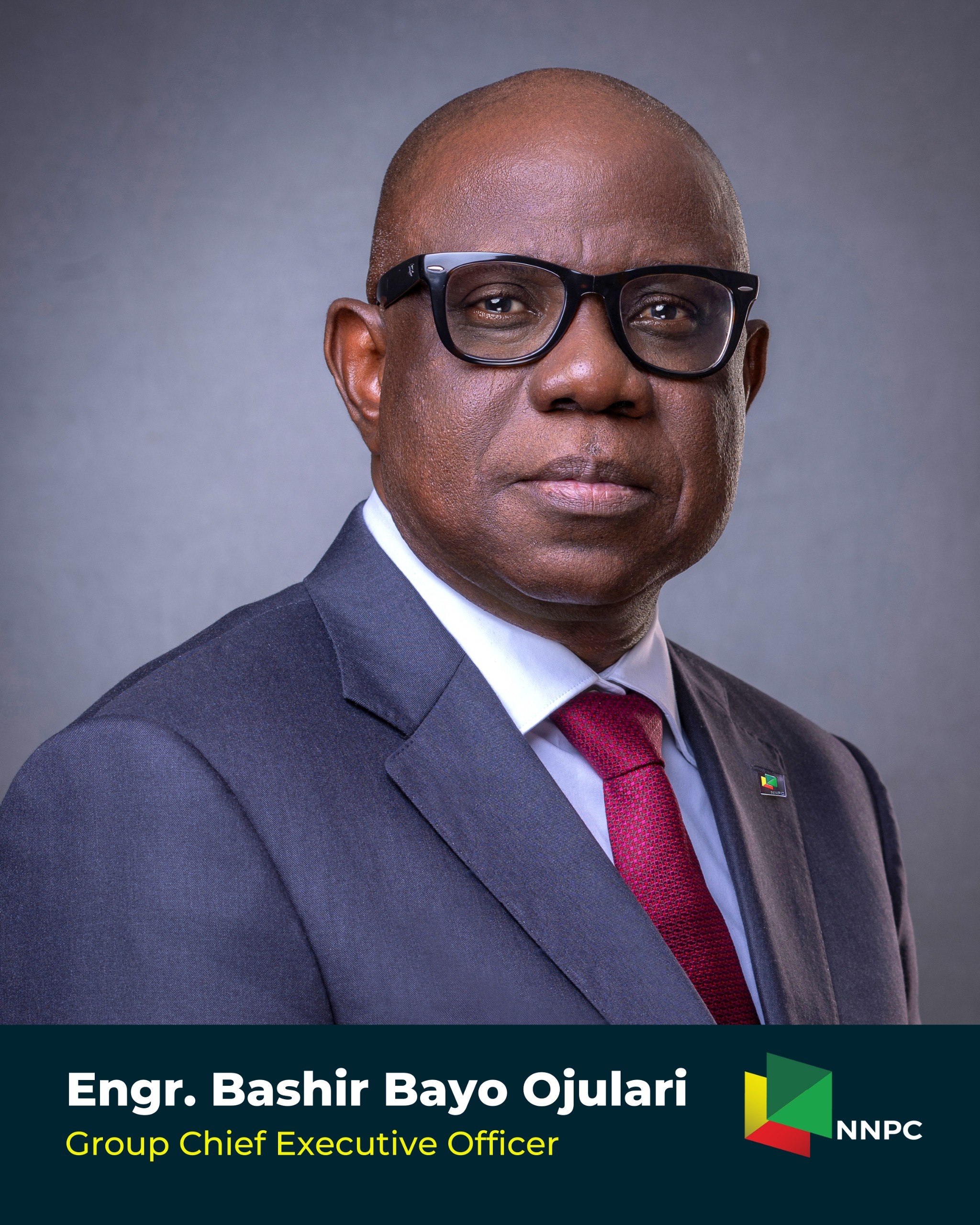
Group Chief Executive Officer, NNPC Ltd., Engr. Bashir Bayo Ojulari described it as “a decisive vote of confidence in Nigeria’s gas sector and in the bold reforms” that have created competitive terms and a predictable investment environment.
NNPC Ltd. also commends the collaboration between AMNI, TotalEnergies and the Nigerian financial sector, saying the model of indigenous operator, international partner and domestic capital is a template for future developments.
In a statement signed by Andy Odeh Chief corporate communications officer of NNPC Ltd. reaffirms its commitment to work with government, regulators and industry partners to sustain investment momentum and deploy Nigeria’s gas resources for industrialisation, job creation and long-term prosperity.
News
At MAN AGM In Kano, Manufacturers Throng Dangote Pavilion Over ‘Peoples IPO’
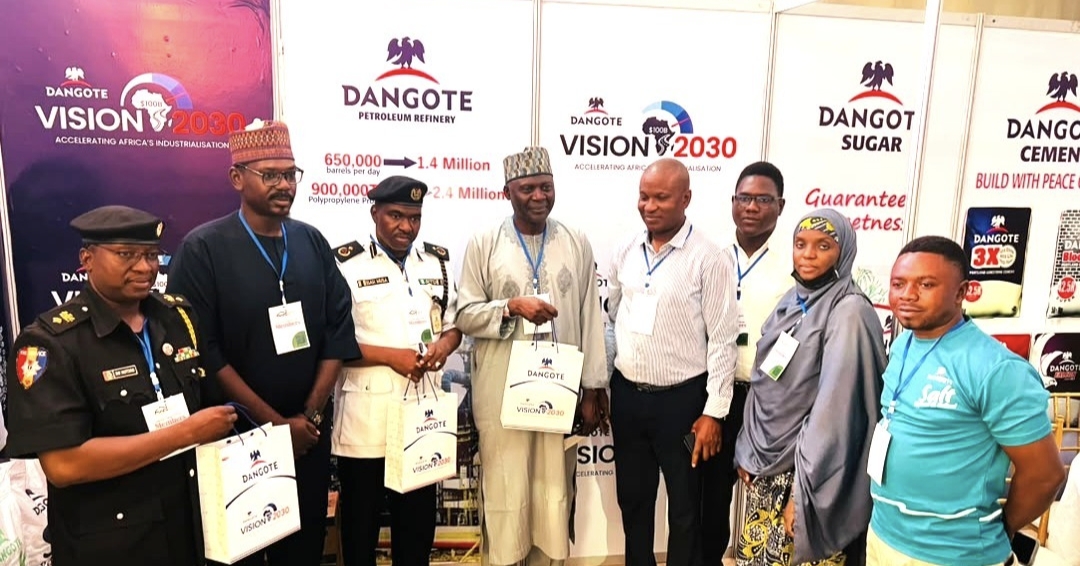
Manufacturers under the aegis of the Manufacturers Association of Nigeria (MAN) thronged the Dangote Group’s pavilion at the exhibition to seek information and clarification on the ongoing Public Initial Public Offering (IPO) of the Dangote Petroleum Refinery and Petrochemicals (DPRP).
The three-day Annual General Meeting (AGM) of the Kano-Jigawa Branch of the Manufacturers Association of Nigeria (MAN), the 54th in the series, ended on Thursday, with the Dangote Group’s representative hosting participants and engaging manufacturers who expressed keen interest in the ongoing Initial Public Offering (IPO) of the Dangote Refinery.
The Dangote Refinery Peoples’ IPO offers Nigerians and other eligible investors an opportunity to buy shares in the Dangote Petroleum Refinery and Petrochemicals, thereby becoming part-owners of one of Africa’s largest industrial projects and participating in its future growth.
The Dangote Refinery IPO runs from 14 September to 13 October 2026.
Dangote Industries Limited is one of the sponsors of the 54th MAN AGM.
Earlier, in his opening remarks, the Chairman of the Manufacturers Association of Nigeria (MAN), Sharada/Challawa Branch, Alhaji Nura S. Madugu, highlighted the mounting burden of multiple taxes, levies and charges on manufacturers, warning that the situation is increasing the cost of doing business and undermining the competitiveness of local industries.
Madugu urged the Kano State and Federal Governments to ease the tax burden on manufacturers and accelerate efforts to harmonise taxes and levies imposed on businesses.
He particularly decried the practice of double and multiple taxation, which he said continued to place additional financial pressure on manufacturers already grappling with high energy costs, inadequate infrastructure, expensive financing, insecurity, foreign exchange challenges and unfair competition from imported goods.
“We are especially concerned about instances of double and even multiple taxation, where the three tiers of government impose what is essentially the same levy under different names and different guises. This practice places our products at a serious disadvantage in their constant competition with imported goods, a disadvantage made worse by the high cost of alternative power supply and the volatility of the foreign exchange rate.
Madugu reminded the meeting of MAN’s enormous contribution to the society and provide employment to thousands of Nigerians, as well as participating actively in tax revenue generation for the country.
“We provide employment to thousands of Nigerians. We participate actively in tax revenue generation for the states and the federation through the deduction of Value Added Tax on our products, the remittance of Pay-As-You-Earn on behalf of our staff, and the payment of Withholding Tax, Education Tax, Tertiary Education Tax, Company Income Tax, and a whole host of other levies too numerous to mention individually. Beyond taxation, we also discharge our Corporate Social Responsibility diligently to the communities in which we operate.
“Even though what we receive in return remains modest, we continue, in strength and in good faith, to serve this nation and to hold up its economy. We do this because we believe in Nigeria and in Kano State. But it must be said plainly,” Madugu added.
In his remarks also, MAN Chairman, Bompai/Jigawa Branch, Mohammed Bello I. Umar, appreciated the association’s members for their resilience, commitment and continued investment in the Nigerian economy despite the difficult operating environment.
He pointed out that the meeting provides the members of the association with an opportunity to reflect on its activities, review the challenges confronting their businesses, acknowledge the progress they have made, and chart a stronger course for the future of manufacturing in the country.
However, he said, the members must acknowledge that manufacturing remains under serious pressure.
He highlighted that the high cost of energy, multiple taxes and levies, inadequate infrastructure, high financing costs, insecurity, foreign exchange challenges and unfair competition from imported goods continue to affect our competitiveness.
“One issue that requires our collective attention is the importation of contraband and substandard goods. These products undermine local manufacturers who invest heavily
“Reliable and affordable electricity remains one of the most important requirements for industrial development.
He however welcomed the ongoing electricity reforms and efforts by the Kano State Government and the State House of Assembly towards establishing a more effective electricity framework for the State.
He called for the swift implementation of reforms that will create a more reliable, competitive and affordable electricity market for industries.
He noted that manufacturers continue to provide employment, generate wealth, support local communities and contribute significantly to government revenue in production, employ Nigerians and comply with government regulations.
“We must therefore stand together and call for stronger enforcement at our borders and markets.
He urged the relevant government agencies to intensify the fight against smuggling, counterfeiting and the importation of goods that compete unfairly with locally
News
NLC President Ajaero: It Is Wrong to Negotiate Minimum Wage Without Minimum Pension
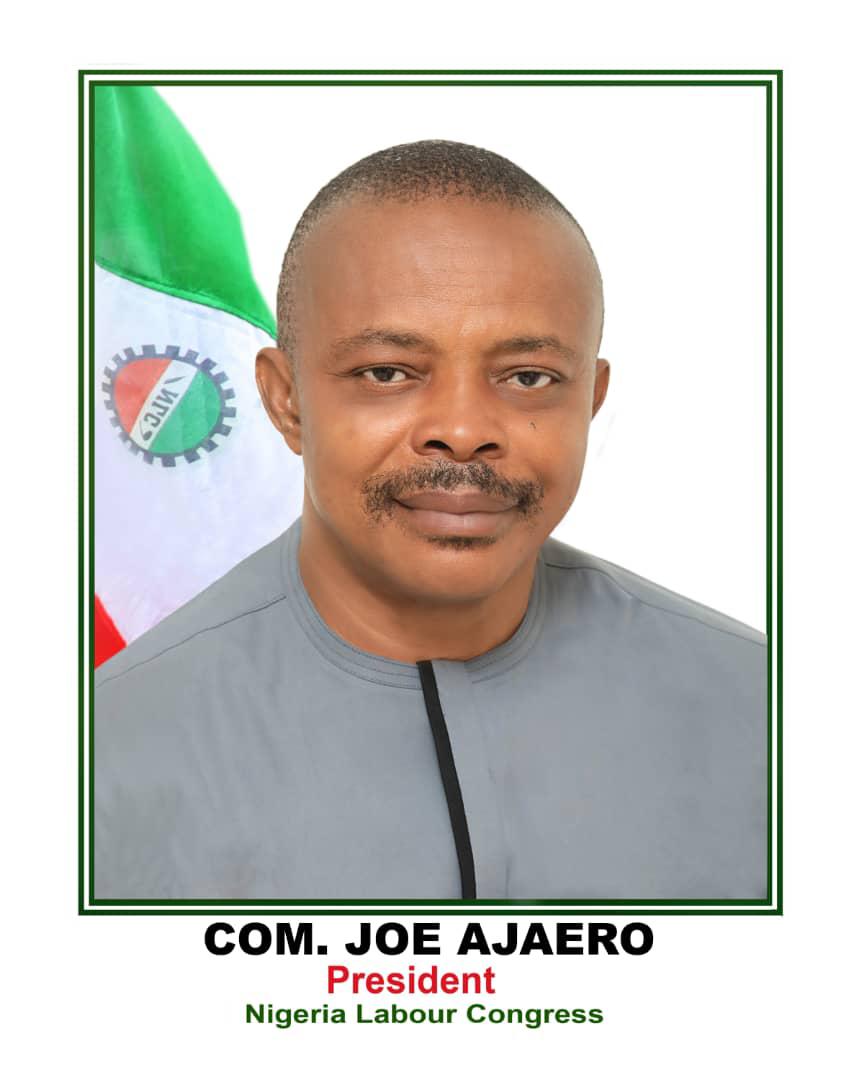
The President of the Nigeria Labour Congress (NLC), Comrade Joe Ajaero, has called for the simultaneous negotiation of minimum wage and minimum pension, saying it is wrong for government and organised labour to focus on workers’ wages without addressing the welfare of retirees.
Ajaero made the call while speaking at the National Pre-Retirement Summit, held at Shehu Musa Yaradua centre in Abuja where he raised concerns over the declining purchasing power of retirement savings and pensions as a result of inflation and other economic challenges.
According to the NLC President, the experience of retirees over the years has demonstrated the need for workers and policymakers to consider what happens to employees after they leave active service.
Ajaero said the depreciation of the value of money means that savings made during a worker’s active years could lose significant purchasing power by the time the worker retires.
He explained that a worker who saves ₦1 million at a particular period could find that the real value of the savings has substantially declined over time because of inflation and the rising cost of living.
“It is wrong for us to start negotiating minimum wage without negotiating minimum pension,” Ajaero said, stressing that retirement benefits must be treated as an important component of workers’ welfare.
The NLC President said the objective of the summit was to examine ways of protecting workers from falling into poverty after retirement, particularly by ensuring that pension contributions and retirement savings are effectively managed.
Ajaero said pension fund administrators and other stakeholders in the pension industry must ensure that workers’ contributions are preserved and managed in a manner that protects their value against economic depreciation.
He said the challenge facing retirees goes beyond the amount accumulated in their pension accounts, arguing that the real value of such funds must also be considered in the face of inflation and increasing living costs.
According to him, the purpose of the discussion should be to develop mechanisms that would enable workers to enjoy a reasonable standard of living after retirement instead of becoming financially vulnerable when they leave active service.
Ajaero also questioned the adequacy of the existing provision allowing retirees to make a 25 per cent withdrawal from their retirement savings, saying such an amount may not provide sufficient financial support for retirees facing the realities of life after employment.
The NLC President called for consideration of mechanisms that would allow retirement contributions to serve as collateral for accessing funds, particularly for retirees who want to establish or manage businesses.
He argued that allowing workers to leverage their retirement savings as collateral could provide them with access to capital while preserving the broader objective of retirement security.
Ajaero said retirees who have acquired skills and experience during their years of service should be supported to use those skills to remain economically active after retirement rather than being left without adequate means of livelihood.
The labour leader also linked the removal of fuel subsidy to the declining purchasing power of pensioners, saying rising transportation and living costs can make existing pension payments inadequate.
Ajaero explained that a pensioner receiving ₦30,000, for instance, could face serious difficulties meeting basic transportation and other expenses when the cost of fuel and other essential commodities rises.
According to him, pension policy must therefore take inflation into account so that pension benefits do not lose their purchasing power as the cost of living increases.
He called for pension investments and benefits to be reviewed in line with prevailing inflationary trends, arguing that the value of retirement income should be protected against sustained increases in prices.
Ajaero further urged the National Pension Commission (PenCom), pension fund administrators and other policymakers to establish stronger channels of communication with workers and contributors.
He said workers who make regular contributions to pension schemes should have opportunities to interact directly with regulators and policymakers so that their experiences and concerns can influence decisions affecting the pension system.
The NLC President said such interaction would enable policymakers to better understand the challenges faced by contributors and retirees, particularly those struggling with the effects of inflation and the rising cost of living.
Ajaero said the labour movement would continue to advocate policies that protect workers not only during their active years but also after retirement, stressing that retirement security should remain an integral part of labour negotiations.
He said the discussions at the National Pre-Retirement Summit were therefore aimed at finding practical solutions to the challenges confronting workers and retirees and preventing poverty in old age.
The NLC President maintained that a comprehensive approach to workers’ welfare must cover both minimum wage during active employment and adequate pension after retirement, saying the two issues should not be treated separately.

NNPC Ltd Welcomes $800m Ima Gas Final Investment Decision

At MAN AGM In Kano, Manufacturers Throng Dangote Pavilion Over ‘Peoples IPO’

NLC President Ajaero: It Is Wrong to Negotiate Minimum Wage Without Minimum Pension

Prof Yusuf Adamu Delivers BUK’s 63rd Professorial Inaugural Lecture, Reflects on Medical Geography and Academic Legacy

Court Orders Fresh PDP Primary in Gombe Over Pantami’s Candidacy

Zamfara Varsity ASUU Threatens Warning Strike Over FG-ASUU Agreement, Promotion Arrears

Bello Sharada: A Great Writer, A Bookish Soul, Gone Too Soon

NUT Launches ‘Go Public’ Campaign to Promote Public Education in Nigeria

Kano Chemists Threaten Warning Strike Over Alleged PCN Pressure

Per Ishaq Samaila: “Waziri” for Strategy. “Mai Jama’a” for Service. One Man. One Mission. Ibrahim Kabir Masari
NNPC Ltd Welcomes $800m Ima Gas Final Investment Decision
At MAN AGM In Kano, Manufacturers Throng Dangote Pavilion Over ‘Peoples IPO’
NLC President Ajaero: It Is Wrong to Negotiate Minimum Wage Without Minimum Pension
Prof Yusuf Adamu Delivers BUK’s 63rd Professorial Inaugural Lecture, Reflects on Medical Geography and Academic Legacy
Court Orders Fresh PDP Primary in Gombe Over Pantami’s Candidacy
Zamfara Varsity ASUU Threatens Warning Strike Over FG-ASUU Agreement, Promotion Arrears
Bello Sharada: A Great Writer, A Bookish Soul, Gone Too Soon
NUT Launches ‘Go Public’ Campaign to Promote Public Education in Nigeria
Kano Chemists Threaten Warning Strike Over Alleged PCN Pressure
Per Ishaq Samaila: “Waziri” for Strategy. “Mai Jama’a” for Service. One Man. One Mission. Ibrahim Kabir Masari
-

 Opinion5 years ago
On The Kano Flyovers And Public Perception
-

 Features5 years ago
How I Became A Multimillionaire In Nigeria – Hadiza Gabon
-

 Opinion6 years ago
Kano As future Headquarters Of Poverty In Nigeria
-

 History5 years ago
Sheikh Adam Abdullahi Al-Ilory (1917-1992):Nigeria’s Islamic Scholar Who Wrote Over 100 Books And Journals
-

 Opinion5 years ago
My First Encounter with Nasiru Gawuna, the Humble Deputy Governor
-

 History5 years ago
The History Of Borno State Governor Professor Babagana Umara Zulum
-

 History5 years ago
The Origin Of “Mammy Market” In Army Barracks (Mammy Ochefu)
-

 News4 years ago
Federal University Of Technology Babura To Commence Academic Activities September