
News
President Tinubu Presents 2026 Budget, Describes it as Budget of Consolidation, Renewed Resilience and Shared Prosperity
By Yusuf Danjuma Yunusa
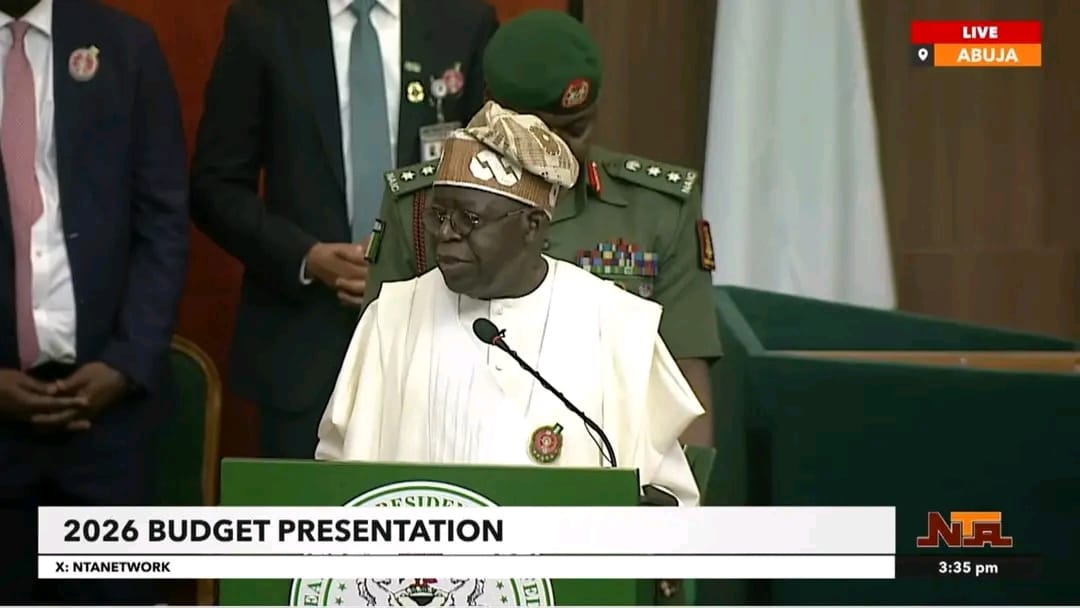
President Bola Tinubu on Friday presented the 2026 Appropriation Bill to a Joint Session of the National Assembly in Abuja, describing it as a critical step in consolidating recent economic reforms and steering Nigeria toward stability and inclusive growth.
The budget, titled “Budget of Consolidation, Renewed Resilience and Shared Prosperity,” was delivered in fulfilment of the President’s constitutional responsibility.
Addressing lawmakers, Tinubu said the 2026 Budget builds on two and a half years of reforms aimed at stabilising the economy, restoring confidence and laying the foundation for a more resilient and competitive nation.
He acknowledged the pressures the reform process has placed on households and businesses, assuring Nigerians that the sacrifices made were necessary for long-term stability and shared prosperity.
According to the President, the 2026 fiscal framework is designed to consolidate macroeconomic gains, strengthen resilience against shocks and ensure that growth translates into jobs, rising incomes and improved living standards.
He said the budget reflects the administration’s determination to move the country from “survival to growth” while deepening fiscal discipline, improving revenue performance and delivering measurable outcomes for citizens.
Read Full Speech Below:
Distinguished Senate President,
Rt. Honourable Speaker and Honourable Members of the House of Representatives,
Distinguished Senators and Honourable Members of the National Assembly,
Fellow Nigerians,
1. I appear before this Joint Session of the National Assembly, in fulfilment of my constitutional duty, to present the 2026 Appropriation Bill of the Federal Republic of Nigeria.
2. This is a defining moment in our national journey of reform and transformation. Over the last two and a half years, we made a deliberate choice: to confront long‑standing structural weaknesses, stabilise our economy, rebuild confidence, and lay a durable foundation for a more resilient, inclusive, and dynamic Nigeria.
3. These reforms were necessary — and they have not been painless. Families and businesses have faced pressure; established systems have been disrupted; and budget execution has been tested. I acknowledge these difficulties plainly, and I assure Nigerians that their sacrifices are not in vain. The path of reform is seldom smooth, but it is the surest route to lasting stability and shared prosperity.
4. Today, we come with a Budget that consolidates our gains, strengthens our resilience, and turns recovery into improved living standards for every Nigerian household.
THEME OF THE 2026 BUDGET
5. The 2026 Budget is themed: “Budget of Consolidation, Renewed Resilience and Shared Prosperity”. It reflects our determination to lock in macroeconomic stability, deepen competitiveness, and ensure that growth translates into decent jobs, rising incomes, and a better quality of life across our Federation.
ECONOMIC REALITIES: SIGNS OF STABILISATION, PURPOSE OF THE NEXT STEP
6. Mr. Chairman of this Joint Sitting, the 2026 Budget was prepared against an improving global outlook. Yet, our focus remains Nigeria: building a strong economy that works for our people.
7. I am encouraged that our reform efforts are already yielding measurable results:
Our economy grew by 3.98% in Q3 2025, higher than the 3.86% recorded in Q3 2024.
Inflation has moderated for eight consecutive months, with headline inflation declining to 14.45% in November 2025, from 24.23% in March 2025. With stabilising food and energy prices, tighter monetary conditions, and improving supply responses, we expect the disinflationary trend to persist—so that inflation continues to decline further over the 2026 horizon, barring major supply shocks.
Oil production has improved, supported by enhanced security, technology deployment, and sector reforms.
Non‑oil revenues have expanded significantly through better tax administration —not excessive taxation.
Investor confidence is returning, reflected in capital inflows, renewed project financing, and stronger private‑sector participation.
Our external reserves rose to a 7‑year high of about US$47 billion as at 14 November 2025, providing more than 10 months of import cover and a stronger buffer against shocks.
8. These outcomes are not accidental. They reflect difficult but deliberate policy choices. Our task now is to consolidate these gains—so that stability becomes prosperity, and prosperity becomes shared prosperity.
2025 BUDGET PERFORMANCE: LESSONS, ACCOUNTABILITY, AND EXECUTION
9. Distinguished Members, our 2025 budget implementation faced the realities of transition and competing execution demands. As at Q3 2025, we recorded:
₦18.6 trillion in revenue—representing 61% of our target; and
₦24.66 trillion in expenditure—representing 60% of our target.
10. Following the extension of the 2024 capital budget execution to December 2025, a total of ₦2.23 trillion was released for the implementation of 2024 capital projects as at June 2025.
11. While fiscal challenges persisted, government met its key obligations. However, only ₦3.10 trillion—about 17.7% of the 2025 capital budget—was released as at Q3, reflecting the emphasis on completing priority 2024 capital projects during the transition period.
12. Let me be clear: 2026 will be a year of stronger discipline in budget execution. I have issued directives to the Honourable Minister of Finance and Coordinating Minister of the Economy, the Honourable Minister of Budget and Economic Planning, the Accountant‑General of the Federation, and the Director‑General of the Budget Office of the Federation to ensure that the 2026 Budget is implemented strictly in line with the appropriated details and timelines.
13. We expect improved revenue performance through the new National Tax Acts and the ongoing reforms in the oil and gas sector—reforms designed not merely to raise revenue, but to drive transparency, efficiency, fairness, and long‑term value in our fiscal architecture.
14. I will also be unequivocal about Government‑Owned Enterprises. Heads of all GOEs are hereby directed to meet their assigned revenue targets. To support this, we will deploy end‑to‑end digitisation of revenue mobilisation—standardised e‑collections, interoperable payment rails, automated reconciliation, data‑driven risk profiling, and real‑time performance dashboards—so leakages are sealed, compliance is verifiable, and remittances are prompt. These targets will form core components of performance evaluations and institutional scorecards. Nigeria can no longer afford leakages, inefficiencies, or underperformance in strategic agencies. Every institution must play its part.
PHILOSOPHY AND OBJECTIVES OF THE 2026 BUDGET
15. Mr. Chairman and fellow Nigerians, the 2026 Budget is guided by four clear objectives:
One, consolidate macroeconomic stability;
Two, improve the business and investment environment;
Three, promote job‑rich growth and reduce poverty; and
Four, strengthen human capital while protecting the vulnerable.
16. In short: we will spend with purpose, manage debt with discipline, and pursue growth that is broad‑based — not narrow — and sustainable — not temporary.
2026 BUDGET OVERVIEW: THE FISCAL FRAMEWORK
17. Distinguished Members, the 2026 Federal Budget is anchored on realism, prudence, and growth orientation.
18. The key aggregates are as follows:
Expected total revenue: ₦34.33 trillion.
Projected total expenditure: ₦58.18 trillion, including ₦15.52 trillion for debt servicing.
Recurrent (non‑debt) expenditure: ₦15.25 trillion.
Capital expenditure: ₦26.08 trillion.
Budget deficit: ₦23.85 trillion, representing 4.28% of GDP.
19. These numbers are not just accounting lines. They are a statement of national priorities. We remain firmly committed to fiscal sustainability, debt transparency, and value‑for‑money spending.
20. The 2026–2028 Medium‑Term Expenditure Framework and Fiscal Strategy Paper sets the parameters for this Budget. Our projections are based on:
a conservative crude oil benchmark of US$64.85 per barrel;
crude oil production of 1.84 million barrels per day; and
an exchange rate of ₦1,400 to the US Dollar for the 2026 fiscal year.
21. We will continue to reduce waste, strengthen controls, and ensure that every naira borrowed or spent delivers measurable public value — especially in infrastructure, human capital, and security.
PRIORITIES AND ALLOCATIONS: SECURITY, PEOPLE, PRODUCTIVITY
22. Our allocations reflect the Renewed Hope Agenda and the practical needs of Nigerians. Key sectoral provisions include:
Defence and Security: ₦5.41 trillion
Infrastructure: ₦3.56 trillion
Education: ₦3.52 trillion
Health: ₦2.48 trillion
23. These priorities are interlinked. Without security, investment will not thrive. Without educated and healthy citizens, productivity will not rise. Without infrastructure, jobs and enterprise will not scale. This is why the Budget is designed as one coherent programme of national renewal.
A. National Security and Peacebuilding
24. Security remains the foundation of development. The 2026 Budget strengthens support for:
modernisation of the Armed Forces;
intelligence‑driven policing and joint operations;
border security and technology‑enabled surveillance; and
community‑based peacebuilding and conflict prevention.
25. We will invest in security with clear accountability for outcomes—because security spending must deliver security results. To secure our country, our priority will remain on increasing the fighting capability of our armed forces and other security agencies by boosting personnel and procuring cutting-edge platforms and other hardware. We are also pursuing a new era of criminal justice system to stamp out terrorism, banditry, kidnapping for ransom and other violent crimes. Our administration is resetting the national security architecture and establishing a new national counterterrorism doctrine—a holistic redesign anchored on unified command, intelligence, community stability, and counter-insurgency. This new doctrine will fundamentally change how we confront terrorism and other violent crimes that have become existential threats to our corporate survival and have heightened anxiety among our people.
Henceforth, and under this new architecture, any armed group or gun-wielding non-state actors operating outside state authority will be regarded as terrorists. These include bandits, militias, armed gangs, criminal networks with weapons, armed robbers, violent cult groups, forest-based armed collectives, and foreign-linked mercenaries. Groups or individuals conducting violence for political, ethnic, financial, or sectarian objectives are also classified as terrorists. Members of any group extorting communities, kidnapping civilians, occupying or seeking to occupy territory within Nigeria will be classified as terrorists. The denominator is that if you wield lethal weapons and act outside the state’s authority, you are a terrorist. Any individual or entity that enables the listed groups as financiers, money handlers, harbourers, informants, ransom facilitators, and negotiators will also be classified as terrorists. Political protectors and intermediaries, transporters, arms suppliers, and safe-house owners will be declared as terrorists. Politicians, traditional rulers, community leaders, and religious leaders who facilitate and encourage violent actions and terror within Nigeria and against our citizens are also terrorists.
B. Human Capital Development: Education and Health
26. No nation can grow beyond the quality of its people. The 2026 Budget strengthens investments in education, skills, healthcare, and social protection.
27. In education, we are expanding access to higher education through the Nigerian Education Loan Fund. Over 418,000 students have been supported, in partnership with 229 tertiary institutions nationwide.
28. In healthcare, I am pleased to highlight that investment in healthcare is 6% of total budget size, net of liabilities.
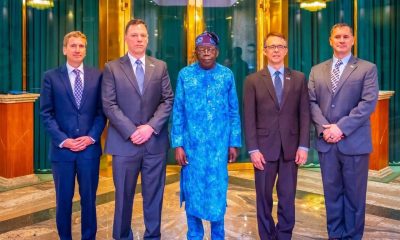
29. We also appreciate the support of international partners. Recent high‑level engagements with the Government of the United States have opened the door to over US$500 million in grant funding for targeted health interventions across Nigeria. We welcome this partnership and assure Nigerians that these resources will be deployed transparently and effectively.
C. Infrastructure and Economic Productivity
30. Across the nation, projects under the Renewed Hope Agenda are moving from vision to reality—transport and energy infrastructure, port modernisation, agricultural reforms, and strategic investments that unlock private capital.
31. We will take decisive steps to strengthen agricultural markets. Food security is national security. The 2026 Budget prioritises input financing and mechanisation; irrigation and climate‑resilient agriculture; storage and processing; and agro‑value chains.
32. These measures will reduce post‑harvest losses, improve incomes for smallholders, deepen agro‑industrialisation, and build a more resilient, diversified economy.
DELIVERY, DISCIPLINE, AND NATIONAL COMPACT
33. Distinguished Members and fellow Nigerians, the greatest budget is not the one we announce. It is the one we deliver.
34. Therefore, 2026 will be guided by three practical commitments:
Better revenue mobilisation through efficiency, transparency, and compliance—especially from GOEs and improved oil and gas sector governance.
Better spending: prioritising projects that can be completed, measured, and felt by citizens.
Better accountability: strengthening procurement discipline, monitoring, and reporting—so Nigerians can see what their money is funding.
35. This is how we will build trust: by matching our words with results, and our allocations with outcomes.
CONCLUSION: A BUDGET THAT BELONGS TO ALL OF US
36. Distinguished Members of the National Assembly, fellow Nigerians, the 2026 Budget is not a budget of promises; it is a Budget of Consolidation, Renewed Resilience and Shared Prosperity. It builds on the reforms of the past two and a half years, addresses emerging challenges, and sets a clear path towards a more secure, more competitive, more equitable, and more hopeful Nigeria.
37. I commend the understanding, sacrifice, and resilience of our people. My administration remains committed to easing the burdens of transition and ensuring that the benefits of reform reach households and communities across the Federation.
38. With unity of purpose between the Executive and the Legislature—and with the resilience of the Nigerian people—we will deliver the full promise of the Renewed Hope Agenda.
39. It is with great pleasure, therefore, that I lay before this distinguished Joint Session of the National Assembly the 2026 Appropriation Bill of the Federal Republic of Nigeria, titled: “Budget of Consolidation, Renewed Resilience and Shared Prosperity”.
May God bless the Federal Republic of Nigeria.
Thank you.










News
Jonathan Urges National Assembly to Overhaul Electoral Litigation Process, Create Specialised Court
By Yusuf Danjuma Yunusa
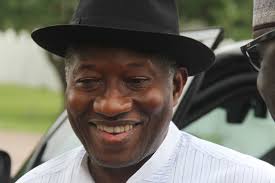
Former President Goodluck Jonathan has called on the National Assembly to overhaul Nigeria’s electoral litigation process by establishing a specialised constitutional court to handle election disputes.
Speaking on Wednesday in Abuja at the 70th birthday and book launch of Senator Gbenga Daniel (APC, Ogun East), Mr. Jonathan argued that a dedicated court would reduce the strain on the political system by resolving election-related cases in a single phase.
He criticised the current three-tier system for governorship disputes—moving from a tribunal to the Court of Appeal and finally to the Supreme Court—as ineffective and unnecessarily prolonged.
Recalling a landmark case from 2011, Jonathan highlighted how technicalities have historically undermined electoral justice. “I remember a particular case where someone lost an election as a governor because the law then stipulated the use of red ink to tick voters’ names,” he said.
“In an entire senatorial district, they were not provided with red pens and used available black or green pens. As a result, those votes were cancelled. The Appeal Court upheld this, even though the lower tribunal felt that a tick is a tick.”
While acknowledging that the National Assembly later amended the law to allow governorship cases to reach the Supreme Court—specifically to prevent such injustices—Jonathan noted that the amendment failed to address the length of the litigation process.
The former president urged Nigeria to draw lessons from Francophone African countries, which employ specialised constitutional courts for political matters. He proposed that if the Supreme Court must remain the final arbiter for governorship elections, the lower tribunal stage should be eliminated entirely.
“I believe the ideal thing to do, which I was considering when I was in office, was to make sure that it’s only one tribunal that listens to any litigation relating to politics. This is done, especially in the Francophone countries in Africa. They have constitutional courts. Anything about elections, only the constitutional courts take decisions,” Jonathan explained.
He also challenged the judiciary to exercise firmness in its rulings, drawing an analogy to football. “Politics is like soccer, and the judges are the referees. If the referee looks the other way, players will break legs or score with their hands,” he added.
News
ADC Defies INEC, Vows to Proceed with Congresses Amid Leadership Crisis
By Yusuf Danjuma Yunusa
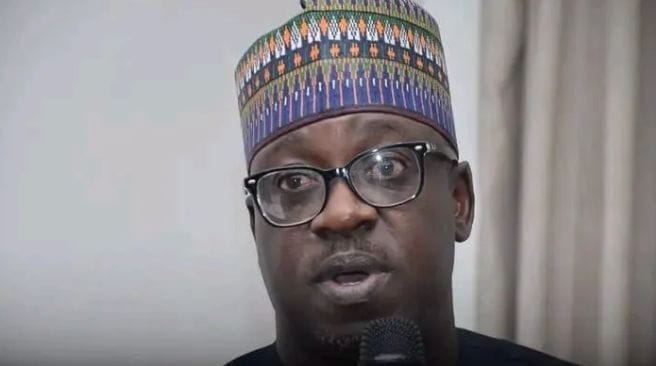
Nigeria’s African Democratic Congress (ADC) has declared it will go ahead with its scheduled congresses and national convention, defying the Independent National Electoral Commission’s (INEC) decision to suspend recognition of the party’s leadership.
The party’s National Publicity Secretary, Bolaji Abdullahi, insisted that the ADC has fulfilled all legal requirements, having formally notified the electoral body of its planned events.
“We will go ahead with our congresses. We have given INEC 21 days’ notice, they have accepted. Whether they come or not, we will continue with our congresses and our convention,” Abdullahi said during an interview on Arise TV.
His remarks come just days after INEC announced it would withhold recognition of the ADC’s leadership pending the outcome of a court case related to an internal dispute within the party.
The standoff sets the stage for a potential clash between the electoral commission and the opposition party, raising fresh questions about party governance, internal democracy, and the legal limits of INEC’s oversight powers in Nigeria.
News
ADC Rejects INEC’s Ruling Interpretation, Vows to Clarify Contradictions
By Yusuf Danjuma Yunusa
The African Democratic Congress (ADC) has sharply criticized the Independent National Electoral Commission (INEC) over its interpretation of a recent Court of Appeal statement, alleging that the commission has abandoned its neutrality by siding with the federal government.
In a press release issued on Wednesday, the ADC’s National Publicity Secretary, Mallam Bolaji Abdullahi, rejected INEC’s position, describing it as “contradictory and inconsistent with facts.” The party claimed that INEC was acting under pressure from a government it characterized as “jittery” due to the ADC’s growing momentum.
“We reject INEC’s interpretation of the Court of Appeal ruling,” the statement read. “We knew that INEC was being pressured by a government that has become jittery from the ADC’s rising momentum even in the face of its relentless assault on all opposition parties.”
The ADC accused the electoral commission of caving to political pressure, asserting that it has effectively chosen to align with the government against the Nigerian people. The party vowed to publicly clarify what it called the contradictions in INEC’s statement.
According to the release, the ADC is currently reviewing its legal and political options and will announce its next steps in the coming days. The party urged its members and the public to remain steadfast.
“We are currently reviewing our options, and we shall make these known soon. Meanwhile, we call on our members and all Nigerians to remain steadfast as they await further directives,” the statement concluded, adding the slogans: “Nigeria is rising. ADC is rising.”

INEC, David Mark, And Coming Abachaian Coronation
Jonathan Urges National Assembly to Overhaul Electoral Litigation Process, Create Specialised Court

ADC Defies INEC, Vows to Proceed with Congresses Amid Leadership Crisis

ADC Rejects INEC’s Ruling Interpretation, Vows to Clarify Contradictions

ADC Rising: Salga hails influx of political heavyweights as a turning point for justice

Governor Abba Kabir Yusuf Holds Exclusive Prerogative to Choose Deputy – Malam Inuwa Waya

The Governor Who Chose His People Over His Politics: Abba Yusuf and the Moral Courage Behind Kano First
Restoring the Glory That Was Always There: Governor Abba Kabir Yusuf and the Historical Vision Behind Kano First

Tinubu to Swear in Olatunji Disu as Inspector-General of Police on Wednesday

NDLEA Clarifies: Drug Case Against Abba Kyari Still Active After Court Discharge
INEC, David Mark, And Coming Abachaian Coronation
Jonathan Urges National Assembly to Overhaul Electoral Litigation Process, Create Specialised Court
ADC Defies INEC, Vows to Proceed with Congresses Amid Leadership Crisis
ADC Rejects INEC’s Ruling Interpretation, Vows to Clarify Contradictions
ADC Rising: Salga hails influx of political heavyweights as a turning point for justice
Governor Abba Kabir Yusuf Holds Exclusive Prerogative to Choose Deputy – Malam Inuwa Waya
The Governor Who Chose His People Over His Politics: Abba Yusuf and the Moral Courage Behind Kano First
Restoring the Glory That Was Always There: Governor Abba Kabir Yusuf and the Historical Vision Behind Kano First
Tinubu to Swear in Olatunji Disu as Inspector-General of Police on Wednesday
NDLEA Clarifies: Drug Case Against Abba Kyari Still Active After Court Discharge
-

 Opinion4 years ago
On The Kano Flyovers And Public Perception
-

 Features5 years ago
How I Became A Multimillionaire In Nigeria – Hadiza Gabon
-

 Opinion5 years ago
Kano As future Headquarters Of Poverty In Nigeria
-

 History5 years ago
Sheikh Adam Abdullahi Al-Ilory (1917-1992):Nigeria’s Islamic Scholar Who Wrote Over 100 Books And Journals
-

 Opinion4 years ago
My First Encounter with Nasiru Gawuna, the Humble Deputy Governor
-

 History5 years ago
The Origin Of “Mammy Market” In Army Barracks (Mammy Ochefu)
-

 History4 years ago
The History Of Borno State Governor Professor Babagana Umara Zulum
-

 News4 years ago
Federal University Of Technology Babura To Commence Academic Activities September