
News
President Tinubu Presents 2026 Budget, Describes it as Budget of Consolidation, Renewed Resilience and Shared Prosperity
By Yusuf Danjuma Yunusa
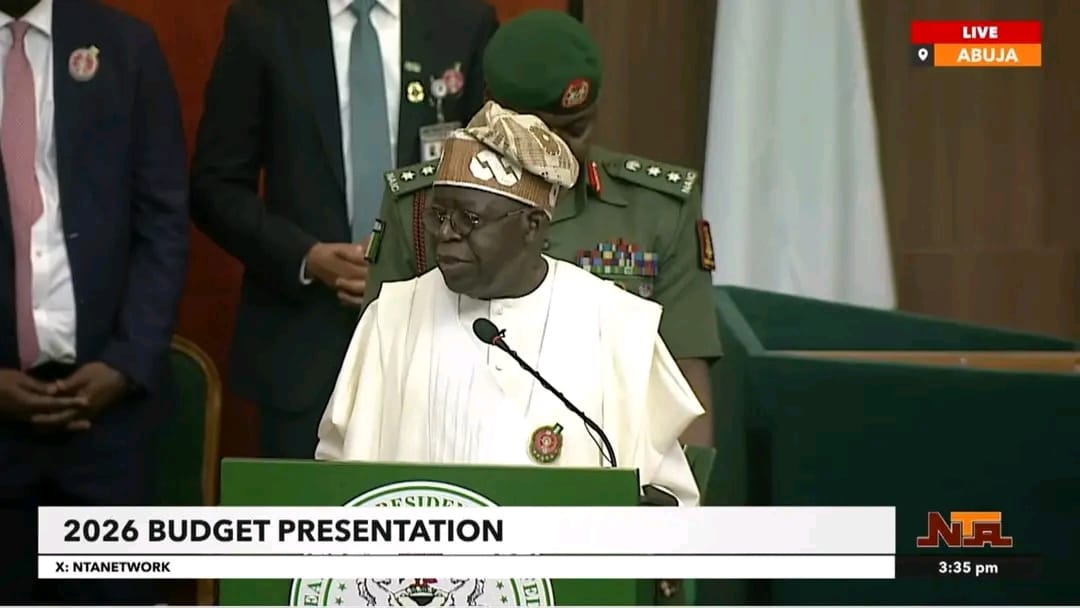
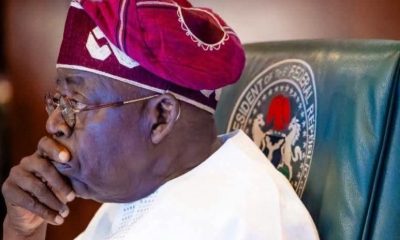
President Bola Tinubu on Friday presented the 2026 Appropriation Bill to a Joint Session of the National Assembly in Abuja, describing it as a critical step in consolidating recent economic reforms and steering Nigeria toward stability and inclusive growth.
The budget, titled “Budget of Consolidation, Renewed Resilience and Shared Prosperity,” was delivered in fulfilment of the President’s constitutional responsibility.
Addressing lawmakers, Tinubu said the 2026 Budget builds on two and a half years of reforms aimed at stabilising the economy, restoring confidence and laying the foundation for a more resilient and competitive nation.
He acknowledged the pressures the reform process has placed on households and businesses, assuring Nigerians that the sacrifices made were necessary for long-term stability and shared prosperity.
According to the President, the 2026 fiscal framework is designed to consolidate macroeconomic gains, strengthen resilience against shocks and ensure that growth translates into jobs, rising incomes and improved living standards.
He said the budget reflects the administration’s determination to move the country from “survival to growth” while deepening fiscal discipline, improving revenue performance and delivering measurable outcomes for citizens.
Read Full Speech Below:
Distinguished Senate President,
Rt. Honourable Speaker and Honourable Members of the House of Representatives,
Distinguished Senators and Honourable Members of the National Assembly,
Fellow Nigerians,
1. I appear before this Joint Session of the National Assembly, in fulfilment of my constitutional duty, to present the 2026 Appropriation Bill of the Federal Republic of Nigeria.
2. This is a defining moment in our national journey of reform and transformation. Over the last two and a half years, we made a deliberate choice: to confront long‑standing structural weaknesses, stabilise our economy, rebuild confidence, and lay a durable foundation for a more resilient, inclusive, and dynamic Nigeria.
3. These reforms were necessary — and they have not been painless. Families and businesses have faced pressure; established systems have been disrupted; and budget execution has been tested. I acknowledge these difficulties plainly, and I assure Nigerians that their sacrifices are not in vain. The path of reform is seldom smooth, but it is the surest route to lasting stability and shared prosperity.
4. Today, we come with a Budget that consolidates our gains, strengthens our resilience, and turns recovery into improved living standards for every Nigerian household.
THEME OF THE 2026 BUDGET
5. The 2026 Budget is themed: “Budget of Consolidation, Renewed Resilience and Shared Prosperity”. It reflects our determination to lock in macroeconomic stability, deepen competitiveness, and ensure that growth translates into decent jobs, rising incomes, and a better quality of life across our Federation.
ECONOMIC REALITIES: SIGNS OF STABILISATION, PURPOSE OF THE NEXT STEP
6. Mr. Chairman of this Joint Sitting, the 2026 Budget was prepared against an improving global outlook. Yet, our focus remains Nigeria: building a strong economy that works for our people.
7. I am encouraged that our reform efforts are already yielding measurable results:
Our economy grew by 3.98% in Q3 2025, higher than the 3.86% recorded in Q3 2024.
Inflation has moderated for eight consecutive months, with headline inflation declining to 14.45% in November 2025, from 24.23% in March 2025. With stabilising food and energy prices, tighter monetary conditions, and improving supply responses, we expect the disinflationary trend to persist—so that inflation continues to decline further over the 2026 horizon, barring major supply shocks.
Oil production has improved, supported by enhanced security, technology deployment, and sector reforms.
Non‑oil revenues have expanded significantly through better tax administration —not excessive taxation.
Investor confidence is returning, reflected in capital inflows, renewed project financing, and stronger private‑sector participation.
Our external reserves rose to a 7‑year high of about US$47 billion as at 14 November 2025, providing more than 10 months of import cover and a stronger buffer against shocks.
8. These outcomes are not accidental. They reflect difficult but deliberate policy choices. Our task now is to consolidate these gains—so that stability becomes prosperity, and prosperity becomes shared prosperity.
2025 BUDGET PERFORMANCE: LESSONS, ACCOUNTABILITY, AND EXECUTION
9. Distinguished Members, our 2025 budget implementation faced the realities of transition and competing execution demands. As at Q3 2025, we recorded:
₦18.6 trillion in revenue—representing 61% of our target; and
₦24.66 trillion in expenditure—representing 60% of our target.
10. Following the extension of the 2024 capital budget execution to December 2025, a total of ₦2.23 trillion was released for the implementation of 2024 capital projects as at June 2025.
11. While fiscal challenges persisted, government met its key obligations. However, only ₦3.10 trillion—about 17.7% of the 2025 capital budget—was released as at Q3, reflecting the emphasis on completing priority 2024 capital projects during the transition period.
12. Let me be clear: 2026 will be a year of stronger discipline in budget execution. I have issued directives to the Honourable Minister of Finance and Coordinating Minister of the Economy, the Honourable Minister of Budget and Economic Planning, the Accountant‑General of the Federation, and the Director‑General of the Budget Office of the Federation to ensure that the 2026 Budget is implemented strictly in line with the appropriated details and timelines.
13. We expect improved revenue performance through the new National Tax Acts and the ongoing reforms in the oil and gas sector—reforms designed not merely to raise revenue, but to drive transparency, efficiency, fairness, and long‑term value in our fiscal architecture.
14. I will also be unequivocal about Government‑Owned Enterprises. Heads of all GOEs are hereby directed to meet their assigned revenue targets. To support this, we will deploy end‑to‑end digitisation of revenue mobilisation—standardised e‑collections, interoperable payment rails, automated reconciliation, data‑driven risk profiling, and real‑time performance dashboards—so leakages are sealed, compliance is verifiable, and remittances are prompt. These targets will form core components of performance evaluations and institutional scorecards. Nigeria can no longer afford leakages, inefficiencies, or underperformance in strategic agencies. Every institution must play its part.
PHILOSOPHY AND OBJECTIVES OF THE 2026 BUDGET
15. Mr. Chairman and fellow Nigerians, the 2026 Budget is guided by four clear objectives:
One, consolidate macroeconomic stability;
Two, improve the business and investment environment;
Three, promote job‑rich growth and reduce poverty; and
Four, strengthen human capital while protecting the vulnerable.
16. In short: we will spend with purpose, manage debt with discipline, and pursue growth that is broad‑based — not narrow — and sustainable — not temporary.
2026 BUDGET OVERVIEW: THE FISCAL FRAMEWORK
17. Distinguished Members, the 2026 Federal Budget is anchored on realism, prudence, and growth orientation.
18. The key aggregates are as follows:
Expected total revenue: ₦34.33 trillion.
Projected total expenditure: ₦58.18 trillion, including ₦15.52 trillion for debt servicing.
Recurrent (non‑debt) expenditure: ₦15.25 trillion.
Capital expenditure: ₦26.08 trillion.
Budget deficit: ₦23.85 trillion, representing 4.28% of GDP.
19. These numbers are not just accounting lines. They are a statement of national priorities. We remain firmly committed to fiscal sustainability, debt transparency, and value‑for‑money spending.
20. The 2026–2028 Medium‑Term Expenditure Framework and Fiscal Strategy Paper sets the parameters for this Budget. Our projections are based on:
a conservative crude oil benchmark of US$64.85 per barrel;
crude oil production of 1.84 million barrels per day; and
an exchange rate of ₦1,400 to the US Dollar for the 2026 fiscal year.
21. We will continue to reduce waste, strengthen controls, and ensure that every naira borrowed or spent delivers measurable public value — especially in infrastructure, human capital, and security.
PRIORITIES AND ALLOCATIONS: SECURITY, PEOPLE, PRODUCTIVITY
22. Our allocations reflect the Renewed Hope Agenda and the practical needs of Nigerians. Key sectoral provisions include:
Defence and Security: ₦5.41 trillion
Infrastructure: ₦3.56 trillion
Education: ₦3.52 trillion
Health: ₦2.48 trillion
23. These priorities are interlinked. Without security, investment will not thrive. Without educated and healthy citizens, productivity will not rise. Without infrastructure, jobs and enterprise will not scale. This is why the Budget is designed as one coherent programme of national renewal.
A. National Security and Peacebuilding
24. Security remains the foundation of development. The 2026 Budget strengthens support for:
modernisation of the Armed Forces;
intelligence‑driven policing and joint operations;
border security and technology‑enabled surveillance; and
community‑based peacebuilding and conflict prevention.
25. We will invest in security with clear accountability for outcomes—because security spending must deliver security results. To secure our country, our priority will remain on increasing the fighting capability of our armed forces and other security agencies by boosting personnel and procuring cutting-edge platforms and other hardware. We are also pursuing a new era of criminal justice system to stamp out terrorism, banditry, kidnapping for ransom and other violent crimes. Our administration is resetting the national security architecture and establishing a new national counterterrorism doctrine—a holistic redesign anchored on unified command, intelligence, community stability, and counter-insurgency. This new doctrine will fundamentally change how we confront terrorism and other violent crimes that have become existential threats to our corporate survival and have heightened anxiety among our people.
Henceforth, and under this new architecture, any armed group or gun-wielding non-state actors operating outside state authority will be regarded as terrorists. These include bandits, militias, armed gangs, criminal networks with weapons, armed robbers, violent cult groups, forest-based armed collectives, and foreign-linked mercenaries. Groups or individuals conducting violence for political, ethnic, financial, or sectarian objectives are also classified as terrorists. Members of any group extorting communities, kidnapping civilians, occupying or seeking to occupy territory within Nigeria will be classified as terrorists. The denominator is that if you wield lethal weapons and act outside the state’s authority, you are a terrorist. Any individual or entity that enables the listed groups as financiers, money handlers, harbourers, informants, ransom facilitators, and negotiators will also be classified as terrorists. Political protectors and intermediaries, transporters, arms suppliers, and safe-house owners will be declared as terrorists. Politicians, traditional rulers, community leaders, and religious leaders who facilitate and encourage violent actions and terror within Nigeria and against our citizens are also terrorists.
B. Human Capital Development: Education and Health
26. No nation can grow beyond the quality of its people. The 2026 Budget strengthens investments in education, skills, healthcare, and social protection.
27. In education, we are expanding access to higher education through the Nigerian Education Loan Fund. Over 418,000 students have been supported, in partnership with 229 tertiary institutions nationwide.
28. In healthcare, I am pleased to highlight that investment in healthcare is 6% of total budget size, net of liabilities.
29. We also appreciate the support of international partners. Recent high‑level engagements with the Government of the United States have opened the door to over US$500 million in grant funding for targeted health interventions across Nigeria. We welcome this partnership and assure Nigerians that these resources will be deployed transparently and effectively.
C. Infrastructure and Economic Productivity
30. Across the nation, projects under the Renewed Hope Agenda are moving from vision to reality—transport and energy infrastructure, port modernisation, agricultural reforms, and strategic investments that unlock private capital.
31. We will take decisive steps to strengthen agricultural markets. Food security is national security. The 2026 Budget prioritises input financing and mechanisation; irrigation and climate‑resilient agriculture; storage and processing; and agro‑value chains.
32. These measures will reduce post‑harvest losses, improve incomes for smallholders, deepen agro‑industrialisation, and build a more resilient, diversified economy.
DELIVERY, DISCIPLINE, AND NATIONAL COMPACT
33. Distinguished Members and fellow Nigerians, the greatest budget is not the one we announce. It is the one we deliver.
34. Therefore, 2026 will be guided by three practical commitments:
Better revenue mobilisation through efficiency, transparency, and compliance—especially from GOEs and improved oil and gas sector governance.
Better spending: prioritising projects that can be completed, measured, and felt by citizens.
Better accountability: strengthening procurement discipline, monitoring, and reporting—so Nigerians can see what their money is funding.
35. This is how we will build trust: by matching our words with results, and our allocations with outcomes.
CONCLUSION: A BUDGET THAT BELONGS TO ALL OF US
36. Distinguished Members of the National Assembly, fellow Nigerians, the 2026 Budget is not a budget of promises; it is a Budget of Consolidation, Renewed Resilience and Shared Prosperity. It builds on the reforms of the past two and a half years, addresses emerging challenges, and sets a clear path towards a more secure, more competitive, more equitable, and more hopeful Nigeria.
37. I commend the understanding, sacrifice, and resilience of our people. My administration remains committed to easing the burdens of transition and ensuring that the benefits of reform reach households and communities across the Federation.
38. With unity of purpose between the Executive and the Legislature—and with the resilience of the Nigerian people—we will deliver the full promise of the Renewed Hope Agenda.
39. It is with great pleasure, therefore, that I lay before this distinguished Joint Session of the National Assembly the 2026 Appropriation Bill of the Federal Republic of Nigeria, titled: “Budget of Consolidation, Renewed Resilience and Shared Prosperity”.
May God bless the Federal Republic of Nigeria.
Thank you.











News
APC Denies Plot to Assassinate Atiku, Urges Security Agencies to Question Timi Frank
By Yusuf Danjuma Yunusa
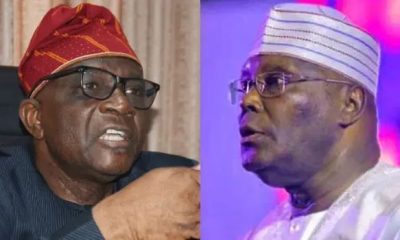
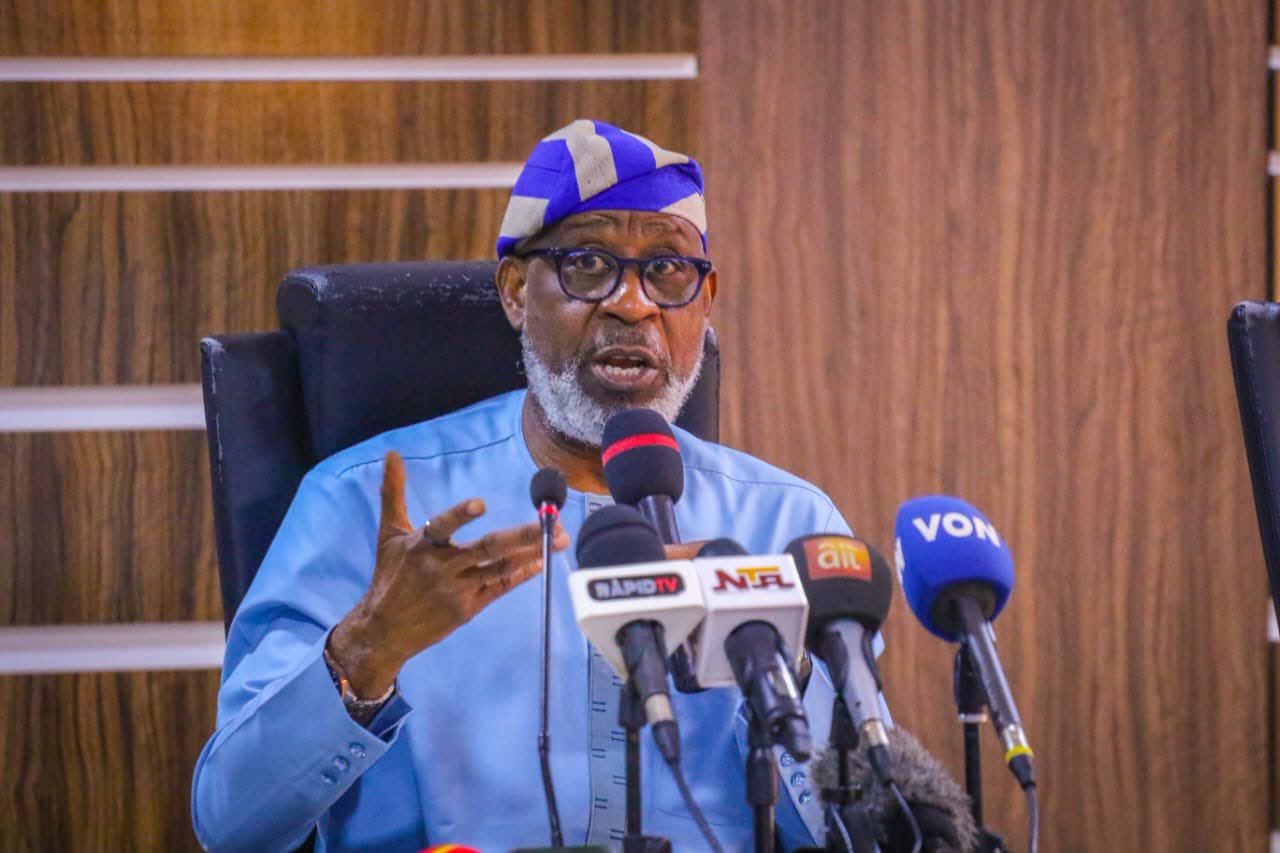
The All Progressives Congress Presidential Campaign Council has denied allegations that the Nigerian Government is plotting to assassinate former Vice President Atiku Abubakar, the ADC presidential candidate, and called on security agencies to invite Timi Frank to substantiate the claim.
In a statement signed by its spokesperson, Dele Alake, dated October 20, 2026, the council said:
“Our attention has been drawn to the statement by Timi Frank, a member of the African Democratic Congress, alleging that the Nigerian Government is plotting to assassinate former Vice President Atiku Abubakar, the Presidential candidate of the ADC. This is a grave allegation that Mr Frank must prove. We thus urge security agencies to invite him to substantiate the allegation, given its gravity and the urgent need to preserve life.”
The council also rejected any involvement by the presidency or the APC Campaign Council, stating:
“We categorically reject the claim that the presidency of Nigeria or the APC Campaign Council is involved in any plot to assassinate former Vice President Atiku Abubakar or any opposition figure.”
It further dismissed as false claims that security personnel attached to Atiku had been withdrawn, saying the former vice president is protected by the police and the Department of State Security. According to the statement, President Bola Tinubu recently directed security agencies to reinforce and increase protection for all presidential, vice-presidential, governorship and deputy governorship candidates across the country.
The council said security around the ADC presidential candidate had never been compromised and that, as a former vice president, Atiku enjoys two levels of state-funded security protection, which the statement said Tinubu had increased ahead of the 2027 general elections.
It urged candidates, parties and supporters to be factual and responsible in public statements and to avoid utterances that could trigger avoidable tension, accusing Frank of “typical opposition rabble-rousing.”
News
Kano Youths Condemn Lawmaker Over Alleged Mockery of Governor Yusuf
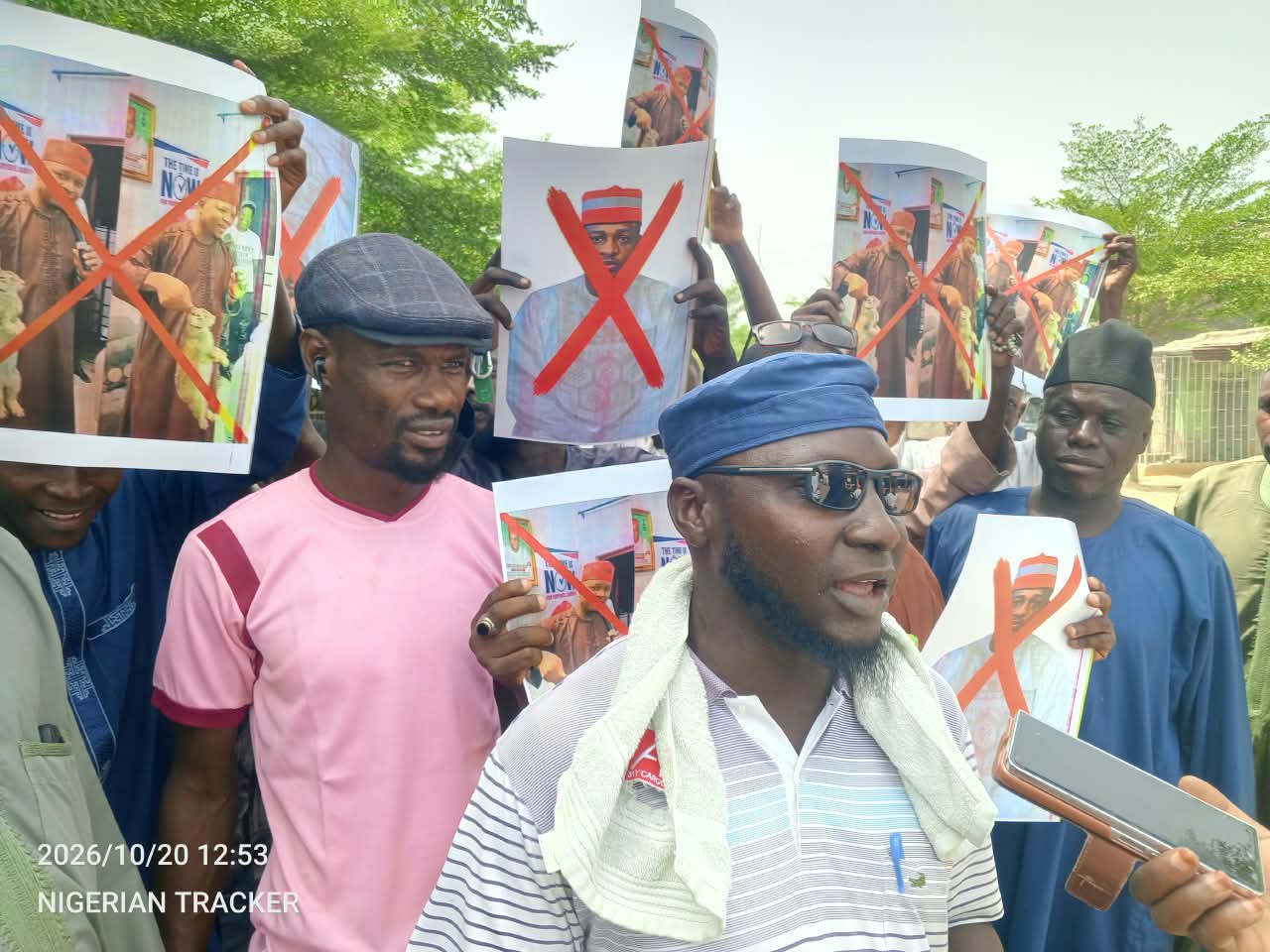
Concerned youths of Gama Ward in Nassarawa Local Government Area of Kano State have condemned the member representing Nassarawa Local Government in the Kano State House of Assembly, Hon. Bello Ali Yusuf, over an alleged act of mockery directed at Governor Abba Kabir Yusuf.
The youths, in a gathering on Tuesday, October 20, 2026, said they were displeased with the lawmaker’s reported action of holding the ear of a live rabbit in the presence of his supporters, which they alleged was intended to ridicule the governor.
Addressing journalists during a peaceful press briefing, the youths described the incident as disrespectful to the office of the governor and contrary to the cultural values and traditions of Gama Ward and the wider Kano community.
According to the group, the alleged conduct was undemocratic and unbecoming of an elected representative, adding that public officeholders should demonstrate maturity, decorum and respect for democratic institutions in their political engagements.
The Concerned Gama Youth further expressed concern that the incident could create unnecessary political tension and undermine the prevailing peace in the state.
They maintained that political disagreements should be handled through constructive engagement and democratic processes rather than actions they considered capable of ridiculing public officeholders.
NIGERIAN TRACKER reports that the group also reaffirmed its support for Governor Yusuf, commending his administration for what it described as people-oriented projects executed in Gama Ward and other parts of Nassarawa Local Government Area.
Specifically, the youths highlighted the construction of the road linking Gwagwarwa to Gama Hotel, describing the project as an important intervention that had improved transportation and eased movement within the community.
While addressing the press the group’s Secretary-General, Comrade Auwal Garba Gama, the road had also contributed to economic activities and improved access for residents.
The youths said the project demonstrated the governor’s commitment to infrastructure development and the welfare of residents of Gama Ward, adding that they appreciated the administration’s efforts to address the community’s needs.
Consequently, the group called on the leadership of the Kano State House of Assembly to investigate the incident and take what it described as immediate and decisive disciplinary action against Bello Ali Yusuf.
The youths argued that the alleged conduct had the potential to bring the legislature into disrepute, urging the Assembly’s leadership to ensure that elected representatives upheld the standards expected of public officeholders.
They also appealed to community leaders, political stakeholders and residents of Gama Ward to continue supporting the governor’s administration while maintaining peace and mutual respect despite political differences.
The group urged residents to remain law-abiding and avoid actions that could escalate political disagreements, while calling on them to pray for the success of the governor’s administration.
The secretary also reaffirmed the group’s solidarity with Gama Ward, Nassarawa Local Government Area and Kano State.
News
IITA Trains Over 1,800 Farmers on Modern Farming Techniques in Kano
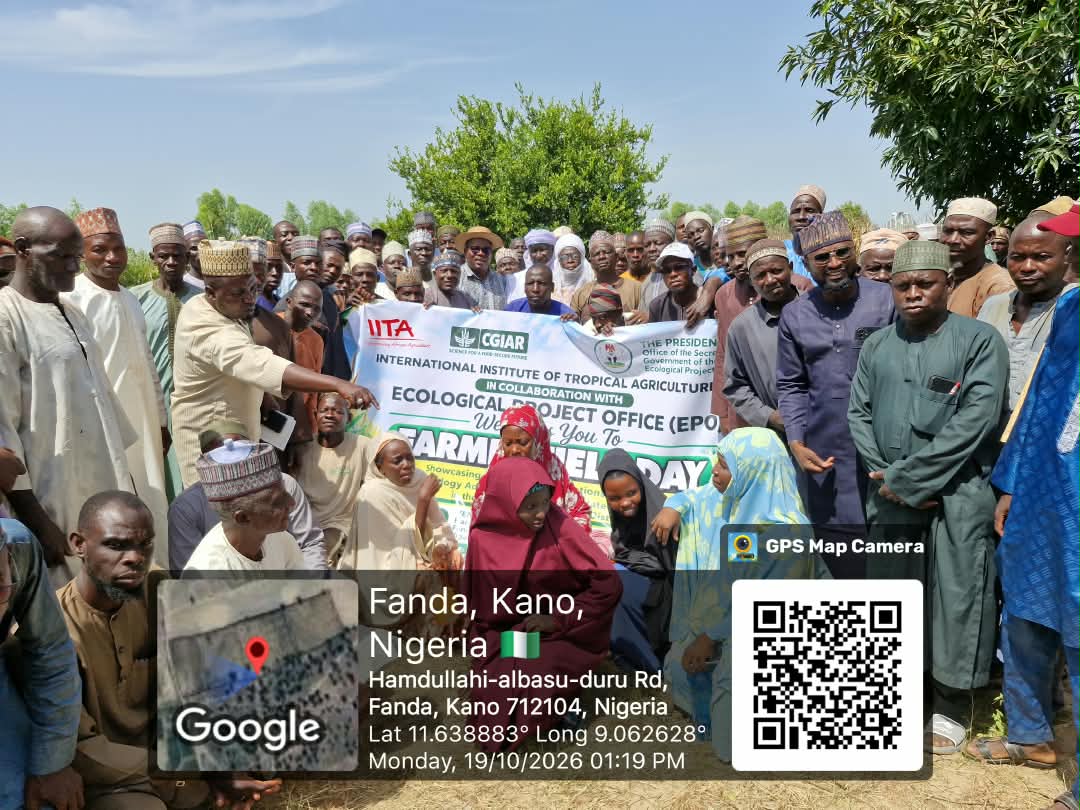
The International Institute of Tropical Agriculture (IITA), in collaboration with Nigeria’s Ecological Project Office (EPO), has trained more than 1,800 farmers in Kano State on modern farming techniques aimed at increasing crop yields and improving food production.
The programme covered farmers from 16 local government areas in Kano South Senatorial District, equipping them with modern agricultural practices to improve farm productivity and address challenges associated with farming, particularly during the dry season.
The training and demonstration of improved farming technologies took place in Hamdullahi community, Albasu Local Government Area, where farmers were introduced to improved crop varieties and other techniques for achieving higher yields.
Speaking at the event, IITA Project Coordinator, Professor Lucky Omoigui, said the training was designed to enhance farmers’ knowledge of improved seed varieties and modern agricultural practices.
He disclosed that more than 1,800 people had benefited from the programme, expressing optimism that the knowledge gained would encourage dry-season farming and boost food production.
Omoigui urged the participating farmers to apply the knowledge acquired to improve their farming practices and increase crop yields.
As part of the programme, the farmers visited demonstration farms, where they were shown modern techniques for cultivating crops, including cowpeas, maize, soybeans, groundnuts, sorghum and rice.
Speaking on behalf of EPO, Bashir Ibrahim Umar said agriculture plays a vital role in poverty reduction and job creation, particularly for young people in Nigeria.
He stressed the need for sustained farmer awareness campaigns and access to agricultural knowledge to encourage the adoption of modern farming technologies and improve livelihoods.
Also speaking, Garba Ayuba, who represented the Chairman of Albasu Local Government Area, Garba Aliyu Hungu, expressed satisfaction with the programme and urged farmers to put the techniques they had learnt into practice.
Similarly, the Gaya Zonal Director of the Kano State Agricultural and Rural Development Authority (KNARDA), Danjuma Uba, commended the farmers for their interest in learning modern agricultural practices.
He emphasised that collaboration between agricultural development agencies and farmers was essential to ensuring the sustainable adoption of modern farming technologies.
In his remarks, Alhaji Saidu Abdulkadir Hamdullahi, whose farm was used to demonstrate the improved crop varieties, said some people had previously doubted the possibility of achieving successful crop production during the dry season.
However, he expressed surprise and delight at the results achieved on his farm, saying the experience had boosted his confidence in dry-season farming.
He thanked IITA and its partners for the training, noting that the programme had improved farmers’ knowledge of seed planting, fertiliser application and other modern agricultural practices.
According to him, the new knowledge would help farmers increase productivity and improve their income.
The initiative forms part of broader efforts to strengthen the agricultural sector by encouraging farmers to adopt modern technologies to improve food production and reduce poverty in Nigeria, particularly in areas facing water shortages.
IITA Technical Support through the Ecological Project Office to promote the best climate-smart agricultural practices around the dams to boost food production and increase the income of smallholder farmers in the Kano South Senatorial District
The International Institute of Tropical Agriculture (IITA) is collaborating with the Ecological Project Office (EPO) to leverage the Federal Government’s rehabilitation and expansion of irrigation infrastructure in the Kano irrigation project, covering Tiga Dam, Challawa Gorge Dam, and Kafin-Chiri Dam in the Kano South Senatorial District, to promote sustainable irrigation and dry-season farming to boost agricultural productivity and increase the income of smallholder farmers. The collaboration under the project “Community-based Engagement on Sustainable Agriculture and Biodiversity Restoration for the Kano Irrigation Scheme” is being implemented across the 16 Local Government Areas (LGAs) surrounding the dams (comprising Ajingi, Garko, Bunkure, Doguwa, Tudun Wada, Karaye, Gaya, Albasu, Kibiya, Rogo, Kiru, Wudil, Bebeji, Sumaila, Takai, and Rano), covering 155 communities.
The project interventions aim to boost year-round farming by combining irrigation with climate-smart practices to increase productivity and income, enhance food security, and improve the livelihoods of smallholder farmers. A total of 1,890 farmers, 20% of whom are women, have been trained in Integrated Soil Fertility Management (ISFM), climate-smart irrigation and water-harvesting technologies, and youth entrepreneurship in climate-smart agricultural practices across the 16 LGAs to enhance their resilience to climate-related vulnerabilities.
Participating communities have witnessed increased farming activities and improved access to and use of climate-smart agricultural technologies, contributing to increased productivity, income, and food security.

APC Denies Plot to Assassinate Atiku, Urges Security Agencies to Question Timi Frank

Kano Youths Condemn Lawmaker Over Alleged Mockery of Governor Yusuf

IITA Trains Over 1,800 Farmers on Modern Farming Techniques in Kano

Former Delta State Governor, Emmanuel Uduaghan, Dies At 71

Astute Civil Society Raises Concern Over Exclusion of Gubernatorial Candidates

Zamfara Varsity ASUU Threatens Warning Strike Over FG-ASUU Agreement, Promotion Arrears

PCACC Arrests Man Over Alleged ₦4.5m Sale, Illegal Leasing of Kano Government Horse Stable

Kano Monitors ₦48.9bn Projects Across Six LGAs

Goje’s Electoral War:The Confrontation With Tinubu,Governor Inuwa,Usman Kumo And APC candidates Ahead Of 2027

Prof Yusuf Adamu Delivers BUK’s 63rd Professorial Inaugural Lecture, Reflects on Medical Geography and Academic Legacy
APC Denies Plot to Assassinate Atiku, Urges Security Agencies to Question Timi Frank
Kano Youths Condemn Lawmaker Over Alleged Mockery of Governor Yusuf
IITA Trains Over 1,800 Farmers on Modern Farming Techniques in Kano
Former Delta State Governor, Emmanuel Uduaghan, Dies At 71
Astute Civil Society Raises Concern Over Exclusion of Gubernatorial Candidates
Zamfara Varsity ASUU Threatens Warning Strike Over FG-ASUU Agreement, Promotion Arrears
PCACC Arrests Man Over Alleged ₦4.5m Sale, Illegal Leasing of Kano Government Horse Stable
Kano Monitors ₦48.9bn Projects Across Six LGAs
Goje’s Electoral War:The Confrontation With Tinubu,Governor Inuwa,Usman Kumo And APC candidates Ahead Of 2027
Prof Yusuf Adamu Delivers BUK’s 63rd Professorial Inaugural Lecture, Reflects on Medical Geography and Academic Legacy
-

 Opinion5 years ago
On The Kano Flyovers And Public Perception
-

 Features5 years ago
How I Became A Multimillionaire In Nigeria – Hadiza Gabon
-

 Opinion6 years ago
Kano As future Headquarters Of Poverty In Nigeria
-

 History6 years ago
Sheikh Adam Abdullahi Al-Ilory (1917-1992):Nigeria’s Islamic Scholar Who Wrote Over 100 Books And Journals
-

 Opinion5 years ago
My First Encounter with Nasiru Gawuna, the Humble Deputy Governor
-

 History5 years ago
The History Of Borno State Governor Professor Babagana Umara Zulum
-

 History6 years ago
The Origin Of “Mammy Market” In Army Barracks (Mammy Ochefu)
-

 News5 years ago
Federal University Of Technology Babura To Commence Academic Activities September