
News
Lieutenant Yerima Will Not Face Any Sanction–Matawalle
By Yusuf Danjuma Yunusa
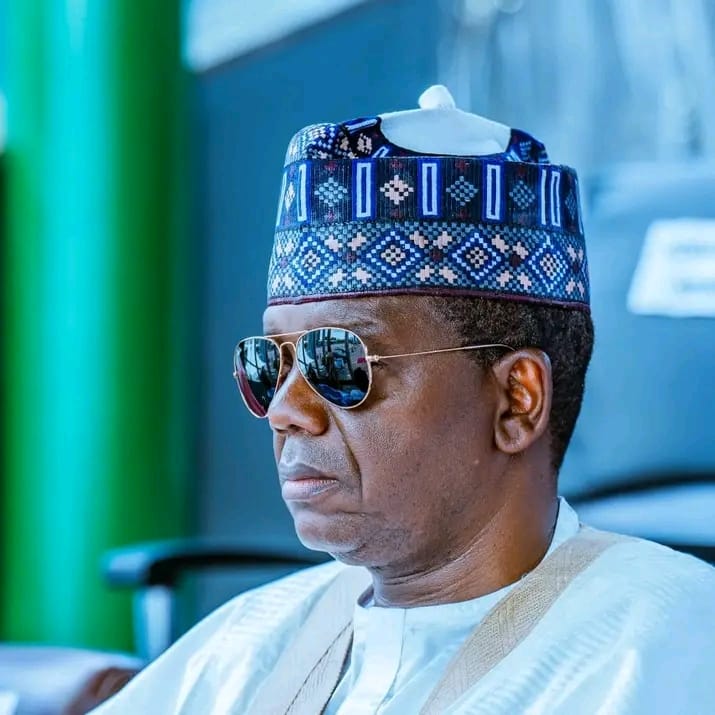
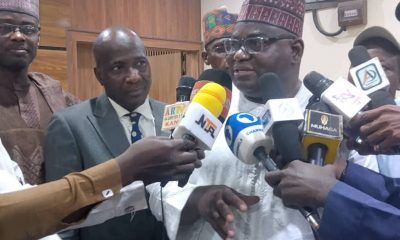
Minister of State for Defence, Bello Matawalle, has assured that Lieutenant Ahmad Yerima, the naval officer who engaged in a heated exchange with the Minister of the Federal Capital Territory (FCT), Nyesom Wike, will not face any disciplinary action.
Matawalle gave the assurance while speaking in an interview with DCL Hausa following public speculations about possible sanctions against the officer after a video of his confrontation with Wike went viral on social media.
In the video, recorded during Wike’s visit to a disputed plot of land in Gaduwa District, Abuja, the FCT minister was seen in a tense verbal exchange with the young naval officer, who stood his ground respectfully during the encounter.
The FCT minister was at Plot 1946 on Monday where he accused soldiers of preventing officials from the FCT Department of Development Control from enforcing a stop-work order.
The land is allegedly linked to a former Chief of Naval Staff, Vice Admiral Awwal Zubairu Gambo (rtd). However, the soldiers stationed at the site blocked the minister’s entry prompting the confrontation. Wike later claimed that the developers lacked valid documents or legal approval for the construction on the site.
Reacting to the incident, Matawalle said the matter should have been handled through proper channels rather than through a public altercation.
“The minister should not have confronted him. Lieutenant Yerima was acting on orders. If Wike had any concerns, he should have spoken to his superiors or to me directly since I oversee naval affairs,” Matawalle said.
He commended Yerima’s composure during the confrontation, describing his conduct as disciplined and professional.
“You can clearly see that he was respectful while standing his ground. As far as we are concerned, he did not break any law or military regulation,” the minister added.
Matawalle also disclosed that the Chief of Naval Staff has commenced an investigation into the disputed land, while clarifying that no formal complaint has yet been received from the FCT Minister.
“This whole situation was avoidable. Before the minister went there, he had already spoken with the Chief of Defence Staff and the Chief of Naval Staff, who assured him that the matter would be looked into,” Matawalle said.








News
NCC to Enforce Subscriber Compensation for Poor Telecom Service
By Yusuf Danjuma Yunusa
The Nigerian Communications Commission has announced that its directive mandating telecommunications operators to compensate subscribers for poor service quality will take effect from this month.
The Commission disclosed this in a Frequently Asked Questions document released on Tuesday, offering clarity on how the compensation framework will work and which subscribers qualify.
According to the NCC, the directive applies specifically to Mobile Network Operators that fail to meet the required Key Performance Indicators for Quality of Service. These operators include major players such as MTN Nigeria, Airtel Nigeria, Globacom, and 9mobile, although the Commission did not specify which of them fell short of the standards.
The NCC noted that a separate compensation framework already exists for Internet Service Providers.
Under the new directive, compensation will cover service failures affecting voice calls, data services, and SMS. To qualify, subscribers must have experienced poor network service in an affected Local Government Area and must have carried out at least one revenue-generating activity—such as a billed call, SMS, or data session—within the period in question.
The Commission added that both individual and corporate subscribers are eligible for compensation.
Importantly, the NCC stated that subscribers will not need to apply to receive compensation. Instead, telecom operators are mandated to automatically identify affected customers and compensate them directly.
“The compensation framework will take effect from April 2026.
“No. The directive does not replace existing consumer protection mechanisms. It adds a direct compensation mechanism for affected subscribers. It aligns with measures set in existing legislation, such as the Consumer Code of Practice Regulations 2024 and the Quality of Service Regulations 2024,” NCC said
“Operators are required and mandated to identify affected subscribers and provide compensation directly. Only service failures that fall below the defined thresholds set by the Quality of Service Regulations will qualify,” NCC said.
However, the regulator clarified that minor or short-lived network disruptions that are quickly resolved may not meet the threshold for compensation.
The move is part of the NCC’s broader efforts to improve service delivery and hold telecom operators accountable for consistent network performance across the country.
News
ADC Leadership Tussle Worsens as Third Faction Emerges, Rejects Nafiu Camp, Mark’s Coalition
By Yusuf Danjuma Yunusa
A new faction within the African Democratic Congress has surfaced, rejecting the authority of the Senator David Mark-led coalition and distancing itself from Nafiu Bala’s faction.
According to Africa Independent Television, the faction led by Don Norman Obinna claims to represent the legitimate National Executive Committee of the party.
The group says it is stepping in to manage the party’s affairs ahead of the next national convention.
At a briefing in Abuja on Tuesday, the group stated that “The tenure of Ralph Nwosu, who handed the party to the David Mark group, had ended in August 2022, and afterwards, he (Nwosu) had faced a series of litigations due to his failure to step down.”
The faction also clarified the status of Nafiu Bala, noting that he “never held the position of National Vice Chairman,” and affirmed that former ADC presidential candidate “Dumebi Kachikwu is still a member of ADC”
The group further disclosed that new interim leaders have been appointed to oversee party activities, ensuring continuity until the national convention is held.
The remarks come amid an ongoing leadership crisis within the ADC, which has seen rival factions contest control of the party. The Independent National Electoral Commission recently withdrew recognition of the party’s leadership under former Senate President David Mark.
News
Internal Crisis Deepens in Jigawa APC as High-Profile Defections Threaten Party Cohesion
By Yusuf Danjuma Yunusa
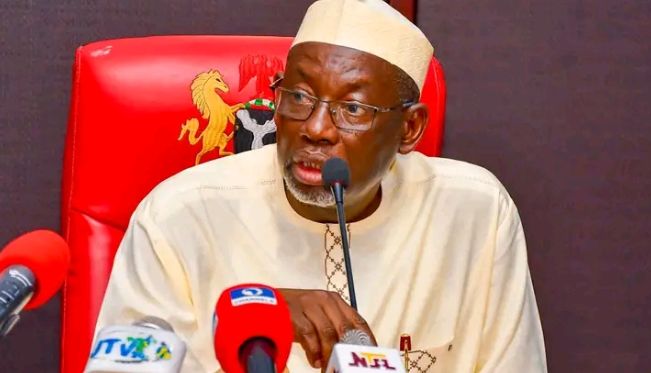
The All Progressives Congress (APC) in Jigawa State is grappling with its most significant internal crisis in years, as a wave of defections by prominent political figures threatens to erode the party’s structural integrity and electoral prospects.
The growing discontent is widely attributed to allegations of poor party management and the marginalisation of key stakeholders under Governor Umar Namadi. His leadership style has come under increasing scrutiny from within party ranks, with critics pointing to a breakdown in internal consensus-building.
Political observers trace the roots of the crisis to a strained relationship between Governor Namadi and his political benefactor, former Governor Mohammed Badaru Abubakar, as well as his financial backer, Isa Gerawa. Although both men remain in the APC, sources familiar with the situation report lingering resentment over what they perceive as a systematic exclusion from decision-making processes and party affairs.
This “cold war” at the highest levels of the party hierarchy has created factions and widened fissures across the APC’s political base in Jigawa. Analysts warn that if left unresolved, the discord could severely undermine party unity and weaken its performance in future elections.
The crisis has now manifested in a string of high-profile defections involving former lawmakers, ex-party executives, and grassroots mobilisers.
Leading the list are former Senators Sabo Nakudu, who represented Jigawa South-West from 2015 to 2023, and Muhammad Ubali Shitu, a longtime political associate of the governor who served in the Senate from 2015 to 2019. Senator Nakudu’s defection is particularly symbolic, as he previously contested the APC governorship ticket against Namadi. His relationship with former Governor Badaru reportedly soured after Badaru backed Namadi during the primaries. Notably, Nakudu and Badaru have since reconciled, united by their mutual opposition to the current governor.
The departure of former party chairmen further underscores the depth of the crisis. Ado Sani Kiri, who chaired the party from 2014 to 2019 and also served as a commissioner and member of the House of Representatives, has left the party, as has Aminu Keskes, who led the party from 2019 to 2023 and previously served as Gumel Local Government chairman and chairman of the Association of Local Governments of Nigeria (ALGON) in the state.
Also among the defectors is Bala Usman Chamo, a former Social Investment Programme coordinator and Dutse Local Government chairman, widely regarded as a key grassroots organiser. Their exit is seen as a major blow to the party’s strength, given their influence across various political blocs in the state.
The crisis has also penetrated the governor’s inner circle, with several political appointees resigning from their positions and quitting the party. Two serving special advisers have stepped down, including one reportedly preparing to contest for a seat in the House of Representatives under the opposition African Democratic Congress (ADC). Additionally, six senior special assistants and two special assistants have resigned, all citing dissatisfaction with the current direction of the party.
One of the most notable exits is that of Zakari Kafin Hausa, a former senior special assistant who played a central role in organising Governor Namadi’s campaign and mobilising the support that led to his emergence as governor. His defection is viewed by insiders as a significant indicator of deepening cracks within the governor’s inner circle.
Perhaps most damaging to the APC’s political machinery is the defection of at least 17 former local government chairmen. These figures are critical to grassroots mobilisation, electoral coordination, and voter outreach. Their exit signals a potential collapse of the party’s local structures, raising serious concerns about the APC’s ability to secure the mandatory 25 percent of votes in the state during future presidential elections.

NCC to Enforce Subscriber Compensation for Poor Telecom Service

ADC Leadership Tussle Worsens as Third Faction Emerges, Rejects Nafiu Camp, Mark’s Coalition

AN OPEN LETTER TO THE PRESIDENT OF THE FEDERAL REPUBLIC OF NIGERIA

Internal Crisis Deepens in Jigawa APC as High-Profile Defections Threaten Party Cohesion

OPINION:Bauchi ,A Paradise for Immunity Seekers? How Alleged Corrupt Politicians Are Eyeing Government House

ADC Leadership Crisis: State Chairmen to Elect Caretaker Committee on Tuesday

Governor Abba Kabir Yusuf Holds Exclusive Prerogative to Choose Deputy – Malam Inuwa Waya

The Governor Who Chose His People Over His Politics: Abba Yusuf and the Moral Courage Behind Kano First
Restoring the Glory That Was Always There: Governor Abba Kabir Yusuf and the Historical Vision Behind Kano First

Table Water Producers Increase New Price for Sachet Water in Kano
NCC to Enforce Subscriber Compensation for Poor Telecom Service
ADC Leadership Tussle Worsens as Third Faction Emerges, Rejects Nafiu Camp, Mark’s Coalition
AN OPEN LETTER TO THE PRESIDENT OF THE FEDERAL REPUBLIC OF NIGERIA
Internal Crisis Deepens in Jigawa APC as High-Profile Defections Threaten Party Cohesion
OPINION:Bauchi ,A Paradise for Immunity Seekers? How Alleged Corrupt Politicians Are Eyeing Government House
ADC Leadership Crisis: State Chairmen to Elect Caretaker Committee on Tuesday
Governor Abba Kabir Yusuf Holds Exclusive Prerogative to Choose Deputy – Malam Inuwa Waya
The Governor Who Chose His People Over His Politics: Abba Yusuf and the Moral Courage Behind Kano First
Restoring the Glory That Was Always There: Governor Abba Kabir Yusuf and the Historical Vision Behind Kano First
Table Water Producers Increase New Price for Sachet Water in Kano
-

 Opinion4 years ago
On The Kano Flyovers And Public Perception
-

 Features5 years ago
How I Became A Multimillionaire In Nigeria – Hadiza Gabon
-

 Opinion5 years ago
Kano As future Headquarters Of Poverty In Nigeria
-

 History5 years ago
Sheikh Adam Abdullahi Al-Ilory (1917-1992):Nigeria’s Islamic Scholar Who Wrote Over 100 Books And Journals
-

 Opinion4 years ago
My First Encounter with Nasiru Gawuna, the Humble Deputy Governor
-

 History5 years ago
The Origin Of “Mammy Market” In Army Barracks (Mammy Ochefu)
-

 History4 years ago
The History Of Borno State Governor Professor Babagana Umara Zulum
-

 News4 years ago
Federal University Of Technology Babura To Commence Academic Activities September