
Politics
From MAKAFI to AWAKAI: The Display of Blind Politics and Political Idolatry
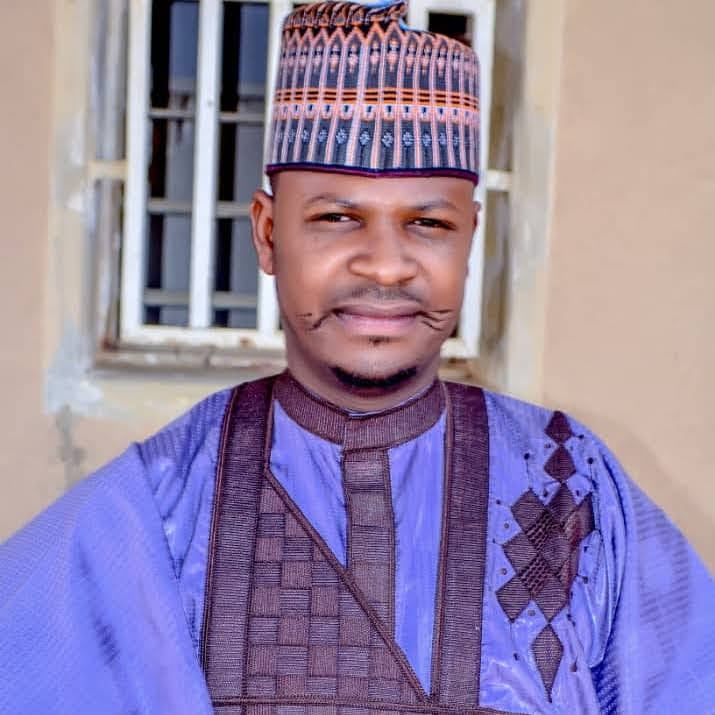
By: Ibrahim Ishaq (Ɗan’uwa Rano)
When people embrace labels like ‘blind followers’ or ‘sheepish supporters’, they are not practicing democracy, they are surrendering their humanity. And democracy cannot thrive without independent minds
First of all, I must express my gratitude to my teacher, Dr. Auwalu Anwar. From his article titled *’From Sawaba to Asara’*, I gained deeper knowledge and clearer understanding of who Kwankwaso is and what Kwankwasiyya represents. That lecture opened my eyes and strengthened my resolve to write this short reflection, particularly on how blind and sycophantic politics has taken root among our people, from leaders to followers.
Blind politics is not limited to the reckless words of followers who degrade their own human dignity. It also includes the irresponsible utterances of political leaders directed at their followers – words which sometimes insult human beings whom Allah has honored, corrupt public morality, and promote thuggery and disrespect among the youth.
The word of our Creator provides a key reminder about the honor and dignity of human beings. Allah Himself declared that He has ennobled mankind. In the commentary of scholars, this means that man is not to be humiliated or debased. If we accept this truth, then why should we call ourselves “blind” (MAKAFI) when Allah has not afflicted us with blindness? Why should we label ourselves “sheep” (AWAKAI)? The truth is, this is nothing but a reckless way of expressing loyalty to a leader within a political system, without considering the danger such behavior poses to our very lives.
To be fair and historically accurate, Kwankwaso and his followers were not the first to engage in this destructive culture of blind loyalty. It dates back to the Second Republic, during the administration of the late Abubakar Rimi, the first civilian governor of the old Kano State. In fact, many of the political strategies and public speaking style that Kwankwaso employs today were learned from the late Abubakar Rimi Limamin Canji “Leader of Change.”
At the height of Rimi’s popularity, he also had blind followers – some went so far as to claim that even if Rimi were to jump into fire, they would follow him. This should not surprise anyone, considering the level of popularity Rimi enjoyed, which Kwankwaso has not yet attained. Several scholars and historians confirmed this. Among them is Sheikh Ibrahim Khalil, Chairman of the Kano Council of Ulama and a former gubernatorial candidate under the ADC, who affirmed this point during an interview I conducted with him on ‘Bakon Mako’. Likewise, Musa Nuhu Yankaba, former publicity secretary of the NNPP in Kano (before the party split), also confirmed this claim after parting ways with Kwankwasiyya. He is now the secretary of the NNPP’s “fresh faction” in Kano.
Even before Rimi, traces of this culture existed – some information even suggest that during the days of Mallam Aminu Kano, known as Tabo and Santsi, there were also leaders whose reckless words were tolerated and who enjoyed blind loyalty from their followers.
Bringing it closer to our own time, we have witnessed political leaders make degrading remarks filled with insults against fellow human beings. For example, recently the Kano APC chairman, Abdullahi Abbas, became notorious for his slogan “ko da tsiya ko da tsiya-tsiya” (“by force or by whatever means”), in addition to other foul remarks directed at his political opponents. Similarly, Alhassan Ado Doguwa, member representing Doguwa and Tudunwada Federal Constituency, once assembled his followers and asked them: “Who will you vote for in 2023?” When they shouted “APC,” instead of him stopping there, he went further and abusively declared: “If you don’t vote APC, then you will vote for your father!”
What is most shocking is that none of his associates or followers objected or cautioned him. Instead, they cheered him with excitement. This clearly reflects how blind politics has gained ground among leaders and followers alike.
Even in neighboring states, we see similar patterns. In Jigawa, for instance, Governor Mallam Umar Namadi Ɗanmoɗi has supporters who go to great lengths to portray him as infallible: asserting that everything he does is always correct. They lavish him with praise, often saying, *“Mallam yana kan daidai”* (“The Mallam is always right”).
Yet, as a scholar, Governor Namadi surely knows the truth: no human being is without error. Only Allah Almighty and our beloved Prophet, peace be upon him – are free from mistakes.
So why, if he truly understands this, does he allow his supporters to keep feeding him such flattery? Why does he sometimes show visible pleasure when they claim he is always right? This is the essence of political sycophancy: the supporters know they are speaking falsehoods, the leader knows the lies, yet both tolerate them for the sake of politics.
But where the situation becomes most alarming is within Kwankwasiyya, in Kano. Many of its members have openly accepted labeling themselves not only as blind followers *’MAKAFI’*, but also as sheep *’AWAKAI’*, just to please their leader. The piercing looks Kwankwaso gives when addressing his “blind” and “sheepish” supporters, along with the language he uses, convinces them that he is their only political idol. They are ready to accept anything he does as right.
In my archive, I came across a video where Kwankwaso gathered people and boasted about his contributions to the education of citizens from poor families – who he claimed he turned into “people of worth.” On the basis of this, he openly declared: “Any okada rider (tricycle rider) who does not place my poster at the back of his bike, may God’s curse be upon him.”
Another recent event further confirms what my teacher, Dr. Auwalu Anwar, once said: “Kwankwaso is a political fraudster who manipulates the gullibility of his followers for his own gain.” Recently, at a political gathering of his loyalists, he openly declared: “We have a party, and we are comfortable in it. Anyone who wants to talk to us, our door is open for alliances.”
In reality, this statement does not reflect the language of a nationalist or a visionary leader. At a time when politicians like Atiku Abubakar, with nearly 7 million votes in the last election, and Peter Obi, with over 6 million votes, are willing to sacrifice personal interests to unite for Nigeria’s survival, Kwankwaso, with barely 1 million votes – presents himself as a commander of a great army, insisting that others must come and negotiate with him. This alone shows clearly that he is a self-serving political merchant, arrogant and indifferent to the national interest – traits that God does not love.
In summary, all the misbehavior of Kwankwaso’s supporters, their insults to respectable people, their blind loyalty and their acceptance of being called animals – has never once been rebuked by him. On the contrary, he often appears delighted, as though he enjoys watching them degrade themselves. Yet the greatest danger of this style of politics is that it will eventually backfire, even on Kwankwaso himself. And history is never lenient with anyone.
Blindness of the heart surpasses even the blindness of the eyes. To willingly embrace the idea of being blind or behaving like sheep is to confess to the death of independent thought. Sheep, ‘AWAKAI’ after all, do not question, do not resist, and do not reason – they simply follow. When human beings reduce themselves to this level in the name of loyalty, politics ceases to be politics, it becomes worship.
This culture of blind allegiance is dangerous for democracy. It shields politicians from accountability and silences critical voices, creating an environment where incompetence and corruption thrive unchecked. The more people boast of their blindness and sheepishness, the more they strengthen the chains that bind their own freedom.
What is worse is the pride with which many now accept this degradation. To call oneself a “sheep” in service of a political leader is not humility – it is humiliation. It is a public declaration that one’s reason has been sacrificed on the altar of sycophancy. And a society where sycophancy is celebrated cannot build a future on justice, fairness, or truth.
Let this brief reflection serve as a wake-up call: Until Kano abandons the politics of blind loyalty and sycophancy, its future will remain hostage to the whims of demigods.
May Allah grant us wisdom, courage, and long, beneficial lives.
Ibrahim Ishaq (Ɗan’uwa Rano)
Email: _danuwarano@gmail.com_
Telephone: _+2348056479966_
Politics
A Remarkable Homecoming: Kano Unites in Support of Abba Kabiru Yusuf, Signaling a Strong Endorsement for Bola Ahmed Tinubu in 2027

By: Nasiru Yusuf Gwadabe
Saturday, 4th April 2026 will not fade easily from the living memory of Kano. It is a date that has already secured its place in the history of the ancient city, not through official proclamation, but through the overwhelming expression of its people. From the very moment the aircraft conveying Abba Kabir Yusuf touched down at about noon, Kano transformed into a living theatre of emotion, loyalty, and political meaning. What began as a homecoming soon evolved into something far deeper, a dual expression of confidence in state leadership and a rising chorus of national political alignment.
What followed defied imagination. The governor could barely step forward without being surrounded by a surging crowd, eager not just to see him, but to connect with him. From approximately 12 noon until about 9 o’clock, movement itself became an extraordinary challenge. It was not resistance that slowed the governor’s convoy, but an outpouring of affection so powerful that it turned a simple journey into a historic procession.
The journey from the airport to the Government House, which ordinarily takes not more than fifteen minutes, stretched into nearly ten hours. What should have been a routine drive became a prolonged passage through a sea of humanity. The motorcade moved slowly, almost ceremonially, as if guided by the collective will of the people rather than the force of engines.
At every junction, the story repeated itself. The convoy would halt, not out of necessity, but out of insistence. Citizens stepped forward to offer prayers, raising their hands and voices in supplication for the governor’s success. These were not symbolic gestures. They were deeply felt expressions of hope, trust, and shared destiny. In those pauses, the line between the leader and the people seemed to disappear, replaced by a bond rooted in mutual belief.
Kano is not a city that offers such devotion lightly. It is politically aware,
historically grounded, and known for its ability to assess leadership with clarity. Yet on this day, its verdict was unmistakable. The scale of the reception, the patience of the crowd, and the emotional intensity of the moment all pointed to one undeniable truth. Abba Kabir Yusuf is not merely occupying an office. He is occupying the hearts of his people.
To describe him as a homeboy is to capture the essence of this connection. He is seen not as a distant authority, but as one who understands the rhythm of the streets, the struggles of ordinary citizens, and the aspirations that define Kano’s future. This familiarity has translated into trust, and that trust has now found its most visible expression in the streets.
Yet beyond the celebration of a leader’s return, a second narrative steadily took shape, one that aligned Kano’s political voice with the national leadership of Bola Ahmed Tinubu. What unfolded was not only a reaffirmation of faith in the governor, but also a growing endorsement of the President, expressed through chants, symbols, and the unmistakable enthusiasm of the crowd.
What unfolded on that Saturday goes beyond spectacle. It carries deep political significance. In a system where legitimacy is often contested, moments like these serve as powerful indicators of public confidence. The crowd was not assembled. It emerged. It was not directed. It was inspired. And in its sheer magnitude, it delivered a message louder than any campaign could convey.
That message is clear. Kano believes in Abba Kabir Yusuf. Kano stands with him. At the same time, Kano is increasingly aligning with the leadership of Bola Ahmed Tinubu, projecting a unified political direction that stretches from the state to the centre.
The long hours from noon to night were not a burden to the people. They were an offering. Every minute spent waiting, every step taken alongside the convoy, every prayer raised was a contribution to a shared narrative. It was a way of saying that leadership, when it is genuine, does not stand apart from the people. It walks among them.
While addressing the mammoth gathering that thronged the streets, Governor Abba Kabir Yusuf expressed deep appreciation for the overwhelming show of love and solidarity, describing it as a clear endorsement of his administration’s direction and achievements. He noted that such a reception was not only humbling but also a powerful motivation to intensify efforts toward delivering more developmental projects across all sectors of the state.
He assured the people that their confidence would not be taken for granted, emphasizing that the administration remains committed to consolidating its gains and expanding its impact beyond 2027. In what appeared to be a pointed message to political opponents, the governor remarked that the unprecedented turnout had already sent a strong signal about the future, particularly to those suggesting that his tenure would be limited to a single term. According to him, the people of Kano have, through their actions, demonstrated where their loyalty lies.
“Today’s outing is no doubt an indication of your unalloyed support and endorsement for our administration to continue with the laudable initiatives that will make Kano greater,” he declared, while challenging any political contender to mobilize a similar organic gathering. The statement carried a clear undertone, positioning the event not just as a welcome ceremony, but as an early barometer of political strength ahead of the 2027 elections.
Importantly, the governor used the moment to reaffirm Kano State’s alignment with the Federal Government under the leadership of Bola Ahmed Tinubu. He emphasized that sustained collaboration with the centre remains vital for attracting federal interventions and accelerating development across the state.
In a more direct political appeal, he called on the people of Kano to translate their visible enthusiasm into electoral action by supporting President Bola Ahmed Tinubu in the 2027 general elections. He stressed that continuity at the federal level would not only consolidate ongoing reforms but also guarantee greater opportunities and development for Kano State.
The response from the crowd reinforced this call. From the airport through the major streets, chants in support of the President grew louder, blending seamlessly with those of the governor. Supporters waved party symbols and openly affirmed their readiness to stand with President Bola Ahmed Tinubu, turning the reception into a powerful demonstration of dual loyalty and shared political purpose.
For many observers, this was more than a moment of celebration. It was a declaration of alignment. The people of Kano, through their sheer numbers and visible enthusiasm, projected confidence not only in their governor but also in the leadership at the centre. The endorsement of President Bola Ahmed Tinubu was not staged. It emerged organically, carried on the voices of thousands who see continuity as a pathway to progress.
This groundswell of support speaks to a broader political reality. Kano remains one of the most influential political blocs in the country, and its direction often shapes national outcomes. By rallying behind both Abba Kabir Yusuf and President Bola Ahmed Tinubu, the people have signaled a convergence of interests that could prove decisive in the coming electoral cycle.
The electrifying reception, marked by chants, music, and a sea of party symbols, brought movement across key roads to a standstill as residents came out in solidarity. The massive turnout underscores the governor’s growing political influence and the deepening connection between his administration and the people. It also reflected the role of grassroots mobilization across all levels, drawing participation from party executives, political office holders, traders, youth groups, and entertainers. The crowd took nearly eight hours to escort the governor from the airport to the Government House, a journey that ordinarily lasts just fifteen minutes.
The reception stands as one of the largest in Kano’s recent political history, second only to the massive turnout recorded on 12th January 2024 following the Supreme Court judgment. In both instances, the people’s response has served as a clear signal of political direction and public sentiment.
As the governor finally made his way through the vast crowd late in the evening, the significance of the moment remained unmistakable. This was more than a return from official engagements. It was a reaffirmation of trust, a visible endorsement of leadership, and a powerful reminder of the bond between Kano and its governor.
Saturday, 4th April 2026 will be remembered not just for the crowd, but for what the crowd represented. It will be remembered as the day Kano stood still, not in silence, but in solidarity. A day when the streets spoke, when the people declared their confidence, and when a leader’s journey home became a collective experience.
And as the echoes of that historic welcome continue to ripple across the political landscape, one conclusion rises above all others. This was not merely a reception. It was a statement of strength, a public reaffirmation of mandate, and a quiet but powerful signal of what lies ahead. In the language of politics, moments like these are not accidental.
They are indicators of momentum, of acceptance, and of a growing consensus. If the future is shaped by the will of the people, then Kano has already begun to write its next chapter, one that places Abba Kabir Yusuf firmly at its center, while echoing a resounding and unmistakable endorsement of Bola Ahmed Tinubu as the path forward to 2027.
Nasiru Yusuf Gwadabe, a Veteran Journalist, retired Editor with CTV writes from Kano
Politics
REJOINDER: The Fallacy of the “Commander” and the Burden of Integrity
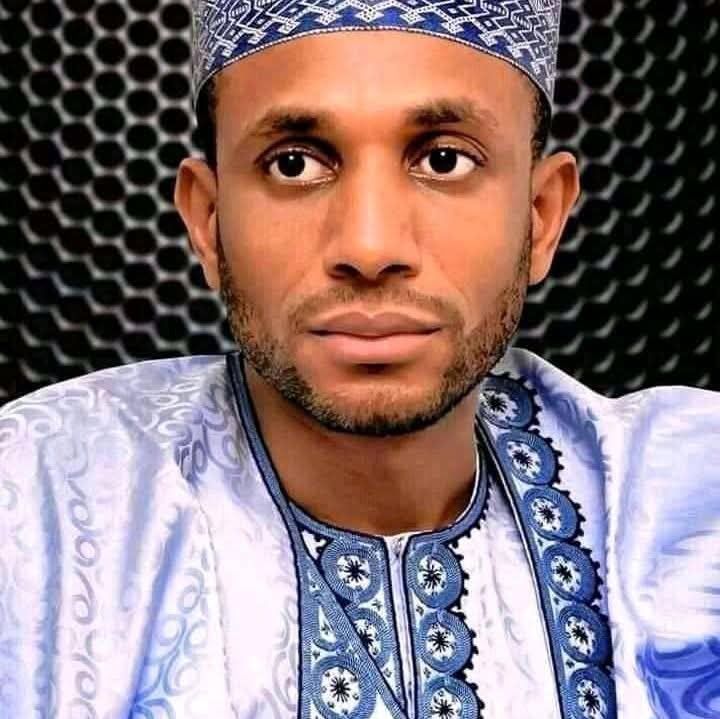
By Halima Isyaku Dantsoho
I read with a mix of amusement and concern the defense of Hon. Murtala Sule Garo by Hadi Abdullahi Muhammad, which attempts to frame the valid scrutiny of a public figure as a mere product of “internal power struggles.” While it is convenient to label every criticism a “media trial,” we must confront the reality that leadership is a sacred trust, not a reward for street mobilization. To suggest that Garo is the ideal choice for Deputy Governor—particularly in the wake of the recent political shift that saw Governor Abba Kabir Yusuf move to the APC—is to ignore the very “storm” the author claims to see. The vacancy in the Deputy Governor’s office exists because Kano is attempting to move past a season of distraction following the resignation of the former occupant; why then would the state replace a controversy with a liability? We are talking about a man who remains entangled in significant litigation regarding his past tenure as Commissioner, and to elevate such an individual to the second-highest office in the state would be like putting out a fire with petrol. It would lock the administration into a permanent state of legal defense, ensuring that the coming years are spent in courtrooms rather than on the construction of a better Kano.
The author praises Garo as a “Commander” of the grassroots, yet in a state as economically vital as ours, “mobilization” is not a substitute for administrative integrity. The “grassroots” of which he speaks—the traders, farmers, and youths—are the primary victims when public funds are allegedly mismanaged at the local government level. True loyalty to the base is shown through transparent governance and the systemic protection of public wealth, not through the strategic distribution of startup tools during an election cycle. If the APC national leadership and President Bola Ahmed Tinubu are truly committed to a “Renewed Hope” agenda, they must recognize that elevating a figure with such unresolved legal narratives contradicts the very integrity the party must represent in this new era. Perfection may not be the standard, but accountability is. Fairness does not mean ignoring a mountain of evidence in favor of political popularity; it means letting the courts decide a man’s fate before he is granted the prestige of high office. Kano has moved forward into a new political era, and it is time our leadership choices reflected a future built on stability rather than a return to the controversies of the past.
Halima Isyaku Dantsoho wrote from Kano.
Politics
Kano’s Quest for an Alternative with Ibrahim Ali Amin Little, By Adnan Mukhtar
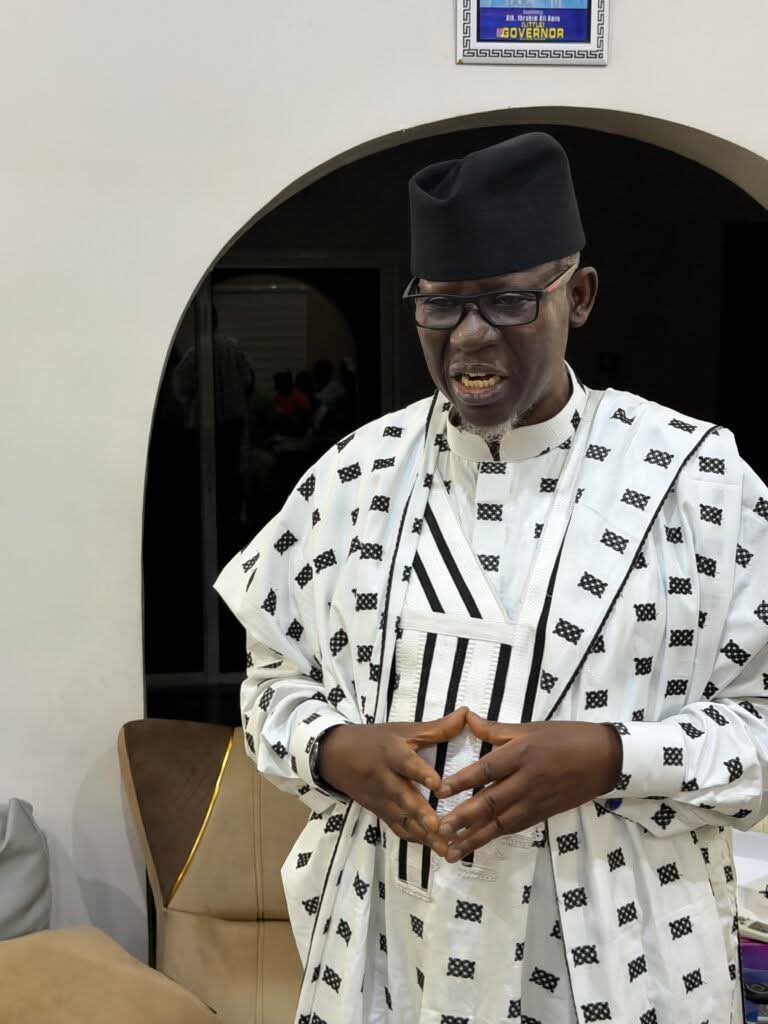
My recent article titled “Ibrahim Little: The Man Fit for the Job” has opened the eyes of many young men and women, particularly those in the Gen Z category, to the personality and potential of Alhaji Ibrahim Ali Amin. He is a man of calibre and a true embodiment of competence for the enormous responsibility of leading Kano, the commercial hub of Northern Nigeria.
The quest for a credible alternative in Kano’s political space began last year when my political mentor and principal declared his intention to contest for the governorship. The name Ibrahim Ali Amin Little has, however, been a household name in Kano politics since the year 2000.
He is involved in politics not for material gain, but out of a genuine passion for investing in the lives of the people. As a businessman with a proven track record, he brings a different perspective to governance. Since 1999, most of Kano’s governors have emerged from the civil service sphere. Despite Kano’s status as a commercial centre, the state has witnessed a form of economic stagnation, largely due to insufficient emphasis on business-driven policies and economic innovation.
When I speak of an “alternative,” I refer to an independent-minded individual who is well-versed in administration and economic management.
Kano cannot be entrusted to someone who lacks a deep understanding of its economic realities. Since 1999, governance in the state has largely revolved around a single model road construction and the awarding of contracts, often without corresponding long-term economic impact.
True governance goes beyond infrastructure. It involves prioritising education by employing competent teachers, strengthening the healthcare sector especially primary healthcare centres with adequate and qualified medical personnel, and creating sustainable systems that improve the quality of life for citizens. These are the real indicators of governance. The question, however, remains: where does Kano stand in all of this?
Unfortunately, very few aspirants are addressing these critical issues except Ibrahim Little. As one of his closest aides, I can confidently say that his priorities are clear and people-oriented. His daily engagements revolve around questions such as: How can we identify and nurture talent? How can Kano become a true industrial hub? How can we establish an independent power supply for the state? And how can we revitalise and boost agricultural productivity?
These are not just talking points for him, they are guiding principles. His interest lies in the development of Kano, not in personal gain or the accumulation of state resources.
At this critical moment, Ibrahim Ali Amin Little stands as the alternative Kano needs.
Adnan Mukhtar
Is a Doctoral Candidate at Northwest University, Kano

INEC Urges Broadcasters to Uphold Fairness Ahead of 2027 Elections

Isoko Traditional Rulers Divided Over 250 Million Offer To Confer Chieftaincy Title On Senatorial Aspirant

A Remarkable Homecoming: Kano Unites in Support of Abba Kabiru Yusuf, Signaling a Strong Endorsement for Bola Ahmed Tinubu in 2027

Kwankwaso, Atiku, Amaechi, Obi, Others Match-Out in Peaceful Protest at INEC’s Headquarters

ADC Crisis: Kwankwaso Seeks Intervention of Gombe Emir

ADC Leadership Crisis: State Chairmen to Elect Caretaker Committee on Tuesday

Governor Abba Kabir Yusuf Holds Exclusive Prerogative to Choose Deputy – Malam Inuwa Waya

The Governor Who Chose His People Over His Politics: Abba Yusuf and the Moral Courage Behind Kano First
Restoring the Glory That Was Always There: Governor Abba Kabir Yusuf and the Historical Vision Behind Kano First

Table Water Producers Increase New Price for Sachet Water in Kano
INEC Urges Broadcasters to Uphold Fairness Ahead of 2027 Elections
Isoko Traditional Rulers Divided Over 250 Million Offer To Confer Chieftaincy Title On Senatorial Aspirant
A Remarkable Homecoming: Kano Unites in Support of Abba Kabiru Yusuf, Signaling a Strong Endorsement for Bola Ahmed Tinubu in 2027
Kwankwaso, Atiku, Amaechi, Obi, Others Match-Out in Peaceful Protest at INEC’s Headquarters
ADC Crisis: Kwankwaso Seeks Intervention of Gombe Emir
ADC Leadership Crisis: State Chairmen to Elect Caretaker Committee on Tuesday
Governor Abba Kabir Yusuf Holds Exclusive Prerogative to Choose Deputy – Malam Inuwa Waya
The Governor Who Chose His People Over His Politics: Abba Yusuf and the Moral Courage Behind Kano First
Restoring the Glory That Was Always There: Governor Abba Kabir Yusuf and the Historical Vision Behind Kano First
Table Water Producers Increase New Price for Sachet Water in Kano
-

 Opinion4 years ago
On The Kano Flyovers And Public Perception
-

 Features5 years ago
How I Became A Multimillionaire In Nigeria – Hadiza Gabon
-

 Opinion5 years ago
Kano As future Headquarters Of Poverty In Nigeria
-

 History5 years ago
Sheikh Adam Abdullahi Al-Ilory (1917-1992):Nigeria’s Islamic Scholar Who Wrote Over 100 Books And Journals
-

 Opinion4 years ago
My First Encounter with Nasiru Gawuna, the Humble Deputy Governor
-

 History5 years ago
The Origin Of “Mammy Market” In Army Barracks (Mammy Ochefu)
-

 History4 years ago
The History Of Borno State Governor Professor Babagana Umara Zulum
-

 News4 years ago
Federal University Of Technology Babura To Commence Academic Activities September