
Politics
From Sawaba to Asara: The Evolution of Commercial Politics in Kano-Auwalu Anwar
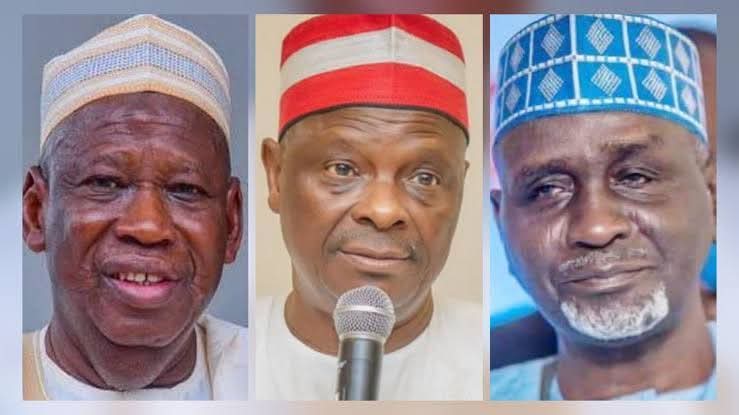
By Auwalu Anwar
“The only thing Kwankwasiyya has in common with NEPU and the PRP is
mimicking wearing the red cap.”
– An Anonymous Elder of Kwankwasiyya.
From Radical Idealism to Commercial Politics
In this month, seventy-five years ago, a momentous event unfolded in Sabongari,
Kano: the founding of the Northern Elements Progressive Union (NEPU) by eightradical young patriots. On 8 August 1950, Abba Mai Kwaru, Bello Ijumu, Baballiya Manaja, Musa Kaula, Abdulqadir Danjaji, Garba Bida, Mudi Sipikin, and Magaji Dambatta convened at Ijumu’s house, No. 9, Ibadan Road, to inaugurate a movementthat would challenge the oppressive foundations of colonial feudalism in Northern Nigeria.
NEPU was not merely a political party; it was an ideological movement rooted in
the emancipation of the oppressed Talakawa, determined to reform the Native Authority system and secure Nigerian independence. Although NEPU was a
regional political party, its visionary founders were pan-Nigerian nationalists.
This founding moment, and the vision it represented, invites critical reflection on the condition of political leadership in present-day Kano. The appropriate homage to NEPU at seventy-five is, therefore, not rhetorical celebration, but sober reflection and evaluation of the trajectory in the deterioration of qualitative leadership.
How far has the dominant political current in Kano embodied by the
Kwankwasiyya movement aligned with or deviated from the values of Sawaba
(liberation), which once defined Kano’s identity? How has the logic of class struggle, ideological activism, and social justice been replaced with a politics of patronage, personality cults, and commercial transactions?.
This article undertakes an analysis of differing political practices and styles of
leadership that defined Kano’s post-NEPU evolution, with a particular focus on how
ideological politics gave way to transactional politics.
Using a historiographical approach, it evaluates the degeneration of radical
traditions into electoral entrepreneurship, culminating in the political dominance of Rabiu Musa Kwankwaso. It offers a diagnostic account of the broader socio-political consequences of this shift, and argues for the urgent need to reconstruct a credible ideological alternative.
The NEPU: A Legacy of Emancipation
NEPU’s principles, enshrined in the 1951 Sawaba Declaration, were foundational
to the political identity of Northern progressives. It aimed to:
1. Overthrow the autocratic family-compact rule embedded in the Native Authority system;
2. Recognize and frame the antagonism between the colonial-traditional elite
alliance and the Talakawa as a class struggle;
3. Democratize state institutions and retool them to serve the interests of the
people;
4. Confront feudal oppression through mass mobilization and revolutionary
change;
5. Establish a new social order rooted in equity, freedom, and dignity.
The NEPU-PRP (People’s Redemption Party) continuum, particularly under the
intellectual and moral leadership of Malam Aminu Kano, defined a political tradition grounded in principled dissent, social justice, and radical reform. Aminu’s historic resignation from public service in October 1950—in protest against the corruption, nepotism, and parasitism of the Native Authorities—signaled a moral break with the status quo. His political career was marked by personal integrity, intellectual engagement, and a commitment to egalitarianism that shaped the ideological orientation of Kano’s political elite for decades.
The PRP in the Second Republic extended NEPU’s legacy into a new era, attracting
intellectual heavyweights like Chinua Achebe, Wole Soyinka, and Bala Usman. It
advanced a politics of mass empowerment, structured participation, and anti- imperial sovereignty. PRP’s clarion call was unambiguous: politics was not a marketplace for wealth but a battleground to ensure the protection of human dignity.
The Military Disruption of Ideological Politics
The ideological rupture began with the political engineering of General Ibrahim
Babangida’s Presidency (1985–1993). Through the imposition of state-created political parties the National Republican Convention (NRC) and the Social
Democratic Party (SDP) Babangida decoupled Nigerian politics from its organic roots. These government-funded parties were ideologically barren, engineered for elite integration rather than democratic participation.
This state-orchestrated detachment of politics from the people led to the rise of
political brokers, transactional loyalty, and personality cults. The movement away
from political conviction to political commodification was not accidental; it was systemic. Party organs were hollowed out.
Patronage replaced ideology.
Campaigns became platforms for rent-seeking rather than nation-building.
Kano, the once-vibrant epicenter of radical northern politics, became a laboratory
for this emerging model of commercial politics. A generation of leaders emerged,
not through ideological struggle and heroism, but through opportunism, access tostate power, and mastery of street-level populism. The old slogans of emancipation were replaced by clientelist chants. The most successful political actors were no longer those who inspired, but those who traded influence.
The Triumvirate: Shekarau, Ganduje, and Kwankwaso
In the post-PRP political order, three men came to dominate Kano’s political
landscape for a quarter of a century: Ibrahim Shekarau, Abdullahi Umar Ganduje, and Rabiu Musa Kwankwaso. Each served as governor for two terms. Collectively, they encapsulate the arc of Kano’s transformation from an ideological vanguard to a commercial theatre.
Of recent, according to many political commentators, pundits, opinion-makers and scholars, such as the former Special Adviser on Religious Affairs during
Kwankwaso’s first term (1999–2003), who also served Ganduje as Commissioner in
the Ministries for Higher Education; and Religious Affairs (2019–2023),Muhammad Tahar Adamu (Baba Impossible) and the State Chairman, Council of Ulama, Ibrahim Khalil, the acceleration of the collapse of our political institutions,
structures, and values, as a people, can be directly linked to the activities of the
triumvirate.
Indeed, each of them has his peculiar attributes as a person, but more so as a
politician. I would like to, at this point, present how people perceive them relating to the deepening socio-political crisis engulfing Kano State; and also express my opinion from what I deduced by observing their political activities and programmes.
For the avoidance of doubt, I do not have any problem with any of them. I have an
excellent personal relationship with Ganduje. Shekarau and I have mutual respect for each other. I genuinely admire Kwankwaso’s exceptional skills and
organisational capacity to mobilise, recruit, and retain followership. However, my love for Kano and training as a student of history are stronger than the sentiments and considerations mentioned above.
Ibrahim Shekarau
Shekarau is regarded, by many, as of lesser faults among the three. He was not haughty even when he emerged governor on the platform of All Nigeria People’s
Party (ANPP). He did not see himself as a super human being for occupying the
office. He was neither known for looting public treasury nor seen to have stolen
Local Governments’ funds, directly or through bogus joint-projects’ account to
execute special projects.
Nevertheless, having spent a great part of his life as an activist or patron of the
Muslim Students’ Society (MSS) and also acquired power on the euphoria of the
restoration of Shari’a implementation, a project into which his predecessor was
known to have been reluctantly involved, Shekarau’s tenure witnessed an obsession to ‘Islamise’ governance and its institutions, for which he committed a large chunk of public resources to court the support of religious organisations and their gatekeepers. Shekarau’s religiously-coated political activities and showmanship made some people to assume that he graduated in theology rather than mathematics.
Despite his relative prudence, Shekarau’s style of financial management was weak
as he was not fully in charge of his appointees; some of whom were perceived to have grossly abused their offices.
Honestly, Shekarau did not achieve any outstanding infrastructural development or transformation. His attention was largely devoted to what he termed, ‘ethical reorientation’ (gyaran zukata; a daidaita sahu); for which he established many
institutions, such as Sharia Commission and Hisbah Commission, to achieve.
Regardless of his shortcomings, Shekarau was conscious of the existing diversities
in the state and tried his best to achieve equitable representation of all interests in
running the affairs of government, which might explain the tremendous peace
recorded in the volatile community during his tenure.
In addition to his generous patronage to religious constituencies, Shekarau extended unprecedented attention and, what people termed “extravagant support,” to traditional institutions and rulers. Thus, the Emir of Kano, Ado Bayero, rewarded
him with the traditional title of Sardaunan Kano. His flirtation with the monarchical
constituency was a total negation of the ideals of NEPU and the PRP, even though
the traditional political institutions have been reduced to mere cultural symbolism.
As a politician, Shekarau is neither regarded as a success story nor a failure. He used to have a large number of fanatical followers, whom he gradually dispersed through tactical group mismanagement and avoidable leadership missteps.
He is not considered a reliable or stable politician and many people allege that his
words, on any promise he made, were hardly kept.
However, the remnants of his political associates always explain that his only real weakness is his desire not to offend anyone, which ironically pushes him, many a times, to offend everyone. That is why he could neither say “No” nor fulfil his
voluntarily made promises at the right time.
Abdullahi Umar Ganduje
Ganduje, in the opinion of many people, is a more difficult person to understand than his two friends. He appears friendly and respectful of everyone, like a salesman, but hardly are his dispositions towards people a true reflection of how he values them.
He is considered exceedingly elusive, slippery, and capable of elevating the art of deception and pretence to a guiding principle in his political interactions and
relationship with others. He is known for being patient, strategic, and crafty.
Ganduje, according to commentators, trusts no one but himself. As a governor, he was perceived and depicted as an embodiment of corruption and malfeasance. His crude appetite for primitive wealth accumulation is seen to be far beyond mere greed or selfishness to a malignant disease.
He was alleged to have personally handled every procurement awarded by his
government, from the purchase of costumes for artistes to the construction of overhead bridges, while in office. The viral videos in which he was shown receiving bribe in dollars from a contractor, which he repeatedly denied was, perhaps, the lowest level of shameful acts to which any governor could go, if proven.
Notwithstanding his love for materialism, most of Ganduje’s construction projects
were regarded to have been executed to specifications and were solid. They were not substandard at staggeringly inflated prices as witnessed during Kwankwaso’s tenure.
Because of his self-love, Ganduje had parted ways with majority of worthy
politicians in his team. This might explain why he was not able to establish any
distinct political identity, apart from Kwankwaso’s, for the eight years he spent as governor in Kano.
Most members of his inner circle were considered riffraff politicians, who were more of a liability to themselves and to others than an asset to the community.
Conscientious public servants and decent politicians did not appear to have attracted his admiration or sufficient attention and support to discharge their duties efficiently.
For instance, towards the general elections in 2023, his chosen State Chairman of All Progressive Congress (APC), Abdullahi Abbas, publicly declared that members of their party did not want Allah’s intervention to avert any calamity during theanticipated gubernatorial election. The prayer was answered, instantly, and they were convincingly defeated at the polls.
Surprisingly, as a two-term governor and former National Chairman of the ruling
party, Ganduje does not have the requisite influence to attract a reasonable number
of credible politicians as his followers in Kano today. However, this does not mean
he has no access to rented crowds, political prostitutes, thugs, and assorted teams of hooligans on demand, to execute his dirty political jobs for him.
Most technocrats in Kano lament the golden opportunities to make a difference in the political fortunes of the State, which Ganduje squandered, intentionally.
He was, among the trio, the most educated; most experienced; most exposed; richest; and the oldest person to be elected governor. Yet, his overall performance did not portray him as someone better than the others, who were considered less endowed
in many respects.
Loyalty was better rewarded than competence in discharging
affairs of the party and in governance, by Ganduje.Unexpectedly, despite the impression many people have about Ganduje as a stingy person, he generated a list of selected associates and friends to whom he sends monetary gifts at regular intervals, usually during the two Eid festivals.
Considering the historicity of radical political tradition and the strong ideological foundation laid by the leadership of the NEPU, as its legacy, many people wonder why the continuing rapid deterioration in the quality of political leadership in Kano
State?.
Rabiu Musa Kwankwaso.
Undoubtedly, of the three gladiators, who are blamed for polluting the political space and lowering the qualitative standards of leadership in the environment, only
Kwankwaso is actually regarded as a serious politician with considerable following to influence a significant shift in political behavior in Kano.
Thus, the search light in this tribute focuses more on him than on the others, in order to have a better understanding of the root causes of the current leadership challenges in the state.
In order to dispassionately discuss the evolution of commercial politics at the
expense of ideological politics in Kano therefore, it is necessary to review the
trajectory of Kwankwaso’s political antecedents, strategy, and ascendancy.
Is Kwankwaso genuinely a pro-poor politician or is he fake and merely taking
advantage of his vulnerable followers, majority of whom are uninformed?
The best way to answer this question, is to trace the transition of party politics in
Kano; from being a conviction-based vocation for the emancipation of society under Aminu Kano; to a self-centred commercially profitable enterprise with Kwankwaso as the sole-signatory to all its bank accounts and the greatest beneficiary of its multiple, often manipulated, but profitable transactions.
Although many people who mean well for Kano lament that it is regrettable to have
an autocrat like Kwankwaso as the dominant political player in the state; they fail to understand that, his emergence was made possible by the nonchalant attitude of true democrats, who refused meaningful involvement in the political process, which created a natural vacuum for him to fill.
Nature abhors a vacuum!
It is, therefore, important at this point to present Kwankwaso’s political history and strategy in order to understand how his emergence as a leading player transforms
ideologically oriented politics into a lucrative commercial enterprise in Kano State.
Kwankwaso’s political career commenced with his election into the House of
Representatives, from Kura-Madobi-Garun Malam Federal Constituency, under the
umbrella of the SDP, in July 1992. He emerged Deputy Speaker when the position was zoned to Kano State. He was later elected Delegate to the National
Constitutional Conference, from Kano Central Senatorial District, in 1994.
In 1999, he contested gubernatorial primaries of the People’s Democratic Party (PDP) and, initially, lost to Ganduje at the Result Collation Centre.
His friend and District Head of Gabasawa at the time, Aminu Babba Dan Agundi,
deliberately delayed submitting the result of his constituency in order to rescue
Kwankwaso with doctored results from Gabasawa. That was how the initial gap wasbridged with unlawful votes when Xan Agundi rigged the process in favour of
Kwankwaso leading to his declaration as the winner.
The incident almost led to the disintegration of the PDP in Kano State. Surprisingly,Ganduje conceded ‘defeat’ to save the party from explosion and was appreciated by all for his maturity and sacrifice. This was what endeared him to the party leadership.
So, if Ganduje had actually rigged Kwankwaso out during the gubernatorial election in 2019, as it has been widely speculated, it should be considered as a mere return match. Revenge, according to experts, is more delicious when it is served cold.
The Director of Organization for Kwankwaso’s Campaign (1999-2003), who was later appointed his Commissioner of Finance, Ibrahim Dan Azumi Gwarzo,
corroborated the role played by Xan Agundi in turning the table against Ganduje.
In fact, he further explained how he used his telephones, Nos. 064-670095 & 064-
670096, and communicated directly with Dan Agundi, from the Result Collation
Centre, and informed him about the number of fictitious votes to manufacture in order to ‘defeat’ Ganduje.
With Kwankwaso’s emergence, Gwarzo further elaborated, he became a monster,
disregarding the principle of equitable representation among the three major political tendencies constituting the PDP in the State, namely: NPN (under Aminu Wali), Santsi (under Muhammadu Abubakar Rimi), and Tavo (under the joint supervision of Dauda Xan Galan/Musa Gwadabe).
PDP elders in Kano were shocked and taken aback by Kwankwaso’s recalcitrant
disposition as soon as he became candidate of the party. His disrespect for them increasingly worsened, up to his swearing-in as Governor.
For instance, he opposed the elders on the choice of Ganduje as his running-mate.
He rejected their proposal on the appointment of Secretary to the State Government.
He refused to take their advice on the nomination of a new Party Chairman to replace Yusuf Baita, who was appointed Commissioner of Commerce and Industry.
In addition, the Chairman of the Elders Committee, Abdu Dawakin Tofa, had
confirmed to me at the time, how Kwankwaso attempted to swindle the committee by proposing to replace Ganduje with Tofa’s brother, Mahmud Baffa Yola, as his
running mate.
Tofa rejected the offer as immoral; only to learn that Kwankwaso’s actual plan was
to replace Ganduje with a different person, Bello Hayatu Gwarzo, had the former
consented for Ganduje to be dropped.
How did Kwankwaso manage to dominate and have absolute control of the political
space in Kano?
The truth is, regardless of his shortcomings, Kwankwaso has certain advantages and qualities, which continuously enhance his chances in contest with his opponents,
since 1999.
He has stupendous wealth, which he amassed in the course of his public life as Governor, Defence Minister, Board Member of the Niger Delta Development
Commission (NDDC), and Special Envoy to Darfur.
He always plans well ahead of others. He is tenacious and persevering. Above all,
he is exceptionally grounded in the etiquette of local politics, as a full-time
practitioner. He always stoops to conquer whenever necessary, with sufficient ease
and fake humility.
His political strategy for mobilization, recruitment, and retention is consistent with his unique character as peasant-elite.
He is an elite by his social status; but speaks and understands the language of
peasants; if occasion demands, he easily blends and becomes one. He is street-smart with unquantifiable native intelligence.
The ability of a politician to connect well with his constituents, at their level, is a
huge asset and a special gift in politics. It is the purpose for which the gift is
deployed, which define the character of a politician as good or bad.
His style of group management is highly decentralized. He micro-manages and
divides his followers into smaller cells in order to dominate and rule them effectively.
For instance, academics, technocrats, professionals, retired security officers,
members of the business community and others, who submit to his authority, are all confine to their local government areas for operational purposes. Thus, it is only
Kwankwaso who knows what is happening in every local government area and in
the entire state. He has no deputy or an effective central coordination committee.
I have deduced this unwritten membership precondition law through discussions
with some of my Kwankwasawa friends and former political associates, who spoke to me in absolute confidence.
He is uncomfortable with self-respecting elites, who know and respect the value of
self-worth. He is not excited in partnering with conscientious intellectuals and does
all he can to keep his distance or block their chances for relevance in his group.
The Kwankwasiyya Group
Kwankwasiyya, therefore, is strictly speaking not an ideological or progressive
political group. It has no ideological blueprint or a manual for the transformation of society. It is a mere collection of desperate followers, who see opportunities and the fulfilment of their life-ambitions and desires only through their leader. Some of his
followers have been accused of making blasphemous utterances to demonstrate their loyalty to him.
The lawless and militant disposition of Kwankwasiyya as a group, makes it attractive to the youth, juvenile delinquents, malcontents, political apprentices, irreconcilables,
and opportunists in society; who become mere tools in the hands of their leader to
manipulate for his exclusive benefit.
Kwankwaso takes advantage of the rooted tradition of political volunteerism in
Kano; and uses it to extract maximum benefits from the activities of his unsuspectingfollowers, whom he programmes and remote controls to work for him not as political associates or partners, but as democratic volunteers, if not labourers.
Of course, among his followers, there are dotted islands of tested politicians, skilled
experts, and decent individuals, who neither place high premium on their services nor bother to protect their dignity. It is alleged that one has to debase his self-esteem in order to belong and be accepted as truly loyal by Kwankwaso.
Internal democracy is a forbidden concept in the group. No open discussions on any
subject relating to fairness and justice in the distribution of positions, which are at
best either allocated arbitrarily among those whose faith in the charade is not in
doubt, or allegedly purchased by people of means, especially new recruits, who
joined the group with the full knowledge that access to any elective or appointive
positions, at all levels, is for sale to the highest bidder. Thus, no dissenting voices on any decisions taken by Madugu are tolerated in Kwankwasiyya.
Honestly, the Kwankwasiyya group is, literally, like a prison under the control of
someone who denies the inmates the freedom of movement and of thought.
Political Brokerage and Investors
Kwankwasiyya is akin to The Buhari Organization (TBO) of yester years. It has a single indivisible objective: to achieve the exclusive ambition of the leader in total disregard for the aspirations, expectations, and deserved benefits to his followers.
As a broker in politics, Kwankwaso always carries his followers in a hand-bag in
order to invest them in any political stock-market of his fancy for his benefit.
He can also lease them, temporarily, to a political party or to any individual, who
pays for his services, or agrees to accommodate him as a potential presidential candidate or a running-mate, depending on the circumstances in which he finds himself.
Frankly speaking, Kwankwaso is neither a selfless politician nor an authentic
political leader. He is a mere portfolio investor or a soldier of fortune in politics.
This is why whenever he jumps from one party to another, he jumps with
Kwankwasawa as sellable commodities in his containers. It does not matter whether or not they have registered with his new party, they are not its members, at all.
For instance, when he adopted the New Nigeria People’s Party (NNPP) and
pretended to ‘contest’the presidential election in 2023, he left his commodities with their tags as PDP leaders in Kano State. He put them in the fixed deposit of Nyesom Wike Domiciliary Account; pending when his under the table auction processes for the commodities would be concluded.
At the end of the process, he handed over the bill of lading to Wike, who took
delivery of them as PDP delegates from Kano State, in order to fight Atiku in the
party primaries. It was much later that those characters left the PDP to join their
auctioneer in NNPP.
Still, in 2023, during the general elections, Kwankwaso’s premium was believed to
have been renewed by the APC in conjunction with its candidate, Bola AhmedTinubu, who sponsored him to contest for the presidential election on the platform of the NNPP, with the sole purpose to block Atiku from harvesting meaningful votes in Kano and becoming the president of Nigeria. He played ball.
For those who perceive Kwankwaso as a mercenary, and they are in millions; his
political activities at the national and sub-national levels are primarily motivated by envy, greed, hatred, ingratitude, and treachery. For instance, one of the gubernatorial candidates of the NNPP in the North-East, during the 2023 elections, has unbelievable stories of treachery relating to his experiences with Kwankwaso’s role in his defeat by the APC.
Kwankwaso’s primary objective has always been to be a president or a vice-
president of Nigeria. Otherwise, he would not mind to pull down any northerner,
whose candidature appears promising towards getting elected to either of these
positions. Thus, he manipulates his followers to truncate any presidential material, who might be better prepared or more competent than him in all respects and, unfortunately, in the name of Kanawa.
As a third term governor, through a trapped proxy, Abba Gida-Gida, Kwankwaso is
alleged to have turned Kano State treasury into his personal Automated Teller
Machine (ATM). This, according to his critics, is the whole essence of his holding onto Kwankwasiyya as an effective instrument of blackmail, deception, fraud,
intimidation, and transactional political relationship with any willing investors.
He is loyal only to his ambition. He adds no real value to others. His sophistication
in political opportunism and treachery at the slightest opportunity, knows no bound, whatsoever. So, any political party or a presidential hopeful, who invites
Kwankwaso for a partnership, does so at his or her own risk.
Presently, in the political permutations of Northern Nigeria, the Kwankwasiyya
group is like a malignant cancer. However, with the requisite discipline,
perseverance, organizational ability, selflessness and sincerity of purpose among stakeholders opposed to Kwankwaso in Kano, his destructive political activities, to the greater interest of the community, shall soon become history.
The aura of Kwankwaso’s invincibility, in the context of Kano politics, is an
exaggerated propaganda. All it takes to weaken and defeat him is the right alliances, strategic planning, and selfless sacrifices by all relevant stakeholders for the common good.
Presently, his eyes might be fixed on the chances of certain influential politicians
in Northern Nigeria, who are believed to nurse presidential ambition, including
Atiku Abubakar, David Mark, Aminu Waziri Tambuwal, Nasir El-Rufai, and Kashim
Shettima. He can strike or stab any or all of them in the back, if President Tinubu
and the APC or any other Southern presidential candidate pays him the right price.
Just watch his next moves for 2027.
Many Northern politicians believe that there is no morality in Kwankwaso’s
insatiable appetite for materialism. Every position of influence within his
jurisdiction, be it in the context of traditional or modern political institutions, is upfor sale to the highest bidder. The lingering Kano Emirate Crisis is often cited to substantiate this allegation.
Kwankwaso’s political legacy, so far, symbolizes the vulgar concept of “moni for hand back for ground.”
Frankly speaking, considering Kwankwaso’s objective and style of running his group, he was never meant to be a leader (jagora) in the true sense of the term. He is merely a head of caravan (madugu) as correctly referred to by those he uses as his commodities, goods, or wares in multiple political deals and transactions.
The Kwankwasiyya group is totally ignorant of the ways and means to follow in transforming society. This is the naked truth! Both the leader and the led are bereft of ideas and ideals to aspire to move society forward.
When I discussed my intention to write this article with one of my friends, who is
an elder in the Kwankwasiyya group, and asked of his opinion on the similarities
and differences between and the NEPU-PRP legacy and the Kwankwasiyya, he responded by saying: “The only thing Kwankwasiyya has in common with NEPU and the PRP is mimicking wearing the red cap.”
With the increasing hopelessness among our youth, drug-addiction, and substance
abuse, the use of Kano and other cities in Northern Nigeria as a flourishing breeding ground for bandits, kidnappers, and juvenile delinquents, for the likes of Kwankwaso to harvest their gullible followers from, will certainly continue; unless those opposed to such ugly trends decide to come together with an alternative narrative and a realistic roadmap to follow for the achievement of their objectives.
Certainly, Kwankwaso as a mere political contractor does not fit the description of a successor to the revered Malam Aminu Kano in the politics of Northern Nigeria.
Similarly, the Kwankwasiyya group as a deliberately constituted hero-worshipping
entity has no linkage, whatsoever, with the radical political tradition and legacies
established by the NEPU-PRP heritage in Kano, since the 1950s.
The successful execution of Kwankwaso’s model of commercial politics can only be
operationally successful in a sick, morally degraded, and lawless society like
Nigeria.
It is important to understand that most of Kwankwaso’s positive contributions as a
governor happened in his first tenure (1999–2003), when he had a good team with self-made individuals and a sprinkle of cerebral intellectuals as members of his cabinet.
His second and “current” tenures are largely defined by deceit, fraud, treachery, and treasury looting, largely through a special, criminally inspired arrangement known as state-local government joint projects’ account. In reality, most of the so-called projects are aborted at the stage of design or documentation, after which full payments for their none-execution are made.
A number of his legacy projects, even in his first term, including five-kilometer
roads; foreign scholarships; fake presidential aspiration; state-local government joint account for the procurement of hospital drugs; overhead bridges; and the establishment of certain pseudo agencies such as the Institute of Sports, were mere excuses for executive robbery.
Recently, the immediate past Secretary to the Kano State Government in the present NNPP administration, Baffa Abdullahi Bichi, had publicly declared that, should he open his mouth on the ongoing atrocities against the people of Kano by the Kwankwasiyya, they would have certainly stoned its leaders. However, he has also
promised to talk loudly at the appropriate time. We are all ears waiting eagerly to
listen to his story.
Kwankwaso believes that he is smart enough to fool all the people all the time.
In his characteristic ignorance and narrow-mindedness, he never thought that people are watching him and recording all his misdeeds but keeping the data for tomorrow.
Many people mistake Kwankwaso’s disposition for arrogance due to a feeling of superiority. Contrarily, I truly do not think that he truly feels superior and is arrogant.
Truly, Kwankwaso suffers from chronic inferiority complex resulting from his
numerous inadequacies and deeply-rooted lack of self-confidence. This might
explain why he faked having a doctorate degree when he became governor in 1999, which was uncalled for considering his rare elevation to an exalted position as
number one citizen in Kano State.
His inferiority complex, I suspect, results from his lack of solid social background.
It might also be the reason why he chooses to always pick unnecessary quarrels with established and credible community leaders, who are regarded as institutions in society. This display of psychological disorder could be the only therapy for him.
For instance, he fought Ado Bayero; he fought Aminu Dantata; he fought Abubakar Rimi; he fought his political benefactor and godfather, Hamisu Musa, who exhumed him from obscurity in rural life and introduced him to politics; and he also disparaged some clerics who had cautioned him against some of his reckless utterances during their preaching sessions.
Kwankwaso is, therefore, the single individual who should be held largely
responsible for accelerating Kano’s democratic decline, through his continuous subversion of radical democratic political institutions, processes, and structures by
their commodification for competitive bidding.
His activities through the Kwankwasiyya group, which he uses to perpetuate
political entrepreneurship can be ended by providing a viable alternative source of
ideological inspiration and guidance to the multitude of the hopeless youth roaming
our streets including his followers.
The Kwankwasiyya Commercial Venture for which Kwankwaso is the sole
proprietor should therefore be considered by all ideologically inclined radical
political groups, institutions, and individuals as a heretical democratic contraption established to mislead and dupe blind subscribers, who are looking for meaningful progressive democratic political alliance or partnership in the interest of national emancipation, development, and transformation.
If this reflection ignites even the smallest urge in some readers to revisit the legacy
of NEPU and PRP with sincerity and vision, then the purpose of this essay would
have been achieved.
NEPU! Sawaba!!!; PRP! Nasara!!!; Kwankwasiyya! Asara!!!






Politics
Goje’s Electoral War:The Confrontation With Tinubu,Governor Inuwa,Usman Kumo And APC candidates Ahead Of 2027
By Engr. Ibrahim Suleiman Kashere
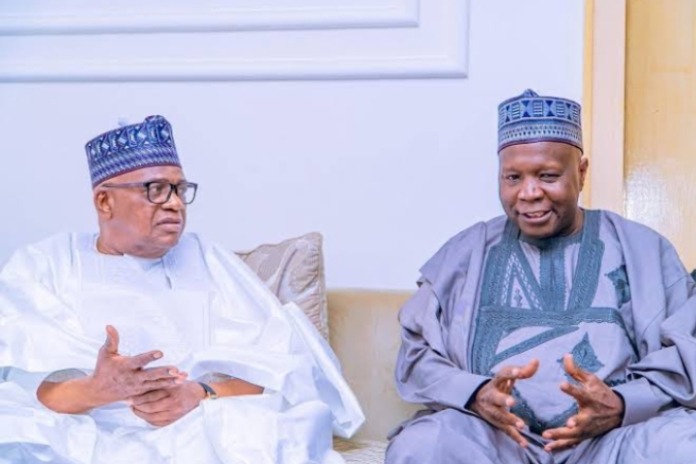
Political survival in a robust democracy demands loyalty, shared ideals and adherence to institutional discipline. Political parties are not mere vehicles for contesting elections; they are institutions built on trust, collective sacrifice and mutual accountability. Yet, the All Progressives Congress (APC) in Gombe State continues to grapple with a recurring internal challenge centred on the actions and public posturing of Senator Muhammad Danjuma Goje, a ranking Senator and one of the most senior political figures in the state.
When personal political expectations diverge from collective party decisions and progress, the resulting friction can compromise electoral cohesion and weaken organisational unity. Recent public statements attributed to Senator Goje—most notably the widely circulated video in which he reportedly directed his followers not to support certain official APC candidates—have brought the long-running disagreement within the Gombe APC back into sharp focus. To those who have followed the internal politics of the party over the years, these developments appear to reinforce concerns repeatedly expressed about his political posture, particularly during the 2023 general elections. What was largely discussed in whispers and allegations in 2023 is increasingly becoming an open political confrontation in 2026.
The friction between Senator Goje and the mainstream APC structure in Gombe State did not start today. It manifested clearly and painfully during the 2023 general elections. Despite flying the flag of the ruling party and benefiting from its platform, serious questions were raised by stakeholders regarding voting patterns across his immediate political base in Gombe Central. Party stakeholders and agents in Akko and Yamaltu/Deba Local Government Areas pointed to noticeable electoral gaps between presidential, senatorial and House of Representatives votes in a number of polling areas as possible evidence of internal political cross-currents and selective voting.
The concern was straightforward: how could candidates of the same political party, contesting simultaneously before substantially the same electorate, record significantly different levels of support in areas where the party maintained a strong organisational presence? For many stakeholders, those discrepancies were not simply numbers to be ignored. They raised legitimate political questions about internal coordination, mobilisation and whether every component of the party machinery worked equally for all APC candidates. Post-election reviews and discussions among party stakeholders consequently alleged that internal coordination had faltered in ways that undermined some official party standard-bearers. The party entered a major election while managing serious internal contradictions when its energy should ordinarily have been concentrated on confronting opposition parties.
The electoral consequences for the APC in Gombe State in 2023 were enormous. Out of the six House of Representatives seats in the state, the APC secured only one—the Akko Federal Constituency seat won by Rt. Hon. Usman Bello Kumo—while it lost the remaining five. At the senatorial level, the APC similarly secured only one of the three seats: Gombe Central, retained by Senator Muhammad Danjuma Goje himself. Gombe North and Gombe South were lost to the opposition.
For many APC stakeholders, these figures remain a painful reminder of the consequences they associate with the internal divisions, selective political support and alleged anti-party activities that characterised the 2023 elections. The political irony is difficult to overlook: while Senator Goje successfully retained his own senatorial seat, the APC suffered substantial losses elsewhere in the state. What should therefore concern every committed party member is whether the lessons of 2023 have genuinely been learned or whether the party is being dragged towards another cycle of internal confrontation ahead of 2027.
It was against this background that grassroots organs of the party initiated disciplinary proceedings against Senator Goje over allegations of anti-party activities. The process began in Kashere Ward, his own ward, where party officials announced disciplinary action against him in April 2023. The matter subsequently generated actions and reactions within other levels of the party structure. For those who initiated the process, it was presented not as witch-hunting but as an attempt to enforce party discipline and protect what they regarded as party supremacy. But the political questions that produced the controversy did not disappear. If 2023 was characterised by allegations of subtle political subversion and selective support, what we are witnessing today is far more open.
The political space in Gombe State has recently been jolted by a widely circulated video in which Senator Goje reportedly directed his followers not to vote for certain candidates whom he accused of working against his political interest. In my considered view, the message goes beyond an ordinary disagreement over individual candidates: it amounts to an open declaration of electoral war against those he perceives as having played a role in denying him another APC senatorial ticket.
The political figures and interests caught within this confrontation include President Bola Ahmed Tinubu, GCFR; Governor Muhammadu Inuwa Yahaya; Rt. Hon. Usman Bello Kumo; and other candidates of the APC, except for the few individuals Senator Goje specifically identified as exceptions deserving his support. For many of us who witnessed the internal disagreements of 2023, the present situation therefore appears to represent a transition from allegations of anti-party activities by implication to a much more explicit political confrontation with those he considers responsible for frustrating his senatorial ambition.
For a political figure who has been a major beneficiary of the APC platform from 2015 to date, such a posture is, in my view, deeply alarming and politically unpatriotic. Senator Goje has enjoyed the support, opportunities and electoral platform of the APC for more than a decade, including successive opportunities to represent Gombe Central in the Senate. To now turn against the party and its candidates barely four months to the 2027 general elections because the political calculations surrounding another senatorial ticket did not favour him raises profound questions about loyalty, reciprocity and commitment to the collective interest of the party.
At a time when every committed party leader should ordinarily be working to consolidate the APC, mobilise its supporters and strengthen its candidates ahead of the general elections, an open campaign against the party’s candidates risks deepening internal divisions and weakening the very political platform from which he has benefited for years.
For a man of Senator Goje’s standing, experience and stature—a former Governor, former Minister and ranking Senator—this development cannot be treated as an ordinary disagreement among grassroots politicians. His relationship with the APC since 2015 has provided him with a powerful political platform through which he has contested and retained his senatorial seat in successive elections, including 2019 and 2023. It therefore raises a fundamental political and institutional question when a serving Senator elected on the platform of a political party openly withholds support from candidates officially sponsored by that same party.
This is not merely about Senator Goje as an individual; it concerns the meaning of party membership, party discipline, loyalty and collective responsibility.
Even more troubling to many stakeholders is the political campaign against the member representing Akko Federal Constituency, Rt. Hon. Usman Bello Kumo, a principal officer of the House of Representatives and an influential APC figure within the constituency. Kumo has been associated with numerous federal interventions and constituency projects in Akko, including road and infrastructure projects, educational interventions, empowerment programmes and other federal initiatives. The establishment of the Federal Medical Centre, Kumo, has similarly become one of the most significant federal institutional developments in the area, although its actualisation involved the Federal Government, Gombe State Government and other institutional and political actors.
Whatever personal political differences may exist, the interests of Akko Federal Constituency and the APC should remain larger than disagreements between individual political leaders. It becomes particularly consequential when a senior member of the same political party campaigns against another member representing his own constituency while continuing to occupy elective office on the platform of that party.
The APC cannot afford to treat these developments with levity. A political party that cannot enforce its constitution and disciplinary standards consistently among its most influential members will find it increasingly difficult to demand discipline from ordinary members at ward and polling-unit levels. Public disagreements, selective endorsements and campaigns against officially nominated candidates can create avoidable divisions within the party framework. They can expose loyal APC members in Gombe Central, Akko and Yamaltu/Deba to fragmentation, confusion and demoralisation at a time when party cohesion should ordinarily be strengthened.
What is at stake, therefore, is not merely who flies the APC flag in Gombe Central, Akko or Yamaltu/Deba. The deeper question is whether party decisions, the party constitution, party hierarchy and collective responsibility continue to command respect irrespective of the status of the individual involved. No political party can sustainably operate two standards of discipline—one for ordinary members and another for political heavyweights.
Senator Goje’s enormous contributions to Gombe politics and his long years of public service cannot reasonably be denied. Neither should his political experience and influence be underestimated. But political stature should ordinarily impose greater responsibility rather than provide exemption from institutional discipline.
The path forward for the APC in Gombe State therefore requires a firm commitment to party rules, institutional strength, internal consultation and collaborative political leadership. The leadership of the party—from the national leadership through the state, local government and ward structures—must ensure that grievances are addressed through recognised constitutional mechanisms and that the collective mandate of the party is protected above individual interests and personal political feuds.
At the same time, due process must remain fundamental. Any allegation of anti-party activity must be handled in accordance with the APC Constitution and applicable law. But due process must not become an excuse for institutional paralysis.
History repeatedly demonstrates that when political indiscipline is ignored because the individual involved is powerful, influential or electorally valuable, such conduct gradually becomes normalised. Once normalised, institutional authority becomes increasingly difficult to restore.
Gombe APC therefore stands at an important political crossroads. The questions raised in 2023 have returned, but this time under circumstances in which political positions are becoming considerably more explicit. The party must determine whether its collective decisions are binding on all its members or whether individual political interests can supersede officially adopted party positions. That determination should not be based on personality, faction or political convenience. It should be based on the APC Constitution, established party procedures, due process and the principle that no individual is greater than the institution to which he voluntarily belongs.
For those of us who believe in the supremacy, stability and continued progress of the APC, the lesson is unmistakable: internal disagreements must be resolved, legitimate grievances must be addressed, and institutional discipline must apply fairly and consistently.
The APC must remain greater than any individual. History has shown that when indiscipline is left unchecked, it becomes a culture. The time to address it is now.
Politics
Kano Politics: The Rise of Verbal Immorality-Adamu Aminu
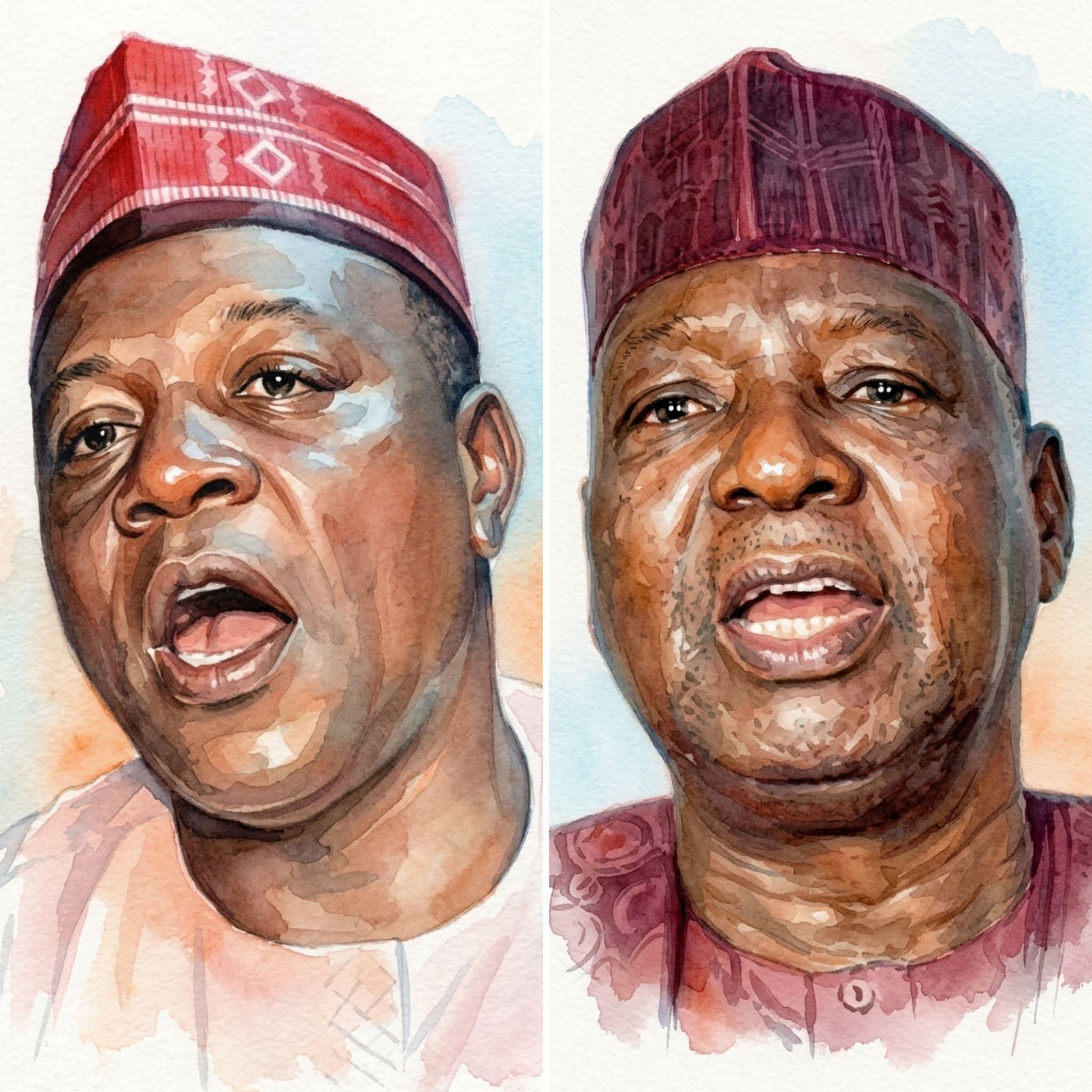
By Adamu Aminu
Political disagreement is not the problem. Nigeria’s democracy was built on the expectation that citizens and their representatives would argue, differ, and contest ideas openly. What is happening in Kano today is something else entirely. It is not debate. It is decay.
In recent weeks, the public exchange between two political proxies in Kano has crossed every line that should separate legitimate criticism from outright character assassination.
What began, ostensibly, as political rivalry has degenerated into insults, curses, and personal attacks that now extend beyond the individuals involved to their families. Parents, spouses, and children — people who hold no office and made no political claim — have been dragged into a contest that was never about governance in the first place.
It is with genuine concern that this must be said plainly: the recent exchange between Alhaji Usman Sharu Baban Lungu, an elderly statesman in his eighties, and Alhaji Nagoda, an aide to Governor Abba Kabir Yusuf, descended into accusations too grave and too dishonorable to repeat here — accusations that dragged innocent family members into territory no political disagreement should ever reach. “Inna lillahi wa inna ilaihi raji’un”
Whatever their differences, two men of public standing — one of them elderly enough to command respect by age alone — have involved their own households in conduct that neither politics nor personal grievance can justify.
Is this the legacy they intend to leave for their children, and for their children’s children, long after they are gone? A name is the one thing a person carries beyond death.
This is not politics. It is a scramble for relevance, dressed up as loyalty. By all appearances, both men are not fighting for ideas or for the people of Kano. They are fighting for attention, for patronage, for whatever crumbs might fall from a political table they hope to remain seated at.
None of this happens in a vacuum. Social media pages and radio stations are institutions that ought to apply editorial discipline and ethical restraint, have instead become amplifiers. A radio interview is meant to test a politician’s ideas, not to provide a stage for insults. Yet politicians whose speech is more familiar with vulgarity than with policy have found that behavior rewarded with airtime and circulation, because outrage travels faster than substance.
The mudslinging is no longer whispered in private. It is broadcast and shared, in the hope of impressing political godfathers who measure loyalty by how loudly their proxies can humiliate a rival.
This raises questions Kano cannot afford to postpone. Where is Kano’s political direction heading when public office is pursued through insult rather than ideas?
Is this the inheritance we intend to leave the next generation, a political culture where vulgarity is normal and dignity is optional?
Has character assassination become a shortcut to relevance, a way of chasing clout rather than earning trust?
And where are the gatekeepers in all of this?
The Kano State Governor, political leaders, religious clerics, and other well-meaning individuals who command moral and civic authority in this state cannot claim ignorance of what is unfolding on air and online.
Their silence is not neutrality — it is consent by omission. Religious clerics who ordinarily do not hesitate to speak on matters of public morality owe the state a word on this matter.
A society that leaves moral guardianship to chance will, sooner or later, find that vulgarity has filled the space their silence left behind.
Constructive criticism holds power accountable. It sharpens argument and improves governance. What Kano is witnessing instead is the normalization of verbal immorality. Left unchecked, this trend does more than embarrass the individuals involved. It teaches a generation of young people in Kano that vulgarity is a legitimate substitute for vision.
Kano’s institutions, political, religious, and media alike, must now decide whether they are custodians of public discourse or accomplices to its collapse.
Adamu Aminu writes from Kano.
Politics
Defamation Against DSP Barau, Institutional
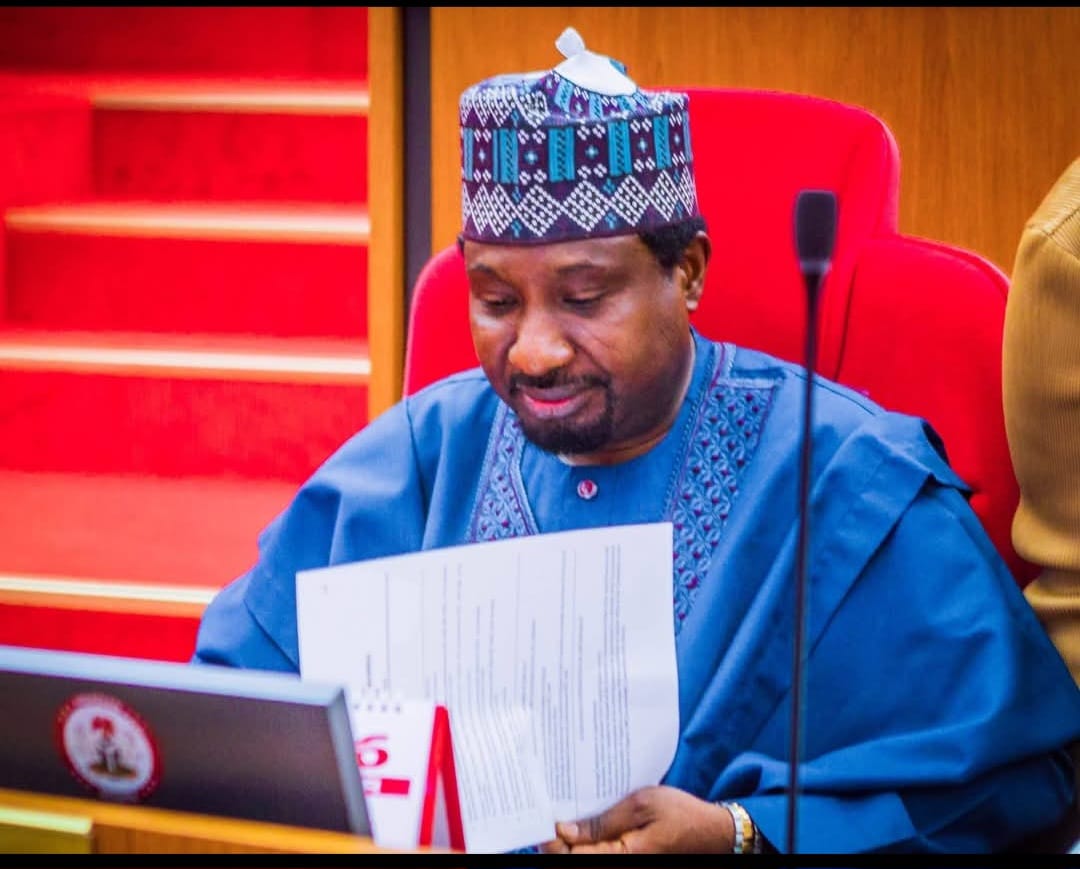
By Abba Anwar
Any act of defamation of character against His Excellency the Deputy President of the Senate and First Deputy Speaker of ECOWAS Parliament, Distinguished Senator Barau I Jibrin, PhD, CFR, more of allegations of terrorism and aiding the national tragedy, is automatically a defamation against democratic institutions.
I know DSP knows glaringly clear that, the current malicious and defamatory allegation against his personality goes beyond his own self as a Distinguished Senator representing Kano North alone. To me, dropping petition against the perpetrators of such act is not only unnecessary, it is deconstruction of democratic institutions and processes.
I came across a petition from DSP’s Solicitors, West-Wig Attorneys, to the Inspector General of Police, dated 22nd July, 2026 and singed by S. Y. Gama Esq and Sani Ibrahim Esq, requesting for “… the immediate investigation, identification and prosecution of persons appearing in the viral video for the alleged, false, malicious and defamatory publication against His Excellency Senator Barau I Jibrin, Deputy President of the Senate of the Federal Republic of Nigeria, and for related offences including cyberstalking.”
As the petition concurs with my understanding of the case at hand, that defamation against Senator Jibrin is defamation against institutions, it says, “The gravity of this matter is further accentuated by the constitutional office occupied by our Client as the Deputy President of the Senate of the Federal Republic of Nigeria.
False allegations of terrorism directed against the holder of such a high public office possess the capacity to undermine public confidence in democratic institutions, diminish the integrity of constitutional governance and unjustifiably expose the occupant of that office to avoidable security concerns.”
The core content of the issue at hand as explained by the petition typifies that, “Our Client’s attention has been drawn to a video presently in widespread circulation across various social media platforms wherein a group of adult women are seen and heard repeatedly referring him as “terrorist” in what appears to be a coordinated public rendition.
The publication has since attracted considerable public attention and has exposed our Client to public odium, ridicule, contempt, opprobrium and immeasurable reputational injury both within and outside the Federal Republic of Nigeria.”
With Senator Jibrin’s position as a global citizen, such grave allegation against his personality sends bad signal to the world against the entire democratic process and institutions in the country. I understand that any decision he takes, if it falls below the protection of his image, which ultimately means protecting our democratic values and institutions, could be a negation of bravery, self-esteem and entrenched democratic mind and might.
I don’t give a damn to the states of origin of those who appeared in the said video or their sponsors, the fact remains, offence is offence wherever perpetrated, hatched or birthed. So discussing about the origins of those people, seen, suspected and invisible for now, is secondary. But I am confident that DSP’s political opponents perceived and real, from Kano state would not engage in this high level defamation of character.
It is only in Kano where you see people from other places coming to the state to castigate their elders, religious, political, traditional etc and go scot-free with the full cooperation of the indigenes. I’m not a proponent of state-of-origin chauvinism, but it hurts and is highly pathetic. It is only in Kano where you see trash being treated as pure or honey. Too pathetic and unfortunate!
Some years back, I have a friend, who is also a journalist, from a popular radio station, who was transferred to Katsina state, during his first political programmes, as he started new rounds of political programmes in Katsina, he met with the serious anger of the then Governor of Katsina state. I think it was either Ibrahim Shema or Aminu Bello Masari. The Governor made it categorically clear to him that, in Katsina they would not take that trash, as obtained in Kano.
But in Kano, when some democratic liabilities, who migrated to Kano, were castigating former Governor Malam Ibrahim Shekarau, the supporters of His Excellency Rabi’u Musa Kwankwaso and His Excellency Abdullahi Umar Ganduje were clapping hands. After Shekarau, the same noisemakers faced Kwankwaso calling him names, Ganduje’s supporters were clapping and smiling. After abuses on Kwankwaso reached peak and subsided, Ganduje’s turn came on board. The same illiterate nuisance who abused Shekarau and Kwankwaso, jumped down harshly on Ganduje. For God sake, what is wrong with Kano people?!
Half of what is obtained in Kano cannot, by any standard, be tolerated elsewhere. The illiterate migrants to Kano, (reader forgive my expression, it isn’t deliberate) always preserve their elders back home. Why Kano is indifferent?
I’m not an advocate of Kano Alone, or the superiority of Kano, all I’m saying is, why it is only in Kano, elders are not seen as elders? Elders from all walks of life. Not only political elders or leaders, anyway.
I know for sure Kano reached its peak, because of her hospitality and receptive atmosphere. In Kano all people are welcomed. This is a good sign of pride and trustworthiness. I will always be happy when more and more people that are non-indigenes and not citizens of Nigeria continue to troop Kano. Wisdom behind Kano’s greatness and development. Without non-indigenes Kano wouldn’t have achieved that feat of commercial hub for the North and sub-Saharan Africa.
Coming back to the main issue at hand, DSP’s Solicitors called the attention of the IGP that, “While the identities and present locations of the persons appearing in the video are presently unknown to our Client, we firmly believe that the investigative, forensic, cyber intelligence and technological capabilities of the Nigeria Police Force are more than sufficient to uncover the identities of every person appearing in the video together with every individual who conceived, sponsored, financed, coordinated, produced, published, transmitted, promoted or otherwise facilitated the dissemination of the offending publication.”
If we believe that DSP’s seek for justice and redress is elegantly needed, to better our today and reshape the integrity of our democratic values and institutions, we should encourage him to pursue this issue to its logical conclusion.
Some of the demands of the petition request the good office of the IGP to, “Commence an immediate, comprehensive and impartial investigation into the viral video and every circumstance surrounding its production, publication and dissemination, and invite, interview and investigate all persons connected with the publication and obtain all relevant electronic and digital evidence necessary for a comprehensive investigation.”
Other requests among others are, “Determine whether the publication and dissemination of the viral videos disclose offences under the Cybercrimes (Prohibition, Prevention, etc) Act, 2015 as amended, the Criminal Code Act, the Penal Code, or any applicable law, and take every other lawful measure considered necessary to preserve, the integrity of public discourse, uphold the rule of law, Cyberstalking and malicious online publications and ensure that the allegation of terrorism are never trivialized or weaponised against any citizen without lawful justification.”
His Excellency DSP should kindly understand that, this defamation is beyond him alone, therefore shelving it aside has serious consequences on democratic institutions. Sir injury on you is injury on institutions. Putting this grave allegation under the carpet, is minus and abhorable. Many of your people, supporters and well wishers are standing by, watching your steps Sir. Is not about you alone Sir. It is also about our institutions.
Anwar writes from Kano
Thursday 23rd, July 2026

Emir Sanusi Seeks Compensation, Reallocation of Demolished Eid Ground Stalls

Gombe flags off the disbursement of the second batch of the AGILE Conditional Cash Transfer

Why Gov Abba Deserves Another Tenure

China, Nigeria Mark Friendship with Joint Cultural Mural

Musa Illiyasu Kwankwaso Celebrates Senator Lado @60, Says Is A Political Dogma

Zamfara Varsity ASUU Threatens Warning Strike Over FG-ASUU Agreement, Promotion Arrears

PCACC Arrests Man Over Alleged ₦4.5m Sale, Illegal Leasing of Kano Government Horse Stable

Goje’s Electoral War:The Confrontation With Tinubu,Governor Inuwa,Usman Kumo And APC candidates Ahead Of 2027

Prof Yusuf Adamu Delivers BUK’s 63rd Professorial Inaugural Lecture, Reflects on Medical Geography and Academic Legacy

Kano Monitors ₦48.9bn Projects Across Six LGAs
Emir Sanusi Seeks Compensation, Reallocation of Demolished Eid Ground Stalls
Gombe flags off the disbursement of the second batch of the AGILE Conditional Cash Transfer
Why Gov Abba Deserves Another Tenure
China, Nigeria Mark Friendship with Joint Cultural Mural
Musa Illiyasu Kwankwaso Celebrates Senator Lado @60, Says Is A Political Dogma
Zamfara Varsity ASUU Threatens Warning Strike Over FG-ASUU Agreement, Promotion Arrears
PCACC Arrests Man Over Alleged ₦4.5m Sale, Illegal Leasing of Kano Government Horse Stable
Goje’s Electoral War:The Confrontation With Tinubu,Governor Inuwa,Usman Kumo And APC candidates Ahead Of 2027
Prof Yusuf Adamu Delivers BUK’s 63rd Professorial Inaugural Lecture, Reflects on Medical Geography and Academic Legacy
Kano Monitors ₦48.9bn Projects Across Six LGAs
-

 Opinion5 years ago
On The Kano Flyovers And Public Perception
-

 Features5 years ago
How I Became A Multimillionaire In Nigeria – Hadiza Gabon
-

 Opinion6 years ago
Kano As future Headquarters Of Poverty In Nigeria
-

 History6 years ago
Sheikh Adam Abdullahi Al-Ilory (1917-1992):Nigeria’s Islamic Scholar Who Wrote Over 100 Books And Journals
-

 Opinion5 years ago
My First Encounter with Nasiru Gawuna, the Humble Deputy Governor
-

 History5 years ago
The History Of Borno State Governor Professor Babagana Umara Zulum
-

 History6 years ago
The Origin Of “Mammy Market” In Army Barracks (Mammy Ochefu)
-

 News5 years ago
Federal University Of Technology Babura To Commence Academic Activities September