
News
Special Report: Nigeria’s Hidden Crisis—15 Million Childhoods Lost to Labor, Experts Suggest a Way Out

By Yusuf Danjuma Yunusa ,Nigerian Tracker Correspondent
In Nigeria, child labor has remained one of the highest rating phenomenon bedeviling the society. This development has become prevalent, particularly, among the low income households the rural communities.
Consequently, the victims are usually prone to psychological trauma, and believing less in themselves among their peers as they are usually deprived of enjoying the euphoria of childhood as their peers.
According to the 2023 report by UNICEF and International Labor Organization(ILO), 43% of children in Nigeria between the age bracket of 5-17 years are engaged in child labor, amounting to 15 million children. Also in the record, 39% of those children which is around 14million are involved in hazardous work, including mining, quarrying, hawking, and domestic servitude.
From the report, it was clear that only 61% of children between 6-14 years of age attend primary school, with many dropping out due to economic pressures.
The report also comprehensively noted that the practice is most prevalent in the northern part of the country, Nigeria. Citing the already accustomed Almajiri system which has indirectly but greatly contributed to this ugly development.
However, emphasis on other regions in the country where such practice is practically in existence was made; noting states like Enugu, Abia and others from the south east where kids engage in menial trades in the market for survival. Lagos state, as a hub for child labor in the western part of the country, where kids are being used as domestic house helps, was not left out either.
Further Revelations From Experts
Sociologist Maimuna Abubakar gave an insight on how children are usually being trafficked from their parents home to their place of illegal labor:
“There are two distinct ways in which the child labor practice is being carried out in Nigeria juxtaposing the northern and the southern parts of the country,” she said.
“From the northern side where mostly girls of the ages of 9-15 years are being taken from their parents home to places they will engage in labor, it’s very difficult to find a girl being used as house help and at same time enrolled in school or any vocational training,” she added.
“But at the other side which is the southern part of the country, girls and boys are usually being trafficked to serve as house helps and apprentices, unlike the north which is mostly girls. And there are usually enrolled in school or vocational training by those they are laboring for–such practice which is very rare in the northern part of the country,” Mrs Maimuna asserted.
Identifying the key drivers to child labor practice in Nigeria, Mrs. Maimuna pointed out that cultural norms is actually one of the main drivers that are fueling the growing numbers of child labor; citing a real life scenario where a father had brought his own daughter to a relative’s house in order for her to be trained up to a secondary education level while she does all the house chores for them:
“The man planned that after her attainment of secondary education, he will marry her out, then she and her husband will be left with the choice of she continuing the education to higher level or not,” she narrated.
While on the other hand, a public affairs Analyst, Dr. Muttaqa Yushau Abdulrauf, clarified that:
“while it’s a good thing for a child to assist his parents in chores, what is frowned upon and termed child labor is when a child is being subjected to a hazardous work that can clearly overpowers him and endangers his life, and also deprived him access to education.”
He also noted that poverty is the main cause for child labor practice in Nigeria:
“Data has shown that the key driver of child labor is poverty.”
“Especially the rural areas where parents are found not being able to take care of their children. So, instead of them finding another source of income, they engage their children in hazardous work especially mining and quarrying which usually serves as their alternative source of income,” Dr. Muttaqa added.
The Role Of Government In Tackling The Phenomenon
While Dr. Muttaqa acknowledged the existence of some of the social welfare programs enacted by the government such as the Child Right Act in some states, he also admitted to the growing numbers of child labor practice in Nigeria amidst the government efforts:
“There so many educational policies being put in place by the government aimed at ensuring that every child has access to education.”
“But despite all the policies, child labor has increased proportionately overtime,” he said.
On the other hand, Mrs. Maimuna criticized that it has been a challenge in the governance system of Nigeria to sustain policies that have been initiated:
“Policies are mostly in papers nowadays without proper implementation and follow up.”
“I could vividly recall there was a time around 2010 until around 2017/2018 where child labor is strictly frowned upon by authorities in charge. Then, if a child is caught hawking on the road during school hours, authorities would take the child into custody and wait for the parents to come and claim him with huge fine. If a particular parent is constantly found guilty of such treatment on a child, such parent would be arrested,” she narrated.
“Then, the Universal Basic Education (UBEC) scheme for free education was in place. The scheme and the strict implementation of consequences for engagement in child labor helped in reducing the numbers of children on the street during school hours,” Mrs. Maimuna added.
“It’s the lack of sustaining the policies by the government that has contributed to the rise in the numbers of child labor in Nigeria today,” she remarked.
Ordinary Nigerians Lent Their Voices
Mus’ab Ahmad Dandani, an indigene of Bauchi state, acknowledged the widespread practice of child labor in Nigeria especially in the north:
“The practice is actually common in Nigeria, especially in the northern part where the Almajiri system is actively in place.”
“However, it’s not restricted to the northern part only as there is poverty everywhere which is the main reason why the children are out on the street as a result of their parents being incapacitated to provide,” he added.
When asked who is to be blamed the most among parents, employers of the child labor, and the government, Mr. Mus’ab responded that every of the category has its own share of the blame.
Another respondent, Jacob Samaila, a resident of Kaduna State noted that the phenomenon is prevalent in the rural areas of the country the most:
“Child Labor is very common in Nigeria, especially in the rural areas”
Like the first respondent, Mr. Jacob also pointed out that the blame for child labor is shared among the parents, the employers, and the government; noting that each of the three has its way of contributing to the challenge.
A kogite, Rashidat Isiaka, remarked that aside poverty, other key factors contributing to the rise in the numbers of child labor practice in Nigeria are lack of education or awareness, and cultural norms:
“Most parents don’t know their children have certain rights over them that are recognized by the law, and punishable if violated.”
She continued, “Also, it’s part of the culture of some communities that girls aren’t supposed to be educated as that will be a waste of time since they usually end up in marriage; and they are expected to be submissive in taking care of the house without doing any job.”
Aminu Ibrahim, a resident of the Federal Capital Territory, Abuja, was of the opinion that parents are to be wholly blamed for child labor practice in Nigeria:
“If parents are deliberate about birth control, there wouldn’t have been a child labor practice in the first place before talking about the need to look up to the government for supports.”
“Parents must stop bringing into the world children they can not cater for,” Aminu cautioned.
He also emphasized that the child labor practice has contributed immensely to the Boko Haram/banditry insurgence that is ravaging rural communities:
“Most of the Boko Haram and banditry members operating in Nigeria were once victims of this child labor of a thing.”
Aminu continued, “If parents had controlled the way they give birth, we wouldn’t be having such experience in Nigeria.”
Due to the growing opinion that poverty is the main reason for the practice in question, Rashidat Ahmad, also a kogite, was asked if at all a child must work to support his parents, at what age would she recommend? And she responded thus below:
“I don’t support the idea of children working at a very young age, but if at all it should happen, then 18 years upward is a good fit.”
Contrary to the above opinion by Aminu Ibrahim that only parents should be blamed for the child labor practice, but of the same understanding as other respondents, Rashidat also noted that each of the three–parents, employers of child labor, and the government–is to be blamed proportionately:
“Child labor is rather a complex issue, and as such, can not be attributed to one party.”
“Moreover, all the three share certain responsibilities that ought to address the ugly development decisively,” she added.
What Is The Best Possible Way Out?
Deducing from the submissions made by experts, and even the other respondents from the various parts of the country, the best and possible way out of this chaos known as child labor are:
Birth control as opined by Aminu Ibrahim, the respondent from the Federal Capital Territory.
Stronger social welfare programs that will see to poverty alleviation–more like job creation and quality access to education for the children.
Enforcement of the Child Right Act laws that will punish its offenders decisively.
If the solutions provided by the respondents will be effectively adhered to and implemented, child labor practice will be reduced to the barest minimum.










News
ADC Rising: Salga hails influx of political heavyweights as a turning point for justice

Ambassador Abdulrahman Mai Nasara Salga, a prominent ADC leader from Dala, Kano, has welcomed the influx of influential politicians into the party, describing it as a sign of ADC’s growing acceptance.
Salga, who contested for the federal legislature in Dala during the 2023 general election, says the party’s progress is heartening, having worked tirelessly to promote ADC’s agenda and position it as a viable alternative for good governance.
He highlights the entry of Kwankwasiyya leader Dr. Rabiu Musa Kwankwaso, former Kano State Deputy Governor Comrade Aminu Abdulsalam, and APC’s 2025 gubernatorial candidate Dr. Nasir Yusuf Gawuna, among others, as major boosts that are transforming ADC into a formidable opposition force.
Salga believes these developments signal a shift towards justice and better leadership in Kano and Nigeria. He urges party leaders, including Atiku Abubakar, Peter Obi, and Kwankwaso, to unite for success in 2027.
The ADC leader pledges continued efforts to promote the party’s ideals, expressing optimism for a brighter future with these influential additions.
News
BREAKING: INEC Removes David Mark-Led NWC from Portal, Updates Records Amid ADC Leadership Crisis

By Yusuf Danjuma Yunusa
The Independent National Electoral Commission (INEC) has formally updated its official portal to reflect changes in the leadership of the African Democratic Congress (ADC), signaling the commission’s recognition of the leadership dispute within the party.
The commission confirmed that the removal of the National Working Committee (NWC) led by David Mark followed a detailed review of a recent Court of Appeal judgment and an ongoing suit at the Federal High Court in Abuja.
According to INEC, the decision comes after receiving conflicting legal representations from the two factions vying for control of the party. One faction, loyal to Nafiu Bala Gombe, urged the commission to enforce the appellate court’s ruling, which includes withdrawing recognition from the Mark-led NWC. The other faction, aligned with Mr. Mark, advised INEC against recognizing Mr. Gombe as acting national chairman, citing the pending legal proceedings.
The leadership crisis traces back to July 2025, when the ADC’s former leadership resigned, paving the way for a new executive committee headed by Mr. Mark. Mr. Gombe, a former vice-national chairman, has challenged this transition, arguing that the party’s constitution mandates his ascension to the leadership role.
In a ruling delivered on March 12, 2026, the Court of Appeal dismissed an interlocutory appeal filed by Mr. Mark. The court ordered all parties to maintain the status quo ante bellum—the state of affairs before the crisis—pending the resolution of the substantive suit at the Federal High Court.
News
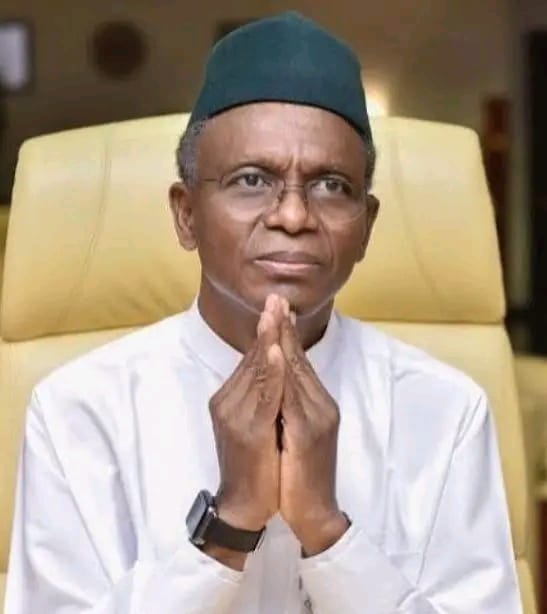
JUST IN: El-Rufai Detained as Bail Ruling Adjourned to April 14
By Yusuf Danjuma Yunusa
Operatives of the Department of State Services on Wednesday took former Kaduna State governor, Nasir El-Rufai, into custody moments after proceedings at the Federal High Court in Kaduna.
El-Rufai, standing trial over alleged corruption, had just concluded a hearing on his bail application filed by the Independent Corrupt Practices and Other Related Offences Commission when DSS operatives bundled him into a waiting vehicle and drove him away, reportedly heading to Abuja.
A heavy DSS presence around the court before the hearing had fuelled speculation that the former governor might be taken into custody.
Security sources said vehicles had been strategically positioned around the court prior to proceedings.
El-Rufai had arrived at the court at about 9:05 a.m. in a Hilux van, drawing attention from security personnel and observers.
Speaking to journalists after the proceedings, lead defence counsel, Oluwole Iyamu (SAN), confirmed that the court had fixed April 14 for ruling on the bail application.
“The bail application was argued and responded to, and the ruling has been fixed for April 14.
“We look forward to that day. We are hopeful. We have put our arguments before the court, and this is a court of justice.
“We await the decision of the court,” he added.
He also noted that the defence team is prepared for a related case scheduled for April 10 at the Federal High Court in Abuja, describing it as “a separate matter.”
“That is a separate matter. As lawyers, we are ready. We have filed all necessary processes and will be in court. That is the DSS matter,” he said.

ADC Rising: Salga hails influx of political heavyweights as a turning point for justice

BREAKING: INEC Removes David Mark-Led NWC from Portal, Updates Records Amid ADC Leadership Crisis

JUST IN: El-Rufai Detained as Bail Ruling Adjourned to April 14

Court Ends NNPP Crisis, Restores Party Leadership to Founder

Why Nura Manu Soro should be APC candidate in Bauchi State come 2027

Governor Abba Kabir Yusuf Holds Exclusive Prerogative to Choose Deputy – Malam Inuwa Waya

The Governor Who Chose His People Over His Politics: Abba Yusuf and the Moral Courage Behind Kano First
Restoring the Glory That Was Always There: Governor Abba Kabir Yusuf and the Historical Vision Behind Kano First

Tinubu to Swear in Olatunji Disu as Inspector-General of Police on Wednesday

NDLEA Clarifies: Drug Case Against Abba Kyari Still Active After Court Discharge
ADC Rising: Salga hails influx of political heavyweights as a turning point for justice
BREAKING: INEC Removes David Mark-Led NWC from Portal, Updates Records Amid ADC Leadership Crisis
JUST IN: El-Rufai Detained as Bail Ruling Adjourned to April 14
Court Ends NNPP Crisis, Restores Party Leadership to Founder
Why Nura Manu Soro should be APC candidate in Bauchi State come 2027
Governor Abba Kabir Yusuf Holds Exclusive Prerogative to Choose Deputy – Malam Inuwa Waya
The Governor Who Chose His People Over His Politics: Abba Yusuf and the Moral Courage Behind Kano First
Restoring the Glory That Was Always There: Governor Abba Kabir Yusuf and the Historical Vision Behind Kano First
Tinubu to Swear in Olatunji Disu as Inspector-General of Police on Wednesday
NDLEA Clarifies: Drug Case Against Abba Kyari Still Active After Court Discharge
-

 Opinion4 years ago
On The Kano Flyovers And Public Perception
-

 Features5 years ago
How I Became A Multimillionaire In Nigeria – Hadiza Gabon
-

 Opinion5 years ago
Kano As future Headquarters Of Poverty In Nigeria
-

 History5 years ago
Sheikh Adam Abdullahi Al-Ilory (1917-1992):Nigeria’s Islamic Scholar Who Wrote Over 100 Books And Journals
-

 Opinion4 years ago
My First Encounter with Nasiru Gawuna, the Humble Deputy Governor
-

 History5 years ago
The Origin Of “Mammy Market” In Army Barracks (Mammy Ochefu)
-

 History4 years ago
The History Of Borno State Governor Professor Babagana Umara Zulum
-

 News4 years ago
Federal University Of Technology Babura To Commence Academic Activities September