
News
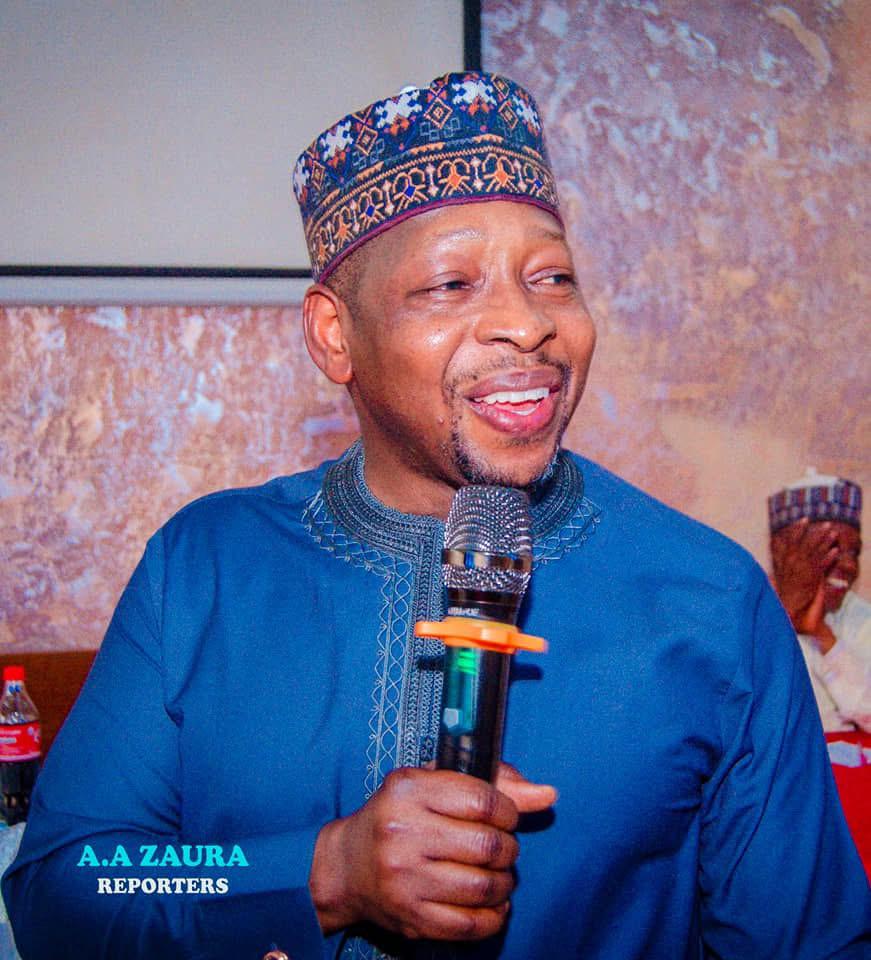
A.A Zaura: He Has Not Seat In Power,But A Place In Every Heart
By Dr Ramadan Ali PhD
In the theatre of life where many chase titles, positions, and applause, some men choose to walk quietly through the back door of history, carrying nothing but the weight of compassion on their shoulders.
Among such rare men stands A.A. Zaura, not adorned with the ornaments of office, nor shielded by the cloak of political immunity, but wrapped in the humble garb of service the kind that needs no microphone to echo.
While many climb the ladder of influence with power-hungry hands, Zaura has chosen to lift others with market-worn palms the hands of a businessman who never allowed profit to replace purpose.
It is said that “a tree is known not by the noise it makes in the wind, but by the fruit it bears.” A.A. Zaura has borne fruit in silence. From the bustling corners of Kano’s marketplaces, where traders bargain over tomatoes and textiles, to the silent alleys where lost youths dance with addiction and crime, Zaura’s money moves not towards building mansions in cities of gold, but towards rebuilding lives that society has written off.
His profit, earned honestly through the sweat of commerce, has become a weapon against ignorance, a shield against poverty, and a bridge for the hopeless. Where others chase contracts, he chases change. Where some see the people as burdens, he sees them as the backbone of a better tomorrow.
There’s an African proverb: “The child who is not embraced by the village will burn it down to feel its warmth.” Zaura heard the silent screams of these forgotten children the drug addicts, the street boys, the phone snatchers whose lives are but twisted poems of a broken system and instead of turning a blind eye like many politicians do, he turned his heart toward them. Not with condemnation, but with compassion. Not with judgment, but with justice.
And he does this not from the comfort of an air-conditioned government office or a convoy of bulletproof vehicles. No he does it with his own hard-earned money, carved from the toil of market stalls and business deals. He funds sensitization programs in slums, organizes reformation drives in public schools, sponsors enlightenment seminars about the dangers of drug abuse, and works with local mentors to snatch the youth from the jaws of destruction.
Ask the mother whose son was lured from the street and enrolled into a skill acquisition center sponsored by Zaura she will tell you, “He is a father to the fatherless.”
Ask the reformed street boy who once wielded daggers in the dark but now holds a pen in the light he will whisper, “Zaura did not give up on me when even my family did.”
This is the measure of the man. Not in the number of television interviews he grants, but in the lives he silently lifts. Not in how often he appears in newspapers, but in the neighborhoods he transforms.
They say “he who carries the people’s burden without being asked has already proven he can lead them.” And in that, A.A. Zaura has passed the test many elected officials continue to fail. While others wait to be sworn into office before they start serving, Zaura serves without being sworn, loves without being lobbied, and uplifts without being urged.
The irony is deafening: those in power sit idle while the powerless do the real work. This man this son of the market, this unsung architect of peace has shown that leadership is not a seat; it is a sacrifice. And he makes that sacrifice every day.
“When the drumbeat changes, the dancer must also change his steps.” Nigeria is dancing dangerously close to the edge. Our youth are slipping. Our morals are fading. Our streets are crying. The time has come for a different kind of leader not a title-bearer, but a burden-bearer. Not a noise-maker, but a nation-healer.
If character still counts…
If selflessness still matters…
If service still outweighs speech…
Then the question must be asked: If not A.A. Zaura, who else?
Who else has used his wealth not to build walls, but to break chains?
Who else has taken profit from market stalls and turned it into purpose in forgotten streets?
Who else has lived among the people, walked their pain, shared their silence, and turned it into strength?
The answer is loud in its simplicity.
A.A. Zaura is not just a name he is a necessity.
A voice we did not expect, but desperately need.
A flame flickering in the wind, yet refusing to go out.
It is time.
Not to reward him.
But to release him into leadership. Into higher service. Into the place where empathy meets power and where his passion can protect even more lives.
A shepherd does not need to be crowned before he protects his flock.” But sometimes just sometimes the flock must crown him, not for his gain, but for their survival.






News
Tinubu, Service Chiefs Brainstorm Over Deteriorating Security in North-East
By Yusuf Danjuma Yunusa
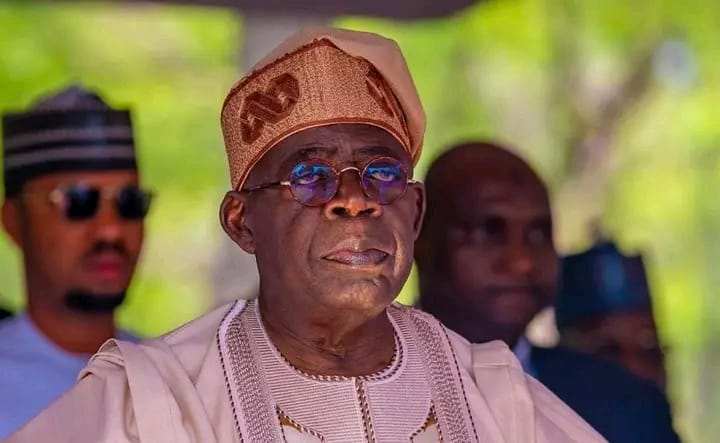
President Bola Tinubu on Thursday convened a nearly two-hour security meeting with service chiefs at the Presidential Villa, Abuja, marking the first of such gathering since Tunji Disu assumed office as Inspector-General of Police.
The security chiefs, who arrived at the Villa without their usual official vehicles, making identification difficult, departed the premises at approximately 5:10pm after extensive deliberations with the President.
The service chiefs and the IG were identified by newsmen present at the Villa as they left the forecourt following the closed-door meeting.
The session comes amid heightened security concerns across the country, particularly the recent killings of military commanding officers in various theatres of operation.
In the past week alone, the military lost at least three commanding officers in charge of forward operating bases following a surge in attacks on security formations and personnel, especially in the North-East where Boko Haram and Islamic State West Africa Province insurgents have intensified assaults on military positions.
Notable among recent incidents was the attack on Ngoshe in Borno State, which resulted in abductions, as well as separate assaults on Konduga, Marte, Jakana, and Mainok, all in Borno State.
The attacks prompted responses from both President Tinubu and Vice President Kashim Shettima, who vowed to deploy overwhelming force to end the insurgency.
As of the time of filing this report, details of the discussions at the security meeting had not been disclosed to the media.
News
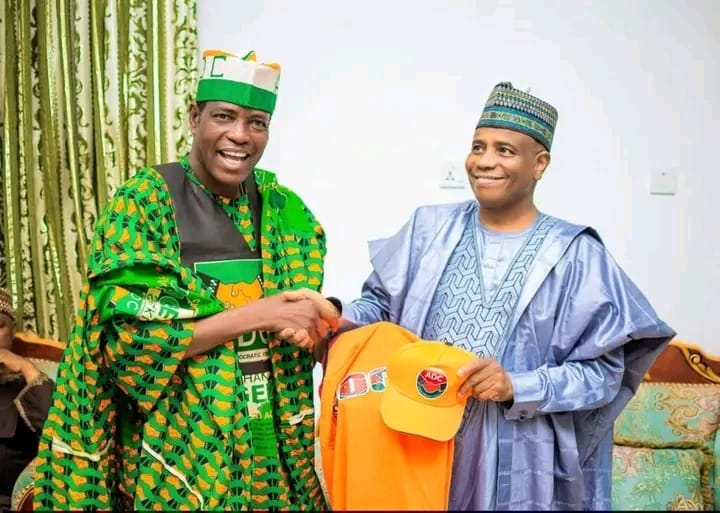
Ex-Sokoto Governor Tambuwal Officially Joins ADC
By Yusuf Danjuma Yunusa
Senator Aminu Tambuwal, a former Governor of Sokoto State, has officially resigned his membership from the Peoples Democratic Party (PDP), attributing his departure to the party’s deepening internal crises. He has subsequently joined the African Democratic Congress (ADC).
Tambuwal, who currently represents Sokoto South in the Senate, formalized his resignation in a letter dated March 11, 2026, addressed to the PDP ward chairman in his Tambuwal/Shinfiri Ward, Tambuwal Local Government Area. The contents of the letter were made public on Thursday.
In the correspondence, the former Speaker of the House of Representatives explained that the decision was the result of extensive deliberations with his political network. “After deep reflection and extensive consultations with my political associates and supporters, I have decided to resign my membership of the Peoples Democratic Party with immediate effect,” the letter stated.
He pointed to the party’s ongoing instability as the primary reason for his exit. “The persistent internal crises, leadership disagreements and growing divisions within the party have made it increasingly difficult for me to continue my membership,” Tambuwal wrote.
While severing ties with the PDP, Tambuwal acknowledged the platform the party provided for his political career. “I remain grateful to the party for the platform it provided me to serve Nigeria as Speaker of the House of Representatives and later as Governor of Sokoto State,” he noted.
Confirming his immediate switch to the ADC, Tambuwal said he is joined by his associates and supporters. He framed the move as a pursuit of a more principled and credible political vehicle. “My decision is guided by the conviction that Nigeria requires a stronger political platform built on integrity, accountability, inclusiveness and a clear commitment to national development,” he added.
Tambuwal’s political career has been marked by significant shifts. He served as Speaker of the House of Representatives from 2011 to 2015 under the PDP before crossing over to the All Progressives Congress (APC) to successfully run for Governor of Sokoto State in 2015. In a dramatic move later that same year, he defected back to the PDP, under whose banner he won a second gubernatorial term in 2019.
Following the conclusion of his second term as governor in 2023, he was elected to the Senate. His latest defection to the ADC is poised to reshape the political landscape in Sokoto State, where he remains a highly influential figure.
News
ADC Criticises Tinubu’s CNG Plan, Demands Price Cap

By Yusuf Danjuma Yunusa
The African Democratic Congress (ADC) has urgently called on the Federal Government to implement a temporary cap on petrol prices, warning that the recent surge in fuel costs is exacerbating the hardship faced by millions of Nigerian households.
In a press statement issued on Wednesday, the party’s National Publicity Secretary, Mallam Bolaji Abdullahi, acknowledged that volatility in global oil markets—spurred by the ongoing crisis in the Middle East—is contributing to the price hikes. However, the ADC argued that external factors do not justify allowing fuel prices to rise unchecked in an economy still reeling from the removal of the fuel subsidy.
“For everyday Nigerians, petrol determines the price of food, transportation, and survival. When petrol rises, everything else rises with it,” Abdullahi stated. “This is why the African Democratic Congress urges the Federal Government to take urgent action to stabilize petrol prices.”
The party criticized the administration of President Bola Tinubu, stating that the current APC-led government must take responsibility for shielding citizens from the harshest effects of the increases. The ADC further called for the introduction of targeted palliatives specifically designed to support low-income Nigerians who are most vulnerable to the rising cost of transportation and goods.
Beyond the immediate call for a price cap, the ADC questioned the feasibility of the government’s long-term energy strategy, specifically targeting the recently announced plan to distribute 100,000 Compressed Natural Gas (CNG) conversion kits.
The party noted that with over 11 million vehicles registered in Nigeria, the proposed 100,000 kits would cover less than one percent of the nation’s vehicle fleet. Furthermore, the ADC raised concerns about the limited availability of CNG refuelling stations across the country, questioning whether the policy would have any tangible impact on the average Nigerian.
“A policy that touches only a fraction of vehicles cannot meaningfully address a national fuel crisis,” Abdullahi said. “If Nigerians cannot easily find where to refuel, then the policy risks becoming an announcement without real impact.”
The ADC urged the Federal Government to pursue a more comprehensive and credible energy strategy that reflects Nigeria’s status as an oil-producing nation.
“Nigeria is an oil-producing country, and it should not be a place where the cost of petrol repeatedly pushes millions of citizens deeper into hardship,” the statement concluded. “At a time of rising global uncertainty, protecting the welfare of citizens must remain the first duty of any government that knows what they are doing.”

DSP Barau As A Global Citizen, His Recent Global Engagements

Tinubu, Service Chiefs Brainstorm Over Deteriorating Security in North-East

Ex-Sokoto Governor Tambuwal Officially Joins ADC

ADC Criticises Tinubu’s CNG Plan, Demands Price Cap

The Cap That Stopped a Boy’s Tears: Remembering Sadiq Modibbo

BREAKING: El-Rufai Suffers Nose Bleeding in EFCC Custody, Family Denied Access

The Essence of Great Health During Ramadan—By Dr. Nelson Aluya

The Governor Who Chose His People Over His Politics: Abba Yusuf and the Moral Courage Behind Kano First

Political Organization : Why Gov Abba Should Adjust

FREEDOM OF SPEECH, NOT FREEDOM FROM CONSEQUENCE: A CITIZEN’S CALL FOR RESPONSIBLE PUBLIC COMMENTARY
DSP Barau As A Global Citizen, His Recent Global Engagements
Tinubu, Service Chiefs Brainstorm Over Deteriorating Security in North-East
Ex-Sokoto Governor Tambuwal Officially Joins ADC
ADC Criticises Tinubu’s CNG Plan, Demands Price Cap
The Cap That Stopped a Boy’s Tears: Remembering Sadiq Modibbo
BREAKING: El-Rufai Suffers Nose Bleeding in EFCC Custody, Family Denied Access
The Essence of Great Health During Ramadan—By Dr. Nelson Aluya
The Governor Who Chose His People Over His Politics: Abba Yusuf and the Moral Courage Behind Kano First
Political Organization : Why Gov Abba Should Adjust
FREEDOM OF SPEECH, NOT FREEDOM FROM CONSEQUENCE: A CITIZEN’S CALL FOR RESPONSIBLE PUBLIC COMMENTARY
-

 Opinion4 years ago
On The Kano Flyovers And Public Perception
-

 Features5 years ago
How I Became A Multimillionaire In Nigeria – Hadiza Gabon
-

 Opinion5 years ago
Kano As future Headquarters Of Poverty In Nigeria
-

 History5 years ago
Sheikh Adam Abdullahi Al-Ilory (1917-1992):Nigeria’s Islamic Scholar Who Wrote Over 100 Books And Journals
-

 Opinion4 years ago
My First Encounter with Nasiru Gawuna, the Humble Deputy Governor
-

 History5 years ago
The Origin Of “Mammy Market” In Army Barracks (Mammy Ochefu)
-

 History4 years ago
The History Of Borno State Governor Professor Babagana Umara Zulum
-

 News4 years ago
Federal University Of Technology Babura To Commence Academic Activities September