
News
A.A Zaura: He Has Not Seat In Power,But A Place In Every Heart
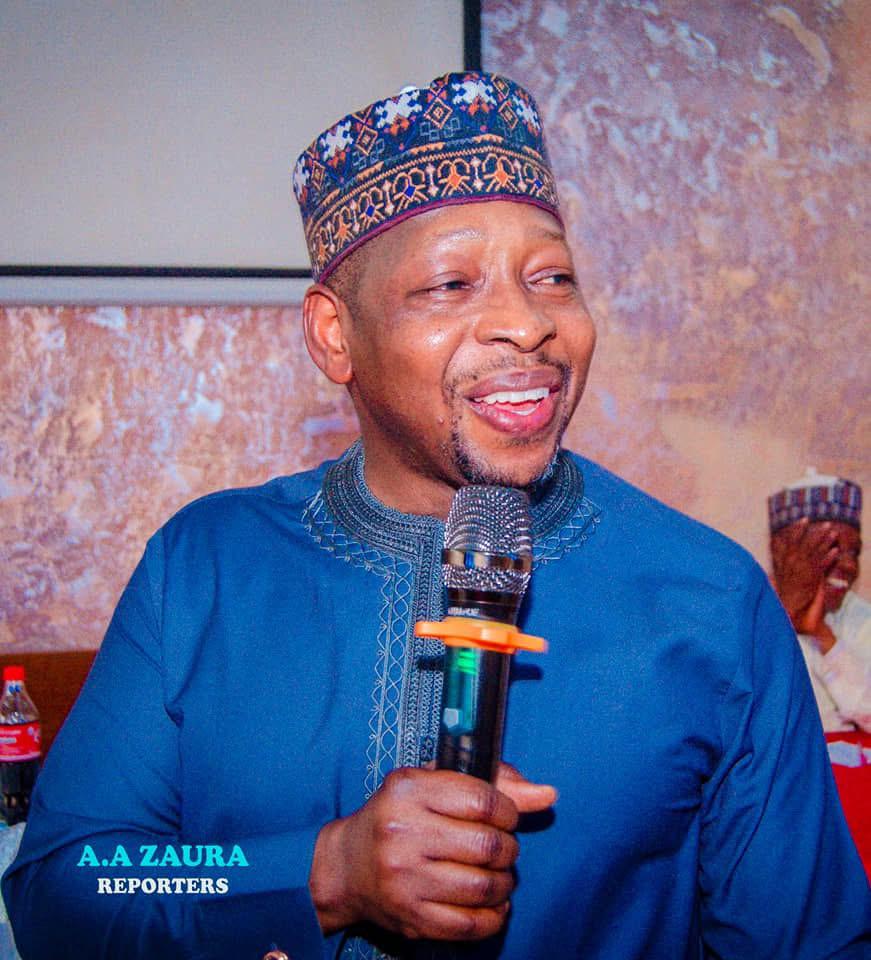
By Dr Ramadan Ali PhD
In the theatre of life where many chase titles, positions, and applause, some men choose to walk quietly through the back door of history, carrying nothing but the weight of compassion on their shoulders.
Among such rare men stands A.A. Zaura, not adorned with the ornaments of office, nor shielded by the cloak of political immunity, but wrapped in the humble garb of service the kind that needs no microphone to echo.
While many climb the ladder of influence with power-hungry hands, Zaura has chosen to lift others with market-worn palms the hands of a businessman who never allowed profit to replace purpose.
It is said that “a tree is known not by the noise it makes in the wind, but by the fruit it bears.” A.A. Zaura has borne fruit in silence. From the bustling corners of Kano’s marketplaces, where traders bargain over tomatoes and textiles, to the silent alleys where lost youths dance with addiction and crime, Zaura’s money moves not towards building mansions in cities of gold, but towards rebuilding lives that society has written off.
His profit, earned honestly through the sweat of commerce, has become a weapon against ignorance, a shield against poverty, and a bridge for the hopeless. Where others chase contracts, he chases change. Where some see the people as burdens, he sees them as the backbone of a better tomorrow.
There’s an African proverb: “The child who is not embraced by the village will burn it down to feel its warmth.” Zaura heard the silent screams of these forgotten children the drug addicts, the street boys, the phone snatchers whose lives are but twisted poems of a broken system and instead of turning a blind eye like many politicians do, he turned his heart toward them. Not with condemnation, but with compassion. Not with judgment, but with justice.
And he does this not from the comfort of an air-conditioned government office or a convoy of bulletproof vehicles. No he does it with his own hard-earned money, carved from the toil of market stalls and business deals. He funds sensitization programs in slums, organizes reformation drives in public schools, sponsors enlightenment seminars about the dangers of drug abuse, and works with local mentors to snatch the youth from the jaws of destruction.
Ask the mother whose son was lured from the street and enrolled into a skill acquisition center sponsored by Zaura she will tell you, “He is a father to the fatherless.”
Ask the reformed street boy who once wielded daggers in the dark but now holds a pen in the light he will whisper, “Zaura did not give up on me when even my family did.”
This is the measure of the man. Not in the number of television interviews he grants, but in the lives he silently lifts. Not in how often he appears in newspapers, but in the neighborhoods he transforms.
They say “he who carries the people’s burden without being asked has already proven he can lead them.” And in that, A.A. Zaura has passed the test many elected officials continue to fail. While others wait to be sworn into office before they start serving, Zaura serves without being sworn, loves without being lobbied, and uplifts without being urged.
The irony is deafening: those in power sit idle while the powerless do the real work. This man this son of the market, this unsung architect of peace has shown that leadership is not a seat; it is a sacrifice. And he makes that sacrifice every day.
“When the drumbeat changes, the dancer must also change his steps.” Nigeria is dancing dangerously close to the edge. Our youth are slipping. Our morals are fading. Our streets are crying. The time has come for a different kind of leader not a title-bearer, but a burden-bearer. Not a noise-maker, but a nation-healer.
If character still counts…
If selflessness still matters…
If service still outweighs speech…
Then the question must be asked: If not A.A. Zaura, who else?
Who else has used his wealth not to build walls, but to break chains?
Who else has taken profit from market stalls and turned it into purpose in forgotten streets?
Who else has lived among the people, walked their pain, shared their silence, and turned it into strength?
The answer is loud in its simplicity.
A.A. Zaura is not just a name he is a necessity.
A voice we did not expect, but desperately need.
A flame flickering in the wind, yet refusing to go out.
It is time.
Not to reward him.
But to release him into leadership. Into higher service. Into the place where empathy meets power and where his passion can protect even more lives.
A shepherd does not need to be crowned before he protects his flock.” But sometimes just sometimes the flock must crown him, not for his gain, but for their survival.













News
Kano Spends ₦10.36bn on Hospitality, Sitting Allowances, Others in Six Months
By Yusuf Danjuma Yunusa
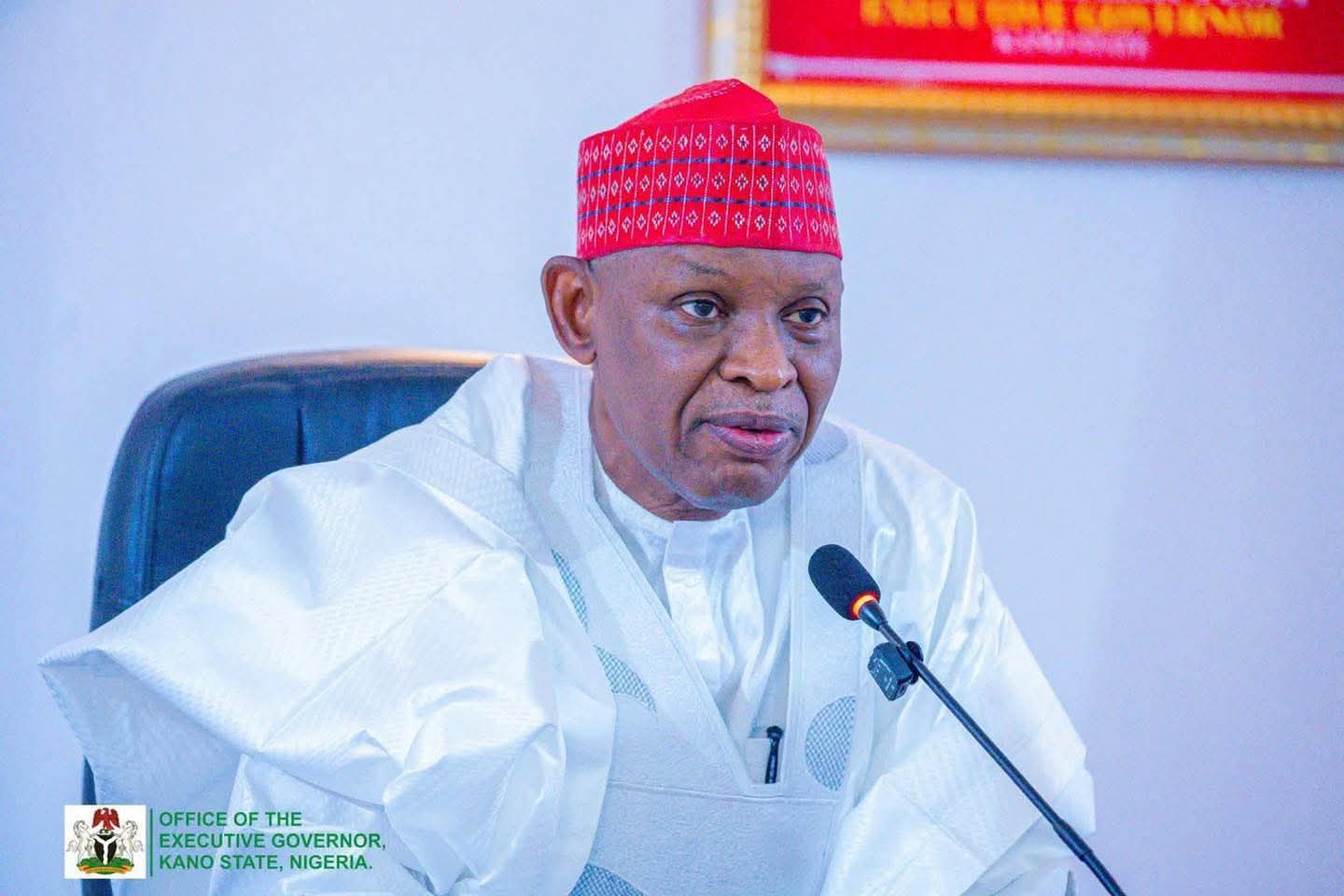
The Kano State Government spent ₦10.36 billion on miscellaneous expenses in the first half of 2026, a review of the state’s second-quarter budget performance report has shown.
The expenditure covers hospitality, publicity, welfare packages, refreshments and meals, celebrations and other miscellaneous items. It represents 16.3 per cent of the approximately ₦63 billion the state budgeted for general miscellaneous expenses for the 2026 fiscal year.
A breakdown of the report shows that hospitality consumed ₦1.78 billion between January and June, or 55.6 per cent of the ₦3.19 billion allocated for the item for the full year. In the second quarter alone, hospitality spending stood at ₦1.31 billion.
Honorarium and sitting allowances gulped ₦1.21 billion, representing 47.1 per cent of the ₦2.57 billion annual budget. The second-quarter report listed ₦1.207 billion under the category.
Publicity and advertisements accounted for ₦1.49 billion, or 35.7 per cent of the ₦4.16 billion budgeted for the year, while welfare packages cost ₦901.94 million against an annual allocation of ₦4.03 billion.
Refreshments and meals gulped ₦116.53 million, representing 7.6 per cent of the ₦1.54 billion allocated for the item. Other miscellaneous expenses stood at ₦3.80 billion, or 29 per cent of the ₦13.08 billion annual vote.
The state also spent ₦296.03 million on special days and celebrations, ₦64.62 million on local medical expenses and ₦40.30 million on international medical expenses.
Under the foreign scholarship scheme, ₦162.95 million was spent, accounting for just 0.6 per cent of the ₦26.23 billion allocated for the programme in 2026.
The figures come from the administration of Governor Abba Yusuf’s spending record in the first six months of the year, as captured in the state’s second-quarter budget performance report.
Sahara reporters
News
Kano Rises to Third Place in 2026 Subnational Climate Governance Performance Ranking

Kano State has risen to third position out of Nigeria’s 36 states in the 2026 Subnational Climate Governance Performance Rating and Ranking (SCGPR 3.0), further consolidating its remarkable progress in climate governance.
The latest ranking represents another significant improvement for the state, which moved from 35th position in 2024 to fourth in 2025, before advancing to third place in the 2026 assessment.
Speaking at the launch of the third edition of the ranking in Abuja on Thursday, the Honourable Commissioner for Water Resources, Environment and Climate Change, Dr. Dahiru Muhammad Hashim, attributed the sustained improvement to the deliberate reforms and strengthened coordination introduced under the leadership of His Excellency, Governor Abba Kabir Yusuf.
Dr. Hashim said Kano had treated the rankings not merely as an assessment of performance but as an opportunity to identify institutional weaknesses, strengthen climate governance and translate policy commitments into measurable action.
“Kano’s rise from 35th to fourth position gave us a stronger foundation to build upon. Our task now is to sustain that progress through institutions that function consistently and programmes whose benefits can be demonstrated,” he said.
The Commissioner highlighted the Kano State Climate Change Policy and the ongoing advancement of the Kano State Climate Change Bill as key steps towards establishing clearer institutional responsibilities, continuity and accountability in climate action.
He also pointed to the state’s grassroots interventions, including the 10 Million Trees Campaign, which builds on the distribution of 5.5 million tree seedlings across the state’s 44 local government areas in 2025. The campaign incorporates digital monitoring, including GPS-verified planting locations, seedling allocation records and survival reporting, to ensure that tree-planting efforts translate into lasting environmental benefits.
According to Dr. Hashim, Kano is also strengthening climate coordination across its 44 local government areas, recognising that communities experience climate risks differently and that effective adaptation requires local knowledge and participation.
He said the integration of water resources, environment and climate change under one ministry provides an opportunity for the state to address interconnected challenges such as flooding, erosion, land degradation, water insecurity, pollution and changing rainfall patterns through more coordinated planning.
“Across these priorities, our objective is to make climate resilience a routine consideration in public decisions. It should inform how we plan infrastructure, support agriculture, manage water resources and prepare for disasters,” he said.
The Commissioner identified institutional strengthening, evidence-based monitoring and climate financing as priorities for the next phase of Kano’s climate response. He said the state would focus on developing well-prepared projects capable of attracting domestic and international financing, particularly in adaptation, water resources, renewable energy and land restoration.
Dr. Hashim also called for stronger partnerships among government institutions, development partners, universities, civil society organisations, businesses and communities to strengthen research, investment, technical capacity and local implementation.
He said the ultimate measure of Kano’s climate governance performance would not be its position on a ranking table alone, but the impact of government interventions on residents.
“For Kano, the ultimate measure of progress is the difference these decisions make to people’s lives: whether farmland remains productive, communities have dependable access to water, and homes and public assets are better protected from environmental hazards,” he said.
The Commissioner expressed appreciation to the Federal Ministry of Environment, the Society for Planet and Prosperity (SPP), development partners, assessors and technical teams for sustaining the Subnational Climate Governance Performance Rating and Ranking.
He also acknowledged Governor Abba Kabir Yusuf for his sustained support for climate governance reforms, as well as civil servants, local government officials, partners and communities whose efforts have contributed to the state’s progress.
Dr. Hashim said Kano would study the findings of the 2026 assessment, consolidate areas of progress and address identified weaknesses.
“Kano State will take the findings of this report back home, use them to refine our priorities and continue the work of protecting our people and their livelihoods,” he said.
Signed
Dr. Dahiru M. Hashim
Honourable Commissioner
Ministry of Water Resources, Environment and Climate Change
Kano State
News
Kebbi Governor’s Aide Threatens to Bar Malami Over Alleged Billboard Vandalism

An aide to Kebbi State Governor, Nasir Idris, has threatened to prevent former Attorney-General of the Federation and Minister of Justice, Abubakar Malami, from entering the state over alleged destruction of billboards linked to political activities.
The governor’s adviser on cemetery affairs, Hon. ATM Jega, issued the warning while reacting to allegations that some individuals were tearing down billboards in different parts of Kebbi State.
Jega warned that he would not allow the alleged destruction of the billboards to continue, insisting that action would be taken if those responsible failed to stop the activity.
The governor’s aide specifically warned Malami, who is the governorship candidate of the African Democratic Congress (ADC) in Kebbi State, to caution individuals he described as his boys against allegedly vandalising the billboards.
“We will prevent Abubakar Malami from entering Kebbi State if he does not stop his boys from tearing down our billboards,” Jega was quoted as saying.
Jega maintained that he would not remain silent while the billboards were allegedly being destroyed, warning that Malami could face restrictions on entering the state if the alleged activities continued.
The threat comes as political activities intensify in Kebbi State ahead of the 2027 general elections, with political parties and their candidates positioning themselves to challenge for elective offices.
Malami, a former minister under the administration of President Muhammadu Buhari, is seeking to become governor of Kebbi State on the platform of the ADC after declaring his intention to contest the 2027 election.
The former minister has since stepped up political mobilisation in the state, including the inauguration of a 600-member ADC campaign council in August 2026 to coordinate the party’s activities across Kebbi’s 21 local government areas.
However, the allegations of billboard destruction and Jega’s threat to prevent Malami from entering the state could further heighten political tensions as preparations for the next general elections gather momentum.

Kano Spends ₦10.36bn on Hospitality, Sitting Allowances, Others in Six Months

Kano Rises to Third Place in 2026 Subnational Climate Governance Performance Ranking

Kebbi Governor’s Aide Threatens to Bar Malami Over Alleged Billboard Vandalism

KIRS seeks wider tax compliance to boost Kano revenue

Breaking:FG Offers 30 Day Fuel Subsidy To Nigerians

Zamfara Varsity ASUU Threatens Warning Strike Over FG-ASUU Agreement, Promotion Arrears

Goje’s Electoral War:The Confrontation With Tinubu,Governor Inuwa,Usman Kumo And APC candidates Ahead Of 2027

PCACC Arrests Man Over Alleged ₦4.5m Sale, Illegal Leasing of Kano Government Horse Stable

Per Ishaq Samaila: “Waziri” for Strategy. “Mai Jama’a” for Service. One Man. One Mission. Ibrahim Kabir Masari

Prof Yusuf Adamu Delivers BUK’s 63rd Professorial Inaugural Lecture, Reflects on Medical Geography and Academic Legacy
Kano Spends ₦10.36bn on Hospitality, Sitting Allowances, Others in Six Months
Kano Rises to Third Place in 2026 Subnational Climate Governance Performance Ranking
Kebbi Governor’s Aide Threatens to Bar Malami Over Alleged Billboard Vandalism
KIRS seeks wider tax compliance to boost Kano revenue
Breaking:FG Offers 30 Day Fuel Subsidy To Nigerians
Zamfara Varsity ASUU Threatens Warning Strike Over FG-ASUU Agreement, Promotion Arrears
Goje’s Electoral War:The Confrontation With Tinubu,Governor Inuwa,Usman Kumo And APC candidates Ahead Of 2027
PCACC Arrests Man Over Alleged ₦4.5m Sale, Illegal Leasing of Kano Government Horse Stable
Per Ishaq Samaila: “Waziri” for Strategy. “Mai Jama’a” for Service. One Man. One Mission. Ibrahim Kabir Masari
Prof Yusuf Adamu Delivers BUK’s 63rd Professorial Inaugural Lecture, Reflects on Medical Geography and Academic Legacy
-

 Opinion5 years ago
On The Kano Flyovers And Public Perception
-

 Features5 years ago
How I Became A Multimillionaire In Nigeria – Hadiza Gabon
-

 Opinion6 years ago
Kano As future Headquarters Of Poverty In Nigeria
-

 History5 years ago
Sheikh Adam Abdullahi Al-Ilory (1917-1992):Nigeria’s Islamic Scholar Who Wrote Over 100 Books And Journals
-

 Opinion5 years ago
My First Encounter with Nasiru Gawuna, the Humble Deputy Governor
-

 History5 years ago
The History Of Borno State Governor Professor Babagana Umara Zulum
-

 History6 years ago
The Origin Of “Mammy Market” In Army Barracks (Mammy Ochefu)
-

 News5 years ago
Federal University Of Technology Babura To Commence Academic Activities September