
News
Governor Abba Denounces Alleged Agreement with Presidency Post-Supreme Court Victory
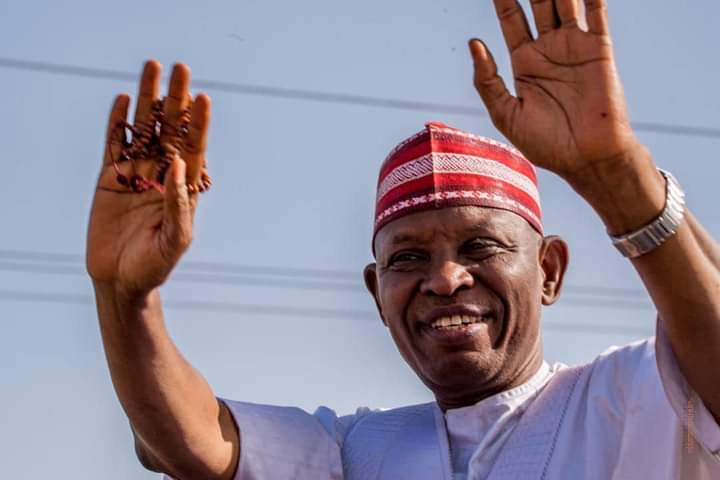
Kano State Governor Alhaji Abba Kabir Yusuf has denounced entering any agreement with Presidency prior to 12th January, 2024 Supreme Court judgment on Kano Election Petition where he emerged victorious.
A statement by the Governor’s spokesperson, Sanusi Bature Dawakin Tofa, described a document already circulating on social media indicating a four term agreement between the Governor and the presidency as imaginary piece, deviod all iota of truth.
For the purposes of emphasis, the rather fake agreement saying Governor Yusuf has accepted to cross carpet to the ruling APC, jettison purported claim to dissolve or allow the five emirates, discontinuing demolition of illegal structures and establishment of Kano Elders Council should be disregarded.
The Governor would like to make it abundantly clear, that having secured his mandate through popular votes of the good people of Kano, and certified by a fair affirmation of Supreme Court judgment, he would not be intimidated by any political opportunist.
Let me also remind those political jobbers hiding under the leniency of Mr. President that whatever political decision or direction that would be taken in Kano will be determined within the confines of the rule of law and executive powers vested in the office of the Executive Governor.
We debunk the rumour and state that no amount of blackmail will distract His Excellency Alhaji Abba Kabir Yusuf from delivering his laudable projects and programmes for the good people of Kano state.
Also worthy of note, the establishment of Kano Elders Council is a personal initiative of the Governor, which is aimed at finding lasting solutions to all solvable problems affecting the state socio-economic and political development. Hence, the Governor Yusuf was not under pressure to form the council.
“Our attention has been drawn to a misconception making round on the social media indicating an agreement between the presidency and Governor Abba Kabir Yusuf in the aftermath of the Supreme Court Judgment that affirmed the mandate of His Excellency.
“I wish to categorically state that Governor Yusuf did not enter any agreement or condition with anybody before the Supreme Court Judgment. I therefore urged the public to dismiss the fallacy being orchestrated by enemies of progress.
‘It is on record that my lord, the Justices of the Supreme Court delivered a landmark Judgment with justice, equity and fairness and largely protect the integrity of the judiciary. “
The governor also expressed sincere appreciation to the President and Commander in Chief His Excellency Alhaji Bola Ahmed Tinubu GCFR for allowing the level playing ground for justice to prevail through non-interference with the judicial process.
The president has demonstrated profound leadership quality by ensuring fair play despite being pushed by some undemocratic elements from Kano and beyond.The President is a true democrat who will not undermine other political parties in the interest of his party.
“Let me state and emphatically so that Governor Yusuf has no prior agreement with the President. However, the president should rather be appreciated for maintaining neutrality, peace, and stability in Kano.
“No doubt, the refusal of the president to carry out the wishes of some prominent members of his party has brought about enduring atmosphere in Kano. On this single act, the good people of Kano will continue to appreciate Mr. President and pray for him to succeed in his administration.”
The governor had several opportunities to meet the president in all of his visits, and the discussions are centred around the development of Kano State.










News
Eight Kano Rep Members Abandon NNPP for APC
By Yusuf Danjuma Yunusa
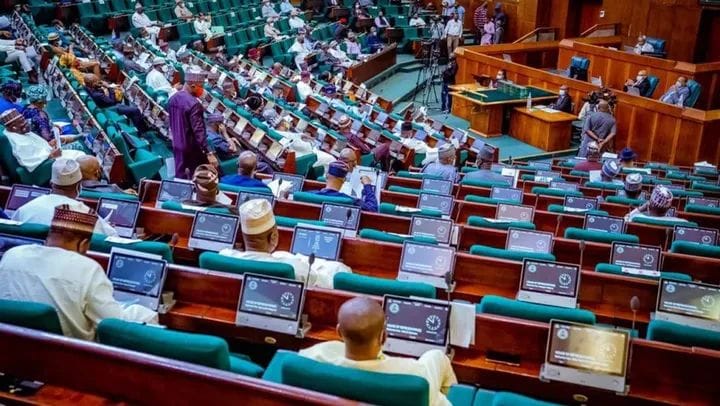
In a dramatic political realignment, eight members of the House of Representatives from Kano State formally defected from the New Nigeria Peoples Party (NNPP) to the ruling All Progressives Congress (APC) on Tuesday.
The mass defection, which signals a significant shift in the political dynamics of Nigeria’s most populous state, was announced during plenary at the Green Chamber. The move represents a major blow to the NNPP, which controls the Kano State Government House, and a substantial boost for the APC as it consolidates its federal influence.
The announcement drew a high-profile audience, underscoring the political weight of the development. Among those present to witness the defection were Kano State Governor Abba Kabir Yusuf, a prominent figure in the NNPP; Deputy Senate President Barau Jibrin; and former Kano governor Abdullahi Umar Ganduje, who now serves as a national leader of the APC. Their presence highlighted the escalating political contest for control and influence in the state.
Political analysts view the defection as a major realignment ahead of future electoral contests. For the APC, the addition of eight federal lawmakers strengthens its numerical standing in the House and deepens its foothold in a state where the NNPP had mounted a formidable challenge in the 2023 elections.
The lawmakers have yet to publicly detail their reasons for leaving the NNPP, but the coordinated switch points to intensifying factional battles and strategic maneuvering within Kano’s political landscape. The development is expected to further polarize the state’s political environment as both parties position themselves for the next electoral cycle.
News
Governor Abba Kabir Yusuf Holds Exclusive Prerogative to Choose Deputy – Malam Inuwa Waya
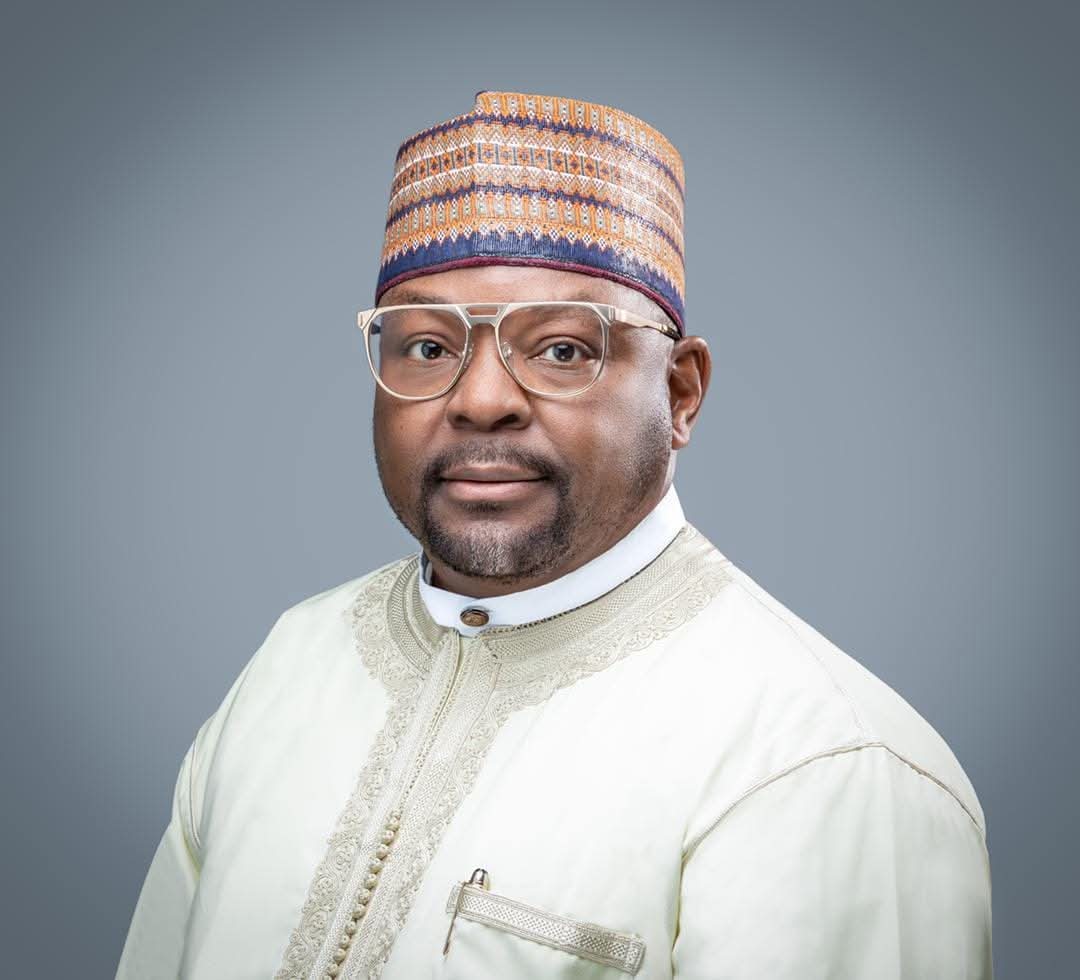
Malam Inuwa Waya, a chieftain of the All Progressives Congress (APC) in Kano, has reaffirmed that the constitutional prerogative to appoint a new Deputy Governor rests solely with His Excellency, Governor Abba Kabir Yusuf.
Speaking to journalists in Kano, Malam Waya cautioned against undue interference from individuals on social media who have been attempting to dictate the Governor’s choice following the resignation of the former Deputy Governor, Comrade Aminu Abdulsalam.
“It is only Governor Abba Kabir Yusuf who has the prerogative to choose his deputy. People should stop coming to social media to tell him who to appoint. The constitution does not mandate him to select from any particular zone; it is entirely his decision,” Malam Waya stated.
He further explained that while political balancing may encourage consideration of candidates from Kano North or South since the Governor hails from Kano Central, such arrangements remain political strategies rather than constitutional requirements.
Malam Waya also commended Governor Yusuf’s infrastructural strides, noting that within two years, the administration has revived water projects, advanced public-private partnerships in power, and accelerated development across education, agriculture, and investment.
“The Governor has revived the glory of Kano. With the infrastructure projects ongoing, it will be an easy sail for all of us as we prepare for 2027. He has put Kano first, and that is what matters,” he said.
On the issue of inclusivity, Malam Waya emphasized that all stakeholders, including former APC members, are being carried along in governance. He urged the people of Kano to unite behind the Governor’s vision.
“We, the old APC members, have no problem with Governor Yusuf. We are knit together in Kano, and our priority is Kano first, not any individual. The Governor knows who he will pick as his deputy, and we trust his judgment,” he concluded.
Malam Waya also extended prayers for the acceptance of Ramadan fasting and congratulated the Muslim Ummah in Kano for celebrating Sallah peacefully.
News
ADC Reports Surge in Membership Following Kwankwaso’s Defection, Calls Him ‘Game Changer’
By Yusuf Danjuma Yunusa
The African Democratic Congress (ADC) has officially welcomed former Kano State Governor and 2023 presidential candidate Senator Rabiu Musa Kwankwaso into its fold, touting his defection as a pivotal move that strengthens a growing coalition for political realignment in Nigeria.
In a statement released for immediate effect, the party described Kwankwaso as a “game-changer,” announcing that he has directed his network of supporters nationwide to join the ADC. According to the party, this call has already triggered a significant uptick in registrations on its online platform over the past 24 hours.
The ADC’s National Publicity Secretary, Mallam Bolaji Abdullahi, framed the defection as part of a broader recognition among Nigerians of the need for a credible political alternative. The statement emphasized Kwankwaso’s experience in governance, grassroots influence, and capacity to unify as assets to the party’s ambition to “rebuild Nigeria.”
Notably, the ADC highlighted the presence of several high-profile leaders at the defection event, including the party’s National Chairman, Senator David Mark; National Secretary, Ogbeni Rauf Aregbesola; and leading presidential aspirants such as former Vice President Atiku Abubakar, Mr. Peter Obi, and Rt. Hon. Rotimi Amaechi. Their attendance, the party stated, reflects a united front and growing momentum.
The party characterized the surge in online registrations as evidence that Nigerians are aligning with what it called a “different path forward.” In its appeal to Kwankwaso’s supporters and the broader public, the ADC positioned itself as a vehicle for restoring dignity, opportunity, and public trust in governance.
“Change does not happen by chance,” the statement concluded. “It happens when people come together with purpose.”
The development marks a significant realignment in Nigeria’s opposition political landscape, with the ADC seeking to position itself as a converging point for influential politicians and their followings ahead of future elections.

Eight Kano Rep Members Abandon NNPP for APC

Governor Abba Kabir Yusuf Holds Exclusive Prerogative to Choose Deputy – Malam Inuwa Waya

ADC Reports Surge in Membership Following Kwankwaso’s Defection, Calls Him ‘Game Changer’

Foreign Affairs Minister Resigns to Pursue Bauchi Governorship Election

Kwankwaso Officially Joins ADC

The Governor Who Chose His People Over His Politics: Abba Yusuf and the Moral Courage Behind Kano First

FREEDOM OF SPEECH, NOT FREEDOM FROM CONSEQUENCE: A CITIZEN’S CALL FOR RESPONSIBLE PUBLIC COMMENTARY
Restoring the Glory That Was Always There: Governor Abba Kabir Yusuf and the Historical Vision Behind Kano First

Tinubu to Swear in Olatunji Disu as Inspector-General of Police on Wednesday

NDLEA Clarifies: Drug Case Against Abba Kyari Still Active After Court Discharge
Eight Kano Rep Members Abandon NNPP for APC
Governor Abba Kabir Yusuf Holds Exclusive Prerogative to Choose Deputy – Malam Inuwa Waya
ADC Reports Surge in Membership Following Kwankwaso’s Defection, Calls Him ‘Game Changer’
Foreign Affairs Minister Resigns to Pursue Bauchi Governorship Election
Kwankwaso Officially Joins ADC
The Governor Who Chose His People Over His Politics: Abba Yusuf and the Moral Courage Behind Kano First
FREEDOM OF SPEECH, NOT FREEDOM FROM CONSEQUENCE: A CITIZEN’S CALL FOR RESPONSIBLE PUBLIC COMMENTARY
Restoring the Glory That Was Always There: Governor Abba Kabir Yusuf and the Historical Vision Behind Kano First
Tinubu to Swear in Olatunji Disu as Inspector-General of Police on Wednesday
NDLEA Clarifies: Drug Case Against Abba Kyari Still Active After Court Discharge
-

 Opinion4 years ago
On The Kano Flyovers And Public Perception
-

 Features5 years ago
How I Became A Multimillionaire In Nigeria – Hadiza Gabon
-

 Opinion5 years ago
Kano As future Headquarters Of Poverty In Nigeria
-

 History5 years ago
Sheikh Adam Abdullahi Al-Ilory (1917-1992):Nigeria’s Islamic Scholar Who Wrote Over 100 Books And Journals
-

 Opinion4 years ago
My First Encounter with Nasiru Gawuna, the Humble Deputy Governor
-

 History5 years ago
The Origin Of “Mammy Market” In Army Barracks (Mammy Ochefu)
-

 History4 years ago
The History Of Borno State Governor Professor Babagana Umara Zulum
-

 News4 years ago
Federal University Of Technology Babura To Commence Academic Activities September