
News
Army Council Approves Promotion of Senior Officers to Major General and Brigadier General Ranks
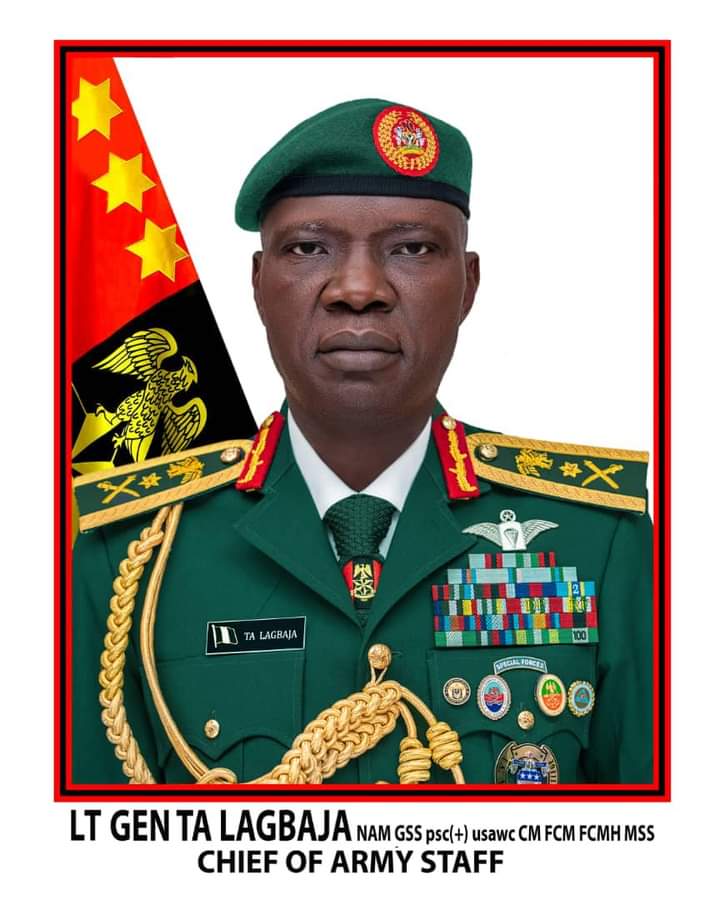
The Army Council has on Thursday 21 December 2023, approved the promotion of senior officers to the next ranks of Major General and Brigadier General respectively. A total of 47 Brigadier Generals have been promoted to the rank of Major General, while 75 Colonels have also been elevated to the rank of Brigadier General accordingly.
Those promoted to the rank of Major General include, Brig Gen WB Etuk Commandant Nigerian Army College of Logistics and Management, Brig Gen JE Osifo Commandant Nigerian Army School of Finance and Administration, Brigadier General WM Dangana Commander Sector 3 Joint Task Force North East Operation HADIN KAI, Brig Gen TB Ugiagbe Acting Chief of Military Intelligence, Brig Gen ASM Wase Deputy Director General Land Forces Stimulation Centre Nigeria Operations, Brig Gen MA Abdullahi Commandant Depot Nigerian Army, Brig Gen BI Alaya Commander Command Engineering Depot, Brig Gen AO Oyelade Director Personnel Planning Army Headquarters Department of personnel Management, Brig Gen OO Arogundade Commandant Nigerian Army School of Electrical and Mechanical Engineering, Brig Gen EI Okoro Commander 13 Brigade, Brig Gen CR Nnebeife Executive Director Nigerian Army Farms and Ranches Limited, Brig Gen FU Mijinyawa Director Plans Army Headquarters Department of Policy and Plans, Brig Gen MT Abdullahi Commander 50 Space Command, Brig Gen M Adamu Commander 32 Brigade, Brig Gen ND Shagaya Commandant Nigerian Army School of Supply and Transport, Brig Gen ME Onoja Office of the CDS and Brig Gen MO Erebulu Acting Director Psychological Warfare Defence Headquarters.
AYCC Condemns Aerial Bombardment Tragedy in Kaduna, Urges President Tinubu for Swift Action
Equally elevated to the rank of Major General are Brig Gen BA Ilori Commander Army Headquarters Garrison Ordnance Services, Brig Gen MO Ihanuwaze Director Budget Army Headquarters, Brig Gen O Nwachukwu Director Army Public Relations, Brig Gen EE Ekpenyong of the Nigerian Army Resource Centre, Brig Gen SI Musa Director Legal Service (Army), Brig Gen M Galadima Commander Command Finance Office and Brig Gen AP Ahmadu Commander 1 Division Ordnance Service.
Officers promoted from the rank of Colonel to Brigadier General are Col Nwakonobi Chief of Staff Headquarters 3 Brigade, Col MC Akin Ojo Commander 41 Engineer Brigade, Col BM Madaki Deputy Director Army Headquarters Operations Monitoring Team, Col MO Edide Directing Staff Army War College Nigeria, Col KE Inyang Commander 76 ST Brigade, Col OO Nafiu Chief of Staff Office of the Chief of Army Staff, Col PA Zipele Commander Signal Operations Command, Col OA Onasanya Acting Command Guards Brigade, Col MI Amatso Deputy Director Department of Civil Military Affairs, Col CM Akaliro Deputy Director Army Headquarters Department of Army Transformation and Innovation, Col NE Okoloagu Directing Staff Army War College Nigeria, Col AS Bugaje Acting Director Special Forces Infantry Corps Centre, Col AM Kitchner Commander 6 Division Finance and Account, Col SJ Dogo Deputy Chief of Staff Operations Headquarters 82 Division and Col JN Garba Commander 32 Brigade Garrison.
Others elevated to the rank of Brigadier General are Col PT Gbor Commander 81 Military Intelligence Brigade. Col SO Okoigi Acting Corps Commander Nigerian Army Medical Corps, Col AF Maimagani Acting Director Chaplaincy (Roman Catholic), Col PO Alimekhena Headquarters 81 Division, Col BI George Acting Director Directorate of Dental Services Headquarters Nigerian Army medical Corps, Col IB Gambari Headquarters 63 Brigade and Col AY Emekoma Participant Senior Executive Course 45 National Institute for Policy and Strategic Studies.
The Chief of Army Staff, Lieutenant General Taoreed Lagbaja congratulates the newly promoted senior officers and their families. He has also charged them to redouble their efforts to justify their elevation and the confidence reposed in them.









News
Atiku Slams Tinubu Over 30-Day Petrol Discount, Demands Answers on Day 31
By Yusuf Danjuma Yunusa
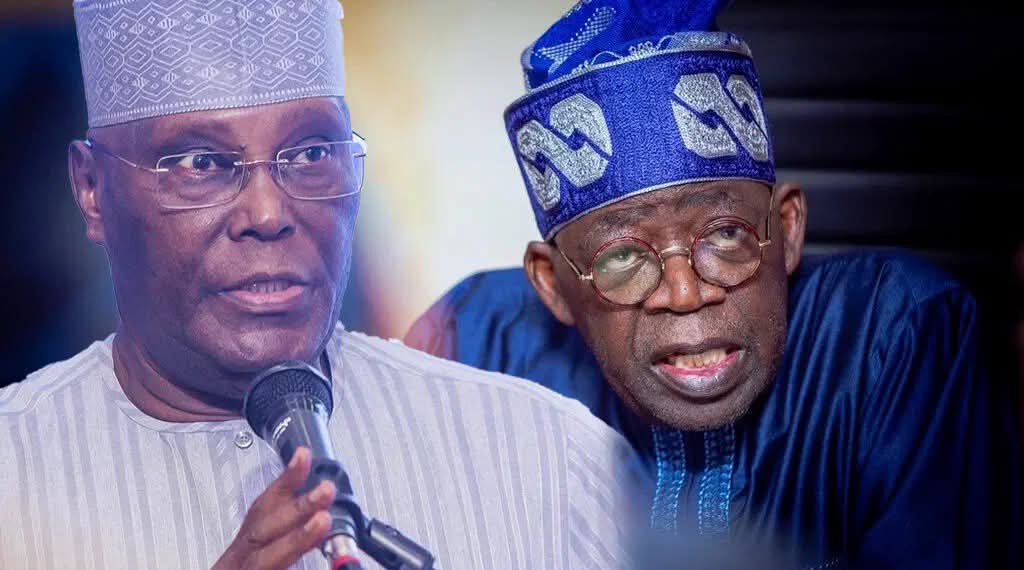
Former Vice-President Atiku Abubakar has criticised President Bola Tinubu’s administration over its 30-day petrol discount initiative, describing the measure as a temporary palliative that would not provide lasting relief to Nigerians grappling with rising living costs.
Atiku, in a statement, accused the Federal Government of introducing the discount as an election-season gesture after more than three years of economic hardship, questioning what would happen when the 30-day period expires.
The former vice-president said the government’s decision to offer a ₦50 discount on petrol at Nigerian National Petroleum Company (NNPC) stations amounted to a temporary intervention rather than a comprehensive solution to the country’s economic challenges.
“What happens on day 31?” Atiku asked, arguing that Nigerians required sustainable policies capable of reducing fuel costs and easing the burden of transportation, food and other essential commodities.
Atiku said the rising cost of living had continued to affect households, businesses and farmers, accusing the Tinubu administration of implementing economic reforms without providing adequate protection for citizens struggling with their consequences.
He said Nigerians had endured higher food prices, increased transportation costs, rising business expenses and growing insecurity, adding that the government should not expect a short-term petrol discount to compensate for the prolonged economic difficulties experienced by citizens.
According to him, the administration had spent more than three years asking Nigerians to endure economic sacrifices, while the cost of essential goods and services continued to rise.
The former vice-president also accused Tinubu of introducing the petrol discount only after his administration had dismissed similar proposals for targeted support to reduce the burden of fuel costs.
Atiku said he had previously advocated targeted assistance to ease the impact of petrol prices but was criticised by the government for what it described as a lack of understanding of economic policy.
He argued that the government’s latest initiative had effectively adopted the principle behind his proposal, although he maintained that the administration had failed to implement it in a comprehensive and sustainable manner.
“When I proposed targeted support to ease fuel costs, you called me ignorant of economic policy. Your government said it could not be done. Now, in a desperate and clumsy retreat, you have shamelessly embraced the principle you mocked,” Atiku said.
He demanded an apology from the president but stressed that his greater concern was the need for the government to explain how Nigerians would be protected from rising fuel costs after the discount period ended.
Atiku distinguished his proposed production subsidy from the government’s 30-day discount, describing his approach as a long-term intervention designed to support local refining and reduce the cost of fuel.
He argued that a properly structured production subsidy could help lower domestic fuel production costs while providing more durable relief to consumers.
According to him, the government’s temporary discount lacked the policy framework required to guarantee stable transportation fares, predictable operating costs for businesses and affordable living conditions for households.
“Atiku described Tinubu’s 30-day discount as a ‘sugar rush masquerading as economic policy,’ arguing that the temporary reduction in petrol prices would be followed by renewed hardship once the initiative expired.
“Families cannot plan their meals around a temporary discount. Transporters cannot set stable fares on it. Businesses cannot invest or plan for the future on it,” he said.
The former presidential candidate maintained that Nigerians needed a sustainable economic relief programme rather than a short-term reduction in petrol prices that could offer only limited respite.
He also accused the president and his economic team of failing to adequately consider alternative policy proposals aimed at reducing the hardship associated with the government’s economic reforms.
Atiku said that during his State of the Nation address on September 18, 2026, he had offered to share his economic relief plan with Tinubu in the national interest.
He expressed disappointment that the president had not accepted the offer, alleging that the government had instead introduced a limited intervention that failed to address the underlying problems.
According to Atiku, the administration’s decision reflected what he described as intellectual laziness and an unwillingness to acknowledge alternative approaches to economic management.
He further accused the government of seeking public approval for a temporary discount after presiding over years of rising living costs.
“Now you offer a ₦50 petrol discount for 30 days and expect applause for returning a fraction of what Nigerians have lost?” he asked.
Atiku said the government should be judged by the overall impact of its economic policies rather than by the announcement of temporary relief measures.
He added that Nigerians were capable of distinguishing between a government pursuing a comprehensive economic strategy and one introducing short-term interventions to manage public dissatisfaction.
The former vice-president also questioned the practical implementation of the discount, particularly the government’s plan to prioritise public transport operators.
He asked whether the initiative would translate into lower transportation fares for passengers and what mechanisms the government would establish to ensure that transport operators passed the savings on to commuters.
“Do not hide behind the word ‘discount.’ You say public transport operators come first. Will fares fall? Who will enforce that?” Atiku asked.
He maintained that without clear enforcement measures and a sustainable policy framework, the initiative might fail to deliver meaningful benefits to ordinary Nigerians.
Atiku urged the administration to adopt a lasting economic relief strategy focused on reducing fuel costs, supporting local refining and easing the pressure on households and businesses.
He said Nigerians had endured significant economic difficulties and deserved policies that would provide predictable and sustained improvements in their living conditions rather than temporary relief measures.
The former vice-president says the public would ultimately judge the Tinubu administration by its ability to address the country’s economic challenges and improve the welfare of citizens.
News
Kano Local Government Finance Deputy Director, Balarabe Muhammad, Dies
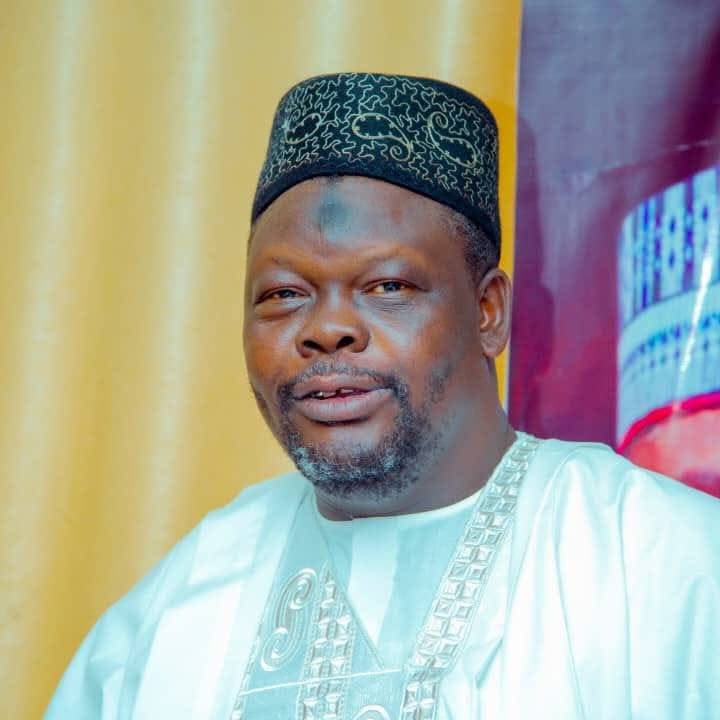
Alhaji Balarabe Muhammad, popularly known as Danbala, the Deputy Director of Finance at Nassarawa Local Government Area of Kano State, is dead.
The deceased was the uncle of Muhammad Bashir, the LEADERSHIP Hausa Online Editor.
Muhammad, who was the younger brother of Alhaji Salisu Muhammad Unguwar Gini, a former secretary of Kano Municipal Local Government, died on Saturday.
He served in several local government areas in Kano State during his career before his last promotion to the position of Deputy Director of Finance at Nassarawa Local Government.
He was also an active member of the Nigeria Union of Local Government Employees (NULGE), Kano State chapter.
His funeral prayer is scheduled for 10:00 a.m. on Saturday, October 10, 2026, at the residence of Mai Unguwar Gini, along Dan’agundi Road, Kano Municipal.
He has since been buried at Dan’agundi Cemetery after the funeral prayer.
News
Kano Spends ₦10.36bn on Hospitality, Sitting Allowances, Others in Six Months
By Yusuf Danjuma Yunusa
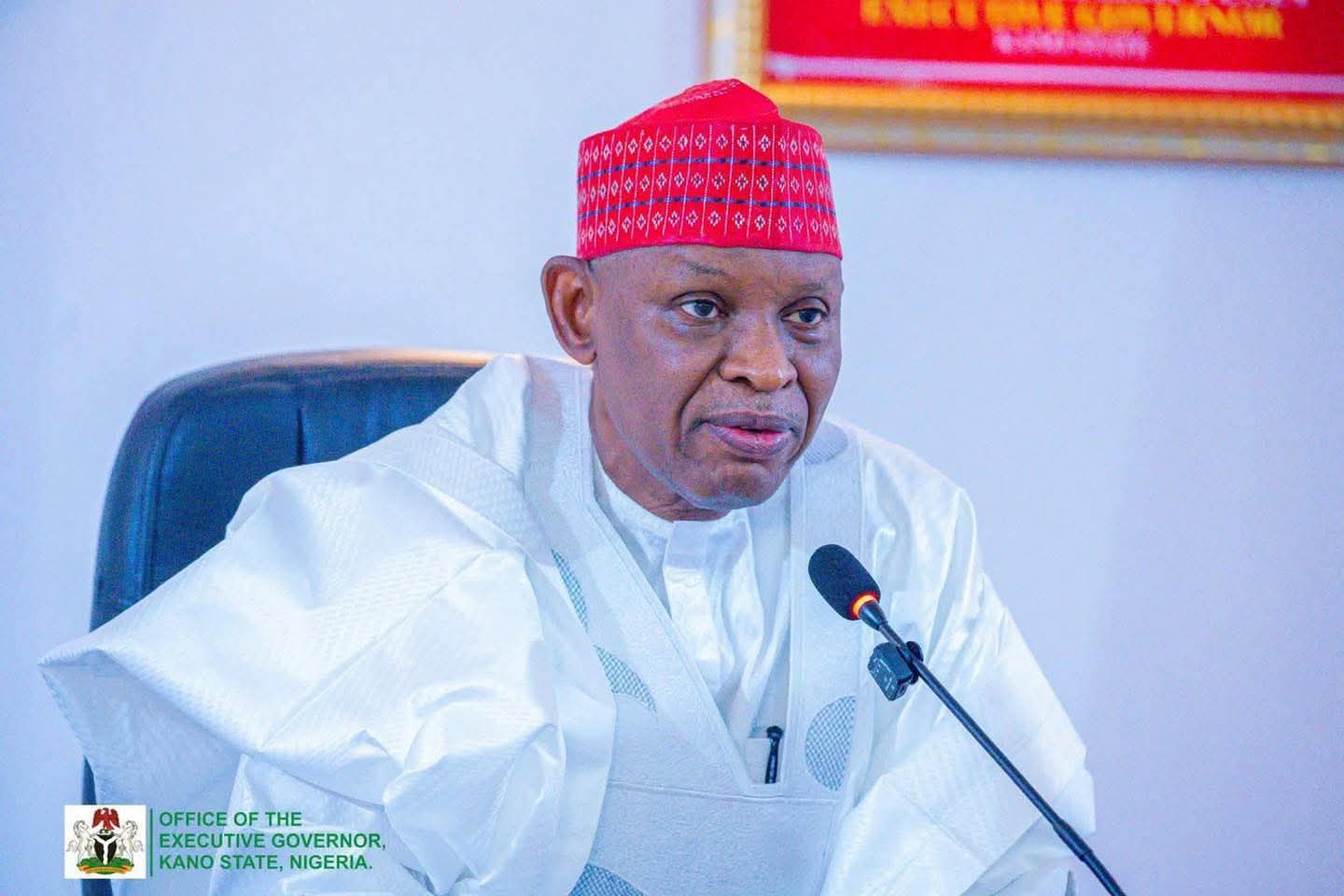
The Kano State Government spent ₦10.36 billion on miscellaneous expenses in the first half of 2026, a review of the state’s second-quarter budget performance report has shown.
The expenditure covers hospitality, publicity, welfare packages, refreshments and meals, celebrations and other miscellaneous items. It represents 16.3 per cent of the approximately ₦63 billion the state budgeted for general miscellaneous expenses for the 2026 fiscal year.
A breakdown of the report shows that hospitality consumed ₦1.78 billion between January and June, or 55.6 per cent of the ₦3.19 billion allocated for the item for the full year. In the second quarter alone, hospitality spending stood at ₦1.31 billion.
Honorarium and sitting allowances gulped ₦1.21 billion, representing 47.1 per cent of the ₦2.57 billion annual budget. The second-quarter report listed ₦1.207 billion under the category.
Publicity and advertisements accounted for ₦1.49 billion, or 35.7 per cent of the ₦4.16 billion budgeted for the year, while welfare packages cost ₦901.94 million against an annual allocation of ₦4.03 billion.
Refreshments and meals gulped ₦116.53 million, representing 7.6 per cent of the ₦1.54 billion allocated for the item. Other miscellaneous expenses stood at ₦3.80 billion, or 29 per cent of the ₦13.08 billion annual vote.
The state also spent ₦296.03 million on special days and celebrations, ₦64.62 million on local medical expenses and ₦40.30 million on international medical expenses.
Under the foreign scholarship scheme, ₦162.95 million was spent, accounting for just 0.6 per cent of the ₦26.23 billion allocated for the programme in 2026.
The figures come from the administration of Governor Abba Yusuf’s spending record in the first six months of the year, as captured in the state’s second-quarter budget performance report.
Sahara reporters

Atiku Slams Tinubu Over 30-Day Petrol Discount, Demands Answers on Day 31

Kano Local Government Finance Deputy Director, Balarabe Muhammad, Dies

Kano Spends ₦10.36bn on Hospitality, Sitting Allowances, Others in Six Months

Kano Rises to Third Place in 2026 Subnational Climate Governance Performance Ranking

Kebbi Governor’s Aide Threatens to Bar Malami Over Alleged Billboard Vandalism

Zamfara Varsity ASUU Threatens Warning Strike Over FG-ASUU Agreement, Promotion Arrears

PCACC Arrests Man Over Alleged ₦4.5m Sale, Illegal Leasing of Kano Government Horse Stable

Goje’s Electoral War:The Confrontation With Tinubu,Governor Inuwa,Usman Kumo And APC candidates Ahead Of 2027

Prof Yusuf Adamu Delivers BUK’s 63rd Professorial Inaugural Lecture, Reflects on Medical Geography and Academic Legacy

Clerics Call, Citizens Cheer: Kano Rallies Behind Muhuyi’s Anti-Drug Task Force
Atiku Slams Tinubu Over 30-Day Petrol Discount, Demands Answers on Day 31
Kano Local Government Finance Deputy Director, Balarabe Muhammad, Dies
Kano Spends ₦10.36bn on Hospitality, Sitting Allowances, Others in Six Months
Kano Rises to Third Place in 2026 Subnational Climate Governance Performance Ranking
Kebbi Governor’s Aide Threatens to Bar Malami Over Alleged Billboard Vandalism
Zamfara Varsity ASUU Threatens Warning Strike Over FG-ASUU Agreement, Promotion Arrears
PCACC Arrests Man Over Alleged ₦4.5m Sale, Illegal Leasing of Kano Government Horse Stable
Goje’s Electoral War:The Confrontation With Tinubu,Governor Inuwa,Usman Kumo And APC candidates Ahead Of 2027
Prof Yusuf Adamu Delivers BUK’s 63rd Professorial Inaugural Lecture, Reflects on Medical Geography and Academic Legacy
Clerics Call, Citizens Cheer: Kano Rallies Behind Muhuyi’s Anti-Drug Task Force
-

 Opinion5 years ago
On The Kano Flyovers And Public Perception
-

 Features5 years ago
How I Became A Multimillionaire In Nigeria – Hadiza Gabon
-

 Opinion6 years ago
Kano As future Headquarters Of Poverty In Nigeria
-

 History5 years ago
Sheikh Adam Abdullahi Al-Ilory (1917-1992):Nigeria’s Islamic Scholar Who Wrote Over 100 Books And Journals
-

 Opinion5 years ago
My First Encounter with Nasiru Gawuna, the Humble Deputy Governor
-

 History5 years ago
The History Of Borno State Governor Professor Babagana Umara Zulum
-

 History6 years ago
The Origin Of “Mammy Market” In Army Barracks (Mammy Ochefu)
-

 News5 years ago
Federal University Of Technology Babura To Commence Academic Activities September