
News
Army Council Approves Promotion of Senior Officers to Major General and Brigadier General Ranks
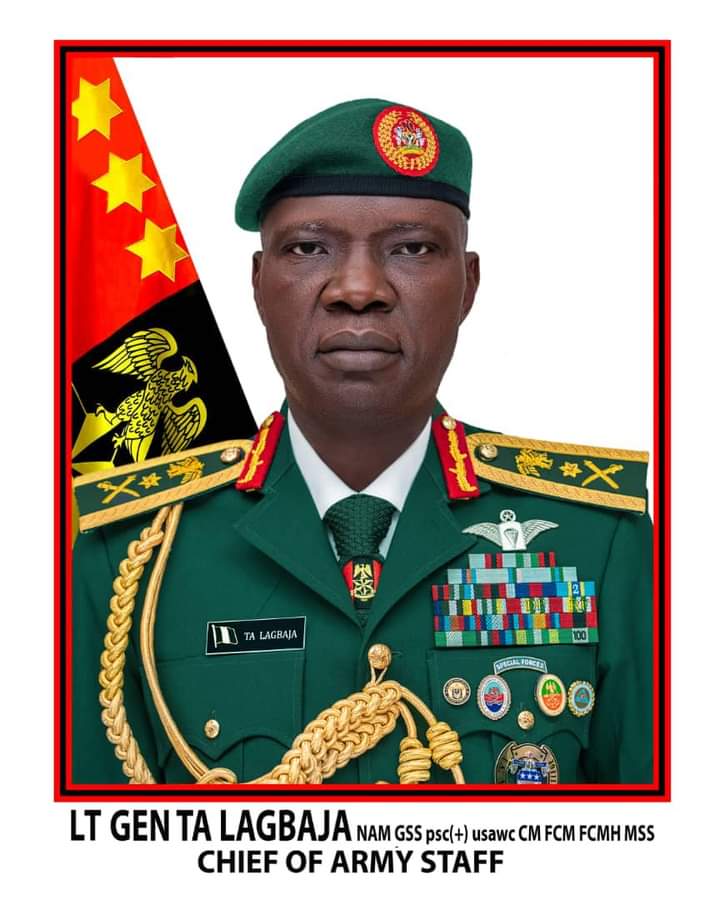
The Army Council has on Thursday 21 December 2023, approved the promotion of senior officers to the next ranks of Major General and Brigadier General respectively. A total of 47 Brigadier Generals have been promoted to the rank of Major General, while 75 Colonels have also been elevated to the rank of Brigadier General accordingly.
Those promoted to the rank of Major General include, Brig Gen WB Etuk Commandant Nigerian Army College of Logistics and Management, Brig Gen JE Osifo Commandant Nigerian Army School of Finance and Administration, Brigadier General WM Dangana Commander Sector 3 Joint Task Force North East Operation HADIN KAI, Brig Gen TB Ugiagbe Acting Chief of Military Intelligence, Brig Gen ASM Wase Deputy Director General Land Forces Stimulation Centre Nigeria Operations, Brig Gen MA Abdullahi Commandant Depot Nigerian Army, Brig Gen BI Alaya Commander Command Engineering Depot, Brig Gen AO Oyelade Director Personnel Planning Army Headquarters Department of personnel Management, Brig Gen OO Arogundade Commandant Nigerian Army School of Electrical and Mechanical Engineering, Brig Gen EI Okoro Commander 13 Brigade, Brig Gen CR Nnebeife Executive Director Nigerian Army Farms and Ranches Limited, Brig Gen FU Mijinyawa Director Plans Army Headquarters Department of Policy and Plans, Brig Gen MT Abdullahi Commander 50 Space Command, Brig Gen M Adamu Commander 32 Brigade, Brig Gen ND Shagaya Commandant Nigerian Army School of Supply and Transport, Brig Gen ME Onoja Office of the CDS and Brig Gen MO Erebulu Acting Director Psychological Warfare Defence Headquarters.
AYCC Condemns Aerial Bombardment Tragedy in Kaduna, Urges President Tinubu for Swift Action
Equally elevated to the rank of Major General are Brig Gen BA Ilori Commander Army Headquarters Garrison Ordnance Services, Brig Gen MO Ihanuwaze Director Budget Army Headquarters, Brig Gen O Nwachukwu Director Army Public Relations, Brig Gen EE Ekpenyong of the Nigerian Army Resource Centre, Brig Gen SI Musa Director Legal Service (Army), Brig Gen M Galadima Commander Command Finance Office and Brig Gen AP Ahmadu Commander 1 Division Ordnance Service.
Officers promoted from the rank of Colonel to Brigadier General are Col Nwakonobi Chief of Staff Headquarters 3 Brigade, Col MC Akin Ojo Commander 41 Engineer Brigade, Col BM Madaki Deputy Director Army Headquarters Operations Monitoring Team, Col MO Edide Directing Staff Army War College Nigeria, Col KE Inyang Commander 76 ST Brigade, Col OO Nafiu Chief of Staff Office of the Chief of Army Staff, Col PA Zipele Commander Signal Operations Command, Col OA Onasanya Acting Command Guards Brigade, Col MI Amatso Deputy Director Department of Civil Military Affairs, Col CM Akaliro Deputy Director Army Headquarters Department of Army Transformation and Innovation, Col NE Okoloagu Directing Staff Army War College Nigeria, Col AS Bugaje Acting Director Special Forces Infantry Corps Centre, Col AM Kitchner Commander 6 Division Finance and Account, Col SJ Dogo Deputy Chief of Staff Operations Headquarters 82 Division and Col JN Garba Commander 32 Brigade Garrison.
Others elevated to the rank of Brigadier General are Col PT Gbor Commander 81 Military Intelligence Brigade. Col SO Okoigi Acting Corps Commander Nigerian Army Medical Corps, Col AF Maimagani Acting Director Chaplaincy (Roman Catholic), Col PO Alimekhena Headquarters 81 Division, Col BI George Acting Director Directorate of Dental Services Headquarters Nigerian Army medical Corps, Col IB Gambari Headquarters 63 Brigade and Col AY Emekoma Participant Senior Executive Course 45 National Institute for Policy and Strategic Studies.
The Chief of Army Staff, Lieutenant General Taoreed Lagbaja congratulates the newly promoted senior officers and their families. He has also charged them to redouble their efforts to justify their elevation and the confidence reposed in them.









News
Kano Spends ₦10.36bn on Hospitality, Sitting Allowances, Others in Six Months
By Yusuf Danjuma Yunusa
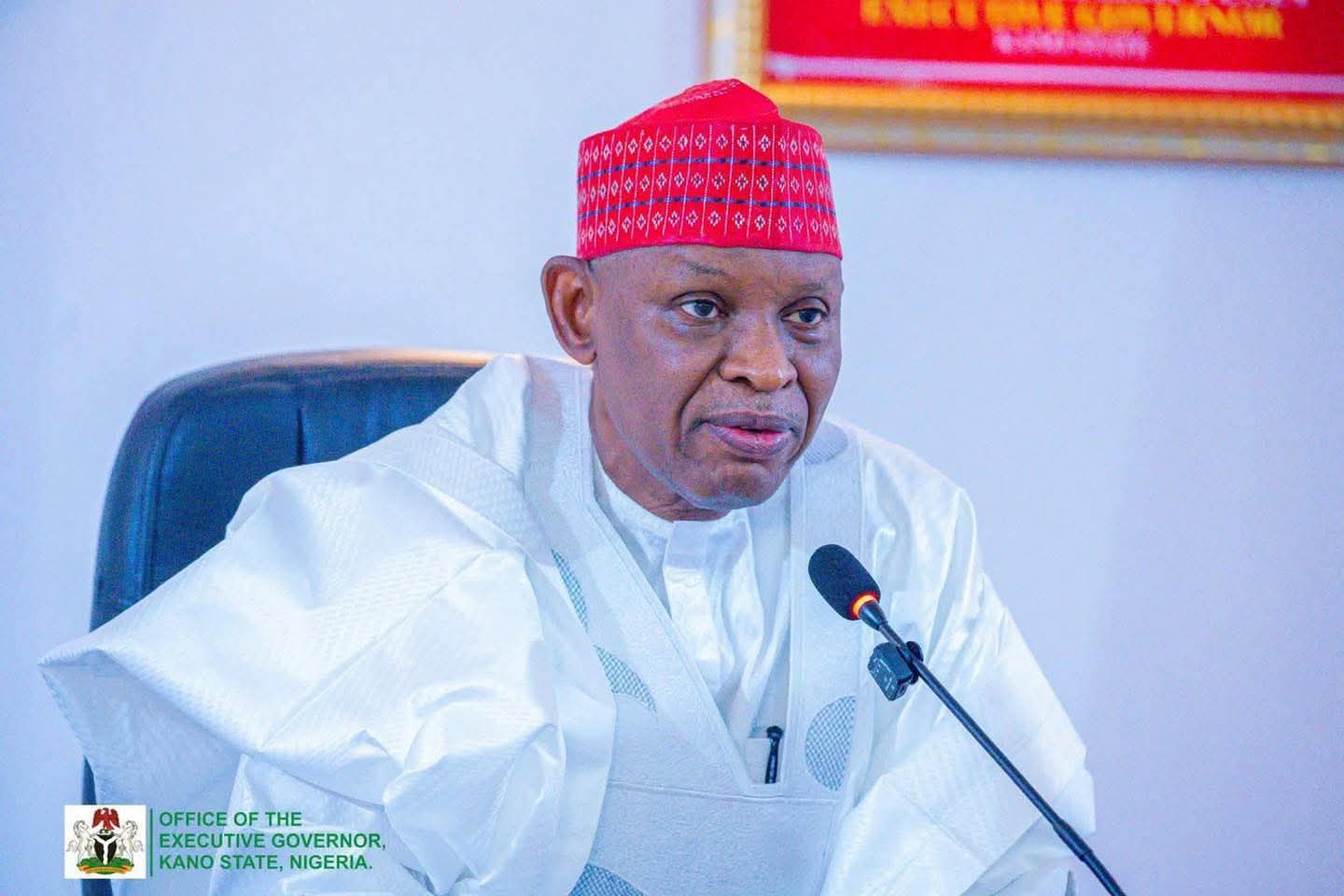
The Kano State Government spent ₦10.36 billion on miscellaneous expenses in the first half of 2026, a review of the state’s second-quarter budget performance report has shown.
The expenditure covers hospitality, publicity, welfare packages, refreshments and meals, celebrations and other miscellaneous items. It represents 16.3 per cent of the approximately ₦63 billion the state budgeted for general miscellaneous expenses for the 2026 fiscal year.
A breakdown of the report shows that hospitality consumed ₦1.78 billion between January and June, or 55.6 per cent of the ₦3.19 billion allocated for the item for the full year. In the second quarter alone, hospitality spending stood at ₦1.31 billion.
Honorarium and sitting allowances gulped ₦1.21 billion, representing 47.1 per cent of the ₦2.57 billion annual budget. The second-quarter report listed ₦1.207 billion under the category.
Publicity and advertisements accounted for ₦1.49 billion, or 35.7 per cent of the ₦4.16 billion budgeted for the year, while welfare packages cost ₦901.94 million against an annual allocation of ₦4.03 billion.
Refreshments and meals gulped ₦116.53 million, representing 7.6 per cent of the ₦1.54 billion allocated for the item. Other miscellaneous expenses stood at ₦3.80 billion, or 29 per cent of the ₦13.08 billion annual vote.
The state also spent ₦296.03 million on special days and celebrations, ₦64.62 million on local medical expenses and ₦40.30 million on international medical expenses.
Under the foreign scholarship scheme, ₦162.95 million was spent, accounting for just 0.6 per cent of the ₦26.23 billion allocated for the programme in 2026.
The figures come from the administration of Governor Abba Yusuf’s spending record in the first six months of the year, as captured in the state’s second-quarter budget performance report.
Sahara reporters
News
Kano Rises to Third Place in 2026 Subnational Climate Governance Performance Ranking
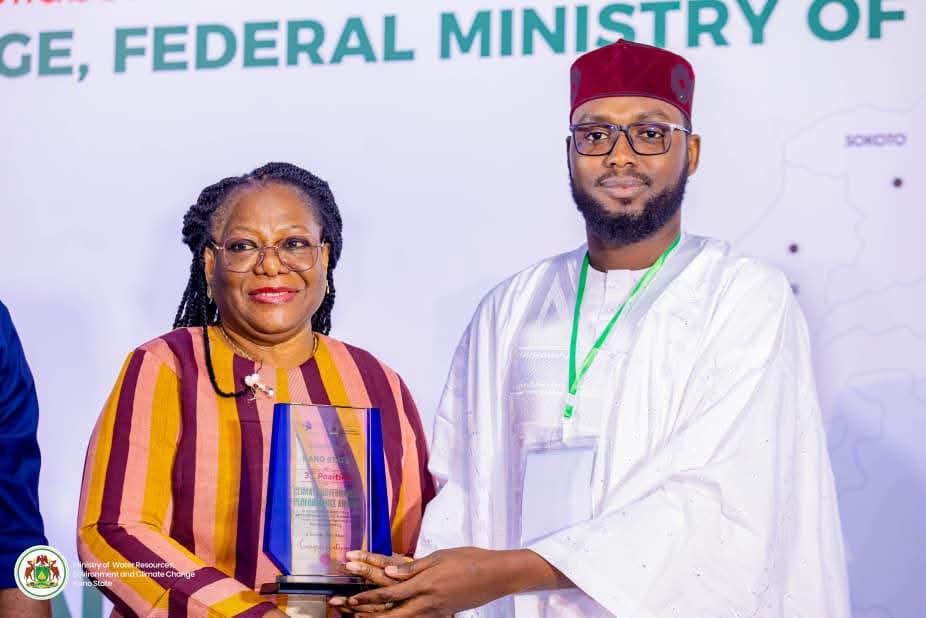
Kano State has risen to third position out of Nigeria’s 36 states in the 2026 Subnational Climate Governance Performance Rating and Ranking (SCGPR 3.0), further consolidating its remarkable progress in climate governance.
The latest ranking represents another significant improvement for the state, which moved from 35th position in 2024 to fourth in 2025, before advancing to third place in the 2026 assessment.
Speaking at the launch of the third edition of the ranking in Abuja on Thursday, the Honourable Commissioner for Water Resources, Environment and Climate Change, Dr. Dahiru Muhammad Hashim, attributed the sustained improvement to the deliberate reforms and strengthened coordination introduced under the leadership of His Excellency, Governor Abba Kabir Yusuf.
Dr. Hashim said Kano had treated the rankings not merely as an assessment of performance but as an opportunity to identify institutional weaknesses, strengthen climate governance and translate policy commitments into measurable action.
“Kano’s rise from 35th to fourth position gave us a stronger foundation to build upon. Our task now is to sustain that progress through institutions that function consistently and programmes whose benefits can be demonstrated,” he said.
The Commissioner highlighted the Kano State Climate Change Policy and the ongoing advancement of the Kano State Climate Change Bill as key steps towards establishing clearer institutional responsibilities, continuity and accountability in climate action.
He also pointed to the state’s grassroots interventions, including the 10 Million Trees Campaign, which builds on the distribution of 5.5 million tree seedlings across the state’s 44 local government areas in 2025. The campaign incorporates digital monitoring, including GPS-verified planting locations, seedling allocation records and survival reporting, to ensure that tree-planting efforts translate into lasting environmental benefits.
According to Dr. Hashim, Kano is also strengthening climate coordination across its 44 local government areas, recognising that communities experience climate risks differently and that effective adaptation requires local knowledge and participation.
He said the integration of water resources, environment and climate change under one ministry provides an opportunity for the state to address interconnected challenges such as flooding, erosion, land degradation, water insecurity, pollution and changing rainfall patterns through more coordinated planning.
“Across these priorities, our objective is to make climate resilience a routine consideration in public decisions. It should inform how we plan infrastructure, support agriculture, manage water resources and prepare for disasters,” he said.
The Commissioner identified institutional strengthening, evidence-based monitoring and climate financing as priorities for the next phase of Kano’s climate response. He said the state would focus on developing well-prepared projects capable of attracting domestic and international financing, particularly in adaptation, water resources, renewable energy and land restoration.
Dr. Hashim also called for stronger partnerships among government institutions, development partners, universities, civil society organisations, businesses and communities to strengthen research, investment, technical capacity and local implementation.
He said the ultimate measure of Kano’s climate governance performance would not be its position on a ranking table alone, but the impact of government interventions on residents.
“For Kano, the ultimate measure of progress is the difference these decisions make to people’s lives: whether farmland remains productive, communities have dependable access to water, and homes and public assets are better protected from environmental hazards,” he said.
The Commissioner expressed appreciation to the Federal Ministry of Environment, the Society for Planet and Prosperity (SPP), development partners, assessors and technical teams for sustaining the Subnational Climate Governance Performance Rating and Ranking.
He also acknowledged Governor Abba Kabir Yusuf for his sustained support for climate governance reforms, as well as civil servants, local government officials, partners and communities whose efforts have contributed to the state’s progress.
Dr. Hashim said Kano would study the findings of the 2026 assessment, consolidate areas of progress and address identified weaknesses.
“Kano State will take the findings of this report back home, use them to refine our priorities and continue the work of protecting our people and their livelihoods,” he said.
Signed
Dr. Dahiru M. Hashim
Honourable Commissioner
Ministry of Water Resources, Environment and Climate Change
Kano State
News
Kebbi Governor’s Aide Threatens to Bar Malami Over Alleged Billboard Vandalism

An aide to Kebbi State Governor, Nasir Idris, has threatened to prevent former Attorney-General of the Federation and Minister of Justice, Abubakar Malami, from entering the state over alleged destruction of billboards linked to political activities.
The governor’s adviser on cemetery affairs, Hon. ATM Jega, issued the warning while reacting to allegations that some individuals were tearing down billboards in different parts of Kebbi State.
Jega warned that he would not allow the alleged destruction of the billboards to continue, insisting that action would be taken if those responsible failed to stop the activity.
The governor’s aide specifically warned Malami, who is the governorship candidate of the African Democratic Congress (ADC) in Kebbi State, to caution individuals he described as his boys against allegedly vandalising the billboards.
“We will prevent Abubakar Malami from entering Kebbi State if he does not stop his boys from tearing down our billboards,” Jega was quoted as saying.
Jega maintained that he would not remain silent while the billboards were allegedly being destroyed, warning that Malami could face restrictions on entering the state if the alleged activities continued.
The threat comes as political activities intensify in Kebbi State ahead of the 2027 general elections, with political parties and their candidates positioning themselves to challenge for elective offices.
Malami, a former minister under the administration of President Muhammadu Buhari, is seeking to become governor of Kebbi State on the platform of the ADC after declaring his intention to contest the 2027 election.
The former minister has since stepped up political mobilisation in the state, including the inauguration of a 600-member ADC campaign council in August 2026 to coordinate the party’s activities across Kebbi’s 21 local government areas.
However, the allegations of billboard destruction and Jega’s threat to prevent Malami from entering the state could further heighten political tensions as preparations for the next general elections gather momentum.

Kano Spends ₦10.36bn on Hospitality, Sitting Allowances, Others in Six Months

Kano Rises to Third Place in 2026 Subnational Climate Governance Performance Ranking

Kebbi Governor’s Aide Threatens to Bar Malami Over Alleged Billboard Vandalism

KIRS seeks wider tax compliance to boost Kano revenue

Breaking:FG Offers 30 Day Fuel Subsidy To Nigerians

Zamfara Varsity ASUU Threatens Warning Strike Over FG-ASUU Agreement, Promotion Arrears

Goje’s Electoral War:The Confrontation With Tinubu,Governor Inuwa,Usman Kumo And APC candidates Ahead Of 2027

PCACC Arrests Man Over Alleged ₦4.5m Sale, Illegal Leasing of Kano Government Horse Stable

Prof Yusuf Adamu Delivers BUK’s 63rd Professorial Inaugural Lecture, Reflects on Medical Geography and Academic Legacy

Clerics Call, Citizens Cheer: Kano Rallies Behind Muhuyi’s Anti-Drug Task Force
Kano Spends ₦10.36bn on Hospitality, Sitting Allowances, Others in Six Months
Kano Rises to Third Place in 2026 Subnational Climate Governance Performance Ranking
Kebbi Governor’s Aide Threatens to Bar Malami Over Alleged Billboard Vandalism
KIRS seeks wider tax compliance to boost Kano revenue
Breaking:FG Offers 30 Day Fuel Subsidy To Nigerians
Zamfara Varsity ASUU Threatens Warning Strike Over FG-ASUU Agreement, Promotion Arrears
Goje’s Electoral War:The Confrontation With Tinubu,Governor Inuwa,Usman Kumo And APC candidates Ahead Of 2027
PCACC Arrests Man Over Alleged ₦4.5m Sale, Illegal Leasing of Kano Government Horse Stable
Prof Yusuf Adamu Delivers BUK’s 63rd Professorial Inaugural Lecture, Reflects on Medical Geography and Academic Legacy
Clerics Call, Citizens Cheer: Kano Rallies Behind Muhuyi’s Anti-Drug Task Force
-

 Opinion5 years ago
On The Kano Flyovers And Public Perception
-

 Features5 years ago
How I Became A Multimillionaire In Nigeria – Hadiza Gabon
-

 Opinion6 years ago
Kano As future Headquarters Of Poverty In Nigeria
-

 History5 years ago
Sheikh Adam Abdullahi Al-Ilory (1917-1992):Nigeria’s Islamic Scholar Who Wrote Over 100 Books And Journals
-

 Opinion5 years ago
My First Encounter with Nasiru Gawuna, the Humble Deputy Governor
-

 History5 years ago
The History Of Borno State Governor Professor Babagana Umara Zulum
-

 History6 years ago
The Origin Of “Mammy Market” In Army Barracks (Mammy Ochefu)
-

 News5 years ago
Federal University Of Technology Babura To Commence Academic Activities September