
Opinion
BBC Brash:Confirming The CIA Covert Conspiracy
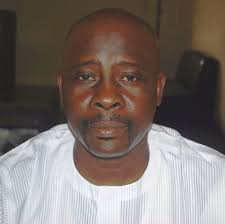
By Bala Ibrahim.
In 2007, Julian Paul Assange, the Australian editor, publisher, activist and founder of WikiLeaks, released a report, alleging that Boko Haram is a CIA covert operation in Nigeria, the aim of which is to ultimately eliminate Nigeria, as a potential strategic rival to the US in the African continent.
Julian Assange’s report said, “The US embassy in Nigeria is a forward operating base for wide and far reaching acts of subversion against Nigeria, which include but not limited to, eavesdropping on Nigerian government communication, financial espionage on leading Nigerians, support and funding of subversive groups and insurgents, sponsoring of divisive propaganda among the disparate groups of Nigeria and the use of visa blackmail to induce and coerce high ranking Nigerians into acting in favour of US interests”.
Of course the CIA was quick to deny the allegation, by accusing WikiLeaks of endangering Americans, helping US rivals and hampering the fight against terror threats by releasing what it claimed was, a trove, or store of valuables of the CIA hacking tools.
According to Heather Fritz Horniak, the then CIA spokeswoman, “The American public should be deeply troubled by any WikiLeaks disclosure, designed to damage the intelligence community’s ability to protect America against terrorists and other adversaries”. But she didn’t confirm or deny the authenticity of the report.
Looking at the barrage of hate speeches, and the ever-increasing divisive propaganda against the government and different people of different ethnicity, alongside the multitude of subversive activities that are perpetrated by a number of foreign agencies in Nigeria, one may be tempted to believe in toto, that indeed, there is a camouflaged policy by some agents against Nigeria.
Recently, piqued by the BBC Africa Eye’s report, which portrayed Nigeria as the epicentre of violence in Africa, Kadaria Ahmed, a former staff of the BBC, accused the medium of acting at variance with it’s own ethics, and the Royal Charter of the BBC, which constitutionally sets out the BBC’s objective, mission and public purposes.
Kadaria was blunt, because as a one time staff of the BBC, she is very familiar with the editorial policy of the medium, especially the regular sermon to staff, to stand on the character of objectivity, and refrain from bias.
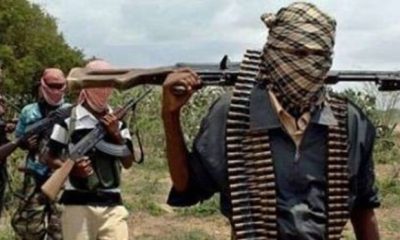
So when the BBC put out a documentary that said in the last 10 years, a new form of insecurity has settled in Nigeria, seizing the innocence of children and the peace of adults, taking lives, destroying homes, and displacing hundreds of thousands, and went on to glorify the terrorists, by meeting them in their dens and giving them undue publicity at the BBC’s prime time, Kadaria asked the medium and other journalists, to question their conscience, and see whether their action is not in tandem with the promotion of terrorism. The documentary was too promotional for the terrorists, and unmistakably intended to instigate more violence, by implicitly suggesting, and showing the invincibility and superiority of the terrorists.
In protest, the Nigerian government threatened to sanction the BBC, along with the Trust TV, which had done something similar, for airing such documentaries that glorify and fuel terrorism and banditry in the country.
For starters, the Nigerian Broadcasting Commission, NBC, announced the imposition of a fine of N5 million each, on Multichoice Nigeria Limited, owners of DSTV, TelCom Satellite Limited, TSTV, and NTA-Startimes Limited, for broadcasting the BBC Africa Eye documentary, titled, the Bandits Warlords of Zamfara.
Rather than seek ways of quietly resolving the issue with the Nigerian government, the BBC is said to be adamant, with a threat that it would even do more. Do more? I hope not.
I am yet to confirm officially, if truly that is the position of the BBC, because, if it turns out to be true, the brash would only confirm WikiLeaks’s allegation, that indeed Boko Haram is a CIA covert operation, and some foreign media are the agents of propaganda in the operation.
Some of us that worked with the BBC, still carry the stigma stamp of the infamous ‘sexed up’ dossier on Sadam’s weapons of mass destruction, which since publication, has left the BBC vulnerable to attacks for falsehood, the devastating effect of which, lead to the suicide of Dr. David Kelly, a weapons expert.
Many heads rolled on the floor of the BBC as a result of shame, starting with the Chairman, Gavyn Davies and followed by the Director General, Mr. Greg Dyke. The journalist that aired the report on the BBC Today programme, Andrew Gilligan, also threw in the towel.
The guys resigned because the Hutton’s inquiry, which was set up by the British government to unravel the truth, had accused the British government of involvement in deceit, and indicted the BBC for being reckless, through the airing of false reports, that were evidently economic with the truth. This bruised heavily, the reputations of the BBC’s management and its supervisory board of governors. Hence, such compulsory resignations.
On its part, the BBC, through the then newly appointed acting chairman, Lord Richard Ryder, apologized for errors in reportage.
“On behalf of the BBC I have no hesitation in apologising unreservedly for our errors and to the individuals whose reputations were affected by them,” – Lord Richard Ryder.
That is the essence of morality-allowing one’s instinct to know the distinction between right and wrong or good and bad behaviour.
It is my hope that the BBC would be guided by the past, so that it does not permit ego, to poison or pollute it’s future.
Regretful acknowledgement of an offence or failure, is a demonstration of strength, which the medium has in abundance, I think.




Opinion
From Grade Level 03 to Director: Binta Bala’s 35-Year Journey of Resilience, Service and Inclusion
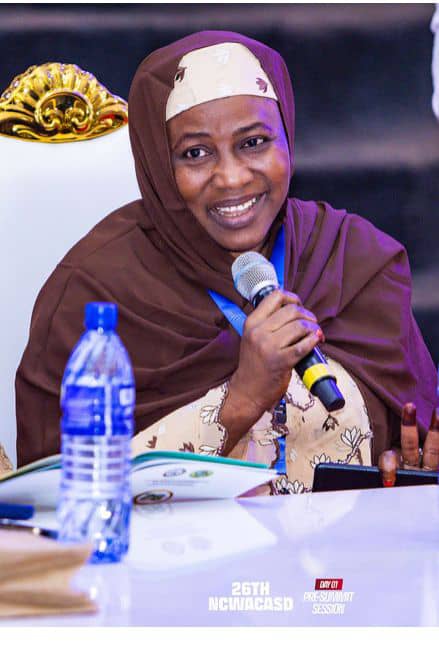
By Dr Binta Bala
Thirty-five years ago, Binta Bala walked into the Kano State Ministry of Education with little more than an SSCE certificate, determination and a dream of building a meaningful career.
She entered the civil service on 18 August 1991 as a Grade Level 03 Lab Attendant.
On Tuesday, 18 August 2026, exactly 35 years later, she closed that chapter of her life in a position that would have seemed distant at the beginning of her journey: a substantive Director on Grade Level 16, with a PhD, and with responsibility for the Department of Persons with Special Needs under the Kano State Ministry of Women Affairs, Children and Persons with Special Needs.
For Bala, the occasion was more than a retirement. It was a moment of reflection on a journey defined by perseverance, education, public service and an unyielding refusal to allow disability to determine the boundaries of her life.
“Alhamdulillah. Alhamdulillah,” she said as she reflected on the milestone.
Her story is particularly significant because she is a woman living with a physical disability and a survivor of polio. She walks with the support of a walking stick, but over the years, that walking stick became less a symbol of limitation than a reminder of how far she had travelled.
From a Humble Beginning
When Bala joined the civil service in 1991, she could not have known that her career would eventually take her to the highest professional levels of her service.
Her first position was modest: Lab Attendant, Grade Level 03.
But what she lacked in rank, she made up for in ambition and determination.
The years that followed brought professional advancement, further education, new responsibilities and challenges. Step by step, Bala continued to build her career, refusing to allow the barriers associated with disability to define her prospects.
“I resisted. I persevered. I kept moving forward,” she recalled.
Her progress eventually took her from the entry level of the civil service to Grade Level 16, culminating in her appointment as a pioneer Director responsible for Persons with Special Needs.
Along the way, she also attained a PhD, transforming a career that began with an SSCE certificate into one marked by academic achievement and professional leadership.
Disability Was Never the Destination
Perhaps the most compelling aspect of Bala’s story is the way she confronted the expectations often imposed on people living with disabilities.
As a polio survivor with a physical disability, she experienced obstacles that could easily have discouraged her. But she chose to concentrate on what she could accomplish rather than what others might have considered impossible.
“My walking stick may have supported my steps, but faith, determination, courage, education, and resilience carried me much further,” she said.
That philosophy became central to her professional life.
Rather than viewing disability as a barrier to achievement, Bala turned her personal experience into a source of strength and a deeper understanding of the struggles faced by persons with special needs.
Her eventual responsibility for the Department of Persons with Special Needs therefore carried a significance beyond the title of the office. It placed someone who had personally experienced the challenges of disability in a position to advocate for inclusion, accessibility and empowerment.
A Career Built Around Service
For Bala, the measure of a successful career was never simply the position attained.
She believes the real reward was the opportunity to serve people and contribute to improving their lives.
“My greatest reward has never been the positions I attained, but the opportunity to serve humanity, promote inclusion, challenge barriers, and contribute to the lives of others,” she said.
During her years in public service, she interacted with children, women and persons with special needs whose experiences reinforced her belief that inclusion must go beyond policy statements.
It must be reflected in opportunities, access, dignity and meaningful participation in society.
She said the people whose lives she touched also taught her important lessons about resilience and courage.
“To every child, woman, and person with special needs whose life we have touched, thank you for teaching me resilience, courage, and the true meaning of service,” she said.
Gratitude to Those Who Walked With Her
As she marked the end of her formal civil service career, Bala did not view her achievement as a solitary accomplishment.
She acknowledged the role played by her family, colleagues, mentors, friends and well-wishers throughout the 35-year journey.
She particularly thanked her family for their sacrifices, prayers and unwavering support.
“Thank you for believing in my ability rather than focusing on my disability,” she said.
She also expressed appreciation to colleagues and mentors who made her professional journey easier and more meaningful.
For a career spanning three and a half decades, such relationships were undoubtedly an important part of the story.
A Farewell Without Bitterness
Retirement also gave Bala an opportunity to look back at the difficult moments of her career with honesty and humility.
She acknowledged that, like anyone who has spent decades working with people, there may have been moments when disagreements occurred or people were hurt.
In a gesture of reconciliation, she apologised to anyone she may have offended, disappointed or wronged during her years of service, whether knowingly or unknowingly.
At the same time, she offered forgiveness to those who may have wronged or hurt her.
She said she wanted to leave the past “with a peaceful heart” and move into the next chapter with gratitude, forgiveness and goodwill.
It was perhaps one of the most striking elements of her farewell: after 35 years of navigating the challenges of a public career, she chose not to leave with bitterness, but with peace.
Retirement Is Not the End
Although Bala has retired from active public service, she made it clear that retirement would not mean withdrawing from the cause that has defined much of her professional life.
She pledged to continue supporting Kano State and advocating for the rights, inclusion and empowerment of persons with disabilities.
“Kano will always have my support and goodwill,” she said.
Her message was particularly directed at persons with disabilities who may have been made to feel that their circumstances determine their future.
“Do not give up. Believe in yourself. Keep moving. Your limitation does not have to be the limit of your destiny,” she said.
It is a message rooted not in theory, but in personal experience.
Bala’s own career provides the evidence.
She began as a Grade Level 03 Lab Attendant with an SSCE certificate. Thirty-five years later, she retired as a Grade Level 16 Director with a PhD, having led a department dedicated to the very community whose struggles she understood so deeply.
Passing the Baton
As she stepped away from active government service, Bala described the moment as the closing of one chapter and the beginning of another.
But she also recognised that the work of inclusion cannot rest on one individual.
“My door remains open. The work of safeguarding and empowering PWDs must continue. I hand the baton to you all,” she said.
That statement perhaps best captures the legacy she hopes to leave behind.
Her story is not simply about career progression from Grade Level 03 to Grade Level 16. It is about what can happen when education, faith, resilience and determination meet opportunity.
It is about a woman who entered public service at the lowest levels and rose through the ranks without allowing disability to become the final word on her potential.
And it is about a career that ultimately came full circle: a polio survivor who once had to navigate the world with a walking stick eventually became a senior public servant responsible for advancing the interests of people living with special needs.
After 35 years, Bala leaves active public service with gratitude rather than regret, forgiveness rather than resentment, and a renewed commitment to the cause of inclusion.
Her final words capture the spirit of the journey:
“35 years of service. One remarkable journey. A lifetime of gratitude. Alhamdulillah.”
And with that, Binta Bala closes one chapter — but not the story.
Opinion
Kano Projects Not Urban-Based: Why Gov Abba Beats All
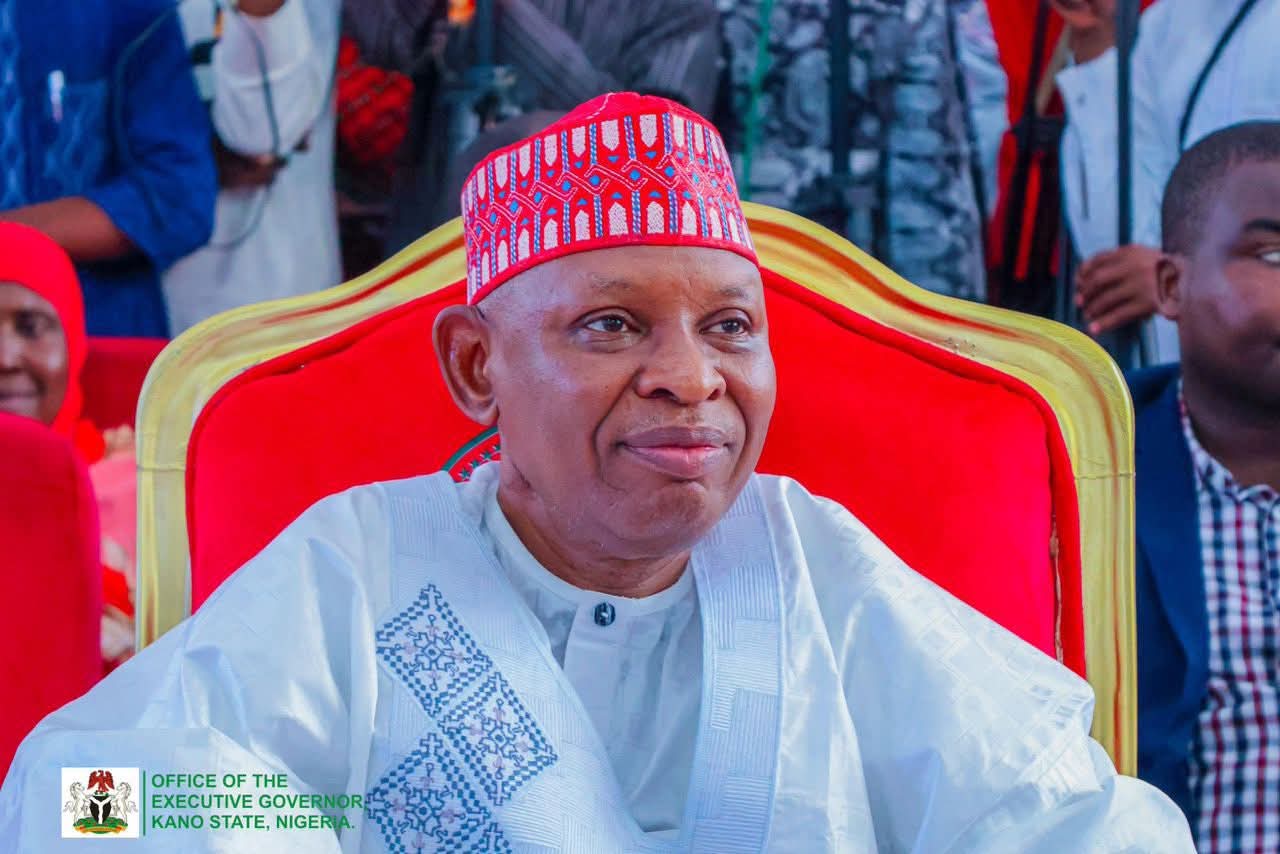
By Abba Anwar
From the flyovers of Lagos and Kano to the farm-to-market roads of Yobe and Ebonyi, Nigeria’s 36 state governments have spent the last three years rewriting their strategies for infrastructural development. All in an effort to bridge development gap.
Between 2023 and August 2026, state budgets and projects implementation show a deliberate paradigm shift. As cities get rail lines, hospitals and interchanges, rural communities are finally seeing feeder roads, solar boreholes and more modern schools.
But in Kano, under the able leadership of His Excellency, Governor Abba Kabir Yusuf, the picture goes beyond that, as the distribution of projects is shared between urban and rural spaces with all sense of humor and fairness. Infrastructural development, among others, is not urban-based.
While 8 metropolitan local government areas (LGAs) have 598 projects across individual LGAs, with a contract sum of N299.36B, 36 rural local government areas (LGAs) have 653 projects across individual LGAs with a contract sum of N287.90B, Kano is still the only state in the federation, to my knowledge, with this scientific categorization, at least in the public eye. As available data indicates. I stand to be corrected.
Also as another category of cross-cutting local government areas (LGAs) boast of 37 projects connecting two or more LGAs together, with a contract sum of N159.50B, and statewide /other have 269 projects, connecting state and LGAs with a contract sum of N249.54B, Governor Yusuf is fast becoming Mr Due Process.
To take my readers deeper in understanding why Kano maintains dozens of miles ahead of other states, this piece examines two states from each of Nigeria’s six geo-political zones, focusing only on projects funded and executed directly by state governments. The picture depicts a scenario of dual priorities — modernize the cities, but don’t leave the villages behind.
In North West zone let me begin with Kano state, though I gave brief highlight above. Under urban projects, we have Kano Metro Light Rail, which is ongoing, Kano Metropolis 5km roads in 8 metropolitan LGAs, upgrade, MRI and CT Scan for Muhammadu Buhari Specialist Hospital and Kano City Flyovers, that are 3 at Tal’udu, Dan Agundi and France Road.
Other urban projects in Kano are Urban Water Expansion and upgrade of Challawa and Tamburawa plants upgrade,
and Kano City Beautification with streetlights, parks, drainage and roads.
For rural projects in the same Kano, there are, among others, LGAs 5km roads across 36 rural LGAs, Rural Schools Renovation which included 1,200 primary schools, Solar Boreholes with 1,000 boreholes across rural communities, Rural Hospitals, upgrade of 5 General Hospitals, Agriculture Access Roads with 150km farm roads in 20 LGAs and Rural Electrification of Solar mini-grids in 50 rural communities.
Under Kaduna state the urban projects include Kaduna Light Rail, which is designed and counterpart,
Kaduna Urban Renewal Phase 2 roads and drainage in Kaduna and Zaria, 1000 Housing units, under Urban Mass Housing project, Leah Sharibu Cancer Center, an urban Specialist Hospital, and Urban Bus Terminals of 4 terminals.
For rural projects under Governor Uba Sani, there are Rural Feeder roads of 300km across 23 LGAs, Rural Education with 150 schools built/rehabilitated, 255 Primary Healthcare Centres (PHCs) Revitalization, at 1 per ward, mostly in rural areas, Rural Water that provided 500 handpumps and solar schemes and Kaduna Agricultural Processing Zones under 3 rural clusters.
It is gratifying to note that the North-West is using urban projects to drive commerce, and rural projects to secure food systems. On top of that, Kano state’s model of simultaneous mega urban projects and statewide rural spread is now being studied by other states. How Governor Yusuf excels.
In North East, Borno state urban projects include Maiduguri 120km roads’ reconstruction and flyovers, Borno State University expansion with new Faculties and hostels, Maiduguri Water Works expansion, and Urban Markets, with the reconstruction of Monday market.
Borno’s rural projects include 480km Rural Access roads in 20 LGAs, 10,000 Housing Units built for Internally Displaced Persons (IDPs) in rural LGAs, rebuilt of 15 rural Markets, Rural PHCs where 80 were rebuilt and Irrigation Schemes with 5 rural dams.
In Yobe state under urban projects, we have Damaturu Urban Renewal roads, that include streetlights and drainage and a completed Yobe International Cargo Airport. While under rural projects Yobe can boast of 380km Rural roads that cover 17 LGAs, 178 rural PHCs upgrade, Rural Agric Inputs with Tractors and fertilizer and Solar Streetlights in 10 rural towns.
In North East their main concern is treating infrastructure as a peace-building tool, reconnecting rural communities to urban centres.
As some states’ major concern is feeder roads construction, upgrade/rehabilitation of PHCs and fertilizer distribution to farmers, of which Kano also considers, but the major concern for Kano is much beyond that. Looking at the nature of Kano’s rural projects and the distribution percentage, one can easily comprehend why the state excels.
Just see the projects distribution of Kano above in the first few paragraphs. As highlighted by the Commissioner for Public Procurement, Projects Monitoring and Evaluation, Comrade Nura Ma’aji Sumaila, in a recent press conference, when he said, “The eight metropolitan LGAs account for approximately N299,36 billion, and 36 rural LGAs account for approximately N287.90 billion, in identifiable single LGA projects.
This demonstrates that the administration’s development agenda extends beyond the metropolitan area and encompasses rural roads, healthcare facilities, schools housing, feeder roads and other essential infrastructure.”
Under North Central, Plateau state’s urban projects include Jos Urban Renewal, Flyovers, Bauchi-Jos dualisation, reconstruction of Jos Main Market and Urban Security Lights. While rural based projects also include a bit over 200 rural Boreholes, 150km Rural Roads at Barikin Ladi, Riyom, Mangu LGAs and rural Agricultural development with Potato value chain centers.
As Niger state can boast of Minna Urban Renewal with Interchanges, drainage and parks, Suleja City roads. As rural projects have 400km Green Economy Farm roads, 100 rural Clinics upgrade and rural Solar Power for 30 rural communities.
For clarity purpose one can say North Central states are treating rural infrastructure as economic infrastructure. As Kano thinks and has many reasons on top of that.
In South Western state of Lagos, urban projects count infrastructure like Lagos Green Line Rail with counterpart funding, Mushin-NNPC-Apapa road, Lagos-Badagry Expressway, Red Line Rail Phase 2 and 2025 Capital, as 70% is urban. Under rural projects there are Ikorodu-Epe-Badagry roads, Rural Health Centers, as10 facilities were upgraded and Rural Jetty Upgrade with 5 riverine jetties.
Another state of South West, Oyo has, as urban based projects, Ibadan Circular road, Section 1, Iwo Road Interchange and Omituntun Bus Terminals 3 terminals in the urban areas. With rural projects like Oyo-Iseyin Road, RAAMP Rural Roads of 200km, upgrade of 100 Rural PHCs and 2025 Capital.
Unlike in many geo-political zones, in South-West state governments use urban revenue to subsidize rural expansion. For Kano similar initiative is visible and welcomed by all. Without any borrowing, either domestic or foreign, Governor Yusuf awarded approximately the sum of N22 billion for prototype mass housing units under the Rural Model City Project, covering all the 36 rural LGAs.
Also the award of another high-value project of approximately N113.19 billion mass housing project at Dawakin Kudu. As both projects are currently awaiting for the establishment of relevant due process procedures.
In Enugu, South Eastern state there are urban projects like, Enugu Smart City roads, Solar Streetlights and Enugu Transport Terminal. As rural projects talk of 260 Smart Green Schools, 100km Rural Roads in 17 LGAs and Rural Water scheme of 150 schemes.
Urban based projects in Ebonyi state have Abakaliki 3 Flyovers, and Abakaliki Ring Road. With Ebonyi Ring road 198km an ongoing, an ongoing Rural Agro roads of 120km and Rural Clinics across 13 LGAs as rural projects.
Delta state from South South has, as urban projects, Warri/Effurun Flyovers, Asaba Urban roads and Urban Drainage systems. As rural projects presented 2025 Rural roads in 25 LGAs, Riverine roads and Jetties and upgrade of 50 Rural PHCs.
Rivers state has the following as urban projects, Port Harcourt Urban Renewal roads and drainage amd Eleme-Onne Road. As rural projects have Bodo-Bonny road with 12 bridges, Rural Electrification, 10 Rural Cottage Hospitals and Rural Water scheme.
Analysis under South-South indicates that geography dictates the project mix — bridges for riverine areas, flyovers for cities. With geography as determining factor in Kano, in a way, “… Kano State government has continued to pursue a broad-based development strategy designed to ensure that government investment is not concentrated solely within the state capital.”
Another interesting thing about the distribution of projects portfolio among urban and rural settlements, is that, it demonstrates investment across all the 44 LGAs, with intervention spanning urban infrastructure, rural development, mass housing, roads, bridges, healthcare, education, climate resilient infrastructure, traffic management and other equally important infrastructure.
Reiterating Governor Yusuf’s commitment to public accountability as a wheel for good governance Comrade Sumaila assured that, “We equally recognize that project delivery is a continuous process and hence, where projects are ongoing, government will continue to monitor implementation, address bottlenecks, strengthen certification processes and ensure that available public resources are deployed responsibly with commensurate value for money.”
Governor Yusuf’s pathway to greater height and to responsible governance maintains that, sustainability of good work with responsive goodwill, leads way to the fast lane of proper and more genuine democracy.
Maintaining the good spirit of Kano state government, Sumaila rejigs that, “Our responsibility is to ensure that every Naira committed to public development is subjected to appropriate procurement procedures, monitoring and accountability. And that projects ultimately deliver tangible value to the good people of Kano state.”
Adieu Governor Yusuf, Adieu!
Anwar writes from Kano
Monday, 17th August, 2026
Opinion
History Made: Eyamu Oghenenyerovwo Peculiar Emerges as UniAbuja’s First Female SUG President
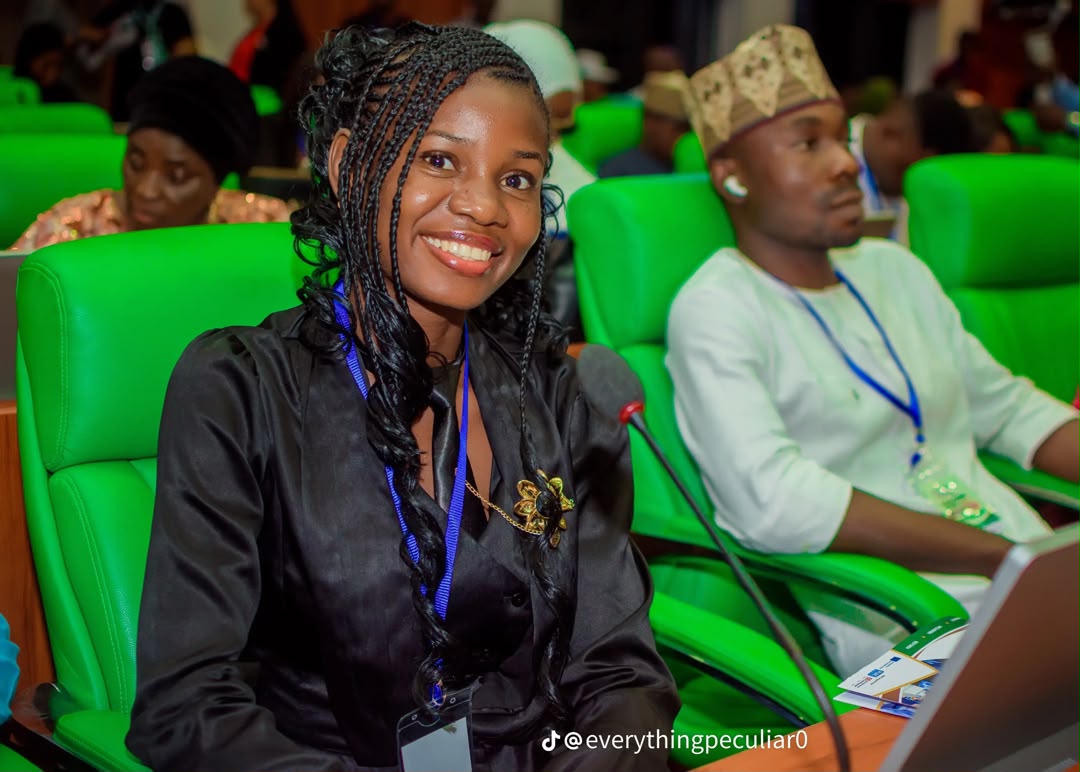
By Asodike Miracle
Eyamu Oghenenyerovwo Peculiar has broken a longstanding leadership barrier at the University of Abuja after emerging as the university’s first female President of the Students’ Union Government (SUG). Her election represents more than a change in student leadership; it signals a new moment for female representation, participation and aspirations within the university community.
The University of Abuja 2025/2026 Students’ Union Government election was conducted on June 30, 2026, through the university’s official digital voting platform on the UniAbuja app. Her victory represents a significant moment in the university’s student leadership history and highlights the growing participation of female students in leadership and decision-making. Peculiar won the election with 4,747 votes, defeating her closest contender, Orelope Abdulbaseet Omobolaji, who polled 4,286 votes. Abubakar Babba Dahiru Babba came third with 1,727 votes.
Eyamu Oghenenyerovwo Peculiar is a 300-level student from the Department of Tourism and Hospitality Management. Her manifesto focused on improving academic support, prioritizing student well-being, protecting students fundamental rights within the university system, and promoting a student government that actively listens to and represents all students opinions across various faculties.
Her campaign identity also played a role in communicating her message to the student community. The slogan, “Everything Peculiar, Nothing Is Ordinary,” presented a distinctive campaign identity while positioning her as a candidate offering something different. Her campaign activities, including a jollof festival where meals were distributed to students, also provided opportunities for direct engagement and interaction with the student body.
Beyond these activities, her campaign mobilized students across different faculties to raise awareness about her candidacy and communicate her vision for the SUG. These efforts demonstrate how campaign communication extends beyond presenting a manifesto; it also involves building visibility, creating connections and making a candidate’s message relatable to the intended audience.
The election’s digital voting process further shaped student participation. Through the UniAbuja app, students were able to cast their votes from their hostels or homes without having to queue at a physical polling point. This reflects the growing role of digital platforms in facilitating participation and connecting students with university processes.
However, the historic victory also comes with expectations. Students will expect the new administration to translate the promises contained in her manifesto into practical initiatives that address academic concerns, welfare, students’ rights and effective representation. As the first female SUG President, she now occupies a symbolic position that carries both opportunity and responsibility. The success of the administration will therefore depend not only on the significance of Peculiar’s emergence but also on how effectively her government communicates with students and responds to their concerns.
This creates a clear relationship between achievement, expectations, performance and reputation. Peculiar’s leadership will be shaped by what her administration does with that opportunity. How effectively it communicates with students, responds to their concerns and delivers on its promises will influence how students assess not only her administration but potentially their perceptions of female leadership within the university.
Reacting to her victory, Peculiar thanked students for believing in her vision , describing her election as a win for every young woman and for leadership built on competence, character and service rather than gender.
Her emergence therefore presents both a breakthrough and a test. It opens a new chapter for female participation in UniAbuja’s student governance while placing greater attention on the responsibilities that accompany leadership. The lasting significance of her election will ultimately be determined not only by being the first female SUG President, but by the quality, responsiveness and accountability of the leadership that follows.

President Tinubu Appoints Abel Olumuyiwa As Head Of Service

Kano Trains Mass Education Officers to Strengthen Adult Learning, Tackle Out-of-School Challenge

SEMA Assesses Sites of Building Collapses, Condoles Families of Nine Victims

From Grade Level 03 to Director: Binta Bala’s 35-Year Journey of Resilience, Service and Inclusion

UNICEF Hands Over Renovated Diso Ward Primary Healthcare Centre to Kano State

How Kano Digitized Land Turns N50m to N750m Monthly
Kano Governor Yusuf Shortlisted for Africa’s SANKOFA Award of Excellence in Infrastructural Development

From the struggle for Gombe State to life in the Senate: Senator Umar Usman Dukku reflects on politics, democracy, and his relationship with the late General Sani Abacha.

Borders, Visas and the Beautiful Game: How U.S. Immigration Policies Shaped Global Perceptions During the 2026 FIFA World Cup

Defamation Against DSP Barau, Institutional
President Tinubu Appoints Abel Olumuyiwa As Head Of Service
Kano Trains Mass Education Officers to Strengthen Adult Learning, Tackle Out-of-School Challenge
SEMA Assesses Sites of Building Collapses, Condoles Families of Nine Victims
From Grade Level 03 to Director: Binta Bala’s 35-Year Journey of Resilience, Service and Inclusion
UNICEF Hands Over Renovated Diso Ward Primary Healthcare Centre to Kano State
How Kano Digitized Land Turns N50m to N750m Monthly
Kano Governor Yusuf Shortlisted for Africa’s SANKOFA Award of Excellence in Infrastructural Development
From the struggle for Gombe State to life in the Senate: Senator Umar Usman Dukku reflects on politics, democracy, and his relationship with the late General Sani Abacha.
Borders, Visas and the Beautiful Game: How U.S. Immigration Policies Shaped Global Perceptions During the 2026 FIFA World Cup
Defamation Against DSP Barau, Institutional
-

 Opinion5 years ago
On The Kano Flyovers And Public Perception
-

 Features5 years ago
How I Became A Multimillionaire In Nigeria – Hadiza Gabon
-

 Opinion6 years ago
Kano As future Headquarters Of Poverty In Nigeria
-

 History5 years ago
Sheikh Adam Abdullahi Al-Ilory (1917-1992):Nigeria’s Islamic Scholar Who Wrote Over 100 Books And Journals
-

 Opinion5 years ago
My First Encounter with Nasiru Gawuna, the Humble Deputy Governor
-

 History5 years ago
The History Of Borno State Governor Professor Babagana Umara Zulum
-

 History5 years ago
The Origin Of “Mammy Market” In Army Barracks (Mammy Ochefu)
-

 News4 years ago
Federal University Of Technology Babura To Commence Academic Activities September