
News
NAPTIP advocates equal punishment for gravity of GBV Cases

Dr Fatima Waziri-Azi, the Director General of the National Agency for the Prohibition of Trafficking in Persons (NAPTIP), has called on Judges to serve punishment worth the gravity of offences in trafficking cases.
The D-G made the call in a statement in Abuja by Mr Vincent Adekoye, the Assistant Public Relations Officer of the agency.
It stated that Waziri-Azi made the call at the opening session of a two-day capacity building workshop of the National Association of Women Judges (NAWJN), in collaboration with the National Judicial Institute (NJI).
The D-G appealed to Judges across the federation to place same measure of sanction on Sexual and Gender Based Violence (SGBV) cases.
She stated that human trafficking offenders and perpetrators of SGBV should be served with sentencing commensurable with the magnitude of offences committed, to send signals and serve as a deterrent.
CITAD Decries Alleged Gender Based Violence At Kano Higher Institution
She noted that some of the offenders often went home with light sentencing in the past, adding that the agency had recorded cases of repeat offenders and this posed great danger to the society.
According to her, Judges have indispensable roles to play in the eradication of human trafficking, curtailing of rapes and minimising cases of SGBV.
She stressed that it was important for the judges to be adequately acquainted with the provisions of the Trafficking in Persons (Prohibition) Enforcement and Administration Act, 2015 (TIPPEA).
“The aim of the Act as stated in section 1 is to provide an effective and comprehensive legal and institutional frame work for the prohibition, prevention, detection, prosecution and punishment of trafficking offenders and other related crimes.
“The Act is also to promote and facilitate national and international cooperation. I am pleading with you all my Lords, the Judges to always consider the stiffer penalties and convictions that are commensurable with the magnitude of crime.
“This is very important as it serves as deterrent and it will assuage the trauma of the victims.”
She enumerated some of the operational challenges faced by the agency to include low reportage, the relationship between suspects and victims, lack of cooperation from the source/vulnerable communities.
Others are difficulty of procuring witnesses from remote areas, unavailability of lawyers to take up civil cases on behalf of victims on Pro-Bono basis, and this is making it difficult for victims to get compensation from their traffickers.
Waziri-Azi also disclosed that the agency had secured conviction of 519 traffickers, rescued and counselled 17, 727 victims.
It also sponsored 17 victims to higher institutions out of which 3 were employed in the service of the agency.
Others according to her, are establishment of 20 State Task Forces across the Country and increased partnership with diverse stakeholders with a reloaded advocacy and sensitisation.
The statement also reported Justice Ibrahim-Tanko Mohammed, the Chief Justice of Nigeria, as saying that SGBV against women were severe human rights violations that must be addressed with all seriousness.
According to him, the roles of female judges in the adjudication of gender based issues cannot be over emphasised.
The statement also disclosed that at the first technical session, Justice Amina Augie, Justice of the Supreme Court, and the female judges were angered by reasons victims of human trafficking and other abuses were in pitiable traumatic state.
Augie stressed that victims had continued to nurse the wounds inflicted on them by heartless traffickers.
Having been exploited, the traffickers are often pampered erroneously or unintentionally with light sentencing.
She pleaded with judges who presided over such cases to consider the plight and exploitation of victims in deciding the cases of human trafficking and domestic violence.
Augie urged the judges to overlook some of the salient technicalities which often denied victims adequate justice, and commended NAPTIP DG for her tireless efforts in the fight against human trafficking in Nigeria.
The female Judges, however, called for synergy among law enforcement agencies in tackling such cases in the country.
They also called for advocacy and awareness, to reduce the vulnerability of the people and get the Judges informed properly on all emerging counter trafficking legal frameworks.
The statement disclosed that the workshop was attended by judges, prosecutors, development partners, including Action Against Trafficking in Persons and Smuggling of Migrants and other stakeholders. (NAN)
Daily News 24

















News
Jonathan Urges National Assembly to Overhaul Electoral Litigation Process, Create Specialised Court

By Yusuf Danjuma Yunusa
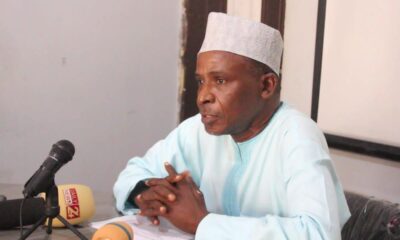
Former President Goodluck Jonathan has called on the National Assembly to overhaul Nigeria’s electoral litigation process by establishing a specialised constitutional court to handle election disputes.
Speaking on Wednesday in Abuja at the 70th birthday and book launch of Senator Gbenga Daniel (APC, Ogun East), Mr. Jonathan argued that a dedicated court would reduce the strain on the political system by resolving election-related cases in a single phase.
He criticised the current three-tier system for governorship disputes—moving from a tribunal to the Court of Appeal and finally to the Supreme Court—as ineffective and unnecessarily prolonged.
Recalling a landmark case from 2011, Jonathan highlighted how technicalities have historically undermined electoral justice. “I remember a particular case where someone lost an election as a governor because the law then stipulated the use of red ink to tick voters’ names,” he said.
“In an entire senatorial district, they were not provided with red pens and used available black or green pens. As a result, those votes were cancelled. The Appeal Court upheld this, even though the lower tribunal felt that a tick is a tick.”
While acknowledging that the National Assembly later amended the law to allow governorship cases to reach the Supreme Court—specifically to prevent such injustices—Jonathan noted that the amendment failed to address the length of the litigation process.
The former president urged Nigeria to draw lessons from Francophone African countries, which employ specialised constitutional courts for political matters. He proposed that if the Supreme Court must remain the final arbiter for governorship elections, the lower tribunal stage should be eliminated entirely.
“I believe the ideal thing to do, which I was considering when I was in office, was to make sure that it’s only one tribunal that listens to any litigation relating to politics. This is done, especially in the Francophone countries in Africa. They have constitutional courts. Anything about elections, only the constitutional courts take decisions,” Jonathan explained.
He also challenged the judiciary to exercise firmness in its rulings, drawing an analogy to football. “Politics is like soccer, and the judges are the referees. If the referee looks the other way, players will break legs or score with their hands,” he added.
News
ADC Defies INEC, Vows to Proceed with Congresses Amid Leadership Crisis
By Yusuf Danjuma Yunusa
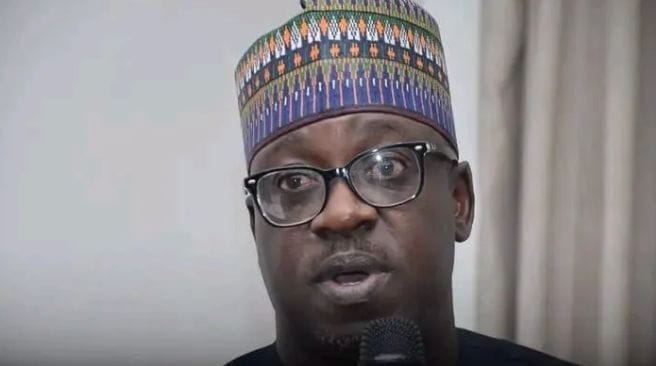
Nigeria’s African Democratic Congress (ADC) has declared it will go ahead with its scheduled congresses and national convention, defying the Independent National Electoral Commission’s (INEC) decision to suspend recognition of the party’s leadership.
The party’s National Publicity Secretary, Bolaji Abdullahi, insisted that the ADC has fulfilled all legal requirements, having formally notified the electoral body of its planned events.
“We will go ahead with our congresses. We have given INEC 21 days’ notice, they have accepted. Whether they come or not, we will continue with our congresses and our convention,” Abdullahi said during an interview on Arise TV.
His remarks come just days after INEC announced it would withhold recognition of the ADC’s leadership pending the outcome of a court case related to an internal dispute within the party.
The standoff sets the stage for a potential clash between the electoral commission and the opposition party, raising fresh questions about party governance, internal democracy, and the legal limits of INEC’s oversight powers in Nigeria.
News
ADC Rejects INEC’s Ruling Interpretation, Vows to Clarify Contradictions
By Yusuf Danjuma Yunusa
The African Democratic Congress (ADC) has sharply criticized the Independent National Electoral Commission (INEC) over its interpretation of a recent Court of Appeal statement, alleging that the commission has abandoned its neutrality by siding with the federal government.
In a press release issued on Wednesday, the ADC’s National Publicity Secretary, Mallam Bolaji Abdullahi, rejected INEC’s position, describing it as “contradictory and inconsistent with facts.” The party claimed that INEC was acting under pressure from a government it characterized as “jittery” due to the ADC’s growing momentum.
“We reject INEC’s interpretation of the Court of Appeal ruling,” the statement read. “We knew that INEC was being pressured by a government that has become jittery from the ADC’s rising momentum even in the face of its relentless assault on all opposition parties.”
The ADC accused the electoral commission of caving to political pressure, asserting that it has effectively chosen to align with the government against the Nigerian people. The party vowed to publicly clarify what it called the contradictions in INEC’s statement.
According to the release, the ADC is currently reviewing its legal and political options and will announce its next steps in the coming days. The party urged its members and the public to remain steadfast.
“We are currently reviewing our options, and we shall make these known soon. Meanwhile, we call on our members and all Nigerians to remain steadfast as they await further directives,” the statement concluded, adding the slogans: “Nigeria is rising. ADC is rising.”

INEC, David Mark, And Coming Abachaian Coronation
Jonathan Urges National Assembly to Overhaul Electoral Litigation Process, Create Specialised Court

ADC Defies INEC, Vows to Proceed with Congresses Amid Leadership Crisis

ADC Rejects INEC’s Ruling Interpretation, Vows to Clarify Contradictions

ADC Rising: Salga hails influx of political heavyweights as a turning point for justice

Governor Abba Kabir Yusuf Holds Exclusive Prerogative to Choose Deputy – Malam Inuwa Waya

The Governor Who Chose His People Over His Politics: Abba Yusuf and the Moral Courage Behind Kano First
Restoring the Glory That Was Always There: Governor Abba Kabir Yusuf and the Historical Vision Behind Kano First

NDLEA Clarifies: Drug Case Against Abba Kyari Still Active After Court Discharge

Nigeria’s Education Minister Tunji Alausa Weighs Resignation to Run for Lagos Governor
INEC, David Mark, And Coming Abachaian Coronation
Jonathan Urges National Assembly to Overhaul Electoral Litigation Process, Create Specialised Court
ADC Defies INEC, Vows to Proceed with Congresses Amid Leadership Crisis
ADC Rejects INEC’s Ruling Interpretation, Vows to Clarify Contradictions
ADC Rising: Salga hails influx of political heavyweights as a turning point for justice
Governor Abba Kabir Yusuf Holds Exclusive Prerogative to Choose Deputy – Malam Inuwa Waya
The Governor Who Chose His People Over His Politics: Abba Yusuf and the Moral Courage Behind Kano First
Restoring the Glory That Was Always There: Governor Abba Kabir Yusuf and the Historical Vision Behind Kano First
NDLEA Clarifies: Drug Case Against Abba Kyari Still Active After Court Discharge
Nigeria’s Education Minister Tunji Alausa Weighs Resignation to Run for Lagos Governor
-

 Opinion4 years ago
On The Kano Flyovers And Public Perception
-

 Features5 years ago
How I Became A Multimillionaire In Nigeria – Hadiza Gabon
-

 Opinion5 years ago
Kano As future Headquarters Of Poverty In Nigeria
-

 History5 years ago
Sheikh Adam Abdullahi Al-Ilory (1917-1992):Nigeria’s Islamic Scholar Who Wrote Over 100 Books And Journals
-

 Opinion4 years ago
My First Encounter with Nasiru Gawuna, the Humble Deputy Governor
-

 History5 years ago
The Origin Of “Mammy Market” In Army Barracks (Mammy Ochefu)
-

 History4 years ago
The History Of Borno State Governor Professor Babagana Umara Zulum
-

 News4 years ago
Federal University Of Technology Babura To Commence Academic Activities September