
News
League of Veteran Journalists Independent of Ministry, Says Waiya as Journalists Adopt Constitution
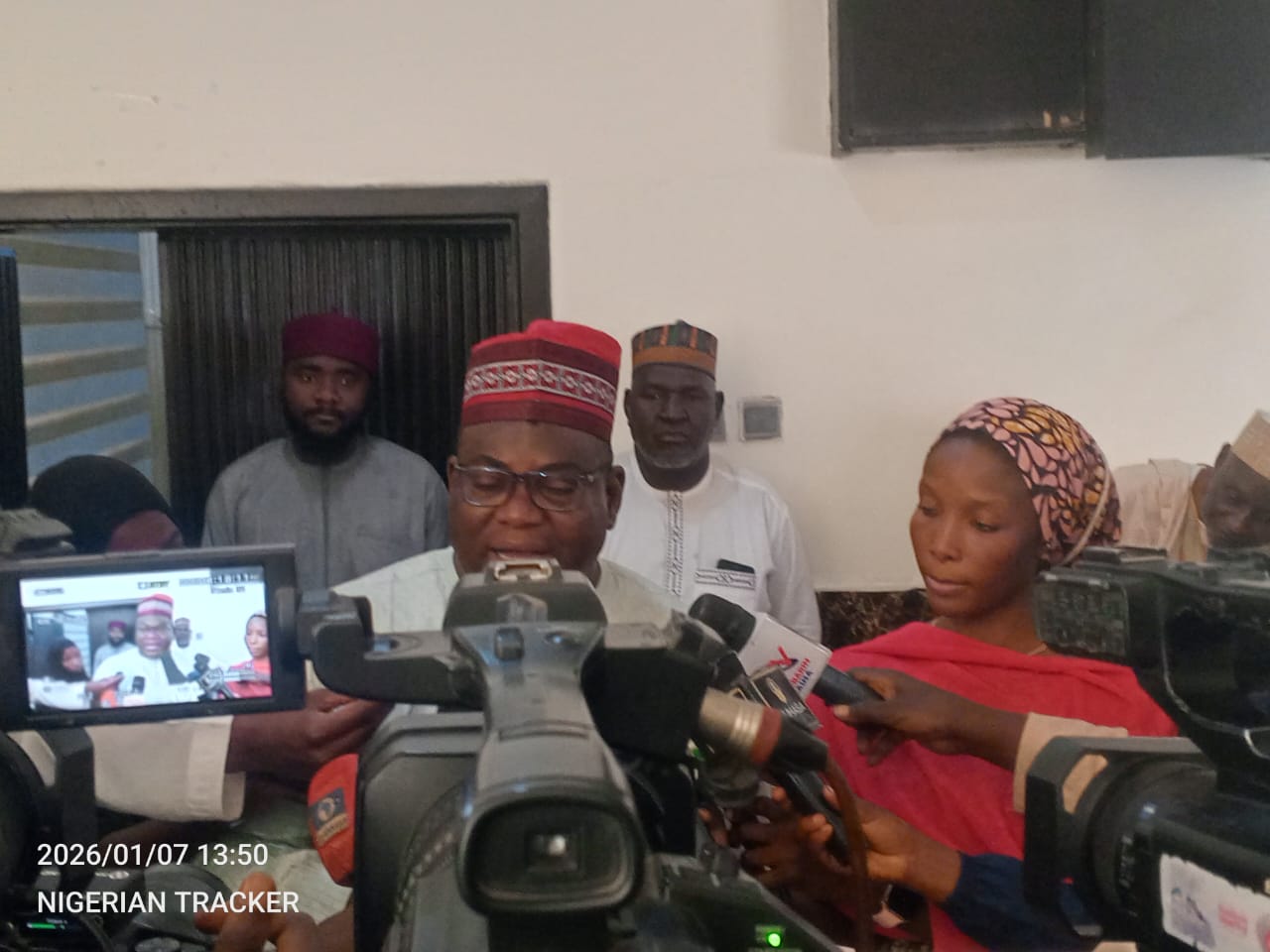
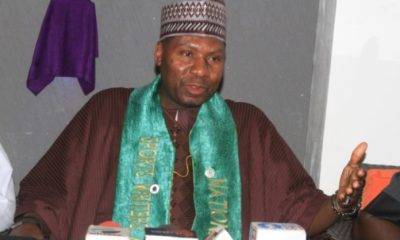
The Kano State Commissioner for Information and Internal Affairs, Comrade Ibrahim Abdullahi Waiya, has clarified that the Kano League of Veteran Journalists (KALVEJ) is an independent professional body and not an appendage of the State Ministry of Information.
Speaking during the ratification and adoption of the League’s Charter, which has now become its Constitution, the Commissioner explained that although the Ministry supports and relates with the League, such engagement is strictly on a professional basis.
He emphasized the importance of preserving the independence of professional bodies to enable them operate effectively and in line with global best practices, noting that the Ministry maintains similar professional relationships with bodies such as the Nigeria Union of Journalists (NUJ), the Nigerian Institute of Public Relations (NIPR), and other related professional organizations.
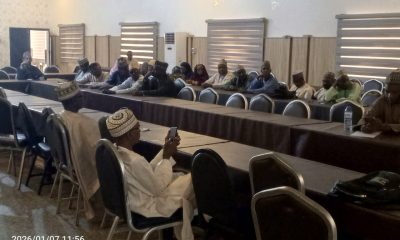
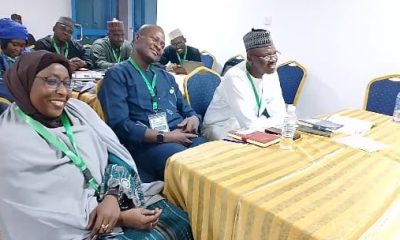
The Constitution was ratified and adopted at the Tahir Guest Palace, Kano, during a session attended by members of the League drawn from various segments of the journalism profession, including academics.
The session featured extensive discussions, comments, observations, and detailed scrutiny of the draft document by members. Key observations raised included the absence of clear provisions on members’ welfare, gender representation, and sustainable funding mechanisms for the League.
Following exhaustive deliberations, members resolved that all issues raised during the session be forwarded to the Constitution Drafting Committee and Secretariat for further consideration and necessary amendments.
At the end of the session, a motion was moved and unanimously adopted mandating the Constitution Drafting Committee to continue managing the affairs of the League for a period of one year, pending the conduct of elections for substantive executives.
In his remarks, the Chairman of the Committee, Alhaji Ahmed Aminu, expressed gratitude to members for the confidence reposed in the committee. He assured the gathering that all concerns raised, particularly those relating to the welfare of members, would be adequately addressed in the revised Constitution.
Signed
Sani Abba Yola
Director, Special Duties
Kano State Ministry of Information and Internal Affairs
7th January, 2026











News
FG Panel Says 37 Miners Died of Suffocation in NSCDC Custody, Recommends 1.4billion Compensation for Deceased Families, Survivors
By Yusuf Danjuma Yunusa
A ten-member independent committee set up by the federal government to investigate the deaths of 37 suspected illegal miners in the custody of the Nigeria Security and Civil Defence Corps (NSCDC) in Minna, Niger state, has identified the cause of their deaths.
The committee found that the miners died from asphyxiation, a condition in which the body is deprived of adequate oxygen, potentially leading to unconsciousness, organ damage or death.
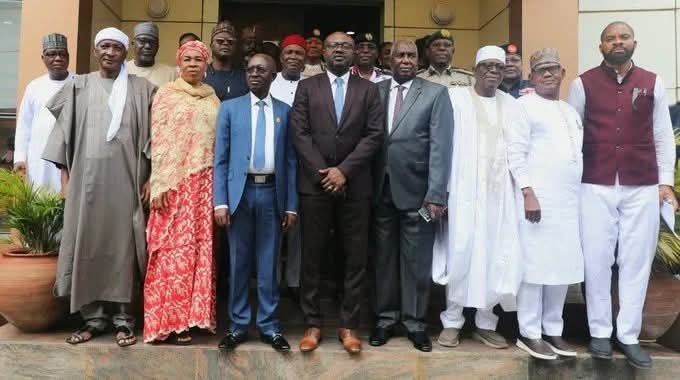
Jonathan Kure, chairman of the committee, spoke on Tuesday while presenting the panel’s report to Olubunmi Tunji-Ojo, minister of interior, in Abuja.
The federal government constituted the committee on September 19 following a directive by President Bola Tinubu for a “full and transparent” investigation into the deaths of the suspected illegal miners.
Tunji-Ojo announced the decision in a statement in which he listed the names of the 21 officers suspended in connection with the incident.
Two days before the committee was constituted, the NSCDC said the suspects were arrested during operations conducted on September 15 and 16 around Mohammed Inuwa Wushishi Estate in Minna, the Niger state capital.
In a statement, Suberu Aniviye, the NSCDC commandant in Niger state, said “scores of the detained suspects were found dead in the early hours of Thursday following a suspected outbreak of disease”.
Following the development, the federal government suspended the Niger state NSCDC commandant and ordered a full investigation into the circumstances surrounding the deaths.
However, on October 6, the panel requested a two-week extension to submit its report on the matter.
Speaking at a press conference in Abuja, Kure said the panel travelled to Minna and inspected the custody facility, conducted autopsies, took witness statements from NSCDC personnel, survivors, families and other witnesses, and collected documentary and forensic evidence.
He noted that preliminary findings showed institutional gaps and overzealousness on the part of some officers, adding that greater professionalism was required in handling such sensitive cases.
The committee also recommended N1.4 billion Naira compensation for deceased families and survivors.
The 10-man investigative committee proposed the sum while presenting the report to the Minister of Interior, Dr Olubunmi Tunji-Ojo on Tuesday in Abuja.Track Exec Orders
The committee’s Chairman, retired Deputy Director, Department of State Services (DSS), Jonathan Kure said that the committee proposed N30 million naira for each of the 33 bereaved families.
Kure added that the committee also proposed that N10 million naira be given to each of the 41 survivors, alongside educational, medical and psychological support.
News
President Tinubu Seeks Senate Approval To Borrow $20.5bn and €1.05bn For 2026–2027 Projects
By Yusuf Danjuma Yunusa
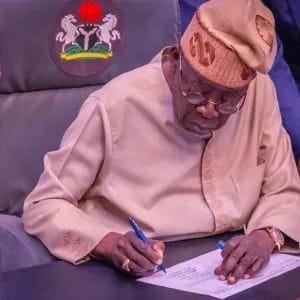
President Bola Tinubu has asked the Senate to approve an external borrowing plan of $20.52 billion and €1.05 billion to bridge funding gaps under the Federal Government’s 2026–2027 supplementary borrowing plan.
Senate President Godswill Akpabio read the President’s request during plenary on Tuesday, stating that the proposed loans would help address Nigeria’s infrastructure deficit and fund critical sectors of the economy.
In the letter, Tinubu requested approval for $20,517,755,901 and €1,045,083,643, with investments planned for power, transportation, healthcare, education, agriculture, water supply, security, job creation and financial management reforms.
“I submit the attached Federal Government 2026–2027 Supplementary External Borrowing Plan for consideration and early approval of the National Assembly to ensure prompt implementation of our projects,” the President wrote.
Tinubu said the proposed projects had undergone technical and economic assessments to ensure they contribute to poverty reduction, skills development, entrepreneurship and national food security.
He added that external borrowing had become necessary to meet the country’s substantial infrastructure financing needs.
Following the presentation, Akpabio referred the request to the Senate Committee on Local and Foreign Debts, chaired by Senator Haruna Manu, for detailed review, with support from the Committees on Appropriations and Finance.
Akpabio noted that aspects of the borrowing framework had featured in earlier government borrowing plans approved for 2025–2027. However, he said the committee would examine the scope of the latest request before further legislative action.
The committee’s review is expected to clarify the proposed borrowing arrangements, disbursement timeline and alignment with Nigeria’s existing debt management framework.
News
Tinubu Says Dangote Group Performs Excellently in Driving Economy
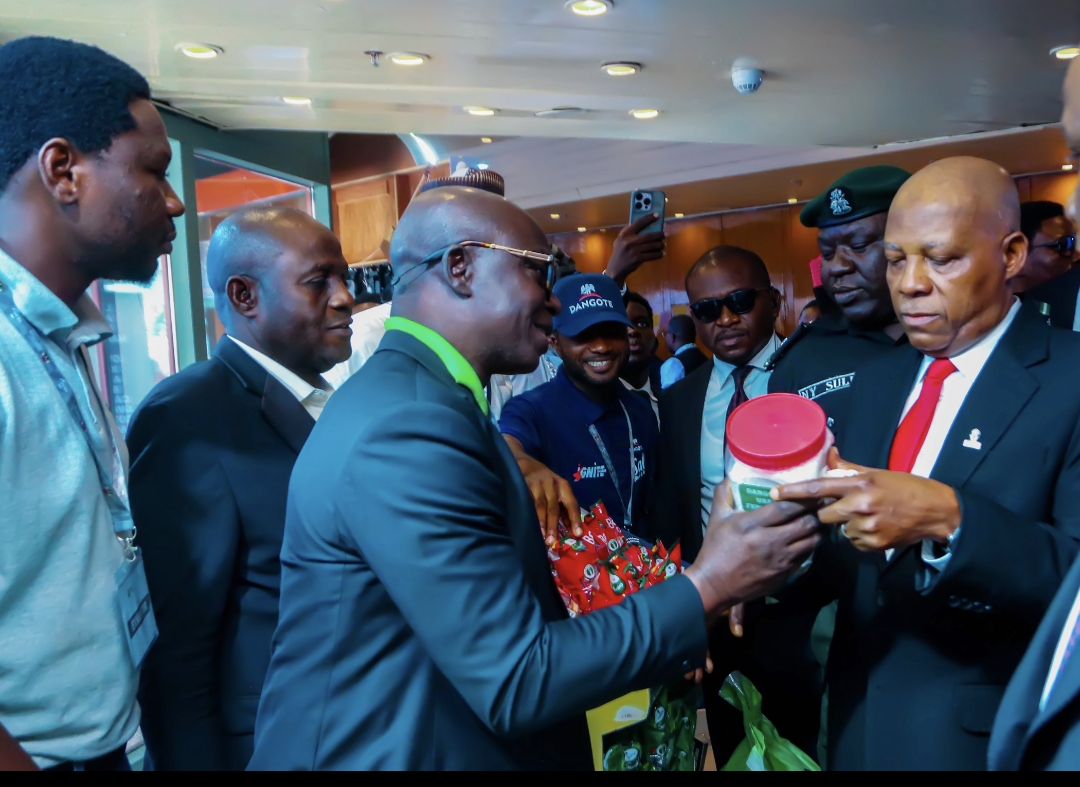
President Bola Ahmed Tinubu has commended the Dangote Group for its significant contribution to Nigeria’s economic growth, citing the conglomerate’s strategic investments in key sectors as instrumental in boosting domestic production, creating jobs, reducing dependence on imports, conserving foreign exchange and strengthening the country’s industrial capacity.
The President gave the commendation during a visit to the Dangote Group pavilion at the ongoing 32nd Nigeria Economic Summit at the Transcorp Hilton, Abuja, on Monday. He was represented at the event by Vice President Kashim Shettima.
Tinubu praised the Group’s performance across its business operations, highlighting the critical role of private-sector investments in expanding productive capacity, stimulating economic activities and supporting national development.
The Dangote Group has investments spanning cement manufacturing, fertiliser production, sugar refining, salt processing and petroleum refining.
These investments contribute to local value addition, employment generation and the development of domestic supply chains, while supporting efforts to reduce Nigeria’s dependence on imported products.
He said his administration is creating conditions for public and private sectors to invest, expand and generate productive employment.
Dangote Group is the second biggest employer of labour after the federal government.
The 2026 Nigeria Economic Summit, themed “Growth That Works: Delivering Jobs, Productivity and Shared Prosperity,” was declared open by the President, who used the occasion to defend the Federal Government’s ongoing economic reforms and emphasise the importance of industrial harmony and private-sector-led growth.
The summit brings together policymakers, business leaders, investors and other stakeholders to discuss practical strategies for accelerating economic growth, improving productivity, generating employment and ensuring that the benefits of economic expansion reach more Nigerians.
The President’s commendation underscores the importance of sustained collaboration between government and the private sector in building a more productive, competitive and resilient Nigerian economy.
He said Nigeria has performed below its potentials for far too long, but “there is no shortcut for economic development.”
We came to rewrite the story of a nation that has performed below its potentials for far too long,” he said.
Through its investments in strategic industries, the Dangote Group remains a major private-sector participant in Nigeria’s industrialisation drive, with the potential to deepen local manufacturing, strengthen supply chains and support the country’s broader economic development objectives.
Through the Dangote Group’s diversified operations, the conglomerate has established a substantial presence across critical sectors of the economy, providing products and services that support construction, agriculture, manufacturing, energy and other productive activities.
One of its investments is the Dangote Petroleum Refinery and Petrochemicals complex in Lagos, which has the potential to transform Nigeria’s downstream petroleum industry by increasing domestic refining capacity and reducing the country’s reliance on imported refined petroleum products.

FG Panel Says 37 Miners Died of Suffocation in NSCDC Custody, Recommends 1.4billion Compensation for Deceased Families, Survivors

President Tinubu Seeks Senate Approval To Borrow $20.5bn and €1.05bn For 2026–2027 Projects

Tinubu Says Dangote Group Performs Excellently in Driving Economy

Court Dismisses El-Rufai’s No-Case Submission in Ribadu Phone-Tapping Trial, Orders Defence

JIBWIS Calls For Arrest,Investigation Of Man In JIBWIS Uniform Over Viral Video Threatening Attack On Enugu On Sunday

Kano Monitors ₦48.9bn Projects Across Six LGAs

PCACC Arrests Man Over Alleged ₦4.5m Sale, Illegal Leasing of Kano Government Horse Stable

Kano Spends ₦10.36bn on Hospitality, Sitting Allowances, Others in Six Months

Goje’s Electoral War:The Confrontation With Tinubu,Governor Inuwa,Usman Kumo And APC candidates Ahead Of 2027

Open The Social Sciences “A Tribute to a Heterodox Scholar: Mallam Ibrahim Muazzam
FG Panel Says 37 Miners Died of Suffocation in NSCDC Custody, Recommends 1.4billion Compensation for Deceased Families, Survivors
President Tinubu Seeks Senate Approval To Borrow $20.5bn and €1.05bn For 2026–2027 Projects
Tinubu Says Dangote Group Performs Excellently in Driving Economy
Court Dismisses El-Rufai’s No-Case Submission in Ribadu Phone-Tapping Trial, Orders Defence
JIBWIS Calls For Arrest,Investigation Of Man In JIBWIS Uniform Over Viral Video Threatening Attack On Enugu On Sunday
Kano Monitors ₦48.9bn Projects Across Six LGAs
PCACC Arrests Man Over Alleged ₦4.5m Sale, Illegal Leasing of Kano Government Horse Stable
Kano Spends ₦10.36bn on Hospitality, Sitting Allowances, Others in Six Months
Goje’s Electoral War:The Confrontation With Tinubu,Governor Inuwa,Usman Kumo And APC candidates Ahead Of 2027
Open The Social Sciences “A Tribute to a Heterodox Scholar: Mallam Ibrahim Muazzam
-

 Opinion5 years ago
On The Kano Flyovers And Public Perception
-

 Features5 years ago
How I Became A Multimillionaire In Nigeria – Hadiza Gabon
-

 Opinion6 years ago
Kano As future Headquarters Of Poverty In Nigeria
-

 History6 years ago
Sheikh Adam Abdullahi Al-Ilory (1917-1992):Nigeria’s Islamic Scholar Who Wrote Over 100 Books And Journals
-

 Opinion5 years ago
My First Encounter with Nasiru Gawuna, the Humble Deputy Governor
-

 History5 years ago
The History Of Borno State Governor Professor Babagana Umara Zulum
-

 History6 years ago
The Origin Of “Mammy Market” In Army Barracks (Mammy Ochefu)
-

 News5 years ago
Federal University Of Technology Babura To Commence Academic Activities September